Methods 4: Adjustment Set Ups & Orthos
 Call Kai
 Learn
Learn Practice Test
 Spaced Repetition
 Match
Match Flashcards
 Knowt Play
1/27

There's no tags or description
Looks like no tags are added yet.
Name | Mastery | Learn | Test | Matching | Spaced | Call with Kai |
|---|
No analytics yet
Send a link to your students to track their progress
28 Terms
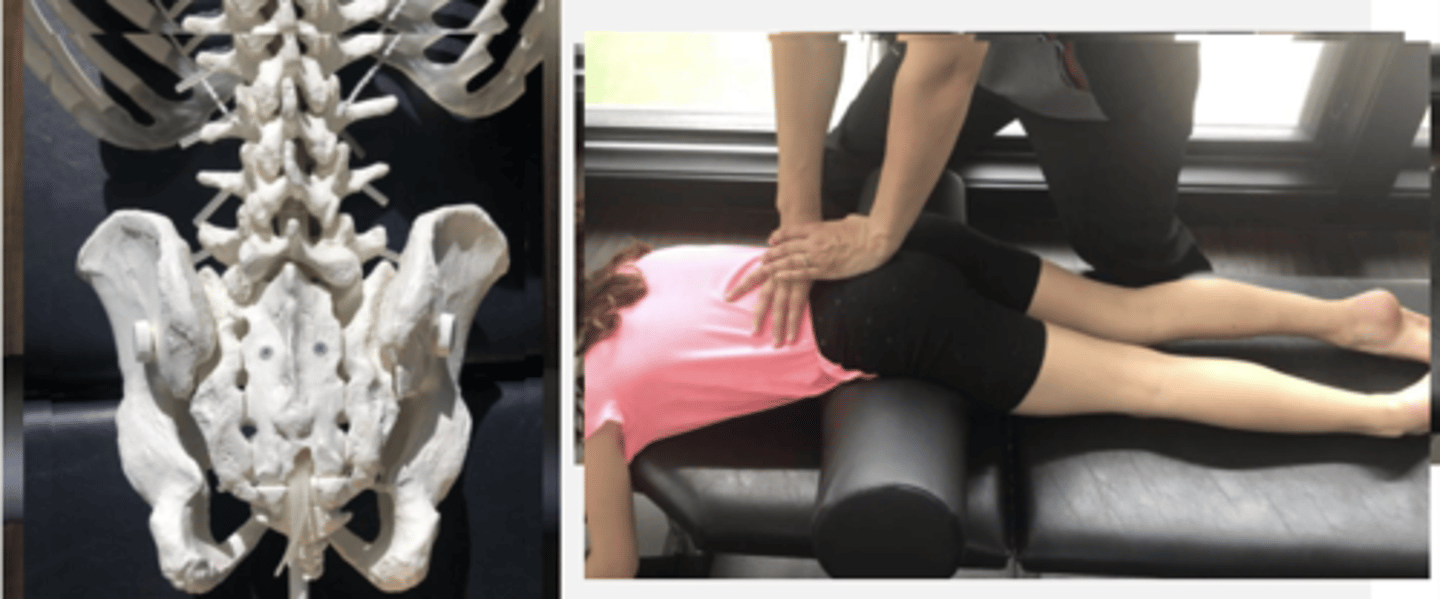
Static & Motion Findings:
-PSIS palpates posterior, medial, and inferior on R
-Loss of extension
-Sacral base - nutated, CN restriction
Technique:
-Prone Bilateral Hypothenar Ilium Sacral Apex Push
PP: Prone-verbalize how you found the segment
DP: Square or Modified fencer stance on side opposite the dysfunction
CH: Cephalad (R) hand, hypothenar (pisiform) on L PSIS
IH: Caudal (L) hand knife-edge on side of sacral apex closest to you
LOD: CH: P-A, M-L, slight I-S
IH: P-A, slight S-I
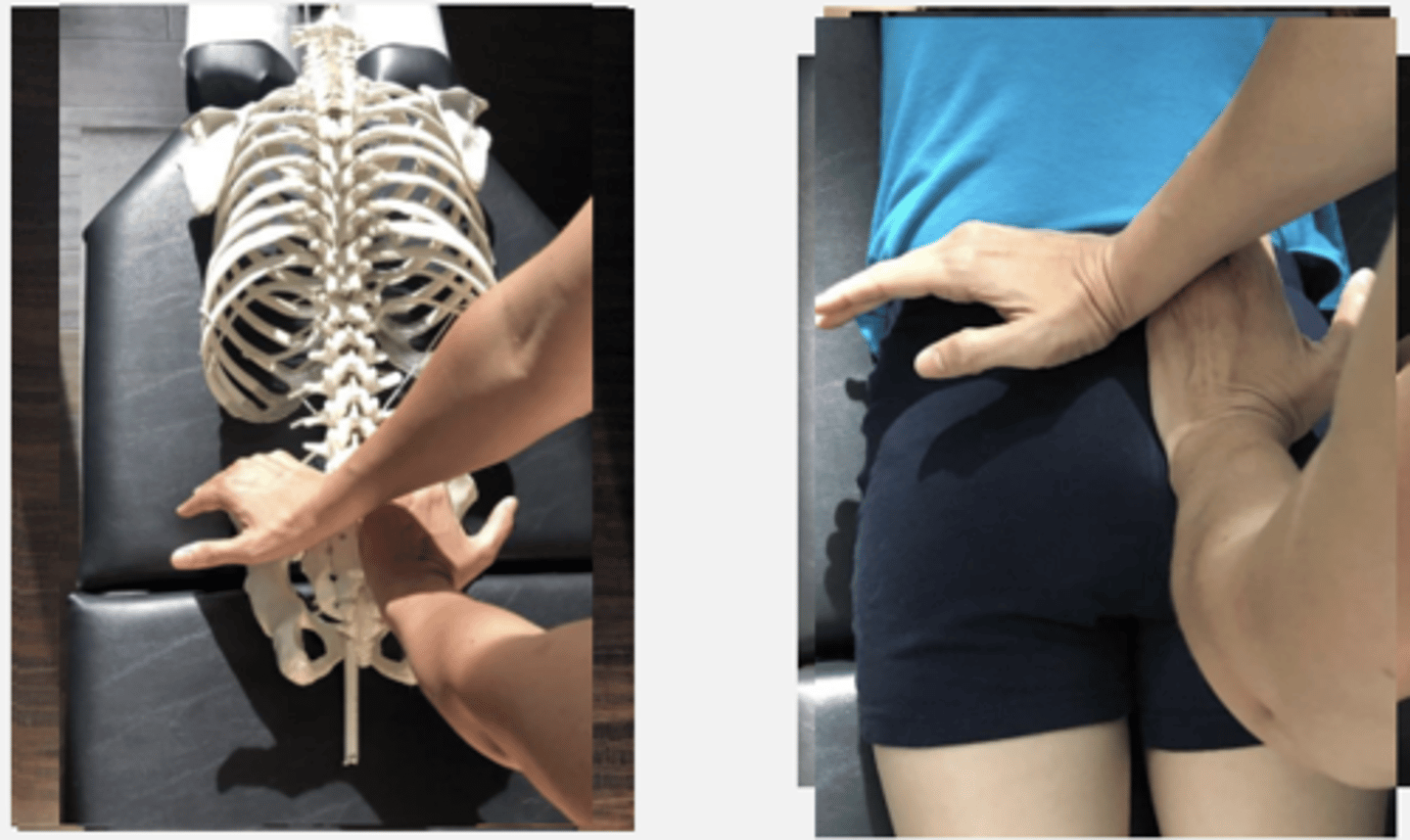
Static & Motion Findings:
-PSIS palpates posterior, medial, and inferior on L
-Loss of extension
Technique:
-Prone Unilateral Reinforced Pisiform Ilium Push
PP: Prone- verbalize how you found the segment
DP: Square or Modified fencer stance on side opposite the dysfunction
CH: Cephalad ( R) hand, hypothenar (pisiform) on L PSIS
IH: Reinforcing CH
LOD: P-A, M-L
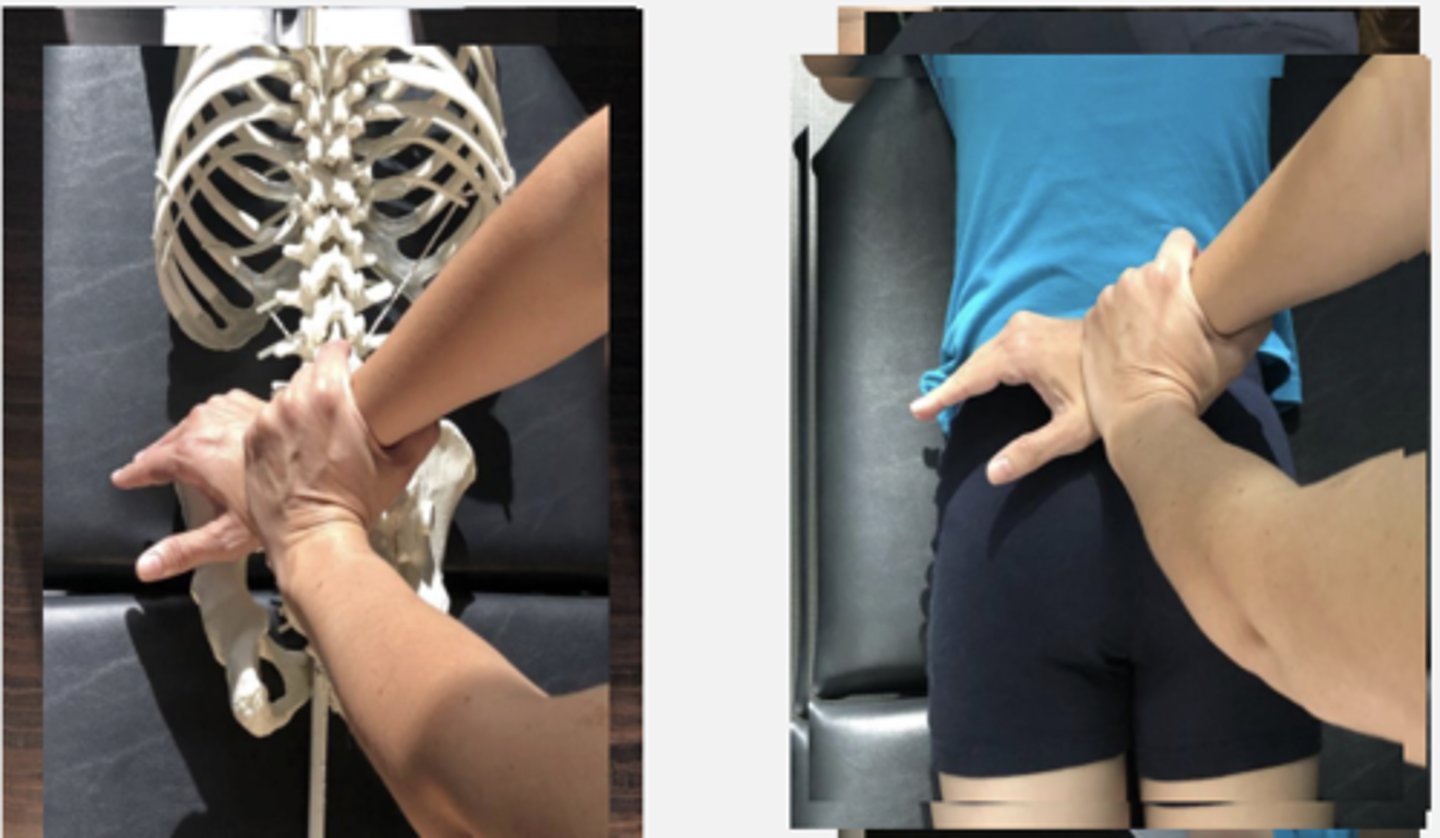
Static & Motion Findings:
-PSIS palpates anterior, superior, and lateral on R
-Loss of flexion
-R sacral base - CN, NR
Technique:
-Prone Bilateral Hypothenar Ischium Sacral Base Push
PP: Prone- verbalize how you found the segment
DP: Square or Modified fencer stance on side opposite the dysfunction
CH: Caudal (L) hand, hypothenar (calcaneal) contact on (L) ischial tuberosity
IH: Cephalad ( R) hand, hypothenar(pisiform) on L sacral base(just medial to the L PSIS)
LOD: CH: P - A, S -I
IH: P -A, I - S
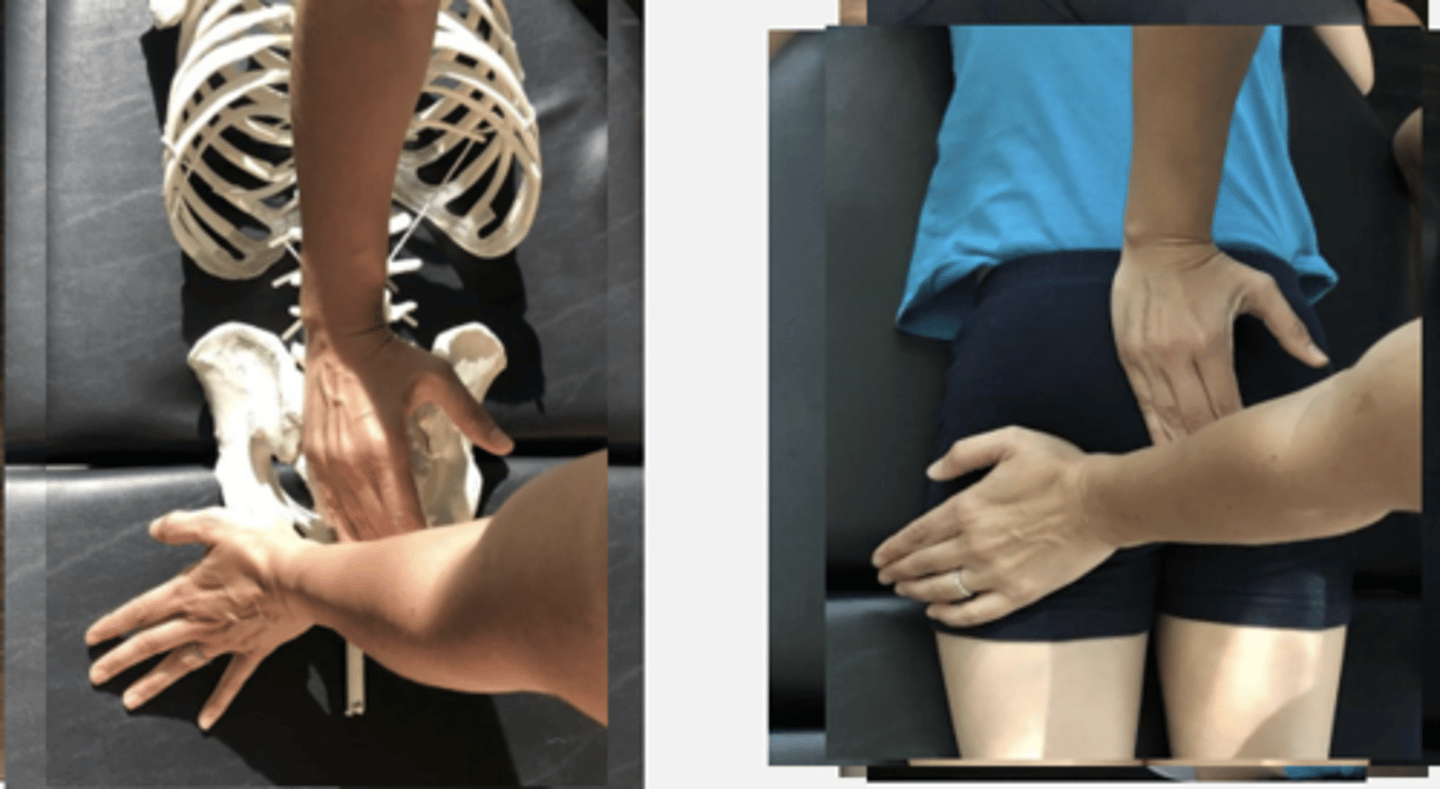
Static & Motion Findings:
-PSIS palpates posterior, medial, and inferior on R
-Loss of extension
-Sacral base - nutated, CN restriction
Technique:
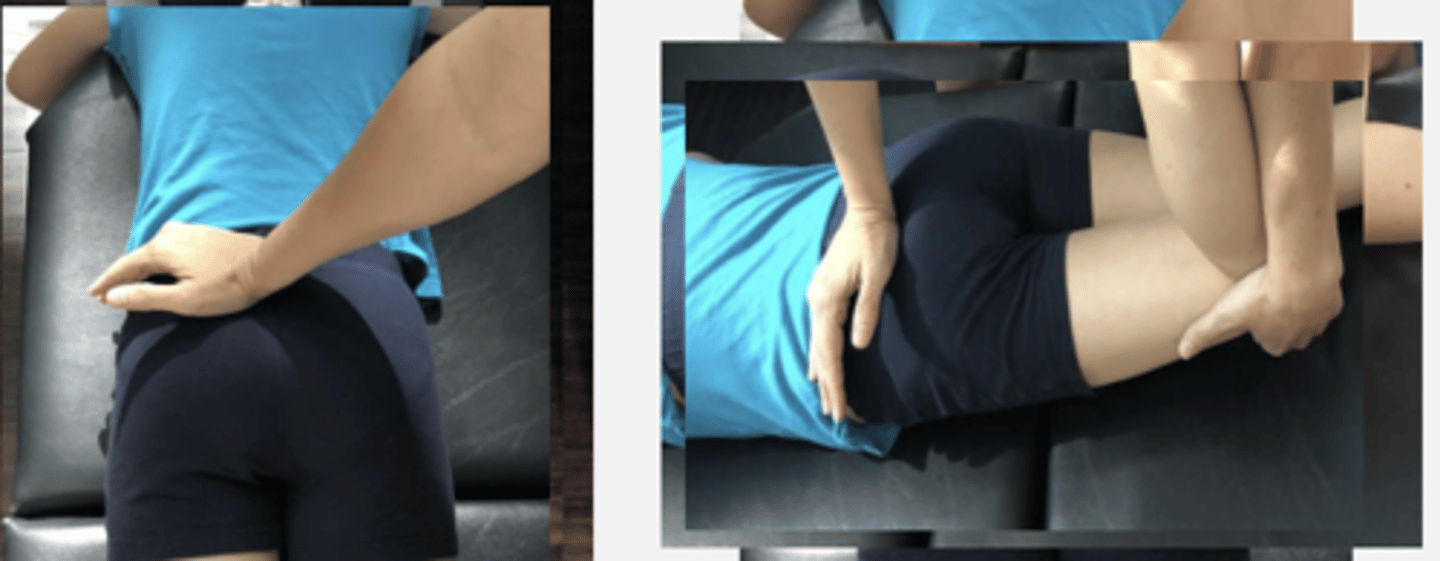
-Prone Hypothenar Ilium Push with Hip Extension
PP: Prone- verbalize how you found the segment
DP: Square or Modified fencer stance on side opposite the dysfunction
CH: Cephalad ( R) hand, hypothenar (pisiform) on L PSIS
IH: Caudal (L) hand grasps pt's distal thigh on same side as the adjustive contact (L distal thigh)
LOD: CH: P - A, M - L
IH: Reinforcing with shallow lift of the thigh contact
Static & Motion Findings:
-L sacral base palpates posterior & superior
-Loss of nutation
Technique:
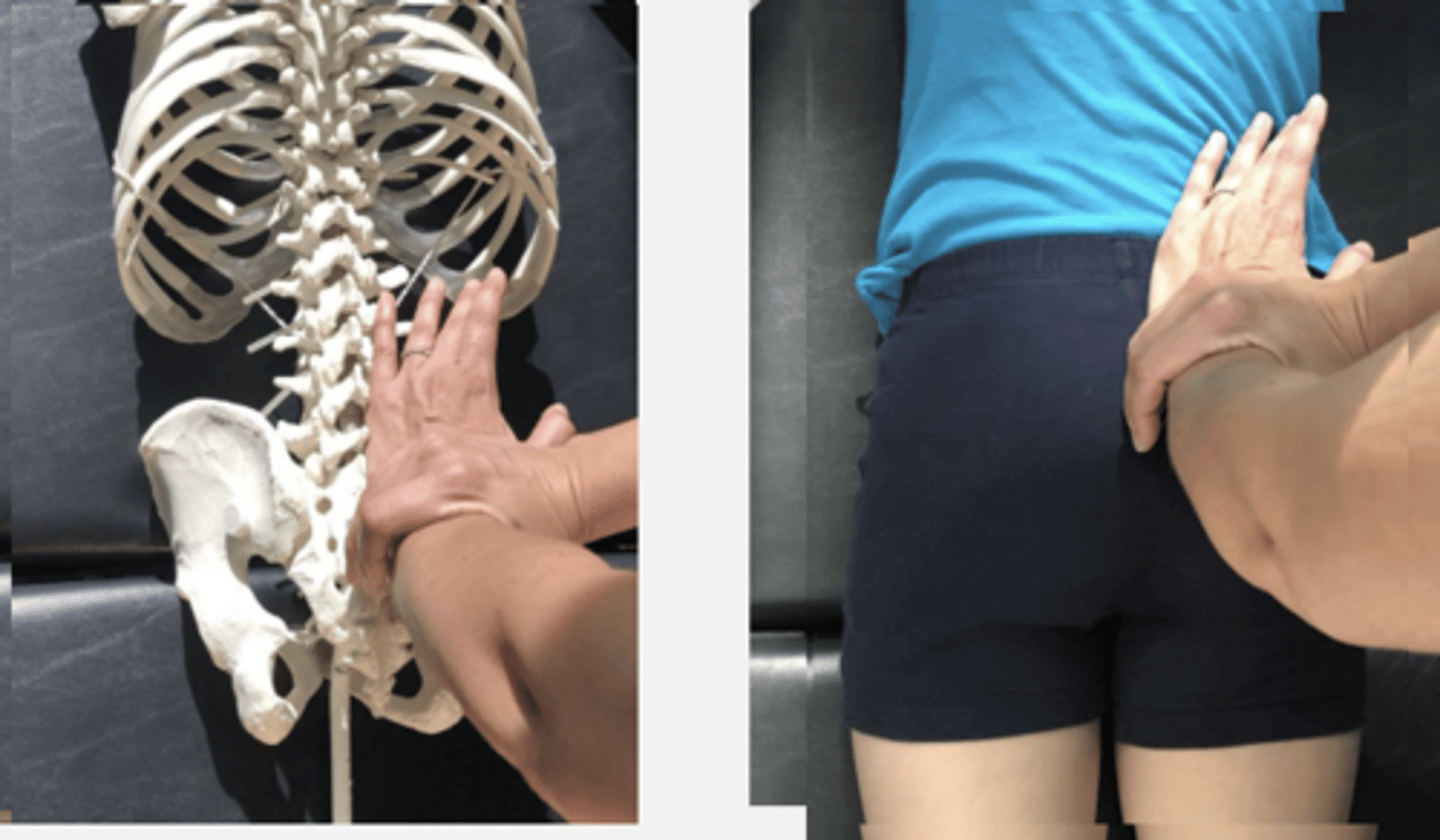
-Prone Unilateral Reinforced Pisiform Sacral Base Push
PP: Prone- verbalize how you found the segment
DP: Modified fencer stance on same side of dysfunction
CH: Caudal (L) hand, hypothenar (pisiform) on superior margin of sacral base just medial to PSIS
IH: Reinforcing CH
LOD: P-A, I-S
Static & Motion Findings:
-PSIS palpates posterior, medial, and inferior on L
-Loss of extension
Technique:
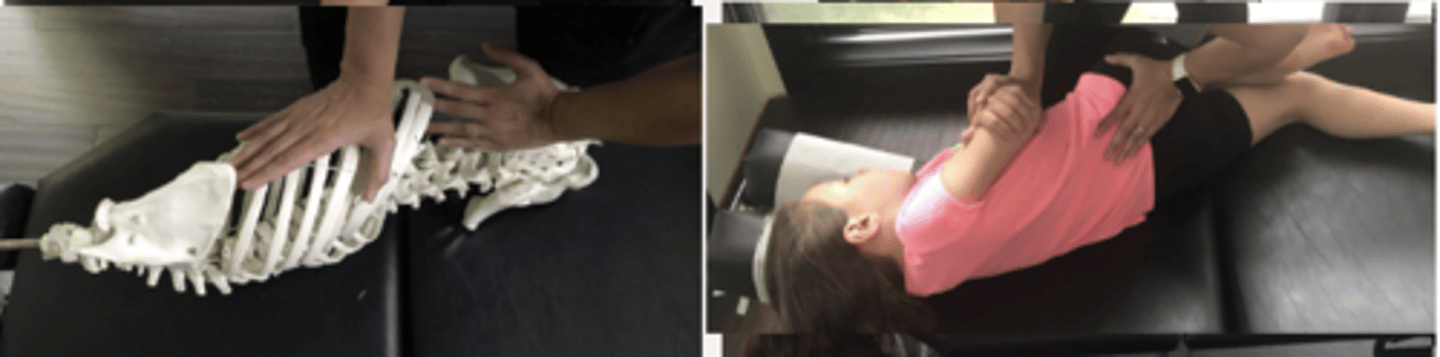
-Side Posture Hypothenar Ilium Push
PP: Basic side posture position with the dysfunctional side up - verbalize how you found the segment
DP: Modified fencer stance on side of dysfunction
CH: Caudal (L) hand,hypothenar (pisiform) on RPSIS
IH: Cephalic ( R) hand slight upward traction holding the pt's up-side shoulder or overlapping hand
LOD: CH: P-A, M-L, I-S
Static & Motion Findings:
-PSIS palpates anterior, superior, and lateral on R
-Loss of flexion
Technique:
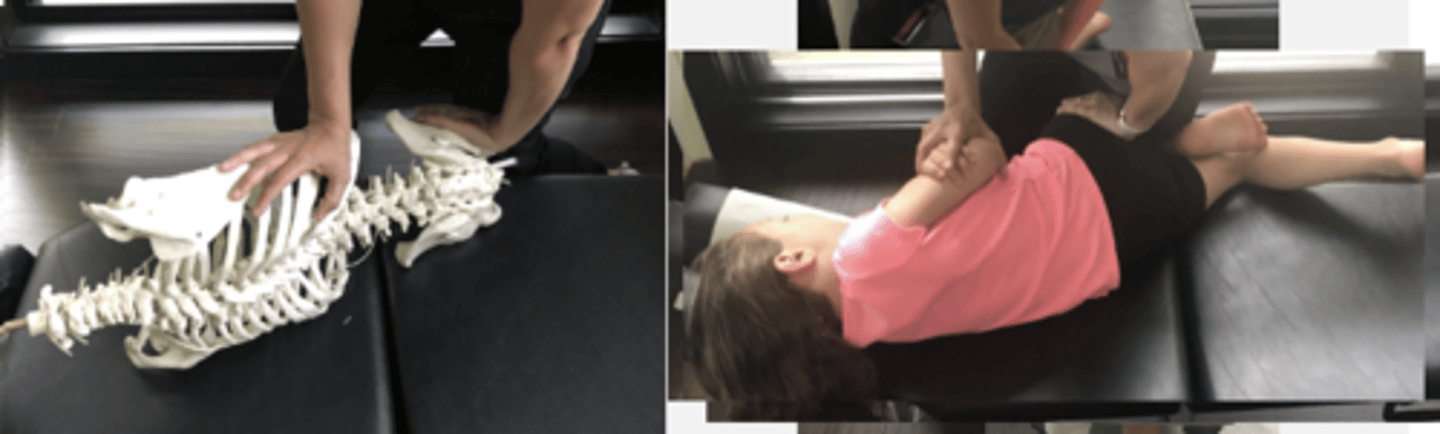
-Side Posture Hypothenar Ischium Push
PP: Basic side posture position with the dysfunctional side up - verbalize how you found the segment
DP: Modified fencer stance onside of dysfunction
CH: Caudal (L) hand, soft broad hypothenar contact R ischium
IH: Cephalic ( R) hand slight upward traction holding the pt's up-side shoulder or overlapping hand
LOD: CH: P-A, along shaft offemur to induce SIJ flexion
Static & Motion Findings:
-PSIS palpates anterior, superior, and lateral on R
-Loss of flexion
Technique:
-Side Posture Forearm Ischium Push
PP: Basic side posture position with the dysfunctional side up - verbalize how you found the segment
DP: Modified fencer stance on side of dysfunction -naturally becomes more of a chest drop
CH: Caudal (L) forearm, soft broad contact pull inferior and lateral over the medial, inferior margin of
IH: Cephalic ( R) hand slight upward traction holding the pt's up-side shoulder or overlapping hand
LOD: CH: Thrust P-A, along shaft of femur to induce SIJ flexion
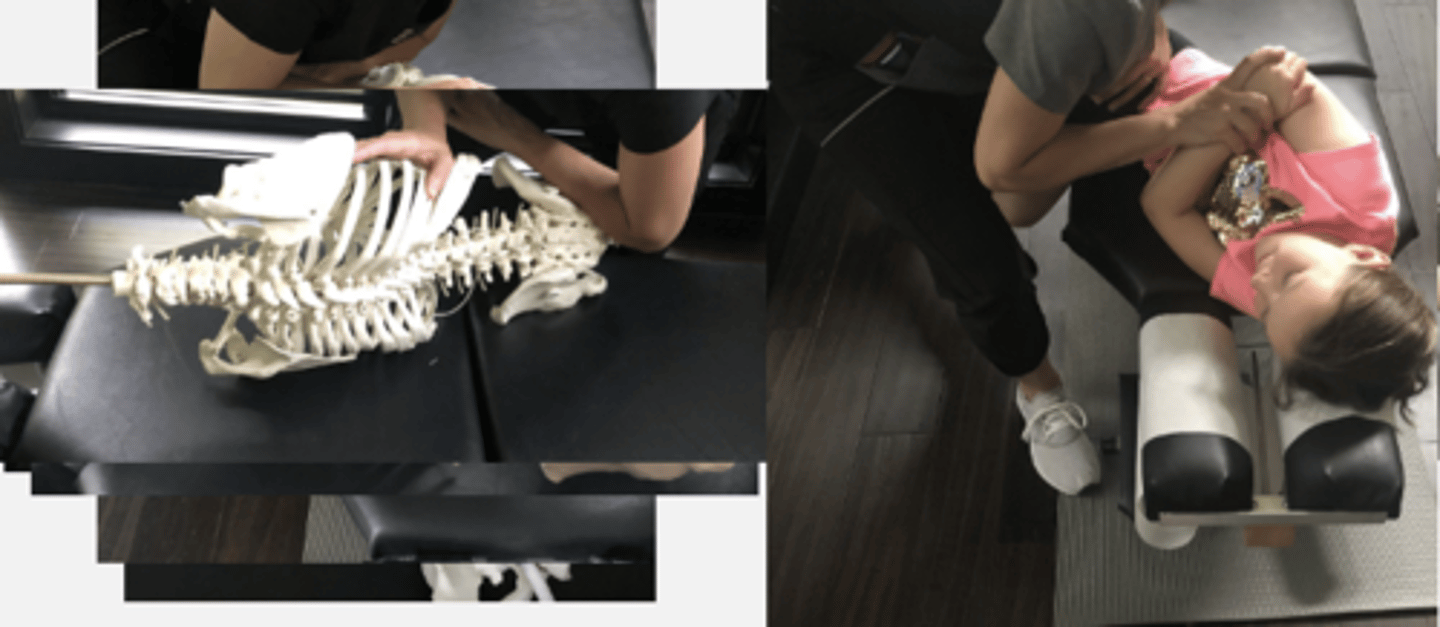
Static & Motion Findings:
-PSIS palpates anterior, superior and lateral on R
-Loss of flexion
-Sacral base palpates posterior & superior on R
-Nutation Restriction
Technique:
-Side Posture Hypothenar (Pisiform) Sacral Base Push, Dysfunctional Side Up
PP: Basic side posture position with the dysfunctional side up-verbalize how you found the segment
DP: Modified fencer stance on side of dysfunction
CH: Caudal (L) hand, hypothenar (pisiform) on R sacral base (just medial to R PSIS)
IH: Cephalic (R) hand slight upward traction holding the pt's up-side shoulder or overlapping hand
LOD: P-A, slight I-S
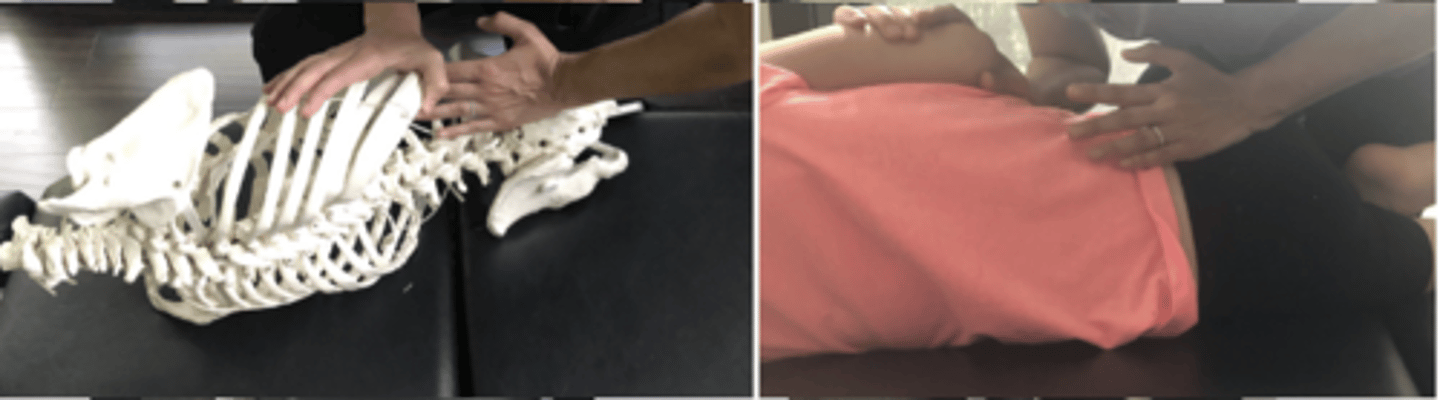
Static & Motion Findings:
-PSIS palpates anterior, superior and lateral R
-Loss of flexion
-Right sacral base palpates posterior & superior
-Nutation restriction
Technique:
-Side Posture Hypothenar (Pisiform) Sacral Base Push, Dysfunctional Side Down
PP: Basic side posture position with the dysfunctional side down-verbalize how you found the segment
DP: Modified fencer stance on side opposite dysfunction
CH: Caudal (L) hand, hypothenar (pisiform) on L sacral base down side (just medial to L PSIS)
IH: Cephalic (R) hand slight upward traction holding the pt's up-side shoulder or overlapping hand
LOD: P-A
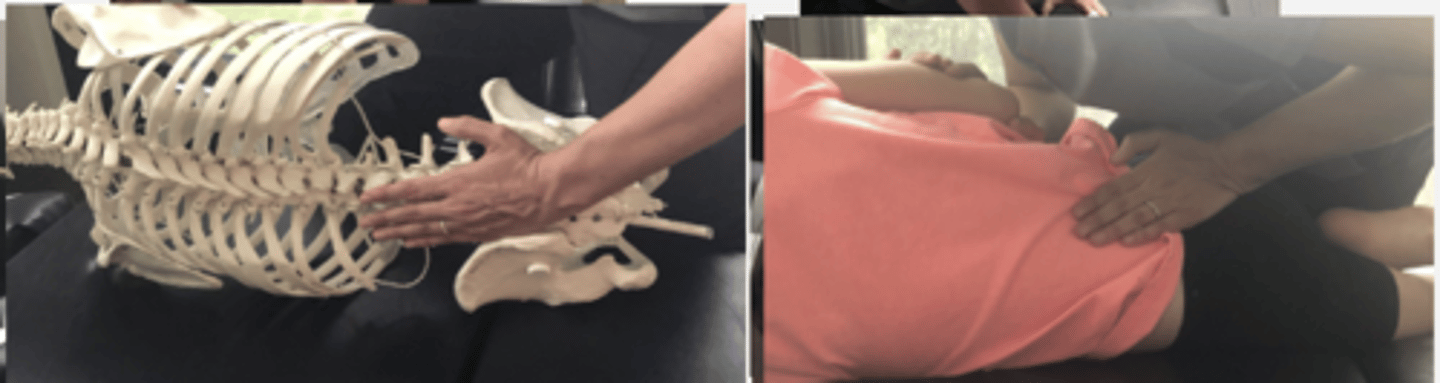
Static & Motion Findings:
-PSIS palpates posterior, medial, and inferior on L
-Loss of extension & counternutation
Technique:
-Side Posture Hypothenar (Pisiform) Sacral Apex Push, Dysfunctional Side Down
PP: Basic side posture position with the dysfunctional side down-verbalize how you found the segment
DP: Modified fencer stance on side opposite dysfunction
CH: Caudal (L) hand, hypothenar (pisiform) on up-side of the sacral apex (R lateral side of sacral apex)
IH: Cephalic (R) hand slight upward traction holding the pt's up-side shoulder or overlapping hand
LOD: P-A
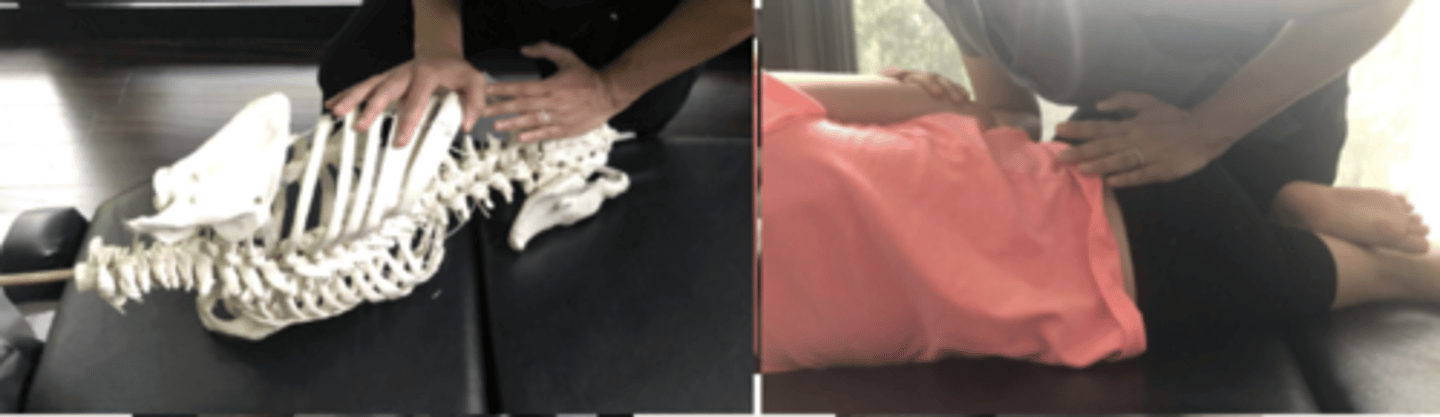
Static & Motion Findings:
-PSIS palpates posterior, medial, and inferior on R
-Loss of extension & counternutation
Technique:
-Side Posture Forearm Sacral Apex Push, Dysfunctional Side Down
PP: Basic side posture position with the dysfunctional side down-verbalize how you found the segment
DP: Modified fencer stance on side opposite dysfunction
CH: Caudal (L) hand, forearm on up-side of the sacral apex (R lateral side of sacral apex)
IH: Cephalic (R) hand slight upward traction holding the pt's up-side shoulder or overlapping hand
LOD: P-A
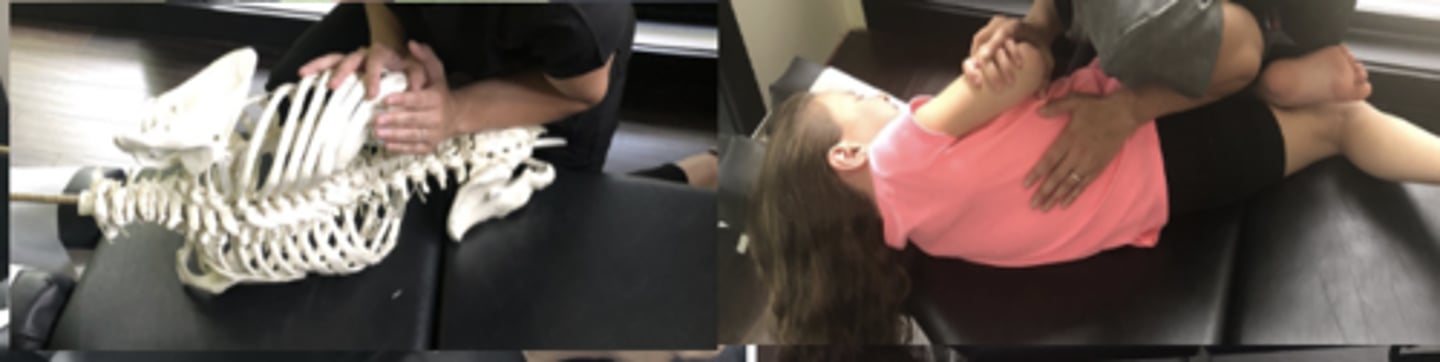
Static & Motion Findings:
-L4 SP palpates posterior & inferior on the L
-Loss of left rotation & right lateral flexion
Technique:
Prone Hypothenar Mammillary Push
PP: Prone-verbalize how you found the segment
DP: Square stance on side of contact
CH: Cephalad (R) hand, hypothenar (pisiform) on L4 MP with fingers running parallel to the spine
IH: Reinforces in anatomical snuffbox
LOD: For rot with LF: P-A, S-I
just rotation: P-A
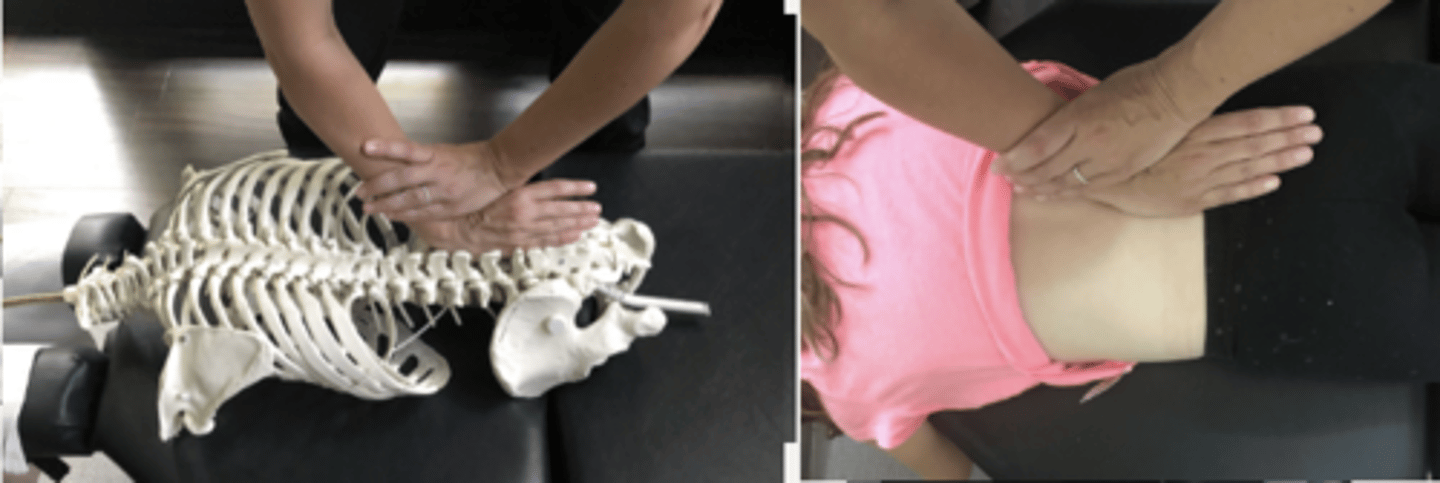
Static & Motion Findings:
-L3 MP palpated posterior & inferior on the L
-Loss of right rotation & right lateral flexion
Technique:
Prone Hypothenar Spinous Push
PP: Prone-verbalize how you found the segment
DP: Square stance on side of contact
CH: Cephalad (R) hand, hypthenar (pisiform) on L3 SP with fingers crossing the spine
IH: Reinforces in anatomical snuffbox
LOD: P-A, L-M, S-I
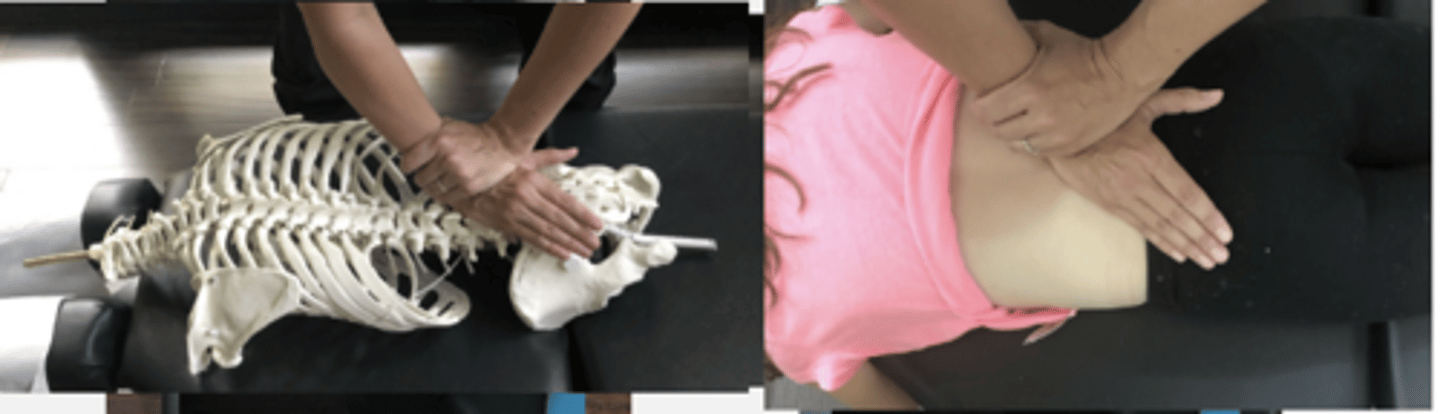
Static & Motion Findings:
-L3 MP palpates posterior on the R
-Loss of left rotation
Technique:
Side Posture Hypothenar Mammillary Push
PP: Basic side posture position with the dysfunctional side up-verbalize how you found the segment
DP: Modified fencer stance on side of dysfunction
CH: Caudal (L) hand, hypothenar contacts dys segment MP (L3 MP) with fingers parallel to spine
IH: Cephalic (R) hand slight upward traction holding the pt's up-side shoulder or overlapping hand
LOD: P-A, slight I-S
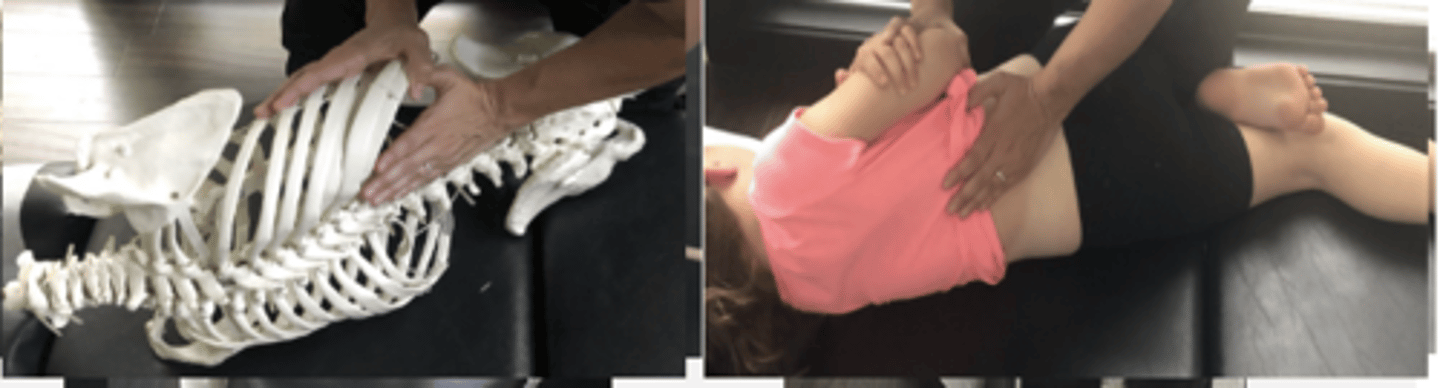
Static & Motion Findings:
-L3 MP palpates inferior on the R
-Loss of left lateral flexion
Technique:
Side Posture Hypothenar Mammillary Push, closed-wedge side
PP: Basic side posture position with the dysfunctional side up-verbalize how you found the segment
DP: Modified fencer stance on side of dysfunction
CH: Caudal (L) hand hypothenar on L3 MP with fingers runing parallel to spine
IH: Cephalic (R) hand slight upward traction holding the pt's up-side shoulder or overlapping hand
LOD: P-A, I-S
(Place roll under patient to assist the LF motion)
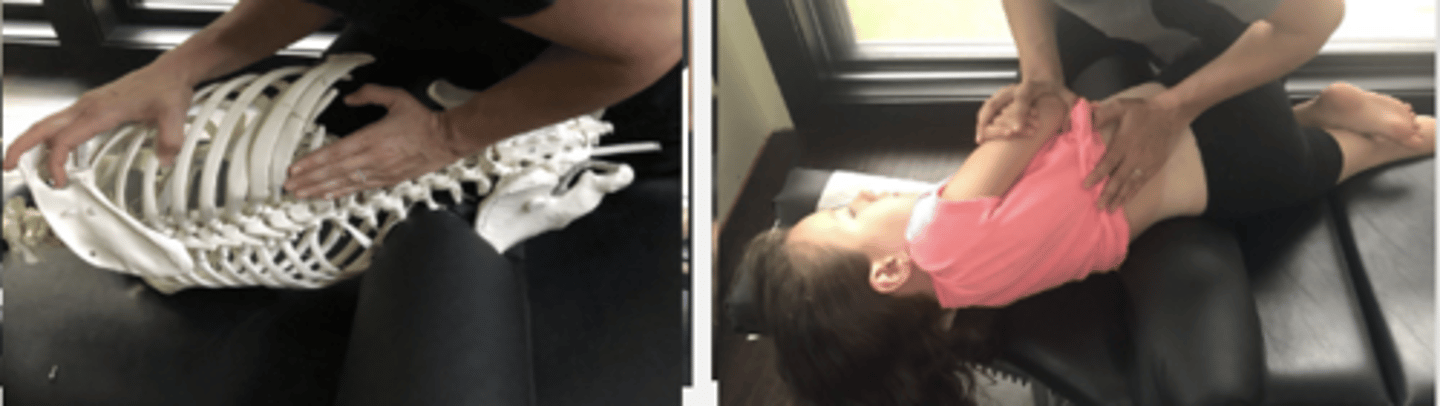
Static & Motion Findings:
-L3 MP palpates inferior on L3
-Loss of right lateral flexion
Technique:
Side Posture Hypothenar Mammillary Push, open-wedge side
PP: Basic side posture position with open wedge side up-verbalize how you found the segment
DP: Modified fencer stance on side of dysfunction
CH: Caudal (L) hand hypothenar on L3 MP with fingers runing parallel to spine
IH: Cephalic (R) hand slight downward traction holding the pt's up-side shoulder to assist in production of LF
LOD: P-A, L-M, S-I
(Lower the thoracolumbar section or place pt's down arm cephalad to induce LF)
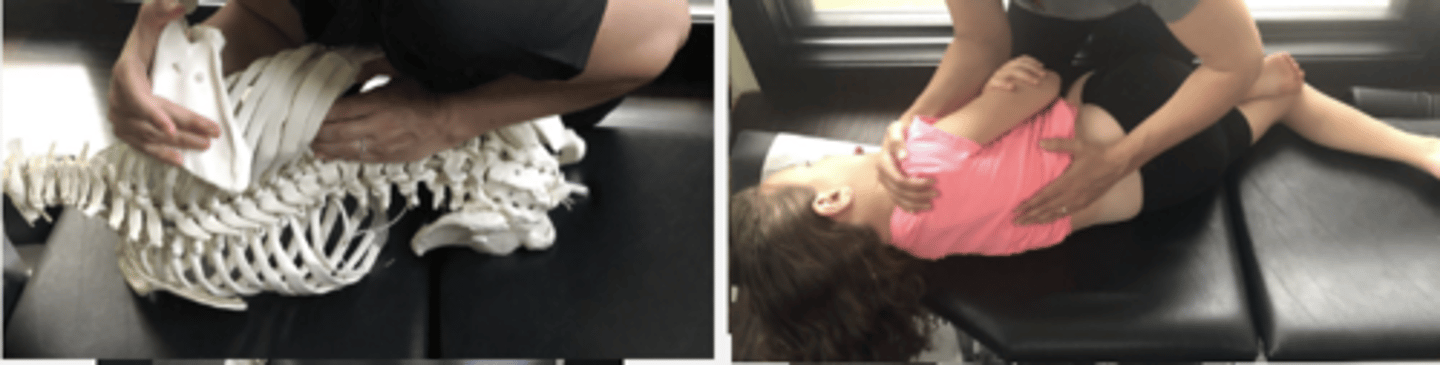
Static & Motion Findings:
-L3/L4 interspinous space is decreased
-Loss of flexion
Technique:
Side Posture Hypothenar Spinous Push
PP: Basic side posture position with either side up-verbalize how you found the segment
DP: Modified fencer stance
CH: Caudal hand hypo/calcaneous slides onto superior segment (L3) spinous with fingers angled across the spine
IH: Cephalic hand slight upward traction holding the pt's up-side shoulder or overlapping hand
LOD: P-A, I-S
(Opening interspinous space)
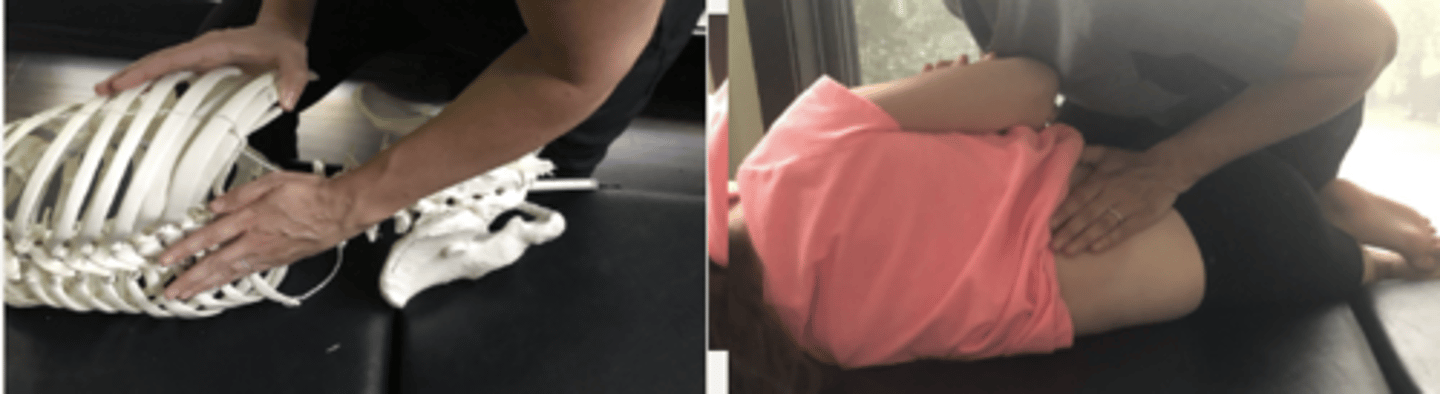
Static & Motion Findings:
-L3/L4 interspinous space is increased
-Loss of extension
Technique:
Side Posture Hypothenar Spinous Push
PP: Basic side posture position with either side up-verbalize how you found the segment
DP: Modified fencer stance
CH: Caudal hand hypo/calcaneous slides onto inferior segment (L4) spinous with fingers angled across the spine
IH: Cephalic hand slight upward traction holding the pt's up-side shoulder or overlapping hand
LOD: P-A, I-S
(Closing the interspinous space)
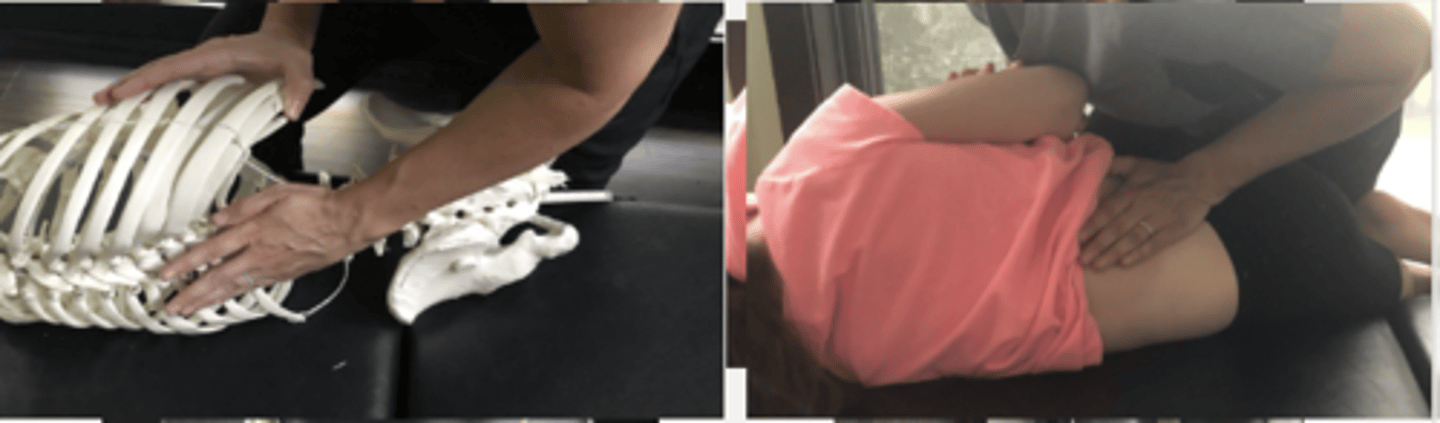
Static & Motion Findings:
-L5/S1 interspinous space is decreased
-Loss of flexion
Technique:
Side Posture Hypothenar Sacral Apex Push
PP: Basic side posture position with either side up-verbalize how you found the segment
DP: Modified fencer stance
CH: Caudal hand hypo/calcaneous slides inferiorly to contact sacral apex
IH: Cephalic hand slight upward traction holding the pt's up-side shoulder or overlapping hand
LOD: P-A, S-I
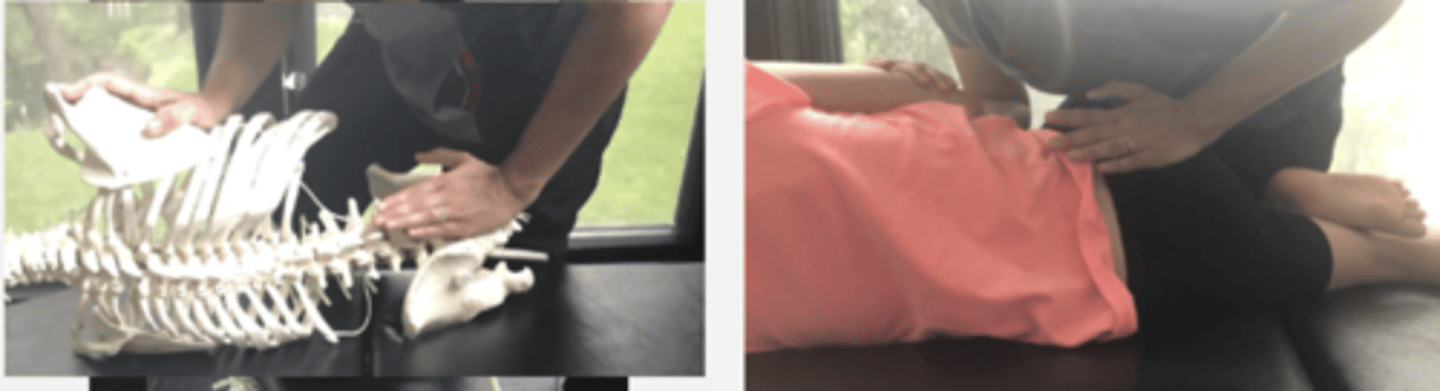
Static & Motion Findings:
-L3 MP palpates posterior on L
-Loss of right rotation
(Can be used with lateral flexion too)
Technique:
Side Posture Hypothenar Spinous Push
PP: Basic side posture with the dysfunctional side down (since spinous has deviated to R) - verbalize how you found the segment
DP: Modified fencer stance on side opposite dysfunction
CH: Caudal (L) hand hypothenar on L3 SP with fingers crossing the spine
IH: Cephalic (R) hand slight upward (downward for lateral flexion) traction holding the pt's up-side shoulder or overlapping hand
LOD: CH: P-A, L-M
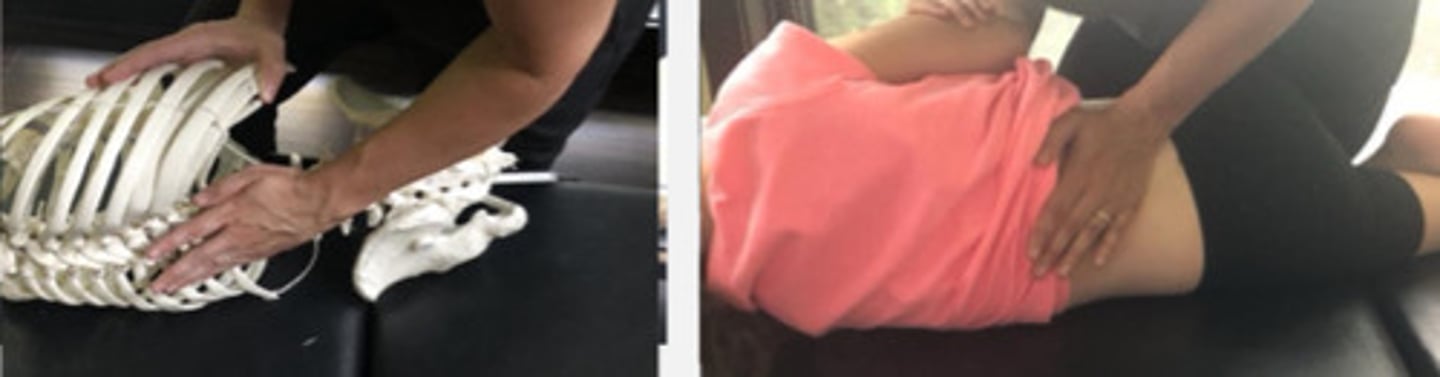
Static & Motion Findings:
-L3 MP palpates posterior on R
-Loss of left rotation
Technique:
Side Posture Digital Spinous Kick Pull
PP: Basic side posture position with the dysfunctional side up (since spinous has deviated to L) - verbalize how you found the segment
DP: Square stance on side of dysfunction & contact their knee with you knee/distal tibia
CH: Fingertips (digital contacts) of 2nd, 3rd, 4th digits of caudal (L) hand hooks the down side of the L3 SP
IH: Cephalic hand slight upward traction holding the pt's up-side shoulder or overlapping hand
LOD: L-M pulling movement to induce axial rotation with quick extension (kick) of contact leg
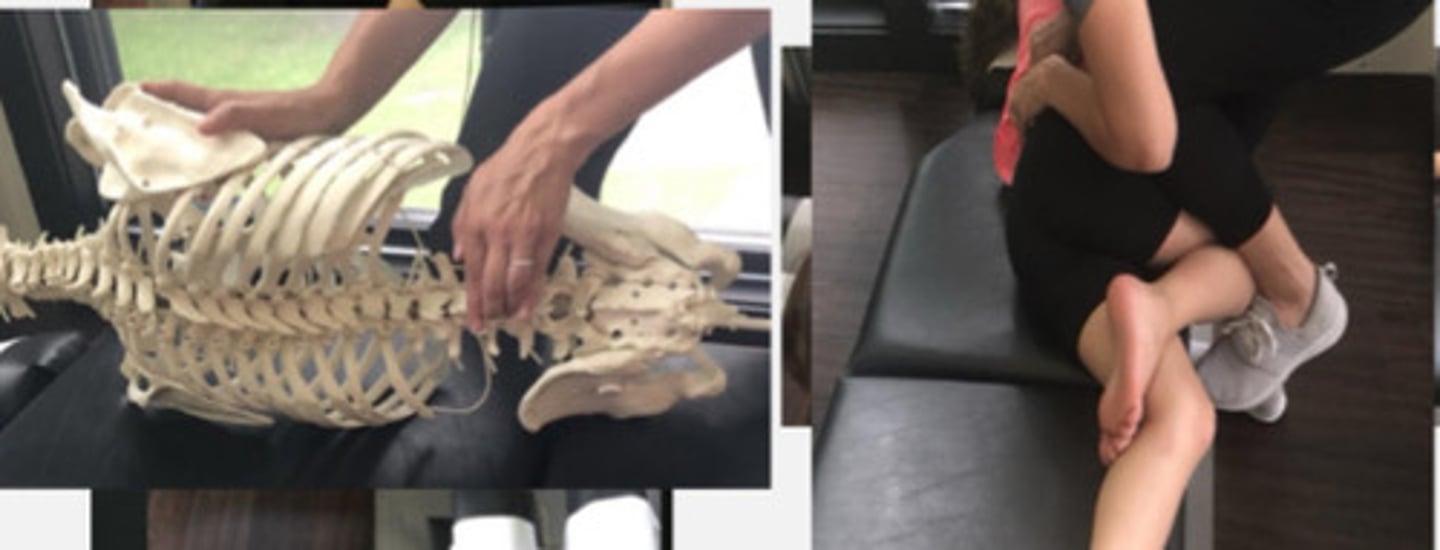
Static & Motion Findings:
-L3 MP palpates posterior on L
-L4 MP palpates posterior on R
-Loss of right rotation
-Loss of left rotation
Technique:
Side Posture Bilateral Digital Spinous Push, Pull
PP: Basic side posture position with the superior dysfunctional side down (since spinous has deviated to R) - verbalize how you found the segment
DP: Square stance on side of dysfunction & contact their knee with your knee/distal tibia
CH: Fingertips (digital contacts) of 3rd & 4th digits of cephalic (R) hand reach under the pt's up-side arm to contact lateral surface of L3
IH: Fingertips of caudal (L) hand hook the downside of the L4 SP
LOD: Cephalic hand-pushes L-M
Caudal - pulls L-M with quick extension of contact leg
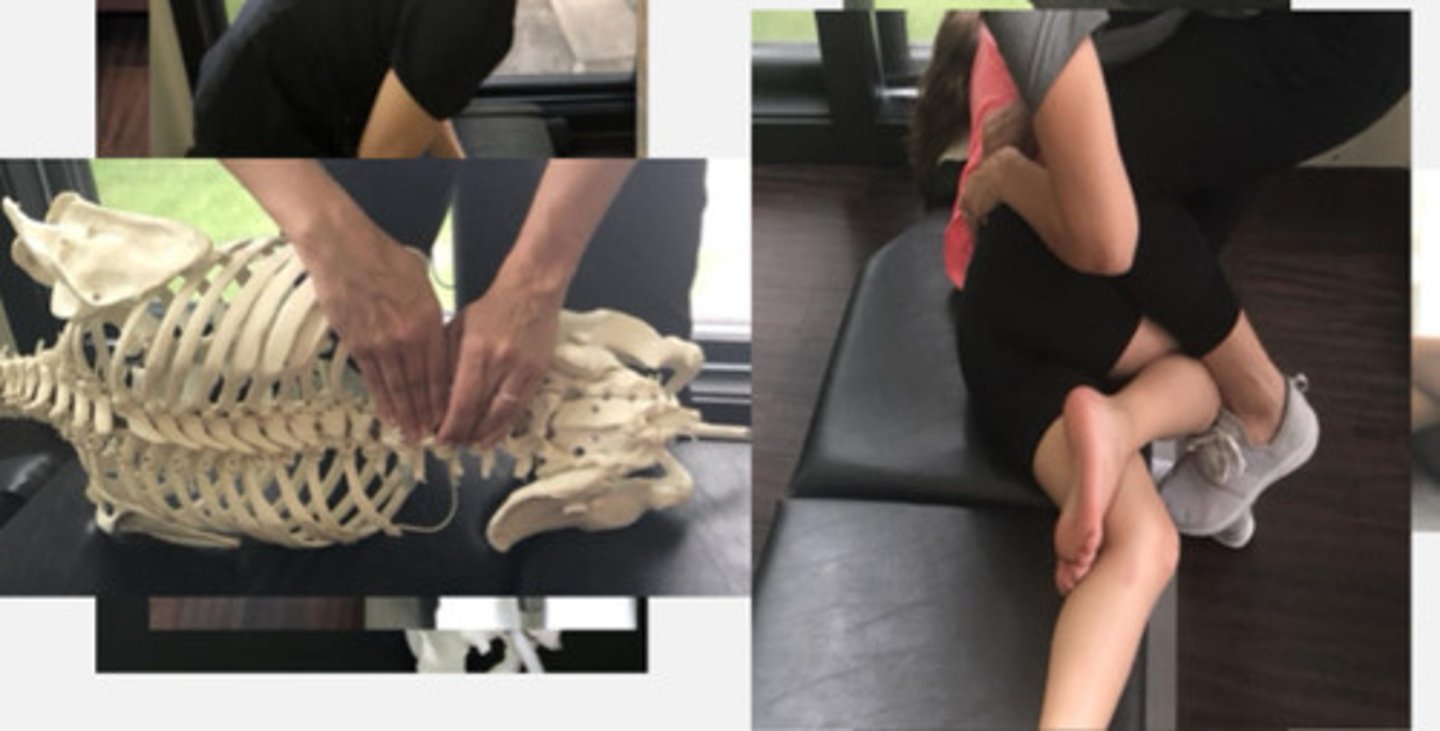
Static & Motion Findings:
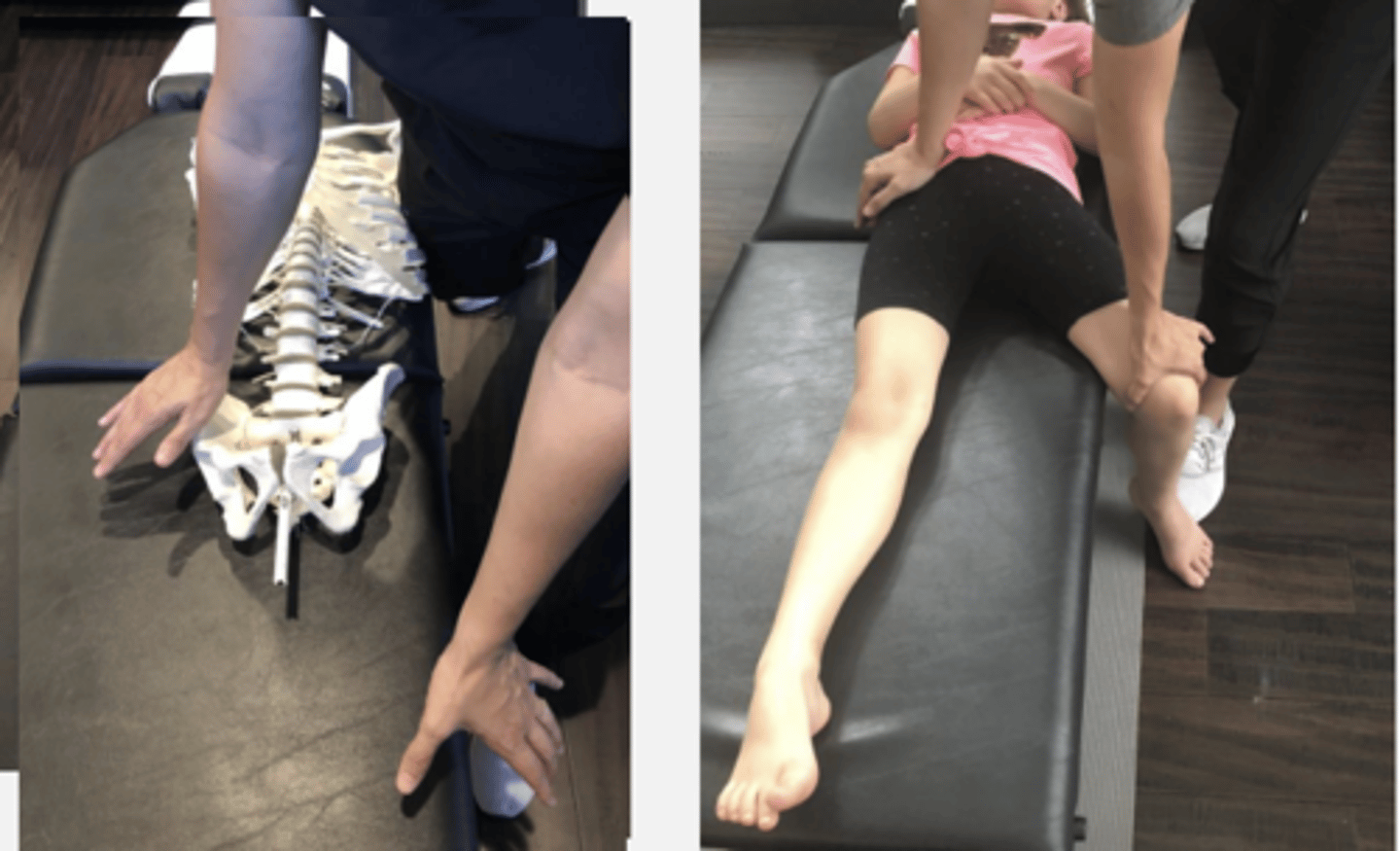
-L pubis palpates more superior than R
-L pubis loss of inferior glide
Technique:
Hypothenar/Thigh
PP: Supine off center of table to side of involvement & corresponding leg hangs off table
DP: Modified fencer stance on involved side facing caudal
CH: Palmar contact of caudal (L) hand to distal femur of leg on involved side
IH: Cephalad (R) hand palmar contact over the opposite ASIS to stabilize the pelvis
LOD: CH applies A-P stress on pt's thigh. Ask pt to raise thigh against resistance & after 4-5 seconds deliver a slight & shallow impulse thrust S-I down the thigh
Static & Motion Findings:
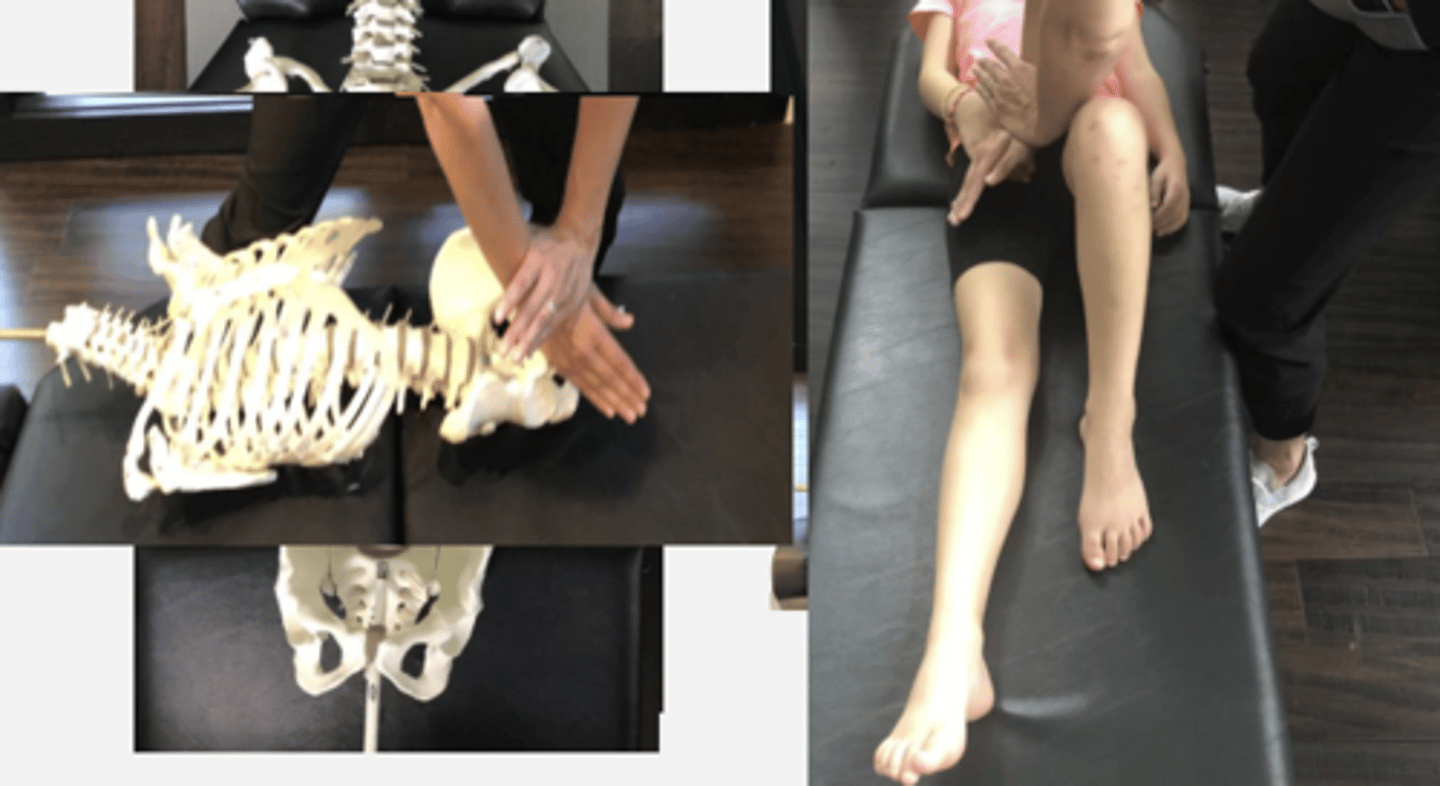
-R pubis palpates more anterior than L
-R pubis loss of posterior glide
Technique:
Hypothenar/Pubis
PP: Supine-uninvolved knee & hip flexed with foot flat on table
DP: Modified fencer/square stance on uninvolved side facing caudal
CH: Hypothenar contact of cephalad (R) hand on anterior aspect of the involved pubis (barrier over pubis)
IH: Caudal (L) hand reinforces CH or establishes a palmar contact over the involved distal thigh
LOD: A-P
Static & Motion Findings:
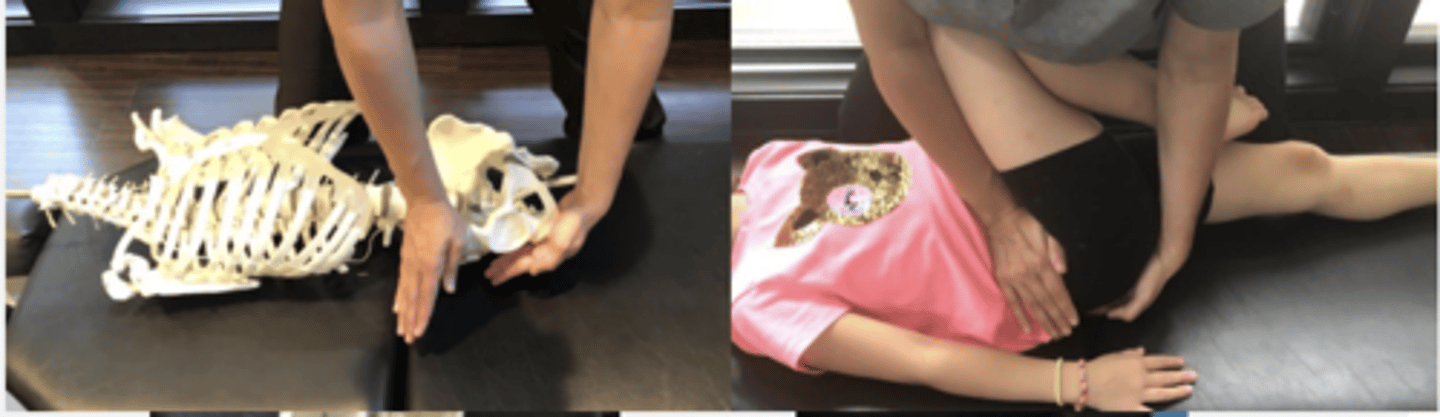
-R pubis palpates more inferior than L
-R pubis loss of superior glide
Technique:
Hypothenar/Ilium, Palmar/Ischium
PP: Supine-involved knee & hip flexed with foot flat on table
DP: Square stance on uninvolved side leaning over pt with your upper body contacting the anterior aspect of pt's tibia
CH: Caudal (L) hand palmar contact of ischium
IH: Cephalic (R) hand reaches over and to place hypothenar on ASIS of the involved side
LOD: CH: P-A, I-S
IH: A-P
Static & Motion Findings:
-Diffuse pain with palpation
-Diffuse pain with provocation
Technique:
Pubic Distraction
PP: Supine-flex both knees & hips with feet flat on table pt's shoulder width apart
DP: Standing at foot of table facing the patient
CH: Palmar contacts of both hands to medial aspects of knees
IH: Palmar contacts of both hands to medial aspects of knees
LOD: Instruct pt to squeeze knees together until adductor mm fatigue occurs. Then deliver a shallow M-L impulse thurst to both knees
Static & Motion Findings:
-Coccyx palpates anteriorly
-Loss of posterior glide
Technique:
Thumb/External Coccyx Push
PP: Prone-with Dutchman roll placed under ASIS. Verbalize how you found the segment
DP: Modified fencer stance facing cephalad
CH: Cephalad thumb contact to base of coccyx
IH: Caudal pisiform/hypothenar contact reinforced over contact thumbnail
LOD: I-S, slight P-A