BUS202: Exam #1 Study Guide (2.0)
 Call Kai
 Learn
Learn Practice Test
 Spaced Repetition
 Match
Match Flashcards
 Knowt Play
1/186

Earn XP
Description and Tags
This covers terms and concepts from Chapters 1-6B and a small portion of Chapter 7.
Name | Mastery | Learn | Test | Matching | Spaced | Call with Kai |
|---|
No analytics yet
Send a link to your students to track their progress
187 Terms
What is Law?
Law consists of enforceable rules governing relationships among individuals and between indivdiuals and their society.
Constitutional Law
The U.S. Constitution distributes power among the branches of government. It is the supreme law of the land. Any law that conflicts with it is invalid. The states also have constitutions, but the federal constitution prevails.
Statutory Law
Statutes and ordinances are enacted by Congress and by state and local legislative bodies.
Uniform laws (ex: Uniform Commercial Code) and model codes are created by panels of experts and scholars and adopted at the option of each state’s legislature.
Administrative Law
consists of the rules and regulations issued by administrative agencies, which derive their authority from the legislative and executive branches of government.
Case Law
__ law Includes courts’ interpretations of constitutional provisions, statues, and administrative rules. Because statutes often codify common law rules, courts often rely on the common law as a guide to the intent and purpose of a statute. __ law governs all areas not covered by statutes.
Common Law
A legal system developed through judicial decisions rather than statutes.
Originated in England and adopted in the United States
Law evolves through cases decided by judges
Past legal precedents or judicial rulings are used to decide cases at hand.
Judges interpret prior cases to resolve new disputes
AKA: Judged-made law
Adversarial system (parties contest each other to prove their cases before a judge who moderates the process and gives judgment.)
NOT CODIFIED
Judicial precedents are binding.
Key Characteristics:
Case-based
Evolves over time
Relies on written judicial opinions
Emphasizes consistency and predictability
Remedies at Law
Include awards of land, money, and items of value. A jury trial is avaliable only in an action at law.
Remedies in Equity
Includes decrees of specific performance, injunctions, and rescission. Decisions to award equitable remedies are guided by equitable maxims.
Stare Decisis
“To stand by things decided” (Latin)
Principle that courts should follow prior judicial decisions
Promotes consistency and stability in the law
Ensures similar cases are decided similarly
Creates predictability
Limits arbitrary judicial decision-making
Strengthens public trust in courts
Allows gradual legal change rather than sudden shifts
Departures from Precedent
A judge may decide that a precedent is incorrect if there have been changes in technology, business practices, or society’s attitudes.
When There is No Precedent
When there is no precedent, a court may look at other legal principles and policies, social values, or scientific data.
Precedent
A prior court decision used as authority in later cases
Binding or persuasive depending on court hierarchy
Forms the backbone of common law reasoning
Rule of Law
The principle that no one is above the law
Laws apply equally to all individuals
Government authority is exercised according to established laws.
Core Elements:
Equality before the law
Transparency
Accountability
Fair and consistent enforcement
There is an independent judiciary, and human rights are guaranteed for all.
Issue-Rule-Application-Conclusion (IRAC)
Legal reasoning requires learning the facts of a case, identifying the issues and the relevant legal rules, applying the rules to the facts, and coming to a conclusion.
Forms of Legal reasoning
In applying an old precedent or establishing a new one, judges use many forms of reasoning:
deductive reasoning
linear reasoning
reasoning by analogy
and others to harmonize their decisions with earlier cases.
Appellant
The party who appeals a case to another court or jurisdiction from the one in which the case was originally brought. May be referred as a petitioner.
Appellee
The party against whom an appeal is taken. May be referred to as a respondent
The Court’s Opinion
The opinion contains the court’s reasons for its decision, the rules of law that apply, and the judgment.
Unanimous Opinion
When more than one judge (or justice) decides a case, and they all agree, a ___ opinion is written for the whole court.
Majority Opinion
If a decision is not unanimous, a ___ opinion outlines the views of the majority.
Concurring Opinion
A ___ opinion is one in which a judge emphasizes a point that was not emphasized in the unanimous or majority opinion.
Dissenting Opinion
A ___ opinion may be written by a judge who does not agree with the majority. A dissent may form the basis of arguments used years later in overruling the majority opinion.
Civil Law
A body of written laws derived from Roman Law and France’s Napoleonic Code.
Based on interpreting a codified set of written laws
Judge’s role is to establish the facts of the case and apply the provisions of applicable courts.
Inquisitorial (Fact-finding in nature)
The Judge plays an active role during the trial by questioning parties’ lawyers, witnesses, and experts.
Judicial precents are NOT binding.
Tension
The __ in the law between the need for stability, predictability, and continuity, and the need for change is a constant struggle.
Fairness of the Law
The American legal system is one of the most comprehensive, fair, and democratic systems of law ever developed and enforced.
Flexibility of the Law
The U.S. law evolves and changes along with the norms of society, technology, and the growth and expansion of commerce in the United States and the world.
Civil Law
Defines the rights between individuals or individuals and governments
Criminal Law
Defines an individual’s obligations to society as a whole.
Substantive Law
Define, describe, regulate, and creates the rights and obligations of persons and governments.
Procedural Law
Provides the steps one must follow in order to avail oneself of one’s legal rights or enforce another’s legal obligations. It includes rules for enforcing those rights.
Priority of Law in the U.S.
The U.S. Constitution and treaties take precedence over all other laws.
Federal statutes take precedence over federal regulations.
Valid federal law takes precedence over conflicting state or local law
Immigration/Sanctuary City or State
Medical/Recreational Marijuana
State constitutions rank as the highest state law
State statutes take precedence over state regulations.
Valid state law takes precedence over local laws
Legal Realism
Legal realists believe that in making decisions, judges are influenced by their own beliefs, the application of principles should be tempered by each case’s circumstances, and extra-legal sources should be consulted.
Private Law
Concerns relationships between private entities.
Public Law
Addresses the relationship between persons and their government
Cyberlaw
The emerging body of law (court decisions, new and amended statutes, etc.) that governs cyberspace transactions.
The United States is a…
constitutional republic
With democratic elements (elections, voting rights)
Most accurately described as a democratic republic.
Federal form of government
A system of government in which the states form a union, and the sovereign power is divided between a central government and its member states.
Federal Powers
The Constitution sets forth specific powers that can be exercised by the national (federal) government and provides that the national government as the implied power to undertake actions necessary to carry out its expressly designated powers (or enumerated powers).
sovereignty
The quality of having independent authority over a geographic area.
State governments have the authority to regulate affairs within their borders.
police powers
powers processed by states as part of their inherent sovereignty. These powers may be exercised to protect or promote:
The public order
education
policing
family law
property law
Health
safety
Morals
General welfare
checks and balances
The system by which each of the three branches of the national government (executive, legislative, and judicial) exercises checks on the powers of the other branches.
Each branch performs a separate function, and no branch may exercise the authority of another branch.
Prevents any branch from exercising too much power.
commerce clause
The provision in Article 1, Section 8, of the U.S. Constitution that gives Congress the power to regulate interstate commerce.
Prevents states from establishing laws and regulations that would interfere with trade and commerce among the states.
Provides the basis for the national government’s extensive regulation of state and even local affairs.
Has a greater impact on business than any other provision in the Constitution.
Courts have interfered that state governments do not have the power to regulate commerce in other states.
interstate commerce
applies to commerce between the states.
intrastate commerce
Applies to commerce within the states as long as the commerce substantially affects commerce involving more than one state.
Dormant Commerce Clause (DCC)
Prohibits California and other states from discriminating against interstate commerce.
State laws that:
Discriminate against interstate commerce, OR Unduly burden interstate commerce without sufficient jurisdiction.
Businesses that operate across state lines can benefit from the DCC’s restrictions on state governments’ power, such as when the laws of another state impose harsher regulations on them than on local businesses.
When state regulations affect interstate commerce, the state’s interest in the merits and purposes of the regulation must be balanced against the burden placed on interstate commerce.
Does not actually appear in the Constitution. Courts have inferred it from the powers granted by the Commerce Clause itself.
National government has exclusive authority to regulate commerce that substantially affects trade among the states.
Balancing Test
Supreme Court established this test for laws that are not blatantly discriminatory.
A state law that has only an “incidental” impact on interstate commerce will fail a Dormant Commerce Clause review only if “the burden imposed on such commerce is clearly excessive in relation to the putative local benefits.”
Judicial Interpretation
The rights secured by the Bill of Rights are not absolute.
Ultimately, the United States Supreme Court, as the final interpreter of the Constitution, gives meaning to these rights and determines their boundaries.
Bill of Rights
The first ten amendments to the U.S. Constitution.
Embodies a series of protections for the individual against various types of interference by the federal government.
Some of these constitutional protections apply to business entities as well.
Blind Spot
An unknown obstacle that prevents us from seeing our unethical behavior. It does not allow us to see the gap between who we think we are, who we would like to be, and who we truly are.
Ethical fading
The removal of ethics from the decision-making process—have led to tragedies and scandals.
Ethics
The study of right and wrong behavior, whether an action is fair, right or just.
Business ethics
focuses on what constitutes ethical behavior in the world of business. Business ethics is not a separate kind of ethics.
It’s important to the long-run viability of a business, the well-being of its officers and directors, and the welfare of its employees.
Moral Minimum
The minimal acceptable standard for ethical business behavior is compliance with the law. But the law does not, and cannot, codify all ethical requirements. An action that is legal may not be ethical. Standards in a company’s policies or codes of ethics must also guide decisions.
“Gray Areas” in the Law
are situations where the law is so broad and difficult to interpret and apply. The law is not always clear, resulting in negotiations or debates.
the legality of a particular action is not always clear. Because there are many laws regulating business, it is possible to violate one without realizing it. And there are “gray areas” of the law in which it is difficult to predict how a court will rule. Sometimes, the test may be whether a consequence was “foreseeable”. Or a case may involve the law in a new context. The best course is to act responsibly and in good faith.
Values
Relatively permanent and deeply held underlying beliefs and attitudes that help determine a person’s behavior.
They reflect a person’s sense of right and wrong or what “ought” to be.
Short-Run Profit Maximization
In the short-run, unethical behavior may lead to increased profits.
In the long-run, such behavior can lead to costly lawsuits, settlements, and other payments, and bad publicity, undercutting profits.
Attitude of Top Management
Ethical conduct can be furthered by not tolerating ethical behavior, setting realistic employee goals, and periodic employee review.
Behavior of Owners and Managers
Those who actively foster unethical or illegal conduct encourage it to others.
Company codes
Are not laws
They are rules that the company sets forth and can enforce. Outlines policies on particular issues and indicate how employees are supposed to act.
Ethics Training to Employees: Large firms may emphasize ethics in training programs.
Sarbanes-Oxley Act (2002)
Requires firms to set up confidential systems for employees to report suspected illegal or unethical financial practices.
Ethical reasoning
is the process by which an individual examines a situation according to his/her moral convictions or ethical standards.
Religious Ethical Standards
Provide that when an act is prohibited by religious teachings, it is unethical and should not be undertaken, regardless of the consequences. Religious standards also involve compassion.
Kantian Ethics
Immanual Kant believed that people should be respected because they are qualitatively different from other physical objects. Kant’s categorical imperative is that individuals should evaluate their actions in light of what would happen if everyone acted the same way.
The Principle of Rights
According to the principle that persons have rights (to life, liberty, for example), a key factor in determining whether a business decision is ethical is how that decision affects the rights of others, including employees, customers, and society.
Utilitarianism
an approach to ethical reasoning in which ethically correct behavior is related to an evaluation of the consequences of a given action on those who will be affected by it. In utilitarian reasoning, a “good” decision is one that results in the greatest good for the greatest number of people affected by the decision.
Actions that will produce maximum societal utility.
A cost-benefit analysis must be performed to determine the effects of competing alternatives on the persons affected.
Corporate Social Responsibility
Those who manage corporations should be accountable to society for their actions.
Environmental efforts
ethical labor practices
charitable donations
volunteer work
triple bottom line
the idea that investors and others should consider not only corporate profits, but also the corporation’s impact on people and on the planet in assessing the firm.
The bottom line is people, planet, and profits.
four-part analysis
maximizes profits and good corporate citizenship.
The legal implications of each decision
The public relations impact
The safety risks for consumers and employees
The financial implications.
Duty-based ethics
an ethical philosophy rooted in the idea that every person has certain duties to others, including both humans and the planet. Those duties may be derived from religious principles or from other philosophical reasoning.
Outcome-based ethics
an ethical philosophy that focuses on the impacts of a decision on society or on key stakeholders.
categorical imperative
a concept developed by philosopher Immanuel Kant as an ethical guideline for behavior. In deciding whether an action is right/wrong, desirable/undesirable, a person should evaluate the action in terms of what would happen if everybody else in the same situation, or category, acted the same way.
Stakeholder Approach
Under this approach, a firm’s duty to its shareholders should be weighed against duties to others (employees, etc.) who may have a greater stake in a particular decision.
corporate citizenship
this theory argues that business firms should pursue goals that society deems important, because firms have so much wealth and power. Some companies publish annual corporate social responsibility—or sustainability, or citizenship—reports to highlight their activities.
A Way of Doing Business
Some argue that corporate promotion of social goals should be pursed as a “way of doing business” rather than as a special program. Some suggest that such activities should be relevant and significant to a firm’s stakeholders.
Employee Recruiting and Retention
A focus on corporate social responsibility can help a firm retain its employees, especially altruistic younger workers.
I Desire to Do Right (IDDR)
approach to organizing issues and approaching them systematically. Has series of steps best conducted by a group.
Inquiry
Discussion
Decision
Review
The U.S. Constitution serves 2 major functions
It creates the 3 branches of government and allocates powers to these branches.
It protects individual rights by limiting the government’s ability to restrict those rights.
Article 1 of the Constitution established the…
legislative branch
The bicameral Congress:
Senate
House of Representatives
Promulgates Law
Article 2 of the Constitution establishes the…
executive branch
The part of the government that consists of:
The president
The vice president
Enforces the Law
Article 3 of the Constitution establishes the…
Judicial branch
The part of the government that consists of:
the supreme court
Reviews the laws
judicial review
enables the judicial branch to act as a check on the other three branches of government, in line with the checks and balances system established by the U.S. Constitution.
Jurisdiction
“juris” (law) "+ “diction” (to speak)
the power of a court to hear a dispute and to “speak the law” into a controversy and render a verdict that is legally binding on the parties to dispute.
The power of a court to compel the presence of the parties (including corporations) to a dispute to appear before the court and litigate and issue binding rulings.
To hear a case, a court must have jurisdiction over
1) the defendant (the party involved)
2) The subject matter
Not every court has the authority to hear all types of cases.
Exclusive Federal Jurisdiction
Admirality
Antitrust
Bankruptcy
Copyright
Federal Crimes
Patents
Suits against the U.S.
Other specified federal statutes
Concurrent Jurisdiction
Federal questions
Diversity of citizenship cases
Exclusive State Jurisdiction
Matters not subject to federal jurisdiction.
3 Ways to have your claim heard in federal court
exclusive federal jurisdiction
“Federal question” cases
“Diversity” cases
Federal Question
cases in which the rights or obligations of a party are created or defined by some federal law of the constitution.
Diversity Cases
The parties are not from the same state, and
The amount in controversy is greater than $75,000.
Standing
A party must have suffered a legal injury and have sufficient “stake” in the controversy.
You must have suffered (or will suffer) a real, concrete harm
Physical
Financial
Legal (loss of rights)
Personal Jurisdiction (in personam jurisdiction)
A court has in personam jurisdiction when it has the legal authority to require a person or business to appear in court and be bound by its judgement.
A court has in personam (personal jurisdiction) over persons within the court’s geographic area.
Long arm statutes permit courts to exercise jurisdiction over persons and businesses outside that area who have minimum contacts within it. A court has in rem jurisdiction over property within its area.
Subject Matter Jurisdiction
The authority or power that each court has over certain types of legal disagreements (disputes).
For a court to hear a particular case, it must have subject matter jurisdiction over the issue(s) that you are asking the court to decide on.
A court of general jurisdiction can decide virtually any type of case.
A court’s jurisdiction may be limited by the:
Subject of a suit
amount of money in controversy
or whether a proceeding is a trial or appeal.
General Jurisdiction
A court has the ability to hear and decide a wide range of cases.
Unless a law or constitutional provision denies them jurisdiction, courts of general jurisdiction can handle any kind of case.
(ex: The California superior courts are general jurisdiction courts)
Limited Jurisdiction
A court has restrictions on the cases it can decide.
It can only hear and decide cases that claim damages of $10,000 or less.
Small claims court is a court of limited jurisdiction.
Limited Civil Courts
can only hear and decide cases for up to $25,000. While these are heard in California superior courts, the judge has to follow the jurisdictional limits in these cases.
Exclusive Jurisdiction
Only a particular court can decide a case.
Long Arm Statutes
courts use long-arm statutes for non-resident parties based on “minimum contacts” with state. Means defendant had some connection with forum state.
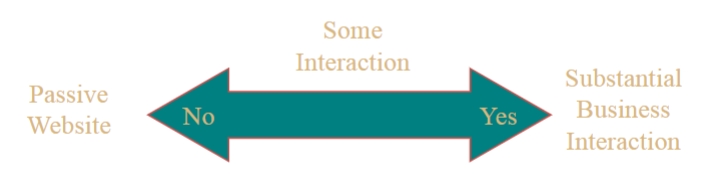
Sliding Scale Standard
Courts use this to determine whether to exercise jurisdiction.
Diversity of Citizenship
Federal jurisdiction covers cases involving
citizens of different states
A foreign government and citizens of a state or of different states
citizens of a state and citizens or subjects of a foreign government.
The amount in controversy must be more than $75,000.
Jurisdiction in Cyberspace
Whether a court can compel the appearance of a party outside the geographic area of the court’s jurisdiction depends on the amount of business the party transacts over the Internet with parties within the court’s area (“sliding scale” test).
Venue
concerned with the most appropriate location for a trial.
the county where you file your location.
generally, proper venue is where the injury occurred
California has 58 trial courts, one in each county. In trial (superior) courts, a judge and sometimes a jury hears witnesses’ testimony and other evidence and decides cases by applying the relevant law to the relevant facts.
Usually, venus is in the county where:
the person you are suing lives OR does business
or the dispute arose, like where an accident happened, or where a contract was entered into or broken.
It is possible to have a situation where more than one county is the proper venue for you to file your lawsuit.

