Marine... all those slides scare me
 Call Kai
 Learn
Learn Practice Test
 Spaced Repetition
 Match
Match Flashcards
 Knowt Play
1/149

There's no tags or description
Looks like no tags are added yet.
Name | Mastery | Learn | Test | Matching | Spaced | Call with Kai |
|---|
No analytics yet
Send a link to your students to track their progress
150 Terms
Chromatophores
Allow cephalapods to change color rapidly
Feature of cephalopods
Powerful beaks
First evidence of ink glands?
330 million years ago in carboniferous period
What is ink made out of?
Melanin and other enzymes
Squid vs Octopus ink
Squid = noxious
Octopus = cloud
Cephalopods examples?
Nautilus
Squid/Octopus
Cuttlefish
How do nautilus fill shells with air
They fill them with ions —> Draw water through osmosis
Take ions out —> Diffusion of water leaves too
Seabird species #
450 species
Shorebirds species #
200 species
Leatherback turtle
Can survive cold due to countercurrent heat exchange
Where are the only marine lizards (marine iguanas)?
Galapagos
Btw they literally swallow stones to decrease buoyancy
Sea Snake
1 lung, reaches to tail
Not tied to land for laying eggs (ovoviviparous)
Sea turtle breath holding
3 hours
Loggerhead Turtle
Most common sea turtle in Florida
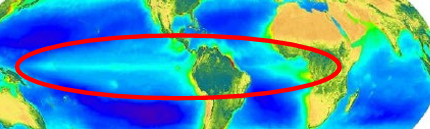
Where are ocean gyres?
30 ° North/South of equator
Converging surface seawater
Causes down welling and low biological productivity
North hemisphere gyres
Center of geostrophic hill is offset to the WEST intensified.
Best studied stream?
Gulf stream. It has warm-core rings and cold-core rings
Chemicals for measuring deep currents?
Tritium
Chlorofluorocarbons
What happens to water at equator?
Upwelling due to seawater moving away and water being replaced
Normal pacific ocean
air pressure higher in east
Strong southeast tradewinds
Warm on west and deeper thermocline there
Upwelling happens east on Peru
El Nino ocean
Weaker pressures
Weaker trade winds
Warmth is in west AND east
Deep thermocline is in east too
Downwelling
LOW PRODUCTIVITY: EL NINO BAD
La Nina
Amplified Normal ocean
Though, shallower thermocline
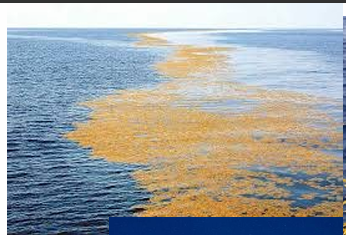
Sargassum
Brown algae that is holopelagic. Found near Mexico/Caribbeans
Magnetite Receptors
Found in beaks of birds/heads of turtles. Use receptors to close/open ion channels based on magnetic field.
Duration and intensity of field are sensed
DMS (Dimethyl sulfide)
Seabirds can detect DMS released by plankton to eat them
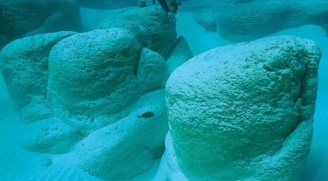
Stromatolites
Made by cyanobacteria
Oldest evidence of life
Standing Crop
Total biomass of photosynthetic autotrophs
Where is lowest primary productivity?
Middle of ocean gyres
Low nutrient environments have what type of phytoplankton?
Smaller phytoplankton cause of their surface area to volume ratio allows for more efficiency. Like Cyanobacteria
High nutrient environments have what phytoplankton?
High nutrients = big phytoplankton like diatoms
Neritic Zone
Zone before continental shelf drops off, full of nutrients and large phytoplankton
Photosynthesis general efficiency
2%
What % of marine catch is from continental shelves (neritic zones)?
90%, cause they have so many fish
Polar food webs
Productive in summer, krill is a keystone species
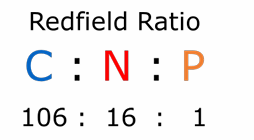
Redfield Ratio
Under these ratios from phytoplankton, you know resources are not limited. Any deviations and they are limited.
Marine fungi examples (generally rare and not well studied)
Lichens at high intertidal zones
Salt marsh fungal infections
Aspergillus sydowii pathogen of caribbean sea fans
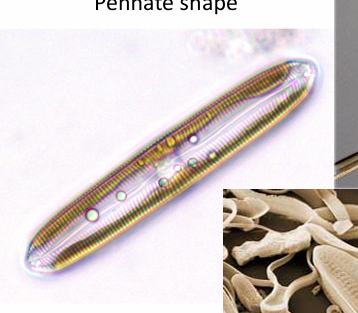
BENTHIC diatom shape
Pennate, like a bacteria
Ciguatera
Toxin produced by dinoflagellates
Ciguatera Poisoning
Dinoflagellates adhered to coral,algae,seaweed are eaten, eventually brought to us.
Transmitted like an STD too somehow
Hallucinations, muscle aches, hot/cold sensations, etc
Macrophytes
Seaweeds and flowering plants in SHALLOW coastal areas
Seaweeds (Protists btw)
Algae of 2 different supergroups, RED and GREEN versus BROWN
Think of how red and green are complementary colors
Green algae cell wall
Cellulose
Brown Algae cell wall
Alginate
Red Algae Cell Wall
Agar, carrageenan
Seaweeds lack?
Vascular tissue, roots, stems, leaves, flowers. General plant stuff
Thallus
Body of the seaweed composed of photosynthetic cells. Literally the skin
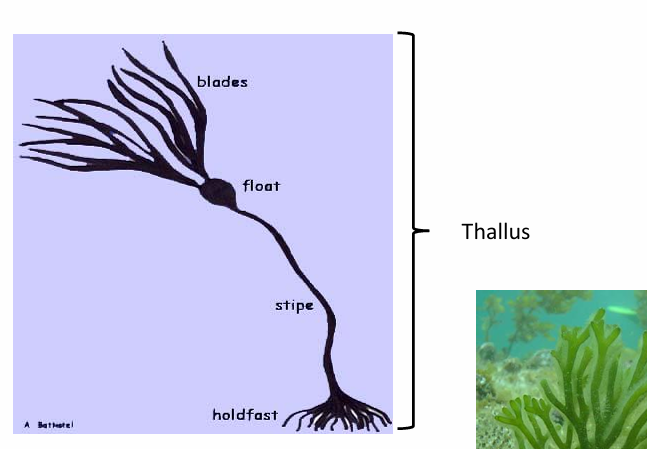
Holdfast
Attaches thallus to the benthos
Stipe
Stem region between blade and holdfast
What type of algae is sargassum?
Brown algae, duh
Method 1 seaweeds reproduce
Fragmentation of the thallus, like a seastar
Method 2 seaweeds produce
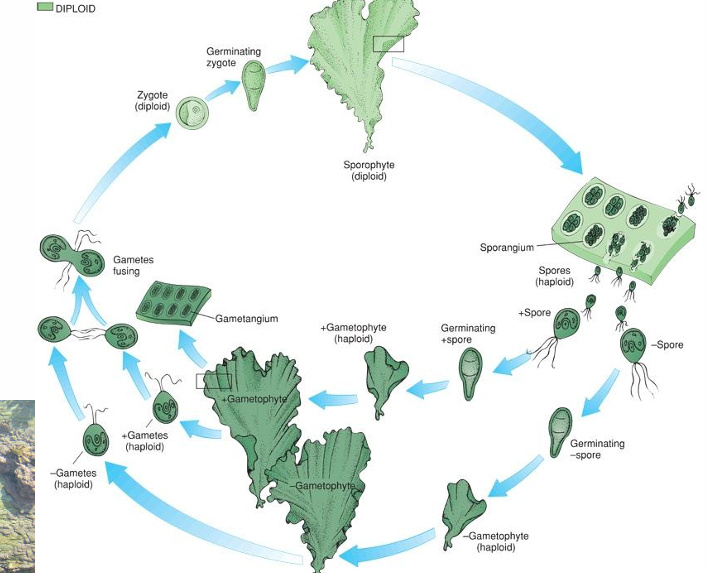
Alternation of generations sporic life cycle between haploid and diploid
Sporophyte and gametophye look the same and sometimes different
Sporophyte = diploid. Gametophyte = haploud
Green Algae (PHYLUM: Chlorophyta)
Contains chlorophyll A and B and carotenoids. Also have coenocytic thallus
Red Algae (PHYLUM: Rhodophyta)
Highest diversity, phycoerythrins make them red, benthic
Phycoerythrin
Light harvesting protein in red algae that directs light to chlorophyll.
Allows for less light = deeper
Coralline Algae
Red algae has calcified cell walls to deter grazers
Brown Algae (Phylum: Phaeophyta)
Mostly benthic. Contains Fucoxanthin. Found in TEMPERATE zones. Epipelagic
What else do brown algae have?
Bladders that are gas filled to maximize light by buoyancy
Receptacles
Where brown algae does meiosis. Also fertilization happens in water column
Fucus Spp.
Eliminate gametophyte stage in brown algae
Marine flowering plants
Seagrasses, mangroves, salt marshes. Came from land, evolved to water. Hydrophytes adapted to marine environment and shallow waters, moreso than seaweeds. They DO have VASCULAR systems.
How do seagrasses grow
Rhizomes (roots basically) extend horizontally and stems grow atop it
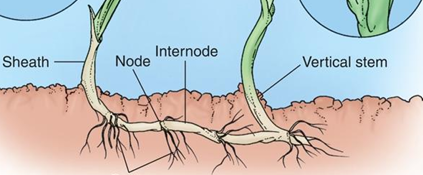
Hydrophilous Pollination
Sperm-bearing pollen is carried by water. (Btw they can be asexual too)
Benthic Protozoans
Single celled heterotrophic protists:
Flagellates, ciliates
Foraminifera
Rhizarian with Calcium carbonate and chambers. Important part of sand
Radiolaria
Rhizarian with silica
How do rhizarians feed?
Filose pseuidopodia
Oscula
Where water exits a sponge
Ostia
Where water enters a sponge
Spongioblasts
Secrete spongin and spicules
Spongin
Structural part of sponges. Have spicules embedded
How do sponges keep to themselves?
They release metabolites to protect from stuff
Choanocytes in sponges
Pump water to generate their feeding current
What happens if a chromatophore constricts from muscles
That is how they work, muscle contraction. Contraction = less seen
Cnidarians
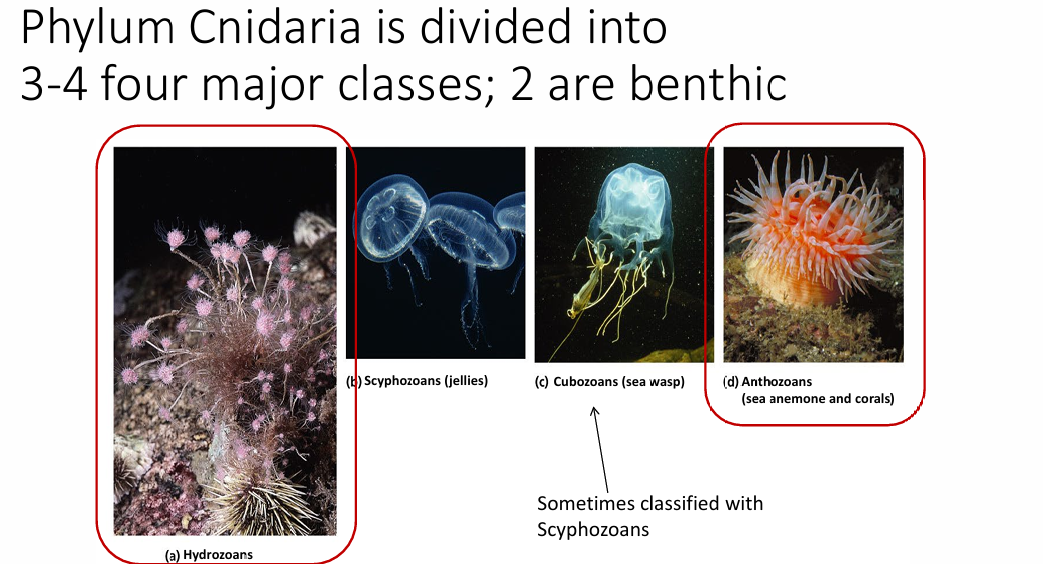
Cnidarian Polyp
Those things spongebob was watching on tv till Gary interrupted
Cnidarian Medusas
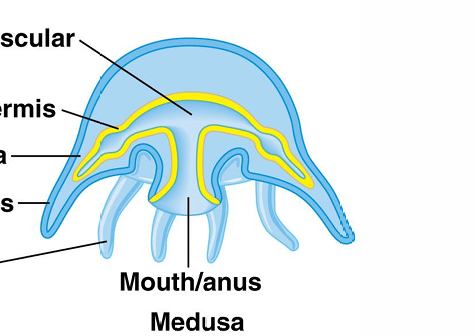
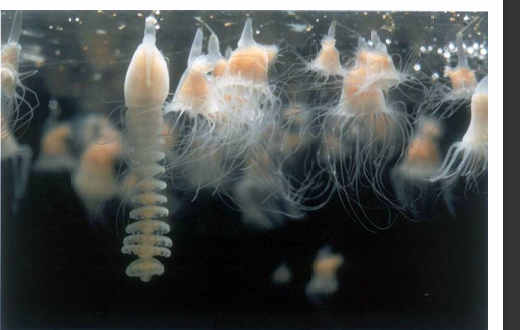
Hydrozoa
A Cnidarian. Alternates between polyps and medusas. Small.
Reproductive and feeding polyp alternation
Anthozoa
A Cnidarian mostly as a polyp. Usually has symbiotic algae Contains:
Sea aneomones
Sea fans
Coral
Nematocysts:
Used by CNIDARIANS to catch prey, digested in gastro-vascular cavity. Also used for defense
Sea anemones are?
Phylum: Cnidarian. Class: Anthozoa
Sea Fans are?
Phylum: Cnidarian. Class: Anthozoa
Coral are?
Phylum: Cnidarian. Class: Anthozoa
Platyhelminthes
Flatworms. Gas exchange is via diffusion. Some have kleptoplast. Blind gut
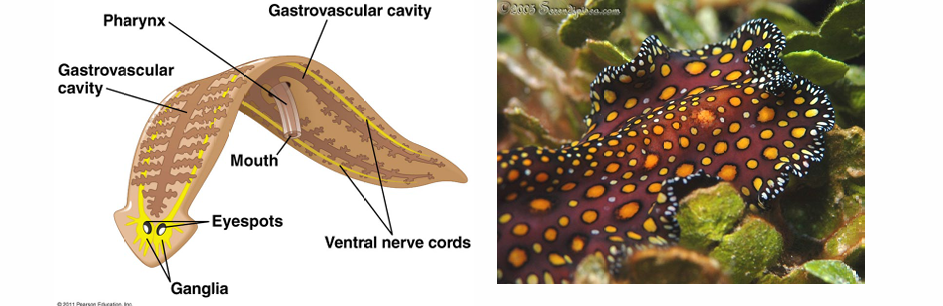
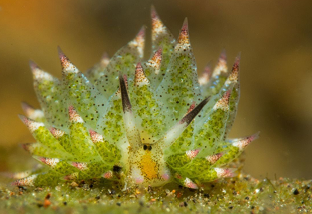
Kleptoplasty
Think of a kleptomaniac, stealing stuff. They steal things like chlorophyll and use it. Flatworms btw
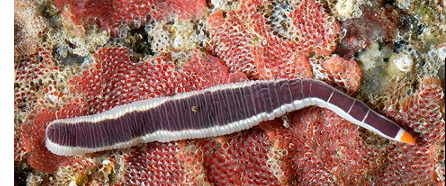
Phylum Nemertea
Ribbon worms. CARNIVOROUS. Complete gut. Use barbed proboscis to kill
Phylum Annelida
SEGMENTED worms with opposition muscles for locomotion.
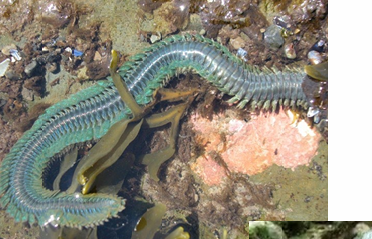
Polychaetes
Are from phylum Annelida. Have segmentation and can be predatory.
Oligochaetes
From phylum Annelida: Lack parapodia, have segments and chitin hairs. Small
Phylum Pogonophora
Beard worms. No digestive track so rely on symbiosis with bacteria. Include the hydrothermal vent worms
Phylum Sipuncula
Peanut worms. Feed by protruding their introvert (stomach)
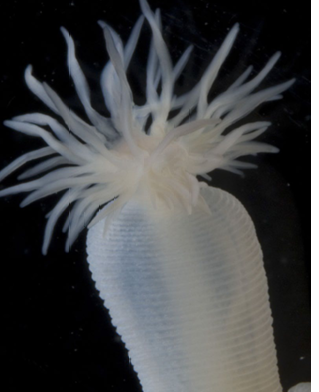
Phylum Mollusca
have soft shell and mantle secretes the shell
Class Bivalves
In the phylum mollusca: Use gills for feeding and gas exchange.
No cephalization (putting everything important in the head) but scallops got eyes
Class gastropoda
Of the Phylum Mollusca: Snails and slugs who have a big foot to glide. Shell can be absent. Gills and complex nervous system
Radula
Strong part of GASTROPODA asnd Polyplachophora that using a chitonous ribbon make it a strong part for killing
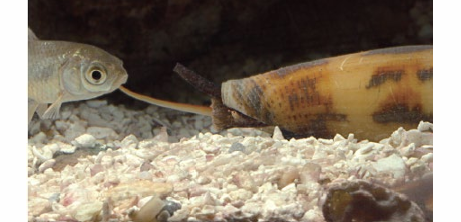
Cone shell
A radula that is modified into a venomous harpoon (remember, gastropoda still, aka mollusca)
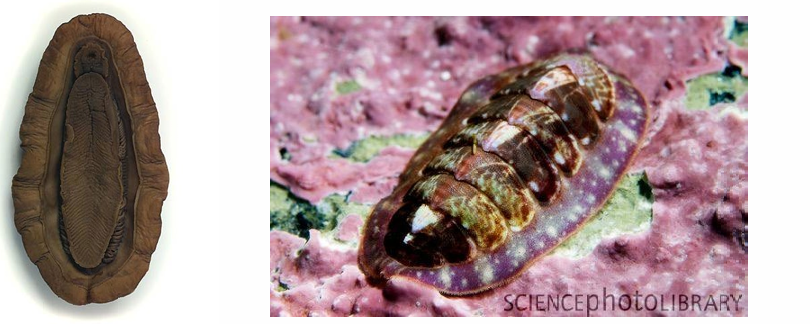
Polyplacophora
From Mollusca: Chitons with 8 dorsal plates that scrape algae with Radula. Attaches to rock with foot.
Class Cephalopoda
From Phylum Mollusca: No shells except nautilus, closed circulatory system, complex brain
Class Monoplacophora
From Phylum Mollusca: Oldest species of molluscs basically, with clear segmentation
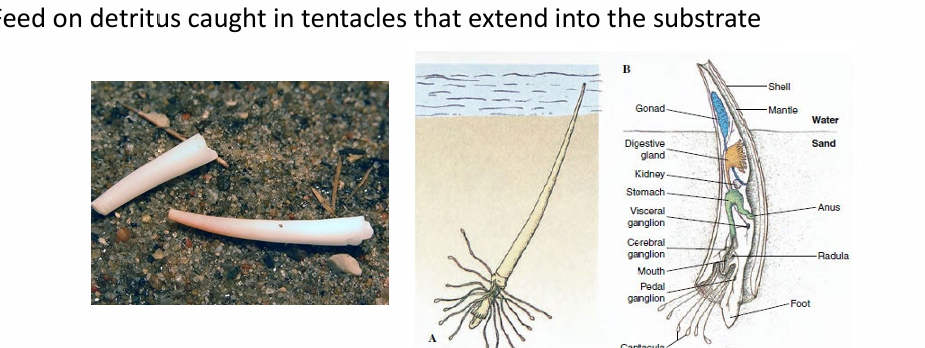
Class Scaphopoda
Phylum: Mollusca: Look like tusk shells with a few hundred species who burrow into sand. FIRST CURRENCY