Orthodontics LO 4 (etiology of malocclusions)
 Studied by 0 people
 Call Kai
 Learn
Learn Practice Test
 Spaced Repetition
 Match
Match Flashcards
 Knowt Play
1/24

There's no tags or description
Looks like no tags are added yet.
Name | Mastery | Learn | Test | Matching | Spaced | Call with Kai |
|---|
No analytics yet
Send a link to your students to track their progress
25 Terms
Developmental, hereditary, environmental
Etiologic factors for malocclusion can be classified as one of these 3:
Developmental
These are the 3 specific causes of malocclusion. These are all types of ———————— etiologic factors. 1.disturbances in embryologic development. 2.skeletal growth disturbances. 3.disturbances of dental development.
Skeletal growth disturbances
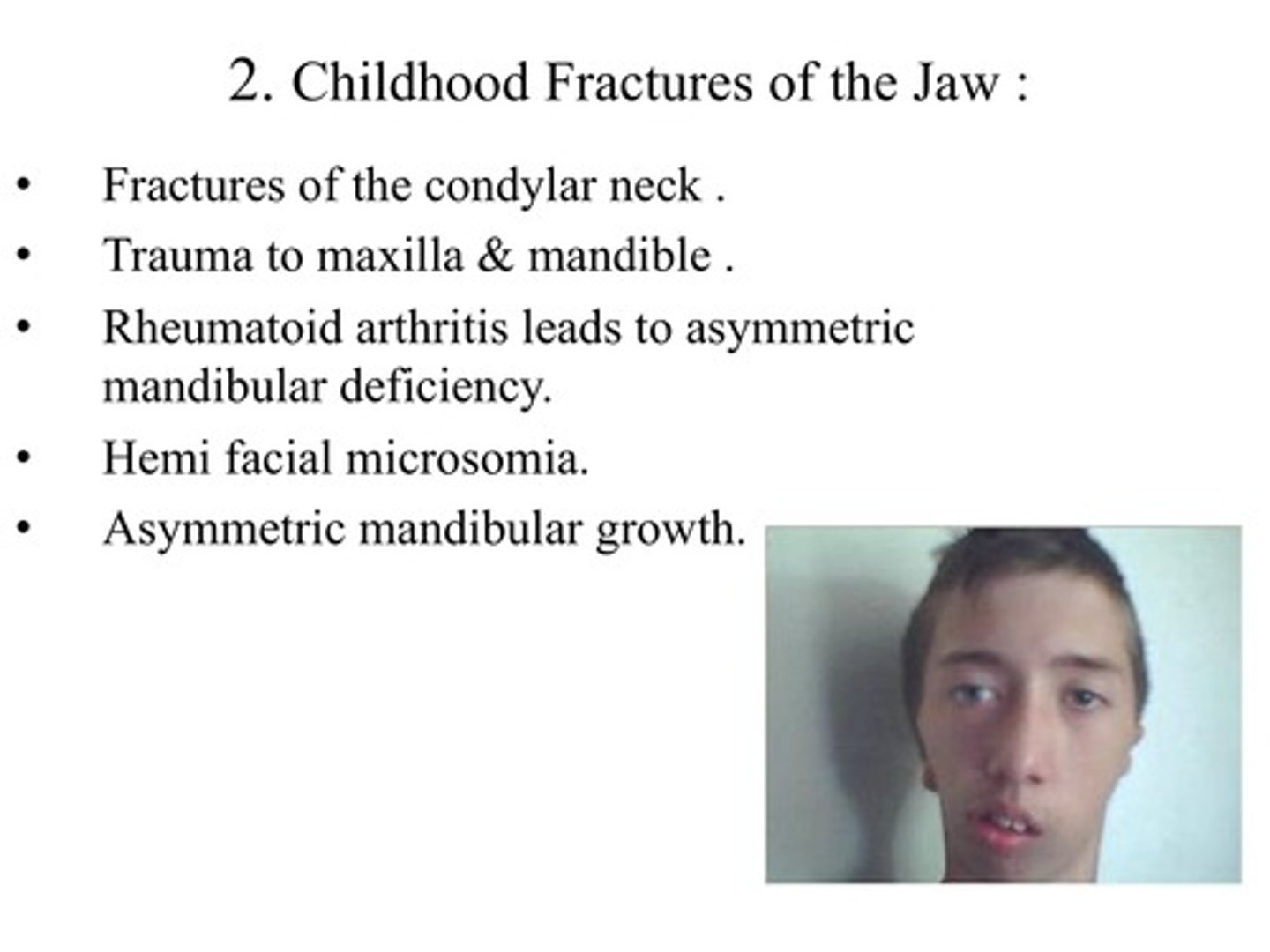
Fetal molding and birth injuries, childhood fractures of the jaws, muscle dysfunction, acromegaly and hemi-mandibular hypertrophy are all types of:
Intrauterine molding
Any pressure against the developing face leads to distortion of rapidly growing areas. Trauma to the mandible during birth (from the forceps) can lead to TMJ damage and underdevelopment of the mandible.
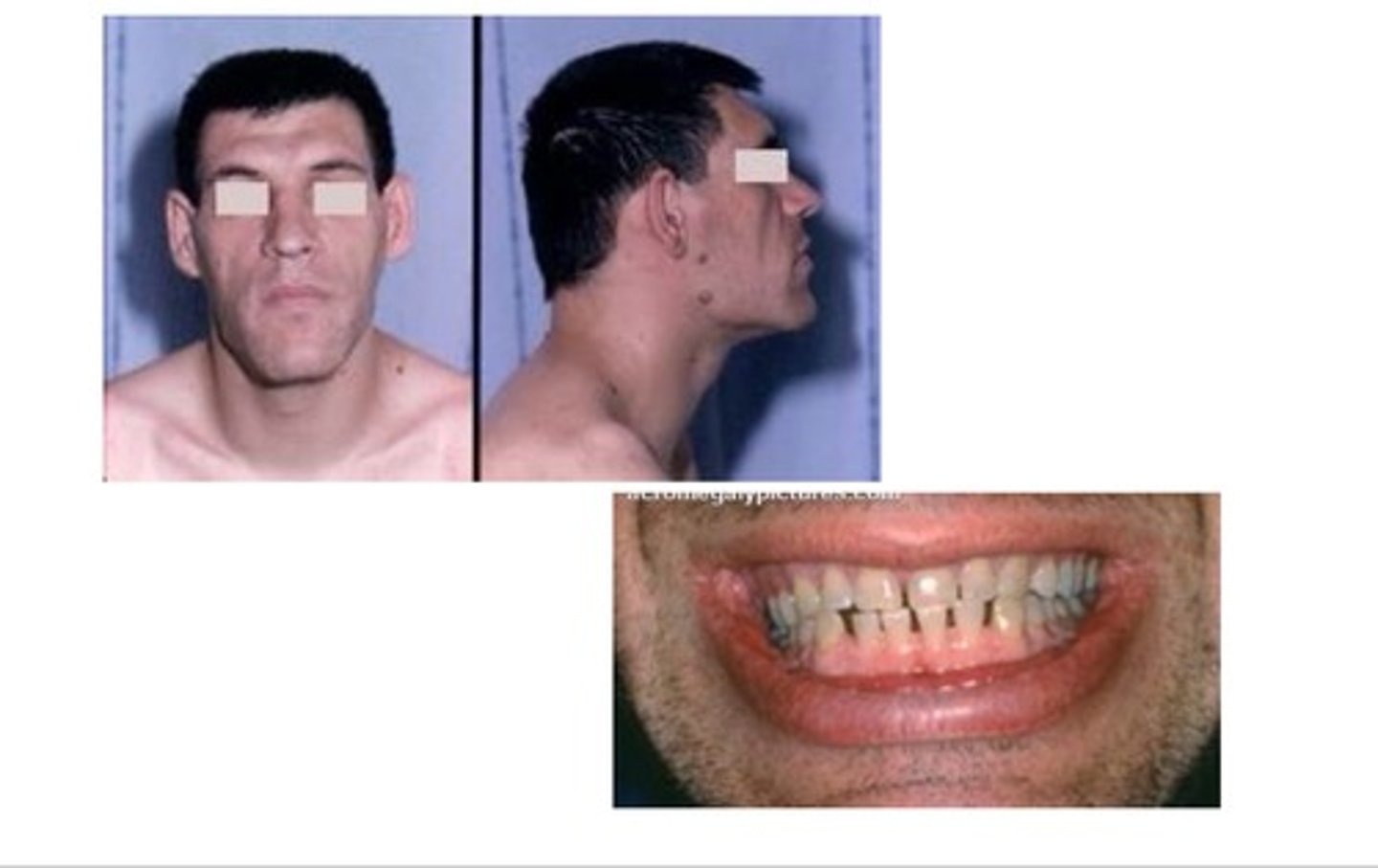
Acromegaly
This is caused by an anterior pituitary tumour. Secretes excessive growth hormone leading to excessive growth of the mandible.
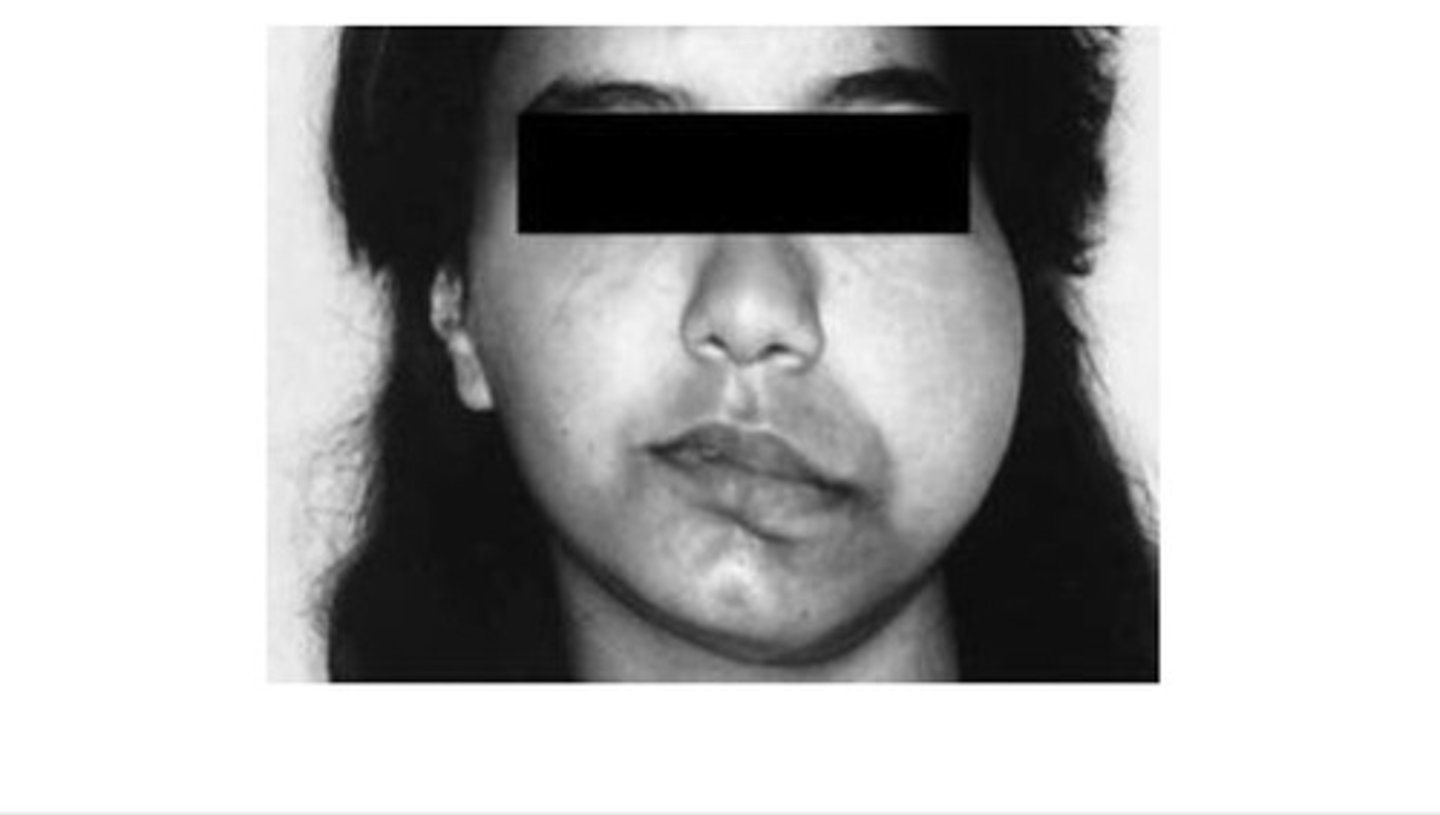
Hemi-mandibular hypertrophy
This is a developmental enlargement of one side of the mandible including the condyle, condylar neck, ramus, and body, along with medial rotation.
Oligodontia
Six or more congenitally missing teeth is called:
Fusion
Teeth with separate pulp chambers joined at dentin
Gemination
"Twinning"; when a single tooth germ attempts to divide, resulting in the incomplete formation of two teeth; the tooth usually has a single root and root canal
Ectopic eruption
This occurs as a result of a permanent tooth bud malposition
Hereditary influences
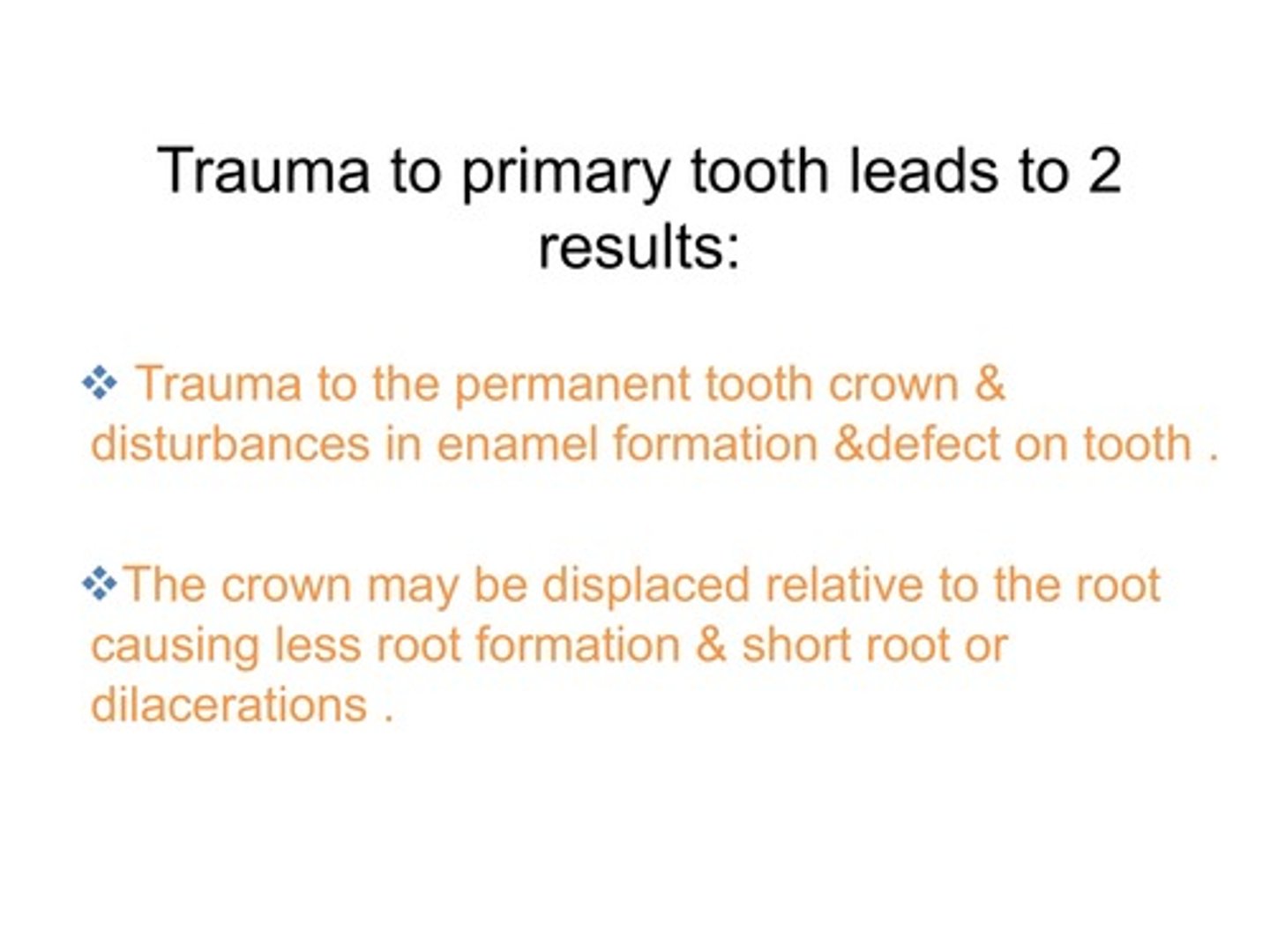
Inherited disproportion between size of teeth and jaws leads to crowding or spacing. Inherited disproportion between size or shape of the upper and lower jaws cause improper occlusion. These are both examples of ———————— influences of malocclusion.
Equilibrium theory and development of dental occlusion
although teeth are subjected to a variety of forces such as masticatory forces, swallowing, and speaking, they do not move to a new location. What is this theory?
Achondroplasia
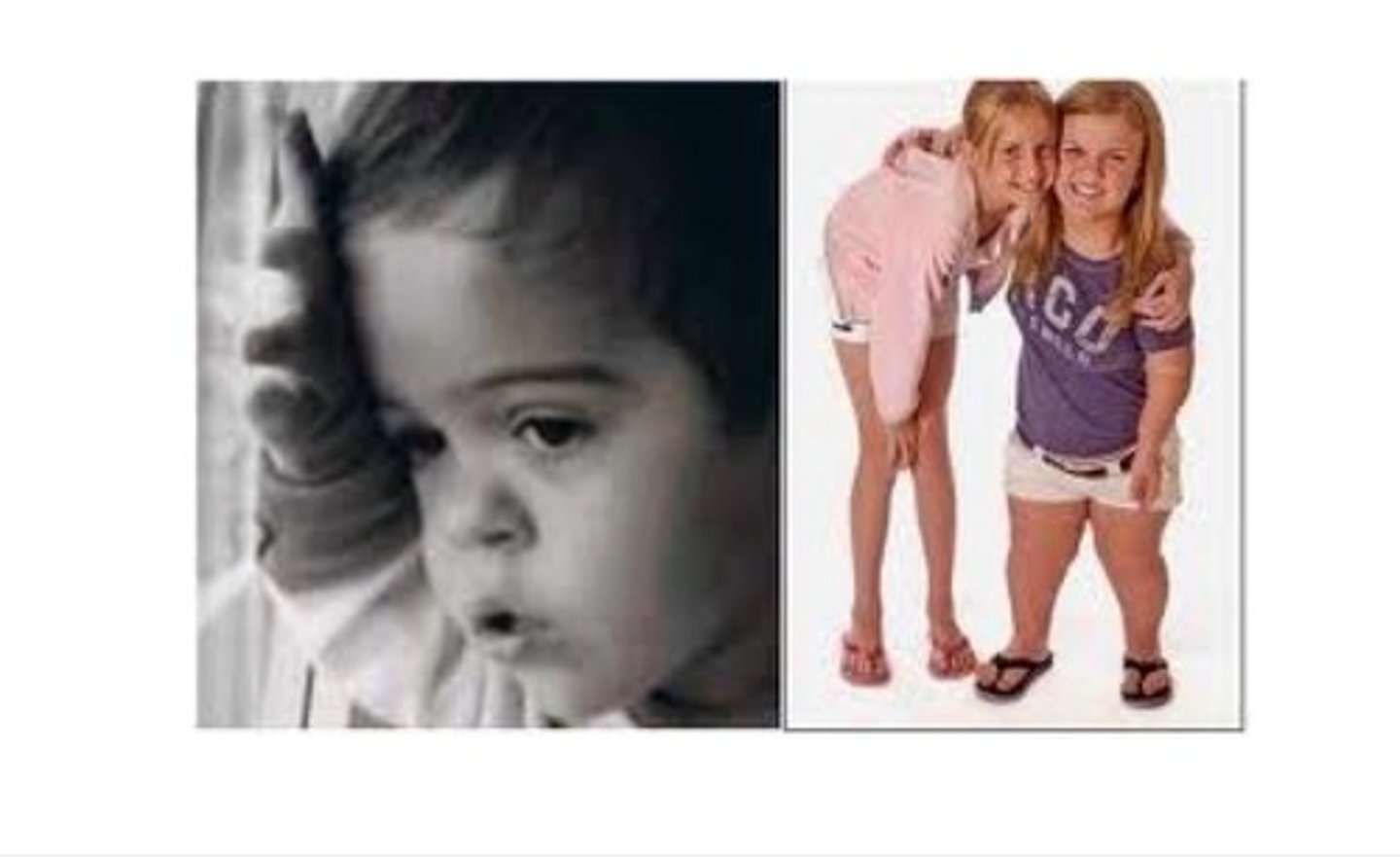
Short limbs, deficient cranial base length (due to deficient growth of synchondrosis), mid face deficiency (due to lack of maxillary growth).
The periodontal fiber system
1. Space closure after tooth loss (due to forces exerted from transeptal fibers in the gingiva).
2. Eruption of teeth due to eruption forces from the gingiva.
Preventive orthodontics
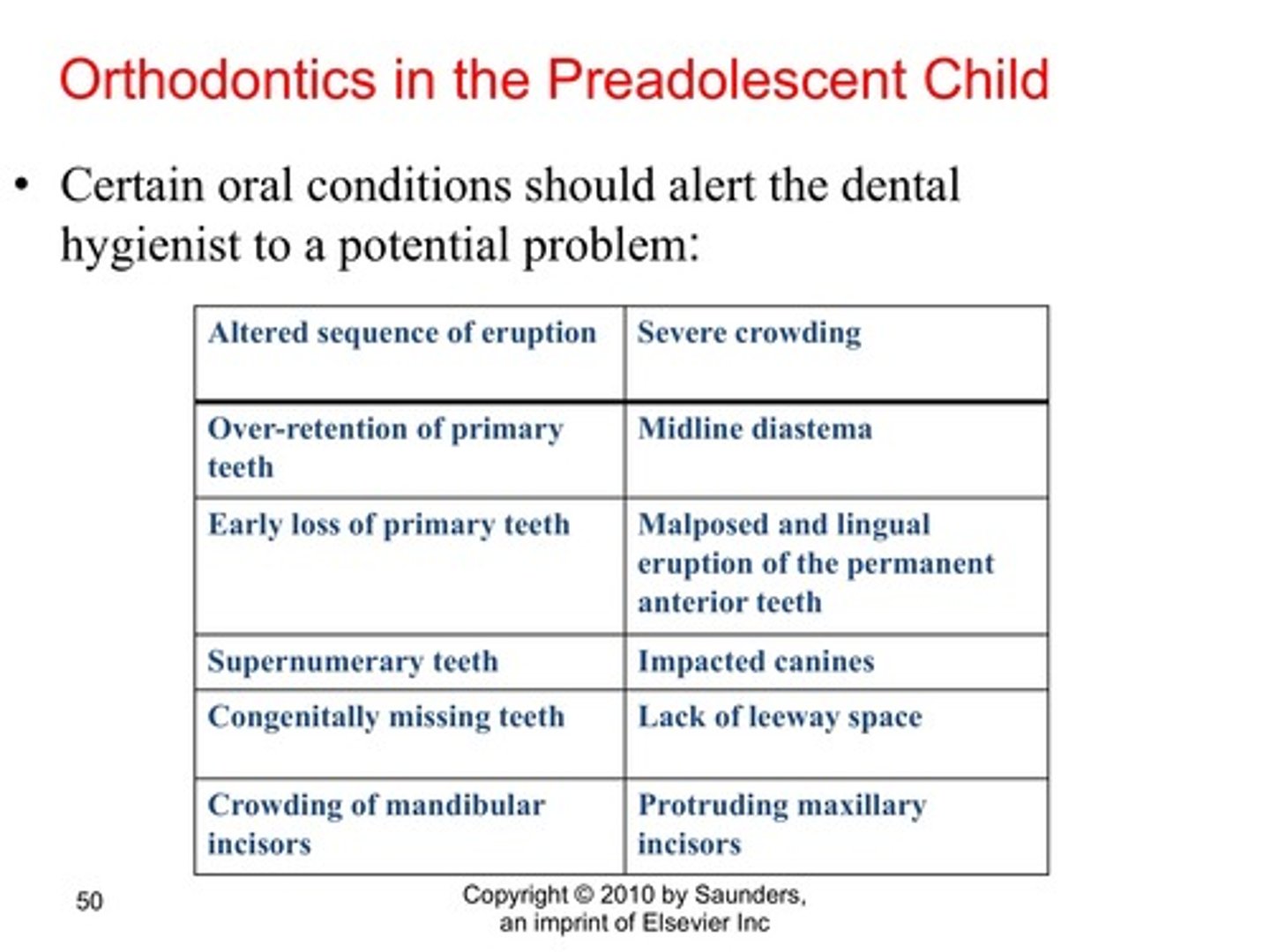
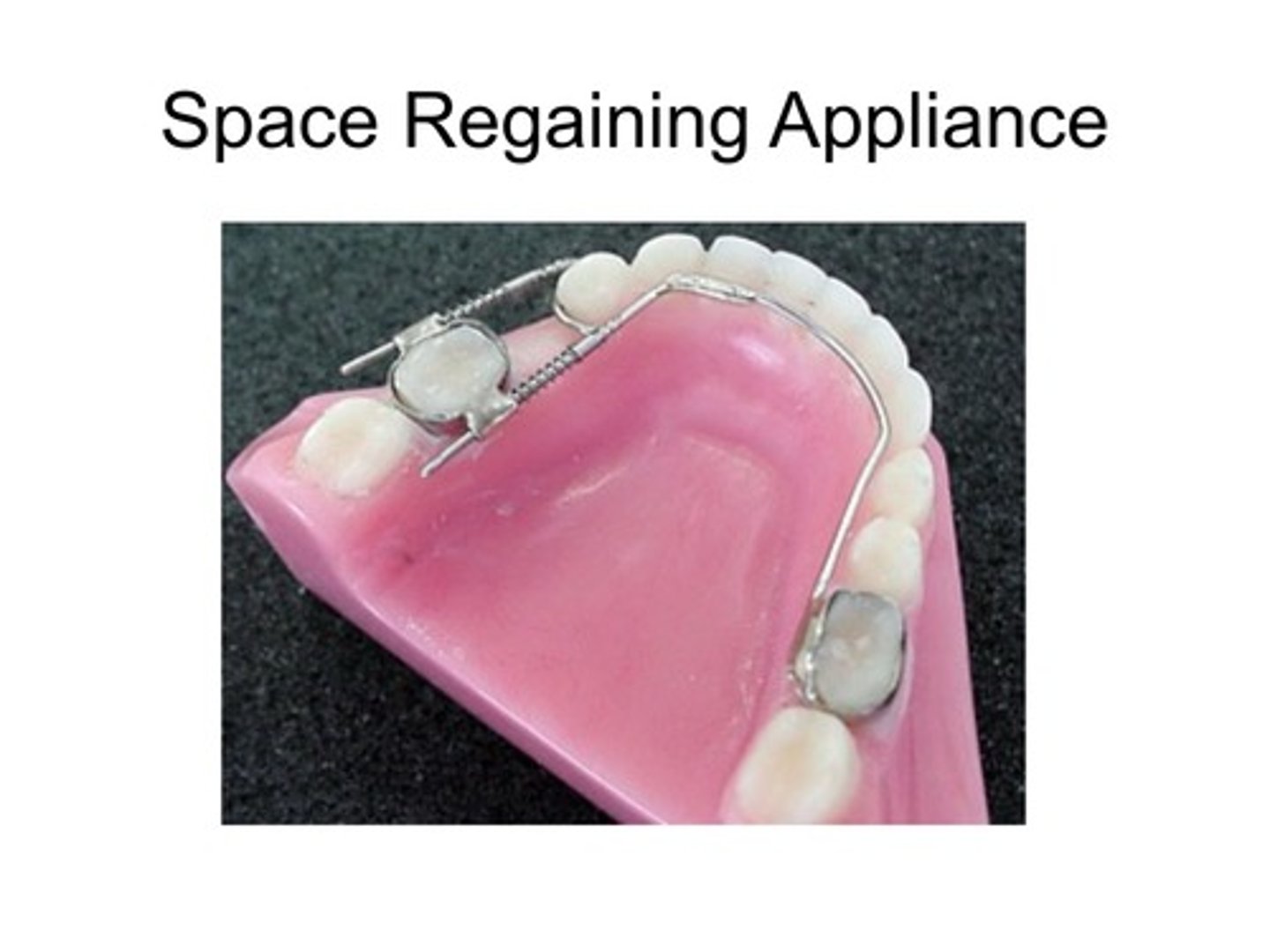
This type of orthodontics allows the dentist to prevent or eliminate irregularities and malposition of the teeth in the developing dentition. Is intended to keep a malocclusion from developing in an otherwise normal mouth. Includes: prevention of primary teeth loss due to caries, usage of space maintainer to save space for permanent tooth eruption, correction of oral habits leading to damage of permanent dentition, early detection of genetic and congenital anomalies, natural exfoliation of primary teeth (because retained teeth lead to impaction or malposition of permanent teeth).
Interceptive orthodontics
This type of orthodontics is performed for problems that, if left untreated, could lead to the development of more serious dental problems over time. Goal is to reduce the severity of a developing problem and eliminate the cause. Length of later comprehensive orthodontic treatment may be reduced. Examples: correction of thumb sucking, tooth removal or tooth size adjustments; or gaining or holding space for permanent teeth.
6-10
Phase I or early interceptive treatment involves limited orthodontic treatment (i.e. expander or partial braces) before all of the permanent teeth have erupted. Between ages — and —.
Comprehensive treatment
Phase II interceptive treatment is called "—————————— treatment", because it involves full braces when all of the permanent teeth have erupted (usually between ages of 11 and 13).
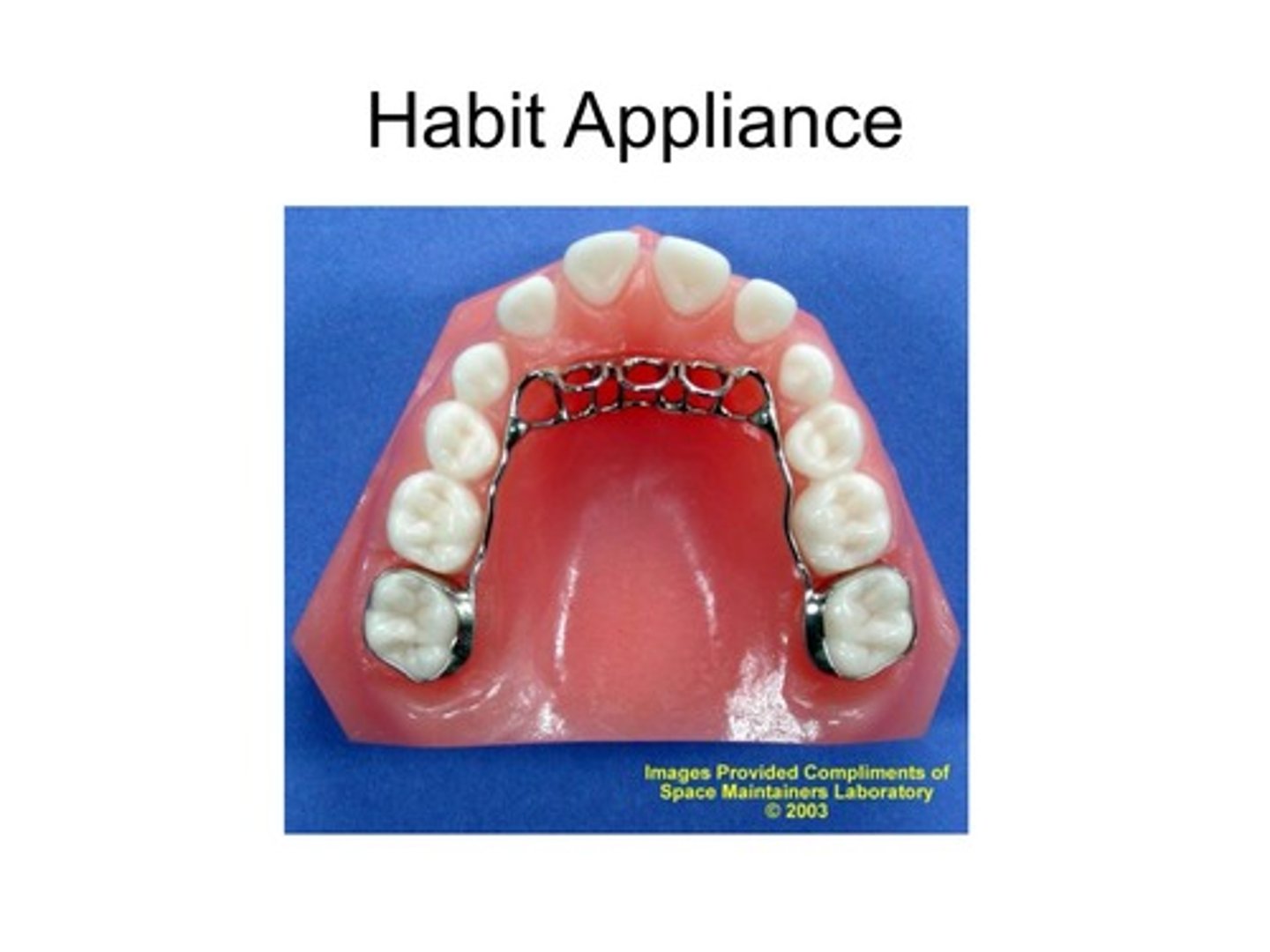
Comprehensive or corrective orthodontics
This type of orthodontics treats problems that involve alignment of the teeth, how the jaws function and how the top and bottom teeth fit together. Goal is to correct the identified problem and restore the occlusion to its optimum. This type of ortho treatment may consist of one or more phases, depending on the nature of the problem being corrected and the goals for treatment.
 Note
Note  Flashcards (334)