Avian scoring guide
 Studied by 0 people
 Call Kai
 Learn
Learn Practice Test
 Spaced Repetition
 Match
Match Flashcards
 Knowt Play
1/50

Earn XP
Description and Tags
diseases, scoring
Name | Mastery | Learn | Test | Matching | Spaced | Call with Kai |
|---|
No analytics yet
Send a link to your students to track their progress
51 Terms
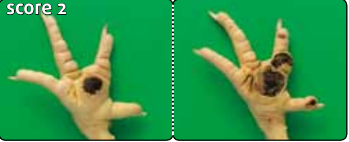
footpad dermatitis
characterized by skin alterations of the footpads, caused by an
inflammatory reaction, evolving from redness to hard, scaly, swollen and necrotic lesions
footpad dermititis
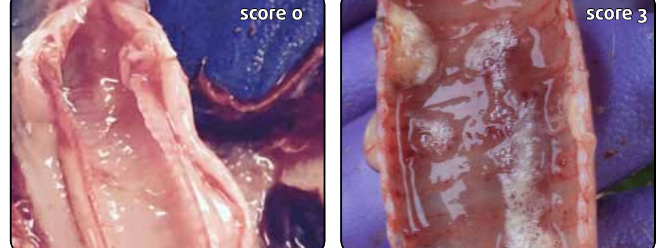
trachea
respiratory pathogens may cause lesions in the organ which can evolve from mild
(redness or mild mucus) to severe (caseous/bloody)
depending on the severity of the lesions, eitology of respiratory pathogens in trachea can be:
environmental (ammonia, low relative humidity, high dust concentration)
viral (infectious laryngotracheitis, newcastle disease, avian influenza, poxvirus)
bacterial (E.coli, Mycoplasma)
fungal (aspergillosis)
trachea
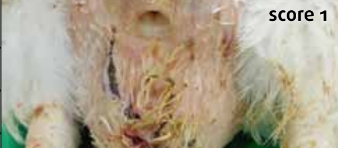
scratches
disruption of the integrity of the skin, caused by the nails of the companion chickens in the poultry house
scratches
This condition might indicate management or ventilation problems in the farm, increased nervousness of the birds due to external factors (noise, predators) or nutritional problems (deficiencies, imbalances)
scratches
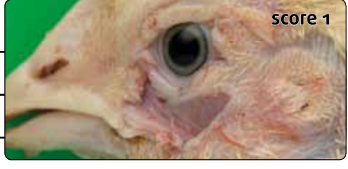
ammonia burns
refer to cornea lesions due to high concentrations of ammonia in the poultry house
ammonia burns
lesions consist of circular, grey-white, opaque, rough-looking areas in the centers of
the corneas
ammonia burns
the lesion can also be split-shaped. The typical appearance in combination with
the presence in both eyes allows differentiation from other eye lesions
ammonia burns
mouth lesions
lesions can be present on the beak, the tongue or the angle of the mouth depending on the etiology (infectious, toxins or traumatic) lesions might differ in appearance (diphteric, plaque-like etc.)
mouth lesions
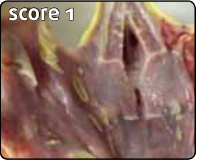
infectious process
skin scratches can introduce bacteria that can lead to inflammation (cellulitis) and yellow fibrinous material between skin and muscle
infectious process
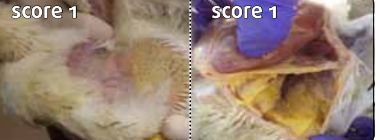
white striping
degenerating myopathy in broilers characterized by macroscopically visible
white striations on breast fillets and thighs. The etiology is unknown but it is believed that it is linked to the high growth rate of broilers and calcium metabolism
white strings
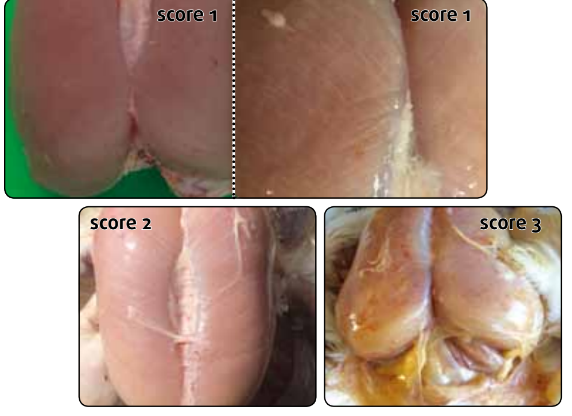
thymus
specialized primary lymphoid organ of the immune system and is located next to the trachea
thymus
most common abnormal condition will consist of atrophy of this organ which can occur after infection with immunosuppressive agents (like Chicken Anemia virus,
Infectious Bursal Disease virus, Marek Disease virus etc.).
trachea
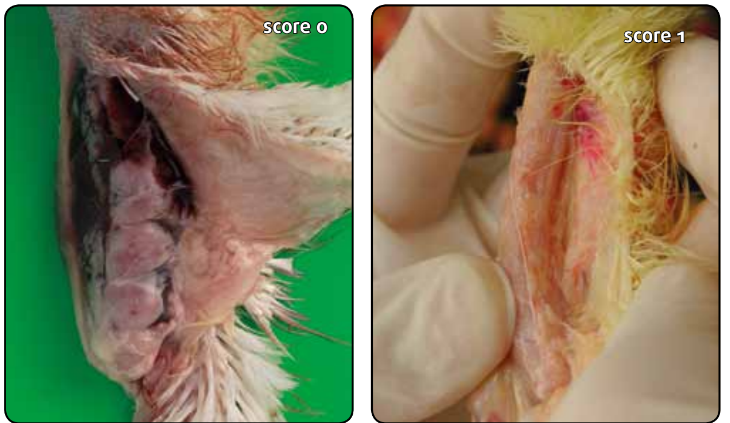
bursal damage
most commonly linked to Infectious Bursal Disease (IBD) , a highly contagious viral disease, causing lesions to primary lymphoid tissue and especially to the Bursa of Fabricius in young birds
acute phase of infection
the bursa will be swollen, oedematous and haemorhages may appear on the mucosal side
bursal damage
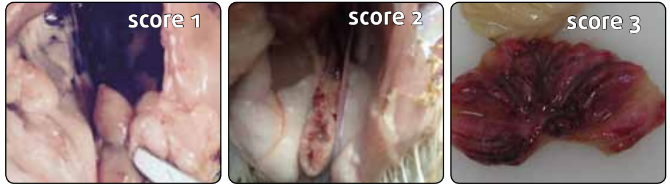
bursa meter
a ruler shaped tool with holes of different sizes numbered 1-8 used to measure the bursa size
femoral head necrosis
condition can be caused by osteochondrosis, dyschondroplasia or osteomyelitis
femoral head necrosis
lesions are due to focal bacterial infection
femoral head necrosis
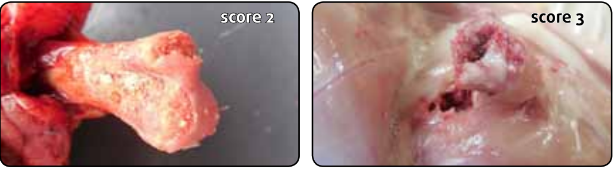
enlarged growth plate
widening of the epiphyseal growth plate is caused by an increased zone of proliferating prehypertrophic zone of epiphyseal cartilage
enlarged growth plate
this condition is described in case of calcium/phosphorus imbalances and in some cases of hypervitaminose A
enlarged growth plate
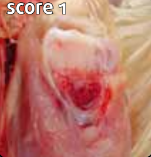
detached cartilage
refers to detachment of the femoral head cartilage during dislocation of the hip joints when performing necropsy. This condition is only scored when no necrotic lesions are present on the detached femoral head
detached cartilage
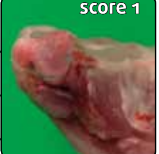
tibial dyschondroplasia
defect associated with the growth plates and is characterized by an avascular plug of abnormal cartilage in the growth plate of long bones
tibial dyschondroplasia
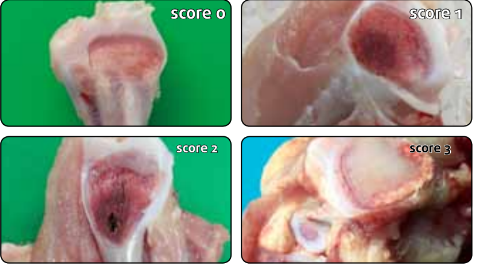
lameness
inability to use one or both limbs in a normal manner and is becoming a major animal welfare and economic concern
rickets
characterized by severe fragility and bending of long bone and widened growth
plate due to poor mineralization
swollen hocks
this condition is scored in case the hocks are swollen but no exudate is present
swollen hocks
can be caused by non-infectious stressors such as too much sitting
brittle bones
non-flexible bones which will easily break without much force
bone strength relies on:
structural factors
compositional factors
physiological factors
nutritional factors
tendosynovitis
Infection of the tendon or inflammation of the fluid-filled sheath surrounding the tendon
synovitis
infection of the synoviae is often accompanied by arthritis and can be diagnosed in the different joints of the birds
synovitis is common in:
knee
hock joints
toes
osteomyelitis
infection of the bone or the bone marrow caused by bacterial infection
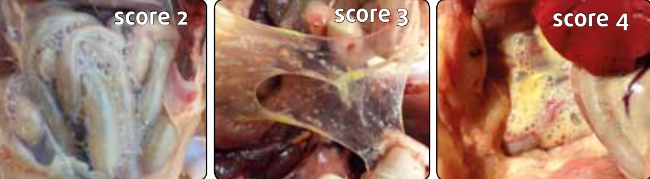
airsacs
important part of the avian respiratory system
airsacs
extremely prone to infection and inflammation
lesions in airsacs
ascites
characterized by the presence of excessive fluid in the abdominal cavity
etiology of ascites
oxygen supply
ventilation
high altitude
respiratory diseases
rapid growth
 Note
Note  Flashcards (229)