A4.1 - Evolution and Speciation
 Studied by 1 person
 Call Kai
 Learn
Learn Practice Test
 Spaced Repetition
 Match
Match Flashcards
 Knowt Play
1/15

There's no tags or description
Looks like no tags are added yet.
Name | Mastery | Learn | Test | Matching | Spaced | Call with Kai |
|---|
No analytics yet
Send a link to your students to track their progress
16 Terms
What is Evolution?
It is changes in allele frequencies in a gene pool (all combinations of genes and alleles in an organism) over many generations.
What causes evolution?
Mutations
Natural selection (survival of the fittest)
Gene flow (exchange of genes between populations via migration)
What was Charles Darwin’s theory?
He came up with evolutionary theory, that it occurs due to natural selection. These are passed on by generations over time
What was Lamarck’s theory?
He proposed that organisms develop mechanisms in their lifetime to help them adapt to the environment, and then pass them onto offspring. For example, Giraffe’s grow long necks in their course of life, to reach high branches, and this is passed onto offpsring.
What are methods to find evidence for evolution?
Evidence from base sequences from RNA and DNA and amino acid sequences
Evidence from selective breeding of animals and crops
Evidence from homologous structures
How can you find evidence for evolution from base sequences of RNA and DNA and amino acid sequences?
DNA can be compared between species, as closely related species share DNA sequences. Proteins also show conserved sequences across species. For example there are Haemoglobin protein similarities between mammals and birds
What is the examination of DNA, RNA and protein sequences called?
Molecular phylogeny. This can be displayed in a phylogenetic tree
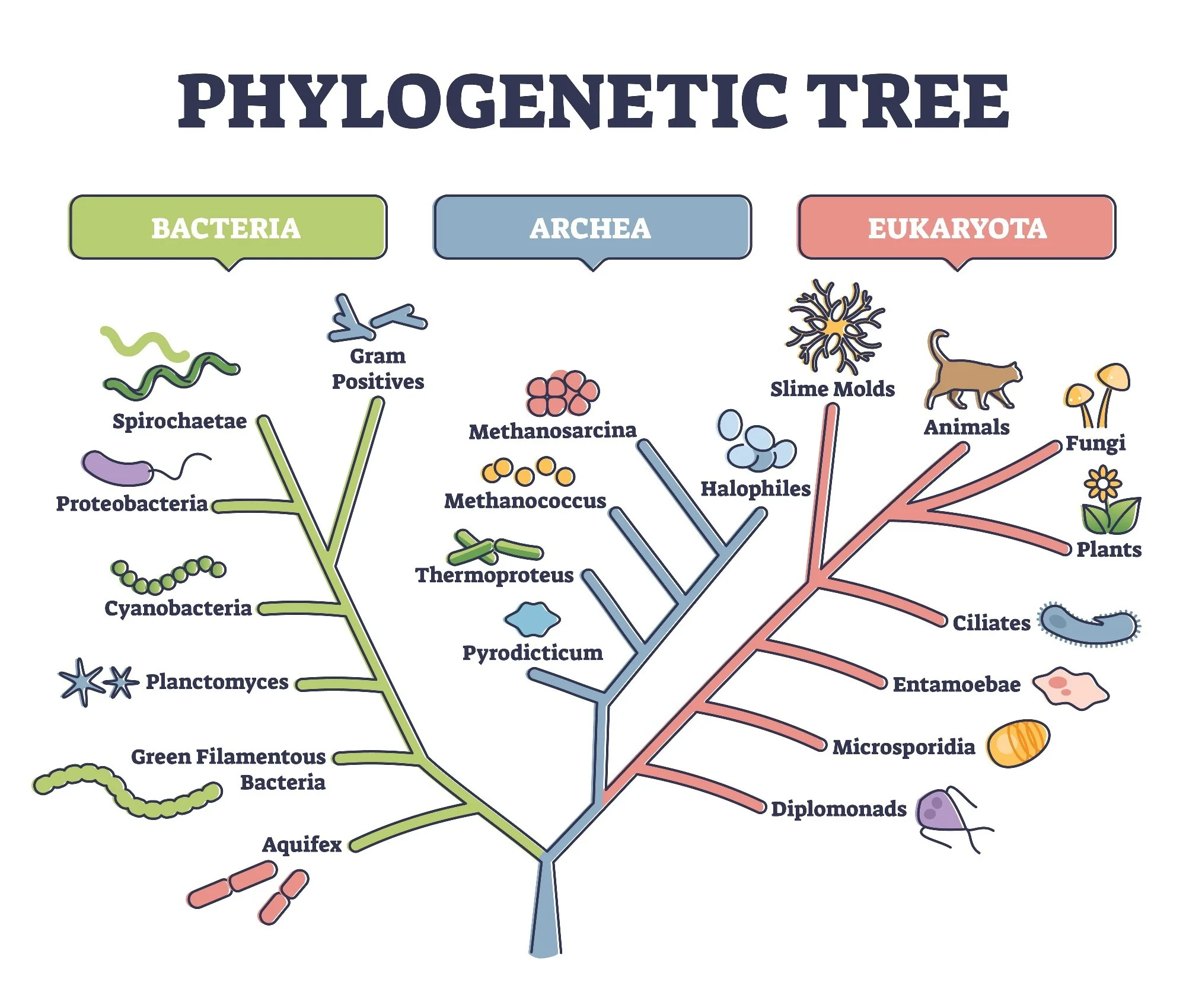
What are the benefits of using molecular phylogeny as evidence for evolution?
Previously only physical traits were used, which can be misleading. Molecular phylogeny is much more accurate. It helped to discover new relationships and got rid of the five-kingdom system by introducing the three-domain system.
What is selective breeding and how can it be used to find evidence for evolution?
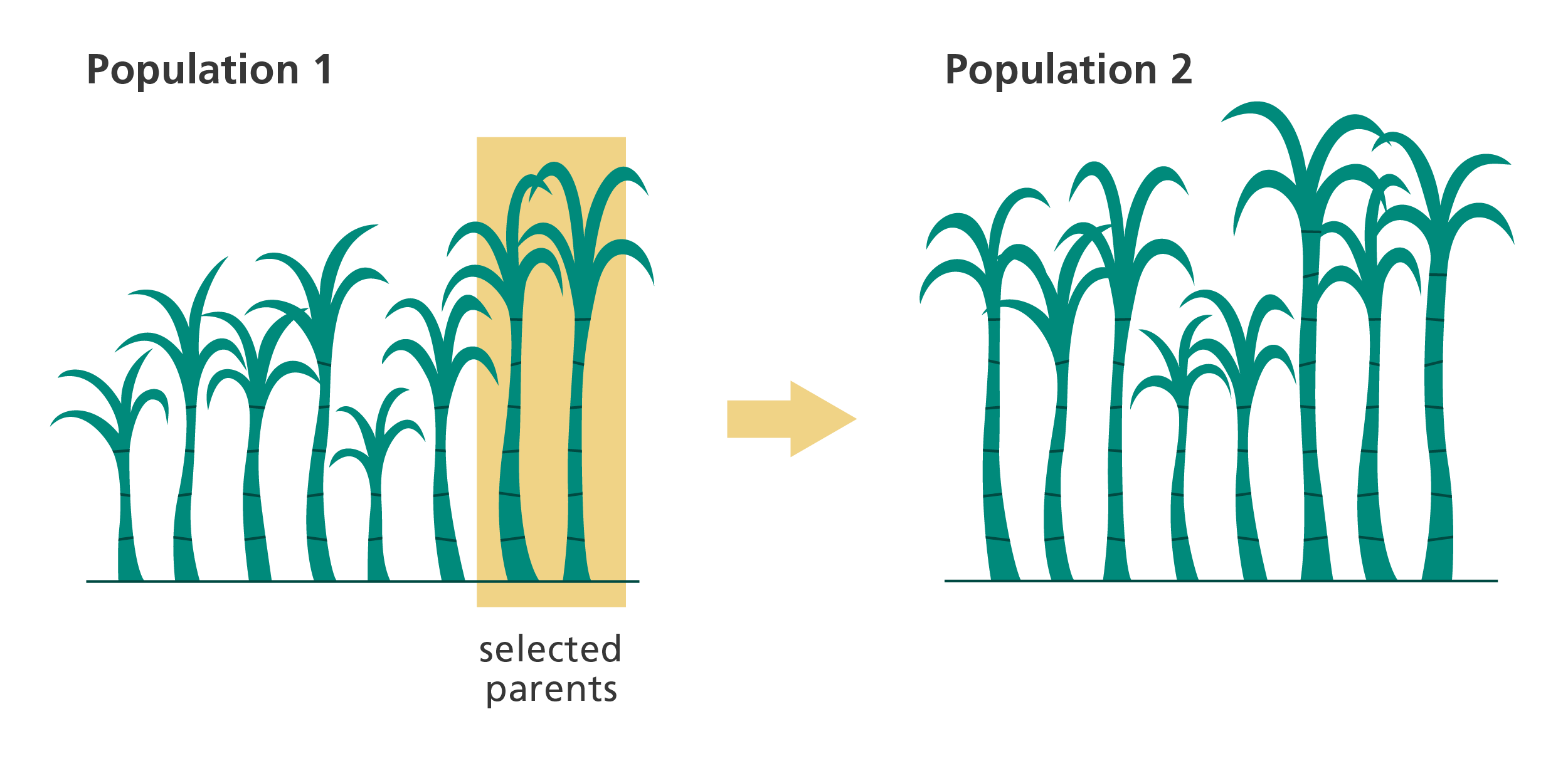
Selective breeding is humans selecting traits for reproduction. It is an artificial, sped up version of natural selection. This method artificially demonstrates evolution and helps humans to understand it.
Selective breeding shows that species can change over time when certain traits are selected for. Traits that help survival are selected for, and trends that don’t disappear
What are homologous structures and how can they be used as evidence for evolution?
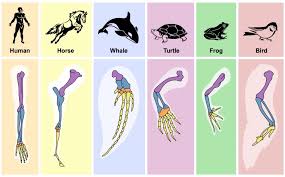
Homologous structures are physical features in different species with similar structures, but different functions, which have risen from a common ancestor. This is evidence of divergent evolution
What is divergent evolution vs convergent evolution
Divergent evolution - when structures arise from a common ancestor but differentiate (e.g., due to speciation)
Convergent evolution - analogous structures (features of species which are similar in function, as it has adapted over time, despite having different ancestors)
What is speciation?
It is the outcome of evolution, where populations become so distinct that they develop into a new species
How does speciation occur?
Geographical isolation - different location (physical barrier)
Ecological isolation - different habitats or niches (adapt to different things)
Divergence - mutations, natural selection
Reproductive isolation - behavioural, temporal, mechanical which can cause prezygotic or postzygotic isolation
What are the two types of reproductive isolation?
Prezygotic (prevents fertilization) and postzygotic (prevents offspring from being fertile)
What is prezygotic reproductive isolation?
Prevents fertilization from occuring, even if population is in same area. Can be due to temporal isolation (mating at different times), behavioural isolation (different rituals before mating), mechanical isolation (incompatible reproductive systems)
What is postzygotic reproductive isolation?
Prevents offspring from being fertile. This is when hybrid embryos fail to develop or die early, or offspring are sterile and unable to reproduce
 Note
Note  Flashcards (77)