Social Psychology: Prosocial Behavior, Bystander Effect, and Helping Decisions
 Call Kai
 Learn
Learn Practice Test
 Spaced Repetition
 Match
Match Flashcards
 Knowt Play
1/17

There's no tags or description
Looks like no tags are added yet.
Name | Mastery | Learn | Test | Matching | Spaced | Call with Kai |
|---|
No analytics yet
Send a link to your students to track their progress
18 Terms
What is prosocial behavior?
Behavior intended for the benefit of another person or group.
What is the difference between egoistic and altruistic behavior?
Egoistic behavior is self-serving, while altruistic behavior is helping without intention of personal gain.
List one reason why we should help others.
To improve our own welfare.
What is inclusive fitness?
The ability of an organism to pass on its genes, considering shared genes with close relatives.
What is kin altruism?
The tendency to help and sacrifice for individuals who share our genes, such as relatives.
What are two factors that improve our welfare through prosocial behavior?
Inclusive fitness/kin selection and heritability.
What is reciprocal altruism?
Helping others with the expectation that they will help in return.
What is social exchange theory?
The theory that human interactions are transactions that aim to maximize one's rewards and minimize costs.
What is the norm of reciprocity?
The social norm that suggests we should return favors to those who have helped us.
What is the mood-maintenance hypothesis?
The idea that maintaining a positive mood can lead to more prosocial behaviors.
What does the negative state relief model suggest?
Helping can improve one's mood if the cost of helping is low and the benefits are high.
What personality characteristic is associated with a higher likelihood of helping?
Empathy.
What is the bystander effect?
The phenomenon where individuals are less likely to offer help when others are present.
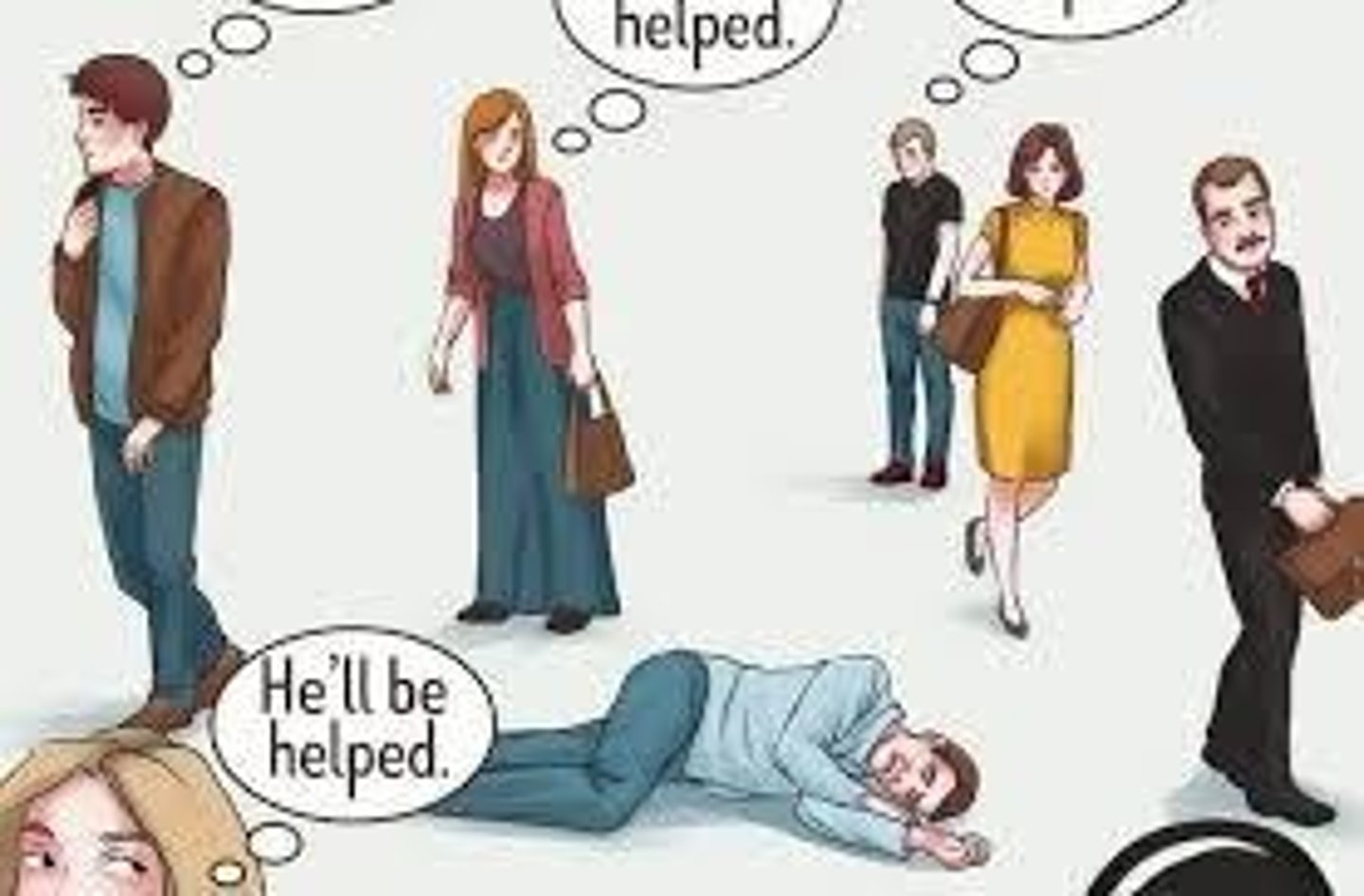
What are the three reasons for the bystander effect?
Diffusion of responsibility, informational influence (pluralistic ignorance), and evaluation apprehension.
What is the decisional model of helping?
A five-step process that includes noticing the event, interpreting it as an emergency, assuming responsibility, deciding how to help, and deciding whether to help.
Who are we likely to help?
Women (especially if attractive), those with similar characteristics, people deemed deserving, and those unambiguously in need.
What was the outcome of Latane & Darley's smoke study?
75% helped when alone, but only 15% helped with three subjects and 10% with two passive confederates.
What did Darley & Latane's seizure study reveal about helping behavior?
100% helped when alone, 62% with one additional person, and 31% with four others.

