L3- Origin of Vertebrates
 View linked note
 Call Kai
 Learn
Learn Practice Test
 Spaced Repetition
 Match
Match Flashcards
 Knowt Play
1/27

There's no tags or description
Looks like no tags are added yet.
Name | Mastery | Learn | Test | Matching | Spaced | Call with Kai |
|---|
No analytics yet
Send a link to your students to track their progress
28 Terms
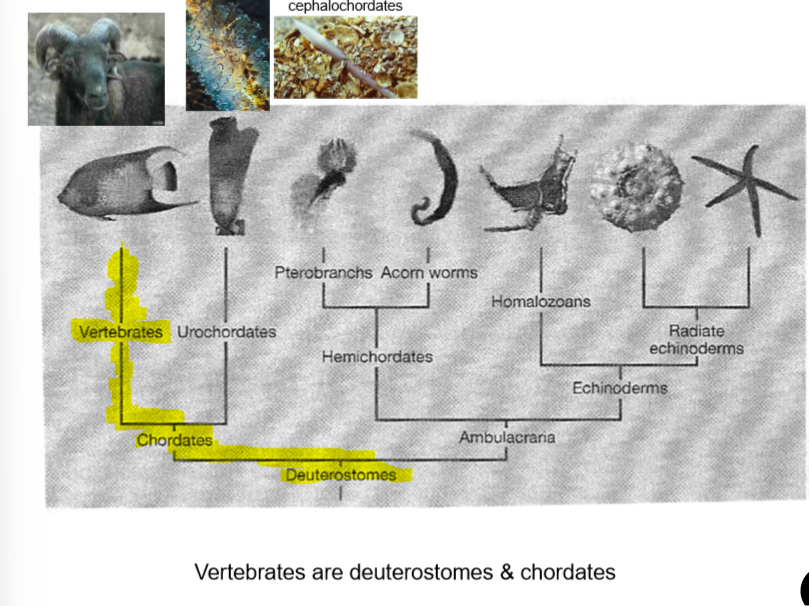
Vertebrates phylogeny:
Vertebrates are in the phylum chordates
Chordates also have sea squirts (urochordates) and cephalochordates
are both invertebrate chordates
Vertebrates closest relatives are the urochordates
Vertebrates are in the group deuterostomes
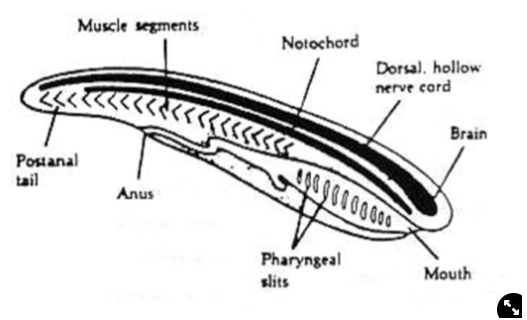
Features of chordates (at some point in their lives):
Notochord→ flexible rod for support, is often lost
Nerve Cord→ is dorsal and hollow, develops into the brain and nerve cord
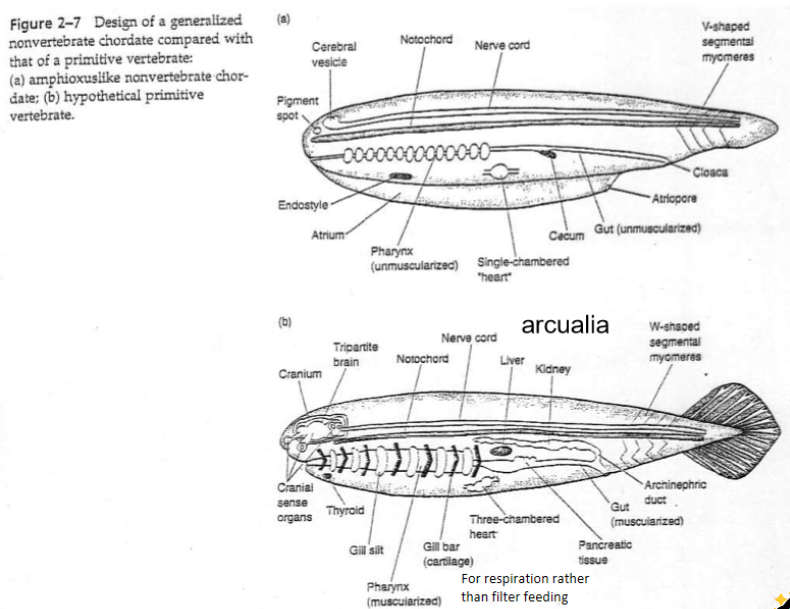
Pharyngeal (gill) Slits→ within the pharynx in the early part of the gut, is a deuterostome feature: invertebrates use this for filter feeding, vertebrates use this for respiration
Post-anal Tail→ muscular, used for movement
Endostyle→ in the pharynx, produces mucus to aid filter feeding, is homologous to the vertebrate thyroid gland which concentrates iodine
Lamprey metamorphasise their endostyle into a thyroid gland
Vertebrate chordates-
have vertebrate instead of notochords
not all have fully formed vertebrate
have a cranium
have an endoskeleton
have duplications of the hox gene complex
have a developed neural crest
have placodes
brain is larger and has 3 parts
are larger and have a higher metabolic rate
can have short periods of anaerobic respiration
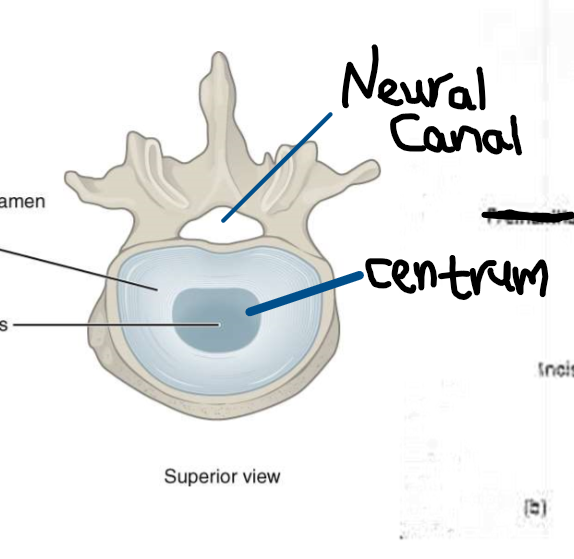
have vertebrate instead of notochords
made of cartilage or bone
centrum→ centre
neural canal→ where the spinal chord goes through
the notochord can remain as intervertebral discs
not all have fully formed vertebrate
Arcualia→ vertebral precursors, in the jawless vertebrates, have notochords and arcualia for support
Lampreys have arcualia along the body and above the notochord (dorsal)
Hagfish have arcualia in the tail and below the notochord (ventral)
Ancestral vertebrae have arcualia above and below the notochord (dorsal and ventral)
have a cranium
can be bony, cartilaginous or fibrous
e.g. the skull
have an endoskeleton
made up of the vertebrae and the cranium
was cartilaginous in early vertebrates
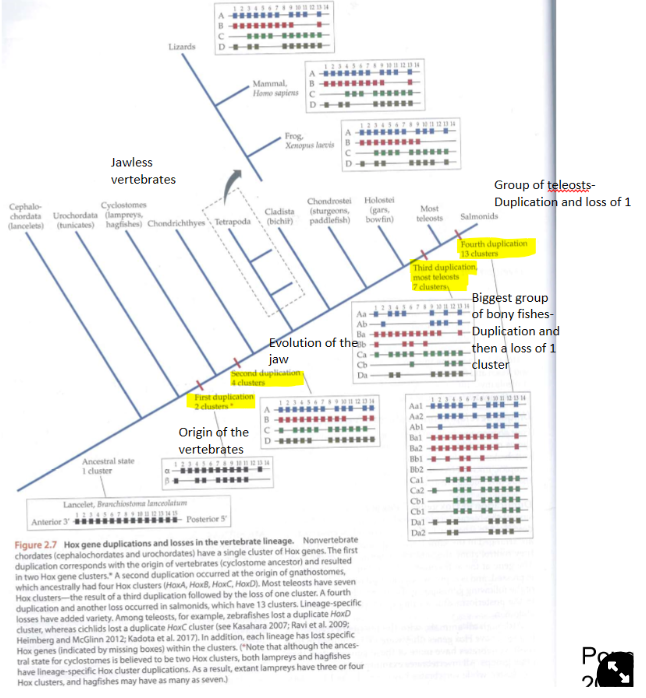
have duplications of the hox gene complex
developmental genes that control anterior-posterior patterning
duplications:
the origin of vertebrates→ first duplication into 2 clusters
the evolution of the jaw→ second duplication into 4 clusters
the evolution teleosts→ third duplication + loss into 7 clusters
the evolution of teleosts into salmonids→ fourth duplication + loss into 13 clusters
→ duplications add to the complexity of vertebrates
have a developed neural crest
neural crest cells are migratory (can move and leave) and are multipotent (can form most cells in the body)
neural crest cells are responsible for new structures, mainly in the head→ add another germ layer to the (quadroblastic)
there are precursors of the neural crest cells in invertebrate chordates→ similar genes expressed when neural plate forms, tunicates (sea squirts) have migratory cells that form pigment cells
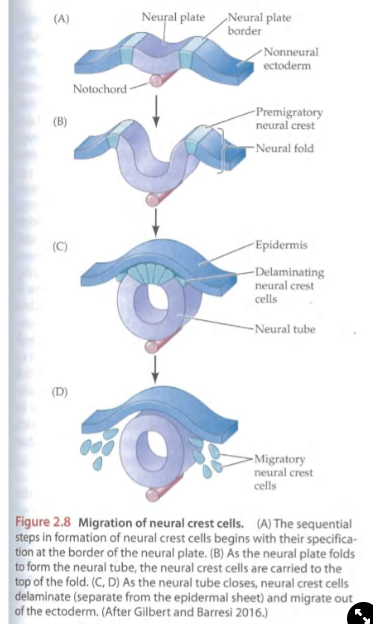
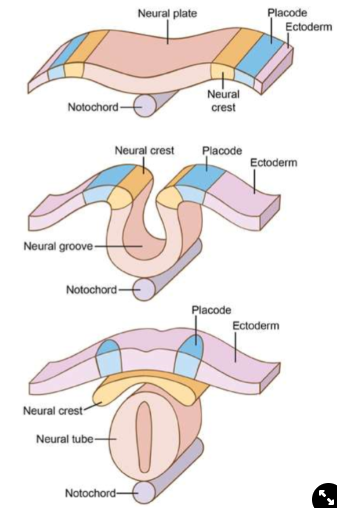
have placodes
complex sense organs, homologs to invertebrate chordates
brain is larger and has 3 parts
forebrain, midbrain, hindbrain
brain of invertebrates is not divided but has similar genes except from in the forebrain→ link between vertebrates and invertebrates
are larger and have a higher metabolic rate
need organ systems as they cannot do diffusion/ciliary action
can have short periods of anaerobic respiration
small bursts of energy, produces lactic acid
Vertebrates have transitioned from…
filter feeding to active predators
Mineralised Tissues-
arose later in vertebrate evolution
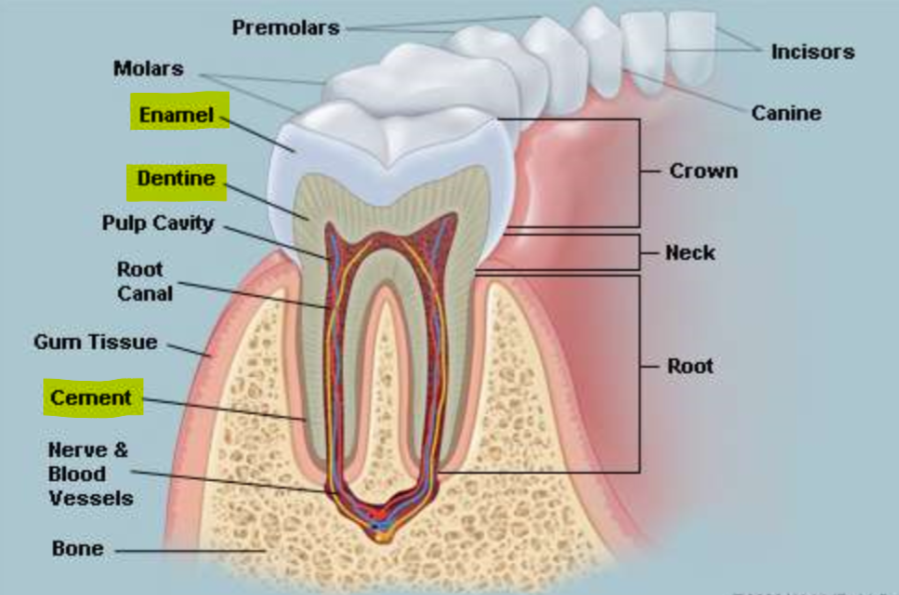
are made up of collagen fibres, proteinaceous tissue and hydroxyapatite
mineral made up of calcium and phosphorus
is more resistant to lactic acid so does not dissolve
Types of mineralised tissue:
mineralised cartilage
bone
enamel, enameloid, dentine
cementum
mineralised cartilage
cartilage that has minerals added to it, main skeletal tissue of sharks and cartilaginous fish
70% mineralised
bone
internal skeleton of bony fish and tetrapods
has a blood supply→ can be repaired
dermal bone→ in the skin e.g. skull
endochondral bone→ in the body e.g. cartilage precursor replaced by bone
70% mineralised
enamel, enameloid, dentine
teeth, exoskeleton of ancient vertebrates, dermal scales
90-96% mineralised→ is more tough than bone
cementum
keeps teeth inside its socket
what did early vertebrates have instead of teeth:
odontodes
tooth-like structures on the outside of animals
grouped together on the outside to form an armour of mineralised tissue
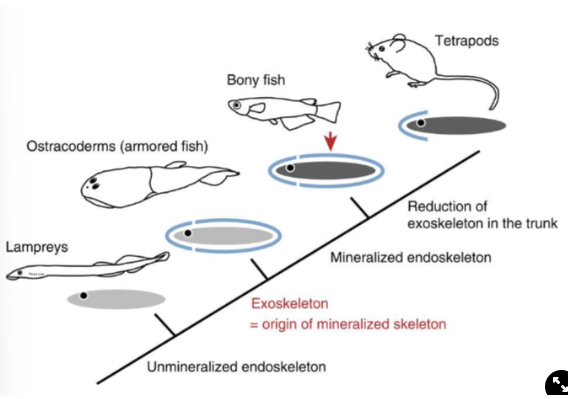
Development of mineralised tissue in vertebrates:
Lampreys→ no mineralised tissue
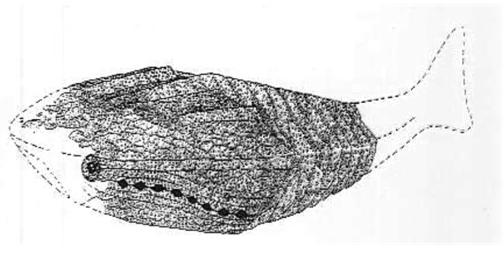
Ostracoderms→ have an armoured outside tissue made of odontodes
Bony fish→ retain the exoskeleton through fins and scales but also have an endoskeleton
Tetrapods→ retain the exoskeleton only in the head region, retain the endoskeleton
Theories of why mineralised tissue evolved:
Defense
Protecting electroreceptors→ used by some groups to detect prey
Store and regulate phosphorus and calcium→ hydroxyapatite
The Earliest Vertebrates→ believed to be:
conodonts
arose ~500mya
fossils look like mineralised tissue and had tooth-like structures in their throats
could have evolved convergently
The Earliest Vertebrates→ may have been:
ostracoderms
armour of odontodes
The Earliest Vertebrates→ actually was…
Myllokunmingia
fossil found to be from ~530mya
has current vertebrate features e.g. notochord, dorsal fin…
has early vertebrate features e.g. skull and skeletal elements made of cartilage
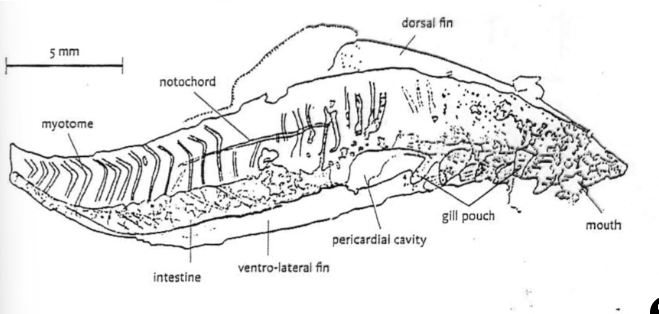
The Earliest Vertebrates→ also found…
Haikouichthys
~530mya
can see the sensory structures too→ implies a neural crest
may be the same as Myllokunmingia
The earliest vertebrates originated in what environment?
marine environment:
earliest fossils are in marine sediments
closest vertebrate relatives are marine (invertebrate chordates and hagfish)
the body fluids of vertebrate closest relatives and hagfish are isotonic to marine water (same concentrations)
