EU Copyright Law - night before exam: key cases
 Studied by 1 person
 Call Kai
 Learn
Learn Practice Test
 Spaced Repetition
 Match
Match Flashcards
 Knowt Play
1/36

There's no tags or description
Looks like no tags are added yet.
Name | Mastery | Learn | Test | Matching | Spaced | Call with Kai |
|---|
No analytics yet
Send a link to your students to track their progress
37 Terms
Infopaq (C-5/08)
The case concerned copying 11 words from newspaper articles.
The CJEU held that even very short extracts can be protected if they reflect the author's own intellectual creation. This established the EU-wide originality standard.

Painer (C-145/10)
Concerned portrait photographs. The Court held that photos are protected where the photographer made creative choices, such as pose, lighting, angle, or framing. Photographs are not excluded from copyright protection.
Football Dataco (C-604/10)
The Court rejected protection based on skill and labour alone holding that originality requires creative choices, not effort. This rejected the 'sweat of the brow' doctrine.
SAS Institute (C-406/10)
Concerned copying software functionality and programming language. The Court held that copyright protects expression, not ideas, functionality, or programming languages. This confirms the idea/expression dichotomy.

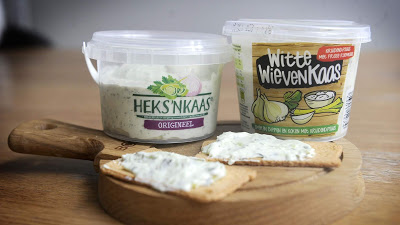
Levola Hengelo (C-310/17)
Concerned whether the taste of a cheese could be a copyrighted work. The Court held that a work must be identifiable with precision and objectivity, which taste is not. Sensory experiences without fixed expression are excluded.
Cofemel (C-683/17)
Concerned copyright protection for clothing designs.
The Court held that there is no aesthetic or artistic merit test in EU law and applied art is protected if it is original.
2 Tier definition of work:
originality
identifiable expression
Mio (C-580/23)
Confirmed the Cofemel approach. Member States may not impose additional national requirements for applied art beyond originality. This reinforces harmonisation.
Pippi Longstocking Costume (BGH)
Concerned a costume resembling the book character. The German court held that characters can be protected if they are sufficiently distinctive. Protection depends on recognisability.
Pelham I (C-476/17)
Concerned the use of a two-second sound sample from a song constitutes a reproduction under Art 2 InfoSoc and a licence is required unless an exception applies.
However → the Court found that there is no reproduction—and thus no infringement—if a user takes a sound sample to include it in a new work in a modified form that is unrecognisable to the ear
Zhang v Dieschburg (Lux CA)
Concerned a painting based on a photograph. The court held that transforming a work does not avoid infringement if original elements are still recognisable. Transformation ≠ automatic legality.

Porsche 911 (BGH)
Concerned use of the shape of the a later model of the car. The court focused on whether the essential characteristics of the original work were recognisable (they were not). Recognition of key elements determines infringement.
Circul Globus București (C-283/10)
Concerned playing music in a circus. The Court held that EU law only covers communication to a public not present at the place where the communication originates. Live performances fall under national law.
Rafael Hoteles (C-306/05)
Concerned hotel rooms receiving TV broadcasts. The Court held that hotel guests constitute a new public, making retransmission a communication to the public. This introduced the 'new public' concept.
Svensson (C-466/12)
Concerned hyperlinking to newspaper articles. The Court held that linking is a communication, but no new public exists where content is freely accessible with the rightholder's consent. Linking is lawful in that case.
GS Media (C-160/15)
Concerned linking to illegally uploaded content. The Court held that linking is infringing if the linker knew or should have known the content was illegal. Knowledge is presumed where linking is done for profit.

BestWater (C-348/12)
Concerned embedding (framing) a YouTube video. The Court treated framing as equivalent to linking. If no new public is reached, there is no infringement.

VG Bild-Kunst (C-392/19)
Concerned framing where the rightholder used technical protection measures to prevent it. The Court held that circumventing such measures targets a new public. Framing then infringes copyright.
Renckhoff (C-161/17)
Concerned copying an image from one website and re-uploading it to another. The Court held this is not linking but re-publication, which always reaches a new public. It is infringement.
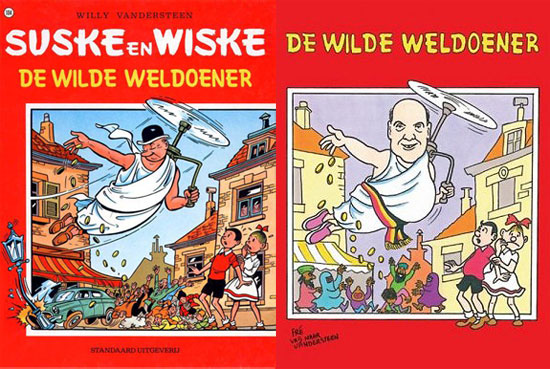
Deckmyn (C-201/13)
Concerned a political cartoon parody. The Court held that parody must evoke an existing work, be noticeably different, and involve humour or mockery. A strict parody definition.
Pelham II (C-590/23)
Concerned whether musical sampling could be justified as pastiche. The Court held that pastiche is an autonomous EU concept, does not require humour, and must be recognisable yet noticeably different. It may cover some artistic sampling.
Vorschaubilder I (BGH)
Concerned Google image search thumbnails. The court held that uploading images online implies consent to thumbnail creation by search engines. This is based on implied licence reasoning.
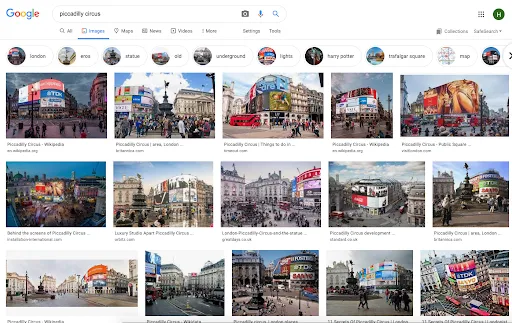
Padawan (C-467/08)
Concerned levies on devices for private copying. The Court held that compensation must reflect actual harm to rightholders. Blanket levies on all devices are unlawful.
UsedSoft (C-128/11)
Concerned resale of downloaded software. The Court held that exhaustion applies to digital software copies if they are perpetual. Licences can be resold.

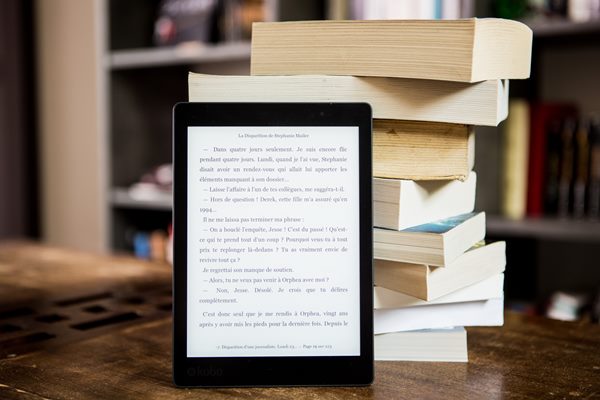
Tom Kabinet (C-263/18)
Concerned resale of e-books. The Court held that exhaustion does not apply to e-books because they involve communication to the public. Digital books cannot be resold like software.
Mircom (C-597/19)
Concerned copyright enforcement by entities acquiring rights to sue. The Court allowed enforcement but warned against abusive copyright trolling. Enforcement must be legitimate.
Stowarzyszenie Oławska (C-367/15)
Concerned damages for copyright infringement. The Court held that damages must be effective, proportionate, and dissuasive, but not punitive.
3 Step Test - (Art. 5.5 InfoSocDir)
→ Exceptions and limitations are only allowed if they:
(1) apply in certain special cases,
(2) do not conflict with the normal exploitation of the work, and
(3) do not unreasonably prejudice the legitimate interests of the rightholder.
This test limits how broadly exceptions can be interpreted.
Communication to the Public (Art. 3 InfoSoc)
→ Requires:
(1) an act of communication, and
(2) communication to a public.
In many cases, the key question is whether a “new public” is reached.
New Public
Public not taken into account by the rightholder when authorising the original communication.
→ If no new public is reached (e.g. Svensson), there is no infringement.
→ If a new public is reached (e.g. Renckhoff), there is infringement.
Hyperlinking Test (Svensson / GS Media)
→ Linking to freely accessible authorised content = no new public.
→ Linking to illegal content = infringement if the linker knew or should have known.
Knowledge is presumed when linking for profit.
Framing
Generally treated like linking.
It is lawful unless it circumvents technical protection measures, in which case it reaches a new public (e.g paywall)
This was confirmed in VG Bild-Kunst.
Art. 5 InfoSoc Exceptions
→ Member States may, but do not have to, implement the exceptions in Art. 5.
If they do, they must comply with the three-step test.
Exceptions must be interpreted strictly.
Parody
→ Member States may, but do not have to, implement the exceptions in Art. 5.
If they do, they must comply with the three-step test.
Exceptions must be interpreted strictly.
Pastiche
→ No humour required.
Must be recognisable and noticeably different.
May cover artistic imitation or sampling (Pelham II).
Article 17 DSM Directive (OCSSPs)
Article 17 DSM Directive (OCSSPs)
→ Online content-sharing service providers perform an act of communication to the public.
They are liable unless they show best efforts to obtain licences, prevent availability, and remove content.
Users must still be able to rely on exceptions like parody and pastiche.
Territoriality
→ Copyright protection and enforcement are territorial.
Implied Consent / Implied Licence
→ Consent may be inferred from the rightholder’s conduct.
Uploading content publicly online may imply consent to technical uses like thumbnails.
This reasoning was used in Vorschaubilder I.
 Note
Note  Flashcards (919)