BIOL 1040 Unit 3
 Call Kai
 Learn
Learn Practice Test
 Spaced Repetition
 Match
Match Flashcards
 Knowt Play
1/149

There's no tags or description
Looks like no tags are added yet.
Name | Mastery | Learn | Test | Matching | Spaced | Call with Kai |
|---|
No analytics yet
Send a link to your students to track their progress
150 Terms
Mycology
The study of fungi
Animals
A fungi more closely related to animals or plants
Mycelium
Filamentous network of compromised of individuals strands of hyphae
Chitin
What is the cell wall made of in fungi
Absorption
Products of digestion are taken up by cells
Decomposer
Break down organic matter to release nutrients
Mycorrhizae
A mutualistic symbiotic relationship between fungi and plant root
Ligin (in wood)
Recycles nutrients and stores carbon
Mutualistic symbiotic relationship
Both the animal and the fungi benefit from the relationship
Chytrids
Have flagellated spores and are common in soil and aquatic habitat
Mycosis
General term for disease caused by fungus
Zygomycetes
Mold
Mold
Rapidly growing fungi that reproduce asexually by producing spores
Yeast
Single-celled fungi
Penicillium
Diverse group with many uses
Antibiotics
Penicillium used to produce penicillin to treat bacterial infections
Lichen
Mutualistic relationship between fungi and a photosynthesizer
Cordyceps
Genus of parasitic sac fungi
Cordyceps Fungus
Insect mind control- compel insect to move to a spot that is best for spore dispersal
Transpiration
The loss of water from leaves by evaporation
Stomata
Regulation is achieved via the opening and closing of what (leaf pores)
Heterotrophs
Derive food from organic sources (don’t create their own)
Psilocybin
Active compound in a “magic” mushrooms
LSD
lysergic acid derived from ergot fungus
Lichen
Which are considered pioneers that create new habitats by converting rock to soil
Plant
Multicellular eukaryote autotroph (produces own food through photosynthesis) and has embryo that develops within protected environment of female parent
Bryophytes, ferns, gymnosperms, angiosperms
The formation of waterproof covering (cuticle) to prevent dehydration; and pores (stomata) to regulate water transport and gas exchange
Ferns, gymnosperms, angiosperms
The development of woody vascular tissue (xylem and phloem) for support and transport of materials throughout larger plants
Gymnosperm, angiosperms
The formation of diploid embryos in the absence of swimming gametes and water, and within protective structures for embryos
Gymnosperms, angiosperms
The development of seeds for dispersal; seed dormancy for enduring harsh or unfavorable conditions
Angiosperms
The development of flowers and fruits to ain in embryo/seed protection and dispersal
Alternation of Generations
Life cycles in which there are distinct multicellular haploid and diploid life forms thta alternate from one generation to the next
Gametophyte
The haploid generation of the plant that produces haploid gametes via mitosis
Sporophyte
The diploid generation of the plant that results from the growth and development of the 2n zygote, and eventually produces haploid spores via meiosis that develop into gametophytes
Xylem
Transports water and minerals upwards in plant (one way flow)
Xylem
The “woody tissue” of higher plants
Xylem
Cellulose cell walls are reinforced with ligin
Phloem
“inner bark” of higher plants
Phloem
Transports organic molecules (e.g. sugars; two-way flow)
Sporophyte
Life cycle is dominated by what
Gametophyte
small, short-lived, inconspicuous
Sperm and eggs
Produced on the underside of gametophyte
Spores
produced on underside of sporophyte
Immature sporophyte
In ferns, an embryo is a(n)
Pollen
Male gametophytes enclosed in a case
Gymnosperm
Produce seeds, but not flowers or fruit
Conifers
Are the most abundant gymnosperm
Angiosperm
Flowering plants
Angiosperms
Can reproduce much more rapidly than gymnosperms (rapid seed development, fast germination, animal-assisted pollination)
Sepals
Protect flowers before they open
Petals
attract pollinators
Stamen
Male component
Anther and filament
Stamen includes
Anther
The male sporangium in which meiosis occurs to form the male gametophyte (i.e. the pollen grain) and mitosis forms gametes (sperm)
Filament
The stalk bearing the anther
Carpel
Female component
Stigma, style, ovary, ovule
Carpel includes
Stigma
sticky and receptive portion of a carpel that traps pollen grain and promotes its gemination
Style
Connects the stigma with the ovary
Ovary
Area in which ovules (each containing an egg) develop; often develops into a fruit
Ovule
The female sporangium in which meiosis occurs to form the female gametophyte and mitosis forms gamete (egg cell) that is eventually fertilized to become the zygote or seed
Pollination
Occurs when a pollen grain lands on the stigma. A pollen tube grows from the pollen grain to the ovule
Double fertilization
The tube carries two sperm. One fertilizes the egg to form a zygote, the other creates the endosperm (provides nutrition)
Style
What is the tube-shaped structure connecting the stigma to the ovary
Fruit
Ripened ovary of a pollinated flower
Ovary
1
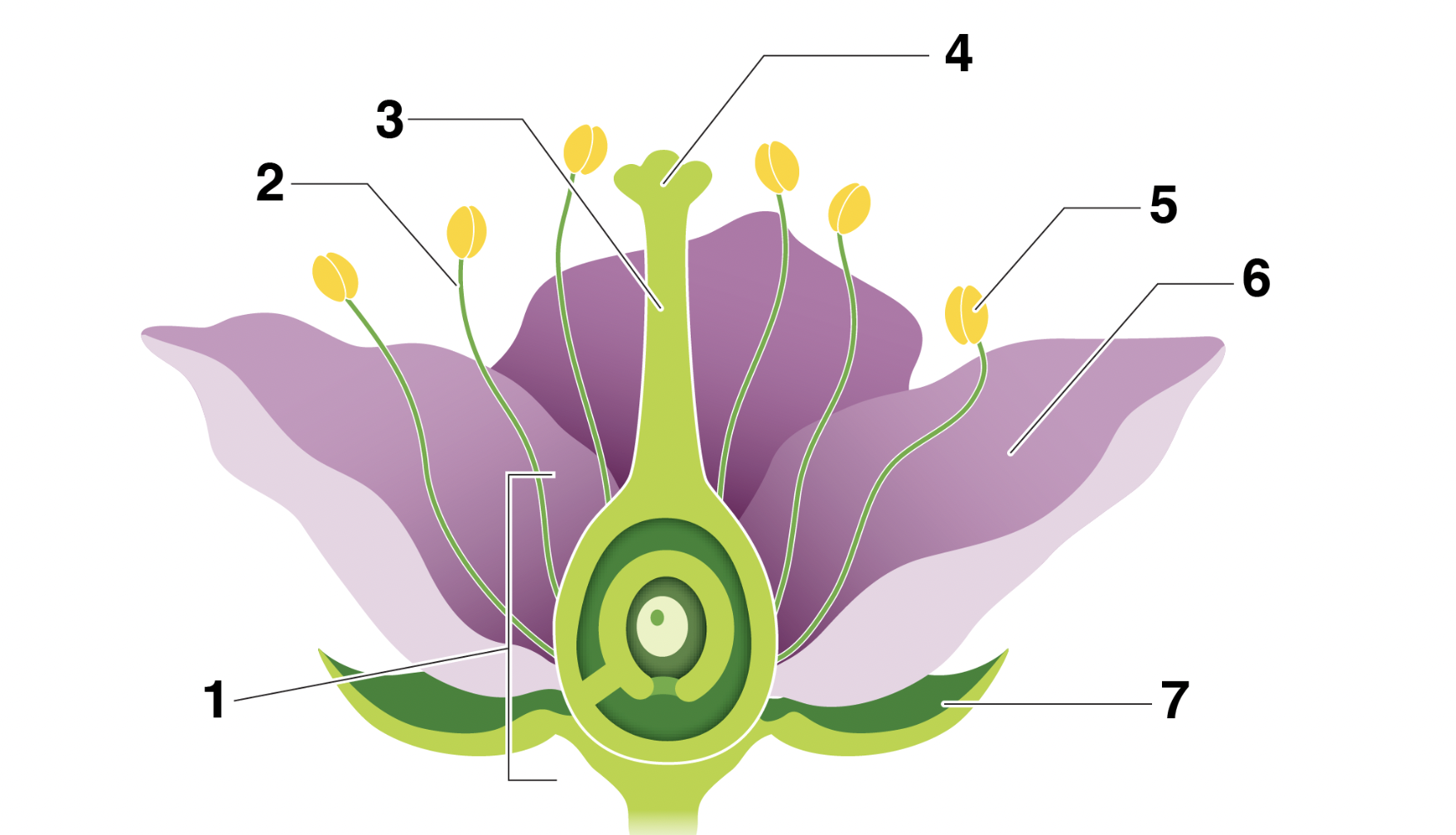
Filament
2
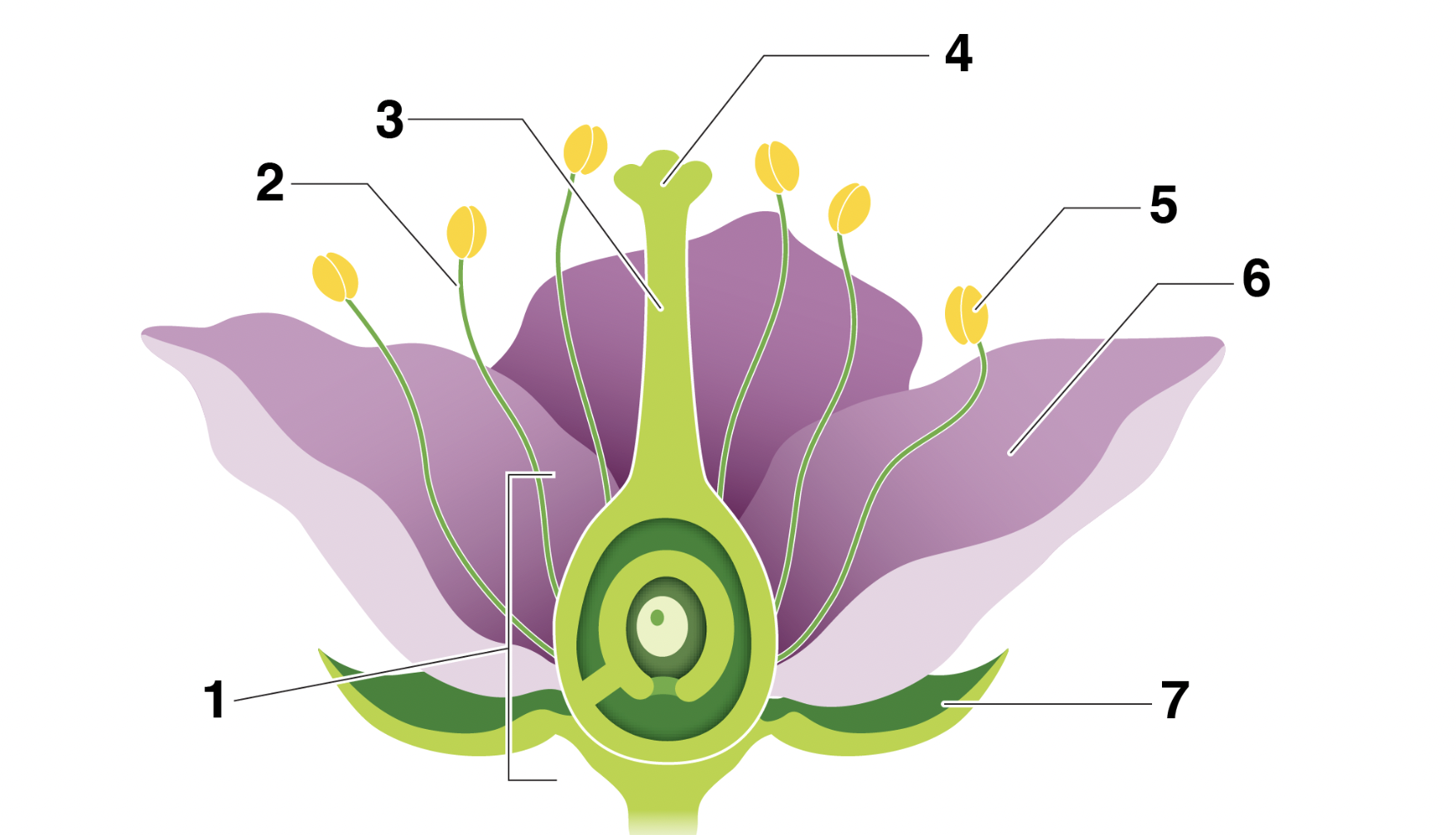
Style
3
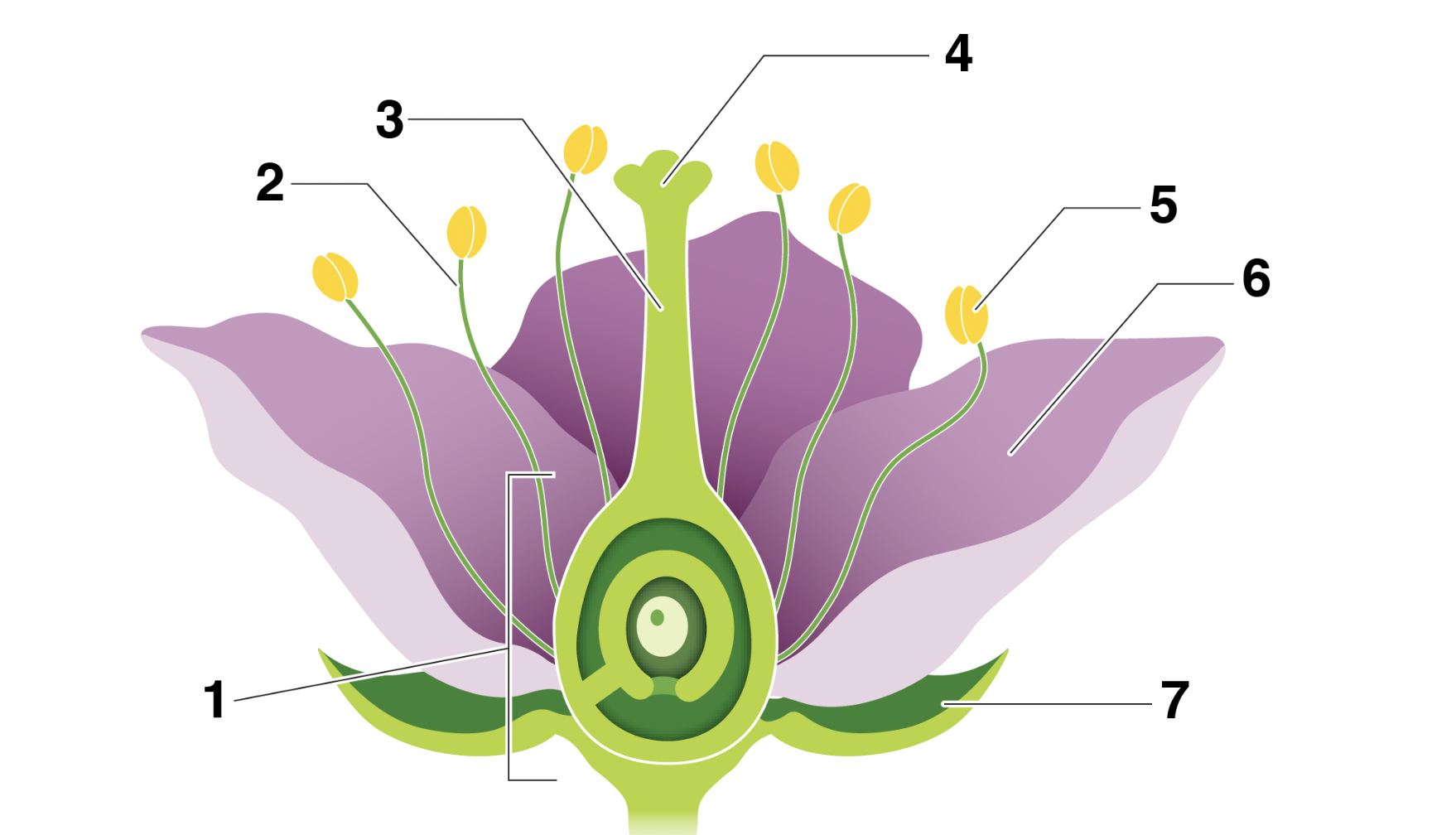
Stigma
4
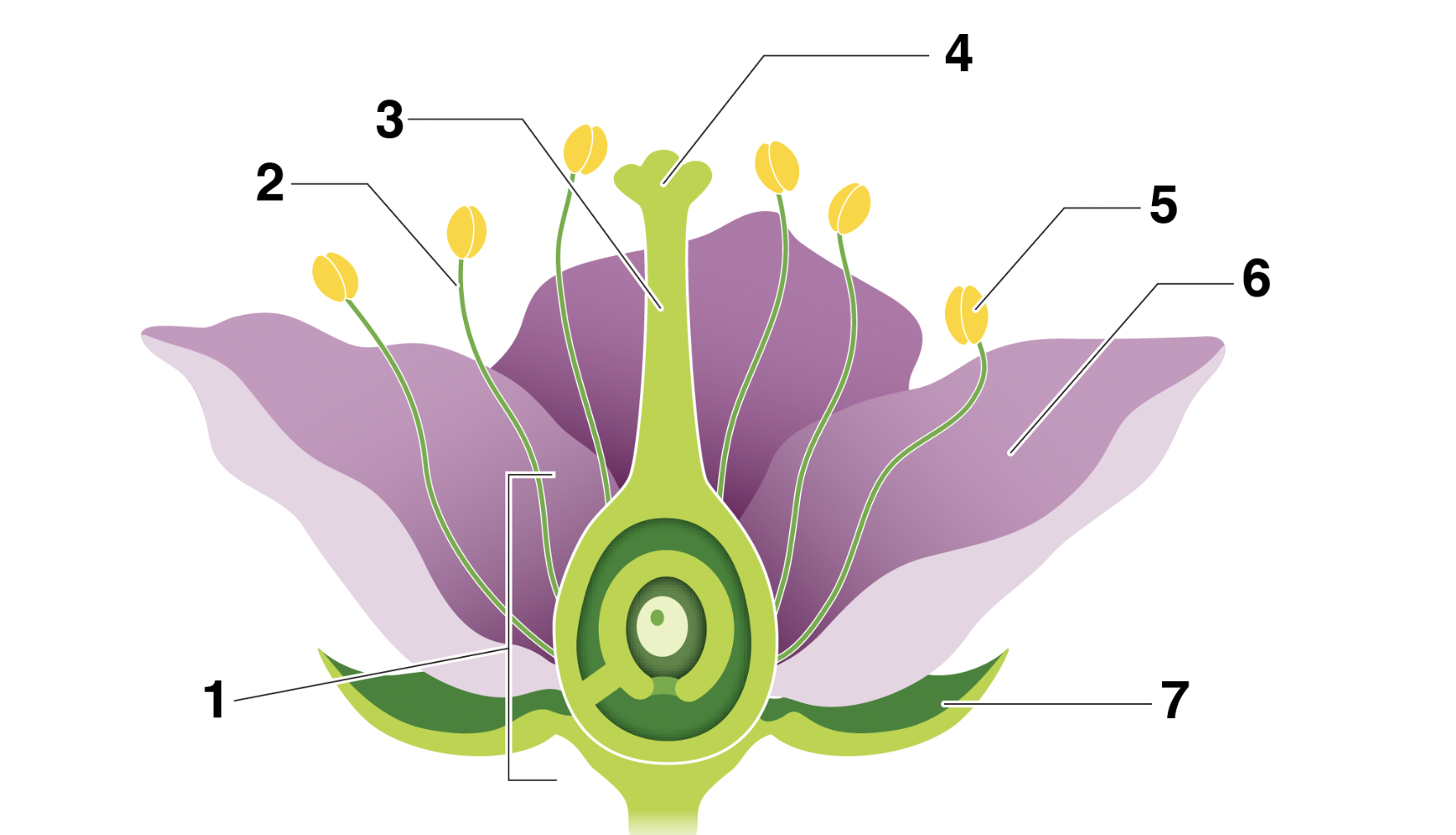
Anther
5
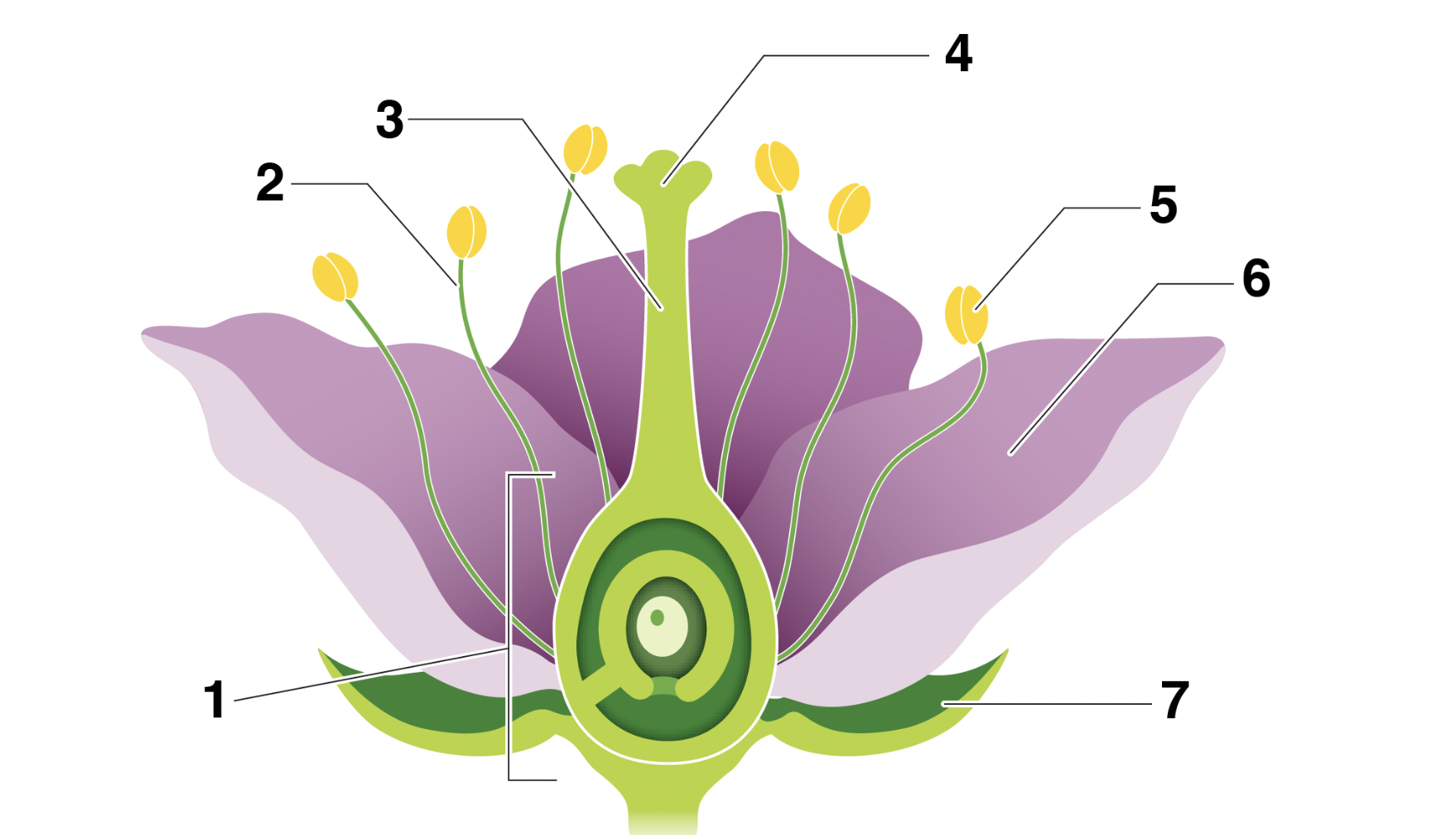
Petal
6
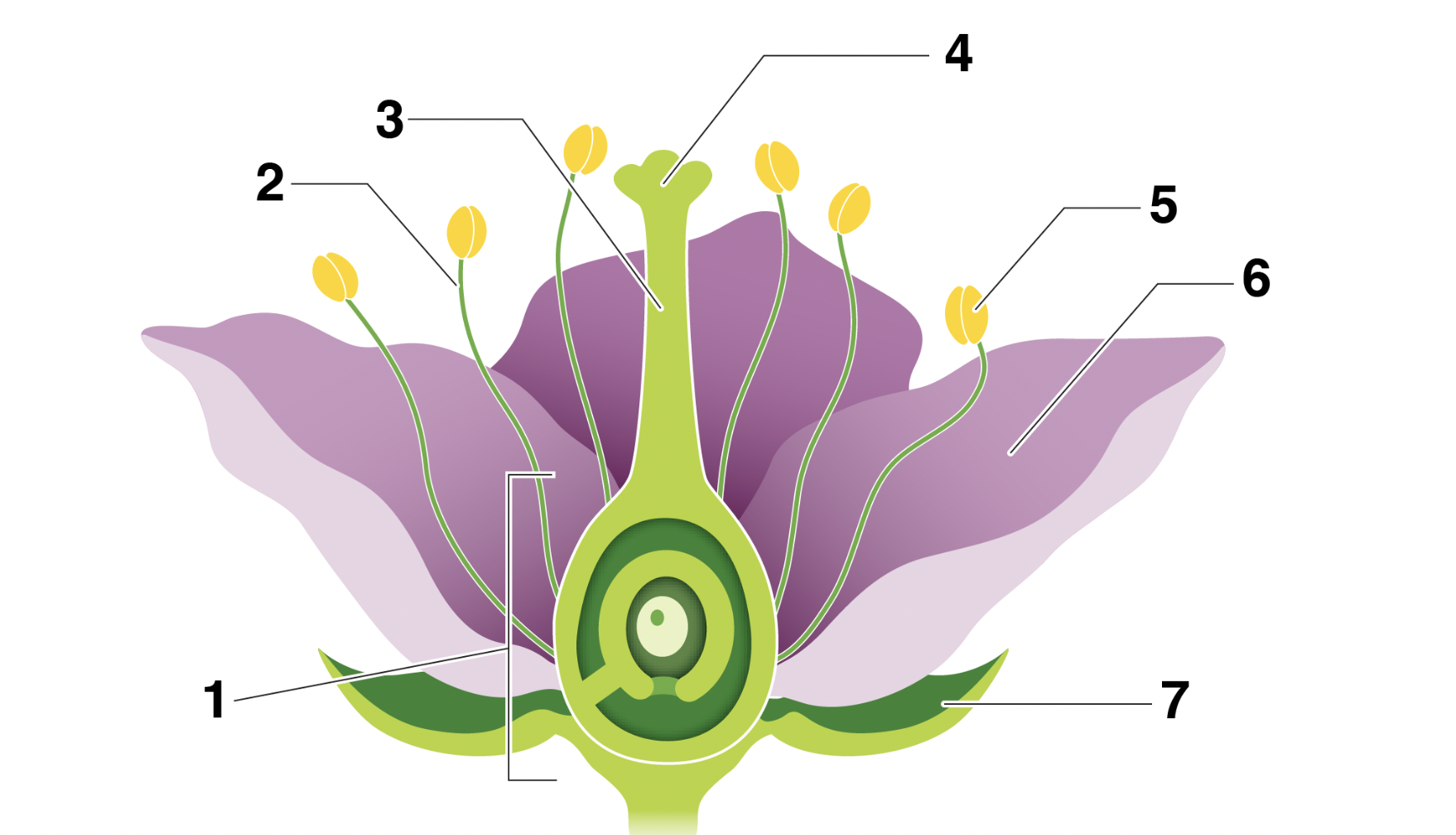
Sepal
7
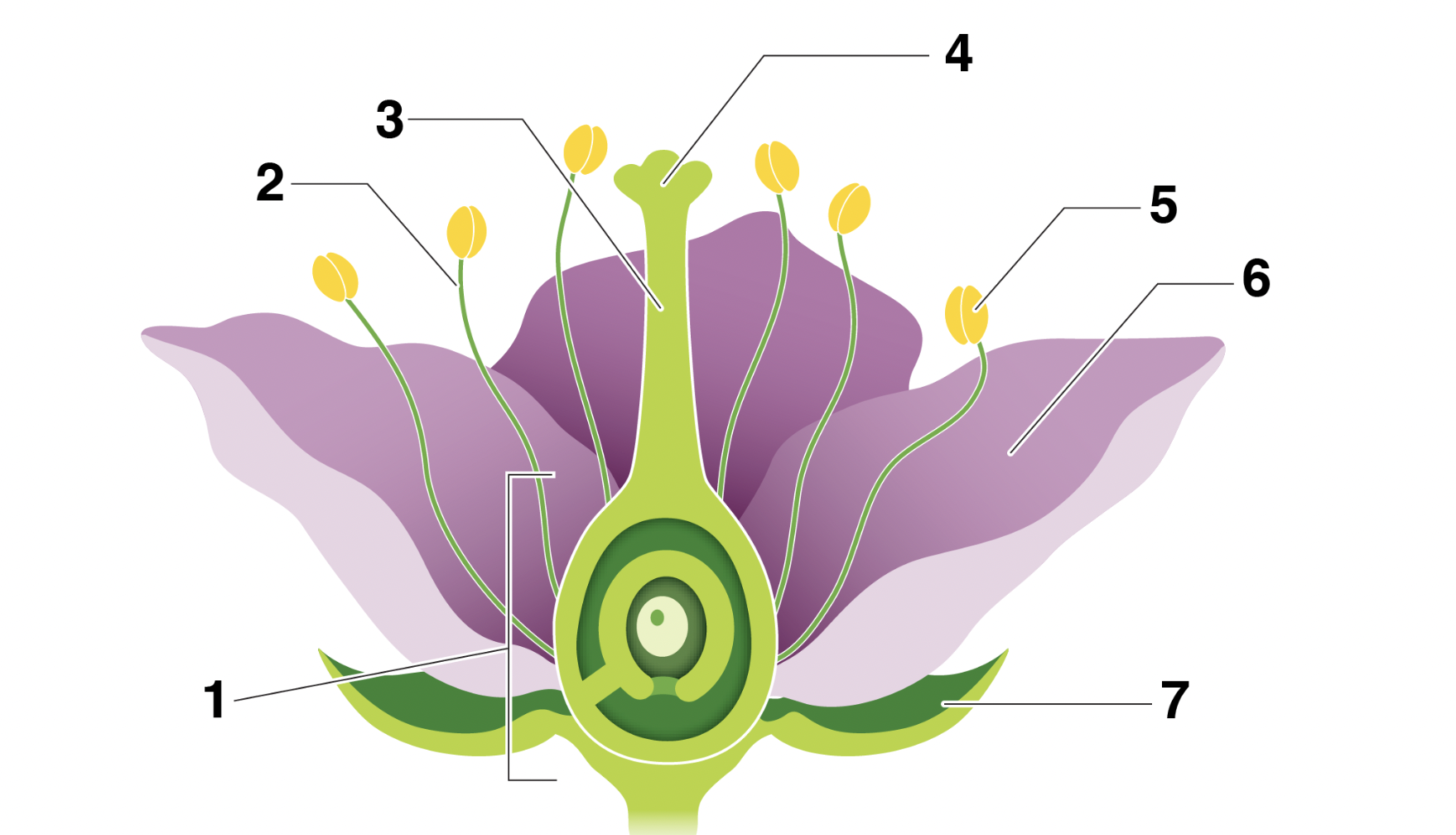
Gymnosperms
Which were the first to evolve trees
Giant Sequoia “General Sherman”
Largest tree by volume
Coast Redwood “Hyperion”
Tallest tree
Bristlecone Pine “Methuselah”
Oldest tree
Cotyledons
embryonic leaves
Dicot
Is a peanut seed a monocot or dicot
Dermal tissue system
Forms the plant’s outer protective covering (e.g. waxy cuticle)
Guards against damage, infection and water loss
Dermal tissue system
Vascular Tissue system
Thick-walled tissues that provide support and a long distance transport system between roots and shoots
Ground tissue system
Majority of plant tissue
Ground tissue system
Photosynthesis, storage, hormone production and support functions
Cuticle
Waxy covering that reduces water loss
Guard Cells
open and close stomata (pores) involved in gas exchange
Cork Cells
Outer layer of bark- protective
Xylem
Cells are dead, hollowed out, and hardened with lignin
Phloem
Transports sugars, hormones, etc. upwards and downwards throughout the plant
Living
Are phloem cells living or dead
Ground tissue system
Fills the space between dermal and vascular tissues
Taproot or fibrous roots, root hairs
Root system
Stems, leaves, flowers
Shoot system
Leaves
The primary sight of photosynthesis, the conversion of energy from the sun into food for the plant
Stems
provide structural support for the plant
Stems
Position leaves so that they can be exposed to sunlight for photosynthesis
Stems
Conduct food, water, and plant nutrients throughout the plant
Roots
Absorb water and minerals from the soil
Roots
Anchor the plant in place
Taproot
Dominant central root from which other roots sprout laterally
Meristems
Regions of cell division and differentiation (new growth)

