4.2.1 biodiversity
0.0(0)
 Studied by 2 people
 Call Kai
 Learn
Learn Practice Test
 Spaced Repetition
 Match
Match Flashcards
 Knowt Play
Card Sorting
1/112

Earn XP
Description and Tags
Last updated 10:55 AM on 4/13/23
Name | Mastery | Learn | Test | Matching | Spaced | Call with Kai |
|---|
No analytics yet
Send a link to your students to track their progress
113 Terms
1
New cards
what is biodiversity?
a measure of variation found in the living world.
\-about the structural and functional variety in the living world.
\-about the structural and functional variety in the living world.
2
New cards
habitat
where an organism lives
3
New cards
what is habitat diversity
the range of habitats in which different species live
4
New cards
what are some common habitats found in the uk?
\-sand dunes
\-woodland
\-meadows
\-streams
etc
\-woodland
\-meadows
\-streams
etc
5
New cards
what is a species
a group of organisms that can freely interbreed to produce fertile offspring
6
New cards
what is a fertile offspring
an offspring that can breed to give rise to more offspring
7
New cards
what is genetic biodiversity
the variation between individuals belonging to the same species.
8
New cards
why do we have genetic biodiversity
to ensure that we all don’t look identical.
9
New cards
how do you sample a habitat
\-select a small portion and study it carefully
\-then multiply up the numbers of individuals of each species found, to estimate the number in the whole habitat
\-ensure that sample is representative
\-then multiply up the numbers of individuals of each species found, to estimate the number in the whole habitat
\-ensure that sample is representative
10
New cards
what are the different types of samples
random
non-random include:
opportunistic
stratified
systematic
non-random include:
opportunistic
stratified
systematic
11
New cards
species richness
a measure of how different species are present
12
New cards
species evenness
a measure of how evenly represented the species are
13
New cards
allele
an alternative version of a gene
14
New cards
locus
the position of that gene on a chromosome.
15
New cards
Polymorphic gene locus
a locus that has more than two alleles
16
New cards
what kind of habitat would be more diverse?
a habitat in which there are even numbers of individuals in each species than where individuals of one species outnumber all the others.
more species evenness= more diversity
more species evenness= more diversity
17
New cards
how would you measure species richness
\-by counting all the species present in the habitat.
18
New cards
how would you measure species evenness
\-carry out quantitative survey.
19
New cards
how would you survey the frequency of plants?
\-use sampling techniques
\-record percentage cover of each plant species.
(large plants) -count the number of individuals per unit area
\-record percentage cover of each plant species.
(large plants) -count the number of individuals per unit area
20
New cards
what does measuring the density of animals in a habitat mean?
calculating how many animals of each species there are per unit area of the habitat.
\-larger ones counted by observation
\-smaller ones by sampling techniques
\-larger ones counted by observation
\-smaller ones by sampling techniques
21
New cards
how would you work out the population in soil
take a sample of soil and sift through it to find all the individuals and count them.
22
New cards
How would you sample in water and estimate population size density
Use a net to sample in the water
\-sift through the mud at the bottom
\-sift through the mud at the bottom
23
New cards
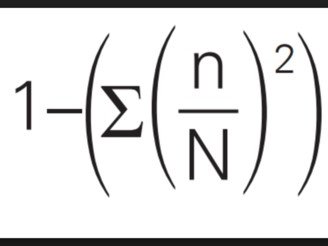
what is simpson’s index of diversity.
A measure of the diversity of a habitat.
\-takes into account both species richness and species evenness.
\-takes into account both species richness and species evenness.
24
New cards
what does a high value of Simpson’s index indicate?
shows a diverse habitat
\-a habitat provides a place for many different species and many organisms to live in.
\-a habitat provides a place for many different species and many organisms to live in.
25
New cards
what happens if there is a small change in the environment
could effect one species
\-if it is small, then the total number of individuals affected is a small proportion of the t
\-if it is small, then the total number of individuals affected is a small proportion of the t
26
New cards
what does a low value for diversity suggest?
a habitat dominated a few species.
27
New cards
what could a small change in an environment do to a species?
it could damage or destroy the whole habitat.
28
New cards
give an example of a small change
disease
predator
human’s actions
predator
human’s actions
29
New cards
how would genetic diversity be for isolated population
genetic diversity would be limited
30
New cards
what can measuring the genetic diversity do?
it can help asses the value of that population as a resource for conservation
31
New cards
Where is genetic diversity found?
where there is more than one allele for a particular locus
32
New cards
how would you asses the genetic diversity?
By looking at the observable features of the individuals.
33
New cards
what does genetic diversity lead to
this will lead to variations between individuals that may be easily observable
\-it means that there will be more genetic differences between the gametes produced by member
\-it means that there will be more genetic differences between the gametes produced by member
34
New cards
if there is a large number of different habitats with an area, what would be the biodiversity? Give an example
it would have a high biodiversity.
e.g- coral reef (lots of microhabitats)
e.g- coral reef (lots of microhabitats)
35
New cards
if there are only one or two different habitats within an area, what would the biodiversity be like? Give an example
\-low biodiversity
\-large sandy deserts have low biodiversity as the conditions are the same throughout the whole area
\-large sandy deserts have low biodiversity as the conditions are the same throughout the whole area
36
New cards
what does it mean when there is a greater number of species in an ecosystem?
\-the more evenly distributed the number of individuals from each species, the greater the species diversity
37
New cards
why are ecosystems with a high species diversity considered more stable than those with lower species diversity? Give an example.
as they are more resilient to environmental changes.
e.g Pine forests of Florida
the ecosystems is dominated by one of two tree species. If a pathogen targets one of the two dominant species of trees, then the whole population could wipe out and the ecosystem would collapse.
e.g Pine forests of Florida
the ecosystems is dominated by one of two tree species. If a pathogen targets one of the two dominant species of trees, then the whole population could wipe out and the ecosystem would collapse.
38
New cards
Can there be genetic difference between populations of the same species and why?
Yes
\-because the two populations occupy different ranges in their habitat, so they are get different selection pressures that affect the allele frequency in their population.
\-because the two populations occupy different ranges in their habitat, so they are get different selection pressures that affect the allele frequency in their population.
39
New cards
why is genetic diversity important?
it can help the population adapt to, and survive changes in the environment
40
New cards
what does inbreeding in a small, isolated populations lead to?
* a high proportion of individuals being homozygous
* results in lower genetic diversity
* also means that genetic diseases caused by recessive alleles can become more common in these populations
* results in lower genetic diversity
* also means that genetic diseases caused by recessive alleles can become more common in these populations
41
New cards
what is a sample?
a method of investigating the abundance and distribution of species and populations
42
New cards
what is random sampling?
the positions of the sampling points are completely random or due to chance
43
New cards
give one advantage of using random sampling
* there will be no bias by the person carrying out the sample as it could affect results.
44
New cards
what is non-random sampling?
* sampling the positions of the sampling points completely random of due to chance
45
New cards
give one weakness of non-random sampling
* there is a chance that the person choosing could show bias towards certain areas.
* they may deliberately place quadrats in areas with the least species as its easier
* Unrepresentative
* they may deliberately place quadrats in areas with the least species as its easier
* Unrepresentative
46
New cards
when is the best time to use random sampling
\-when a sample area is reasonably uniform or has no clear pattern
47
New cards
what does the distribution of a species mean?
describes how it spread throughout the ecosystem.
48
New cards
what does the abundance of species mean?
the number of individuals of that species.
49
New cards
what is a quadrat?
\-square frames made of wood or wire
\-placed on the ground and the organisms within them are recorded.
they can be used to measure the distribution and abundance of plants or slow-moving animals.
\-placed on the ground and the organisms within them are recorded.
they can be used to measure the distribution and abundance of plants or slow-moving animals.
50
New cards
how do you avoid sampling bias when using quadrats?
by placing it randomly in the area
51
New cards
describe how you would use a quadrat in an experiment
* convert sampling area into a grid format and labelling each square on the grid with a number
* the use a random generator to pick the sample points
* the abundance of all the different species present can be recorded
* the use a random generator to pick the sample points
* the abundance of all the different species present can be recorded
52
New cards
what are sweeping nets?
* large, strong nets with a fine material used to catch flying insects and insects that live in long grass by sweeping the net back and forth through the grass
53
New cards
what are pitfall traps?
* cans or jars that are buried in the ground that used to catch ground insects as they fall into the trap.
54
New cards
what are pooters?
small plastic containers with two tubes sticking out that are used to suck up small insects
* first tube is placed over the insect and the second tube is used by the scientist to create suction
* first tube is placed over the insect and the second tube is used by the scientist to create suction
55
New cards
what is a tullgreen funnel?
* funnels with a light bulb above and a container below used to collect invertebrates to move down until the drop into the container
56
New cards
what is kick-sampling?
This technique is used to catch freshwater invertebrates living in streams or rivers
* net placed on the stream-bed so that water can flow into it
* and the steam bed just above the net is churned by the scientist for a set period of time
* invertebrates carried by the stream into the net
* net placed on the stream-bed so that water can flow into it
* and the steam bed just above the net is churned by the scientist for a set period of time
* invertebrates carried by the stream into the net
57
New cards
how would you use a line transect?
* lay out a measuring tape in straight line across the sample area
* at equal distances along the tape, record the identity of the organisms that touch the line e.g every 2m
* produces quantitative data
* at equal distances along the tape, record the identity of the organisms that touch the line e.g every 2m
* produces quantitative data
58
New cards
how would you use a belt transect
* place quadrats at regular intervals along the tape and record the abundance of each species within a quadrat
* produces quantitative data
* produces quantitative data
59
New cards
what is the gene pool
all the alleles of all the genes within a species
60
New cards
why can there be genetic differences or diversity between populations of the same species which increases the size of the gene pool
* This may be because the two populations occupy slightly different ranges in their habitat and so are subject to slightly different selection pressures that affect the allele frequencies in their populations
61
New cards
why is diversity in a species important?
it creates a larger gene pool which can help the population **adapt**, and survive **changes in the environment**
62
New cards
what could be changes in the environment that help the population adapt
**biotic factors** such as new predators, pathogens and competition with other species
**abiotic factors** like temperature, humidity and rainfall
**abiotic factors** like temperature, humidity and rainfall
63
New cards
how can genetic diversity be assessed?
* The **proportion of polymorphic gene loci**
* The number of loci that have two or more alleles
\
* The **proportion of the population that is heterozygous** for any specific gene locus
* **Allele richness**
* The number of different alleles that exist for specific genes
* The number of loci that have two or more alleles
\
* The **proportion of the population that is heterozygous** for any specific gene locus
* **Allele richness**
* The number of different alleles that exist for specific genes
64
New cards
how can phenotypes be used to identify the presence of multiple alleles
when each **different allele** is expressed in the phenotype of an individual they produce **observable differences**
65
New cards
what do you do if some genes with different alleles don’t produce an observable change in the phenotype
**the DNA sequences or the protein products of the alleles must be examined and compared**
66
New cards
what is genetic polymorphism
when there are two or more alleles present at a single loci
67
New cards
what is a monomorphic locus
is one that does not have multiple alleles
68
New cards
what is a polymorphic locus
that has multiple alleles
* The most common allele must have a frequency less than 95% or 99%how
* The most common allele must have a frequency less than 95% or 99%how
69
New cards
how do you assess the genetic diversity of a species population
* They identify how many of these gene loci are polymorphic
* The number of polymorphic gene loci is then divided by the total number of loci being investigated
* The number of polymorphic gene loci is then divided by the total number of loci being investigated
70
New cards
what is the equation for calculating the proportion of polymorphic gene loci (*P*)
***P*** **= number of polymorphic gene loci ÷ total number of loci investigated**
71
New cards
what are limitations of proportion of polymorphic genetic loci
does not illustrate the allele richness of a breed or species
72
New cards
what can you do instead of using the proportion of polymorphic genetic loci
Comparing the **amino acid sequences** of proteins
* This is a useful method when investigating allozymes
* Comparing **DNA sequences**
* Due to the fact that the genetic code is degenerate, the amino acid sequence of two alleles could be the same but their DNA base sequence could be different
* This is a useful method when investigating allozymes
* Comparing **DNA sequences**
* Due to the fact that the genetic code is degenerate, the amino acid sequence of two alleles could be the same but their DNA base sequence could be different
73
New cards
why has there been an exponential growth?
* **Improved technology** leading to an **abundance of food** = increase in birth rate
* **Improved medicine, hygiene and health care** = decrease in death rate
* **Improved medicine, hygiene and health care** = decrease in death rate
74
New cards
what happens as the human population increases
countries become more economically **developed**, our requirement for these **natural resources** also **increases causes a harmful effect on the environment**
75
New cards
why is there a conflict between human needs and a conservation of biodiversity
* The damage to these ecosystems is negatively impacting the **species** and **habitats** contained within them
76
New cards
what are the main factors affecting biodiversity today
\
* Habitat destruction
* Overexploitation
* Hunting
* Agriculture
* Climate change
* Habitat destruction
* Overexploitation
* Hunting
* Agriculture
* Climate change
77
New cards
what happens when land is cleared for human need such as agriculture and industry
* **Habitat loss** (plant and animals completely lose their habitats)
* **Habitat fragmentation** (habitats are divided into small areas - populations living within these **separated habitat fragments** are more likely to suffer from **inbreeding** or **local extinction**)
* **Habitat fragmentation** (habitats are divided into small areas - populations living within these **separated habitat fragments** are more likely to suffer from **inbreeding** or **local extinction**)
78
New cards
why is deforestation one of the most damaging forms of habitat destruction
the **highest levels of biodiversity**
79
New cards
how are marine habitats also being destroyed
\
* **Coral reefs** (some people use dynamite as an extreme way to catch fish, which damages corals)
* **Sea beds** (fishing practices such as trawling, where nets are dragged along the sea bed, destroy this important habitat)
* **Coral reefs** (some people use dynamite as an extreme way to catch fish, which damages corals)
* **Sea beds** (fishing practices such as trawling, where nets are dragged along the sea bed, destroy this important habitat)
80
New cards
how is natural resources being overexploited
they are being used up **faster** than they can be replaced
81
New cards
why are trees being overexploited
much deforestation is **unsustainable**
as trees are **removed** but are **not replaced** by replanting. Even if they are replanted, the **rate at which trees are being removed** far **exceeds** the **rate at which they are growing back**
as trees are **removed** but are **not replaced** by replanting. Even if they are replanted, the **rate at which trees are being removed** far **exceeds** the **rate at which they are growing back**
82
New cards
how is hunting a form of overexploitation
many **wild, non-farmed species** of animals are being hunted and removed **more quickly** than their wild populations can be **replenished**
83
New cards
give an example of hunting being overexploitation
hunting of animals for 'bush meat' in developing countries (including the hunting of primates such as monkeys and chimpanzees, as well as other mammal and reptile species)
84
New cards
what modern farming techniques have had a major negative impact on the level of biodiversity?
* farms raised a monoculture-
* pesticides used on crops, kill insect pests but also kill many non-target species
* fields were made bigger, removal of hedgerows and stonewalls biodiversity removed
* fertilisers- leach into waterways causing eutrophication-leads to the death of fish species
* pesticides used on crops, kill insect pests but also kill many non-target species
* fields were made bigger, removal of hedgerows and stonewalls biodiversity removed
* fertilisers- leach into waterways causing eutrophication-leads to the death of fish species
85
New cards
why are bumblebees in decline?
* bumblebees require habitats with a large number of flowering plants to ensure a supply of pollen all year round e.g hedgerows
86
New cards
use of pesticides to the decline of bumblebees why?
* The **monoculture** of crops **reduces plant diversity** for bumblebee habitats, has a negative impact on pesticides
87
New cards
what two factors that make farming economically viable?
* high yield- measure of how useful a product is obtained
* profit
* profit
88
New cards
why is it difficult to find balance between conservation and farming
* it can be expensive and time-intensive to maintain biodiversity
* it can reduce the yield of crops and livestock
* it can reduce the yield of crops and livestock
89
New cards
what is climate change
* weather patterns to change and frequency of extreme weather to events to increase
90
New cards
how does climate change affect biodiversity
* climate change is happening too fast for species to adapt to these changes, result in many species becoming extinct and a major decline in biodiversity
91
New cards
how is global warming causing decrease in biodiversity
* species move to poles and may not be able to compete with the species already present in these habitats
* some species may not be able to move or change their distributions fast enough to adapt
* some species may not be able to move or change their distributions fast enough to adapt
92
New cards
global warming is threatening marine biodiversity
* increasing the atmospheric CO2 leads to more co2 in seawater, decreasing the pH, negatively affects organisms that require calcium carbonate for shells
* increased ocean temperatures-led to an increased frequency of coral-bleaching events, tiny organisms that live inside help keep them alive leave due to temperature stress
* increased ocean temperatures-led to an increased frequency of coral-bleaching events, tiny organisms that live inside help keep them alive leave due to temperature stress
93
New cards
what are some reasons for maintaining biodiversity
* ecological
* Economic
* Aesthetic
* Social
* Moral/ethical
* Environmental
* Agricultural
* Economic
* Aesthetic
* Social
* Moral/ethical
* Environmental
* Agricultural
94
New cards
why does biodiversity have a major effect on the stability of an ecosystem
* a more diverse ecosystem is better able to survive and adapt to environmental changes or threats
95
New cards
give an example on how biodiversity have a major effect on the stability of an ecosystem
if the temperature of a species-rich lake rises due to global warming:
* Some species of fish in the ecosystem are unable to cope with the change while others can
* Some species of fish in the ecosystem are unable to cope with the change while others can
96
New cards
what are keystone species?
they have a larger impact on the ecosystem than others
97
New cards
give an example as to what happens when keystone species are lost
* Bush elephants in the savannah graze in a very extreme way, knocking over and eating several species of tree
* This destruction of vegetation actually helps to maintain the ecosystem
* This destruction of vegetation actually helps to maintain the ecosystem
98
New cards
What are some economic reasons to maintain biodiversity
* ecotourism- a major source of income for many countries
* Many tourists travel to and spend money in National parks so they can see wildlife
* Increased tourism in a country contributes to the economy and provides jobs
* contributions to the field of **science and technology**
* The specific enzyme used in DNA sequencing was first discovered in thermophilic bacterium found in a hot spring in Yellowstone National Park, USA
* Many tourists travel to and spend money in National parks so they can see wildlife
* Increased tourism in a country contributes to the economy and provides jobs
* contributions to the field of **science and technology**
* The specific enzyme used in DNA sequencing was first discovered in thermophilic bacterium found in a hot spring in Yellowstone National Park, USA
99
New cards
how are aesthetics reasons to maintain biodiversity
\
* **pleasure in the beauty of nature**
* It provides **inspiration** for creatives such as photographers, poets, musicians and artists
* There is a strong argument for preserving biodiversity because of its aesthetic benefits
* **pleasure in the beauty of nature**
* It provides **inspiration** for creatives such as photographers, poets, musicians and artists
* There is a strong argument for preserving biodiversity because of its aesthetic benefits
100
New cards
what are social reasons to maintain biodiversity
people like watching environments which may be lost if they are not conserved, with the loss of the social benefits that they can bring
 Note
Note  Flashcards (66)