alcohol pt 2
 Call Kai
 Learn
Learn Practice Test
 Spaced Repetition
 Match
Match Flashcards
 Knowt Play
1/13

There's no tags or description
Looks like no tags are added yet.
Name | Mastery | Learn | Test | Matching | Spaced | Call with Kai |
|---|
No analytics yet
Send a link to your students to track their progress
14 Terms
opoids and alcohol (acute)
increases endogenous opioid (endophrin) production and release
increase gene expression of both endorphin and enkephalin in selected brain areas of rats
opoids and alcohol (chronic)
reduces gene expression, making less peptides available for release
in humans leads to reduced brain levels of endorphin
may contribute to dysphoria that accompanies chronic alcohol use and withdrawal
opoids (endogenous)
release of DA in mesolimbic neurons is regulated by opioids in the VTA and in the NAC
alcohol induced opioid release may produce reinforcement by modulating DA
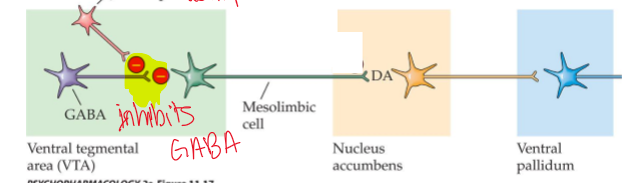
opoid and alcohol reinforcement
opioid receptor antagonist reduce alcohol self admin
naloxone and naltrexone significantly reduce alcohol self admin
u opoid receptor KO mice fail to self adminster ethanol
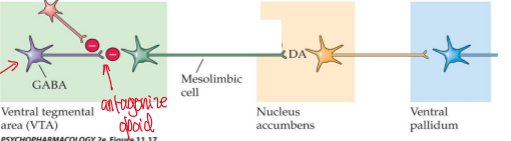
endogenous opioid system
are more responsive to the effects of alcohol in rat strains bred for alcohol preference
higher baseline levels of u-opioid receptors in NAC and amygdala
AUD
alcohol use disorder
chronic relapsing brain disease characterized by compulsive alcohol use, loss of control over alcohol intake and a negative emotional state when not using
detoxification
alcohol use is stopped and withdrawal symptoms are treated until severe abstinence syndrome (e.g. acute phase) has ended
withdrawal symptoms are strong motivators and can be physiologically dangerous
detoxification drugs
involves substituting and benzodiazepine chlordiazepoxide or diazepam
prevents alcohol withdrawal including seizures and DTs
dose is gradually reduced, withdrawal symptoms are reduced
pharmacotherapeutic treatment
strategies
making drinking unpleasant
reduce alcohol’s reinforcing qualities
reduce withdrawal symptoms
disulfiram, naltrexone, acamprosate
disulfiram
1949
inhibits aldh, drinking even 1 oz of alcohol results in flushing, pounding heart, nausea, vomitting,
compliance on the drug because it only works if the individual stays on the drug
doesnt work on craving
naltrexone
upoid receptor antagonist
reduces the high associated with alcohol—> alcohol loses its rewarding effects and becomes less reinforcing
improves abstinence rates
PO
longer lasting for long term dependence
naloxone
rapid onset, short acting, not bioavaliable po
acamprostate
2004
a partial antagonist of NDMA receptor
blocks Glu release during withdrawal
restores basal GABA level in dependent rats
reduces some of the brain’s hyperexcitability associated with alcohol withdrawal
alcohol is a
carcinogen

