Bio of Sea Exam 3 Master
 Call Kai
 Learn
Learn Practice Test
 Spaced Repetition
 Match
Match Flashcards
 Knowt Play
1/173

There's no tags or description
Looks like no tags are added yet.
Name | Mastery | Learn | Test | Matching | Spaced | Call with Kai |
|---|
No analytics yet
Send a link to your students to track their progress
174 Terms
seagrass community
subtidal with low wave action, ideal temp, and lots of grass species
widgeon grass
NC seagrass species that is closest to shore
shoal grass
NC seagrass species that is in shallower and high stress areas
eel grass
NC seagrass species that is found the deepest with a more stable environment
increased leaf length/width/number of leaves and wider rhizome
adaptations to eel grass with cooler temperature and lower variability (low PAR)
PAR
photosynthetically active radiation (light available for the plants to use in photosynthesis)
increased root density and rhizome sugar production
adaptations of eel grasses with warmer temp and higher variability (high PAR)
thicker blades
adaptations of seagrass growing deeper
sediment
abiotic factor that can block out light to seagrass when in the water collumn
intertidal
zone of seagrass with higher light and freshwater input (wave action/salinity/desiccation = higher stress)
subtidal
zone of seagrass with medium light level and less freshwater input (less stressful)
seagrass roots
large part of seagrass biomass that also stores carbon underground
rhizome
lateral root system of seagrass that stores energy/sugar
roots and vascular system
2 things seagrass has that macroalgea don’t
salt water marshes
next to mudflats with grassy areas and minimum wave action
pickleweed
species of grass in salt marshes found upland
saltmeadow cordgrass
species of grass in salt marshes found midland
smooth cordgrass
species of grass in salt marshes found lowland
cordgrasses
invasive species of west and east coast of salt marches
spartina alternifoliate
west coast cordgrass
phragmites australis
east coast cordgrass (produces toxins)
lowers biodiversity, grows over everything, and creates unstable habitats
3 megatives from the invasion of cordgrasses to salt marshes
climate, salinity, tide changes, soil
4 keys of success for mangroves
white mangroves
mangrove species found inland with little to no water
black mangroves
mangrove species found midland with some water present
red mangroves
mangrove species found lowland and mostly submerged in water (- low tide)
propagules
seeds of red mangroves that are used for population
prop roots
roots of red and white mangroves that provide structure and support, O2, and habitat space
lenticles
openings on prop roots for gas transfer of oxygen during low tide only
salt-excluders
red mangroves: separate saltwater at root surface to keep salt out
pollination
what black and white mangroves use for population
pneumatophores
roots of black mangroves that assist with gas exchange of O2
some salt-secreting
black mangroves: some salt excluded at roots but most is taken in and exc
fully salt-secreting
white mangroces: salt glands on leaves that are used for all salt excretion
stabilization of soil
importance of good plant root system
estuaries
body of water partially enclosed and made of fresh and salt water
brackish (.5-30 ppt)
type of water in estuaries
most productive ecosystem
estuaries
eutrophication
increased nutrients that can lead to too much algal growth
they create lots of biomass/organic material for animals to thirive
why estuaries are most productvie
specialist species
can survive narrow temperature range and thrives in it
generalist species
can survive and do good in larger temperature range
range expansion
moving higher/lower latitudes and withstanding more temps/ranges
bar-built
estuary built from longshore currents that produce a sand spit
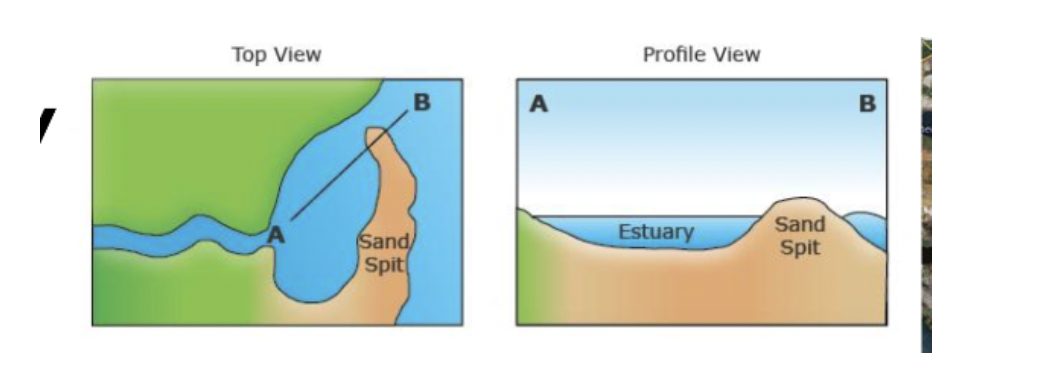
sand spit
extension of sand coming off perpendicular to land
longshore currents
waves that go in at an angle but out straight, bringing sand with them
Pamlico sound, NC
example of a bar-built estuary
fjords
estuary from glaciers retreating over time, creating valleys that become filled with water and a sill
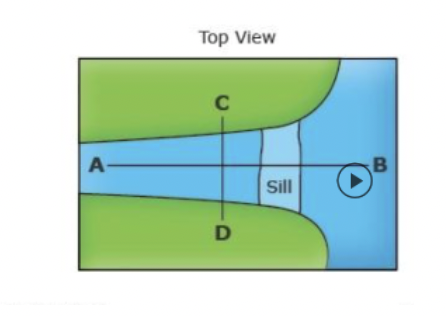
sill
gathering of settlement near mouth of the river
Milford sounds, New Zealand
example of a fjord
tectonic
estuary formed from tectonic activity resulting in land sinking and water flowing into basins
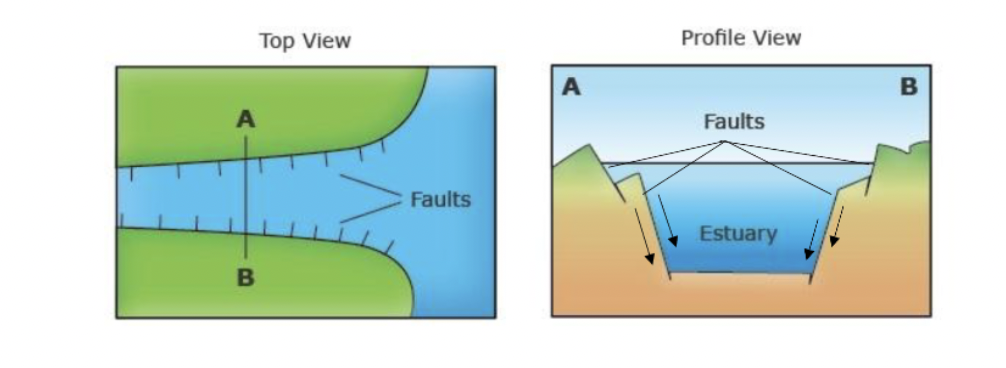
San Francisco Bay, CA
example of a tectonic estuary
Bay of Fundy, Canada
tectonic estuary with powerful tides that create power for over 40,000 houses
Drowned river valleys
most common estuary, saltwater flows into river from sea lever raising and creating a delta
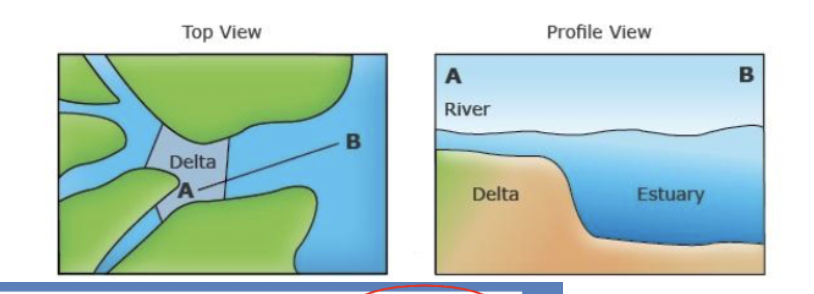
Cape Fear Inlet, NC
example of a drowned river valley
delta
deposited sediment mostly by river
Bayous
estuary formed from melting glaciers that accumulate silt on the tops of them, ultimately creating a nourished estuary
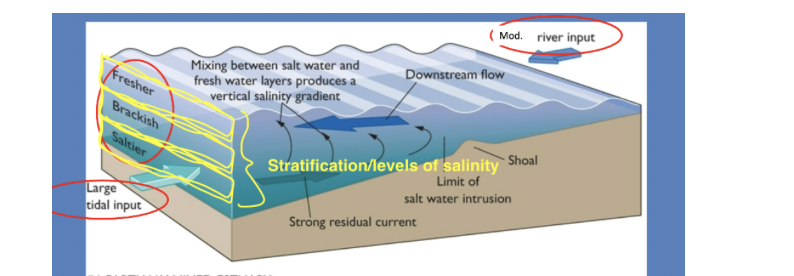
partially mixed estuary
Strong tides and moderate river input create a weaker halocline, stratification, and vertical mixing
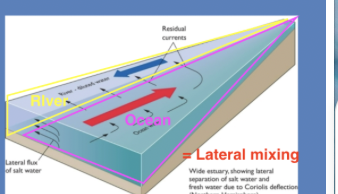
well mixed estuary
Strong tidal current and low river inflow created little to no stratification and lateral mixing
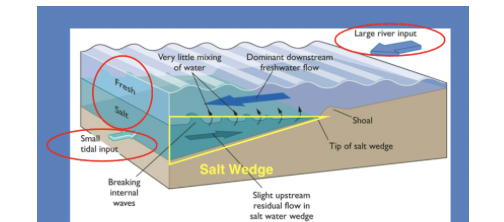
Salt wedge estuary
low tidal current and big freshwater inflow create a strong halocline and stratification
temporally
refering to time/over time
eurohaline
can live in wide salinity ranges
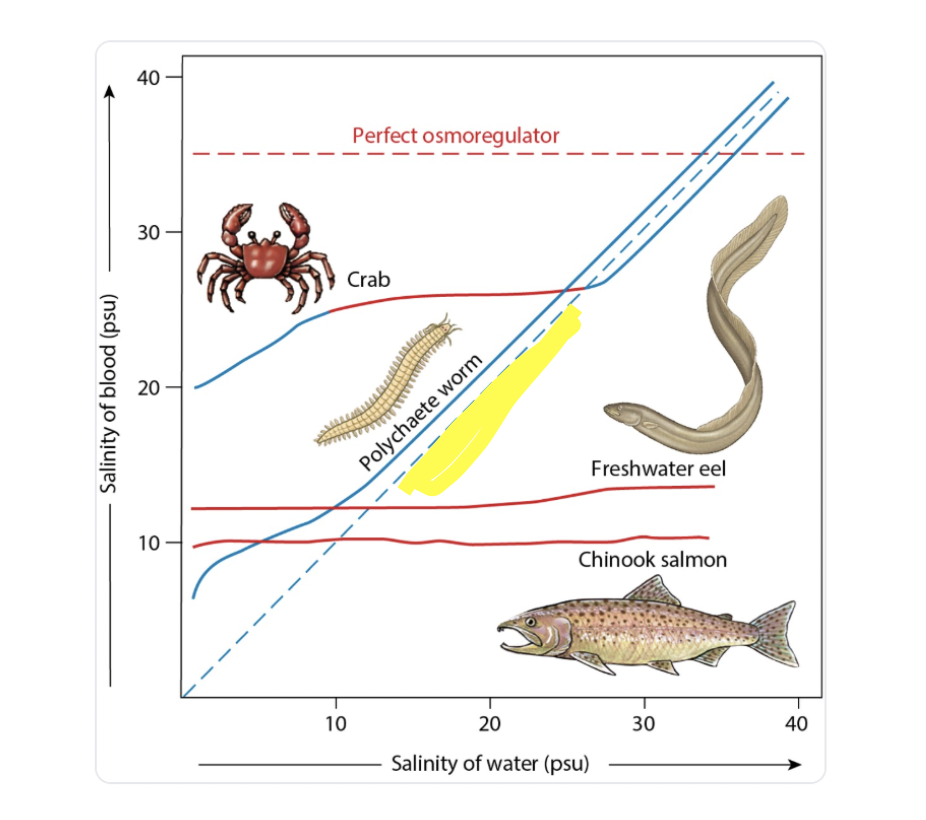
osmoregulators
actively using energy to regulate their salinity levels (stable internal levels)
hyperosmoregulation
keeping internal salinity levels greater than surroundings
hypoosmoregulation
keeping internal salinity levels lower than surroundings
osmoconformers
matches internal salinity to that of the surroundings (changing internal levels to surroundings)
perfect osmoregulator
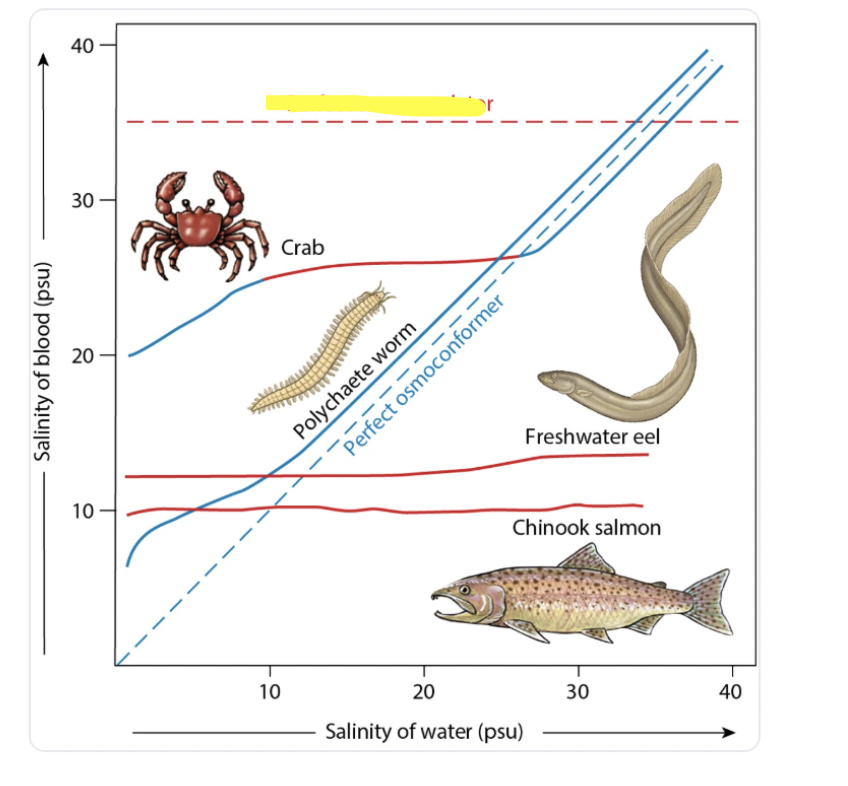
perfect osmocomformer
stenohaline
can only live in a small ranges of salinity
3-20 ppt
most common salinity levels from brackish water species
0-5 ppt
most common salinity levels for fresh water species
5-15 ppt
less common salinity levels for fresh warer species
wider estuary
results in a larger fetch and therefore more mixing of salinities between freshwater and seawater
width, evaporatoin, seasons
3 facors that affect salinity levels in estuaries
substrate
sand grains
anoxic
little to no oxygen present
mud
most common substrate
downstream (near sea)
where is the substrate grain smaller in an estuary due to tidal influence
open water ecosystem
plankton dominated and used as nurseries
phytoplankton
primary producer of open water ecosystem
zooplankton
primary consumer of open water ecosystem
catadromous
spawn at sea and move toward shore as adult
anadromous
spawn near shore and move out to sea as adults
mudflat ecosystems
around open waters with exposure to air at low tide, creating oxygen fluctuation
birds adapting different beak shapes/lengths so they aren’t going for the same prey
resource partitioning in mudflats
oyster reef ecosystems
adjacent to mudflats with beds filled of oysters and tiny crabs
other oysters
what oysters like to be on
improved water quality
results from oysters filtering a lot of water
Abiotic
nonliving factors (currents/temp/salinity/pH)
Biotic
living factors (animal interactions)
Fundamental Niche
theoretical range of environmental conditions under which a species can survive, grow, and reproduce (absent of competition or predetation)
Realized niche
the actual, restricted set of environmental conditions and resources a species requires to occupy an environment
Spacial/habitat niche
physical space occupied by the organism in an environment
Trophic niche
Organisms functional role, diet, and position within a food web
Multidimensional niche
range of environmental conditions and resources in which a species can survive and reproduce
Population
group of one species in given area
community
multiple populations of different species
exponential growth
continuous population growth with out ecological limits
Carrying capacity (k)
the number of individuals a habitat can support with available resources

