FST 10 Midterm 1
 Studied by 0 people
 Call Kai
 Learn
Learn Practice Test
 Spaced Repetition
 Match
Match Flashcards
 Knowt Play
1/301

There's no tags or description
Looks like no tags are added yet.
Name | Mastery | Learn | Test | Matching | Spaced | Call with Kai |
|---|
No analytics yet
Send a link to your students to track their progress
302 Terms
first stage in the Food Timeline
hunter gatherer
second stage in the Food Timeline
agricultural revolution
third stage in the Food Timeline
industrial revolution
nomadic societies, no food storage, local availability of food (diet specialization), plant-based diets, and primitive tools
Neanderthals (cavemen)
How did man evolve beyond other species?
fire, communication
Fire led to the evolution of man, _________, and evolution of _____ _________.
migration, homo erectus
Fire led to cooking, which contributed to the evolution of Homo erectus because of: smaller _______ and guts, increased energy availability: larger _____ and bodies, and the ability to exploit new _________.
teeth, brains, habitats
fire, primitive tools, forms of communication <8000 BC
hunter gatherer
domestication of animals, permanent settlements, crop cultivation, expansion of farming tactics and tools, rise and development of civilization 8000 BC - ~1800 AD
agricultural revolution
The hunter gatherer and agricultural revolution stages both had _____ population.
low
These two stages in the Food Timeline helped create a stable food supply: a__________ and ____________ revolution.
agricultural, industrial
Disadvantages of the Agricultural Revolution consisted of: land fertility issues from _________, _________ disposal issues, and infectious _________ spreading easily.
overuse, waste, diseases
During the Agricultural Revolution, the population _________ due to __________.
declined, disease
urbanization, railroads, refrigeration, discovery of penicillin, food science and technology, nutrition ~1800 AD - present day
industrial revolution
The Industrial Revolution led to a population _______.
boom
The Industrial Revolution occurred before the Agricultural Revolution and was responsible for the large manufacturing industries we see today. (True/False)
false
Which of the following characteristics best describes the Neanderthal man?
A. nomadic society
B. hunter gatherer that spent time scavenging and foraging for food
C. stored food for tough times
D. developed sophisticated equipment
E. A and B
F. B and C
E
Austrolopithecus to _______ ______ due to the increased consumption of meat.
homo erectus
Harnessing fire and the introduction of cooking allowed cooked foods to taste better. (True/False)
true
Eating raw food required more time and effort to breakdown foods, so after eating cooked foods, the man developed smaller guts because it took ______ time and effort.
less
Which of the following best supports the idea that cooking is responsible for the evolution of Homo erectus?
A. decrease in brain size
B. building of structures like the pyramids
C. smaller guts and teeth
D. domestication of animals
E. large industry development
C
What is the main goal of the Agricultural and Industrial revolutions?
A. create peace and harmony
B. create large and efficient food manufacturing plants
C. create a stable food supply
D. create a large population
E. none of the above
C
After the development of agriculture, the development of civilization followed. (True/False)
true
The following event was instrumental in the sudden increase in population of the World: the discovery of __________.
penicillin
What were the disadvantages of the Agricultural Revolution?
A. infectious diseases spread easily
B. waste disposable issues
C. land fertility issues from overuse
D. all of the above
D
The four different aspects of food: physiologically, chemically, culturally, and:
ideally
Physiologically food is __________ and ________.
nutrition, satiety
The aspects of food physiologically: nutrition are body ______, ________, and energy.
mass, metabolism
nutrition fuels this
metabolism
nutrients required in large quantities
macronutrients
protein, carbohydrates, fats and lipids as nutrients
macronutrients
nutrients required in small quantities
micronutrients
vitamins and minerals as nutrients
micronutrients
Food physiologically is satiety, which is __________ and t_______.
hunger, thirst
Food is chemically mostly ________.
water
the sum of all chemical rxns that occur in living organisms
metabolism
in metabolism, organic cmpds broken down to provide heat and energy in this process
catabolism
macromolecules, vitamins and minerals, coloring agents and pigments, taste, odor, flavor, and aroma compounds (what aspect of food is this)
chemically
Foods are chemically water and ___________.
macromolecules
this is the only factor that does not change nutritional value and is required in photosynthesis
chlorophyll
food is culturally ancient beliefs about relationships between food and health
cultural statement
food is culturally a national dish or expression of heritage
ethnic/national statement
food culturally in Judaism, Islam, Orthodox Christianity
religious statement
food is culturally weddings, funerals, birthdays, births, rites of passage, etc.
celebration
western world theory, food affects four humors and believed to control a person’s temperament
humoral theory
The humoral theory is related to fire, earth and _________.
water
There are four humors: blood, __________, yellow and ________ bile.
phlegm, black
eastern world beliefs, opposite of contrary forces that are complementary or interconnected, believed food to be medicine and the balance of “cool cold”, “neutral”, and “warm hot” foods
yin and yang
the shady side of the mountain (the black part), dark, wet, cool, feminine, fruits, leafy veggies, water plants
yin
sunny side of the mountain (the white part), light, dry, warm, masculine, red meats, root veggies, spices
yang
Fruits, leafy veggies, and water plants are related to _____ while red meats, root veggies, and spices are related to ________.
yin, yang
Yin and Yang are beliefs based on _____________ and not ______________!
energetics, temperature
nshima, beans, eggplant and greens
zambia
sushi
japan
moussaka
greece
haggis
scotland
peking duck
china
wiener schnitzel
austria
poutine
canada
tacos
mexico
food as a religious statement, belief that food influences spiritual well-being, dictated by deity
holy scriptures
In China, what is the first thing that is checked when people get sick? _________ What is the first action 90% of the time taken? __________
food, diet
In China, food keeps body in ___________ and free of disease.
balance
moistening and cooling for the body (yin/yang)
yin
warming and dying for the body (yin/yang)
yang
bitter foods
heart
sour foods
liver
spicy foods
lung
salty foods
kidney
sweet foods
spleen
In Judaism, food can either be _______ (proper, okay to eat) or ________.
kosher, treif
proper and ok to eat
kosher
not kosher foods
treif
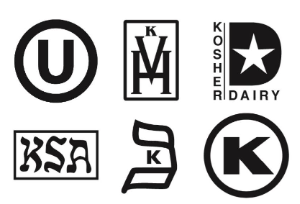
These labels determine __________ foods.
kosher
Kosher foods do not need to be ___________.
blessed
What animals are allowed?
Ruminants (cow, sheep, goat, deer, etc.), domestic birds, fish with finds and removeable scales. (Y/N)
Pork, rabbits, shellfish, birds of prey, scavenger birds, blood (Y/N)
Y, N
Are pigs and rabbits kosher? (Y/N)
N
Is blood kosher? (Y/N)
N
separation of dairy and meat
parve
Are cheeseburgers kosher? (Y/N)
N
Grains are prohibited at __________ and are not kosher.
passover
In Islam, food can be ___________ (lawful, okay to eat) or __________ (prohibited).
halal, haram
the belief that food influences your spiritual well-being, “you are what you eat”
halal
Halal laws have prohibition of specific animals, especially:
pork
prohibition of specific animals, drugs and intoxicants, and blood
halal
______________ is prohibited in Halal laws, including natural vanilla extract.
alcohol
In Halal laws, all meats must be _______________ while slaughtered.
blessed
Drying, fermentation, salting and curing, smoking are examples of food _________________.
preservation
all food is clean, fasting
orthodox christianity
In Orthodox Christianity, people are required to strictly fast ____ days before ____________.
40, easter
In Orthodox Christianity, people fast __________ and Friday.
wednesday
Expensive food is culturally a _______ symbol.
status
Food is culturally a statement of social awareness or values. Some such as the _________ method (organic, USDA) and ______ (vegetarian)
farming, diet
nutritious, wholesome, safe, appealing, stable, convenient, sufficient, affordable and available, appropriate (food aspect)
ideally
Food is ideally __________; gluttony, wasteful vs. moderation, respect.
appropriate
To be kosher, food must be blessed by a rabbi. (T/F)
F
To be halal, meat must be blessed. (T/F)
T
Which of the following is kosher?
cheeseburger, shellfish, venison (deer meat), blood pudding
venison
Which of the following is halal?
pork, bread, alcohol, blood pudding
bread
What is an example of celebration-specific food?
rice, apple, turkey
turkey
 Note
Note  Flashcards (23)