FA 2- Class 16-Lipids/membranes
 Call Kai
 Learn
Learn Practice Test
 Spaced Repetition
 Match
Match Flashcards
 Knowt Play
1/28

There's no tags or description
Looks like no tags are added yet.
Name | Mastery | Learn | Test | Matching | Spaced | Call with Kai |
|---|
No analytics yet
Send a link to your students to track their progress
29 Terms
What makes a cell a cell?
Enclosed in a membrane
Membrane:
Cells are seperated from their environment by semi-permiable membranes.
What are membranes composed of?
Phospholipids → made up primarily of fatty acid components + glycerol. Contain many carbons
What are the common feat of membranes despite being diverse?
Sheetlike structure → 2 mol. thick
Mostly lipids and proteins, with some carbs linked to the proteins/lipids
Both hydrophilic and hydrophobic moieties. Form bilayers spontaneously in water.
Specific proteins mediate distinctive functions of the membrane
Noncovalent assemblies. lipids and proteins held by noncovalent interactions.
Membranes are asymmetric - 2 faces of biological molecules. always differ from each other
Fluid structures
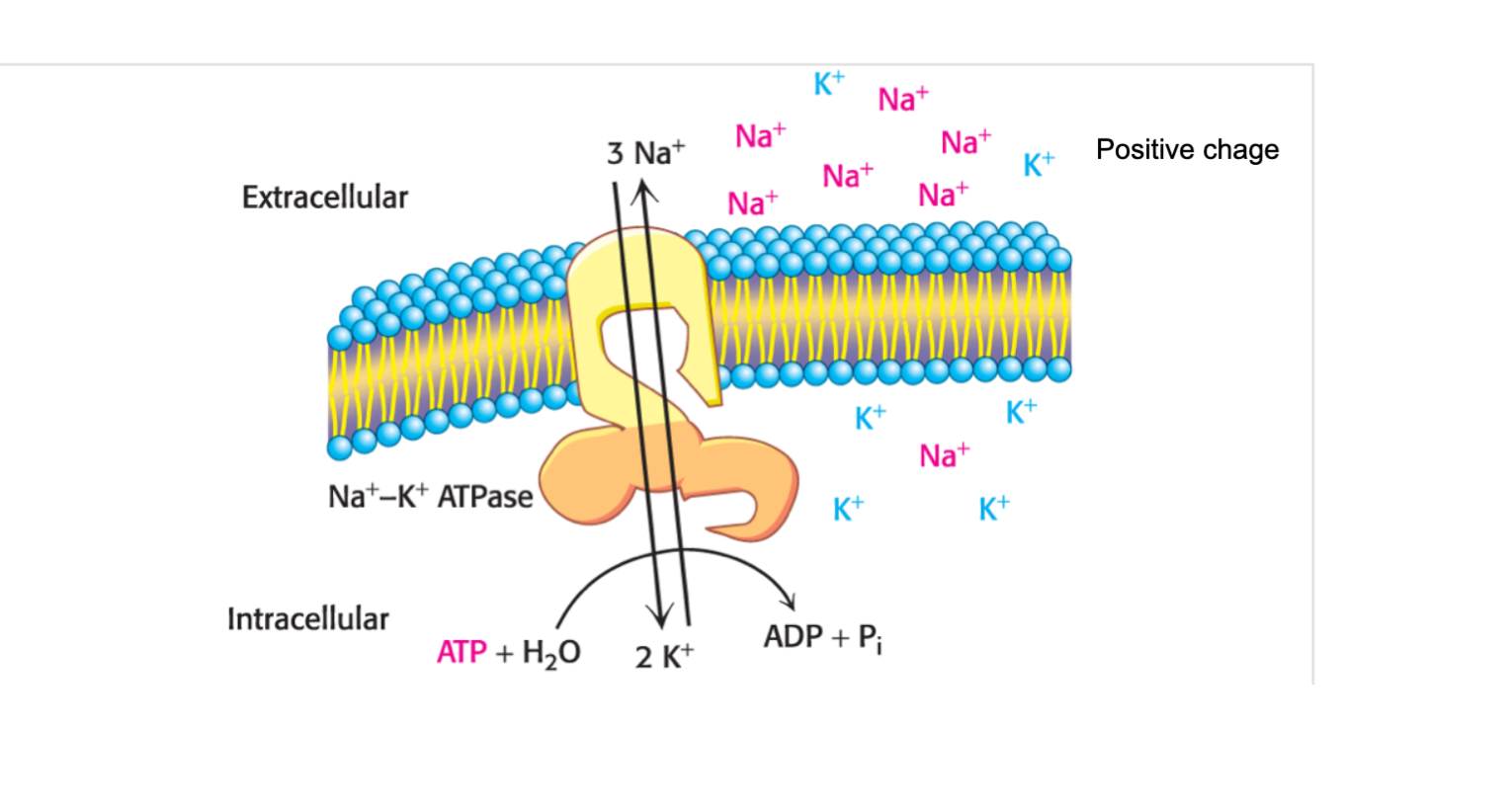
Most membranes are electronically polarized
Are fatty tails hydrophobic or hydrophilic in a membrane ?
They are hydrophobic, they are hydrocarbons
Nomenclature of lipids:
Count from the carboxyl end
Saturated vs. Unsaturated
Saturated - high melting temp ( no double bonds), solid
Unsaturated - low melting temp (double bonds), liquid
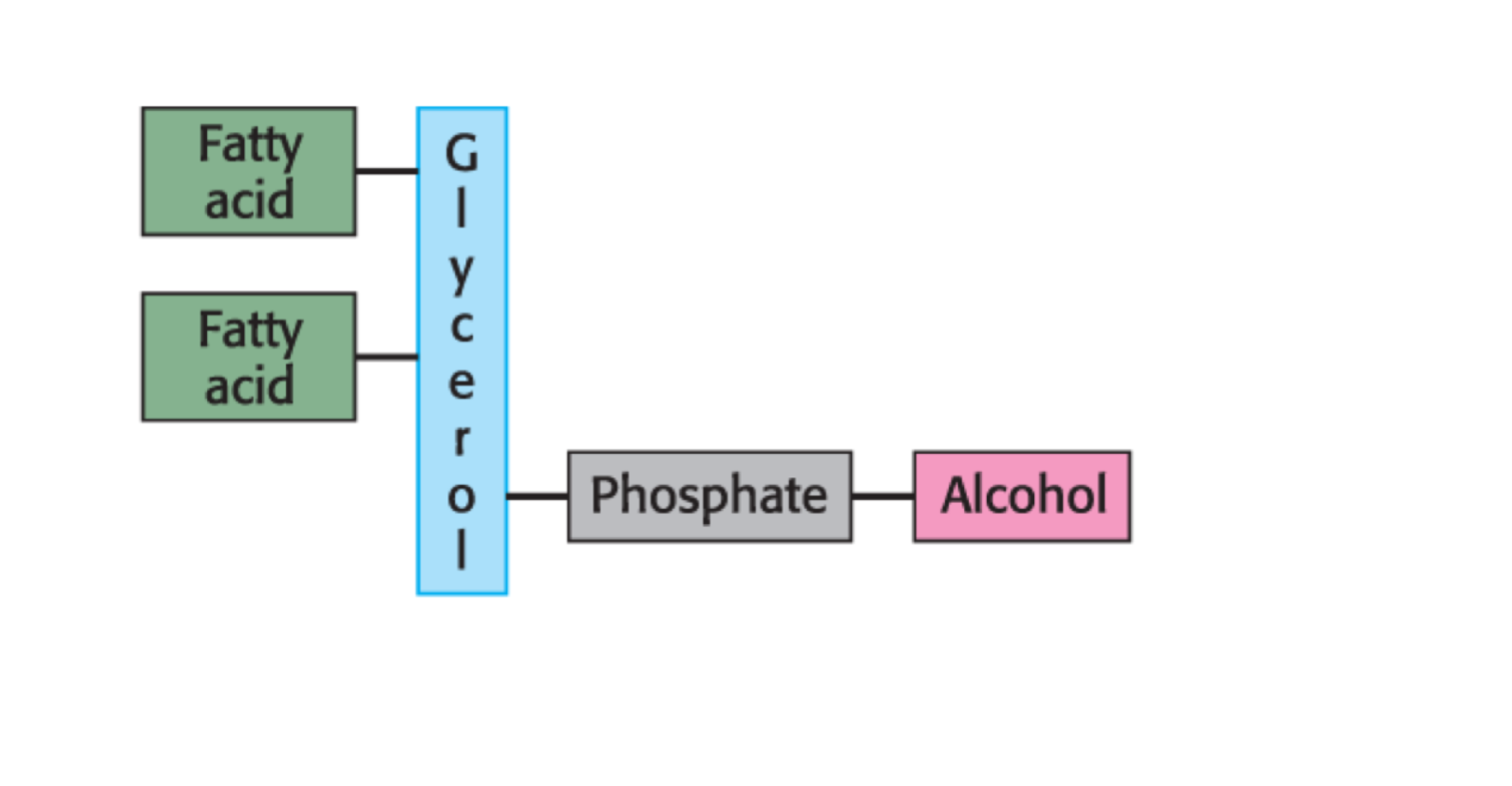
What are the units in order of a phospholipid?
A phospholipid is the unit of biological membranes
fatty acid (x2) —glycerol —phosphate - alcohol
What is the simplest phospholipid?
Phosphotidate, it has no alcohol/ethanol group on it
Intermediate of many membrane phospholipids
True/False: membrane lipids can have attached sugars
True. It can have glucose or galactose attached ( ex. cerebroside)
What is the structure of membrane lipids:
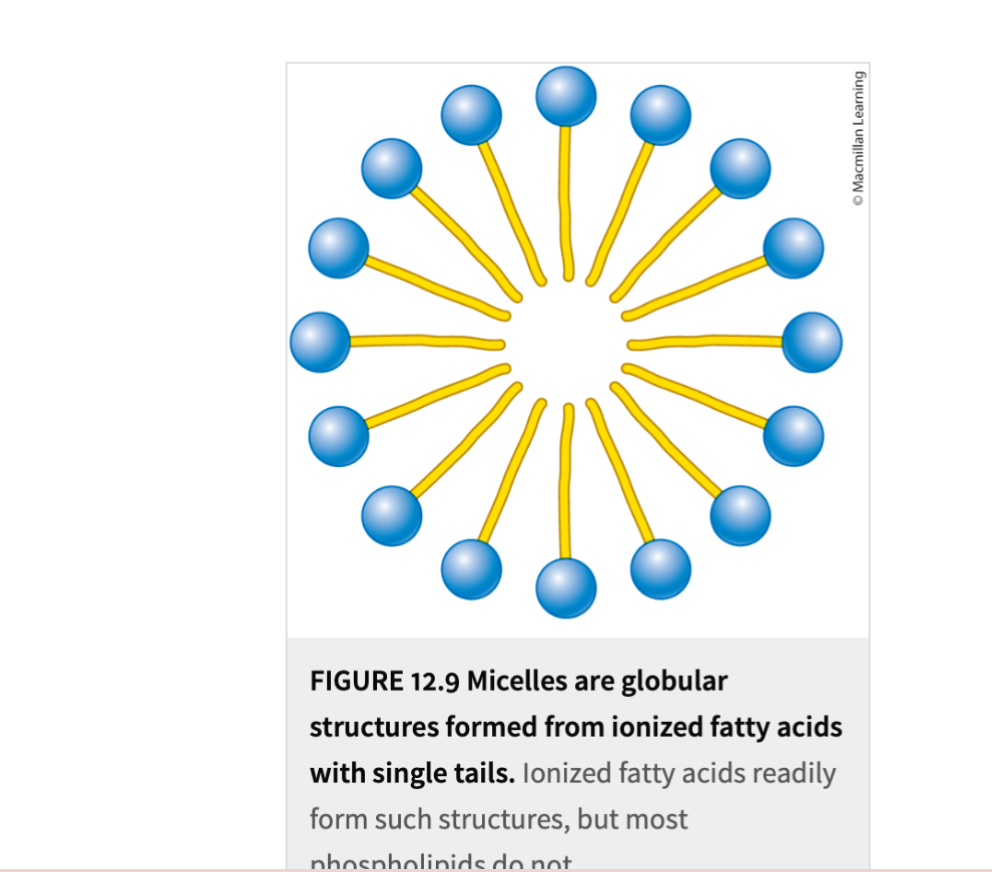
Have a polar hear and non polar tails, can form micelles that are energetically favorable.
Micelle:
Globular structures formed from ionized fatty acids with single tail.
Can phospholipids form micelles?
No they only form bilayers or liposomes.
Bilayer:
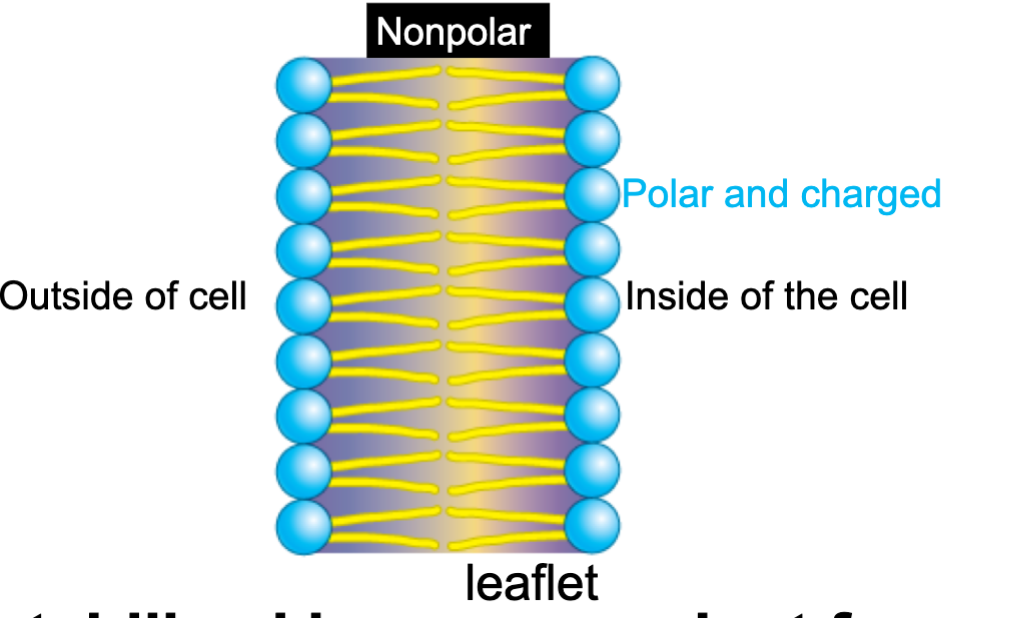
Hydrophobic fatty acids on the inside and the charged polar heads on the outside. Stabilized by non covalent forces
Liposomes:
Filled with polar molecules, can be used for drug delivery.
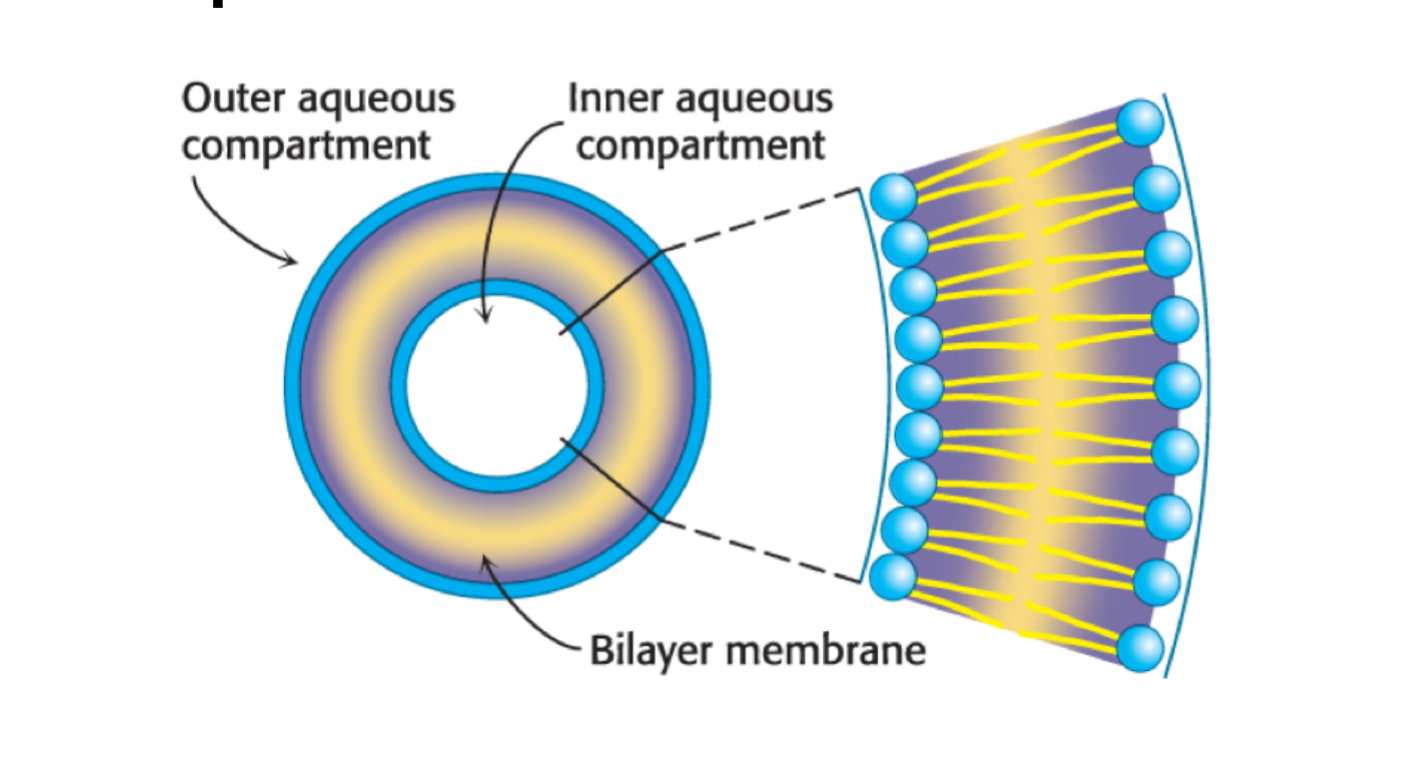
How are liposomes used in research?
Can be used for drug delivery, can be sonified to form liposomes then be subjected to gel filtration to have the mol. trapped in the lipid vesicle.
Do membranes allow for the passage of polar molecules?
Cell membranes generally do not allow polar molecules to freely pass through their hydrophobic, nonpolar lipid bilayer core. While small, uncharged polar molecules (like water) can pass through slowly, most polar molecules require specialized protein channels or carriers—known as facilitated transport—to cross the membrane.
Do all membranes have the same structure or ratio of proteins in their structure?
No, while most share a common basic architecture (a phospholipid bilayer), the protein-to-lipid ratio varies significantly based on membrane function
Do bacteria and eukaryotes use their membranes the same?
No, they can be classified differently based on their membranes. Eukaryotes use membranes for complex internal compartmentalization (organelles like nuclei/mitochondria), while bacteria (prokaryotes) lack these compartments and instead use their plasma membrane to perform metabolic processes like ATP production.
Where do membranes have hydrophobic beta sheets? What are they made of and are they on the outside/inside?
located in the outer membranes of Gram-negative bacteria, mitochondria, and chloroplasts. These sheets form transmembrane channels/pores, with hydrophobic amino acids facing outward into the lipid bilayer and hydrophilic residues facing the interior pore.
Alpha helices in membranes:
Most common structure for spanning biological membranes and are found in the membrane proteins of nearly all cell types, including eukaryotic (animal, plant, fungi) and prokaryotic (bacteria, archaea) cells.
These helices are essential for anchoring integral membrane proteins and forming channels in the plasma membrane or inner bacterial membranes.
Proteins can attach to membranes via covalent _____?
hydrophobic groups
What does membrane fluidity depend on?
Phospholipids and other components
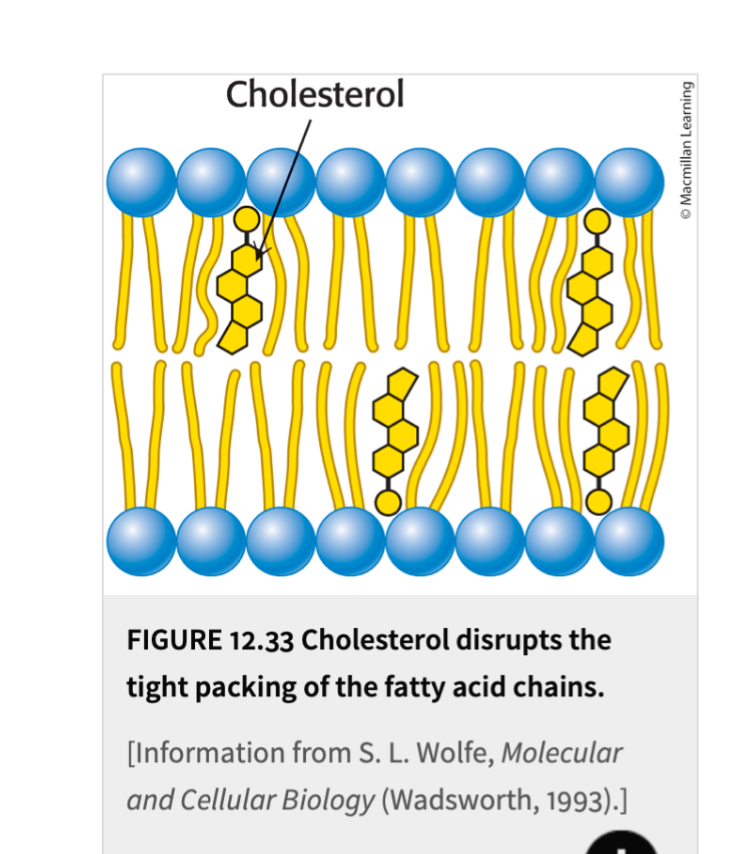
cholesterol
What effect does cholesterol have on the membrane?
Makes it more fluid. The cholesterol disrupts the tight packing of the fatty acid chains.
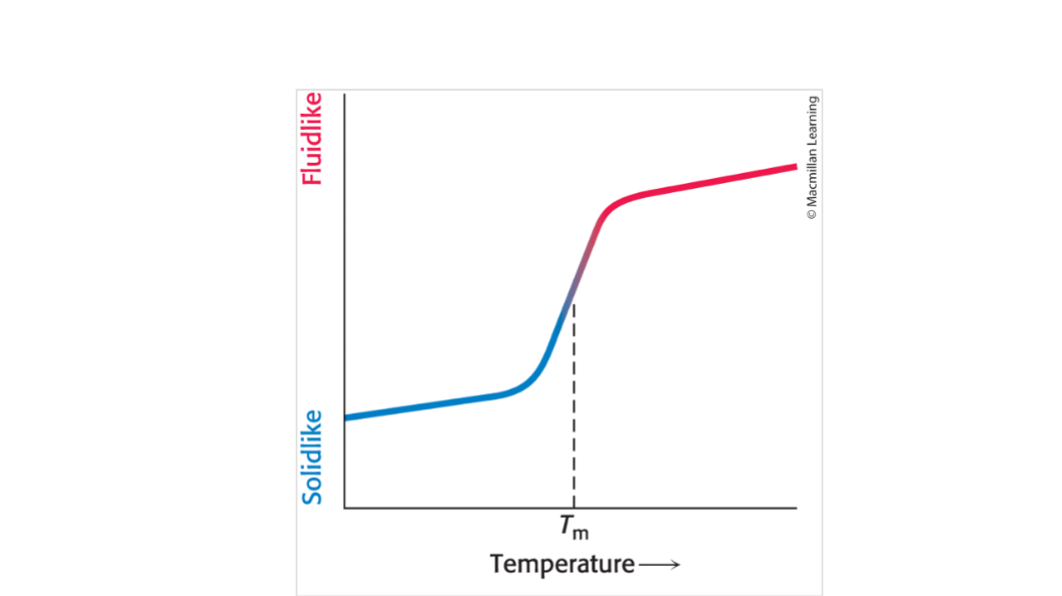
How does this graph display the melting temp of a membrane?
Tm is the melting point and represents the midpoint along the phase transition curve. It shows how it is goign from more solid packed ordered states to a random liquid state.
What are the 2 movement types of proteins/lipids in the bilayer?
Can move transversely or laterally
Transverse diffusion:
flip flop - one side to the other
slow
Lateral diffusion:
moves side to side on the same face of the membrane
rapid movement
Are membranes symmetrical or asymmetric? Why?
Asymmetric due to the movement of polar molecules.