AQA Psychology - Research Methods
 Studied by 3 people
 Call Kai
 Learn
Learn Practice Test
 Spaced Repetition
 Match
Match Flashcards
 Knowt Play
1/144

There's no tags or description
Looks like no tags are added yet.
Name | Mastery | Learn | Test | Matching | Spaced | Call with Kai |
|---|
No analytics yet
Send a link to your students to track their progress
145 Terms
Strengths of questionnaires
+ Cost effective
+ Can gather large amounts of data quickly
+ Can be completed without the researcher being present
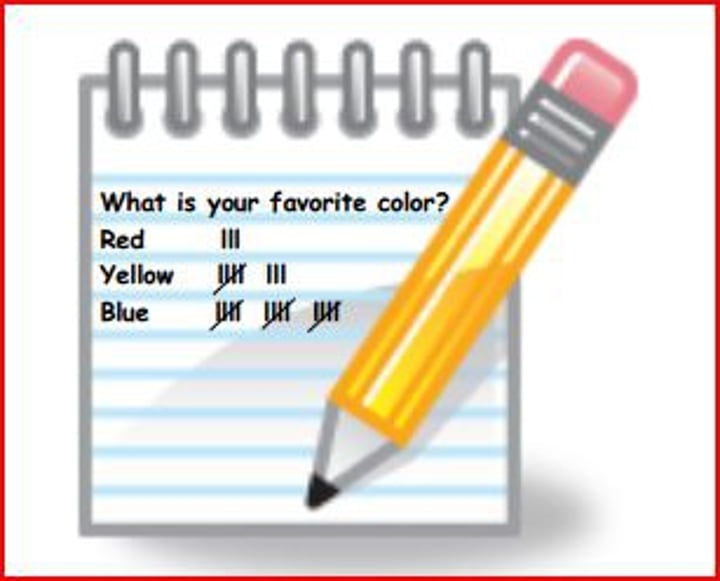
Open Questions
Questions with no fixed answer/response and respondents can answer in any way they wish.
Advantages & Disadvantages of an Open Question
+ Get more information
+ Produces qualitative data - depth and detail
- People can miss them out as they can't be bothered to answer them
- Harder to analyse
Self-report techniques
Any method in which a person is asked to state or explain their own feelings, opinions, behaviors and experiences related to a given topic.
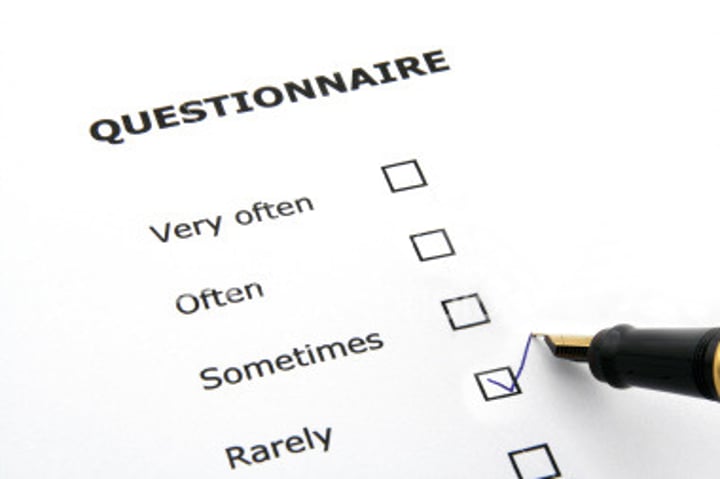
Questionnaire
A set of written questions (sometimes called items) used to access a persons' thoughts/experiences
Weaknesses of questionnaires
- Can produce response bias
- P.ps may misunderstand the question or read it incorrectly
- Demand Characteristics / Social Desirability may occur
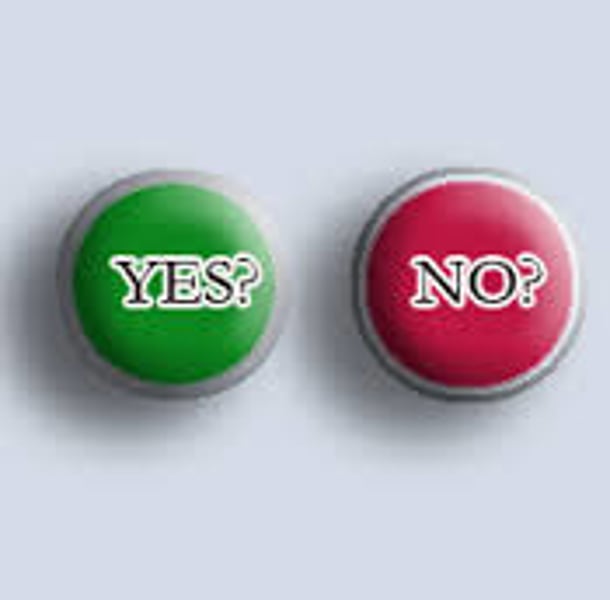
Closed Question
Questions with a fixed answer/ the choice of response is determined by the question setter.
Advantages & Disadvantages of a Closed Question
+ People have to same perception of the Q&A
+ Quick and easy to answer
+ Quantitative data is easier to analyse
- Not detailed or in depth answers
- Don't find out the meaning behind the answer
Interview
A live encounter (face to face or on the phone) where one person asks a set of questions to assess an interviewees thoughts/experiences. They can be structured, semi structured or unstructured.

Structured Interview
Made up of pre-determined questions and are asked in a fixed order. Basically like a questionnaire but conducted face to face.
Unstructured Interview
Works like a conversation. There are no set questions. There is a general aim that a certain topic will be discussed and interaction tends to be free flowing.
Semi-structured Interview
There is a list of questions that have been worked out in advance but interviewers are also free to ask follow up questions when they feel it is appropriate.
Strengths & Weaknesses of Structured Interview
+ Straight forward to replicate
+ Reduces differences between interviews
+ Easier to analyse
+ Get answers you're looking for
- Get less information as P.ps can't deviate from the point
- Don't find out people's worldwide views
Strengths & Weaknesses of Unstructured Interview
+ Can get more detailed answers as people can elaborate
+ More flexible as you can gain insight
- Not easy to replicate
- Not easy to analyse as you get irrelevant information
- Experimenter effects can occur
Leading Questions
Encourages P.ps to give a particular answer e.g don't you think...?
Ambiguity
Questions which can be interpreted in various ways. They can mean different things to different people.
Loaded Questions
They are questions which contain emotive language which is likely to produce an emotional reaction in the respondent.
Double-barreled Questions
They contain two options within a single question.
Aim
A general statement that the researcher intends to investigate.

Hypothesis
A detailed statement which is clear, precise and testable that states the relationship between variables being tested.

Directional Hypothesis
The researcher makes it clear what difference is anticipated between the 2 conditions or groups.
(One tailed).
Non-directional Hypothesis
Simply states that there is a difference but not what the difference will be.
Null Hypothesis
There will be no relationship between the 2 variables.
Meta-analysis
A particular form of research method that uses secondary data. Data from a large number of studies which have involved the same research question and method are combined.
Quantitative Data
Data that focuses on numbers and frequencies which can be counted. e.g. experiments, questionnaires and psychometric tests.

Qualitative Data
Data that describes meaning and experiences which is expresses in words e.g. case studies, interviews and observations.
Primary Data
Information that has been obtained first hand by the researcher. It is also known as field research.
Secondary Data
Information that has already been collected by previous researchers. It is also known as 'desk research' and can be found in journal articles, books or websites.I
BPS
British Psychological Society
Informed Consent
Participants should be told what they are letting themselves in for. Only then they are in a position to give informed consent. If under 16 consent must be obtained from their parents.
Deception
Information is withheld from participants: they misled about the purpose of the study and what will happen during it.

Right to Withdraw
Participants should be told this at the start of the research. No attempt should be made to encourage them to remain.
Protection from harm
Participants should not be put through anything they wouldn't normally be expected to.
Competence
Psychologists must not attempt to carry out research unless they are qualified to do so.

Debrief
Researchers should discuss the aims of the research with the p.ps making sure they know how they've contributed to meeting the aims
Variable
Any "thing" that can vary or change with in an investigation. They are generally in experiments to determine if changes in one result in changes to another.
Independent Variable - IV
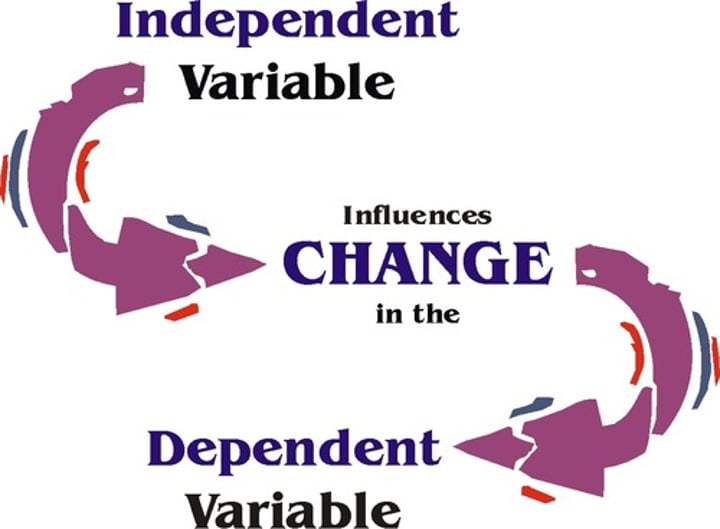
An aspect of the experimental situation that is manipulated by the researcher or changes naturally so the effect on the DV can be measured.
Dependent Variable - DV
The variable that is measured by the researcher. Any result/change on the DV should be caused by the change in the IV.

Operationalising Variables
The process of devising a way of measuring a variable. It is a clear statement of what the variable is.
Lab Experiment
An experiment that takes place in a controlled environment where the researcher manipulates the IV and records the effect on the DV while maintaining strict control of extraneous variables.

The Criteria for a Lab Experiment
1) The IV is manipulated by the researcher to produce a change in the DV
2) All other variables that might influence the results i.e. extraneous variables are held constant or eliminated
3) Participants are randomly allocated to a condition.
Advantages of a Lab Experiment
+ Can establish cause and effect
+ Few if any extraneous variables
+Easy to replicate
+High internal validity
Disadvantages of a Lab Experiment
- Lacks ecological / external validity
- Demand characteristics can occur
- Behaviour in a lab is often different
- Experimenter effects can occur
Field Experiment
An experiment that takes place in a natural setting where the researcher manipulates the IV and records the effect on the DV.

Advantages of a Field Experiment
+ More ecologically/externally valid
+ Fewer demand characteristics
+Replication can occur to some extent
+ Fewer experimenter effects
Disadvantages of a Field Experiment
- Chance of extraneous variables
- More time consuming
- Ethical issues (informed consent)
- Need a skilled researcher
Natural Experiment
An experiment where the change in the IV is not caused by the researcher as it would have happened if the researcher wasn't there. The researcher records the effect on the DV.
Advantages of a Natural Experiment
+ No demand characteristics
+ No researcher effects
+ Fewer ethical issues
+ Allows P.ps who wouldn't normally be tested to take part.
Disadvantages of a Natural Experiment
- Lack of control (extraneous variables)
- Short term behaviour may be displayed
- No random allocation can create confounding variables
- Harder to replicate
Quasi Experiment
The IV has not been determined by anyone the variables simply exist e.g. being old or young.
Extraneous Variables
Any variable apart from the IV which can effect the DV if not controlled. However they can be maintained or eliminated.
Confounding Variables
A variable apart from the IV which can effect the DV. However it can't be controlled.
Control Condition
The IV isn't changed and provides a baseline measure. the condition is in a repeated measures design that provides a baseline measure of behaviour.
Experimental Condition
Where you manipulate the IV. The condition is in a repeated measures design containing the IV as distinct from control.
Baseline Measure
Result established from control condition when no manipulation of IV occurs. Allows comparisons to be made.
Random Allocation
People are chosen randomly e.g. names from a hat meaning there's an equal chance of being selected.
Ecological Validity
How methods can be applied to real life settings.
External Validity
How valid results are outside of a research setting.
Demand Characteristics
Any cue from the researcher or research situation that can be interpreted by participants as revealing the purpose of the investigation leading them to changing their behaviour.
Experimenter Effects
Where the experimenter changes a persons views usually sub-consciously through body language.
Experimental Methods
The type of experiment you do.
Experimental Designs
How you carry the experiment out.
Independent Groups Design
Each participant either does the control condition OR the experimental condition.
Advantages of Independent Groups Design
+ Reduces demand characteristics
+ Quick to administer
+ Could be used for all tests
+ Prevents order effects
Disadvantages of Independent Groups Design
- Individual differences can occur
- Lots of P.ps are required
- More time consuming
Repeated Measures Design
Each participant does the control condition AND the experimental condition.
Advantages of Repeated Measures Design
+ Quick to administer
+ No individual differences
+Fewer P.ps are required
Disadvantages of Repeated Measures Design
- High possibility of demand characteristics
- Order effects can occur
- Can't be used for all tests
Matched Pairs Design
Participants are matched on key characteristics. One participant does control condition and the other does the experimental condition.
Advantages of Matched Pairs Design
+ Less possibility of demand characteristics
+ Prevents order effects
+ No individual differences
Disadvantages of Matched Pairs Design
- Time consuming
- Lots of P.ps are required
- Hard to match P.ps on all variables
- Can't be used for all tests
- Not very economical
Counterbalancing
An attempt to control order effects in a repeated measures design e.g. ABBA where when group does the experimental condition first where as the other does the control condition.
Order Effects
A confounding variable arising from the order which participants take place in the different conditions e.g. boredom.
Naturalistic Observation
Take place in a setting where behaviour would usually occur.
Advantages & Disadvantages of Naturalistic Observations
+ High external validity
+ Easy to apply in everyday life
- Hard to replicate
- Extraneous variables can occur
Controlled Observation
Some control over variables takes place to observe how people may interact/behave. They take place inside and outside of a lab.
Advantages & Disadvantages of Controlled Observations
+ Easy to replicate
+ Less Extraneous Variables
- Findings can't be applied to all real life settings
Participant Observation
The researcher is involved in/with the experiment. The researcher joins the group either overtly of covertly.
Advantages & Disadvantages Participant Observations
+ Experience the same situation which gives insight which increases validity
- Can get too attached to people and lose objectivity
Non-Participant Observation
The researcher is not involved in what is going on. The researcher is external to what is going on/the people being observed.
Advantages & Disadvantages of Non-Participant Observations
+ Allows researcher to maintain an objective psychological distance from P.ps
- Researcher has less insight
Covert Observation
Where the researchers status is not made clear to the group and the researcher doesn't get consent.

Advantages & Disadvantages of Covert Observations
+ No participant reactivity
+ Natural Behaviour - Increases validity
- Ethics - People might not want to be observed
Overt Observation
The researcher is open about their intentions and seeks consent. People know they are being observed.
Advantages & Disadvantages of Overt Observations
+ More ethically acceptable (have consent)
- Can be influenced as they know they're being watched
Structured Observations
Key influence of the design of an observation is how the data is recorded.
Unstructured- Everything is written down; produces qualitative data
Structured - Only specifics are recorded; produces quantitative data
Behavioural Observations
To produce a structured record of what the researcher hears or sees. The target behaviour is broken into behavioural categories that are observable and measurable. All target behaviour is included.
Sampling Methods
Event Sampling - Counting the time a particular behaviour occurs in a group/individual.
Time Sampling - Recording behaviour with a pre established time frame.
Inter-Observer Reliability
Two or more researchers observe the same behaviour at the same time then compare and amend results to create correlations.
Content Analysis
A kind of observational study where behaviour is observed indirectly in pictorial or verbal material.
Target Population
The entire group a researcher is interested in. The researchers wishes to draw conclusions from only the people in the group.
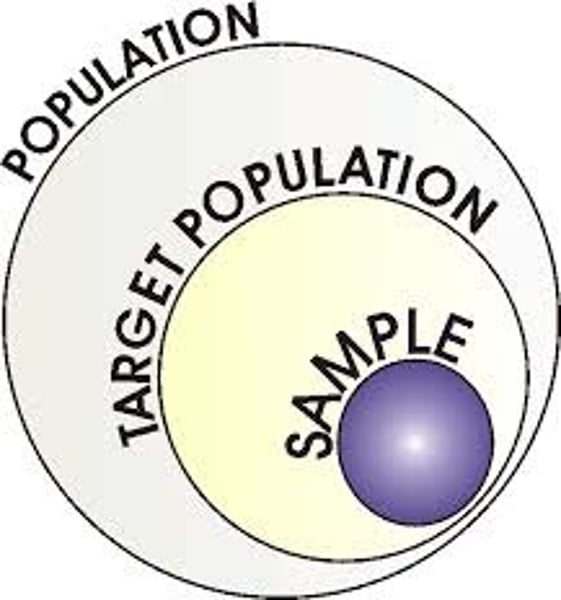
Bias - sampling
When certain groups are over or under represented with in the sample selected. It limits the extent to which generalisations can be made to the target population.
Generalisation
The extent to which findings and conclusions from a particular experiment can be broadly applied to the population. This is possible if the sample of people is representative of the population.
Inter-Rater Reliability
Correlating the judgements of two or more ratings of behaviour when using a rating scale.
Peer Review
The assessment of work by others who are specialists in the same field to ensure that any research set for publication is high quality.

How is psychological research published?
Initially in journals which will then be translated into textbook information or be discussed at conferences,.
Aims of Peer Review
1) To allocate funding properly and appropriately. It stops researchers spending lots of money on investigations which may encounter problems. Also it helps to develop the areas of psychology that need to be developed,
2) To validate the quality of research. It establishes more accurate to inter-observer reliability. Additionally it makes sure that you are measuring what you set out to measure.
3) To suggest amendments and improvements. It allows researchers to get more accurate results as it eliminates potential problems.
Evaluation of Peer Review
+ Helps to establish validity and accuracy of research because more than one person will carry out the experiment therefore allowing the data to be correlated.
- The anonymity could lead to them being overcritical . Changing data which is right and doesn't need to be changed could give inaccurate results and may not be objective as they should be
- Publication Bias can occur where only positive results or attention grabbing results are published. By publishing data which doesn't support a hypothesis, it allows it to have more understanding and knowledge.
Case Study
A research method that involves a detailed study of a signal individual, institution or event.
Sampling Techniques
The method used to select people from the population.
 Note
Note  Flashcards (84)