bio130 pt.2
 Call Kai
 Learn
Learn Practice Test
 Spaced Repetition
 Match
Match Flashcards
 Knowt Play
1/105

Earn XP
Description and Tags
section 2 lectures, fill in the blanks
Name | Mastery | Learn | Test | Matching | Spaced | Call with Kai |
|---|
No analytics yet
Send a link to your students to track their progress
106 Terms
the ____/____ is a specialized material outside the animal cell
extracellular matrix, plants also have but diff. composition
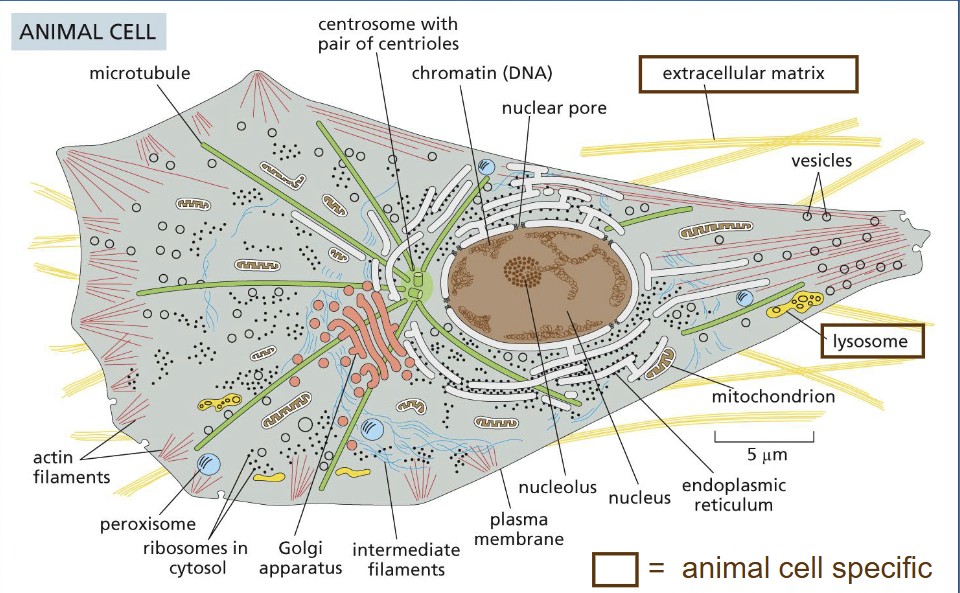
_____ degrades cellular components that are no longer needed in animal cell
lysosome
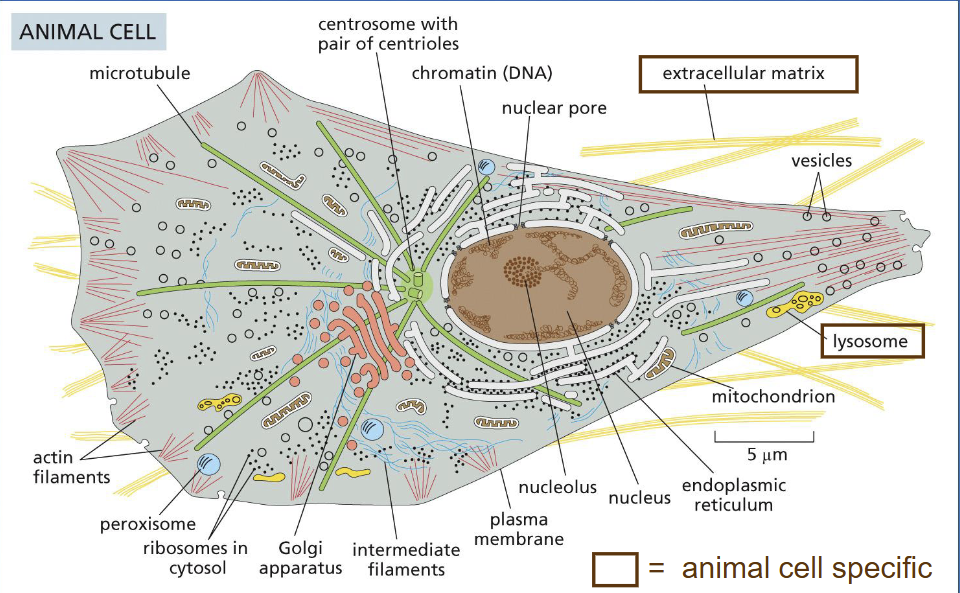
the ___/___ is not present in animal cells, helps keep the cells shape, and provides protection against mechanical stress
cell wall, not present in animal cell
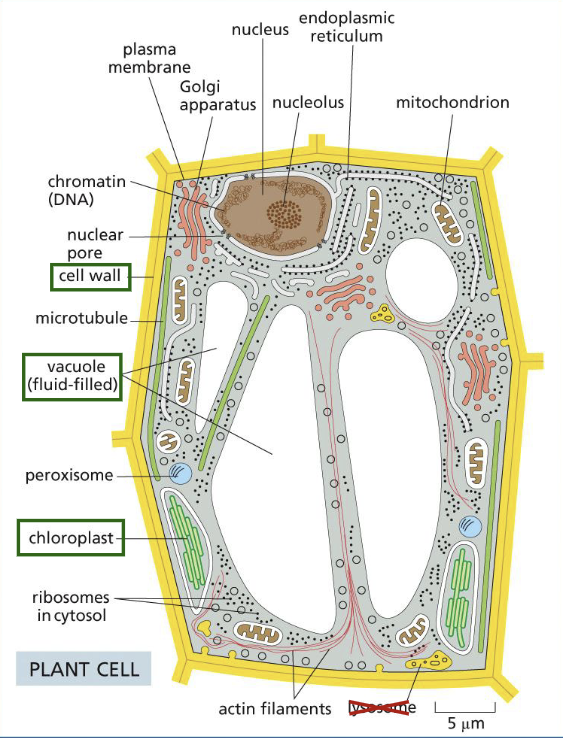
2 types of ___ present in plant cells to degrade (like animal lysosome) and provide storage for small molecs. and proteins
vacuoles, not found in animal cells
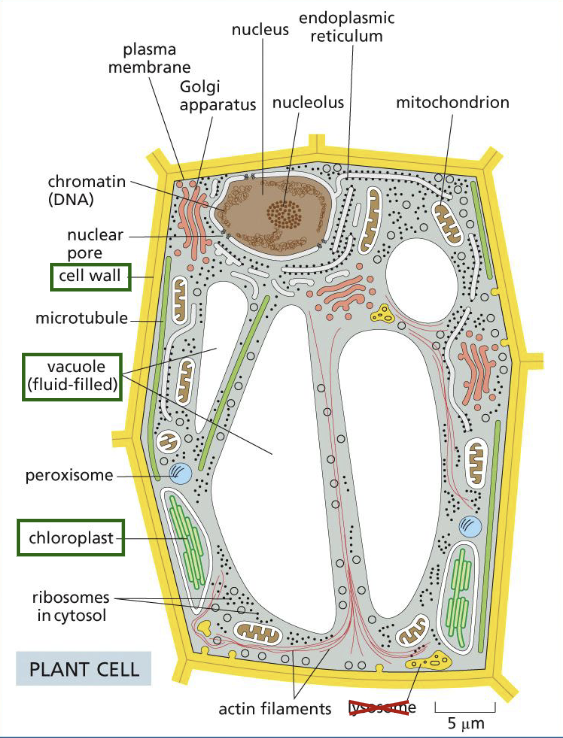
the ____ is the site of photosynthesis
chloroplast, not found in animal cells
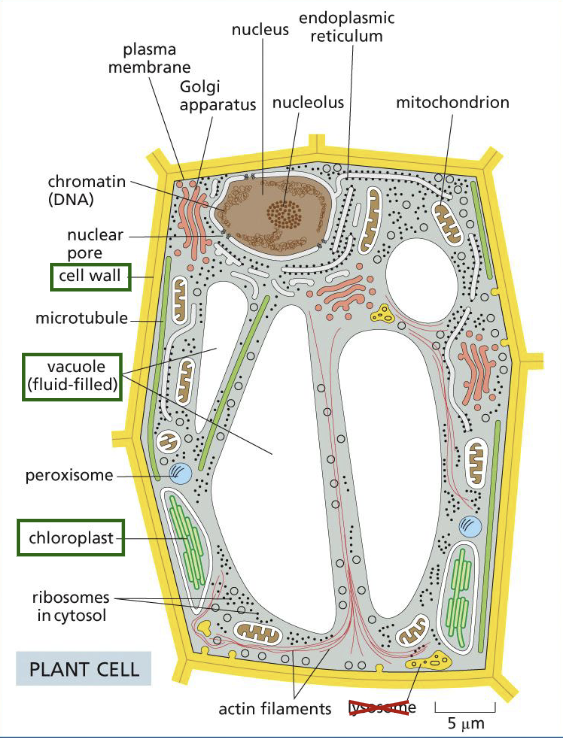
the ___ includes contents of the cell outside the nucleus, including membrane-bound organelles
cytoplasm
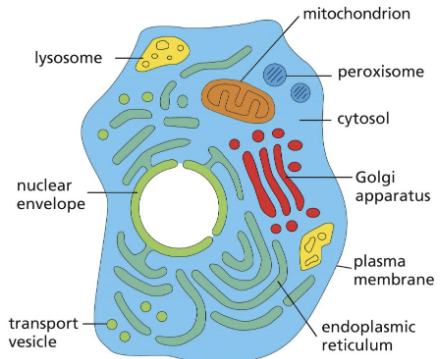
the ____ is the aqueous part of the cytoplasm which does not include membrane bound organelles but includes cytoskeleton and ribosomes
cytosol
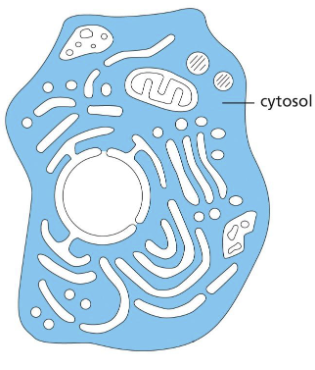
the ___ is the inside of organelles
lumen
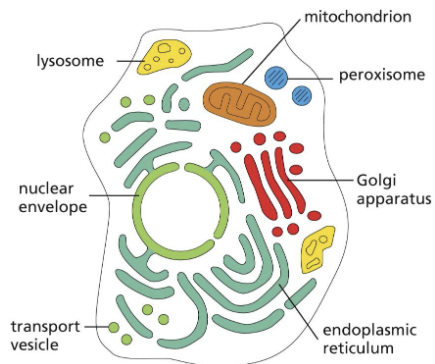
_____ is the division of a eukaryotic cell into specialized membrane-bound or membrane-less regions called compartments optimized for specific biochemical functions
compartmentilization
the ___/____ is involved in cell communication, import and export of molecules, and cell growth and motillity/mobility
plasma membrane
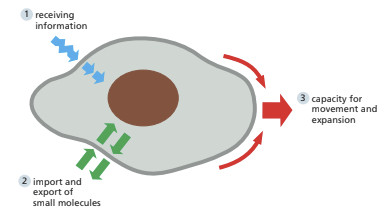
all cell membranes are composed of ____ and ____
lipids, proteins
the ___/____/___ states that there is mobility in lipids and some proteins, and many diff. kinds of lipids and proteins in the membrane.
fluid mosaic model
lipids have a ____ head and a ____ tail, making them amphipathic.
hydrophilic head, hydrophobic tail
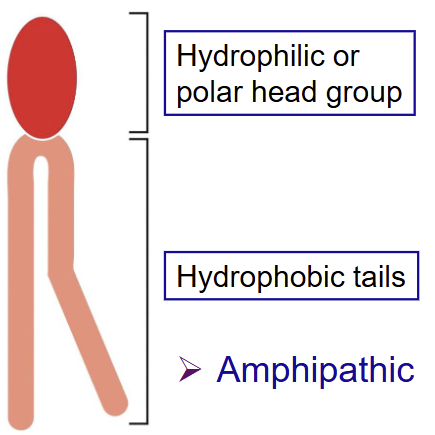
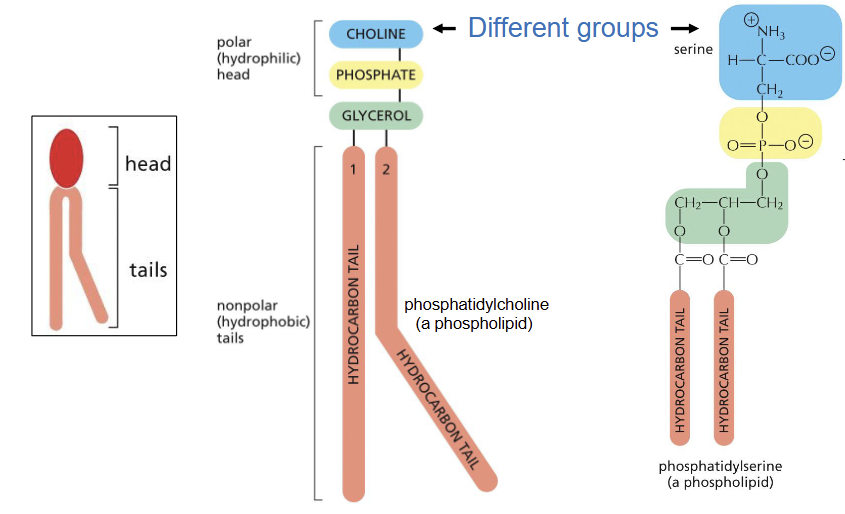
the most abundant type of lipids in the cell membrane are ____
phospholipids
phosphoglycerides are composed of 2 hydrocarbon tails connected to a ____ connected to a ____ group connected to an r- group
glycerol, phosphate
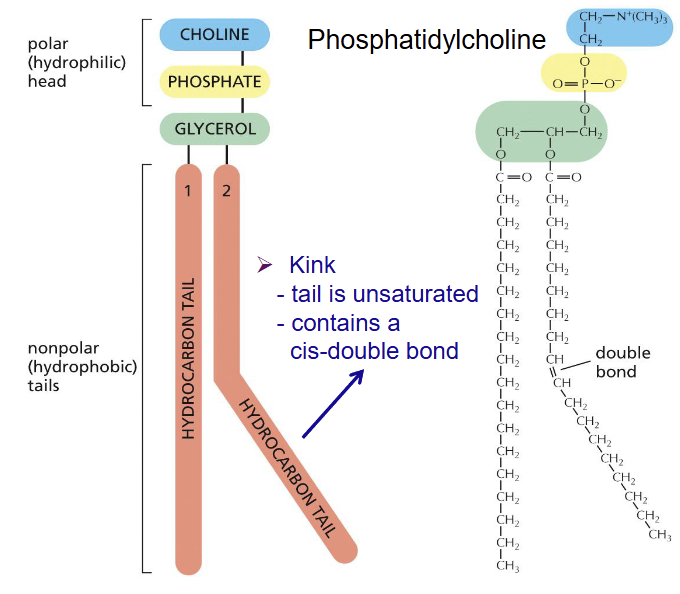
a kink in the hydrocarbon tail is due to a cis ____/____, making the tail unsaturated
double bond
ALL membrane lipids are _____
amphiphatic
in aqueous environments, phospholipids spontaneously self associate into a ____ with the polar head group interacting with water and the two hydrophobic tails interact with other hydrophobic tails
bilayer
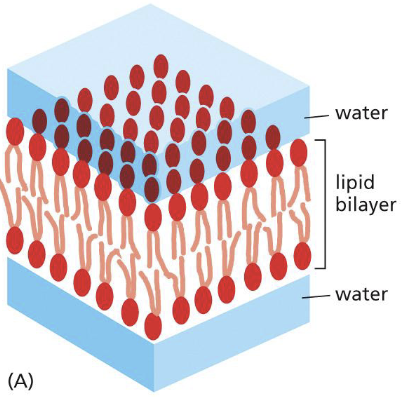
____ are artificial lipid bilayers used to study lipid properties, membrane protein properties, and deliver drugs into cells
liposomes, aka “nanotech”
phospholipids can ____/____, ____, and ____ but rarely flip-flop (move from one leaflet to the other)
diffuse laterally, rotate, and flex
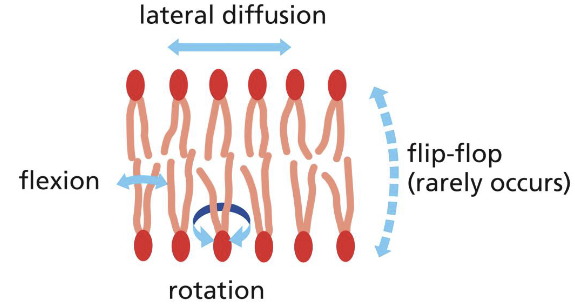
membrane fluidity is affected by ____ (lower = more viscous less fluid) and ____/____
temperature, lipid composition
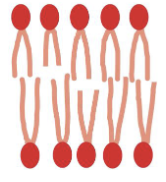
shorter hydrocarbon chain length ____ tail interactions with each other and ____ fluidity of membrane at lower temps.
reduces, increases
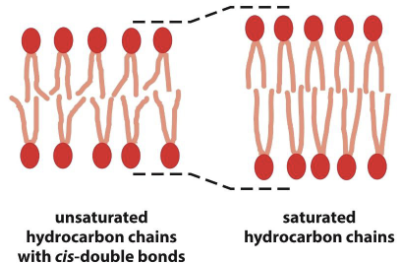
double bonds in an unsaturated tail creates a small kink which makes if more difficult for tails to pack, ____ fluidity of membrane at lower temps.
increases
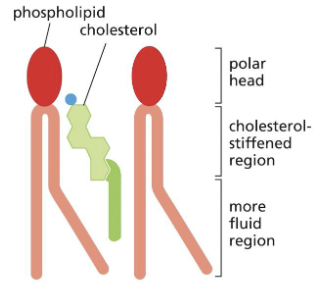
addition of ____ in animal cell membrane stiffens membrane (reduces fluidity) and makes it less permeable to water
cholesterol
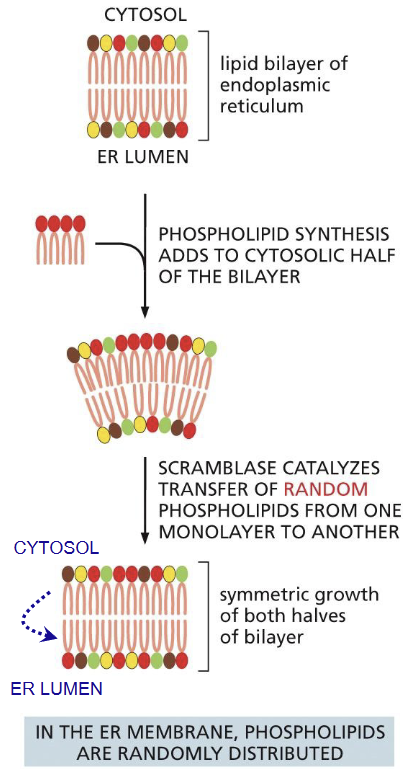
newly synthesized phospholipids are added to the ____ side of the ER membrane
cytosolic
_____ (phospholipid translocator) catalyzes the rapid flip-flop of phospholipids from one leaflet to another to equally distribute
scramblase
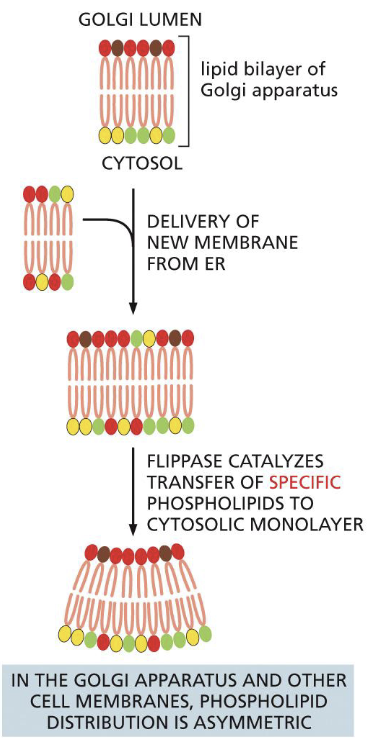
______in the golgi membrane catalyzes the rapid flip-flop of specific phospholipids from the bilayer side to to the cytosolic leaflet, maintaining the asymmetry of the membrane
flippases
membranes retain ______ during transfer between cell compartments when transported, conservation applies to both phospholipids and any proteins inserted in the membrane
orientation
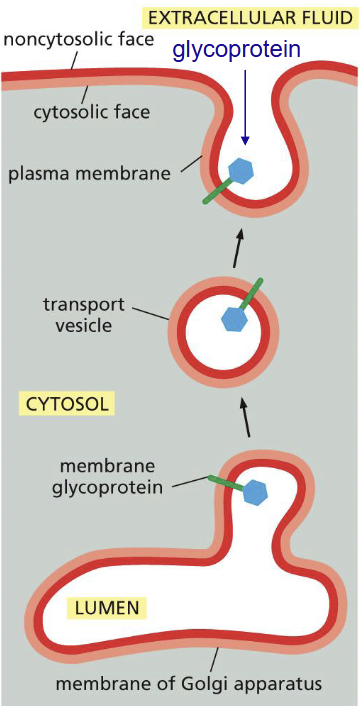
Phospholipids and glycolipids are distributed asymmetrically in the ____/_____ of an animal cell plasma membrane
Lipid bilayer
most membrane functions are carried out by ____/____, which have a variety of functions
membrane proteins
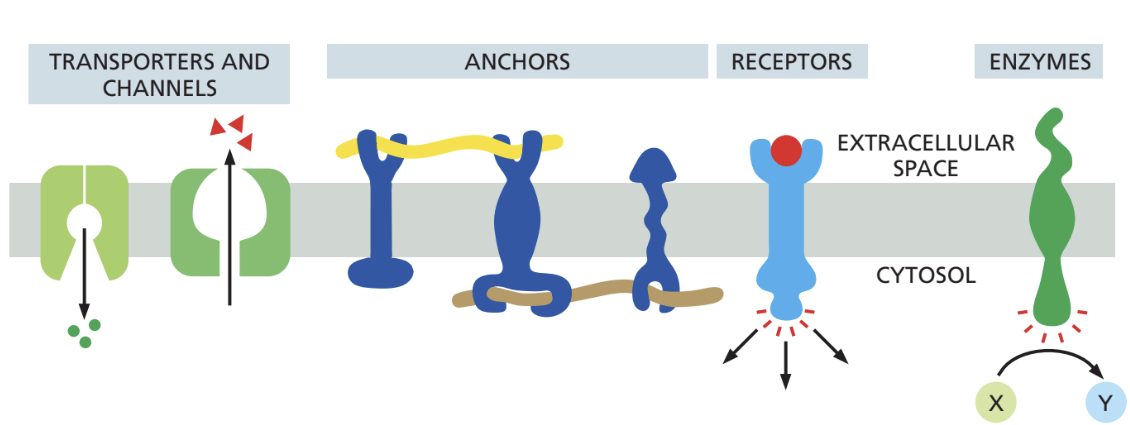
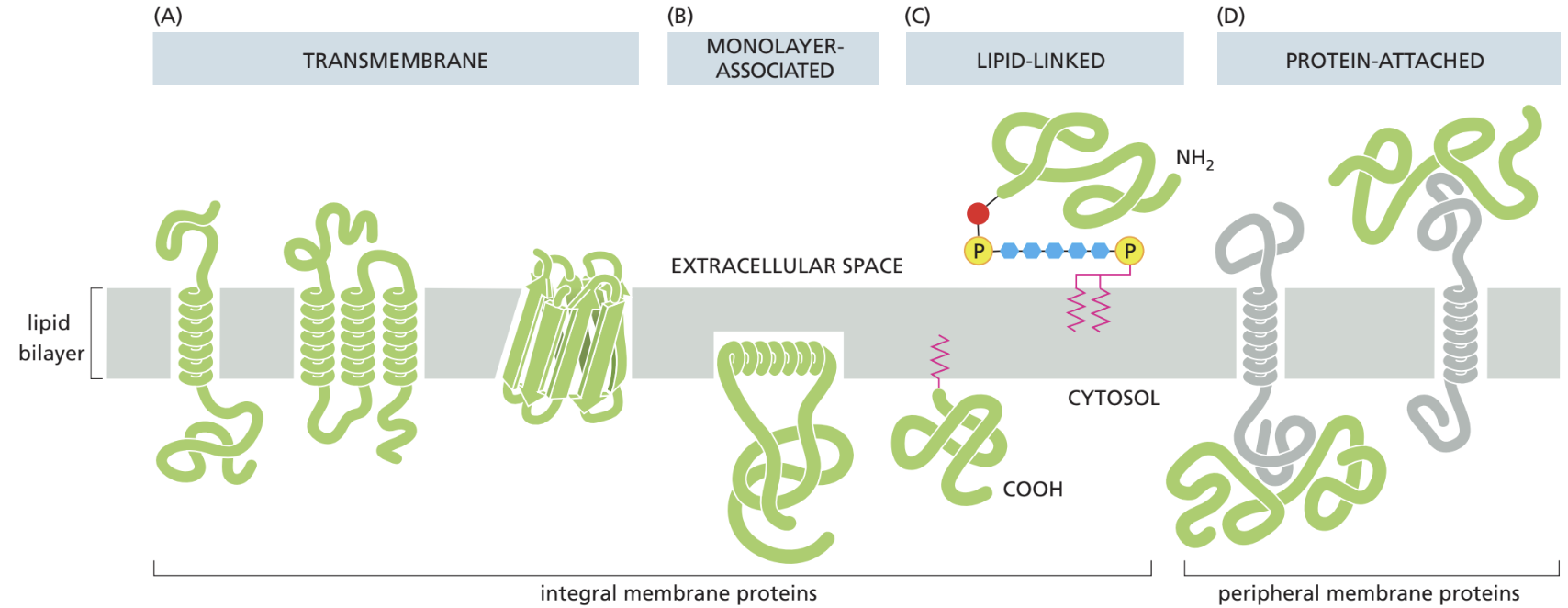
______ proteins are amphipathic, extending through both sides of the lipid bilayer, with hydrophobic regions on interior of bilayer and hydrophilic regions exposed to aqueous environment on either side of membrane. can be single/multi pass
transmembrane
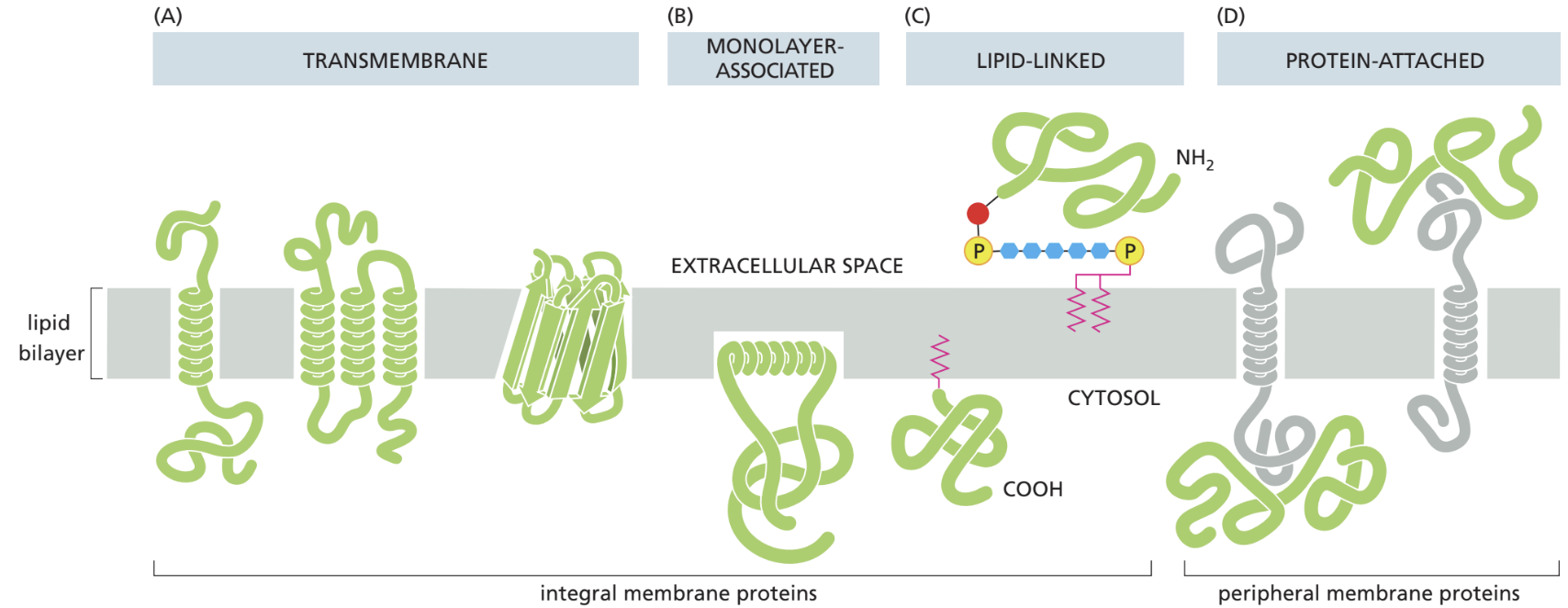
_____ proteins are directly attached to the lipid bilayer, can be removed only by disrupting the bilayer with detergents
integral
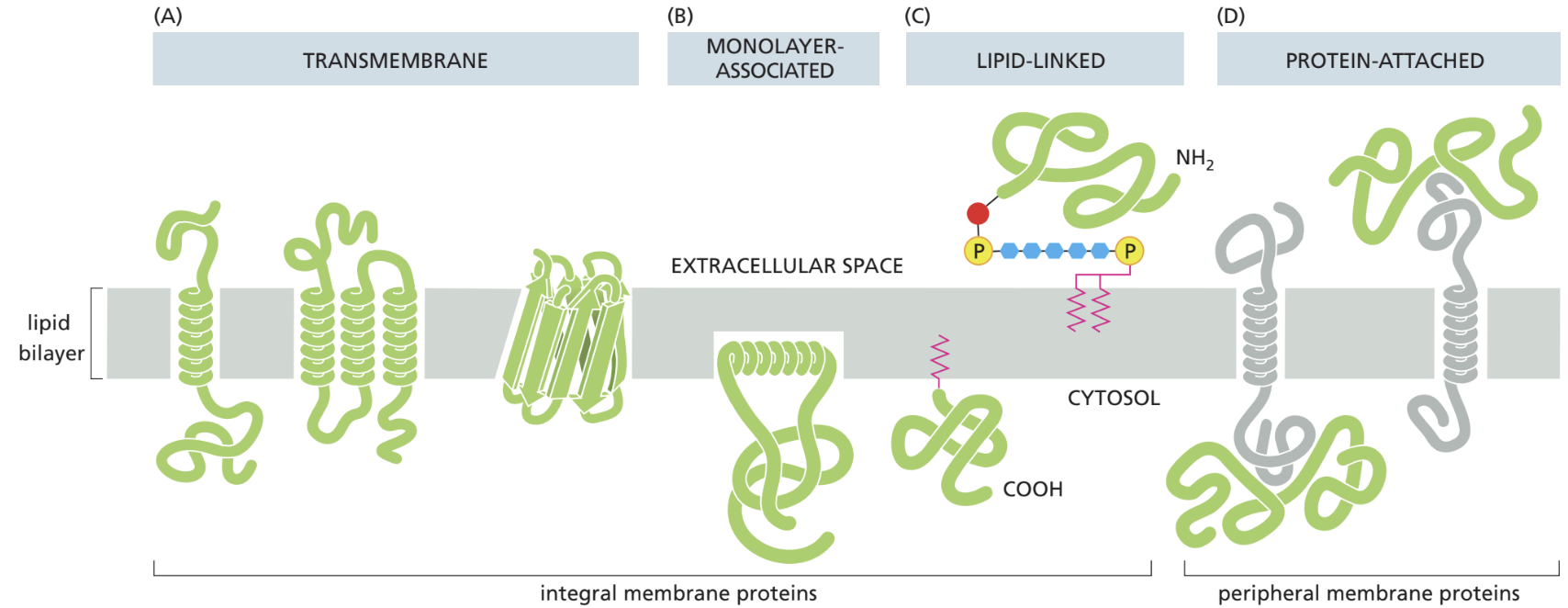
______ membrane proteins covalently attach to other membrane proteins, can be removed with gentle extraction
peripheral
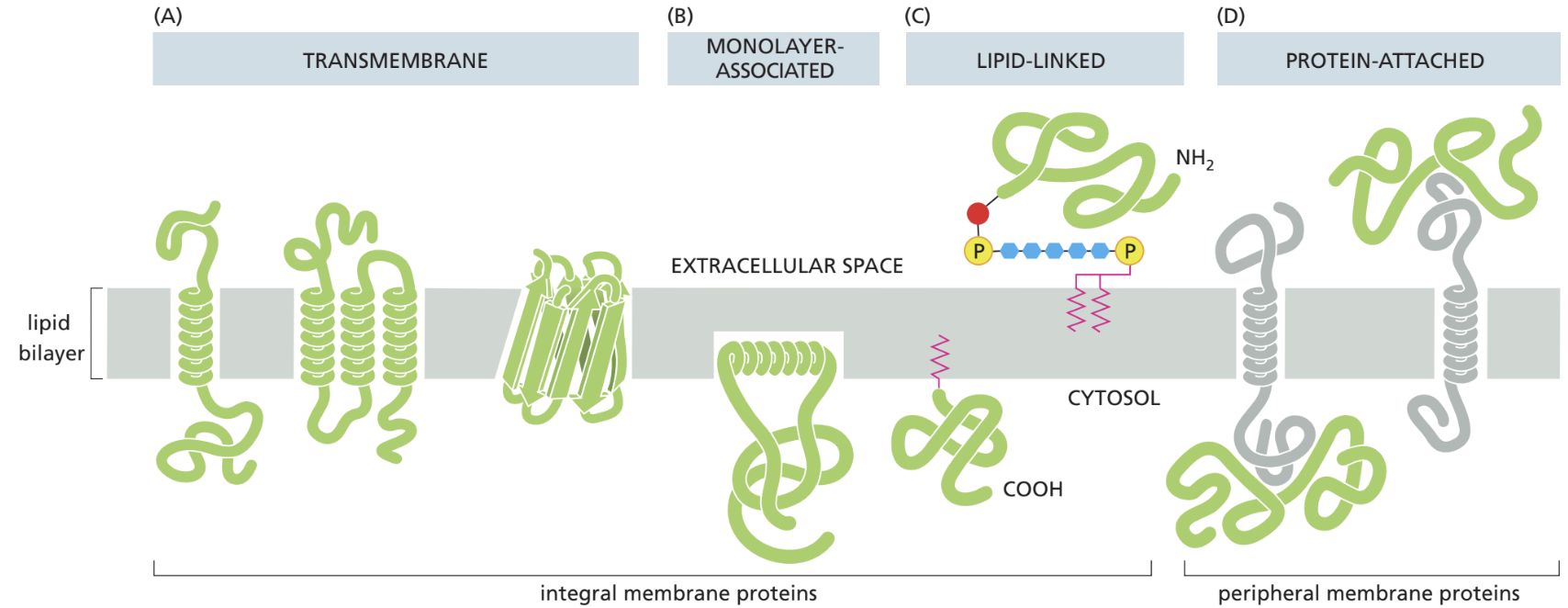
transmembrane proteins can extend acorss bilayer as single/multiple ___/____, or as a rolled up β sheet (β barrel)
α helix,
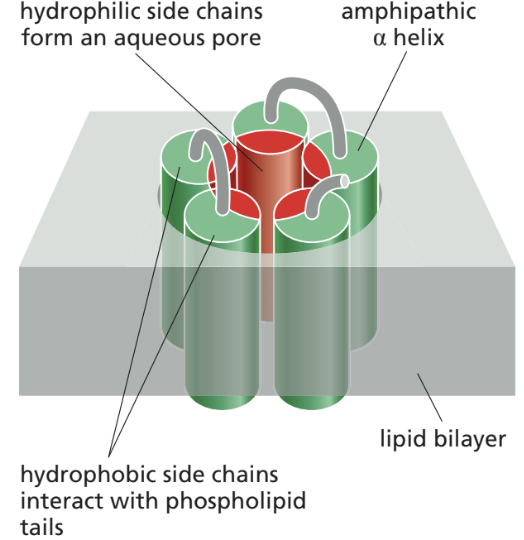
In a β barrel, amino acid side chains face inside of the barrel are mostly _____, while those on the outside are _____
hydrophilic, hydrophobic
detergents are disruptive agents which destroy the ___/____ by disrupting hydrophobic associations
lipid bilayer
cells have ways of confining particular proteins to localized areas within the bilayer, therefore creating functionally specialized regions called ____/____
membrane domains
lipid linked membrane proteins have ______ (GPI, lipid), which attach them to cell membrane, synthesized in ER lumen, and ends up on cell surface (non cytosolic face)
anchors
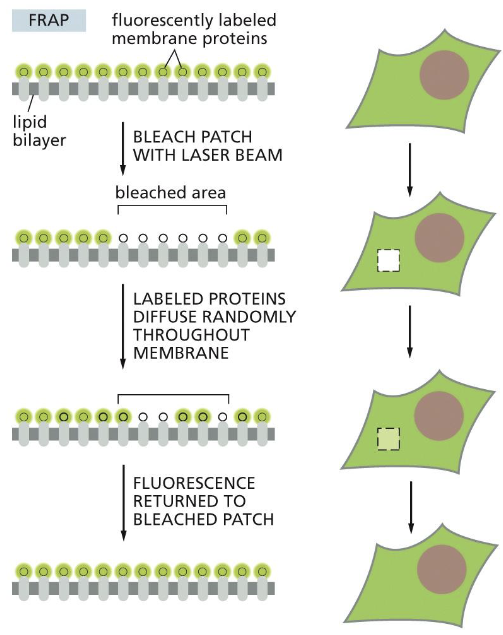
_____ is a technique used to study the lateral diffusion within a leaflet (protein movement)
FRAP Fluorescence Recovery After Photobleaching
FRAP works by
applying ___/labelling with fluorescent antibody
____ an area (white)
measuring recovery time of ____/____ to move into particular area
GFP, photobleaching, neighbouring proteins
_____/____, a form of passive transport, is the use of membrane transport proteins to transfer specific molecs down their conc. gradient
facilitated transport
the lipid bilayer is ______ to small nonpolar molecs. (O2 CO2 N2 …), and small uncharged polar molecs. (H2O, …),
permeable
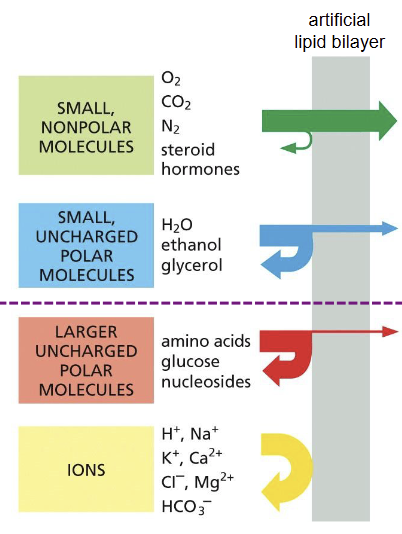
the lipid bilayer is more permeable to more _____ or ______ molecs (faster diffusion across lipid bilayer)
hydrophobic, nonpolar
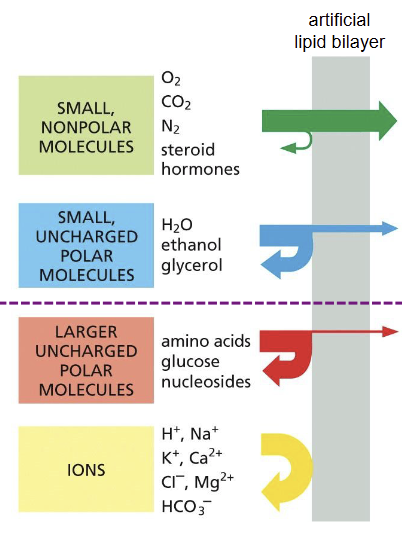
the lipid bilayer is ____ to large uncharged polar molecs (glucose, AA…), and ions (Na+, H+…), requiring membrane proteins for transport
impermeable
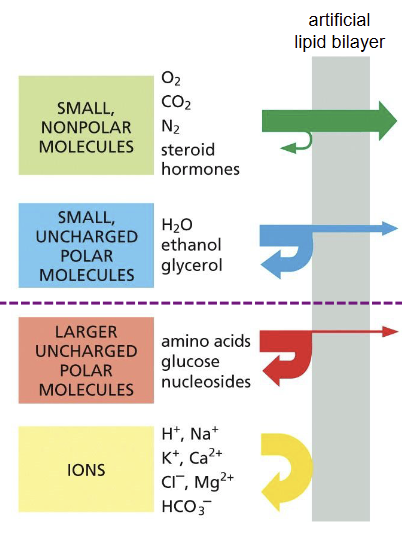
transmembrane transport proteins create a protein lined path across the cell membrane to transport _____ and _____ molecs. (ions, sugars, nucleotides…)
polar, charged
each transport protein is _____: transporting a specific class of molecules, different specificities depends on protein
selective
Channel proteins bind weakly to transported molec, does not change in conformation a lot during transport, selective on basis of ____ and ____/_____
size, electric charge
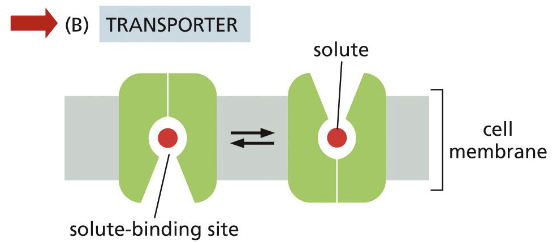
_____ proteins only transfers molecules/ions that fit into specific binding site, undergoing conformational changes during transport
transporter/carrier
For uncharged molecs. direction of transport only depends on ____ of solute on either side of the membrane
concentration
_____ transport moves molecs. down the conc. gradient, does not directly require energy by the membrane transport protein
passive
____ transport moves a molec, against its conc. gradient, directly requiring energy.
active
for charged molecs. the direction of transport depends on the the _____ gradient = concentration gradient + membrane potential
electrochemical
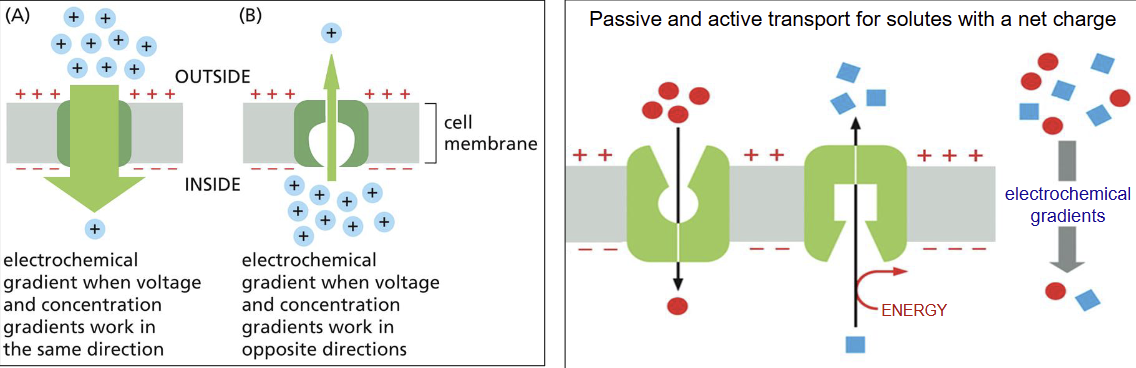
_____ are specialized channels in the plasma membrane to facilitate the flow of water
aquaporins
osmosis is the movement of ____ down its concentration gradient
water
osmolarity is the total concentration of solute particles ____ the cell,
inside
solute concentration ____ the cell is generally greater compared to ____ the cell
inside, outside
_____ proteins are responsible for the movement of most small, water soluble, organic molecules and a handful of inorganic ions across cell membranes.
transporter
_____ proteins are selective, hydrophilic transmembrane pores that allow passive transport of small, water-soluble molecs and ions into/out of cell/organelle
channel
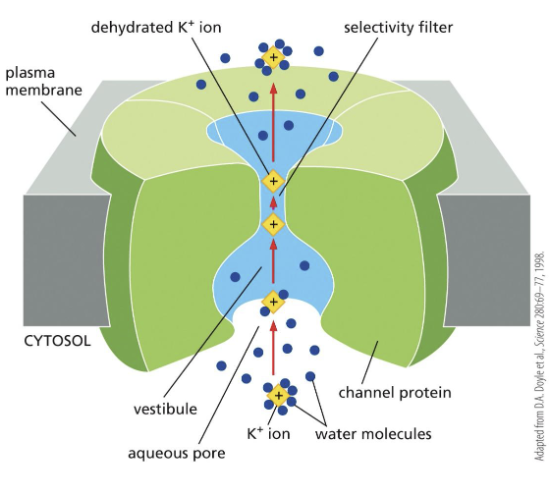
___/____ ion channels are always open, but selectivity depends on the diameter, shape, and distribution of charged amino acids that line it
non gated
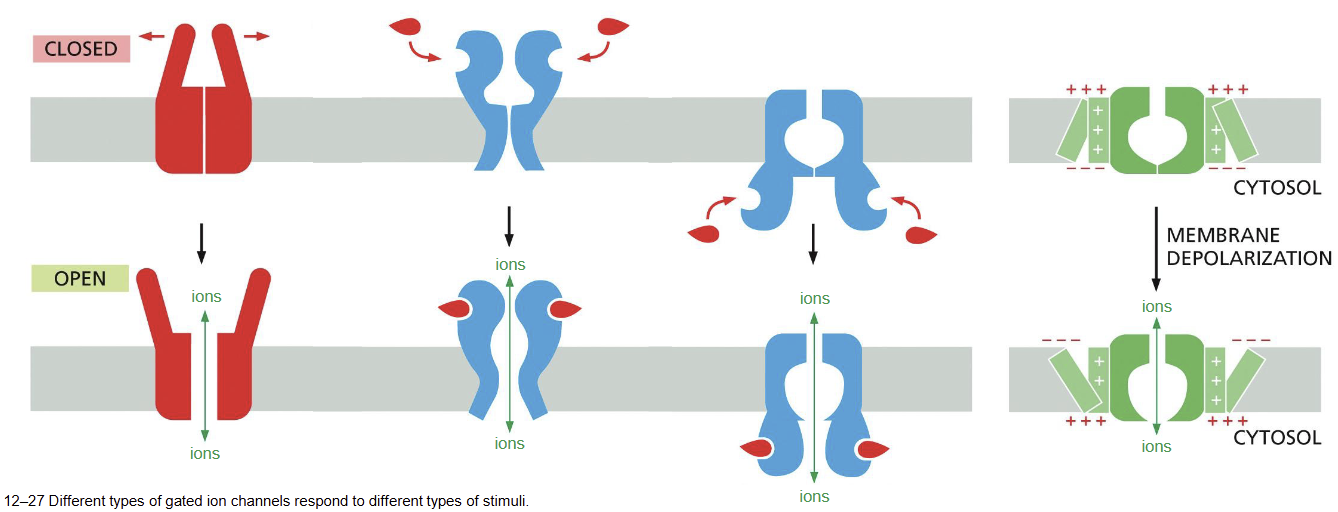
____ ion channels are selective, depend on a signal that that causes a switch between closed and open state through change in conformation
gated
mechanically gated ion channels require ____/____
ligand (extracellular) gated ion channels require a ____ (e.g. neurotransmitter
ligand (intracellular) gated ion channels require _____ (e.g. ion, nucleotide)
voltage gated ion channels require a ___/__/___ across membrane
mechanical stress
ligand
ligand
change in voltage
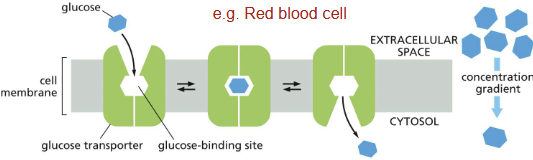
____ refers to the passive transport of one solute down its electrochemical gradient. direction of transport is reversible
uniport
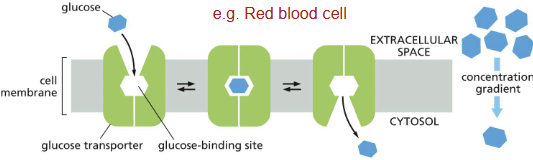
the glucose transporter is a ____ that ____ transports glucose, working in either direction (in or out of the cell), down the concentration gradient
uniporter, passively
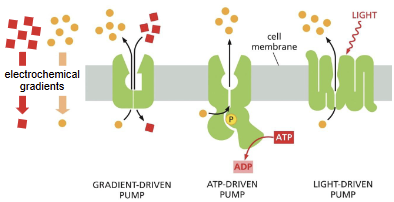
some examples of ____ transport include gradient-driven pump, ATP-driven pumps (ATPases), and light-driven pumps (bacteria)
active
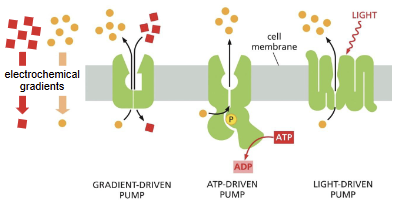
____/___ carry out active transport, importing solutes that are at a lower concentration outside the cell than inside (against conc. gradient)
transmembrane pumps
if a pump moves both solutes in the same direction across the membrane, it is ____
symport
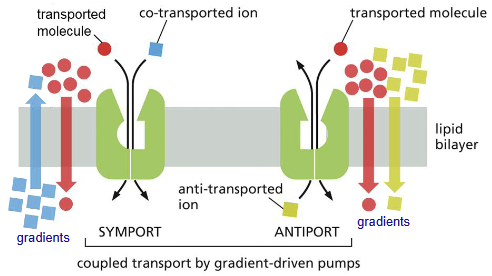
if a pump moves two solutes in opposite directions, it is called _____
antiport
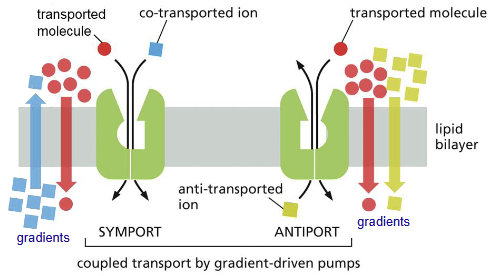
in gradient-driven pumps, the free energy from the 1st solute moving ___ its gradient is used to transport 2nd solute ___ its gradient
down, against
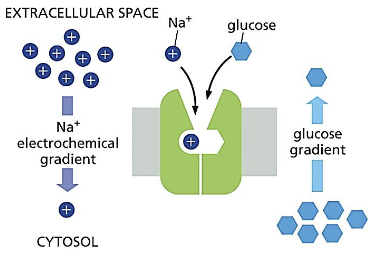
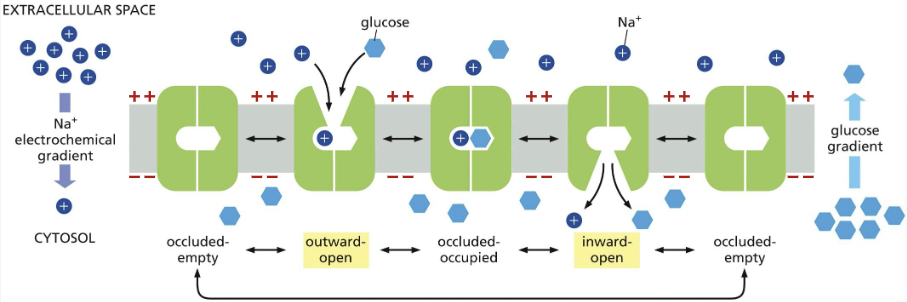
Na+-glucose pump is an example of _____, is a gradient driven pump
symport
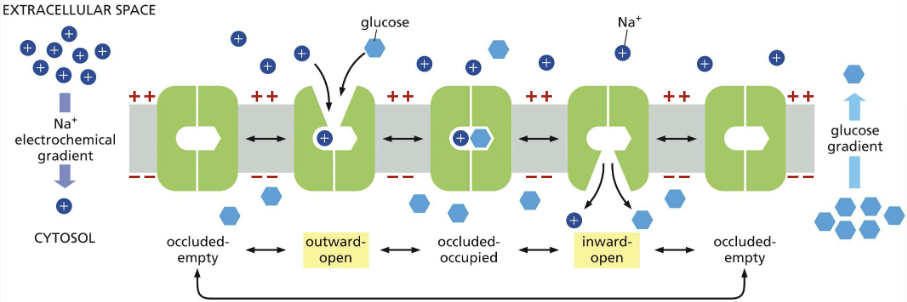
In a Na+-glucose symport,
Na+ moves ____ its gradient to provide energy to move glucose ___ its gradient
down, against
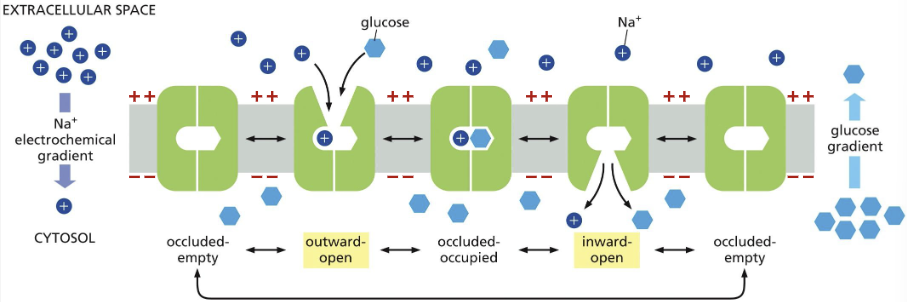
in a Na+-glucose symport,
random osciliations between conformations causes symport to be ____, but generally moves in the forward position
reversible
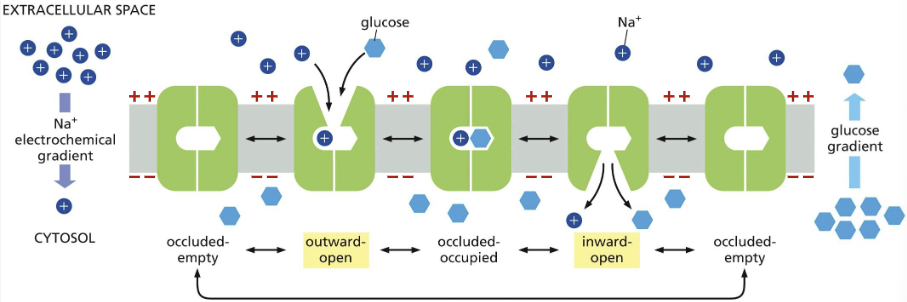
In a Na+-glucose symport,
both molecs. must be present for the transport to occur, known as ____/___: the binding of Na+ enhances the binding of glucose
cooperative binding
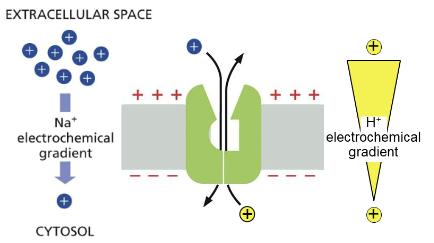
Na+-H+ exchanger is an example of ____, is a gradient-driven pump
antiport
In a Na+-H+ exchanger,
Na+ moves ____ its electrochemical gradient provides energy to move H+ ____ its electrochemical gradient
down, against
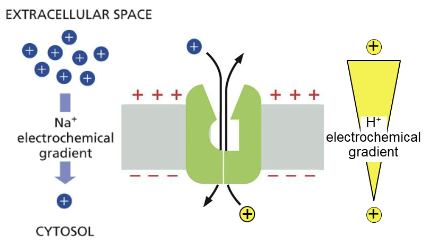
the ____ exchanger is used to control the pH in the cytosol, preventing the cell interior from becoming too acidic
Na+-H+
The Na+ electrochemical gradient is maintained in animal cells via the _____/___, maintaining membrane potential
Na+-K+ pump
cytosolic pH needs to be ~7.2 for optimal enzyme function,
as cytosolic pH drops (excess H+), activity in the Na+-H+ exchanger ___ (more efficient), and the H+ is transported out,
increases, more H+ = more acidic
ATP driven pumps use energy from ATP hydrolysis to transport solutes for ___ transport
active
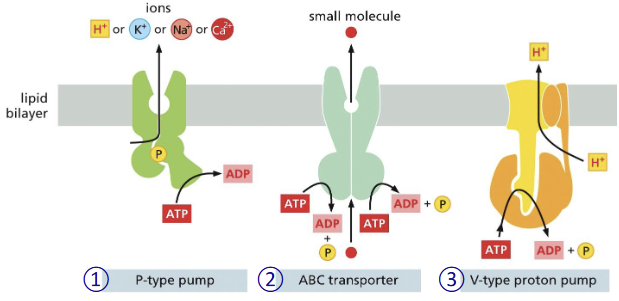
3 types of ATP-driven pumps include:
_____ pumps, ___ type pumps and _____ pumps
p-type, ABC, v-type
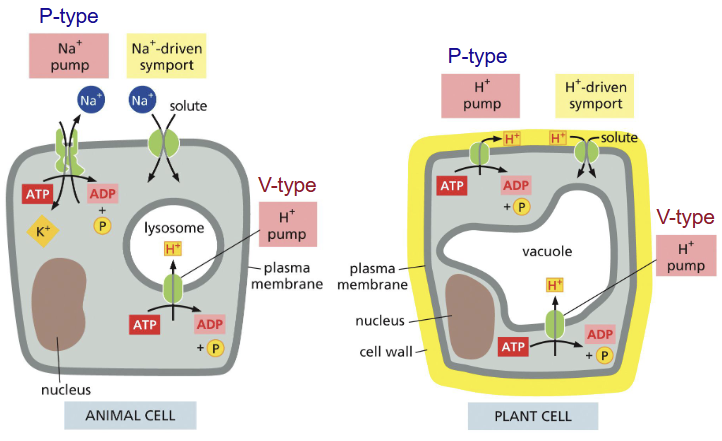
P-type pumps use ATP to ____ themselves during the pumping cycle, transports ions, phospholipids
phosphorylate “pee”
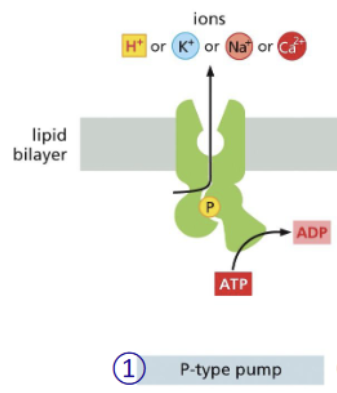
The Na+-K+ pump is a ____/___ which moves both Na+ and K+ ____ their gradients
p-type pump, against
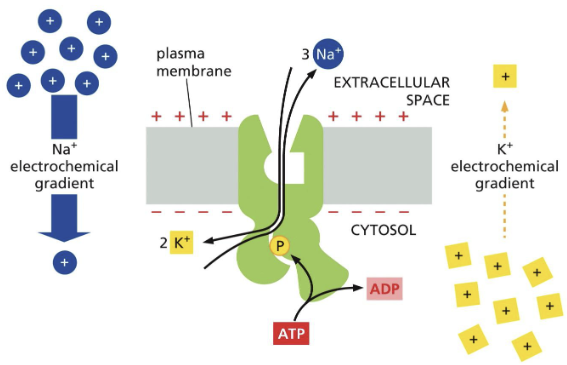
the Na+-K+ pump moves _ Na+ out, _ K+ in
3, 2
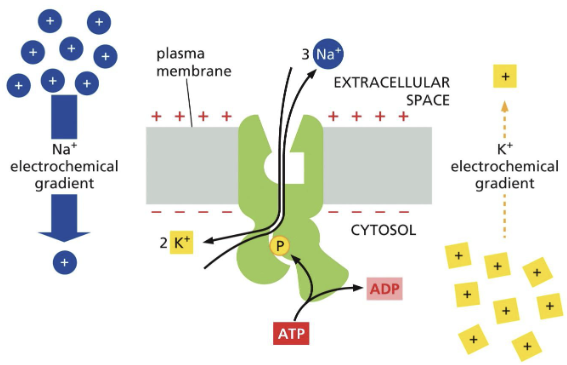
the Na+ gradient is used to transport ___ into the cell (e.g. glucose) and to maintain __
nutrients, pH
explain pumping cycle of Na+-K+ pump
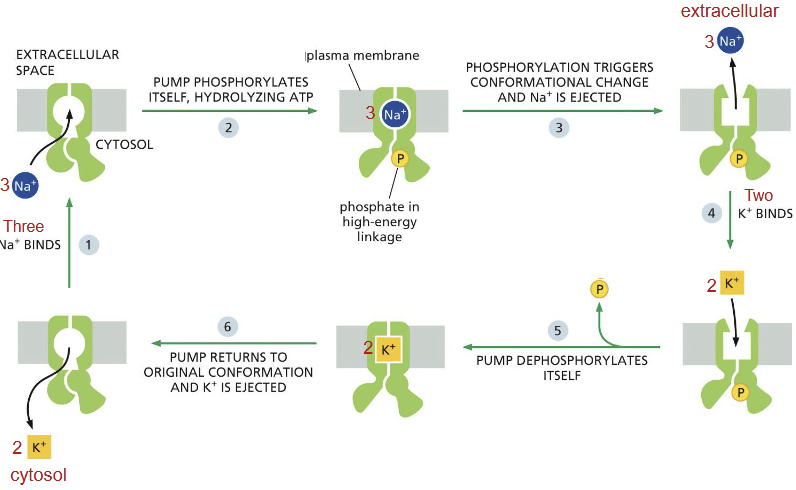
p-type pumps function in generating and maintaining ______/____
electrochemical gradients, e.g. Na+ K+ pump (animal), H+ pump (plants)
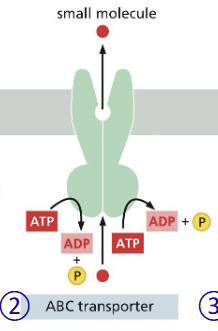
___ transporters uses 2 ATP to pump small molecs. across cell membrane
ABC
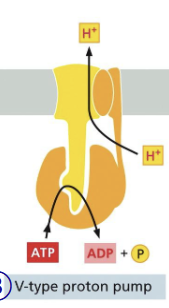
_-___ proton pump uses ATP to pump H+ against its gradient into organelles to acidify the lumen (animals), or into lysosome in plant vacuoles
v-type
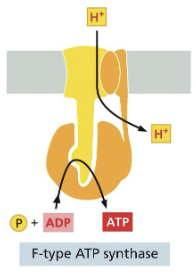
F-type ATP synthase are structurally related to _-___ proton pumps but have the opposite mode of action (pump H+ out of lumen)
v-type
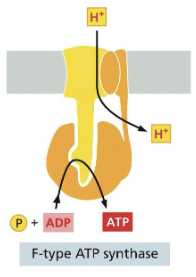
F-type ATP synthase uses H+ gradient to drive __/____ in mitochondria, chloroplasts, bacteria. is reversible
ATP synthesis → niagara falls
the ___/____ is the difference in electrical charge on two sides of membrane
membrane potential
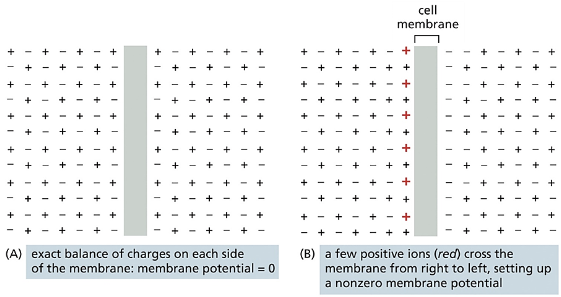
___/____ is used by gradient driven pumps to carry out active transport (symport, antiport), and electrical signaling
membrane potential
K+ leak channels play a major role in the generation of ___/____ (animal cells) which causes K+ to flow out of cell
membrane potential
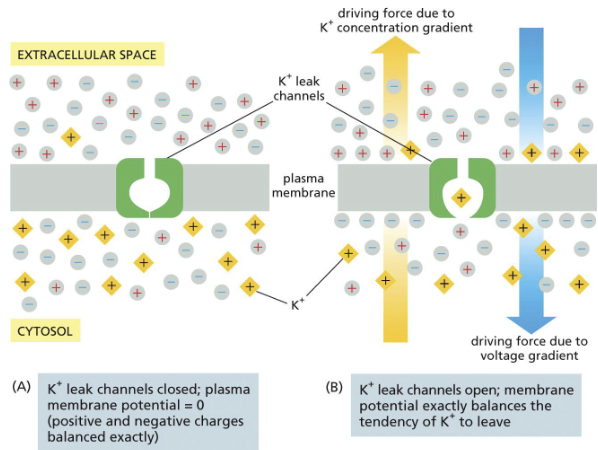
membrane potential is maintained by K+ leak channels and the Na+-K+ pump, resulting in more (+) ____ of cell, and more (-) ____ of cell)
outside, inside
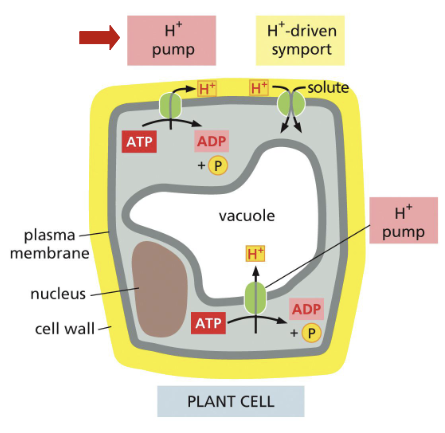
in plants, __/___ (p-type pump) is used to generate a membrane potential, gradient driven pumps (e.g. H+ driven symport), electrical signaling, and to regulate pH
H+ pump
the ____ of intracellular compartments and membranes will differ for different cell types
volumes
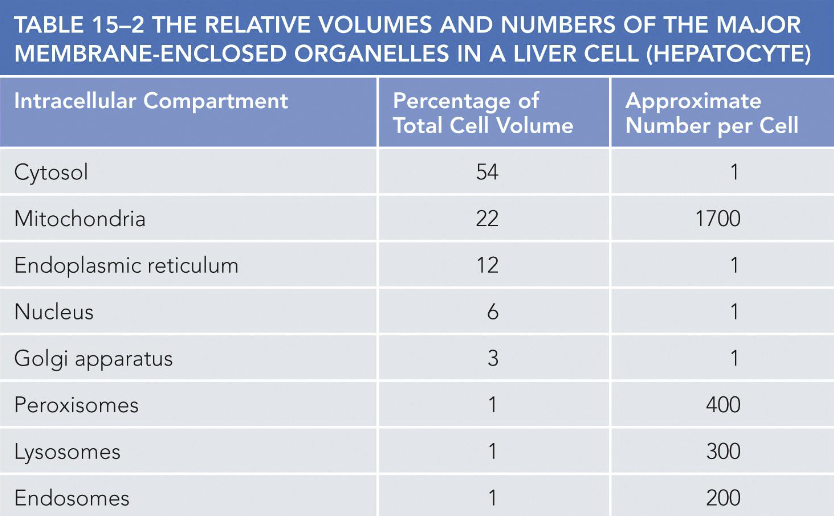
protein sorting is the selective transfer of compartments containing unique sets of proteins from the ____ (where they’re made) to the compartment where they’ll be used
cytosol
protein sorting depends on signals in the ___/___/____ on proteins
amino acid sequence
the ____ makes up half the cell volume, is the site of protein synthesis/degradation, and contains the cytoskeleton
cytosol
The ___/___/___ houses membrane-bound ribosomes, and is the site of synthesis of soluble proteins and transmembrane proteins for the endomembrane
rough endoplasmic reticulum (ER)
the ___/____/____ is the site of phospholipid synthesis, and detoxification
smooth endoplasmic reticulum (ER)

