1.2.9 Taxes and Subsidies (Micro)
 Call Kai
 Learn
Learn Practice Test
 Spaced Repetition
 Match
Match Flashcards
 Knowt Play
1/10

There's no tags or description
Looks like no tags are added yet.
Name | Mastery | Learn | Test | Matching | Spaced | Call with Kai | Chat |
|---|
No analytics yet
Send a link to your students to track their progress
11 Terms
INDIRECT TAX
An indirect tax is a government imposed tax that is charged on producers of goods and services and is paid by the consumer indirectly.
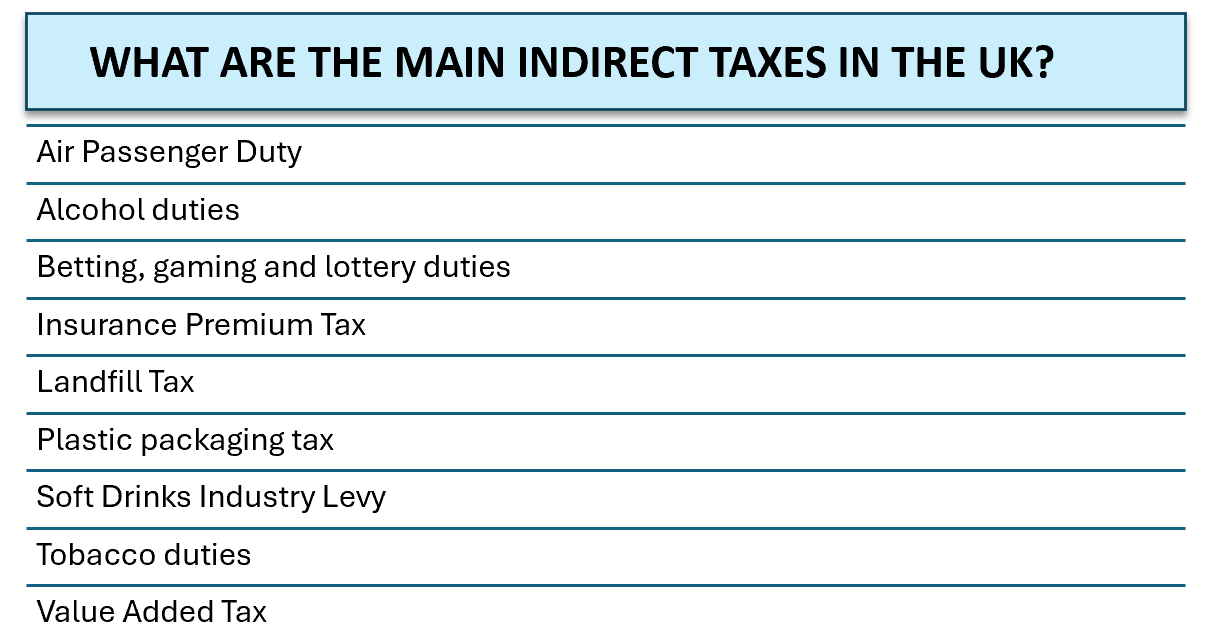
MAIN INDIRECT TAXES IN THE UK
EXCISE DUTIES
Are a form of indirect tax put on producers of goods and services often leading to an increase in price and is indirectly paid for by consumer in order to prevent bad behaviour (ie cigarette tax)
DIFFERENT EXCISE DUTIES IN THE UK
Values added after tax
Fuel excise duty
Sugar tax
Tobacco duties
TAX INCIDENCE
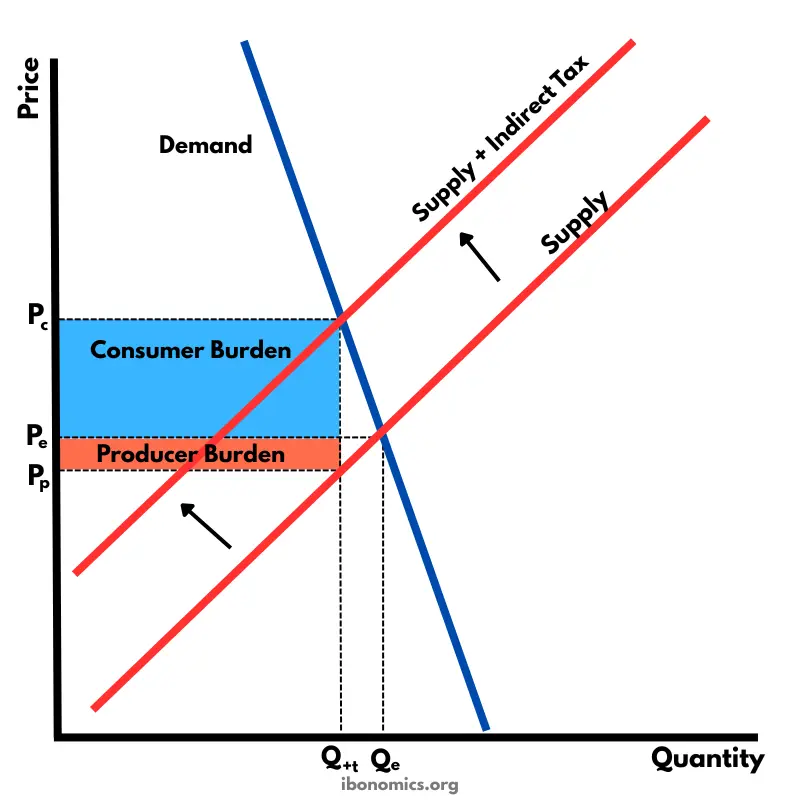
However much of the tax burden the producer decides to put on the consumer. Who truly pays
INDIRECT TAX GRAPH
AN INCREASE IN INDIRECT TAX WILL DECREASE SUPPLY, SHIFTING THE ENTIRE SUPPLY LINE INWARDS (TO THE LEFT).
Consumer will receive most of the tax burden
SUBSIDY DEFINITION
A subsidy is a payment from the government to a producer to lower their costs of production and encourage them to produce more
GOVERNMENT SUBSIDY
It is any form of government support- financial or otherwise- offered to producers and consumers.
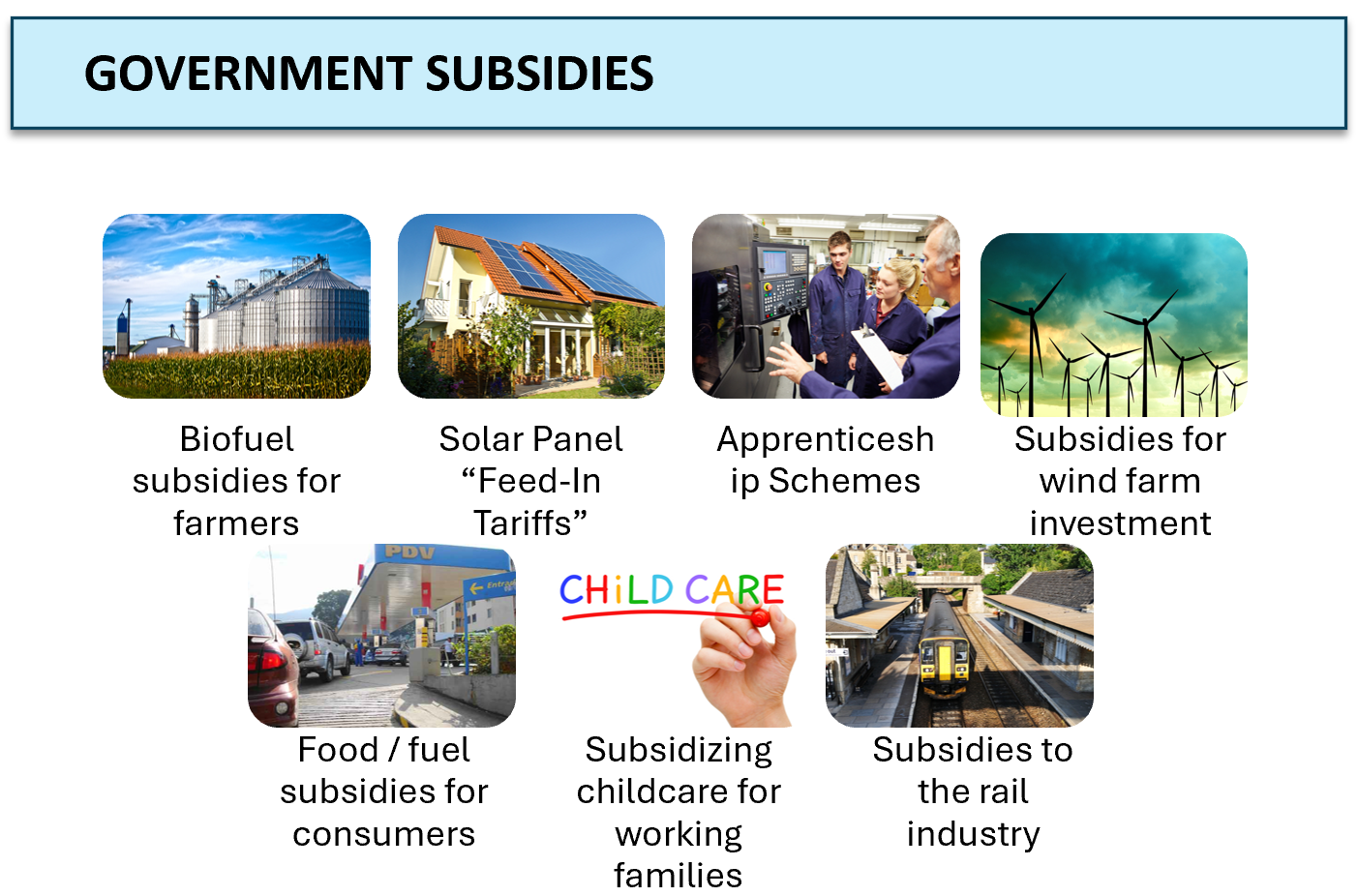
EXAMPLES OF GOVERNMENT SUBSIDIES
EFFECTS OF SUBSIDIES
Subsidies help maintain lower prices for consumers, which helps households on low and fixed incomes.
They increase the employment rate, by making workers more skilled through apprenticeship schemes and lowering the cost of employing workers.
Subsidies could help control inflation, by keeping costs of production low.
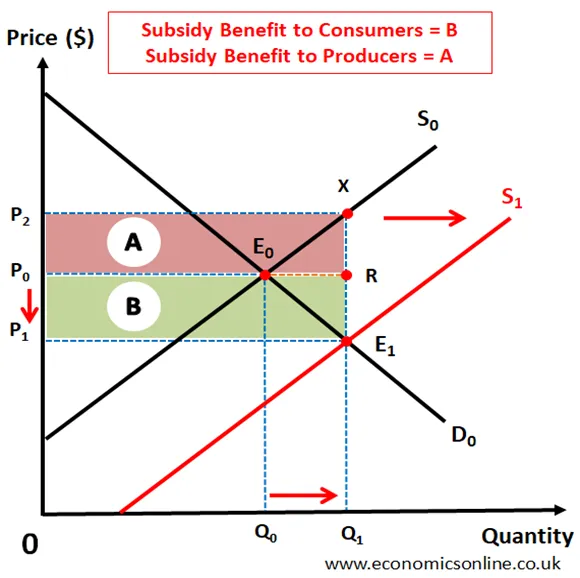
SUBSIDIE GRAPH
AN INCREASE IN SUBSIDY WILL SHIFT THE ENTIRE SUPPLY LINE OUTWARDS (TO THE RIGHT).
This is because subsidies reduce production costs, acting as an incentive for producers to increase output at any given price.