NEURO2020 week 1
 Call Kai
 Learn
Learn Practice Test
 Spaced Repetition
 Match
Match Flashcards
 Knowt Play
1/29

Earn XP
Description and Tags
WEEK 1
Name | Mastery | Learn | Test | Matching | Spaced | Call with Kai |
|---|
No analytics yet
Send a link to your students to track their progress
30 Terms
Brain structure
Tells us about the morphology or form of things
CT scan may show brain structure and indicate a tumour that may be causing some observable behaviour
Brain Function
Tells us about activity
EEG may show abnormal brain activity that is indicative of a seizure
Superior =
Inferior =
above, below
Rostral =
Caudal =
towards the head, towards the tail
Contralateral =
Ipsilateral =
other side, same side
Bilateral
Unilateral
both sides, one side
Proximal
Distal
close to main body, far from main body
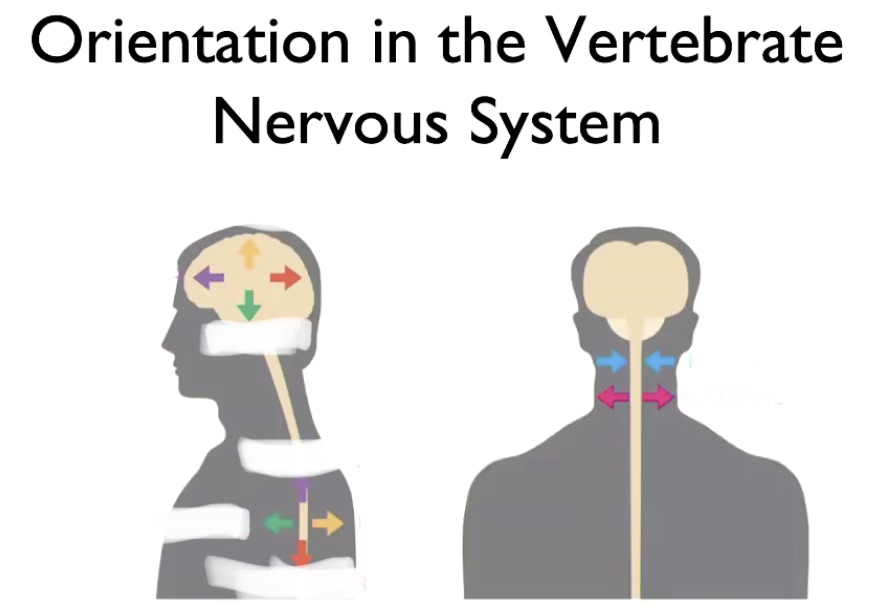
yellow?
dorsal
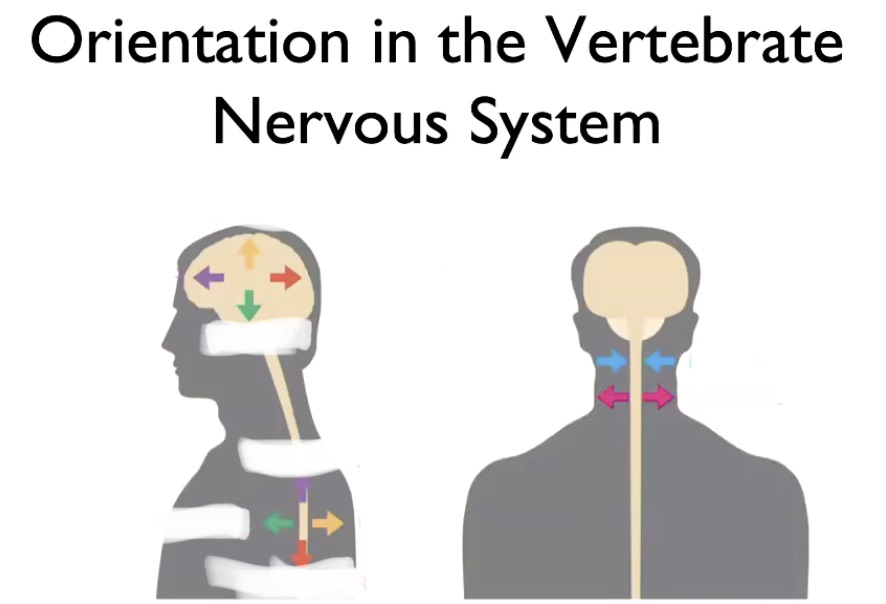
red?
posterior
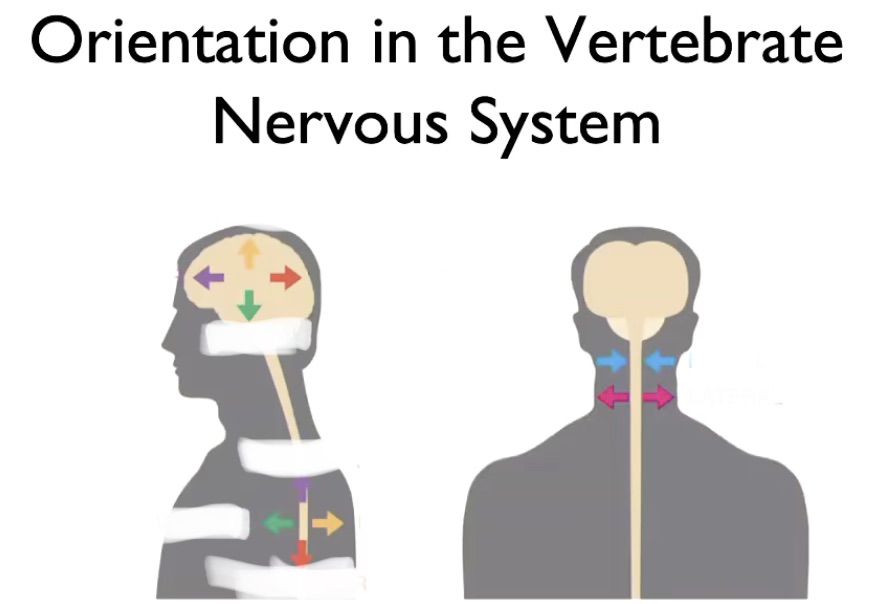
purple?
anterior
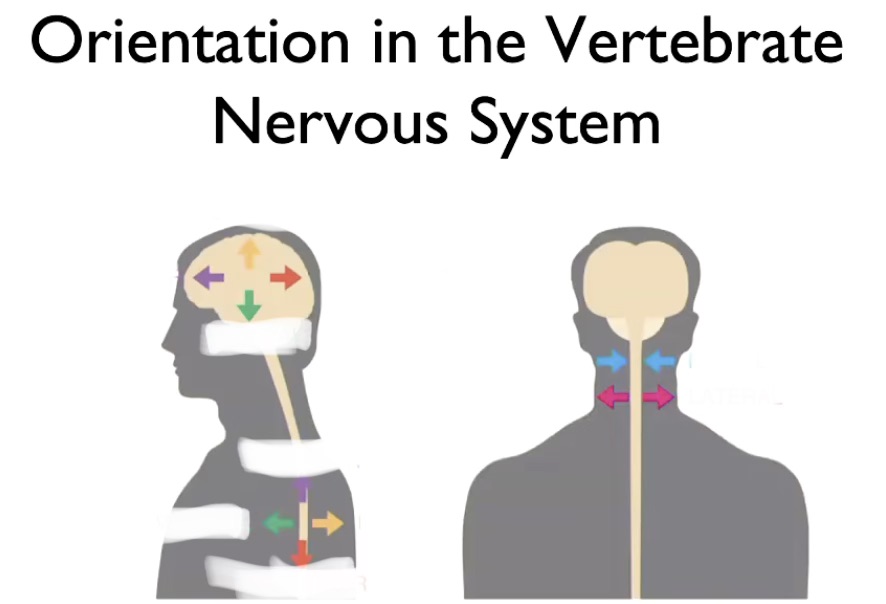
green?
ventral
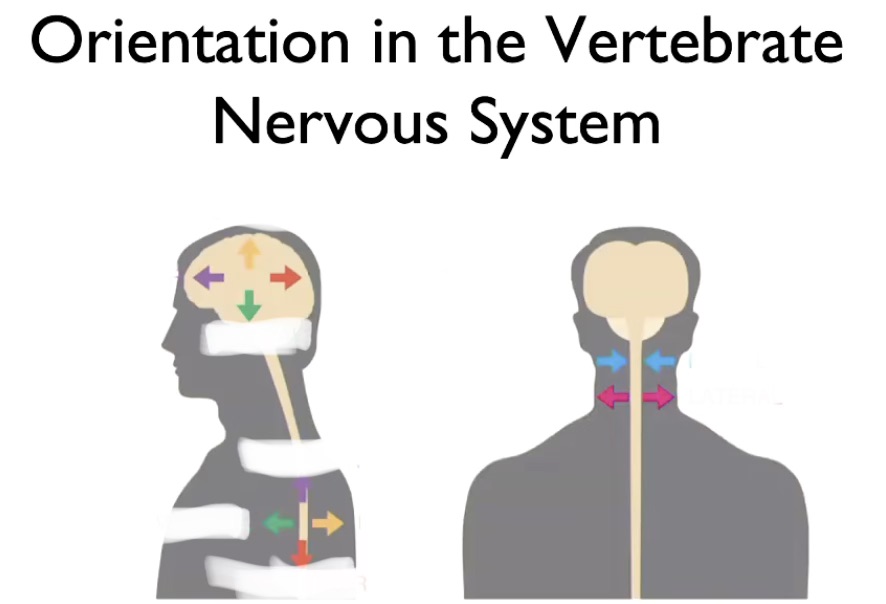
blue?
medial
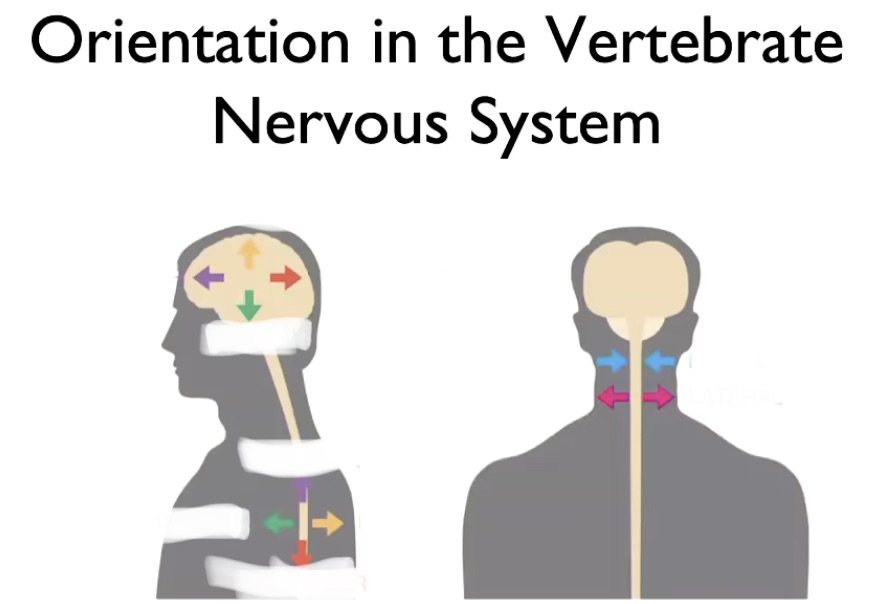
pink?
lateral
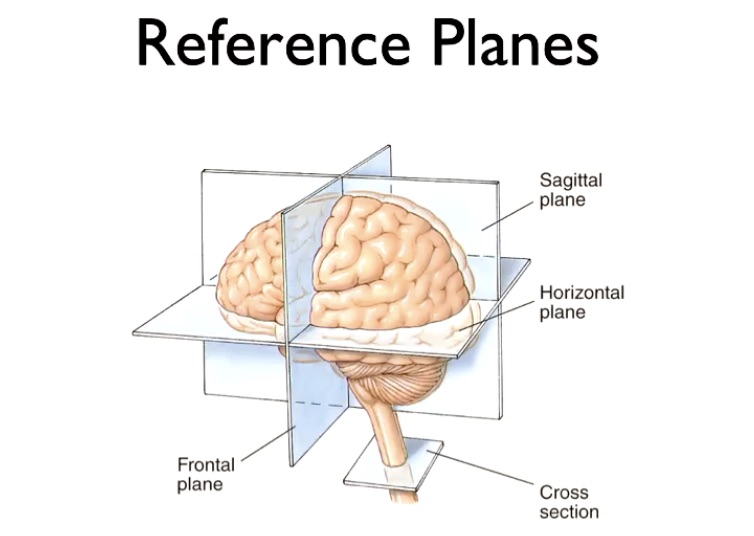
bottom?
frontal plane?
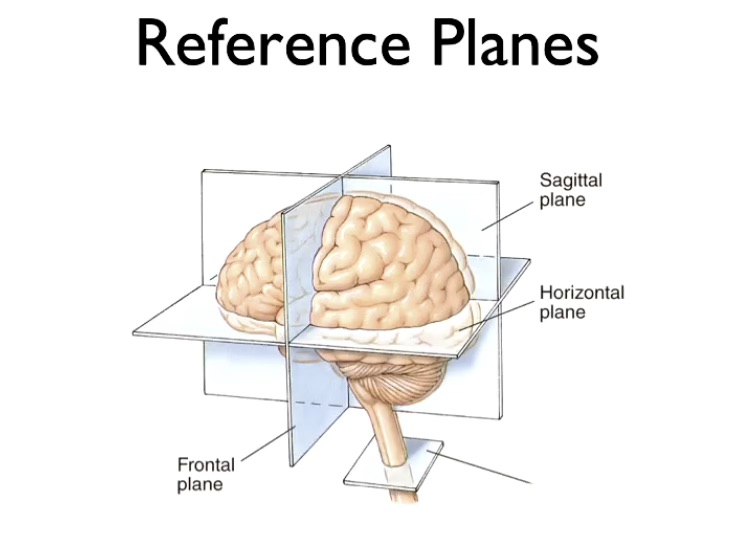
bottom?
cross section
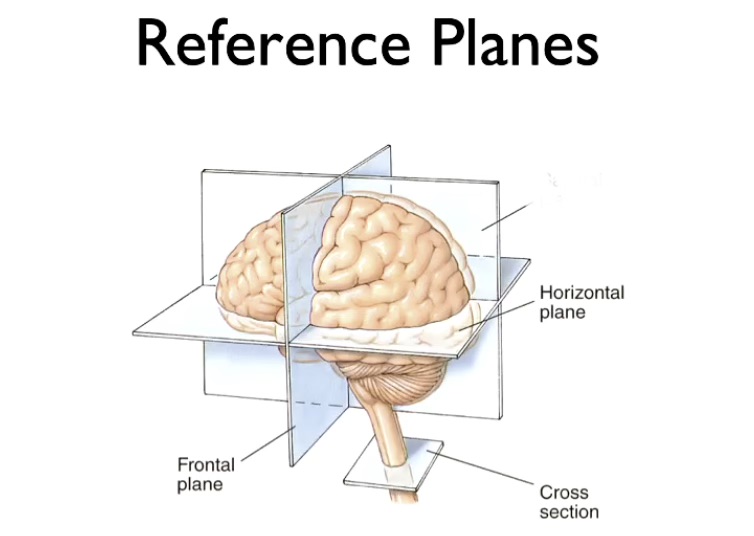
highest?
sagittal plane
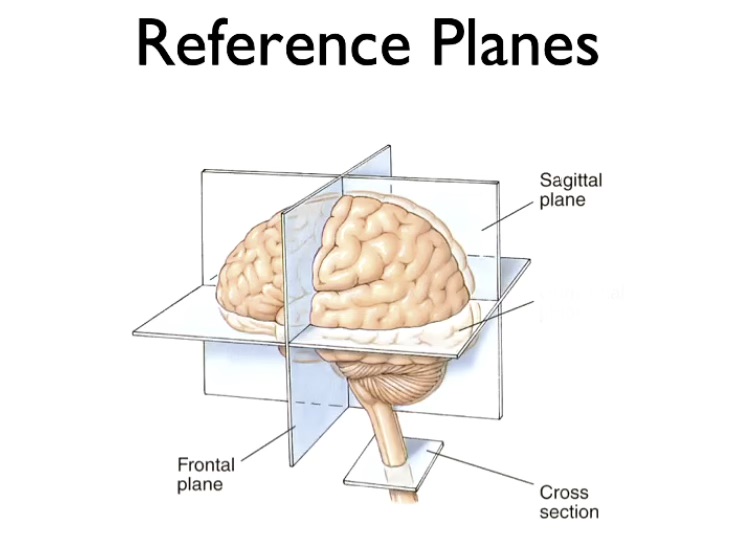
middle?
horizontal plane
CAT SCAN
Computer assists in reconstructing 3-D structure of brain from many individual 'slices'
Positron Emission Tomography (PET)
Somewhat invasive
Inject or inhale radioactive isotope – then image brain after task.
Program accumulates intersections of collisions to build a map if where highest activity occurs
Magnetic Resonance Imaging (MRI)
Detects waves emitted from hydrogen atoms when in a magnetic field
Functional Magnetic Resonance Imaging (fMRI)
Captures area of increased oxygenated blood flow in the brain
More active areas take up more oxygenated blood
Oxygenated blood has magnetic properties
Non-invasive
High spatial resolution
Poor temporal resolution
Transcranial Magnetic Stimulation
Single magnetic pulses are applied to specific locations on scale during/prior to task
Magnetic activity disrupts activity in targeted structures by inducing an electrical current
Cognitive or behavioural consequences are observed
Allows causal inference
Electroencephalography (EEG)
Gives you waveforms that reflect different brain states
Beta/alpha/delta waves etc.
Individual signals are noisy, the average is informative
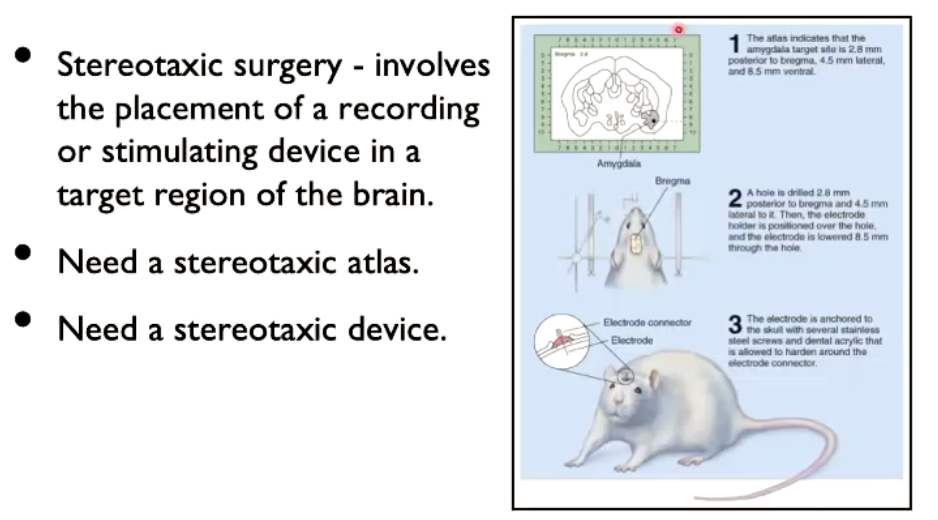
Invasive recording methods 1
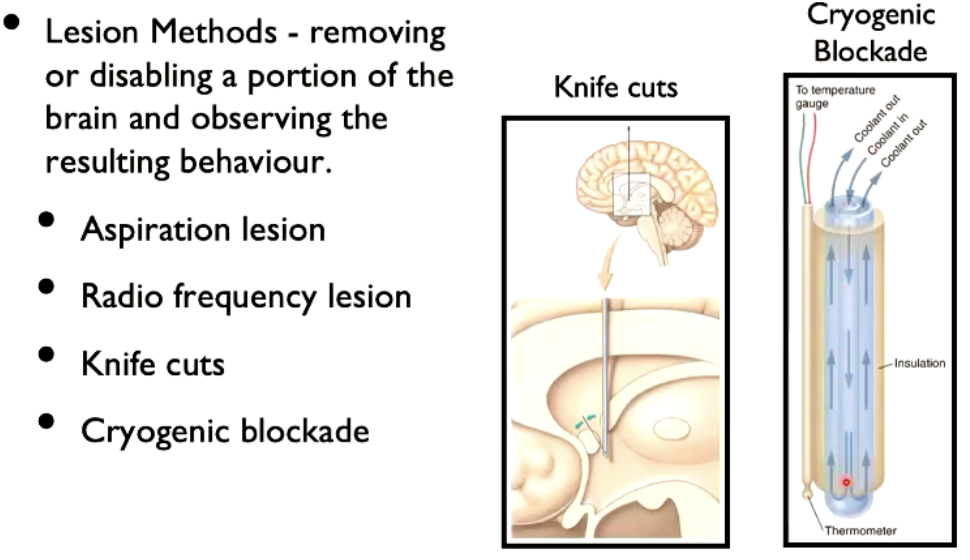
Invasive recording methods 2
spatial resolution
How blurry/sharp is the image?
How precisely can we locate a structure or region from a given method?
High resolution is on the order of micrometres or the sub-cellular level.
temporal resolution
How precisely can we determine the timing of neural events from a given method?
Highest resolution is on the order of microseconds
Causation in Brain activity
Can be inferred by observing the consequences of stimulating/disrupting activity in specific brain region on associated behaviours.
detection threshold
Faintest stimulation a person can detect
discrimination threshold
What is the smallest detectable difference between two stimuli

