B4.1 Adaptations to Environment
 Call Kai
 Learn
Learn Practice Test
 Spaced Repetition
 Match
Match Flashcards
 Knowt Play
1/10

There's no tags or description
Looks like no tags are added yet.
Name | Mastery | Learn | Test | Matching | Spaced | Call with Kai |
|---|
No analytics yet
Send a link to your students to track their progress
11 Terms
Habitat
The environment in which an organism, species, population lives
Habitat can be described by their geographical or physical location and by the type of ecosystem.
→ Abotic + Biotic
Community
A group of populations living and interacting with each other in an area.
Ecosystem
A community and its abiotic environment
Adaptations to Sand Dune
→ problem : dehydration
→ Adaptations
Sea oat
Drought-resistant, shallow root system
Dense interwoven roots to maximise the uptake of water (hold sand in place, prevent beach erosion)
Narrow leaves reduce transpiration
Stomata close for an extended period of time if the soil around them remains dry
Adaptations to Mangrove Swamp
High salt concentrations in the mud
Waterlogged, anaerobic soil
Red Mangrove → tropical and subtropical tree that grows along the salt water zone
Prop roots extended above the water line
Roots above the water line is is used to absorb oxygen.
Roots below the water line filter salt out so the tree can get access to fresh water.
Tangled root growth under the trees provides a protective habitat for fish and other marine animals
The distribution of a species is influenced by
the range of tolerance to abiotic factors.
sessile organisms
organisms that stay in one place and can be counted individually
example of marine ecosystem
Coral Reef
25% marine organism live in or around coral reef
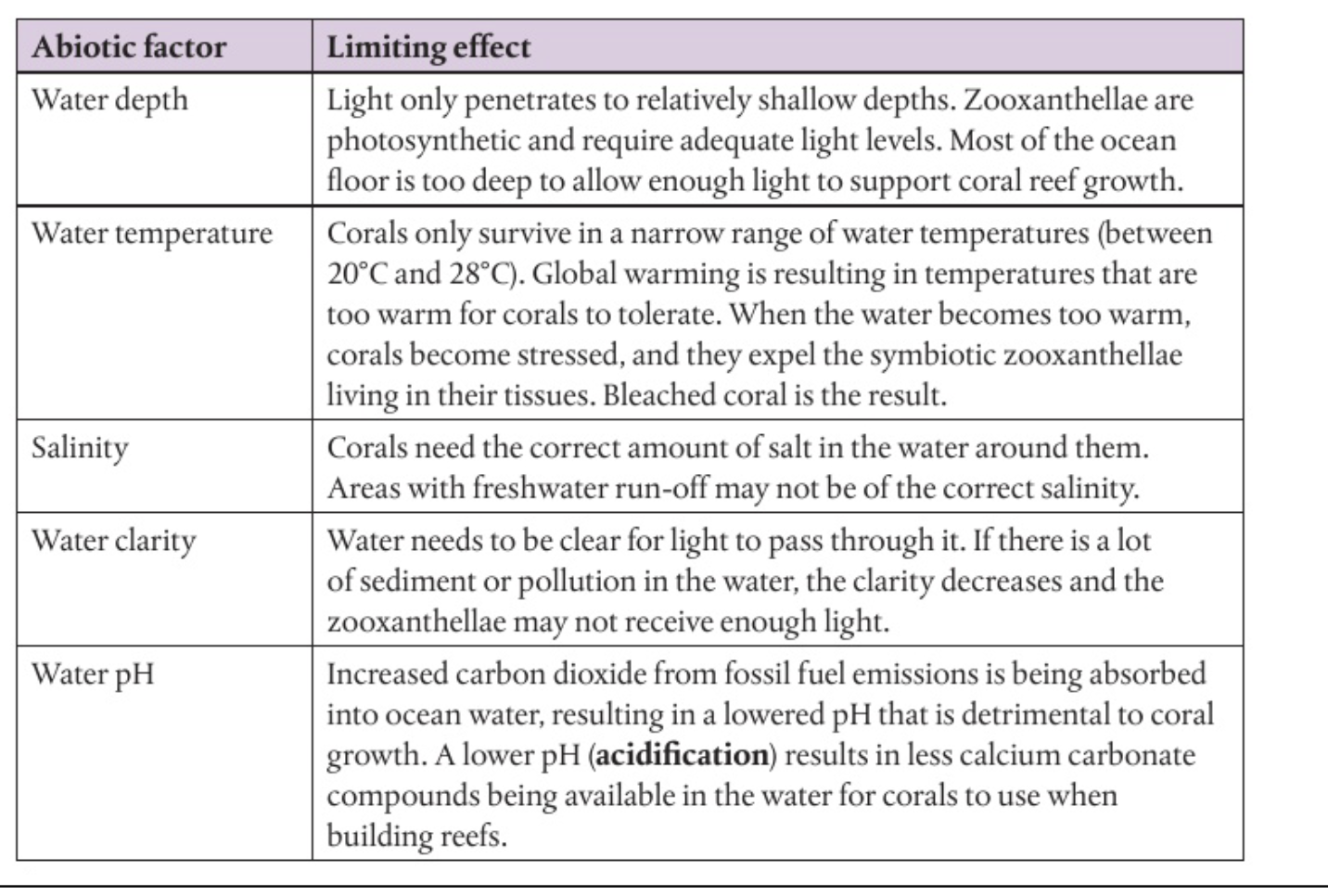
limiting factor : water clarity , water depth , pH , temperature ,Salinity
symbiotic relationship between polyps and microscopic algae - Zooxanthellae
→ water depth : 2-45m , shallow for sun to penetrate
→ water clarity: clear so sun can penetrate for zooxanthellae to photosynthesis
→ temperature : 20-29. coral reef only survive in narrow temperature range. Global warming → water becomes warm , coral reef becomes stress → expel the symbiotic relationship zooxanthellae → result in bleached cora
→ pH : suitalbe salinity for for algae to grow . Increased acidity can cause coral bleaching, where corals expel the zooxanthellae
→ salinity : suitalbe salinity for algae to survive
Biomes
Biomes: groups of ecosystem that share similar abiotic conditions which in turn results in similar communities of plants and animals due to Climate conditions that characterize them.
/ Biomes are groups of ecosystems which are very similar due to similar abiotic factors, although they may be far apart geographically
Tropical forest: Warm humid (Highest temperature and precipitation)
Temperate forest: Mild, seasonal
Taiga: Cold coniferous
Grassland: Dry, open
Tundra: Cold, permafrost (lowest temperature and precipitation)
Hot desert: Arid, hot
Ecosystems makeup biomes
Adaptations to life in hot desert
Saguro Cactus
Water Retention:
Thick, waxy cuticle
Water Gathering:
Shallow root system to gather rainwater
Fennec Fox
Heat dissipation:
Large and heavily vascularised ears
Nocturnal; days are spent in underground dens
Water retention:
Kidneys reabsorb most water
Rarely urinate
Adaptations to life in tropical rainforest
Poison Dart frog → avoiding predators
Warning coloration that act as a signal for predators to avoid colored frogs.
Highly toxic chemicals in their skin from their diet of toxic insects.
Kapok tree → competition for light
Abundant and varied plant growth lead to competition.
Fast growing and very tall to access to more sunlight.
Strong foundation from buttress roots to support rapid growth and very tall trunk with shallow soil.


