sports nutrition OTC ex 4
 Call Kai
 Learn
Learn Practice Test
 Spaced Repetition
 Match
Match Flashcards
 Knowt Play
1/18

There's no tags or description
Looks like no tags are added yet.
Name | Mastery | Learn | Test | Matching | Spaced | Call with Kai |
|---|
No analytics yet
Send a link to your students to track their progress
19 Terms
low volume- exercise & nutritional needs
exercise <7 hrs/week
diet alone should meet nutritional needs
moderate volume-exercise & nutritional needs
exercise 7-20 hrs/week
may req specific nutritional intake to maintain or enhance performance
High volume-exercise & nutritional needs
exercise >20 hrs/week
may req specific nutritional intake to maintain or enhance performance
supplement benefits
enhance strength and power
increase endurance
replace water and electrolyte (prevent hydration)
FDA and dietary supplements
dietary supplement health and education act DSHEA of ‘94
FDA doesn’t approve dieta supp or validate efficacy claims
FDA can only remove products deemed unsafe or mislabeled/ ineffective
Current laws on dietary supplements
no req for efficacy or for safety
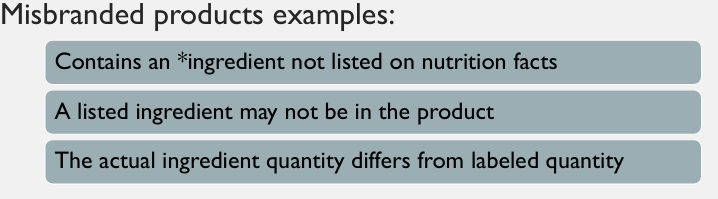
misbranding- dietary supp
-It is very common
-lack of correlation between ingredient claims and actual contents
-Prohibited substances may be found in misbranded products,
and if in competitive sports, may lead to doping violations
Macros 101
carbs 1g=4 cals
protein 1g= 4 cals
fats 1g=9 cals
energy use in exercise
at rest- macros stored for later use
mild-stored macros used slowly, burn fats to preserve glycogen stores
moderate- higher intensity activity leads to glycogen depletion
high-intensity- anaerobic metabolism req. Muscle breakdown occurs
Calorie utilization
walking: 80% FA oxidation, 20% carbs
running: 50% FA oxidation, 50% carbs
high intensity: 10% FA Oxidation, 90% carbs
sports nutrition products
carb-based products
TG (fat) containing products
protein products
electrolytes and water
Carb- based products
carbs
monosaccharides(disaccharide) & sucrose- sports nutrition drinks
provide rapid absorption & carb availability
cont. 6-8% carb
optimal absorption/ good GI tolerance
maltodextrin- energy gel packets and bars
slower absorption, used in endurance formulas
contain 20-25% carbs, light/ easy to carry must consume with water
lactose
good recovery fuel after exercise, various forms, tolerance may vary
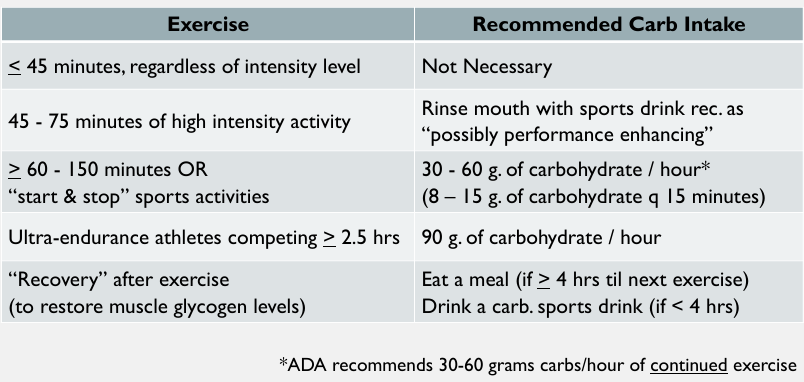
rec carb consumption
TG- containing products
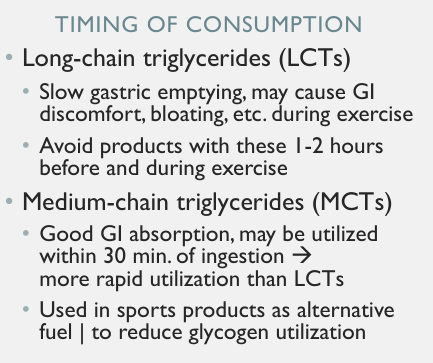
Fat
provide energy, imp fat soluble vitamins, source of essential FA, shouldn’t be eliminated from diet
protein products
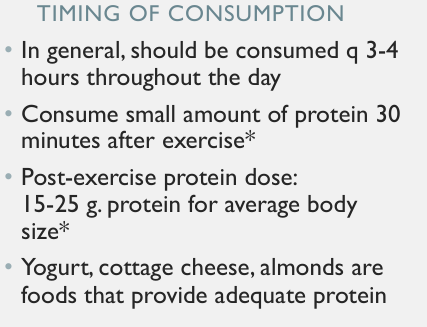
maintains nitrogen balance and mucle mass
req for building and req body tissues
needed for protein hormone production
energy source
rec protein consumption
Athletes who exercise 10 hrs/week or more
Have increased protein & caloric needs
Highly active adults who participate in endurance exercise
1.2 - 2 g/kg/day in addition to an increased overall caloric intake
Adults attempting to increase body mass
1.2 - 2 g/kg/day “ “
Athletes attempting to gain muscle mass / build muscle
GL Rec: 1.2 or 1.4 – 2 g/kg/day and should modify diet to meet needs”” but don’t exceed total caloric goal
2 - 2.5 g/kg/day suggested, data lackin
potential protein ADRs
GI distress & diarrhea (minor)
case reports of: HTN & hepatitis
concerns for: kidney damage, bone osteoporosis
dehydration S&S
definition- 2% decrease in total body weight
decreased physical performance/ fatigue
mental impairment/ confusion
irritability
mucle cramps
heat exhaustion/ heat stroke
rhabdomyolysis
electrolyte abnormalities

