BIO120 EXAM section
 Studied by 1 person
 Call with Kai
 Learn
Learn Practice Test
 Spaced Repetition
 Match
Match Flashcards
 Knowt Play
1/128

There's no tags or description
Looks like no tags are added yet.
Name | Mastery | Learn | Test | Matching | Spaced | Call with Kai |
|---|
No study sessions yet.
129 Terms
autotrophs
自养生物 自己制造食物!
植物的什么反映了adaptation?
leaf, stem and root traits
比如沙漠植物
Epiphytes
附生植物!Epiphytes grow on trees, so NOT roots into the soil, 需要holding rainwater→tank水箱 解决水短缺。水箱中落叶或动物死亡→解决nutrient短缺
physiological ecology is different for plants, WHY?
Sessile(固着的生物), 活动范围受限,tolerate
Autotrophic: make their own food through photosynthesis
需要CO2,光照,水,soil nutrients(氮、磷、钾,即NPK)nitrogen, phosphorus, potassium, or NPK))
Photosynthesis
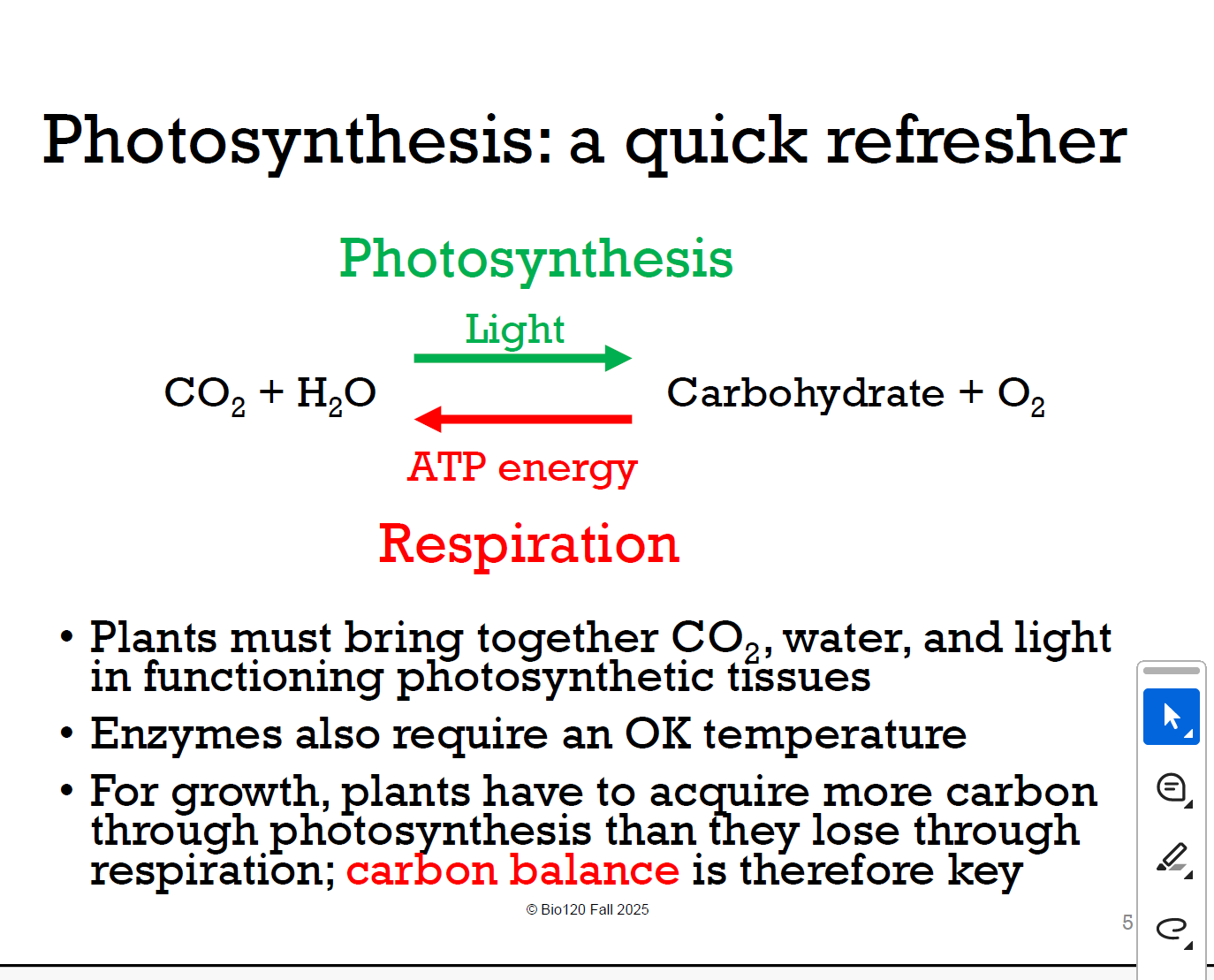
光合作用!CO2+H2O=carbohydrate+O2
组合light, CO2, 水—>functioning photosynthetic tissues光合组织
合适的temperature—> enzyme
得到的C photosynthesis>respiration 失去的C(carbon balance)
respiration
呼吸作用!
Net primary productivity (NPP)
=得到的C photosynthesis – respiration 失去的C
transpire
蒸腾作用!通过stomata气孔失去水分
stomata
气孔,CO2进入的通道+水分和O2散失的通道(transpire 蒸腾作用)
大Leaf意味着什么?
harvesting light, CO2 ↑
Overheating, water loss↑ by transpiration
植物的对策:过热和失水
大多数植物通过C3 Photosynthesis 固定C(Rubisco enzyme 接受CO2,但过热时→捕获O2→photorespiration光呼吸)
怎么办?
C4 photosynthesis
CAM photosynthesis (沙漠植物)
干脆就长在shady habitats 或者打开气孔—> 蒸发型冷却evaporative cooling
C4 photosynthesis
enzyme PEP carboxylase first accepts CO2 →photorespiration↓
CAM photosynthesis
plants 在白天关闭 stomata → reduce water loss
在晚上打开stomata → let in CO2; 由于photosynthesis 需要光照才能进行,CO2 被储存为malate(苹果酸) 直到daytime
Evaporative cooling
需要plentiful water,有时并不适用。所以当(ABA激素让植物关闭气孔):
gas exchange (CO2…)→ stop growing
Overheating & tissue damage
Microphylly
几乎没有叶子。举例仙人掌! Broad的一面朝前,在夕阳时接受大量光照,而其顶部狭窄,在正午时避免overheating
什么适应于episodic rain间隙性降雨
巨量water storage
延展的,浅的根系
CAM photosynthesis 白天黑夜..
root forage
nitrogen 氮氮
symbionts 共生体 N-fixing bacteria能从空气中转化N为植物能吸收的形式
How plants evade stress? 逃避压力
落叶Deciduous habit(deciduousness): dropping leaves during dry or cold seasons reduces water stress and tissue damage
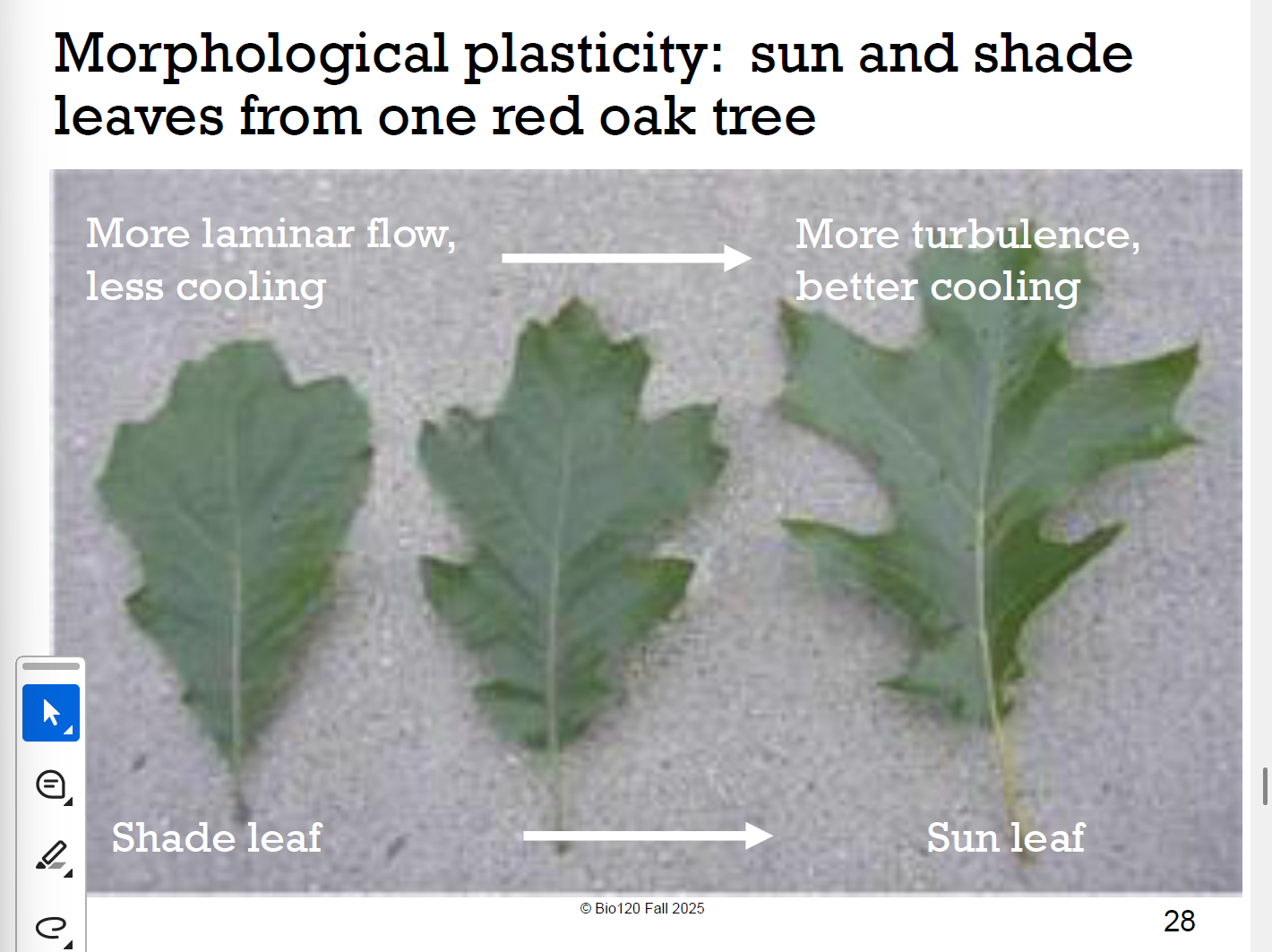
湍流turbulent flow: leaf shape 不规则,或有洞,打破laminar flow,→ 阳生叶不规则→影响gas exchange→ better cooling(=也反映Morphological plasticity,同一基因不同环境,导致不同表型)(原理=动物convective cooling,耳朵大turbulence↑)
convergent evolution趋同进化
拥有相似的trait,实际上只因为生活在类似的环境。例如都需要能耐热抗旱
population dynamic
population 随时间变化的规律,包括 exponential growth, geometric growth, logistic growth
why they matter
Natural resource management, Conservation, Health, predicting human population growth, what limits population growth
population, population size, population density
A population is a 住在一个区域的collection of individuals
Population size, N, 个体数量
Population density is size/area
population models
用来预测trajectory of population growth through time
已知当前个体N1个,时间t变化为t+1,下一步的个体数Nt+1,
Nt = 时间t 那时候的population size N(t)
Nₜ₊₁ = f(Nₜ)
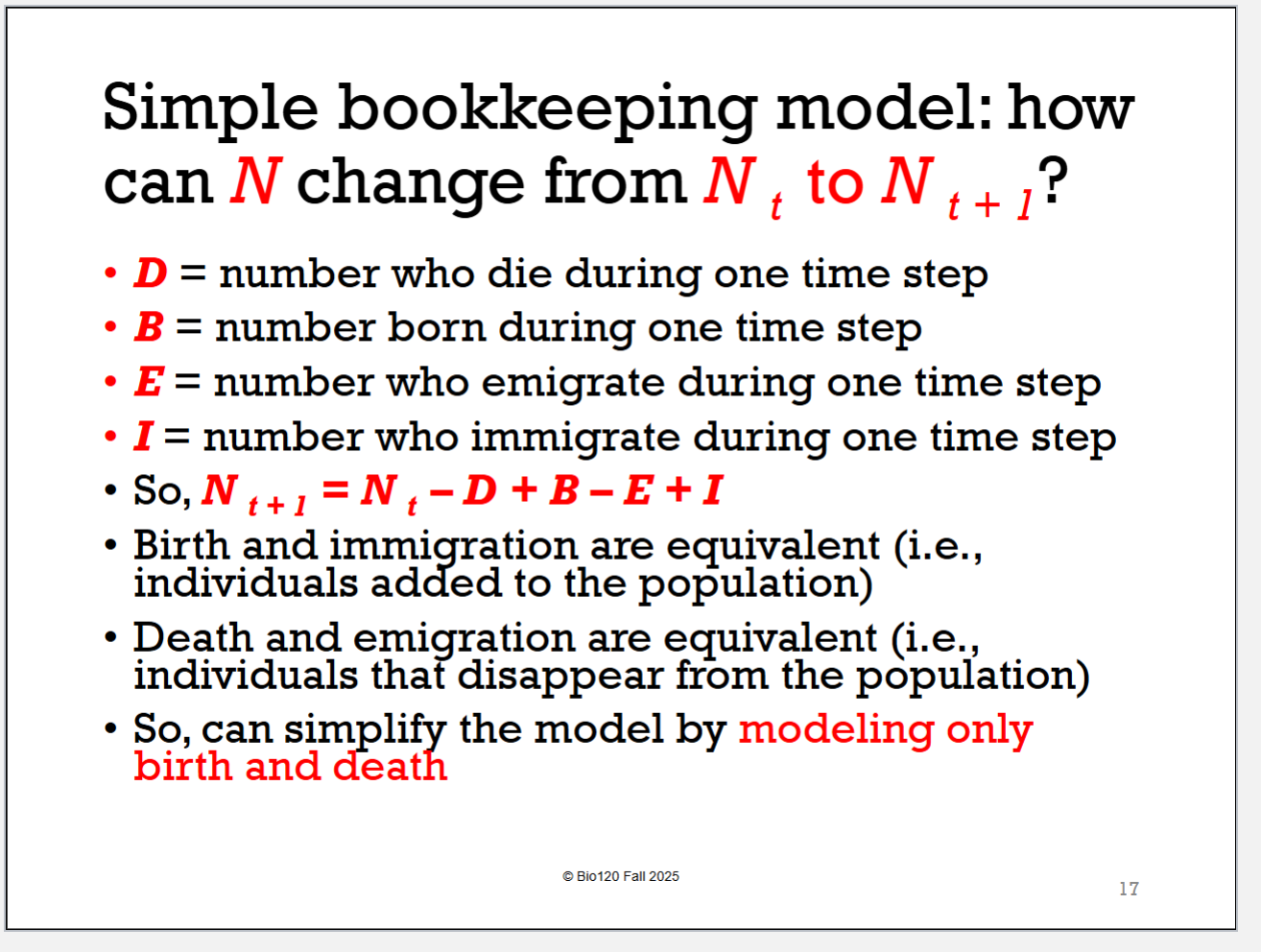
how can N change from N t to N t + 1?
D die 死亡
B born 出生
E emigrate 移出
I immigrate 移入
N t + 1 = N t – D + B – E + I
Geometric Growth
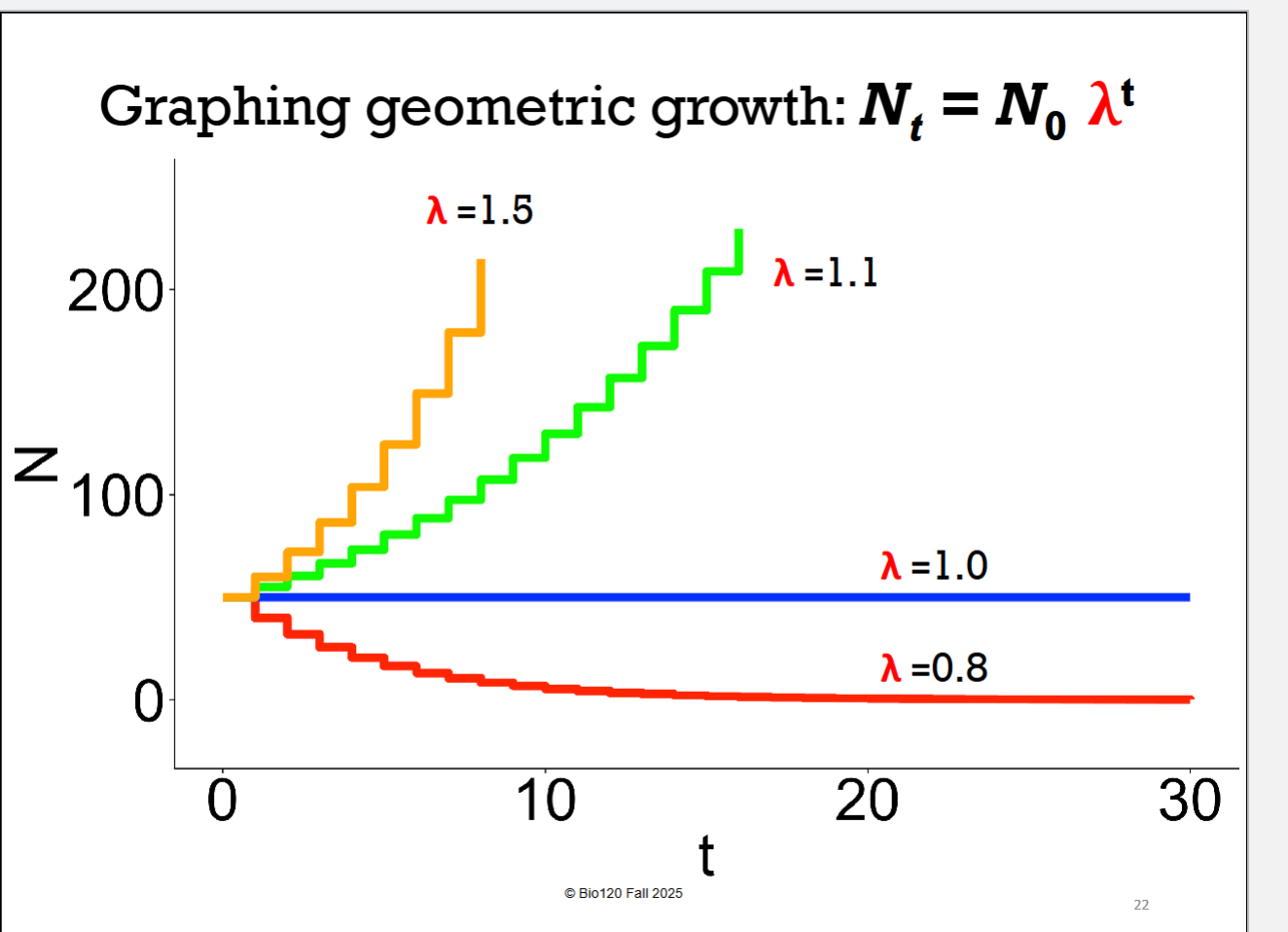
population以固定倍数λ增长
简化为NO Immigration and emigration
per capita rate(人均率)不变,λ是人口随时间变化的倍增因子
λ>1= 出生>死亡,population grows↑ ,λ<1 = shrink ↓
但没有能永远保持>1或<1的,不断变化。
exponential growth
连续时间内!(Geometric为离散时间)
r = b-d “intrinsic rate of increase”内禀增长率(净增长)
增长速度(dN/dt) = r × 当前数量(N)
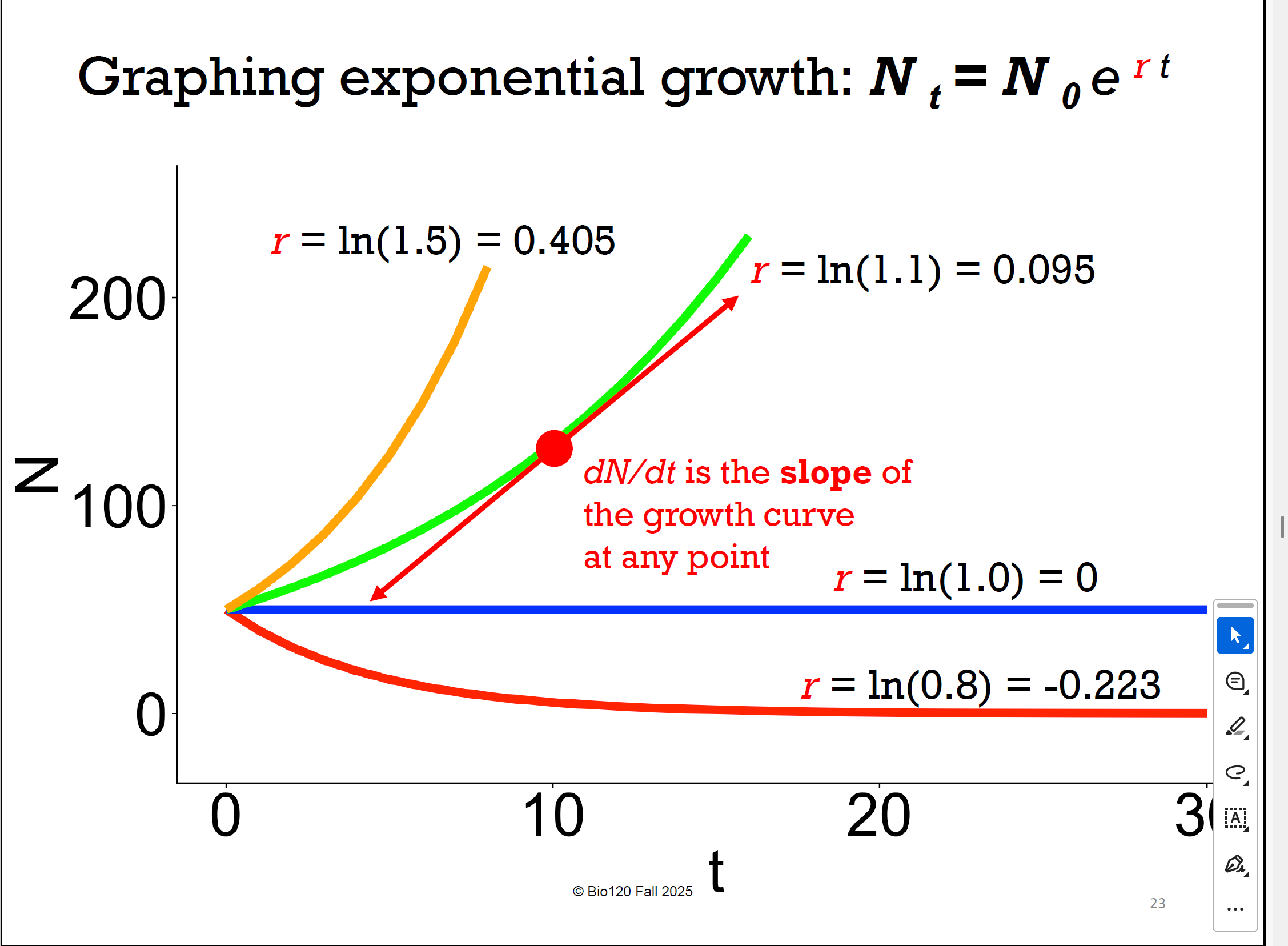
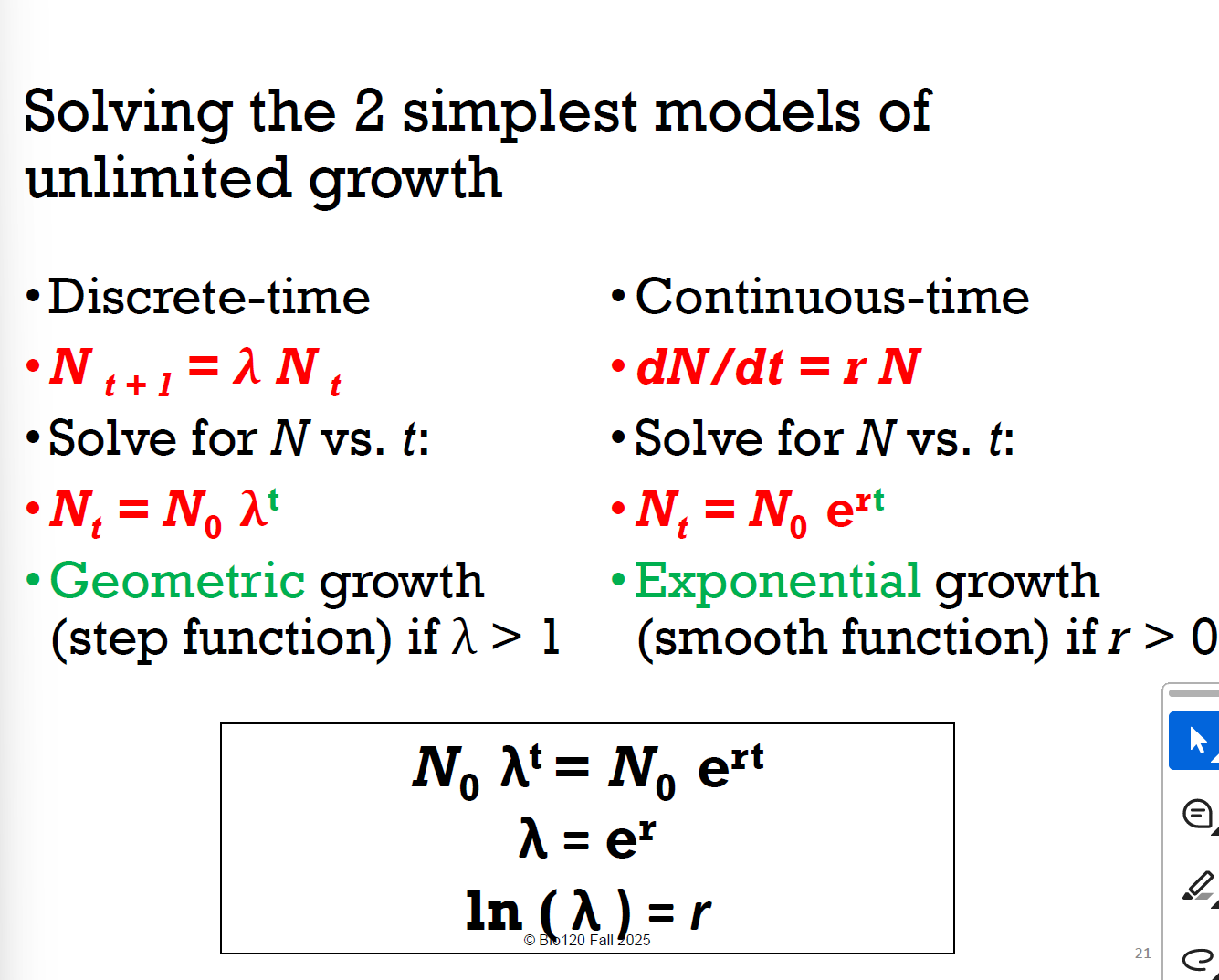
默写一遍
Logistic growth(种群不会增长爆炸的原因?)
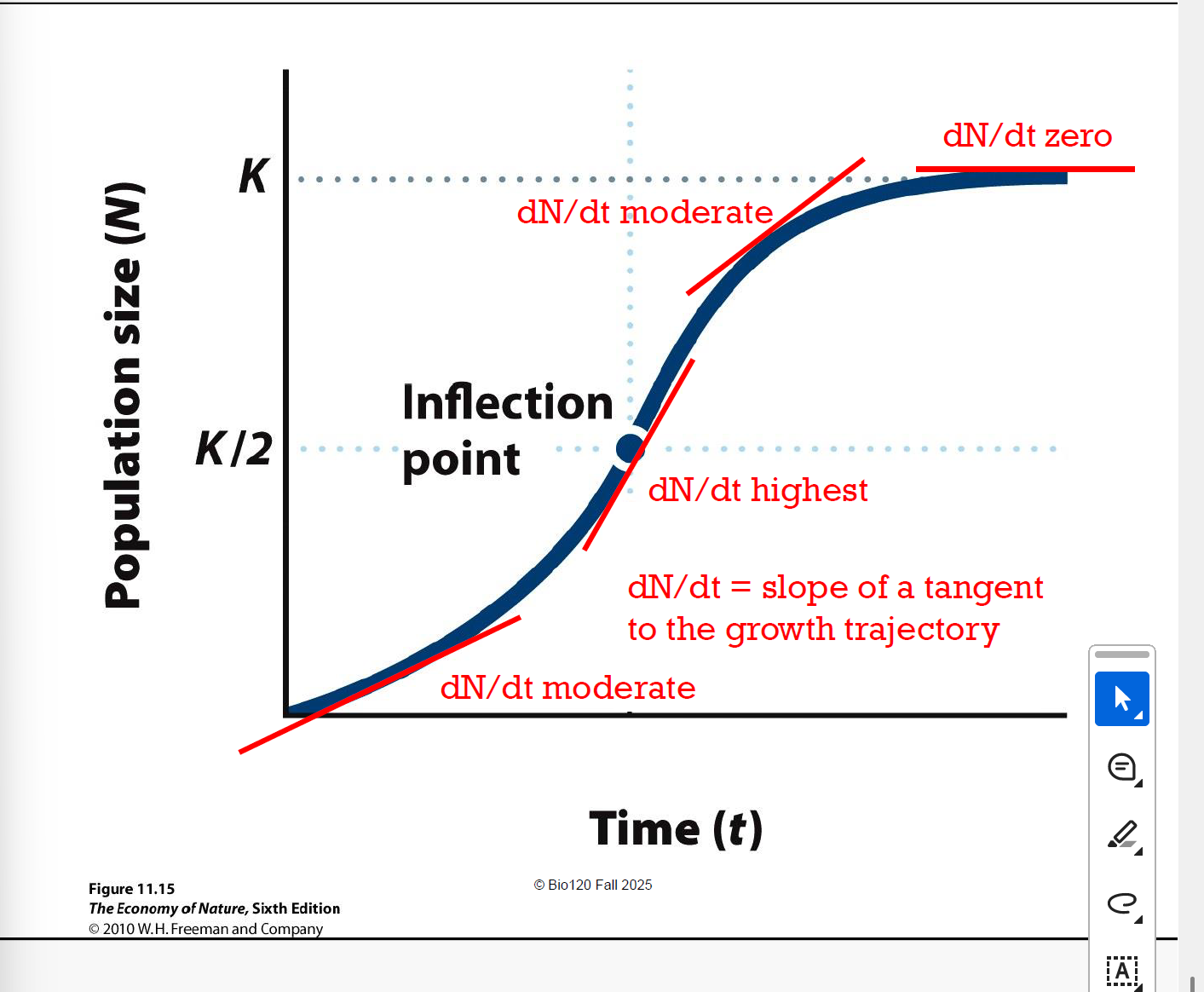
是因为有密度依赖项density-dependent growth modeled by logistic equation 密度依赖就是种群密度越拥挤,资源越少,增长会减缓,直至停止。
dN/dt = rN (1 − N/K)
当种群接近 K 时增长速率下降,最终在 K 停止增长
(1 − N/K) 是密度依赖项,exponential则是密度无关的density independent
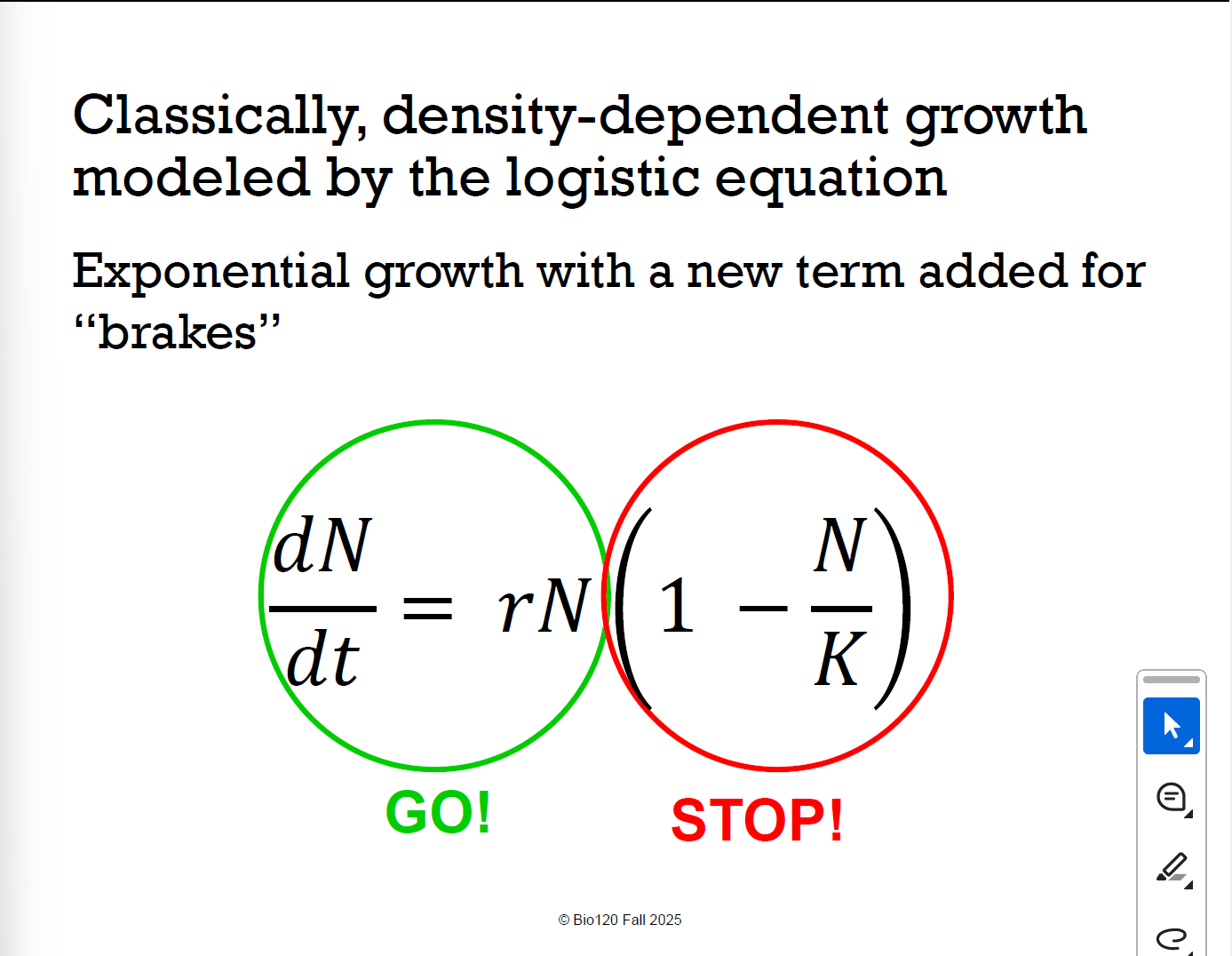
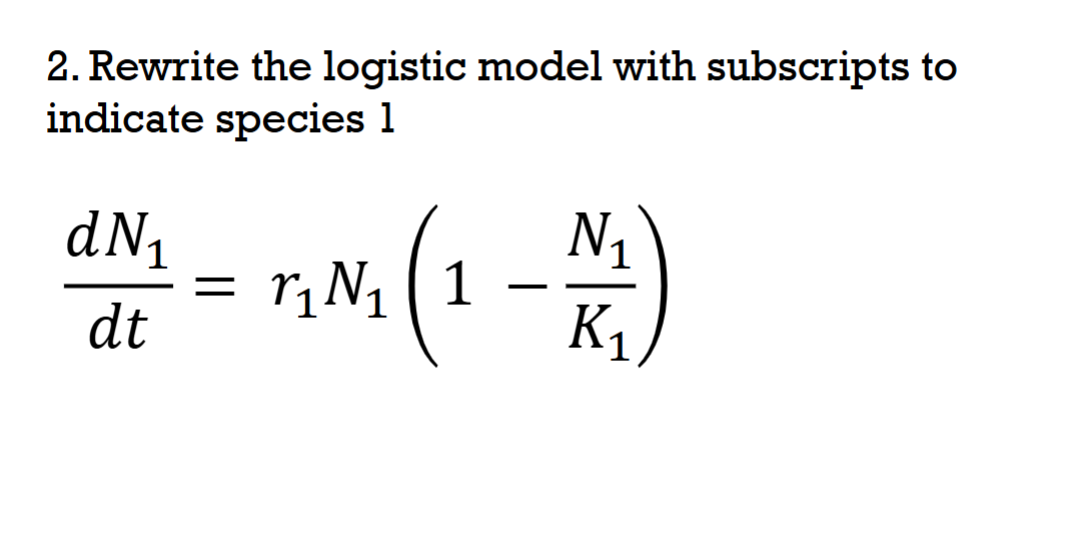
K N r t 分别是什么?(logistic)
K:carrying capacity 环境容纳量
N0:初始种群大小
Nt:时间t时的种群大小
r:出生率-死亡率,intrinsic rate of increase
t:时间
K/2 reflection point拐点?(Logistic)
=maximum growth rate,过点后由加速变减速。
dN/dT=0时停止增长,K点。
Allee effects
先前模型中,都是population 接近0时增长最快。而allee effects表示低密度群体带来的负面影响。由于social benefits such as: mate finding, group living, group defense. 寻找配偶,群居生活,集体防御
不止存在上限K,也存在一个下限lower limit
真实世界的种群是“年龄结构化的”(age-structured population)
Fecundity and survivorship 随年龄而变化!生殖力,存活概率
Life history strategy = 不同生物怎么安排能量用来生长、生殖、生存。是不同的。e.g.海龟幼年死亡率高,成年后寿命极长
resource accumulation period(资源积累期)
Grow for a period without reproducing 只成长不繁殖
Typical life history for many plants and animals
small size 开始,resource accumulation period,(足够resources, 足够mature)→reproduction
Fecundity
生的多
age classes intervals
Arbitrary units of time chosen to give a reasonable number of age classes for the organism in question 选择任意的时间单位,小时、周、5年,只为划分出合理适合该物种的数量。
life table
汇总不同年龄段中,平均个体会发生什么,例如死亡年龄,繁殖年龄。
Data that summarize the life events that are statistically expected for the average individual of a specified age in a population
survivorship schedules
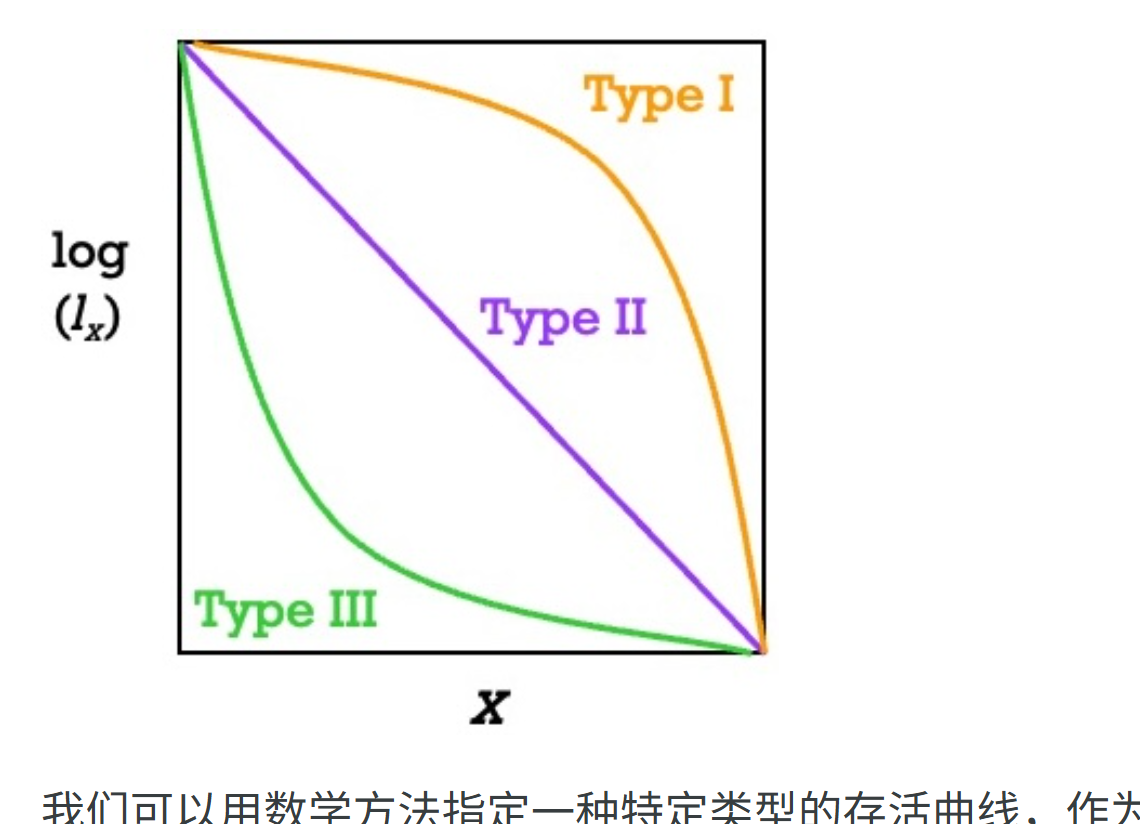
lx = 活到年龄x的概率。活多少!
l0 = 1.0
survivorship curve =横轴为x 纵轴为Ix
Ix随x增大而减小!
Types of survivorship curves
type1 老年死亡率(mortality)高。人类
type2 死亡率在每个年龄差不多。鸟类
type3 幼体死亡率高。鱼类
Fecundity schedules
不同年龄能生多少宝宝的平均值。生多少!
mₓ = 一个年龄为 x 的雌性在这一年平均生多少女儿。
Fecundity–survivorship trade-offs = cost of reproduction 生的多 活的短
Net reproductive rate, R0
R₀ = 一只雌性在她一生中平均生多少女儿。
R0 = Σ lx mx 也就是Fecundity×survivorship 生多少乘以活多少
R₀>1 增长
适用于生育,也适用于病毒疾病的生育
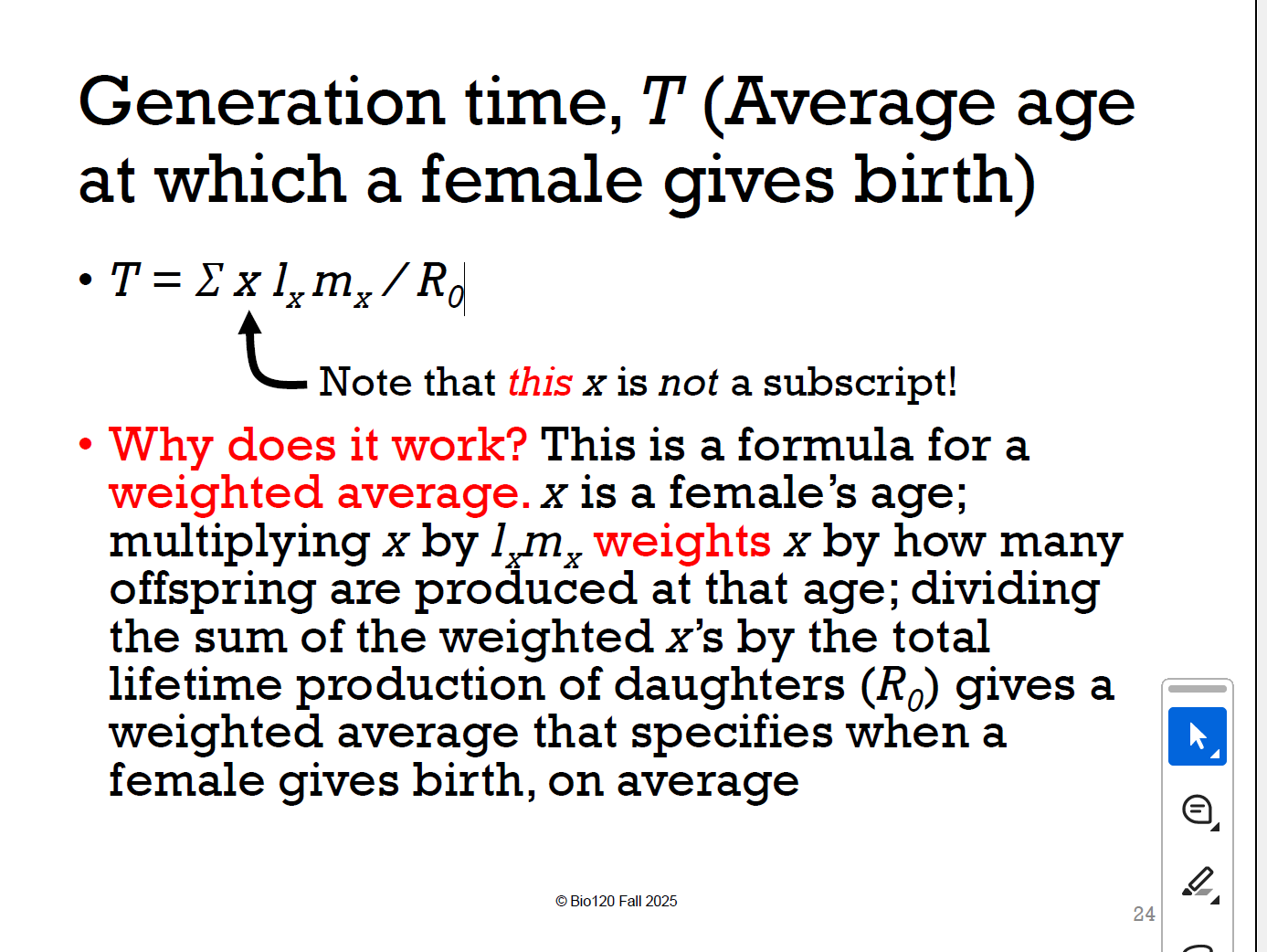
Generation time, T
在几岁生。
T = Σ x lx mx / R0
X是妈妈几岁, lx 是活到x岁的机率,mx是在年龄 x 产生多少,R0是一生平均生多少
semelparous/iteroparous
big bang一次繁殖/多次。三文鱼salmon/人
(semel=monocarpic一次繁殖)
沙漠一年一度短暂雨季适合“速成长+爆发性生殖”
为什么natural selection favour semelparity?终其一生只繁殖一次?
当攒久一点能让reporductive output提升
其Size越大,产生卵越大(fish)
pollinator 吸引法,大花吸引更多传粉。
predator satiation tactic 捕食者饱和策略,撑爆捕食者(剩下种子发芽)
k strategy versus r strategy
r的特点:幼年死,K:老了才死(K型也有semelparity多年生竹子在最后共同开花,一次繁殖,然后死)
生长快速,世代短,体型小,资源投入gonad生殖器官,高繁殖率,生存竞争弱,扩散强,semelparity梭哈,不耐阴shade intolerant,种子休眠dormancy, born to run。
CSR,c是竞争=K,S是耐受=环境恶劣依旧缓慢生长,R是ruderal=r
reproductive value vₓ
某年龄X的个体未来还能生多少女儿(生育黄金期的female价值最高)
natural selection favor
behaviour: 在行为生态中老年个体更冒险
masting
masting = 某些植物隔几年突然超级大量开花或结种,属于semelparity的predator satiation(捕食者饱和)。不同树木可能同时masting, 因为越多个体一起爆种子 → 捕食者越吃不完
→ 所以自然选择更容易保留“同步结果”的基因模式。
这就是reproductive synchrony(繁殖同步)
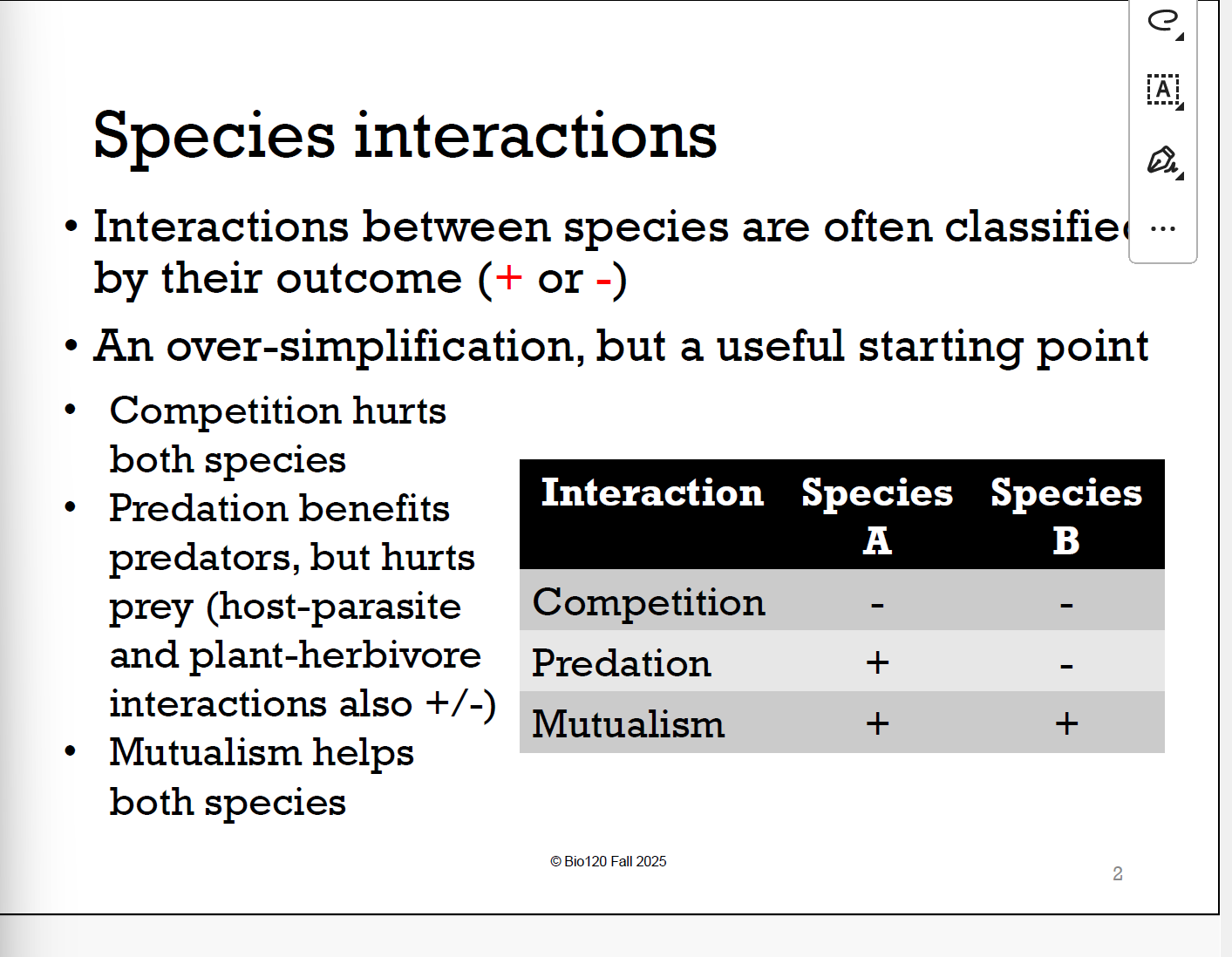
Species interactions
competition竞争
predation捕食(host-parasite 宿主-寄生虫and plant-herbivore植物-食草动物 +/-)
mutualism互利共生
Intra-specific competition 种内竞争a(nei)
conspecifics同物种内,争夺resources
Inter-specific competition 种间竞争e(jian)
heterospecifics不同物种间,争夺resources
Scramble/exploitative competition争夺/剥夺
depletion a shared resource 消耗资源,不直接互动。
Contest/interference competition对抗/干扰
直接互动,例如:战斗battles over territory
Lotka-Volterra equations
在logistic model(已包含种内intra-specific)加入2nd braking term 种间竞争inter-specific。
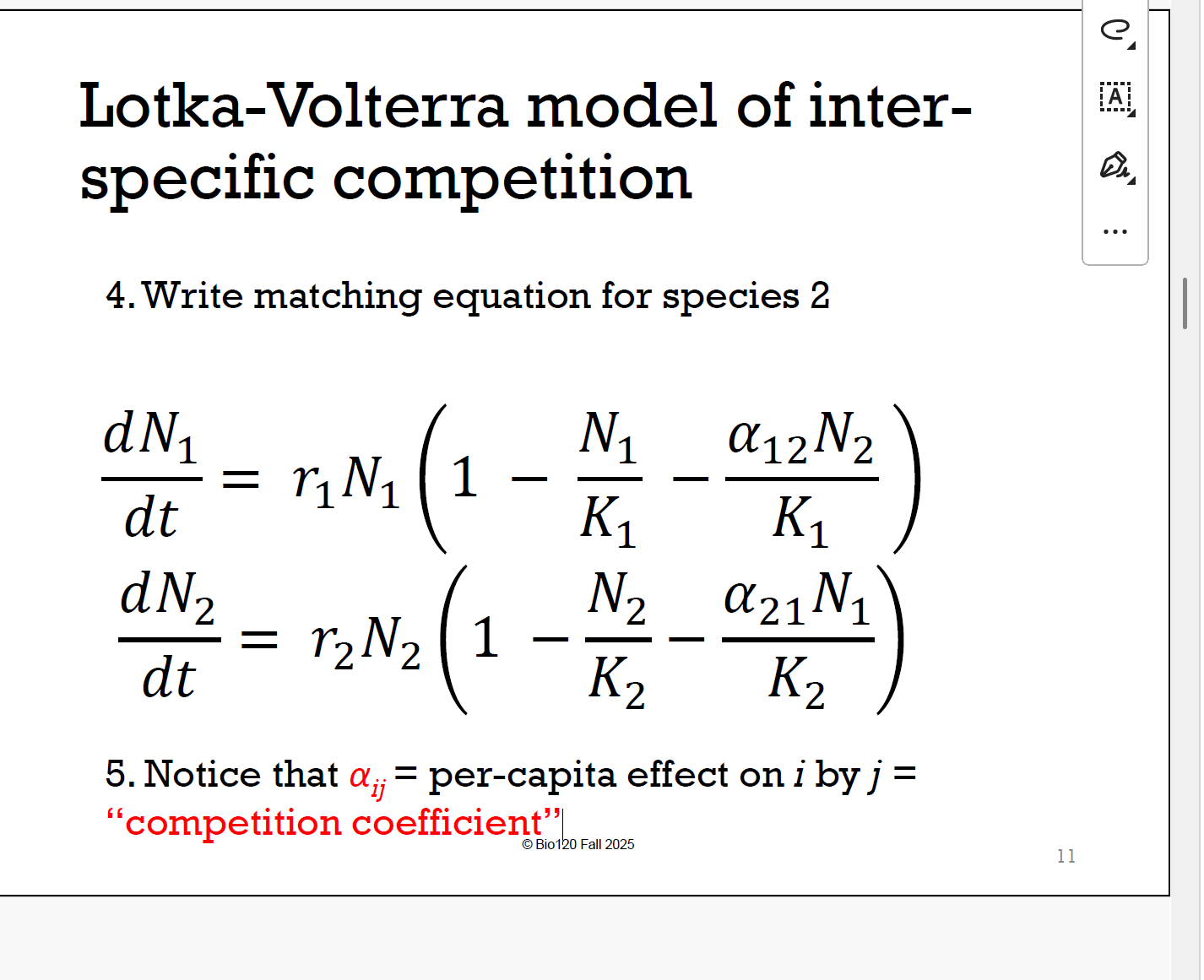
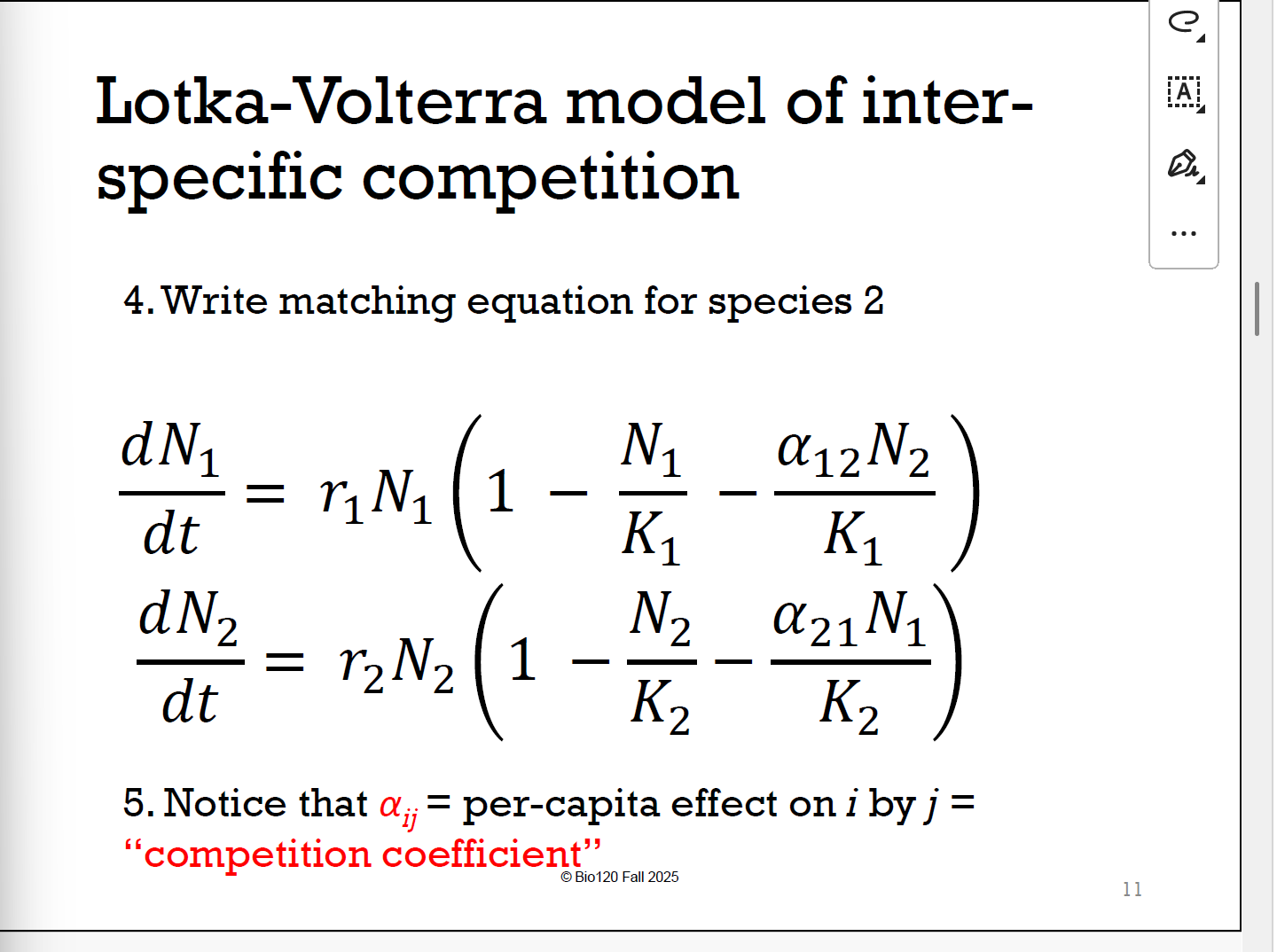
什么是竞争系数α?
αij = j对i的per-capita effect =“competition coefficient竞争系数“
α12N2 converts individuals of species 2 into an equivalent number of individuals of species 1。多少个N1=1个N2
举例:一只松鼠 = 吃 10 单位种子,一只麻雀 = 吃 1 单位种子
→ α₁₂=10
→ 假设3只松鼠,则α₁₂N₂ = 10 × 3 = 30
意思是:这 3 只松鼠对麻雀造成的压力,等价于 30 只麻雀造成的压力
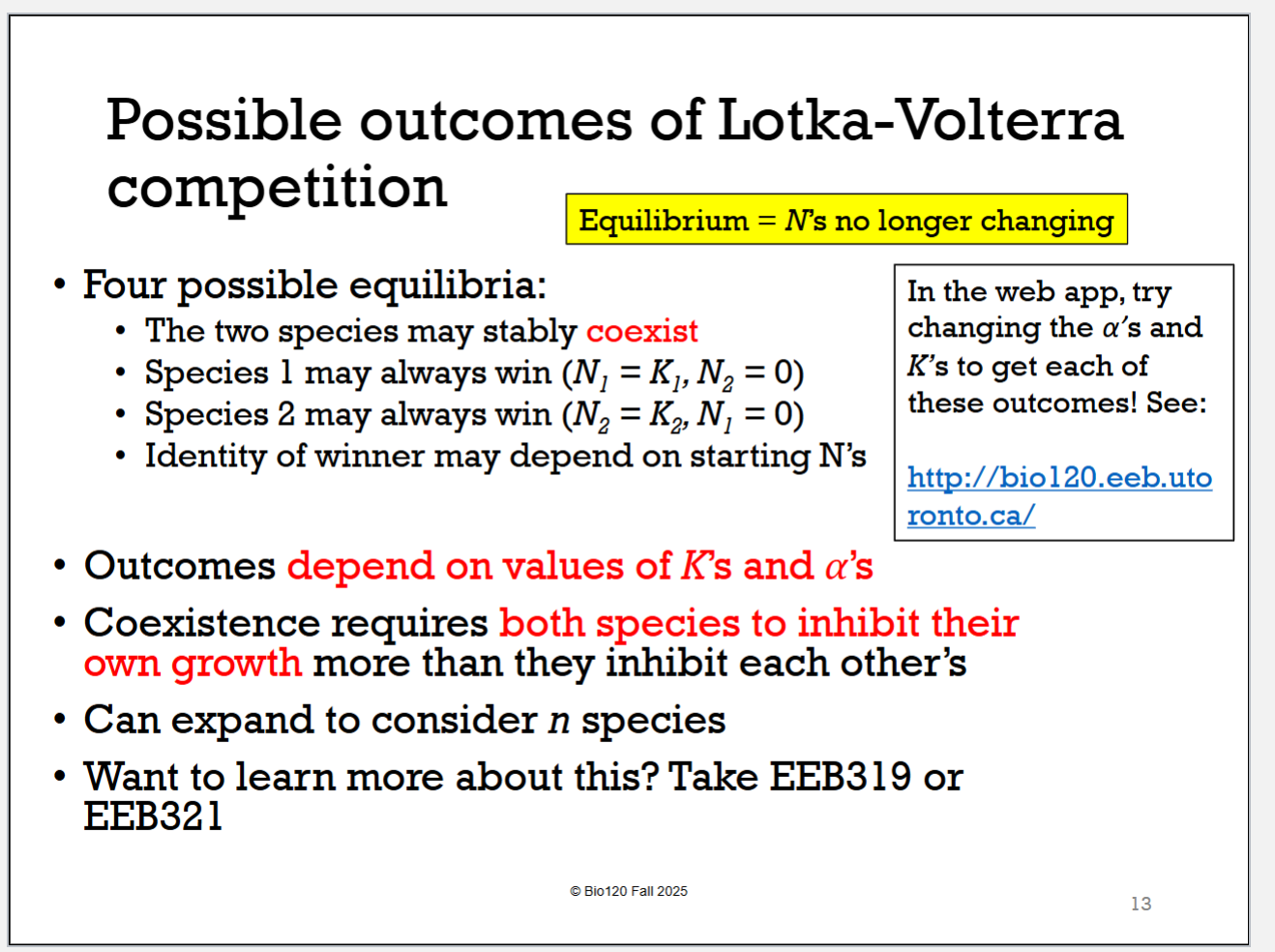
outcomes of Lotka-Volterra competition 取决于……?
K(每个物种最多能养多少 capacity) 和 α 值(竞争强度=per-capita effect)。
possible equilibria: coexistence 共存
物种抑制自己growth > 抑制其他species growth
→ equilibrium = N’s no change anymore 种群大小不变,个体数量不变
possible equilibrium: 占领
Species 1 may always win (N1 = K1, N2 = 0),或者种群2赢 vice versa。物种 1 对资源的利用更强,或物种 2 对它的影响更弱
→ 物种 1 占领资源,挤走物种2
→ equilibrium 种群大小不变
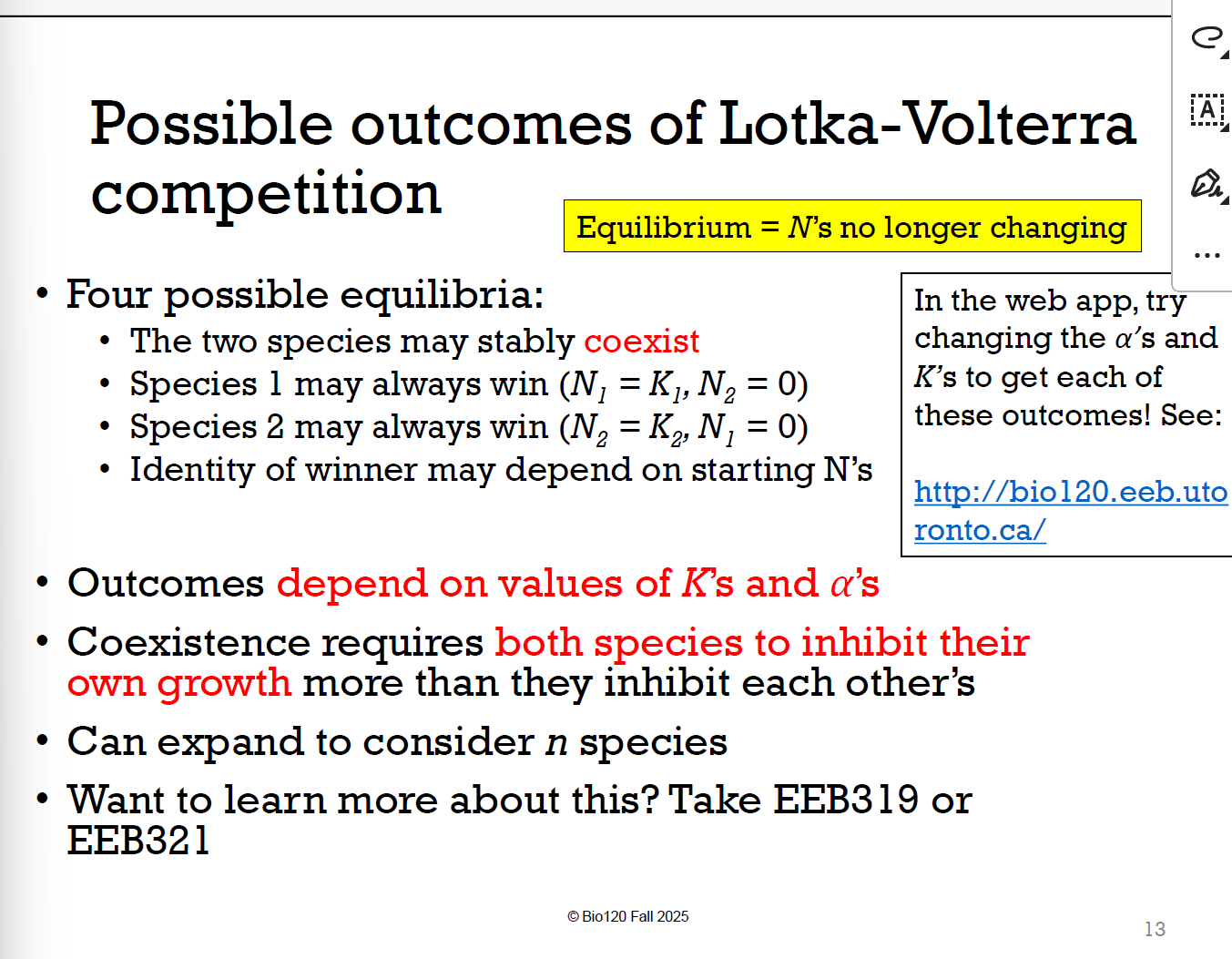
winner 取决于 starting N’s
谁一开始数量多,谁就赢
equilibrium
For a population物种: population size not changing over time (dN/dt = 0)种群大小不变了
For a community群落: a community not changing over time
严格定义:all populations in a community at equilibrium每个种群都不变
通常: constant species composition物种组成不变
Stability
system的恢复如初的能力,当经历一次perturbation or disturbance
Coexistence共存
当两个或更多物种在 equilibrium 都有非零数量时,就叫共存。如果其中一个死了就不是coexistence。
每个物种对自己的伤害,大于对其他物种的伤害。
Competitive exclusion(竞争排除)
如果两个物种竞争得太激烈(资源重叠太高)
种间竞争强于种内竞争 → 一方会灭绝
不适用反例:Phytoplankton浮游植物,tropical rainforest热带雨林
Character displacement(性状分化)
相似的物种如果要长期共存,就会进化出差异,减少竞争。
e.g finches的 喙的深度(beak depth)
Paradox of the plankton(浮游植物悖论)
Phytoplankton need only light, CO2, N, P, and micro-nutrients to grow,不适用于competitive exclusion(生态位niche重合,却并不影响)
competition in commonity
竞争影响community composition 和 species richness。组成 和 物种丰富度
降低物种多样性
互动复杂系统难以用小模型预测。
Interactions
Predation / Carnivory(捕食 / 食肉)lethal(致命)
Grazing / Herbivory(啃食 / 食草)
Parasitism / Disease(寄生 / 疾病)e.g. brood mimicry巢卵拟态
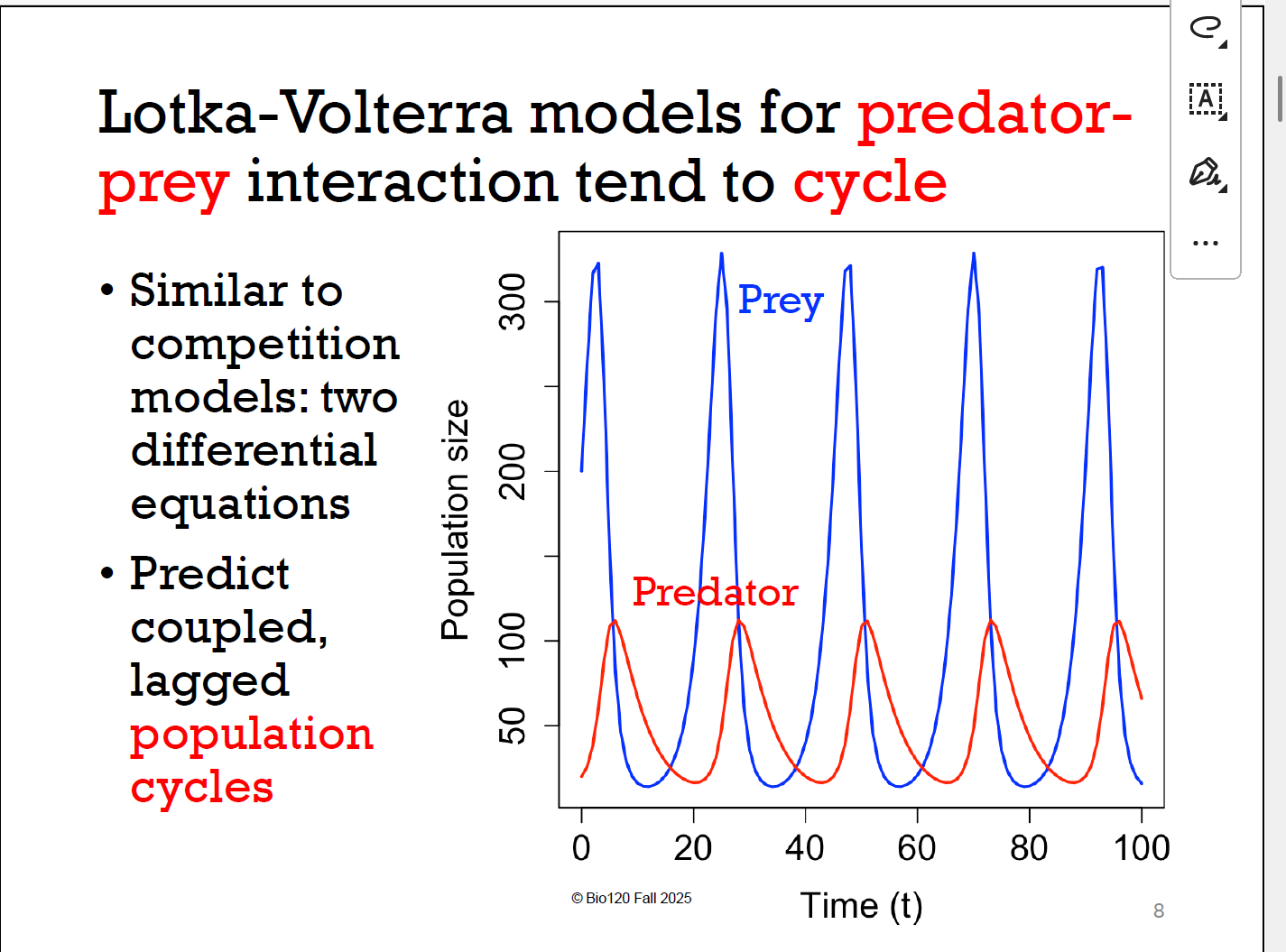
Lotka-Volterra models for predator-prey interaction tend to cycle
捕食者predator曲线落后于猎物prey
形成成对的,延后的周期 coupled, lagged population cycles
Antagonistic co-evolution 对抗性协同进化
reciprocal(互相) adaptation。猎物进化防御,捕食者随之进化counter-adaptations。“Red Queen hypothesis”
Life-dinner principle (unequal selection pressures)
猎物承担的选择压力更多,因此猎物比捕食者进化要快。后果是死亡v.s 捕食者的饥饿
inducible defenses 诱导防御
遇到威胁时才打开。例如植物morphology形态改变(Daphnia ‘helmets’),化学成分,行为。人类免疫系统。
predator 如何影响 biodiversity?
Predation maintains biodiversity ↑。例子:Pisaster海星被移除,mussels贻贝没有了天敌疯狂增长,发生竞争排除(competitive exclusion)其他小生物竞争不过,
Enemy Release Hypothesis(天敌释放假说)
invasive species在communities they invade更强势,因为更少的predators, parasites寄生虫, or pathogens病原体,它们从老家的天敌压力中被“释放”出来了。
complex life cycles 寄生虫parasites
需要两个或更多宿主。一个宿主的叫direct life cycle
Distribution, life history traits, and behaviours of hosts can affect parasite abundance and transmission
Vector
媒介transport parasites,其本身也是host
Zoonotic disease
(人畜共通传染病)通常传播自Reservoir(病原体储存宿主):带病原体但不生病,如蝙蝠
更多物种 → 疾病风险降低↓
Dilution effect(稀释效应):物种太多了,蚊子想咬A但是咬到 B、C、D 的机会增加
→ 反而减少了它咬“高风险物种 A”的机会
更多物种 → 疾病风险上升↑
Amplification effect(放大效应)=如果疾病可以感染很多宿主,那宿主越多,病原体繁殖空间越大。
所以是两种可能性。
Latitudinal gradient in species richness
地球上物种数量从赤道往两极递减↓。human pathogen人类病原体richness也是越靠近赤道,种类越多。
Nutritional Mutualisms 营养性互利共生
食物换食物。Legumes & rhizobia: exchange fixed C for fixed N 。通常发生在自养生物(Autotrophs) 与异养生物(Heterotrophs) 之间
Defensive mutualisms 防御性互利共生
protection 换 food。 Cleaner fish & client fish: exchange parasite寄生虫 removal for food。移除寄生虫=保护
Dispersal Mutualisms 传播性互利共生
花粉或种子的传播与食物报酬的交换
Lotka-Volterra model是竞争模型,如何适用于mutualism?
+β12N2/K1 物种2的存在提高了物种1的有效承载力
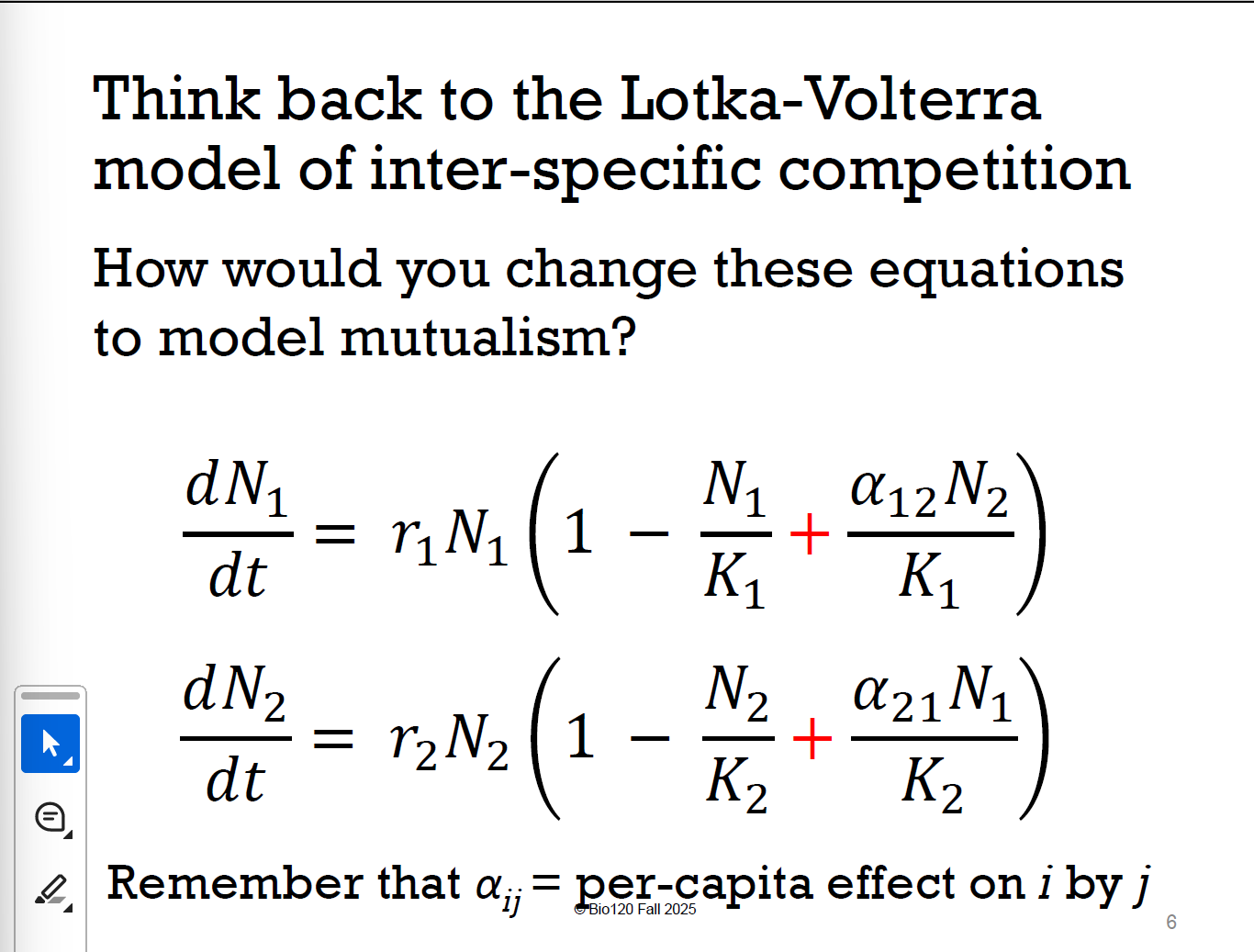
orgy of mutual benefaction 互利互惠的狂欢
Lotka-Volterra models of mutualism会导致无限的exponential growth, 但现实中有很多限制因素:1. 种内竞争 2. 捕食者或竞争者 3. Diminishing returns to mutualism互惠效果随成绩提高而减弱
Invasional meltdown
如果2个入侵物种形成mutualism,就造成Runaway Population Growth不可控增长。2 non-native species facilitate one another’s spread
Spring ephemerals
perennial understory herbs that flower right after snow melts, producing a short-lived “carpet of flowers”春季短暂植物 = 多年生林下草本植物,在雪融化后立即开花.
种子上的Elaiosomes 油脂吸引ants为其传播。native ant, mostly native plants, invasive ant, mostly invasive plants.
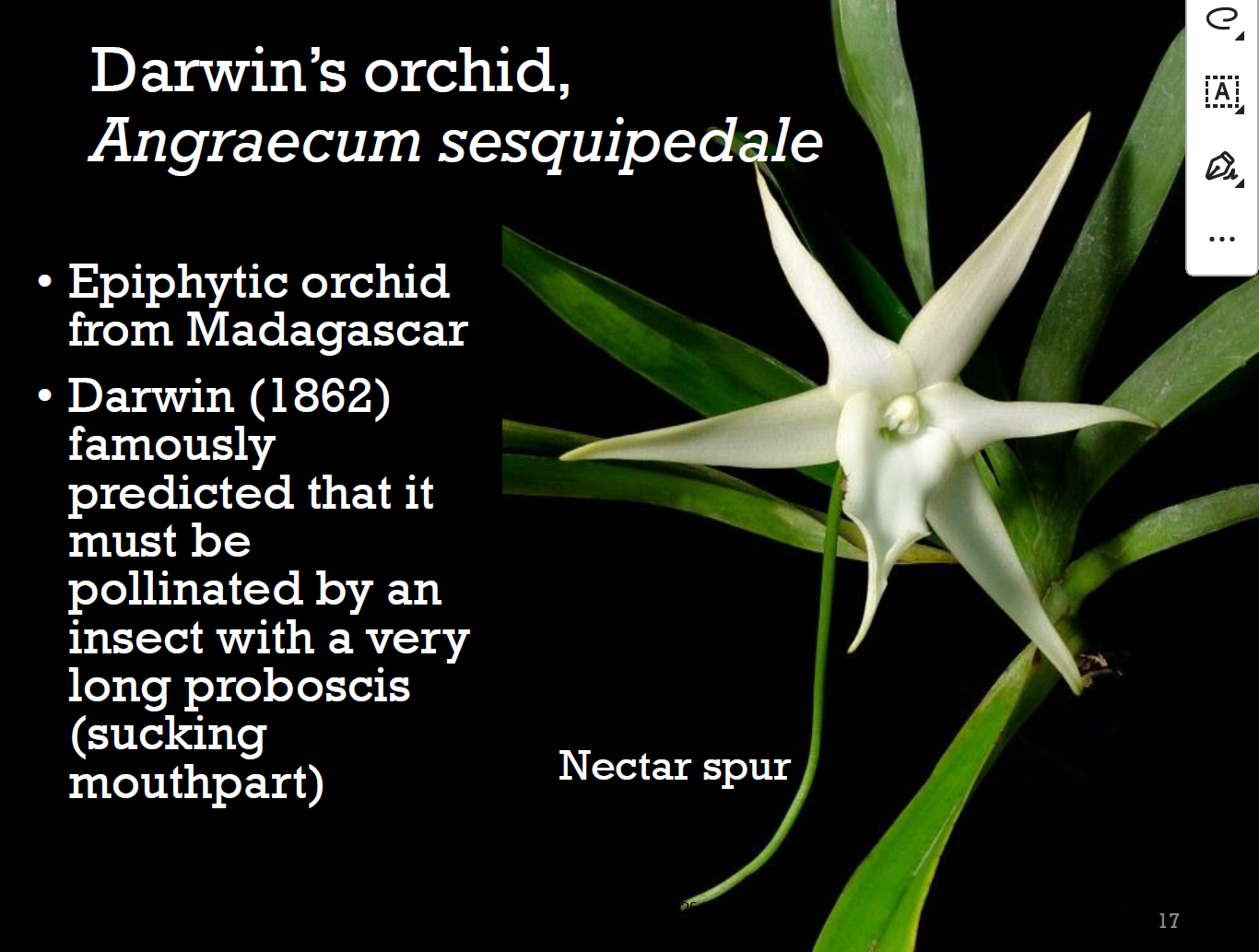
Darwin’s orchid
pollinated by an insect with a very long proboscis (sucking mouthpart) 由一种有长喙(吸允式口器)的昆虫授粉
→Reciprocal adaptation (coevolution) between flowers and insects
vertically transmitted
Bacterial endosymbionts in aphids:在蚜虫的细菌内共生中,Buchnera(细胞内细菌) are vertically transmitted; they are passed in aphid eggs from mothers to offspring 他们通过蚜虫卵传递到蚜虫后代。
mutualisms often highly specialized?
Not really. 很多共生关系是horizontally transmitted; partners are acquired anew each generation。像aphid-Buchnera那样遗传自父母的比较罕见。
Microbiomes
refers to either all the microbes living together in a community (often, a host) or their collective genomes。宿主身体里、或一个环境中的所有微生物 + 它们的基因。
比如:人的肠道微生物组
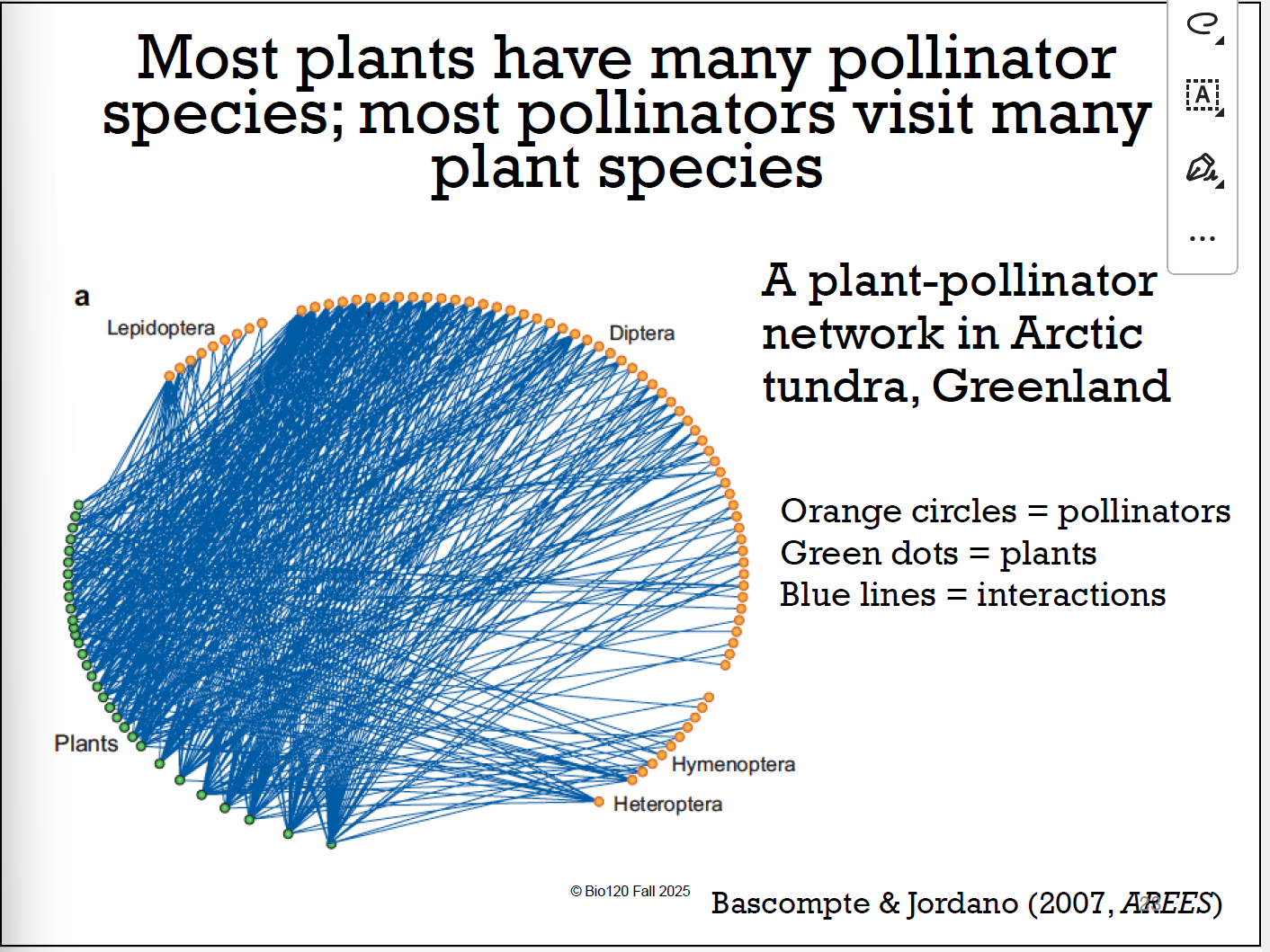
mutualistic network
大多数植物有很多Pollinatior,大多数pollinator也访问很多植物。
microbiomes 能反映什么?
Mammal gut microbiomes reflect diet, phylogeny, and morphology 哺乳动物肠道微生物群反映了饮食、系统发育和形态
population can disperse
allows organisms to:
• 新区域定居 Colonize new areas
• 竞争逃避 Escape competition
• 近亲繁殖避免 Avoid inbreeding depression
metapopulation
collection of spatially distinct populations that are connected via dispersal。空间上不同,通过dispersal 连接的种群合集
Patch
每个空间上分离的population叫做patch(spatially distinct population)
Source-sink dynamics:
‘Sinks’ are populations in small habitat patches that would go extinct, except …
Migrants from ‘source’ populations ‘rescue’ these populations
Patch dynamics
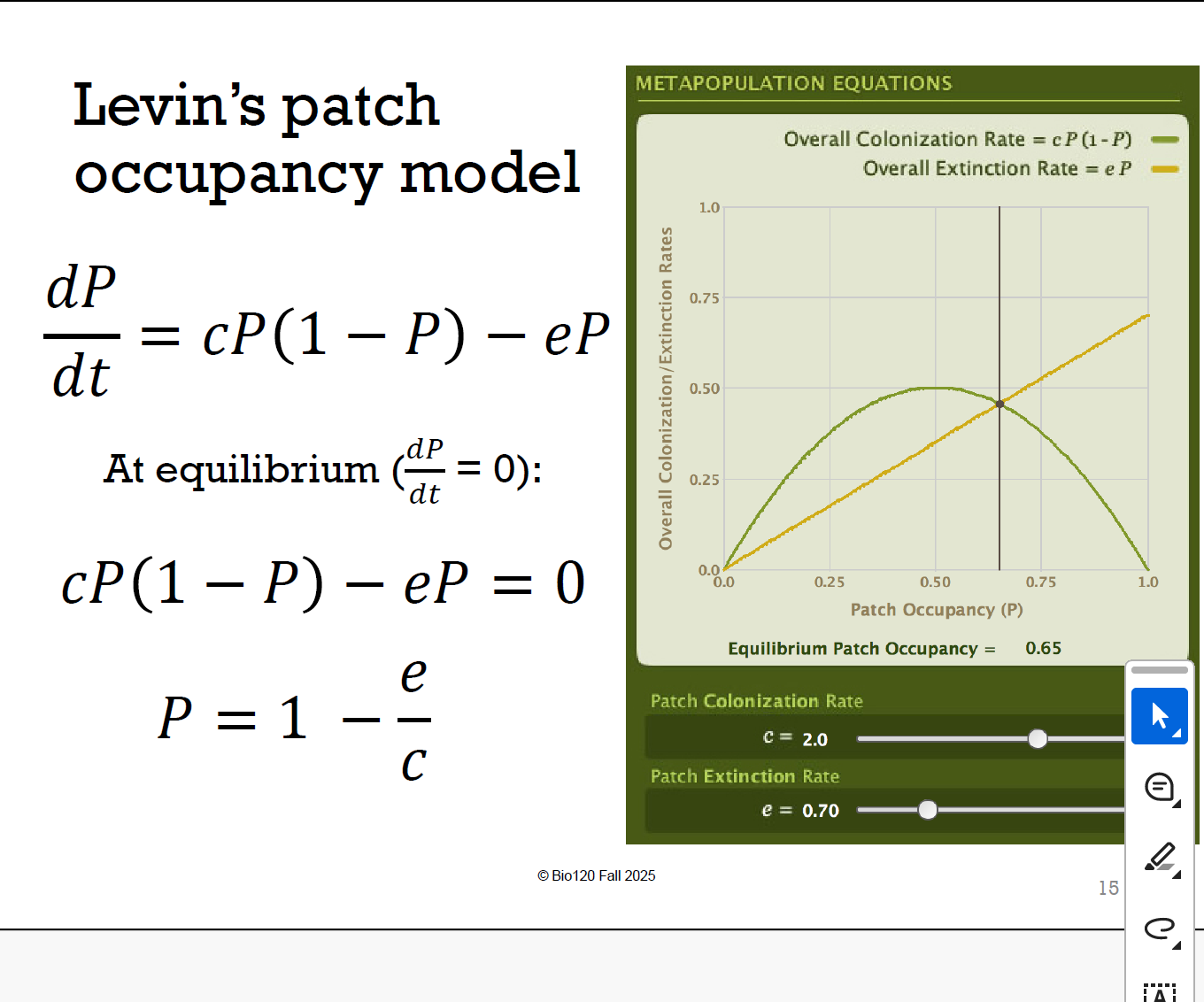
是随时间变化的 patch occupancy,e是恒定灭绝速率,p是已occupied patch比例,1-P是 空Patch比例
Colonization rate
𝑐𝑃(1 − 𝑃), where c is a constant
Levin’s patch occupancy model
𝑑𝑃/𝑑𝑡 = 𝑐𝑃 (1 − 𝑃) − 𝑒𝑃. at equilibrium(物种增=物种减,动态平衡) dp/dt=0,𝑃 = 1 − 𝑒/c
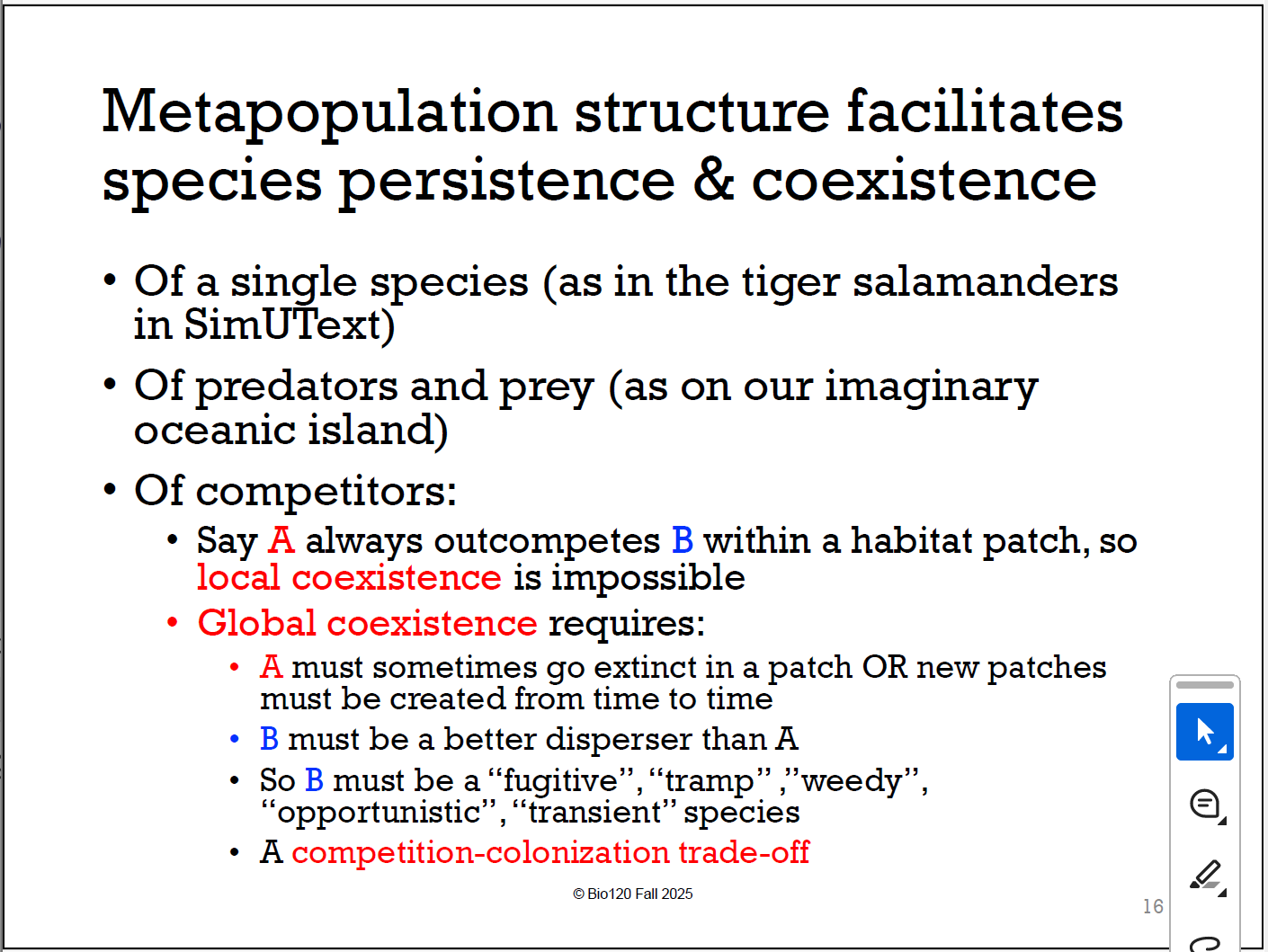
metapopulation 可以使永远弱势于A的种群B也存活下来
local coexistence 本地共存不可能,global coexistence却可能:1. A有时在某 patch灭绝 or new patches 产生 2. B有更强disperser 能力 3. B is fugitive(逃亡者),tramp(流浪者),weedy(杂草型),opportunistic(机会主义),transient(暂居者)
reservoirs储备元
大种群
 Note
Note  Flashcards (20)