National 5 Physics - Waves
 Call Kai
 Learn
Learn Practice Test
 Spaced Repetition
 Match
Match Flashcards
 Knowt Play
1/27

There's no tags or description
Looks like no tags are added yet.
Name | Mastery | Learn | Test | Matching | Spaced | Call with Kai |
|---|
No analytics yet
Send a link to your students to track their progress
28 Terms
Wave
transfers energy without any transfer of mass / matter
Transverse wave
a wave that vibrates at right angles to its direction of travel
Longitudinal wave
a wave that vibrates parallel to its direction of travel
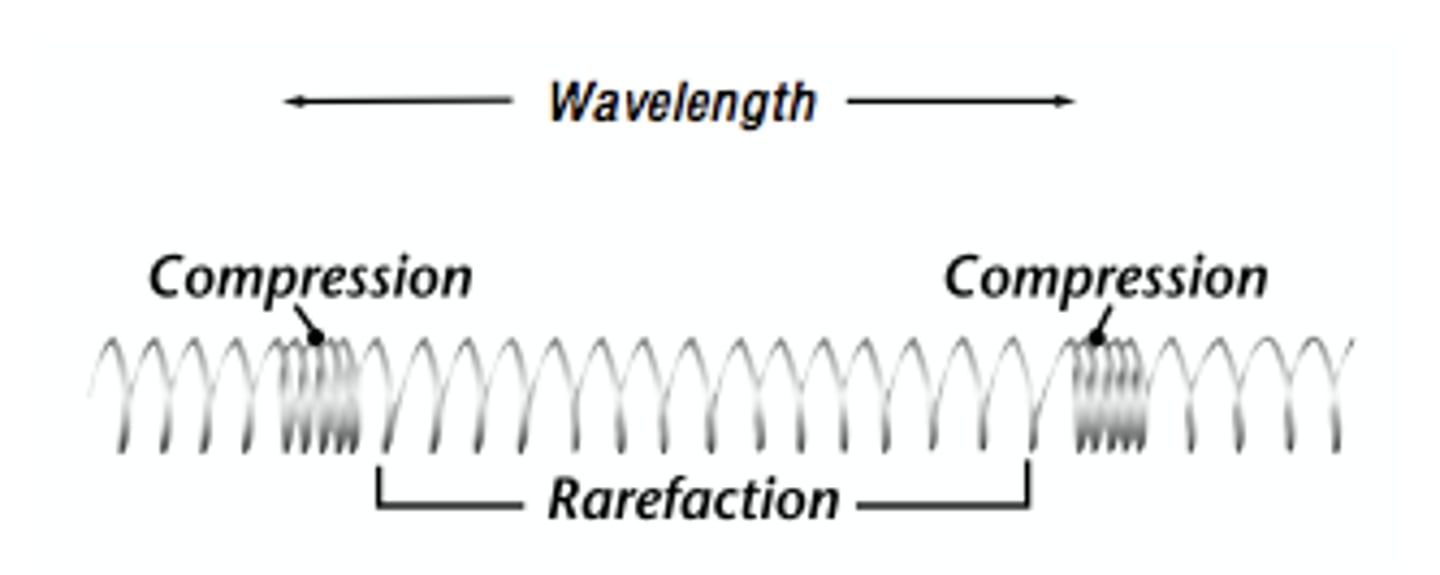
Frequency
number of waves produced or passing a point per unit of time
Period
time for one wave to pass a point, the inverse of frequency
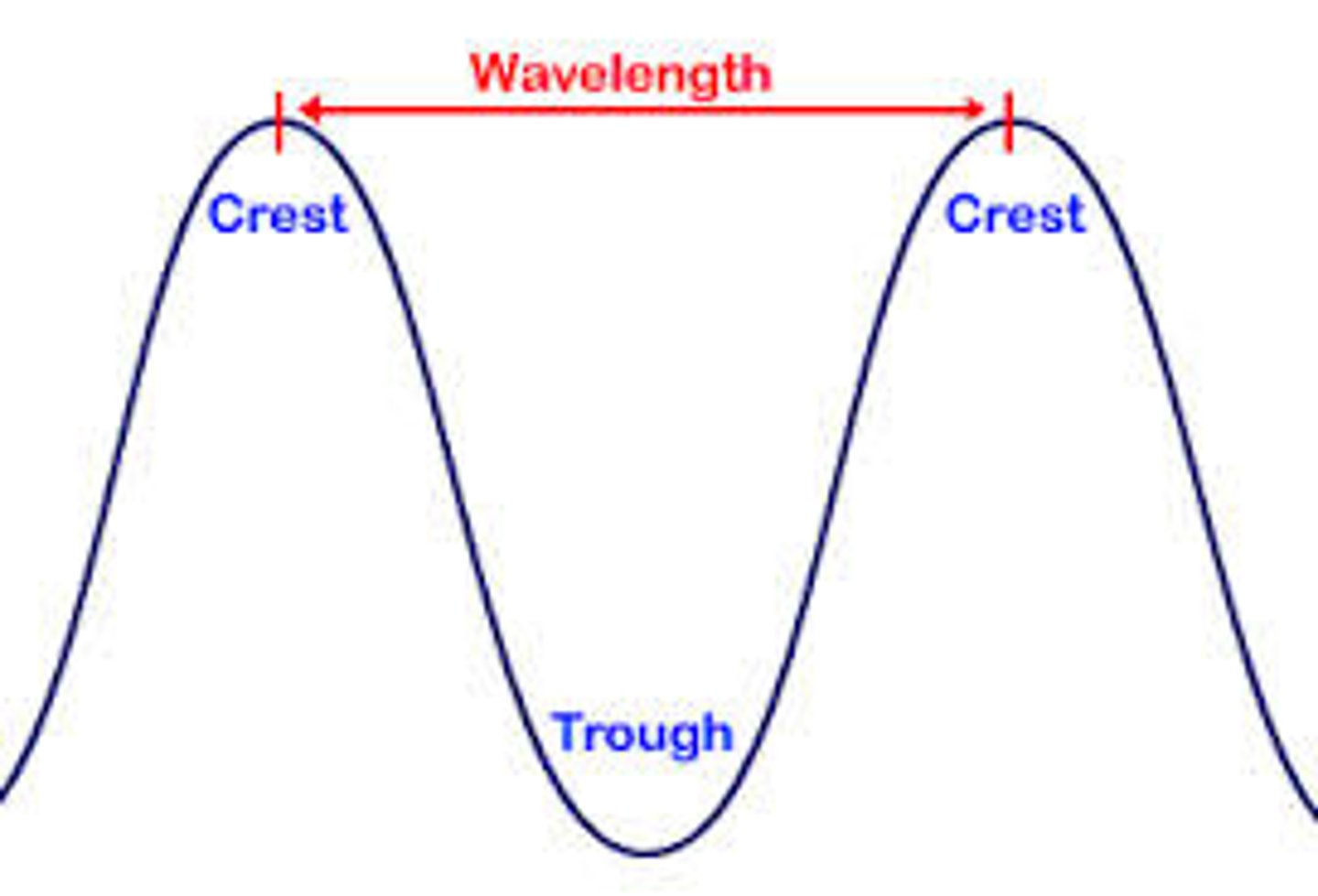
Wavelength
distance from a point on one wave to the same point on the next wave, ie crest to crest or trough to trough
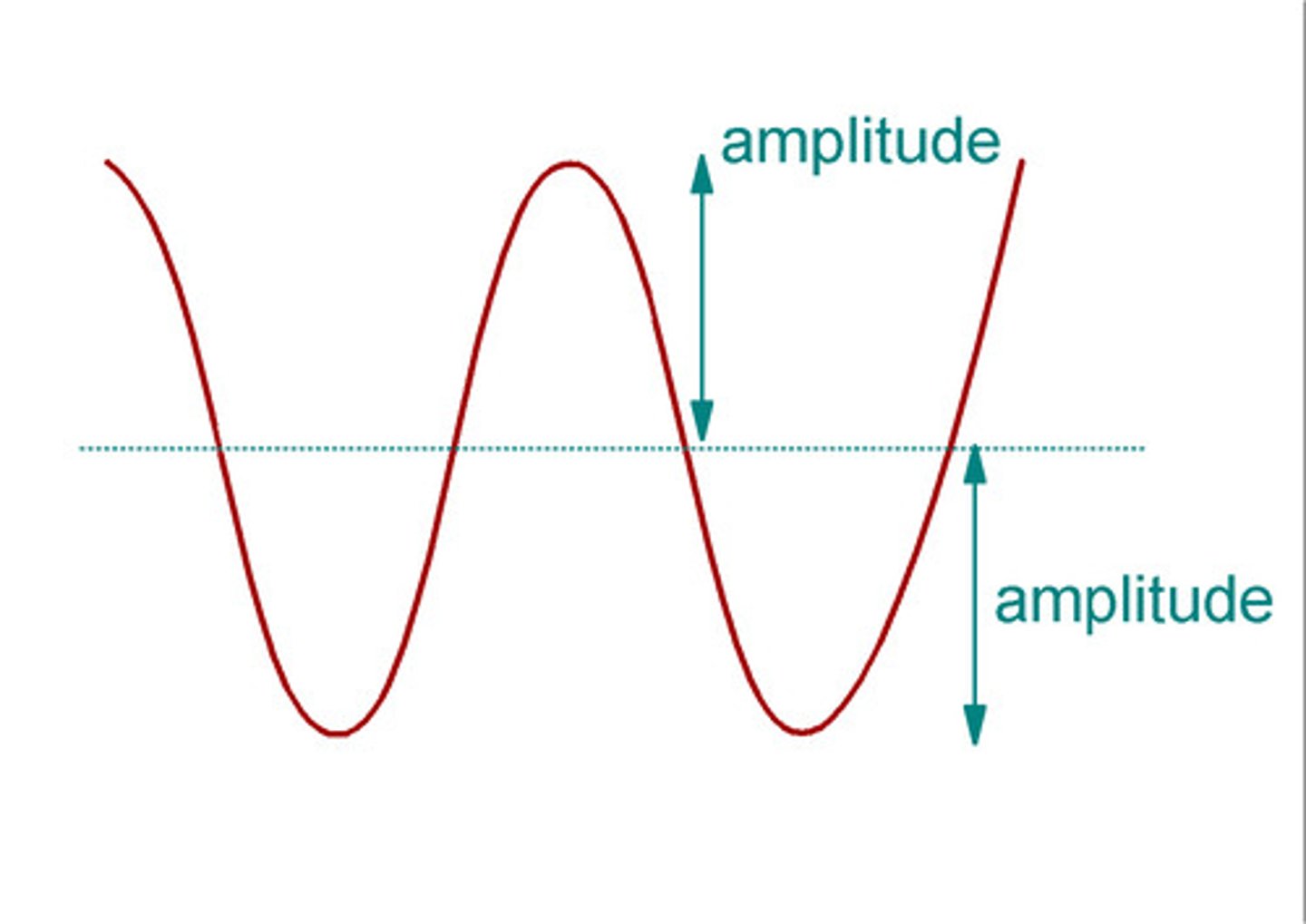
Amplitude
distance from the central axis to the crest or trough of a wave.
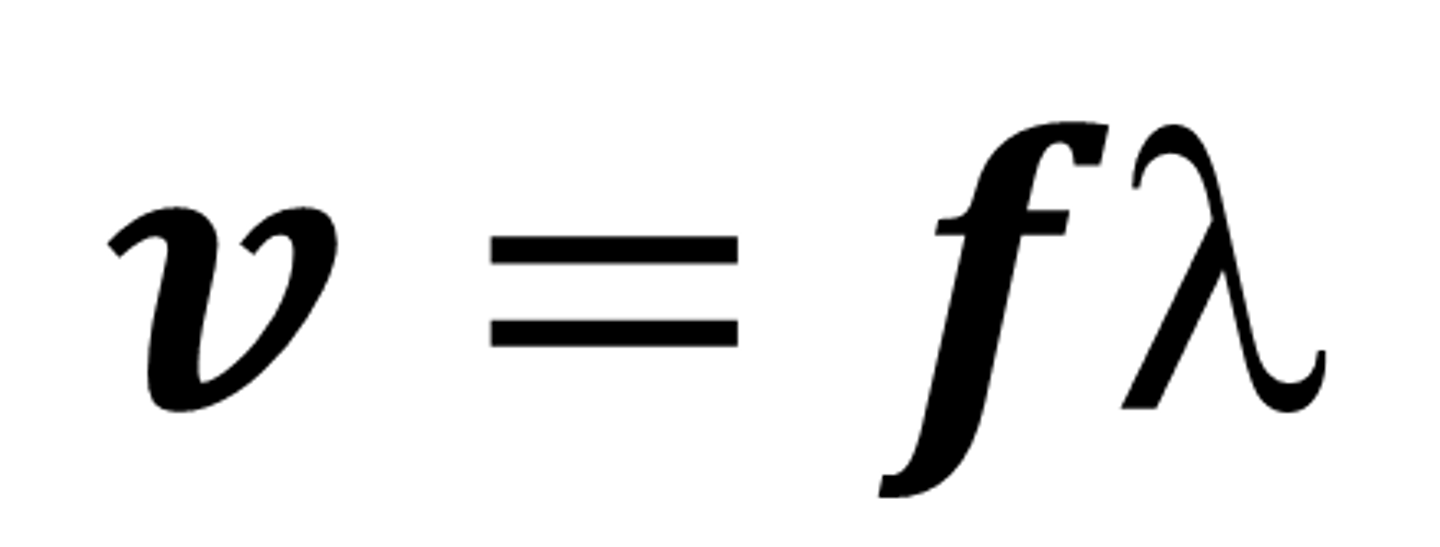
Wave speed
distance a wave travels per unit of time
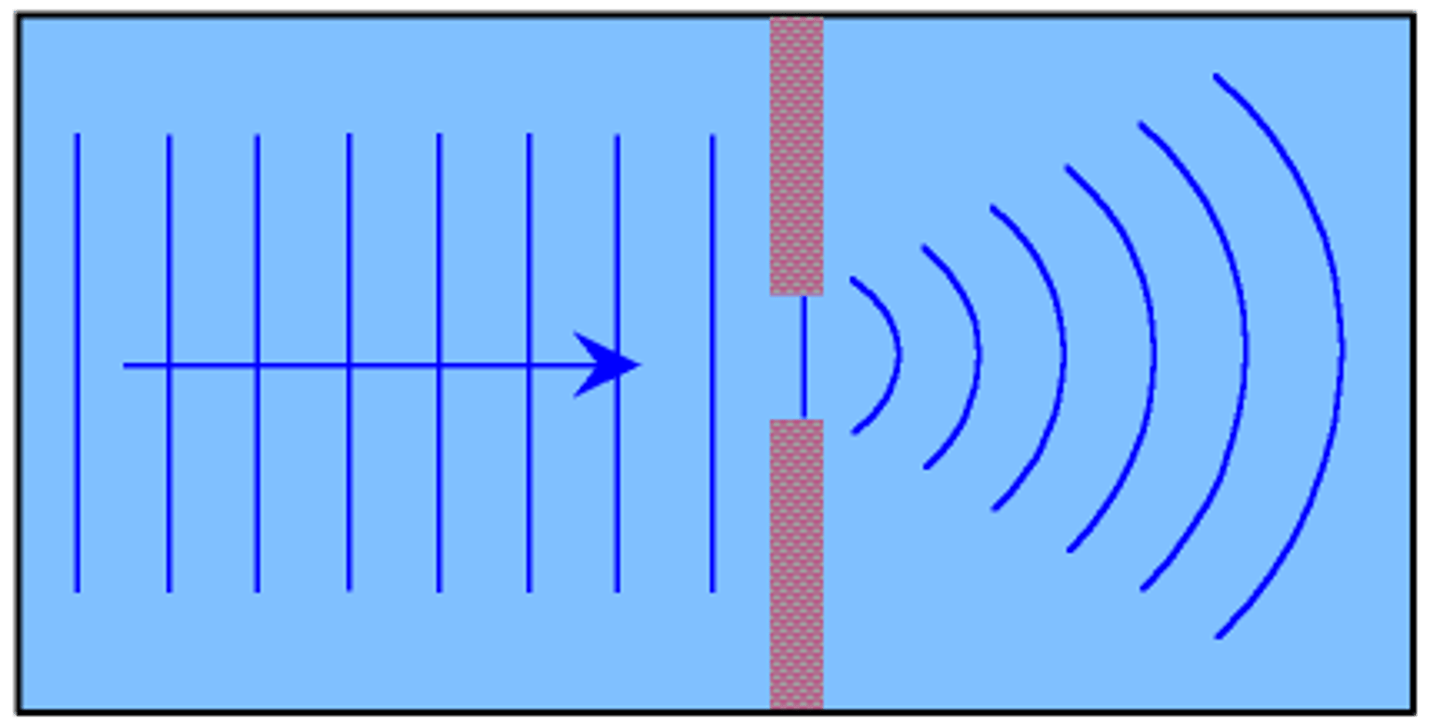
Diffraction
the change in direction of a wave as it passes by an obstacle or through a gap
Electromagnetic spectrum
the full range of frequencies of electromagnetic waves
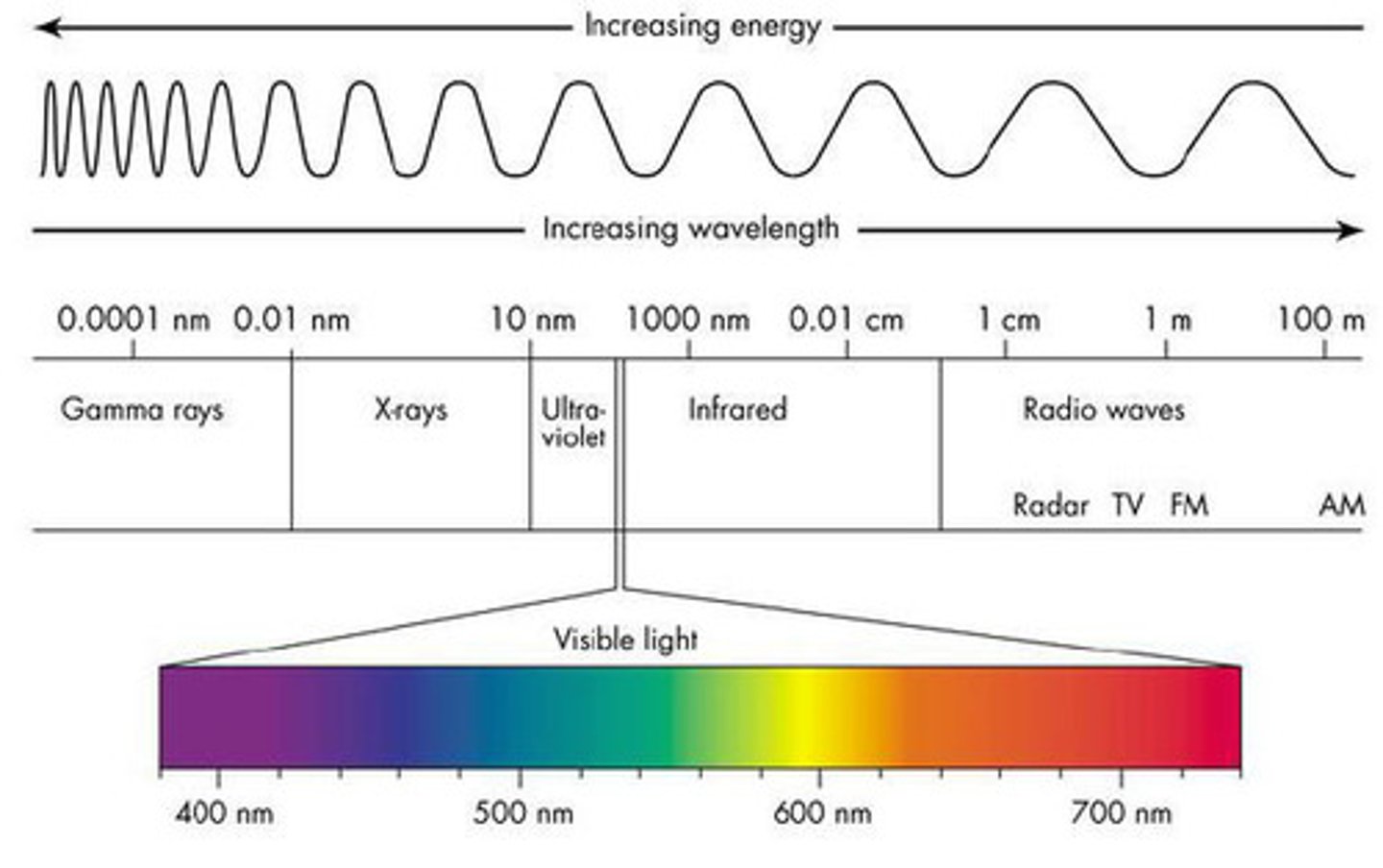
Gamma rays
highest frequency and energy EM waves, detected by photographic film, used for cancer treatment
X-rays
2nd highest frequency and energy waveband, detected by photographic film, used to view broken bones
Ultraviolet
band of EM spectrum with frequency just above visible, causes sun burn, detected using fluorescent materials.
Visible light
part of the spectrum which can be detected by the retina of the human eye, includes the peak wavelengths emitted by the Sun.
Infrared
heat radiation, part of the EM spectrum with lower frequency and longer wavelength than visible, detected by photodiodes and charge coupled devices (CCD)
Microwave
short wavelength radio waves used for mobile phone communication and heating food.
Radio wave
the longest wavelength part of the spectrum, detected using an aerial, used to transmit radio and TV signals.
Refraction
the change in speed and wavelength of a wave as it travels from one medium to another. If the angle of incidence is greater than 0° then this causes a change in direction.
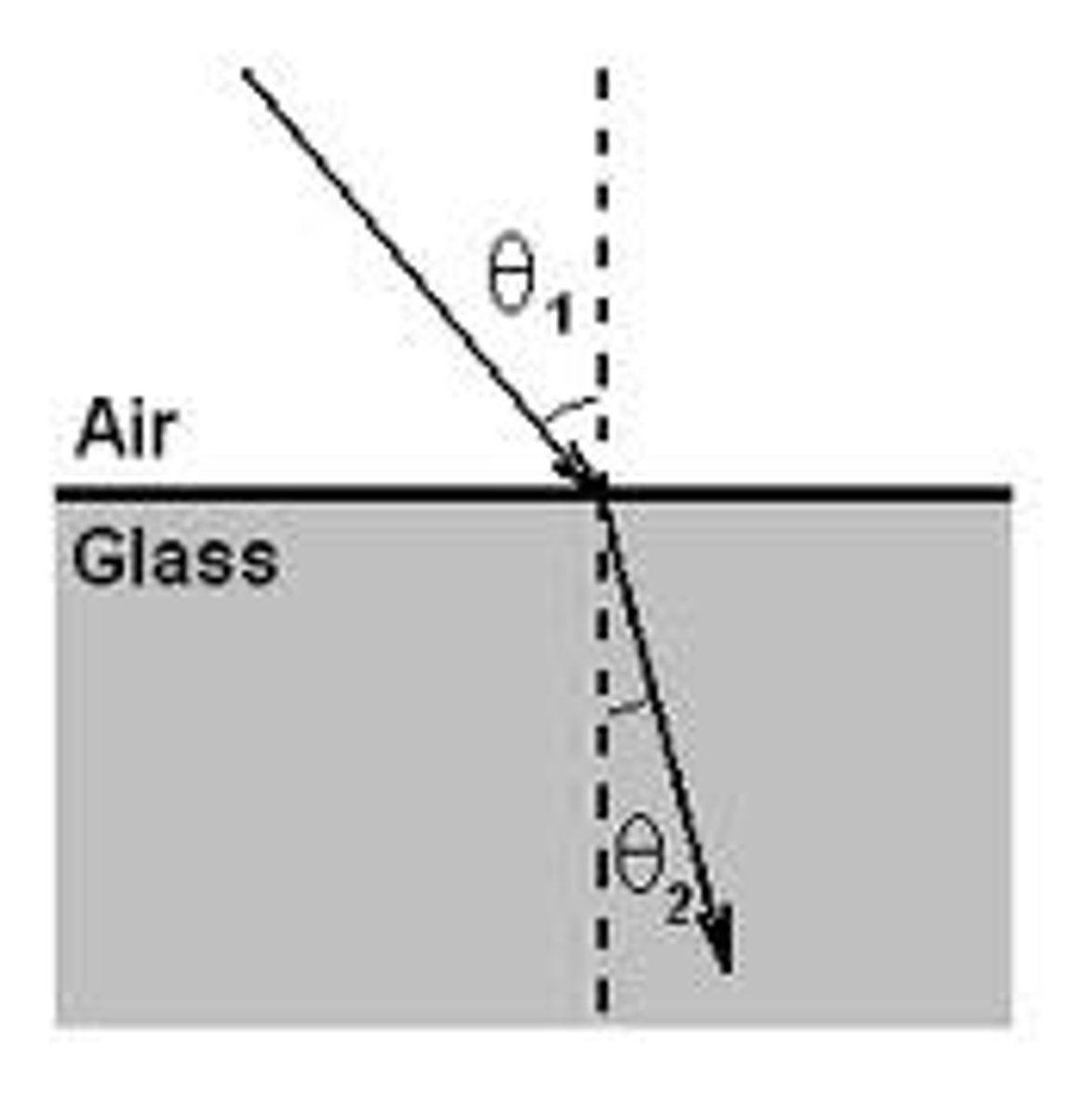
Normal
imaginary construction line drawn at right angles to a surface where a ray of light is incident on it, all angles are measured from the normal
Incident ray
the ray of light going into a surface
Angle of incidence
angle between the normal and the incident ray
Reflected ray
the ray of light which bounces off a surface and travels away from it.
Angle of reflection
angle between the normal and the reflected ray. This is always equal to the angle of incidence
Refracted ray
ray of light which has passed through a surface and is travelling through a different material
Angle of refraction
angle between the normal and the refracted ray
Total internal reflection
occurs when the angle of incidence is greater than the critical angle, light does not refract through a surface but instead reflects off it like a mirror.
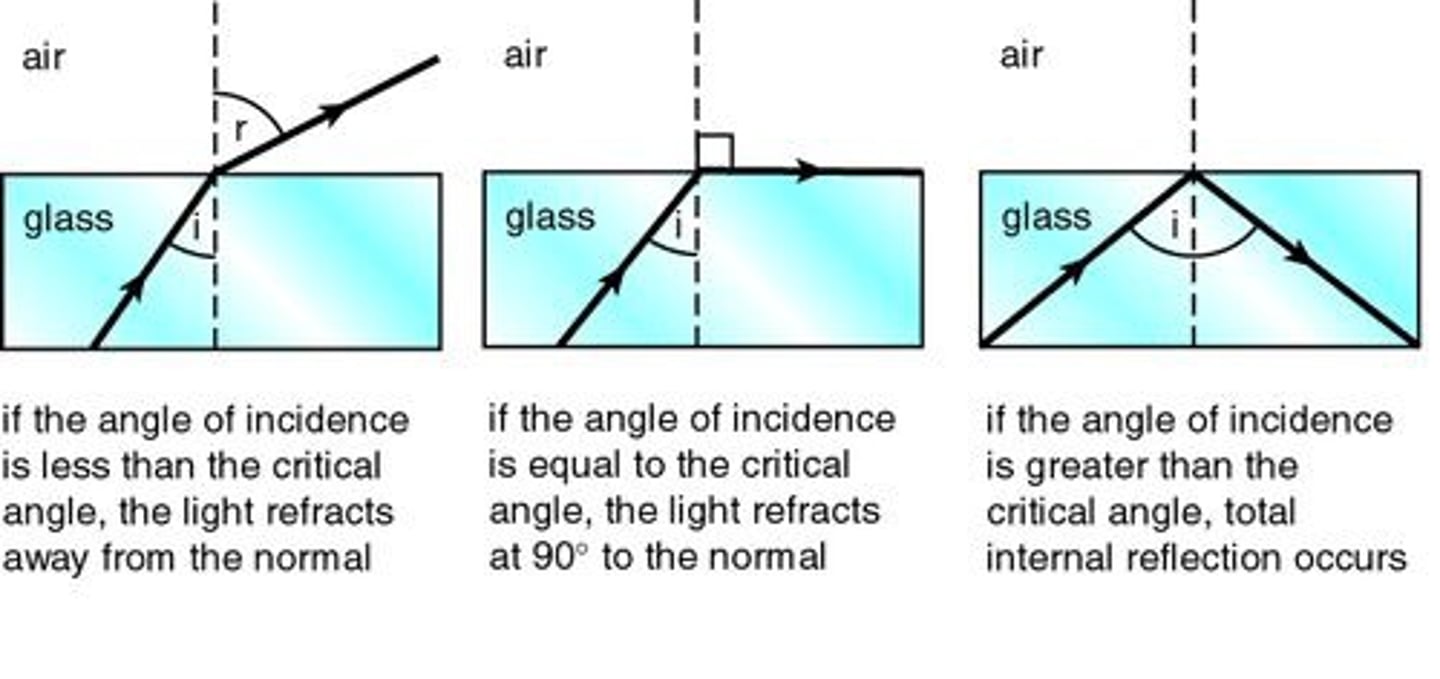
Critical angle
the angle of incidence which produces an angle of refraction of 90°
Refractive index
a measure of how much a material slows down a ray of light relative to its speed in a vacuum.
Explore top notes

