11-12. pharmacodynamics 1-2
 Studied by 11 people
 Call Kai
 Learn
Learn Practice Test
 Spaced Repetition
 Match
Match Flashcards
 Knowt Play
1/12

There's no tags or description
Looks like no tags are added yet.
Name | Mastery | Learn | Test | Matching | Spaced | Call with Kai |
|---|
No analytics yet
Send a link to your students to track their progress
13 Terms
what does affinity describe? what does it NOT describe?
describes how well a ligand binds a receptor
does NOT describe receptor activity elicited by a ligand
what is the equilibrium dissociation constant (Kd)? what does a small Kd mean?
value used to quantify affinity
the concentration of ligand needed to occupy half the receptors at equilibrium
small Kd = high affinity
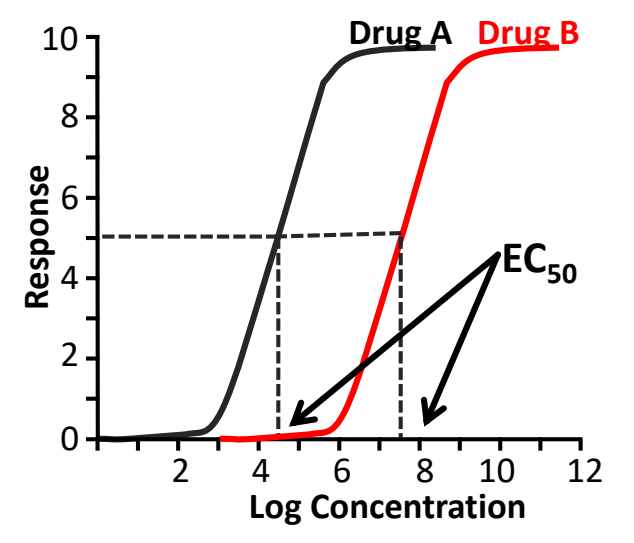
what is potency? how is it measured?
amount of drug needed to produce a response (measured in molar concentration)
measured by the effective drug concentration needed to produce the half-maximal response
EC50 or ED50
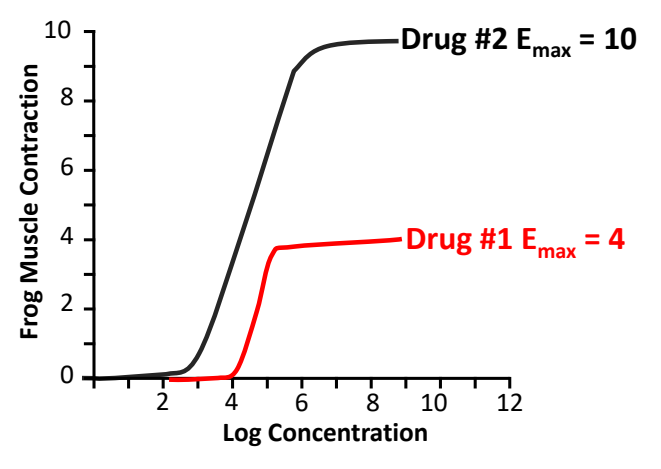
what is intrinsic activity (aka efficacy)? how is it measured?
ability of a ligand-receptor complex to elicit a biological response
measured by the maximal response elicited by a receptor (Emax)
full agonists have ____ affinity, ____ intrinsic activity
high affinity, high intrinsic activity
partial agonists have ____ affinity, ___ intrinsic activity
high affinity, low intrinsic activity
competitive antagonists have ___ affinity, ___ intrinsic activity
high affinity, no intrinsic activity
non-competitive antagonists have ____ affinity, ___ intrinsic activity
affinity for different site than endogenous agonist, no intrinsic activity
which type of antagonist cannot be overcome by increasing agonist concentration?
non-competitive antagonists → bind to receptors at different site than agonists; prevent agonists from activating receptor
physiological antagonist
drug that counters the effects of another by binding to a different receptor and causing opposite effects
ex. glucagon & insulin
chemical antagonist
drug that counters the effects of another by binding the drug and preventing its action
ex. chelators given in cases of lead poisoning
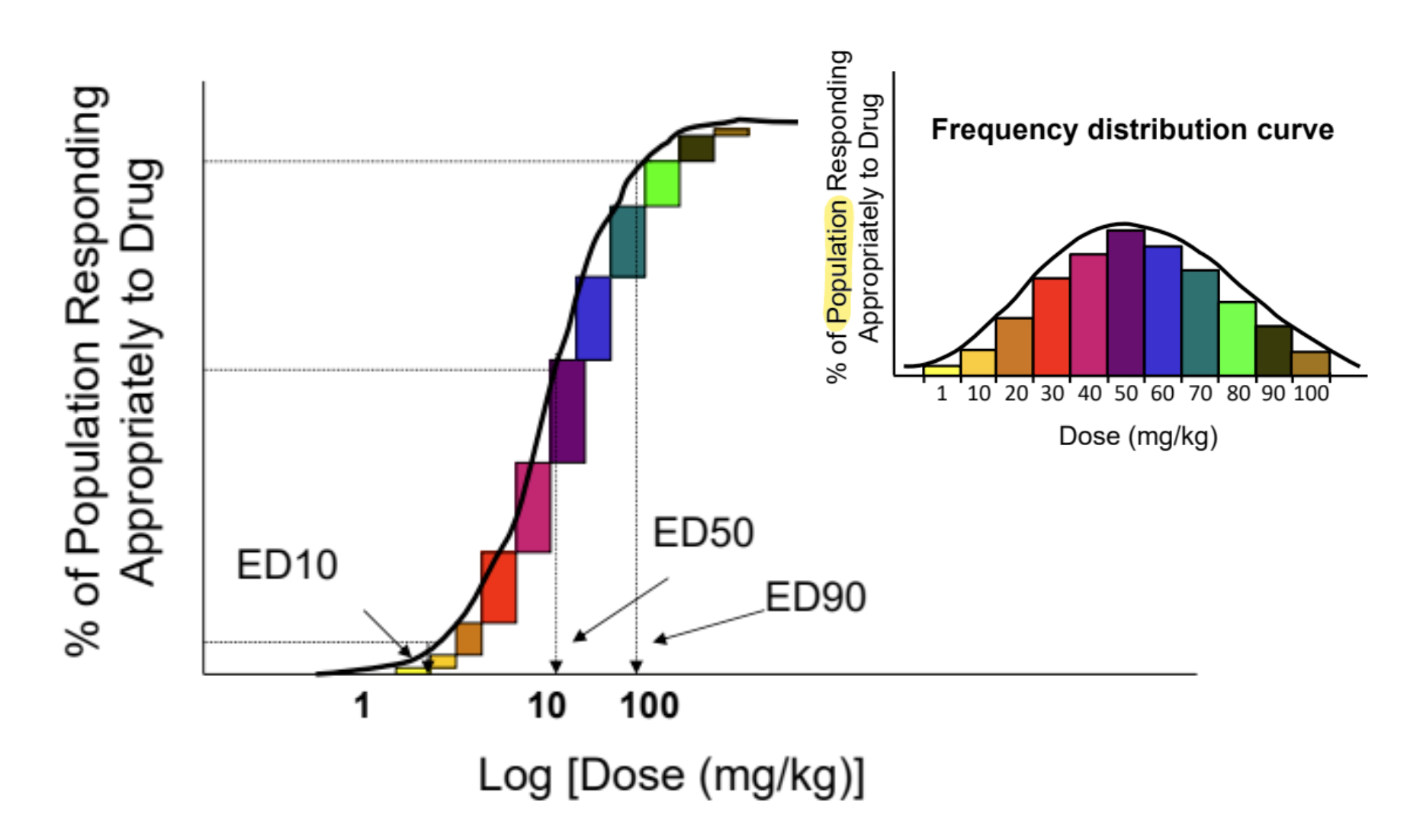
what does a quantal dose-response curve measure?
cumulative population distribution responding to the drug
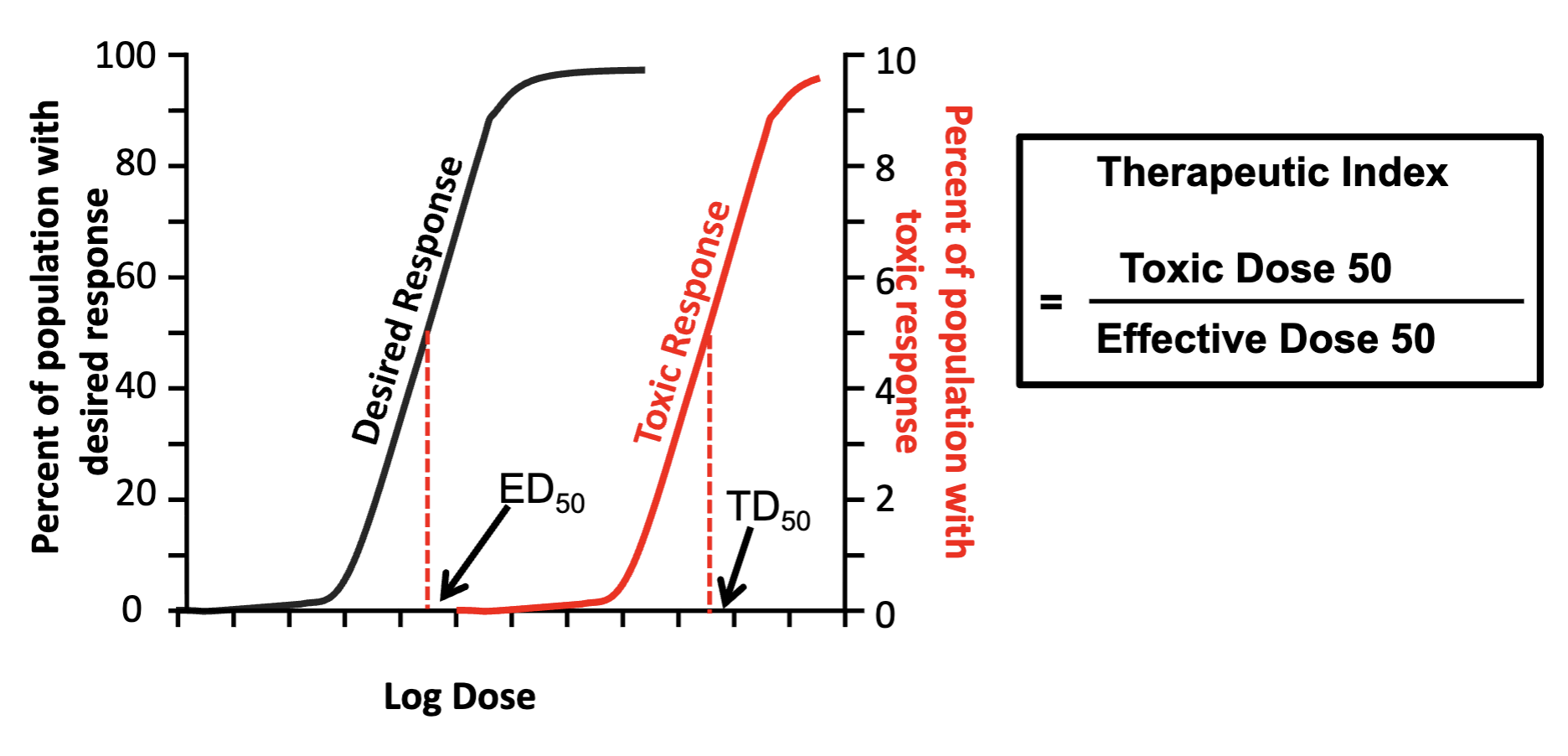
what does therapeutic index measured? how is it calculated?
measures relative drug safety
 Note
Note  Flashcards (20)