COMM181 - HR Final Exam
 Call Kai
 Learn
Learn Practice Test
 Spaced Repetition
 Match
Match Flashcards
 Knowt Play
1/85

There's no tags or description
Looks like no tags are added yet.
Name | Mastery | Learn | Test | Matching | Spaced | Call with Kai |
|---|
No analytics yet
Send a link to your students to track their progress
86 Terms
Mod 1: Occupational Health and Safety (OHS)
Ontario Occupational Health and Safety Act OHSA (1979, amended 1990)
Goal
to protect workers from health and safety hazards on the job
it sets out duties for all workplace parties and rights for workers
Workplace Safety and Insurance Act (WSIA) - pt 2 deals with the prevention of occupational injury and disease
Coverage
applies to almost every worker, supervisor, employer and workplace in Ontario, including workplace owners, constructors and suppliers of equipment or materials to workplaces covered by the Act
Enforcement
a fine of up to $100,000 for an individual person and/or up to 12 months imprisonment;
a fine of up to $1,500,000 for a corporation
Employee Rights
Under the Canada Labour Code, employees have the following three basic rights:
to know about anything that could affect health and safety in the workplace
to take part in making the workplace safe
to refuse work that is not safe
Employer Responsibilities
report a workplace accident or injury
provide first aid in the workplace
prevent workplace injury
create a company safety policy
know your responsibilities
establish a health and safety program
control hazards
learn from experience
leadership and training
establish a return-to-work program
create a joint occupational health and safety committee or representative
Occupation Health and Safety
the identification, evaluation, and control of hazards associated with the work environment
OHS: Potential Health Hazards
Potential health hazards:
physical agents
noise, temperature, lighting, vibrations, and radiation
biological agents/biohazards
exposure to natural organisms such as parasites, bacteria, insects, viruses, etc
chemical agents
chemical compounds, other harmful toxic substances
ergonomically related injuries
ergonomics: interaction of physical attributes of workers with their work environment (human-machine interface)
problems include repetitive strain, stress, over-exertion, fatigue, back injuries, etc
psychosocial hazards
related to characteristics of the job, work environment
OHS: Psychosocial Hazards and Workplace Stress
What is workplace stress?
many different uses of the term “stress”
something we are exposed to; something we feel
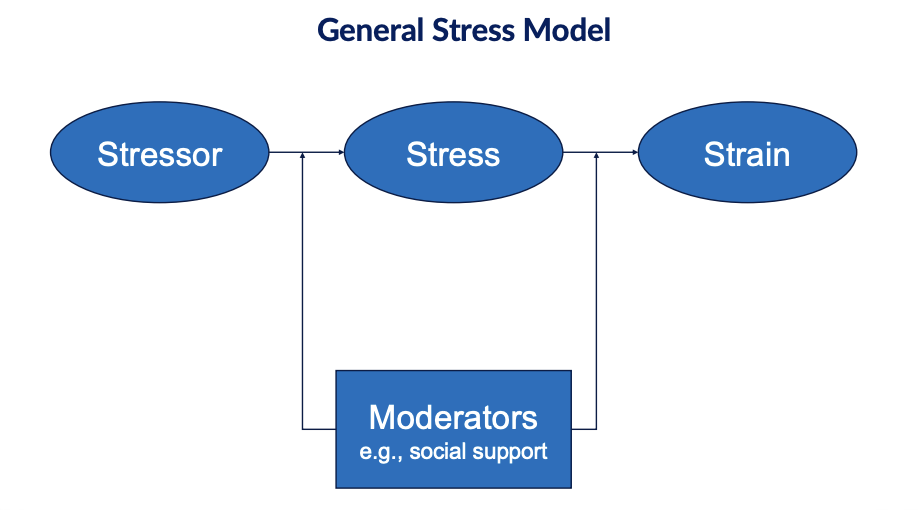
General stress model distinguishes between:
stressors
stress
strain
There is also:
eustress
distress
burnout
General Stress Model: Stress, Stressors, Strain
Stressor
environmental event
Stress
an individual’s response to, or evaluation of, the stressor
Strain
result of stress - psychological, physical, behavioural, organizational
Moderators
factors that change the relationship between 2 variables
influences whether stressor —> stress, and stress —> strain
Eustress, Distress, Burnout
Eustress (+)
positive stress that accompanies achievement and exhilaration
Distress (-)
harmful stress characterized by a loss of feeling of security and adequacy
Burnout (-)
most severe stage of distress, manifesting itself in depression, frustration, and loss of productivity
OHS: Major Work-related Stressors
workload/work pace
amount of work; speed required
role stressors
role conflict - incompatible demands from 2 or more sources
role ambiguity - unclear expectations
inter-role conflict - ex// work-family conflict
work scheduling
ex// night work, rotating shifts
career concerns
job insecurity, over/under-promotion
job content and control
inadequate skill use & discretion; little meaning
interpersonal relations
conflict, aggression (coworkers, supervisors, subordinates)
OHS: Workplace Aggression (WA) and Violence
Definition of WA
“behaviour that is enacted by an individual(s) within or outside an organization, intended to physically or psychologically harm a worker(s), and occurs in a work-related context”
Sources of WA
coworkers, supervisors, subordinates, public
Types of WA
violence: physical acts, may result in physical harm
hostility: verbal abuse, cursing
incivility: gossip, rumours, mean pranks
work obstruction: interruptions, not providing resources
OHS: Types of Workplace Violence
Types of Workplace Violence
based on assailant’s (aggressor’s) relationship with target
Type 1: no legitimate relationship
enters workplace to commit criminal act (theft)
85% of workplace homicides (death, intentional or not) are a result of this
Type 2: legitimate relationship
aggressive act committed during an interaction
ex// customer, client, patient
accounts for about 60% of nonfatal (not causing death) assaults
Type 3: assailant is a current or former employee
targets a coworker or supervisor
related to both individual and organizational characteristics (discussed later)
Type 4: assailant has ongoing or previous relationship with an individual employee
ex// domestic violence spilling into workplace
5% of workplace homicides
OHS: Workplace Violence - Individual Predictors
Workplace Violence
Individual Predictors
trait anger
predisposition toward revenge
negative affectivity
low self-control
hostile attributional style
past history with aggression
alcohol consumption
OHS: Workplace Violence - Situational/Organizational Predictors
Workplace Violence
Situational/Organizational Predictors
physical conditions
crowding, heat, noise, etc
perceived injustice
layoffs, downsizing
strict/abusive supervision
failure to address aggression/mistreatment
lack of a policy/enforcement
OHS: Workplace Aggression - job-related predictors of experiencing aggression
Workplace Aggression
Job-Related Predictors of Experiencing Aggression
being responsible for the care of others
exercising physical control over others
interacting with frustrated individuals
having contact with individuals under the influence of alcohol, illegal drugs, or medication
supervising/disciplining others
decisions that result in the denial of a service/request
working alone
working evenings or nights
working in clients’ homes
handling valuable guns, weapons, or dispensing drugs
OHS: Workplace Aggression - Potential Consequences of Aggression
Workplace Aggression
Potential Consequences of Aggression
Physical
injury, death, somatic symptoms
psychological
fear, anger, depression, anxiety
reduced job satisfaction, commitment
behavioural
substance use, aggressive behaviour
reduced job performance, absenteeism, quitting
Under Pressure
62% of Americans are stressed about work (APA)
each year, more than $275,000,000 worth of working days are lost in the US because of absenteeism resulting from stress
¼ Americans admits to have taken a “mental health day” to cope with stress
cost to employer = $602 per worker per year
lady gaga, kanye west, selena gomez and mariah carey all reported to have been hospitalized as a result of stress and exhaustion
eating 1.4 ounces of dark chocolate everyday for 2 weeks has been shown to reduce stress (study conducted by Nestle)
stress balls, relaxation tapes, and other stress-fighting products and services account for $14B of spending in the US each year
1/3 of American children (8-17) worry about their family finances
other sources of stress are from homework and teasing
kids cope with stress by listening to music (44%), eating (26%), and talking to their parents (22%)
2/3 of spoken curse words are a result of stress
swearing accounts for 80 out of 15,000 typically spoken words per person, per day
study of 42 female monkeys found those suffering from social stress held more abdominal fat, a precursor to heart disease
In Sweden, stress and anxiety account for 41% of total sick pay
workers can get up to 75% of their salary as sick pay for years
Mod 2: Orientation, Training & Development
in class activity: scavenger hunt
Socialization vs Orientation
socialization
process of employees adapting to organization
long-term process, often informal
orientation
program that informs new employees about their job and company
short-term, often formal
socialization
define
a process by which employees begin to adapt to the values, norms, and beliefs of the organization and its members
involves learning the organization’s climate (shared perceptions) and learning to “fit in”
climate
“members’ shared perceptions of the contingencies (possible future event/outcome) between behaviours that occur in the work environment and their consequences”
learning what behaviours are expected, acceptable, and unacceptable
stages of socialization
anticipatory (pre-arrival)
employees begin with certain expectations about the organization and the job
based on company reputation, word of mouth, experiences during recruitment and selection
encounter
employee has started new job
Inconsistencies between expectations and realities emerge
needs info re policies, procedures, etc.
benefits of an orientation program
shows the organization values the employee
reduces employee anxiety
clarifies expectations (and improves performance)
change (settling in)
inconsistencies start to get worked out
employee begins to identify with the organization
transition from being an “outsider” to feeling like an “insider”
often involves taking on new attitudes, values, and behaviours to align with the organization’s
misalignment = dissatisfaction and turnover
Realistic Job Preview (RJP) may be helpful
information about job demands and working conditions; both positive and negative consequences
ex// life insurance sales job: autonomy, high income potential, but also income uncertainty
Why is socialization important?
Sets the tone of employment relationship
reduces anxiety for employees
will I fit in?
will I enjoy the job/coworkers?
affects employee performance
clarifies expectations and how things are done
affects other individual and organizational outcomes
lower commitment, absenteeism, turnover, lower productivity
Training vs Development
Both refer to the learning of job-related behaviour
Training
focuses on job performance
emphasis on acquisition of specific KSAs needed for the present job
Development
focuses on personal growth, longer-term development
emphasis on acquiring KSAs needed for future job or organizational needs
Training Process (5 steps)
Step 1: Needs Analysis (goals)
organizational analysis
culture, values, mission, goals (ex// audit report writing)
job/task analysis
KSA requirements
person analysis
gaps between employee KSAs and KSAs required by jobs
ex// performance evaluations, self or supervisor identification
what is the goal of training?
Organizational change vs achieving performance levels
Step 2: Develop Training Objectives
must include:
the desired behaviour
the conditions to which it is to occur
performance criteria
ex// by the end of this class, you will be able to list and define the 5 steps involved in the development of a training program, without referring to your notes
Step 3: Develop Program Content and Learning Principles
issues to consider:
needs assessment
training objectives
audience
class size
time availability
cost
training format
learning principles
Step 4: Deliver Training
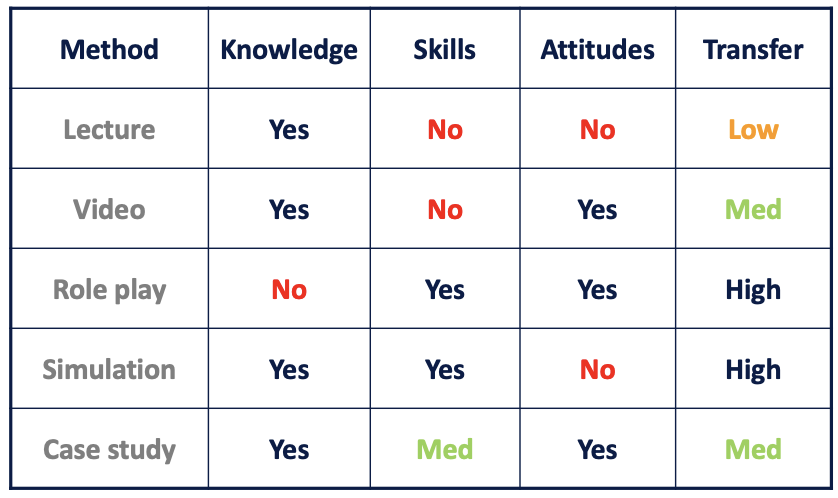
Numerous methods to choose from:
off-the-job techniques
lectures
role playing (ex// x-cultural training)
case studies
simulations
computer-based training
virtual learning
on-the-job techniques (OJT)
ex// apprenticeship, job rotation
Step 5: Evaluating Training Effectiveness
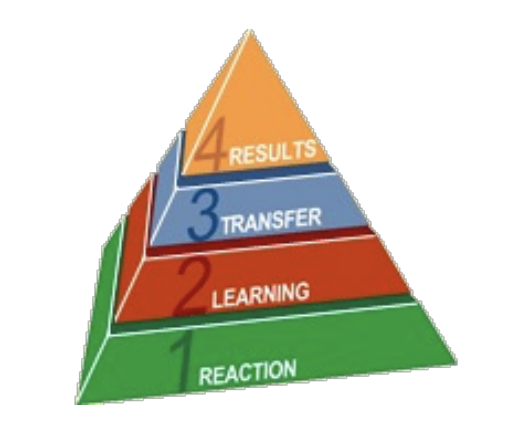
5 criteria - Kirkpatrick’s 4 levels plus 1
Reaction
Are participants satisfied with training?
Learning
How much has been learned?
Attitude change (in addition to Kirkpatrick)
Did training result in attitude change?
Behaviour change
Did the learning transfer to the job?
Results criteria
Was the training worth the cost to the company?
Training Process: Learning Principles
Learning Principles
Factors that contribute to effective learning:
participation
participants are actively involved (liked prof eddy asking students questions in class)
repetition
repeated review of material (students learning again at home after class)
relevance
material is meaningful (or take philosophy 101)
transference
application of training to actual job situations (ex// simulation exercise)
feedback
information given to learners re their process (midterm, final)
Training Motivation and Success
Direction, intensity, persistence to learn
Affected by individual characteristics and situational characteristics
individual characteristics
cognitive ability
need for achievement (motivated to learn)
conscientiousness (discipline to learn)
locus of control, self-efficacy (belief in one’s capabilities)
valence (belief regarding desirability of outcomes obtained from training)
age, anxiety (negative relationship)
situational characteristics
climate (work environment that influence use of training on the job)
ex// adequate resources, cues to remind them of what they learned, opportunities to use skills, frequent feedback
source: colquitt, lepine, & noe, 2000
Strengths and Weaknesses in Training (relation between)
Training Evaluation
If possible use an evalution method that will allow you to draw conclusions about the training’s effectiveness
Reaction measures
Important but don’t refer to effectiveness
Measure behaviour post-training
Can’t determind whether change occurred
Pre-test, Post-test design
Pre-test, Post-test Design
measure —> training —> measure
Allows you to see if change has occurred:
ex// # of widgets produced before training = 10/minute
# of widgets produced after training = 16/minute
But what if other employees who did not receive training average = 15 widgets/minute
Is training effective?
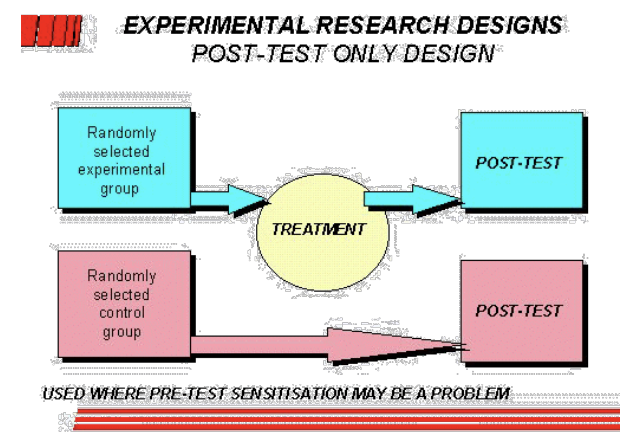
should also use a control group
employees who did not receive training
Control Group
Mod 3: Performance Management
Performance Appraisal: Purpose of Performance Appraisals
Purpose of Performance Appraisals
Administrative - to make employment decisions
promotion, termination
training - who to train, what training is required
compensation - merit increases
legal justification for any of these decisions
Feedback and development
point out strengths and weaknesses
Identify corrective action to address weaknesses
motivation (recall Hackman & Oldham)
Performance Appraisal: The “Criterion Problem”
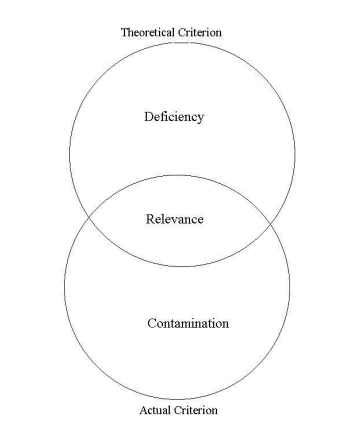
The “Criterion Problem”
difficulties involved in determining what performance is and how to measure it
Ultimate Criterion
ex// “what is happiness?”
It is a “construct”, in other words (i.e.), conceptual in nature
includes everything that ultimately defines success on the job
Operational Criterion
the aspects of performance that are actually measured
Criterion Deficiency
when performance standards fail to capture the full range of employees’ responsibilities
ex// focus on sales but ignore customer service
Criterion Contamination
when factors outside the employee’s control influence his/her performance
ex// machine breakdowns, differences in sales regions
Performance Appraisal: Potential Performance Criteria
Potential Performance Criteria
Output
units produced, items sold, $ sales, commissions earnings
Quality measures
# errors, # errors detected, # complaints/grievances, # commendations, breakage
Lost time
absences (unexcused), lateness/tardiness, turnover (withdrawal from training or job, transfers tue to inadequate performance)
Ratings
performance appraisals by trainers, supervisors, peers, self
Others
citizenship behaviours (volunteer)
counterproductive behaviours (theft)
safety records, accidents
Performance Appraisal: Measurement Considerations
Measurement Considerations
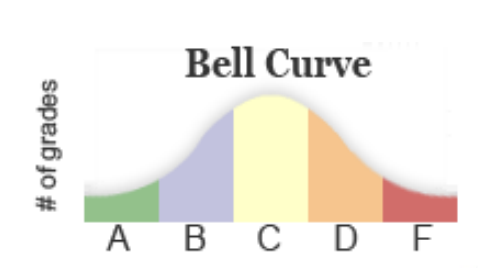
Absolute judgments vs. relative judgments
Absolute
compare employee to pre-established criteria/dimensions
focused on definite goals for individuals
ex// your weekly decisions sets
Relative
compare employee to other employees’ rankings
more competitive, and can lead to less effective teamwork and cooperation
ex// your rankings at the end of Q2 and Q4
Performance Appraisal: Measurement Methods
Measurement Methods
What do we want to measure: traits, outcomes, or behaviours?
Traits
ex// loyalty, dependability, initiative
problems: ambiguous, susceptible to bias, not legally defensible, focuses on the person rather than the performance
Outcomes
ex// sales revenue, # calls answered, # of complaints
problems: influenced by factors beyond employee control
Behaviours
ex// work well with others
focuses on what employees do (in other words, what they should start, stop, and continue doing)
2 common instrument types: BARS and BOS
Methods of Appraisal
performance checklist: check in the box (ex// Mcdonalds)
field review: “watch what you do” (ex// mystery shops - go undercover, military)
graphic rating scale: list of performance characteristics rated by quality of performance (most popular and common)
mixed standard scales: rate either as better, equal, or worse than statements describing behaviour
forced-choice method: must rate one of 2 statements (+ve/-ve)
narrative essay: unstructured and unstandardized to facilitate comparison (good for writing recommendations)
critical incident method: recording (?) effective and ineffective behaviours (impractical)
combination approaches: combination of any of the above
Behavioural Instrument: BARS
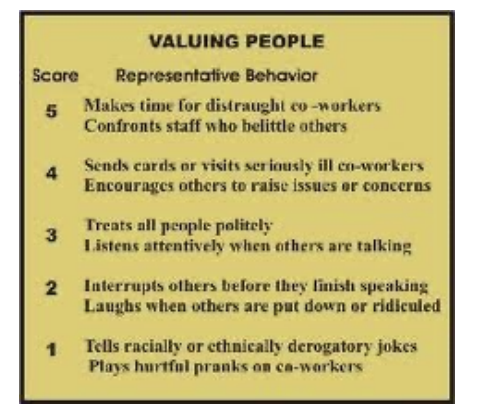
Behaviourally Anchored Rating Scales (BARS)
format was developed due to lack of standardization (and reliability) across rates
goal was to help rater rate
performance standards are concrete:
Each standard consists of a number of specific, behavioural anchors on the rating form itself
The behaviour anchors cover the range of performance from excellent to poor
Anchors are worded in the form of expectations; see p. 370 text for example
Behavioural Instrument: BOS
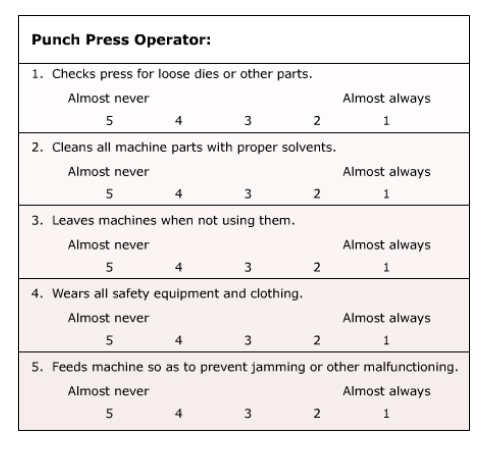
Behavioural Observation Scales (BOS)
Assess performance based on the frequency of use criterion
ex// overcoming resistance to change
describes details of change to subordinates
listens to employee concerns
discusses with employees how changes will affect them
(ex// 1 = almost always never, 5 = almost alwaus)
Performance Appraisal: 360/Multi-Rater Feedback
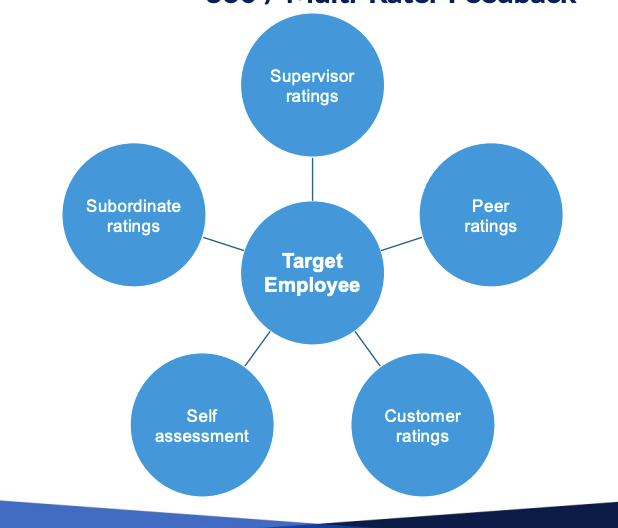
360/Multi-Rater Feedback
Benefits
More complete picture of job performance
Different stakeholders may observe different behaviours
Target may behave differently with different stakeholders
Reduced bias because feedback comes from more than one person
Feedback from peers and subordinates useful for developmental purposes
Limitations
complex and time-consuming
potential for conflicting opinions
same behaviours may be seen as positive by one group and negative by another
peer, subordinate, and self-ratings: not useful for administrative decisions (ex// raises)
peer and subordinate evaluations may jeopardize co-worker relations
Discussion question: among the different raters, who do you think is the best rater for developmental (promotional opportunities)
Performance Appraisal: Factors Distorting Ratings
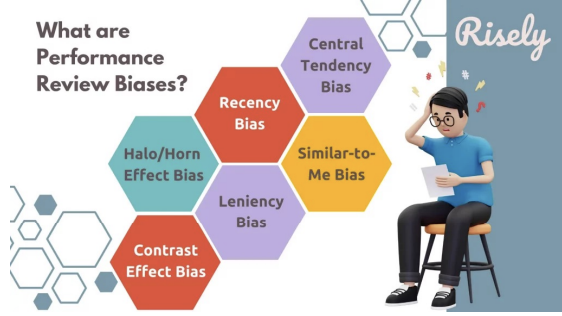
Factors Distorting Ratings
Individual Differences
halo effect
tendency to provide similar ratings across different dimensions
leniency/harshness effect
when ratings are restricted to the high/low part of the scale
central tendency effect
when rater avoid extreme ratings and restricts to the middle of the scale
similarity effect (“similar-to-me” effect)
tendency of rater to inflate ratings when they have something in common with the target
recency effect
ratings are based largely on employees' most recent behaviour
contrast effect
when employee’s ratings are biased upward/downward because of comparison with another person who was recently rated
matthew effect
tendency of rater to use previous evaluations as anchor for subsequent evaluations
1. employee receives same evaluation year in year out
2. if they have done well, will continue doing well; vice versa
Politics Behind Performance Appraisals
Inflation
To maximize merit increase for subordinates
To avoid hanging out dirty laundry
to give the subordinate a break, hoping for improved performance
to avoid a written permanent record or poor performance as part of subordinates file (TD example)
to promote a subordinate “up and out” for poor performance or lack of fit
Deflation
To shock subordinate to higher performance
to teach a rebellious subordinate a lesson (who’s in charge)
to send a message that he/she should be leaving the organization
to build a strong documented record to speed up the termination process
What your boss is really saying
You are doing fine
I have no idea what to tell you. There are things I could bring up, but I don’t have the guts to do it.
Some aspects of your performance need attention
I’m really pissed at lots of stuff you do, but I’m trying to be even about it so you don’t get in my face and spoil my muffin
I’m very dissatisfied with certain things
You’re about to be fired, but I’m giving you a chance to react in a positive way
I hope you take this the right way
I am going to hurt you now and really enjoy it
You need to take more initiative
I would like you to do more of my job for me so I can take a nap every afternoon
You don’t communicate as well as you should
I don’t communicate as well as I should. You have to take the initiative with me.
Keep up the good work
I have nothing more to say, and I want you to like me. Now, get out of here. Please.
Mod 4: Compensation & Benefits
Pick a Starting Salary
Reaching the end of a job interview, the Human Resources Person asked the young MBA fresh out of MIT, “And what starting salary were you looking for?”
The candidate said, “In the neighbourhood of $125,000 a year, depending on the benefits package.”
The HR person said, “Well, what would you say to a package of 5-weeks vacation, 14 paid holidays, full medical and dental, a company-matching retirement fund to 50% of salary, and a company car leased every 2 years - say, a red Corvette?”
The engineer sat up straight and said, “Wow!!! Are you kidding?”
and the HR person said, “Certainly… but you started it”
Compensation: Questions
Questions about compensation
How much should employees be paid?
What is the right pay mix (in other words, base, bonus, benefits)?
Should the compensation package include group performance?
How much emphasis should be placed on keeping pay rates low?
Do you always match market pay?
Discussion Question: How do you negotiate your starting salary?
What is compensation?
What is compensation?
Financial returns employees receive as part of the employment relationship
Creates a willingness among qualified persons to join and do the things needed by an organization
How do we get people to do what we need them to do?
Extrinsic rewards
Factors that satisfy basic human needs for survival and security, as well as social needs for recognition
Intrinsic rewards
Factors that satisfy higher order needs for self-esteem, achievement, growth and development
Reward system
A mix of extrinsic and intrinsic rewards provided to organizational members
Goals of compensation
goals of compensation
effective compensation systems:
attract potential employees to join
retain existing employees
motivate employees to higher productivity
Compensation: Equity Concerns
External equity
alignment (& perceived fairness) of pay relative to the external marketplace
Internal equity
alignment (& perceived fairness) of pay relative to the pay of others within the organization
Total compensation package (compensation mix)
base pay
foundation pay for most employees
performance (variable) pay
designed to reward performance (individual, team, organizational)
ex// merit pay, incentive pay
indirect pay (benefits)
non-cash items or services to satisfy employee needs
ex// pensions, vacation, education reimbursement
total compensation = base + performance + indirect
cash compensation = based + performance —> (cash you “take-home”)
Types of compensation (base, performance, benefits)
Compensation: base, performance, benefits
salary
wages
pay for time off
stock options
incentives
health & dental care
health spending accounts (HSA)
merit pay
protection programs
employee services
pension
cost of living adjustment (COLA)
Methods for establishing base pay
job evaluation
ranking jobs according to value to the firm
points system (“compensable factors”)
market pricing
minimum amount necessary to attract qualified individuals
pay for knowledge (skill-based or person-based pay)
based on skills and competencies acquired
Compensable Factors
Compensable Factors
job inputs (KSAOs)
knowledge (education)
skills (computer, languages)
abilities (cognitive, psychomotor)
other attributes (experience)
job requirements (effort)
mental and physical
job outputs (responsibility)
accountability (ex// # of direct reports), work outcome (quality, mistakes)
job conditions
indoors and outdoors, exposure to extremities, etc.

Factors affecting compensation
legislation
minimum wage legislation
pay equity (equal pay for work of equal value)
labour market constraints
supply and demand of particular occupational groups
product/service market
nature of product or service which organization competes in
ex// top research scientists for pharmaceutical industry
financial constraints
ability to pay
industry, union, sector
Compensation: Benefits (non-financial, indirect)
Reasons for providing benefits:
improve employee satisfaction
meet employee health and security requirements
attract and motivate employees
reduce turnover (ex// staff products)
maintain favourable competitive advantage
compliance with the law
Compensation: Benefits - Flexible benefit plans (cafeteria)
Flexible Benefit Plans (Cafeteria)
individuals can choose the benefits that best suit them
tailor to meet employee changing needs (new family, old age)
cost control (allow employees to buy additional benefits)
greater employee satisfaction (understand cost and benefits)
poor choice on part of employee can result in lower satisfaction
cost with administering a cafeteria plan
Compensation: government-mandated benefits
Canada Pension Plan
Employment Insurance (min. 19 to max. 50 weeks)
Provincial Medical Plan
Vacation and vacation pay in lieu (varies by province)
Workers’ compensation (loss of income due to work injuries)
Compensation Strategies (Policy)
Lead
paying above the average compensation levels in a given market
to compete for talent, make up for inadequate working conditions, tight labour market, skilled workers
Match
paying at average compensation levels in a given market
no difficulty in filling position
Lag
paying below average compensation levels in a given market
financial constraints (ex// WestJet)
Secret Pay vs Open Pay
Secret Pay
equity sensitivity (perception of fairness)
knowledge of pay predicts pay satisfaction more than actual pay received
Open Pay
open communication facilitating trust (perception of fairness)
can be motivating for performance pay
Compensation: what will you do if you are not happy with your reward?
What will you do if you are not happy with your reward?
increase effort/performance
organizational withdrawal (find more rewarding job)
acquire illicit rewards (stealing, counter-productive behaviour)
demand higher pay (how?)
demand reduced job duties
reduce effort/performance (increased absenteeism)
find less demanding job
Compensation Research
background
a company (in Israel) had lost 2 large contracts
In lieu of layoffs, company made temporary pay cuts of 15% in 2 manufacturing plants
research question
would employees perceive the pay cut as unfair and seek to redress via theft?
would the nature of the reason provided for the pay cut influence the degree of theft that would occur?
rationale given for paycut…
In the 2 plants getting pay cut, the explanation for the pay cut varied:
Plant A: Adequate explanation
rationale for cut, management showed remorse
Plant B: Inadequate explanation
rationale was minimal, no remorse
Plant C: Control plant
plant owned by the same company and no cut was necessary
Data collected every 2 weeks, for 30 weeks
10 weeks before, during and after pay cut (pre-post test)
theft measured as shrinkage (% unaccounted for by known usage, ex// sales)
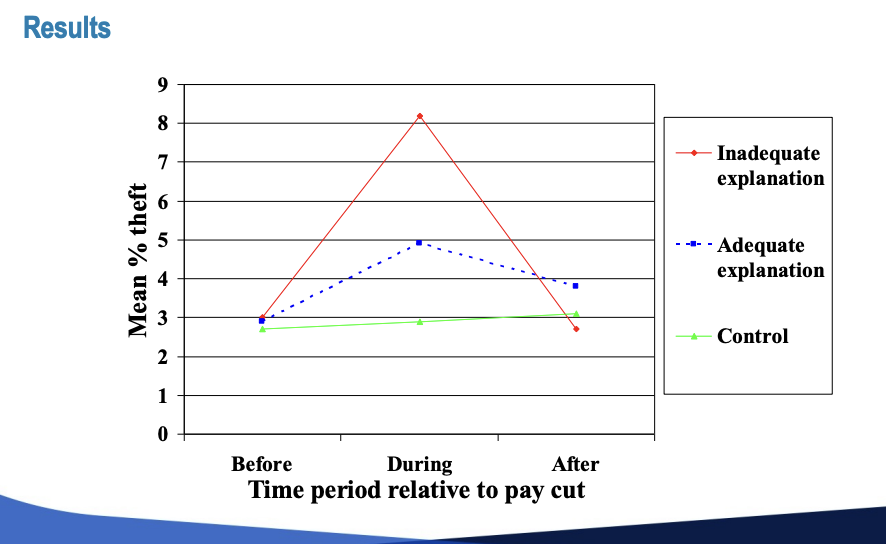
research findings
increase theft during the underpayment period
moderated by the adequacy of explanation
less theft when decision is not biased, provided adequate explanation, management sensitive to employees
conclusion
fairness re pay cuts has a significant influence on employees’ negative reactions toward pay cuts
It’s all about the money
one day an employee sends a letter to his boss asking for an increase in his salary
Dear Bo,
In thi$ life, we all need $ome thing mo$t de$perately. I think you $hould be under$tanding of the need$ of u$ worker$ who have given $o much $upport including $weat and $ervice to your company. I am $ure you will gue what I mean and re$pond $oon.
Your$ $incerely, $asha
The next day, the employee received this letter of reply:
Dear Sasha,
I kNOw you have been working very hard. NOwadays, NOthing much has changed. You must have NOticed that our company is NOt doing NOticeably well as yet. NOw the newspaper are saying the world`s leading ecoNOmists are NOt sure if the United States may remain in recession for aNOther year. I have NOthing more to add NOw. You kNOw what I mean.
Yours truly, Manager
In-class Exercise (Tug-of-War)
In your group (everyone with the same coloured sheet as yours), discuss the following questions:
How would you feel as the agent in your scenario?
What steps would you take to solve the dilemma?
What recommendations would you recommend to the organization to prevent other people from finding themselves in such a predicament?
Now, find someone with a different coloured sheet as yours and discuss the same questions
Debrief:
Describe the feelings of the two different agents
What recommendations would you make to alleviate the conflicts between individual and team performance (Be sure to relate your answer to compensation systems)
Have you found yourselves in similar job situation?
Mod 5: International Human Resource Management (HRM)
International HRM: Human Resource Planning
domestic function
projecting HR supply
forecasting HR needs
identifying the number and kinds of staffing to fill positions
international function
preparation (identifying, selecting, preparing)
repatriation
International Business Trends
Globalization and trade blocks
Top Trading Partners: with Canada
US
China
UK (Post-Brexit)
Mexico
Japan
Germany
South Korea
MNCs expansion to Eastern Europe, Asia, Africa
66% of MNEs confirmed use of expatriate assignments will continue (National Trade Council/Windham International)
What happens without trade?
CGTN video (propaganda about China company)
Shows that everything in day-to-day life is made in China
video of a boy showing how every product he owns and uses in his daily life is “Made in China”
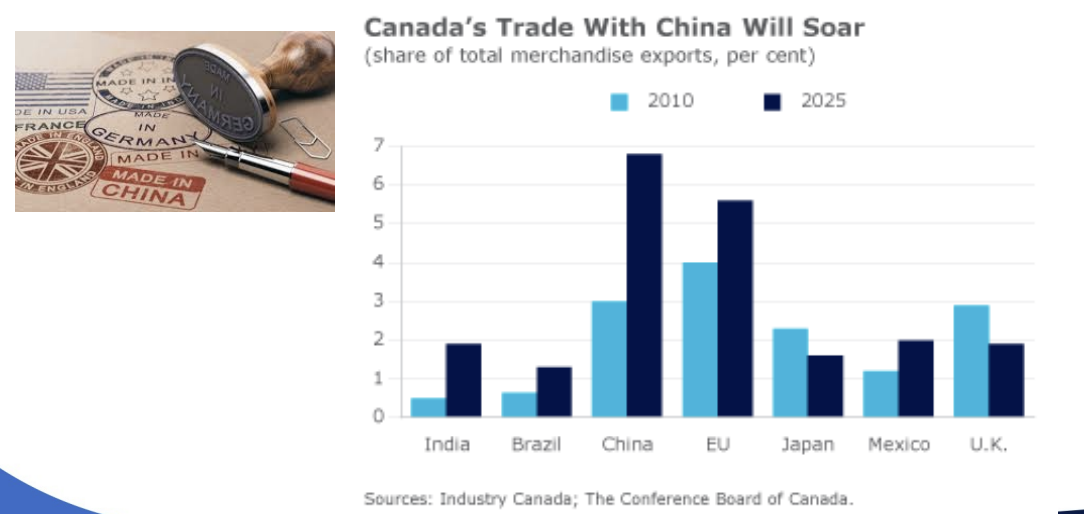
Hofstede’s Dimensions
Hofstede’s Cultural Relativity
Power Distance
Individualism vs. Collectivism
Masculinity vs. Femininity
Uncertainty Avoidance
Long-Term Orientation (Confucian Dynamism)
Hofstede’s Dimensions - 1. Power Distance
The extent to which the less powerful members of institutions and organizations within a country expect and accept that power is distributed unequally
Power Distance at Work
Hierarchy
Centralization
Salary range
Participation
Ideal boss
Privilege & status symbol
ex// Low power distance: (fact check)
Canada
US
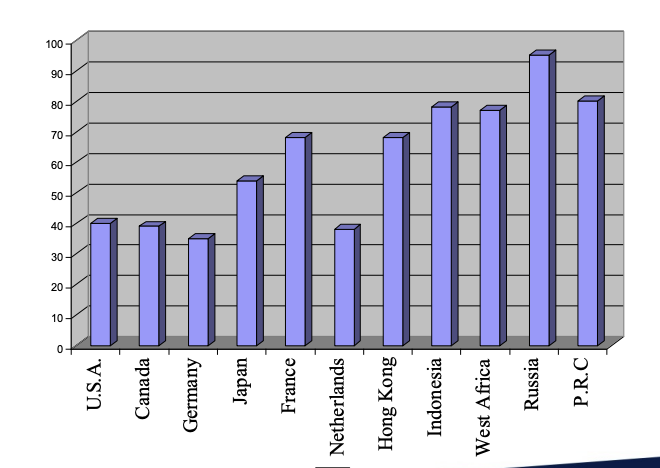
Hofstede’s Dimensions - 2. Individualism vs. Collectivism
individualist societies
ties are loose, and everyone looks out for himself or herself
ex// Countries: US, Canada, Germany, France, Netherlands
collectivist societies
people integrated into strong, cohesive groups; protection is exchanged for loyalty
ex// Indonesia, West Africa, People’s Republic of China (PRC), Hong Kong
(middle: Japan, Russia)
Individualism vs. Collectivism at Work
Employee-employer relationship
Hiring and promotion decisions
Managerial focus
Task vs. relationship priority
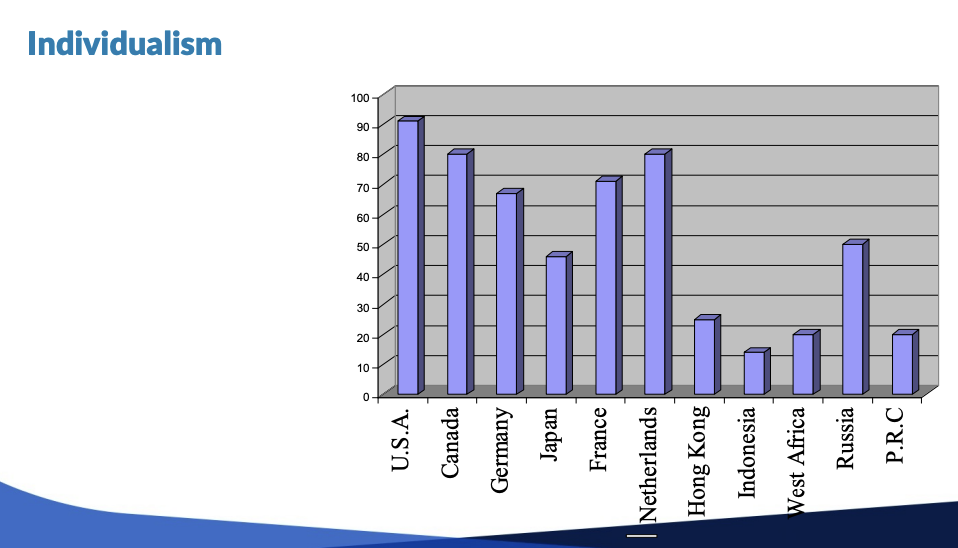
Hofstede’s Dimensions - 3. Masculinity vs. Femininity
Masculine societies
Social gender roles are distinct (men focus on material success; women on quality of life)
Feminine societies
Social gender roles overlap (both quality of life)
Masculinity vs. Femininity at Work
Centrality of work
Ways of managing & decision-making
Femininity: equality, solidarity, quality of work life
Masculinity: equity, compete, performance
Conflict resolution
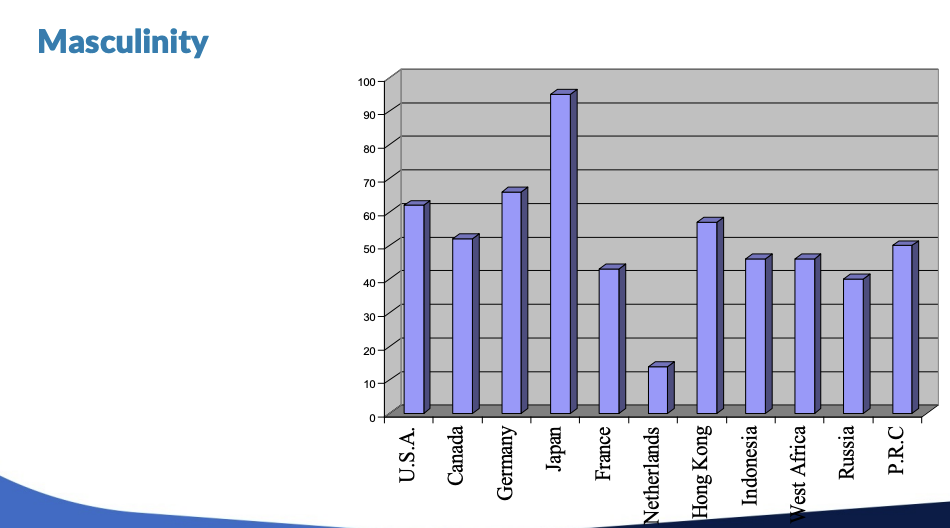
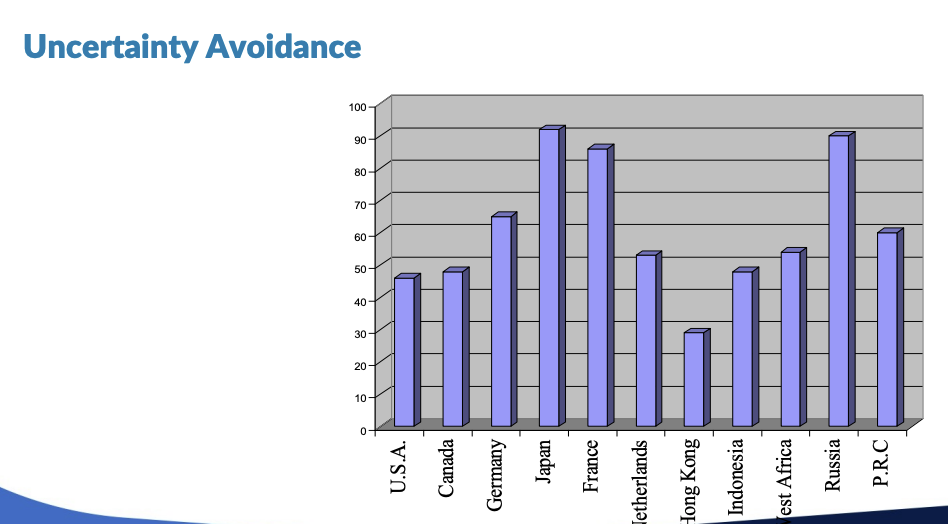
Hofstede’s Dimensions - 4. Uncertainty Avoidance
The extent to which members of a culture feel threatened by uncertain or unknown situations
NOT the same as risk avoidance
Presence of rules
Uncertainty Avoidance at Work
Necessity of rules
Time orientation
Precision & punctuality
Interpretation of “What is different…”
Appropriateness of emotional display
Hofstede’s Dimensions - 5. Long-Term (time) Orientation (Confucian Dynamism)
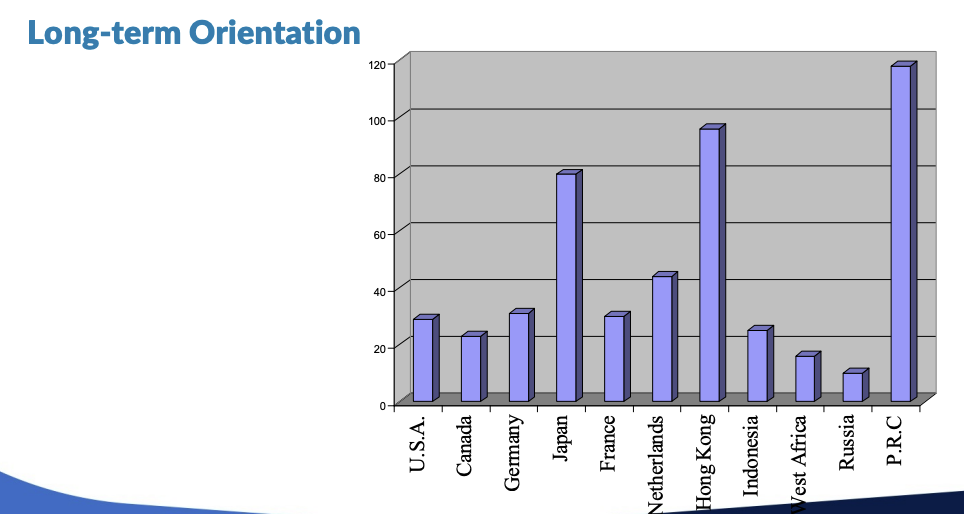
Long-term Orientation (Confucian Dynamism)
The ‘newest’ dimension
Emphasis on long-term vs. short-term orientation
Truth vs. virtue: what one believes vs. what one does
Short-term orientation
Social pressure to “keep up with the Joneses”
Small savings
Expect quick results
Concern with possessing Truth
Long-term orientation
Thrift: being sparing with resources
Large savings
Perseverance toward slow results
Concern with respecting the demands of Virtue
Strategic International Staffing: Staffing Strategies
Staffing Strategies
Parent Country Nationals (PCN)
initial expansion
foreign subsidiary management (senior levels)
Host Country Nationals (HCN)
local requirements, technical/cultural expertise (lack)
Limited HQ experience, control issue
Third Country National (TCN)
cross-culturally competent, proven track record
network and supply of TCNs
Expatriate Assignments
Expatriate Assignments
Types of Assignments
business development/negotiations
technical competence
troubleshooter
country head/manager
Importance
foreign subsidiary management
organizational learning (market, customers, culture)
control (philosophy, processes, control)
management development tool
Expatriate Failures
What is expatriate failure?
inability of expatriate to perform effectively in a foreign country
early departure, recall, incomplete/failed assignments
1980s (Tung 1981)
16-40% terminated pre-maturely
30-50% ineffective
1990s (Swaak 1995, Martinko & Douglas 1999)
25-40% failed
2000s (Harzing 2002, Harzing & Christensen 2004)
20-40%
Strategic Staffing: Why Expatriate Assignments Fail?
Why Expatriate Assignments Fail?
Top 7 Reasons
inability of spouse to adjust cross-culturally
inability of manager to adjust cross-culturally
other family-related problems
manager’s personality/emotional problems
manager’s inability to cope with responsibilities
manager’s lack of technical competence
manager’s lack of motivation to work overseas
Strategic Staffing: Financial and Emotional Cost of Expatriate Failure
Financial and Emotional Cost of Expatriate Failure
Cost of Expatriate Assignment
typically 2-5X cost of expatriate salary for training, housing, cost of living allowance (COLA), schools, and taxes
translates into USD 600K-1M for an executive with basic compensation of USD 200K (NTC/Windham Survey)
Intangible costs
lost business opportunities
damaged company reputation
weakened relationships with foreign partner/government
expatriates’ career (emotion, self-esteem)
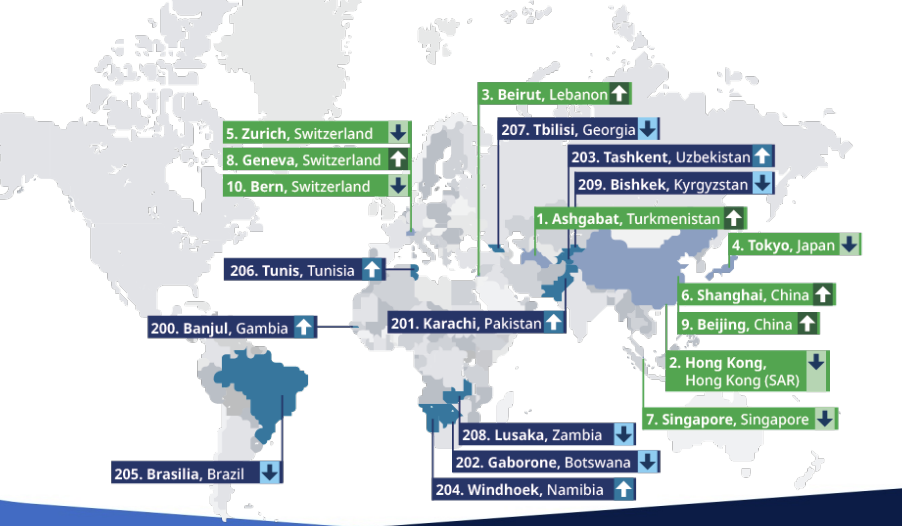
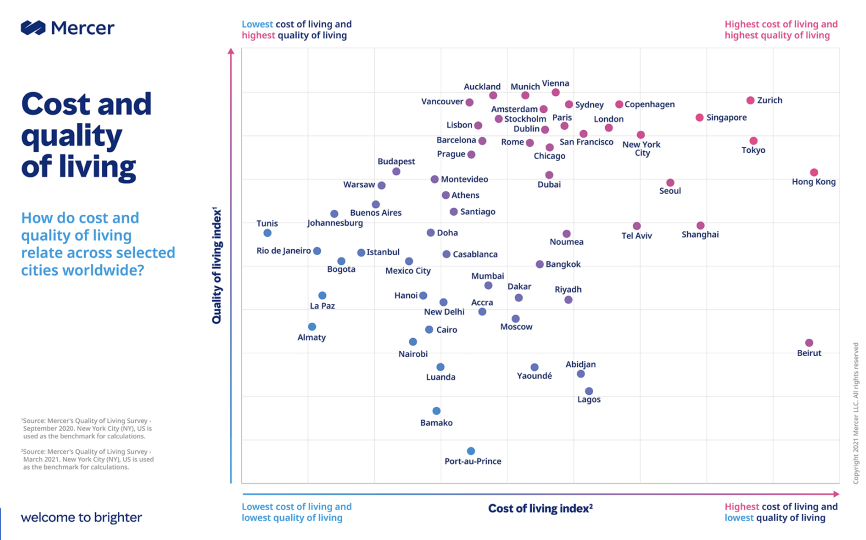
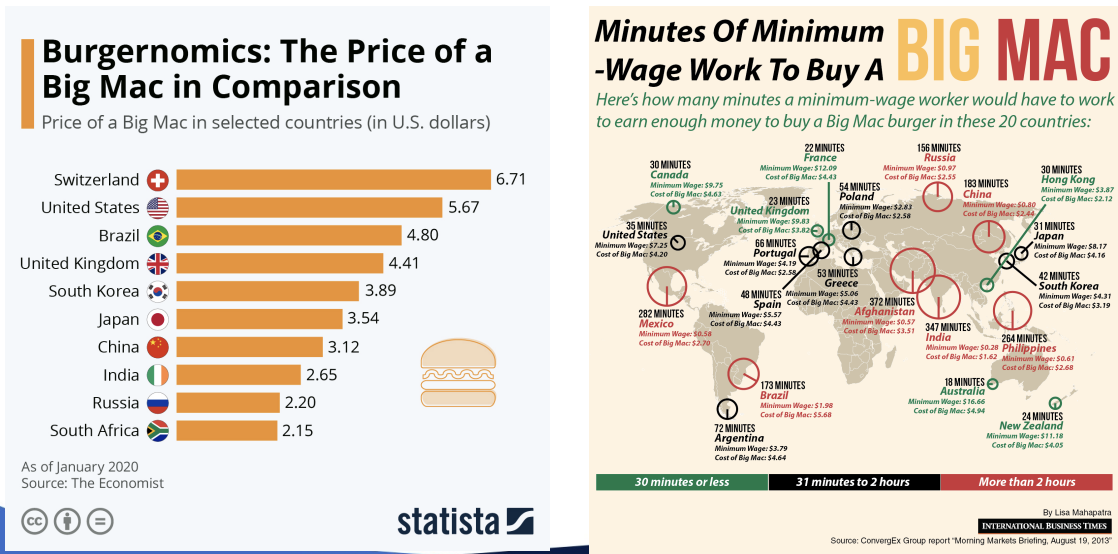
Cost of Living Survey (Mercer)
Big McCurrency and the Cost of a Burger
Cross-Cultural Effectiveness
general adjustment
general living in the host country
interaction adjustment
ability to interact with HCNs (host country nationals)
work adjustment
ability to carry out duties and perform in the host country

Strategic Staffing: Enhancing Expatriate Success
Enhancing Expatriate Success
Recruitment and Selection
identifying candidates who are willing and able to go (Big 5)
develop candidates
local laws (ex// “Gaijin” in Japan)
Training
language skills
cross-cultural competency, sensitivity training
assigning mentor
Compensation
salary, goods & services, housing, taxes, education, shipping of personal effects
home-based policy, host-based policy, currency
COLA, isolation/hardship pay
Length of Assignment
long enough to accomplish goal/attain proficiency but not “go local”
Malcolm in the Middle: In-class Exercise
What are the most important concerns for your family?
What information would you need to make a decision?
What can your employer do to make the transition easier: (1) to go alone, (2) with the whole family
What can the employer do to enhance the success of the your assignment abroad?
Mod 6: Employment Standards & Employee Relations/Rights
Employment Standards Act (2000)
Purpose
provides the minimum standards for most employees working in Ontario
sets out the rights and responsibilities of employees and employers in ON workplaces
Covers
hours of work, rest
wages
overtime pay
pregnancy/parental leave
sick leave
family/bereavement leave
vacation
public holidays
termination and layoffs
severance
equal pay for equal work
Employment Standards Act (2000): More Details
minimum wage rates
general: $17.60/hr (incl. liquour servers)
students (<18): $16.60/hr

