APUSH Period 2 Vocabulary: Key Concepts and Themes
 Call Kai
 Learn
Learn Practice Test
 Spaced Repetition
 Match
Match Flashcards
 Knowt Play
1/26

There's no tags or description
Looks like no tags are added yet.
Name | Mastery | Learn | Test | Matching | Spaced | Call with Kai |
|---|
No analytics yet
Send a link to your students to track their progress
27 Terms
Joint Stock Company
A company whose stock is owned jointly by the shareholders.
Natural law
Natural law is a theory that asserts certain rights or values inherent by virtue of human nature and can be universally understood through human reason.
Glorious Revolution
The Glorious Revolution was an important event in English history where the Catholic King James II was overthrown and replaced by his daughter Mary and her husband, William of Orange.
Separatists
A separatist is a person or a group who advocates for political, ethnic, religious, or any other form of separation from a larger entity, such as a government.
House of Burgesses
The House of Burgesses was the first democratically-elected legislative body in the British North American colonies.
Royal Charter
A Royal Charter is a formal grant that is issued by the monarch under royal prerogative as letters patent.
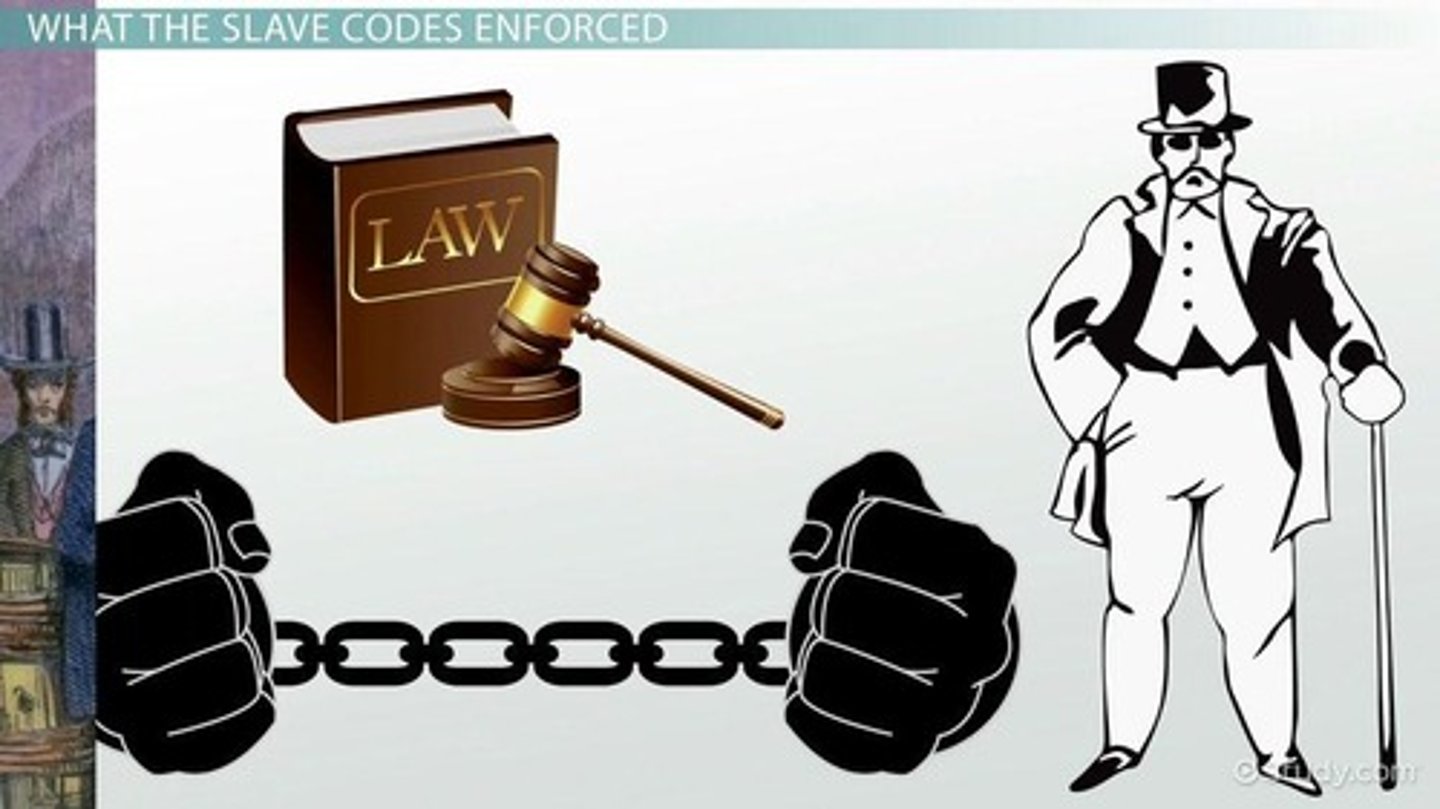
Slave Codes
The slave codes were laws relating to slavery and enslaved people.
Huguenots
A Huguenot was a French Protestant during the 16th-17th centuries who suffered persecution at the hands of the Catholic majority.
Squatter
A squatter is someone who occupies a vacant house or building without the owner's permission or any legal right.
Indentured Servitude
Indentured Servitude is a system where a person works for a master for a set period using a contract, typically to pay a debt for their passage to a new country.
Virginia Company
The Virginia Company was a joint-stock company founded by King James the first in the year 1606 to found and finance the first English settlement in North America which was Jamestown.
Predestination
Predestination is a doctrine in Christian theology which is the divine foreordaining of all that will happen, specifically with regard to the salvation of some and not others.
Freemen
A person who is not a slave or serf.
Protestant Reformation
The Protestant Reformation was a religious movement in the 16th-century which ended the church's religious unity in West Europe and in turn, created Protestant churches.
New England Confederation
The New England Confederation was a 17th-century alliance between four Puritan colonies to defend themselves against Native tribes and the Dutch colony of New Netherland.
Massachusetts Bay Colony
The Massachusetts Bay Colony was an English settlement on the east coast of North America around Massachusetts Bay, founded in 1628 by Puritan English colonists.
Dominion of New England
The Dominion of New England was an administrative union of English colonies created in 1686 by King James II to consolidate and reduce colonial autonomy.
Navigation Acts (Laws)
The Navigation Acts were a series of laws made to restrict England's carrying trade to English ships in the 17th and 18th centuries.
Puritans
Puritans are a member of a group of English Protestants of the late 16th and 17th centuries.
Quakers
Quaker is a member of the Religious Society of Friends, which was a Christian movement founded by George Fox around 1650.
Bacon's Rebellion
Bacon's Rebellion was an armed rebellion in the year 1676 by Virginia settlers led by Nathaniel Bacon against the rule of Governor William Berkeley.
Mayflower Compact
The Mayflower Compact was an agreement signed by English Pilgrims aboard the Mayflower in 1620, establishing a form of self-government in Plymouth Colony.
Headright System
The Headright System was a colonial program established in 1618 by Virginia Company which granted land to people.
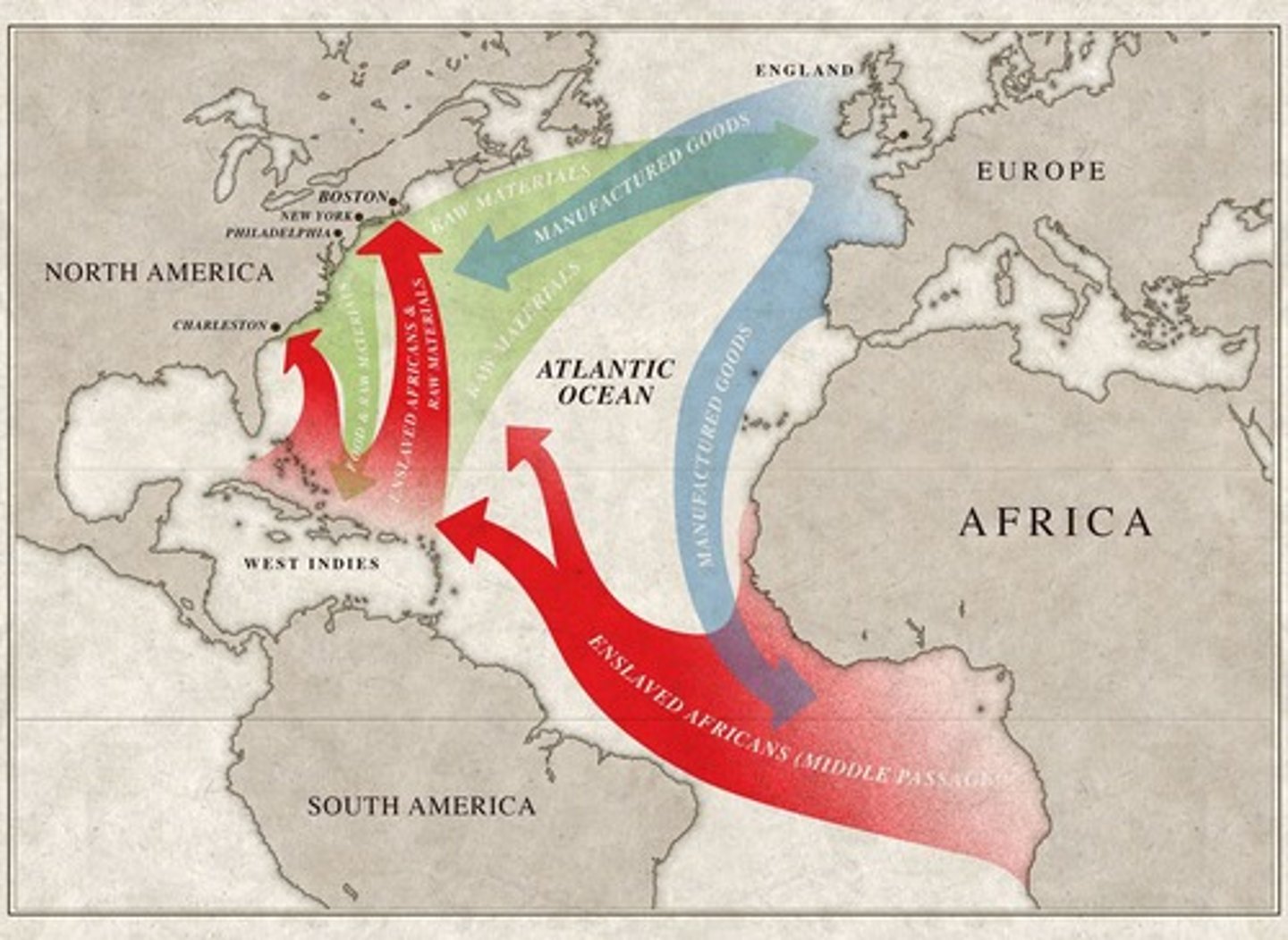
Middle Passage
The Middle Passage of the Triangular Trade was a long and brutal journey which carried enslaved Africans across the Atlantic to the Caribbean and the Americas.
Great Awakening
The Great Awakening was a religious revival in the British American colonies mainly between 1720 and the 1740's which taught people that they had a relationship between Jesus Christ.
Triangular Trade
The Triangular Trade was a three-legged economic model and trade route linking Europe, Africa, and the Americas from the 17th to 19th centuries.
Molasses Act
The Molasses Act was a British law which imposed a tax on molasses, sugar, and rum to the American colonies from non-British sources.

