Trunk + Back Muscle
 Call Kai
 Learn
Learn Practice Test
 Spaced Repetition
 Match
Match Flashcards
 Knowt Play
1/37

There's no tags or description
Looks like no tags are added yet.
Name | Mastery | Learn | Test | Matching | Spaced | Call with Kai |
|---|
No analytics yet
Send a link to your students to track their progress
38 Terms
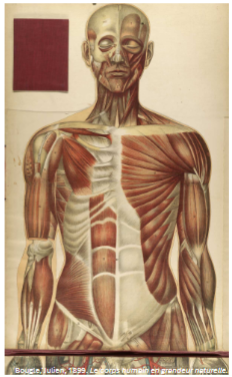
Muscles of the Trunk: how many compartment?
Posterior (back) compartment
2. Anterior chest compartment
3. Anterolateral abdomen compartment
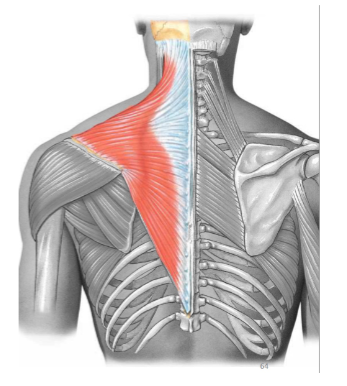
Posterior compartment: muscles of the back exist in how many layers?
• Back muscles exist in 3 layers with largely separate functions
Superficial layer: mostly move scapula and shoulder girdle
Intermediate layer: respiratory
Deep layer: move/stabilize spinal column
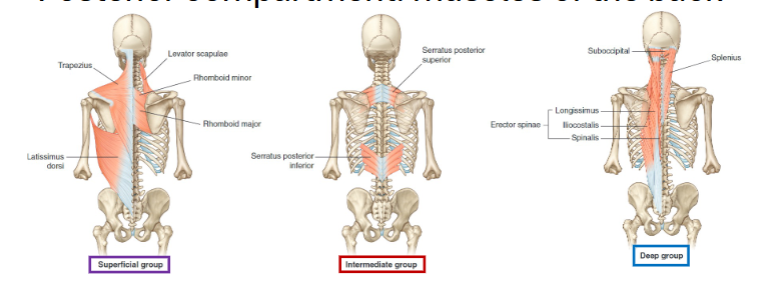
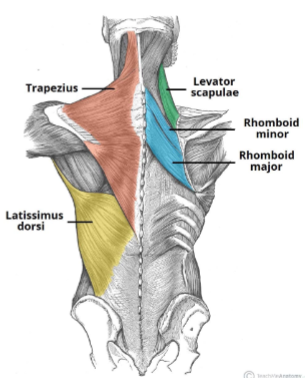
Superficial muscles of the back
- Trapezius, Latissimus dorsi are most superficial
• Then Levator scapulae, Rhomboid major, Rhomboid minor
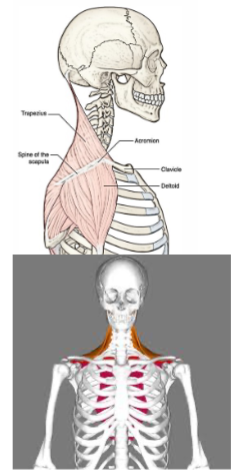
Trapezius: Orgin and Insertion
Origin: Occipital bone, ligamentum nuchae, spinous processes of thoracic vertebrae, thoracolumbar fascia
Insertion: clavicle, and acromion process and spine of scapula
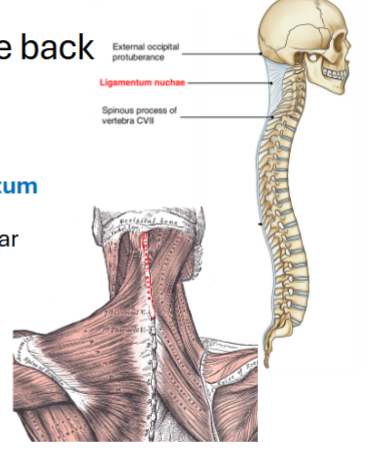
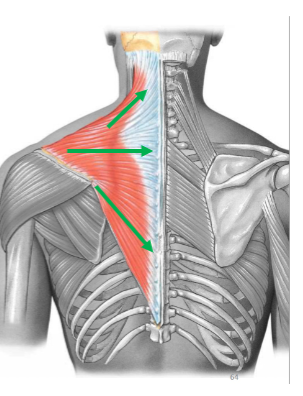
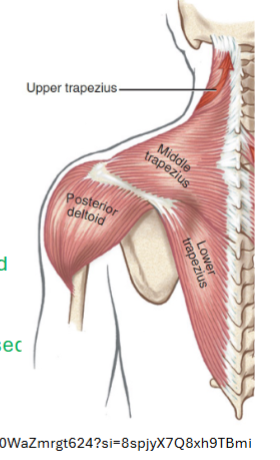
Trapezius: Function
Superior fibers
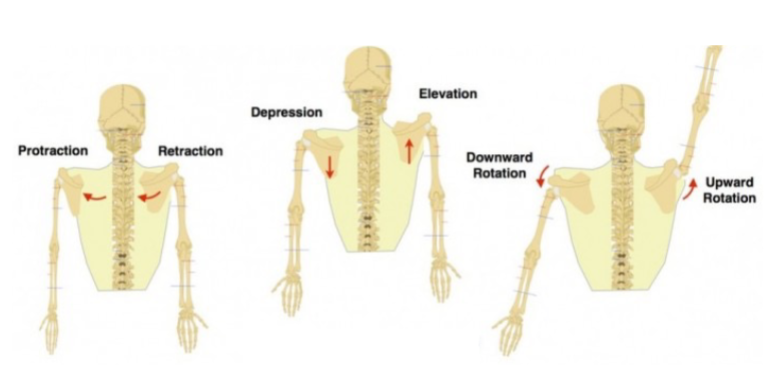
• Draws scapula superomedially (elevation &
retraction)
• Extension of head and neck
• (Unilateral) lateral flexion/rotation of head and
neck
Middle fibers
• Draws scapula medially, rotates as arm is raised
Inferior fibers
• Draws scapula inferomedially (depression)
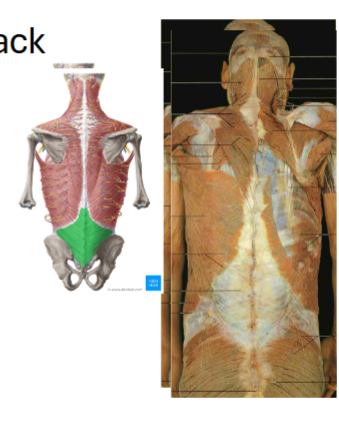
Latissimus Dorsi: Orgin and Insertion
Origin: spinous processes of lower thoracic and lumber vertebrae,
thoracolumbar fascia, ribs 8-12
• Insertion: bicipital/intertubercular groove of humerus
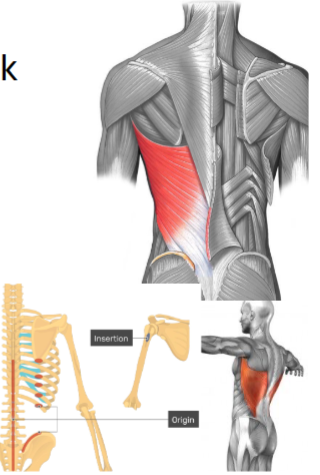
Latissimus Dorsi: Function
Arm/shoulder adduction & extension, some medial/internal rotation of arm
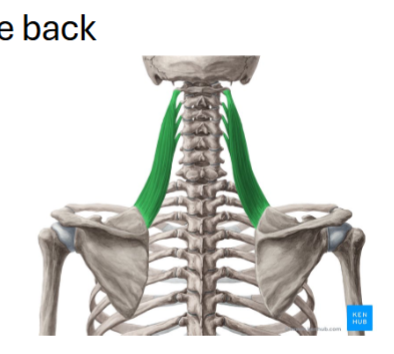
Levator Scapula: OI
Origin: transverse processes of C1-C4
• Insertion: superior angle and medial border of scapula
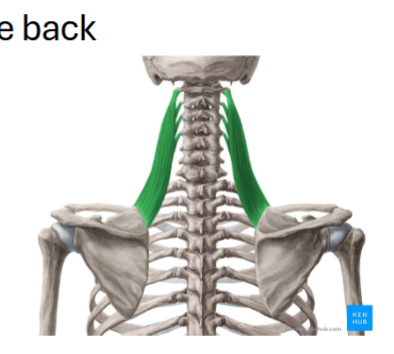
Levator Scapula: F
Elevate scapula, downward rotation of scapula, lateral flexion of neck
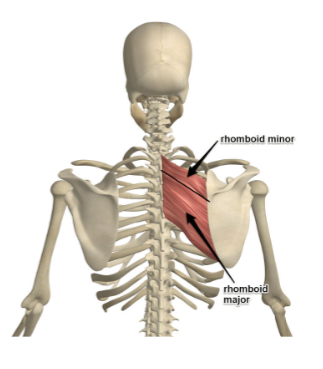
Rhomboid Minor: OI
Origin: C7-T1 spinous process
• Insertion: medial border of scapula
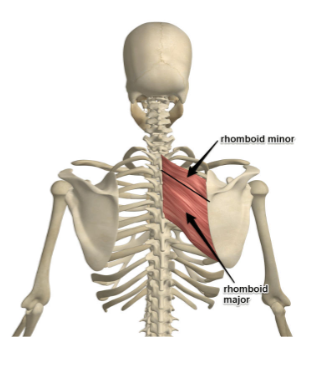
Rhomboid Minor: F
Retraction, elevation of scapula
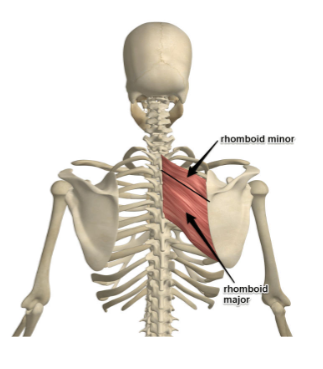
Rhomboid Major: OI
Origin:T2-T6 spinous process
• Insertion: medial border of scapula
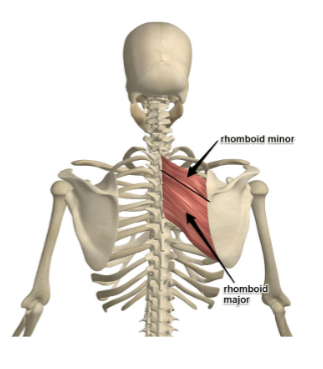
Rhomboid Major: F
Retraction, elevation, downward rotation of scapula
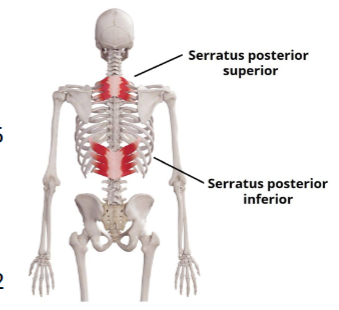
Intermediate muscles of the back
Serratus Posterior Superior
Serratus Posterior Inferior
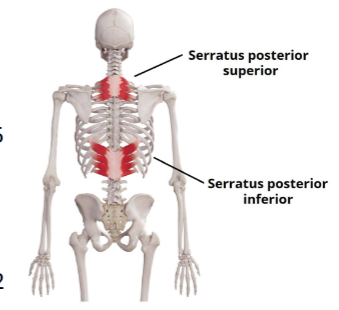
Serratus Posterior Superior
Origin: Ligamentum nuchae, C7-T3 spinous process
• Insertion: superior border of ribs 2-5
• Function: Elevate the ribs
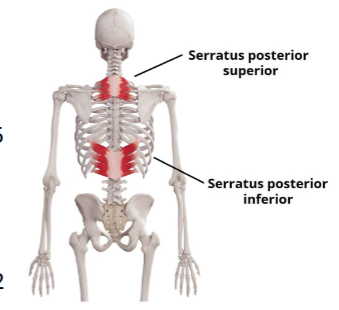
Serratus Posterior Inferior
• Origin: T11-T12 spinous process
• Insertion: Inferior border of ribs 9-12
• Function? Depress the ribs
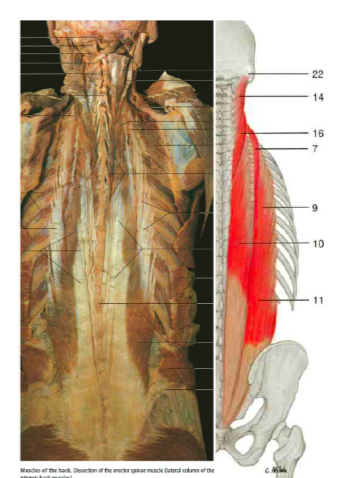
Deep muscles of the back
1. Splenius Capitus
2. Quadratus Lumborum
3. Erector spinae group
• Iliocostalis
• Longissimus
• Spinalis
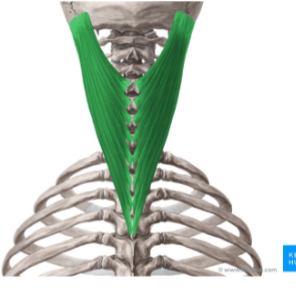
Splenius capitis
• Origin: C7-T3 & nuchal ligament
• Insertion: occipital bone, mastoid process of temporal bone
• Function:
Unilateral: lateral flexion and rotation of head
Bilateral: extension of neck/head
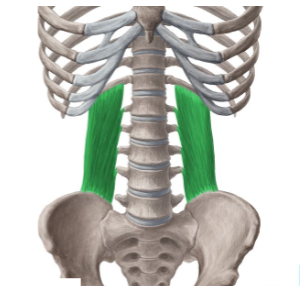
Quadratus Lumborum
• Origin: iliac crest
• Insertion: inferior border of rib 12, transverse processes of vertebrae L1-L4
• Function:
Unilateral: lateral flexion of trunk
Bilateral: trunk extension
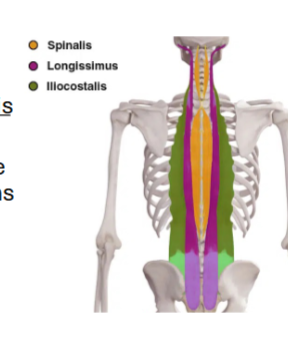
Erector spinae muscles
are a group of muscles: Iliocostalis, Longissimus, Spinalis
• Origin & insertion: (in general) originate from the lumbar & lower thoracic regions and insert onto the upper thoracic and cervical regions
• Function:
Extensors of the spine, maintain posture and balance
Movement of the vertebral column
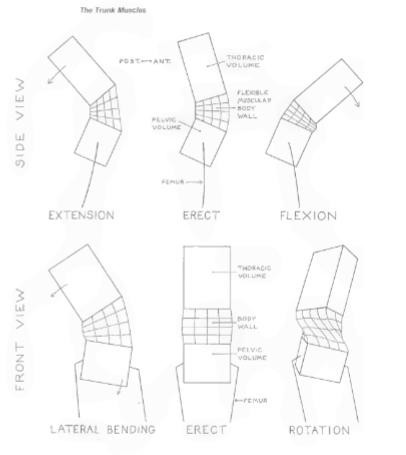
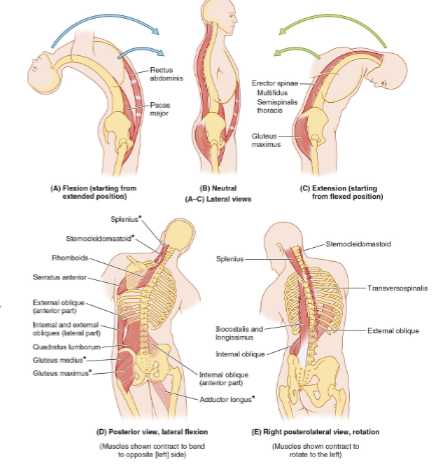
Vertebral column largely moved DIRECTLY by:
Erector spinae group
• Small inter-vertebral muscles (not discussed)
• Low back muscles (e.g., Quadratus Lumborum)
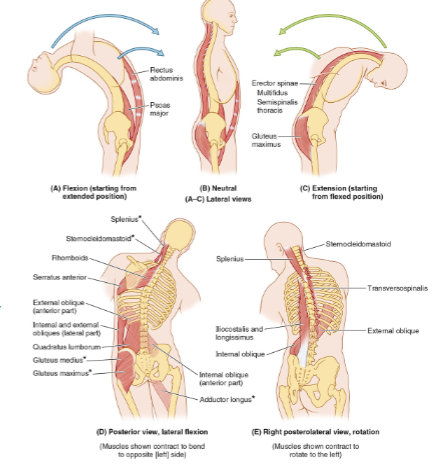
Vertebral column moved INDIRECTLY by:
• Abdominal muscles
• Pectoral girdle muscles
• Pelvic girdle muscles
• Lower limb muscles
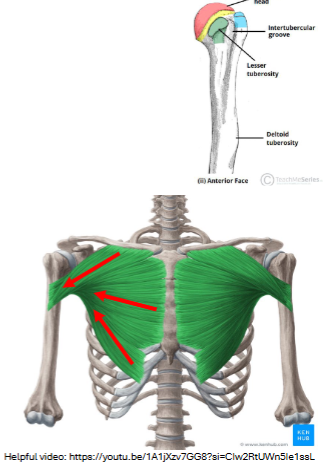
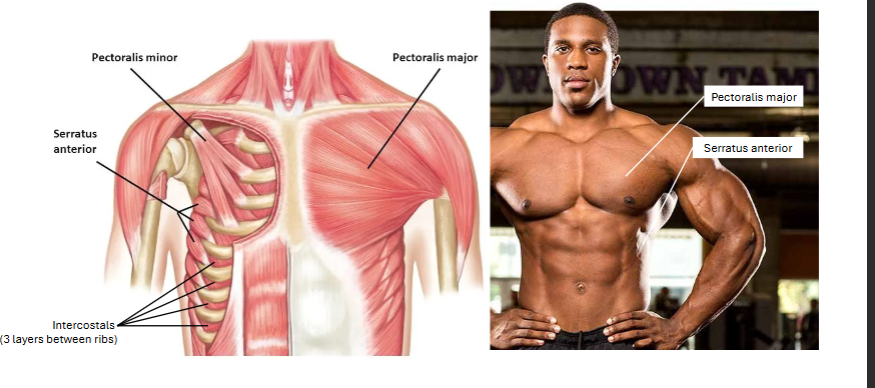
Pectoralis Major
Origin: cartilages of ribs 1-6, sternum, inferior medial portion of clavicle
• Insertion: greater tubercle, intertubercular groove of humerus
• Function: Shoulder flexion, adduction, medial rotation
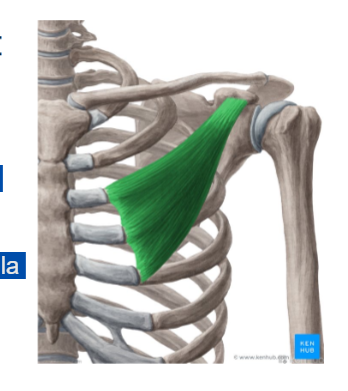
Pectoralis Minor
Origin: anterior & superior surface of ribs 3-5
• Insertion: coracoid process of scapula
• Function:
Scapular protraction, superior rotation of scapula
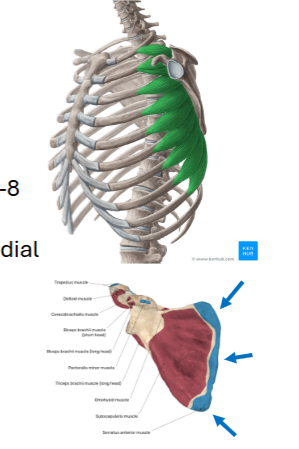
Serratus Anterior
Origin: anterior & superior surface of ribs 1-8
• Insertion: anterior surface of scapula's medial border, superior angle, inferior angle
• Function:
Scapular protraction
MOVEMENT of the back
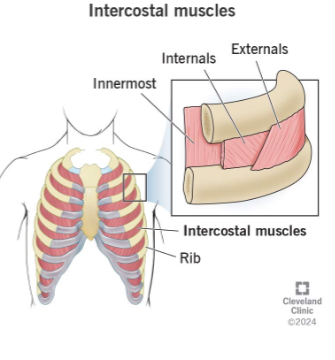
Intercostal muscles
3 layers of muscles between the ribs:
• External Intercostals
• Internal Intercostals
• Innermost Intercostals
• Function:
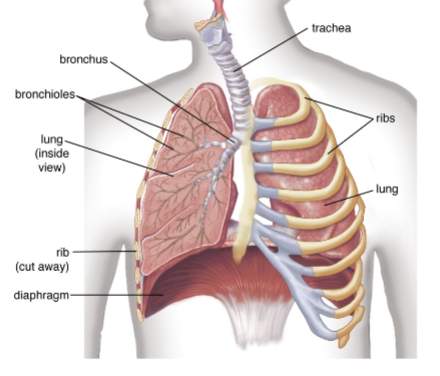
External: elevate ribs (breathing in)
Internal, innermost: depress ribs (breathing out)
Other breathing muscles
Anterior (chest) compartment
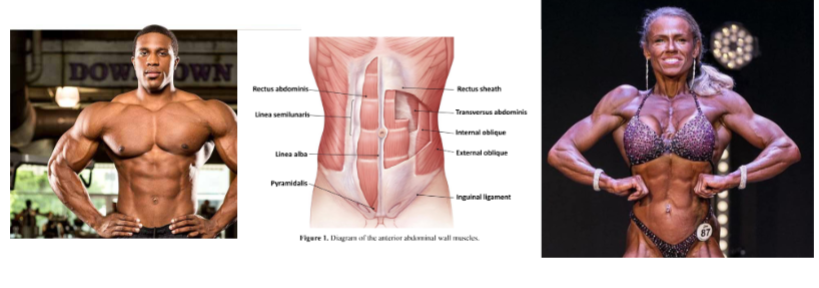
Anterolateral abdomen compartment
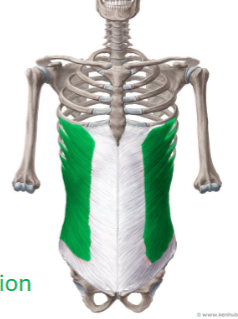
External and Internal Abdominal Obliques
• Attachment points: (generally) ribs, aponeurosis, thoracolumbar fascia
Linea alba, anterior half of iliac crest, pubis, inguinal ligament
• Function:
Unilateral: Trunk lateral flexion, trunk rotation
Bilateral: Trunk flexion
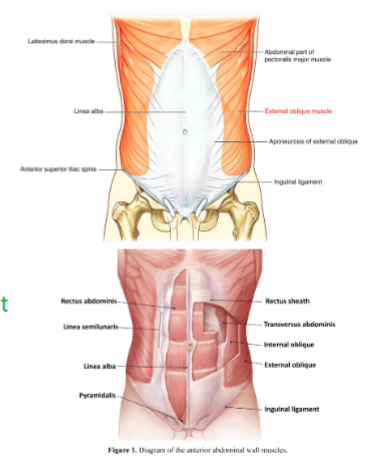
Aponeurosis (Rectus Sheath)
• An extension of the tendons of the abdominal muscles
• Its function is to protect the contents it encloses
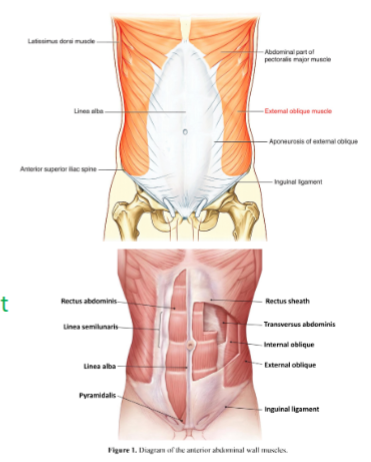
Linea Alba
• Attachment site for multiple abdomen muscles
• A thin band of connective tissue running from from the xyphoid process to the pubic symphysis
• It separates the left and right sides of your rectus abdominis (six-pack abs)
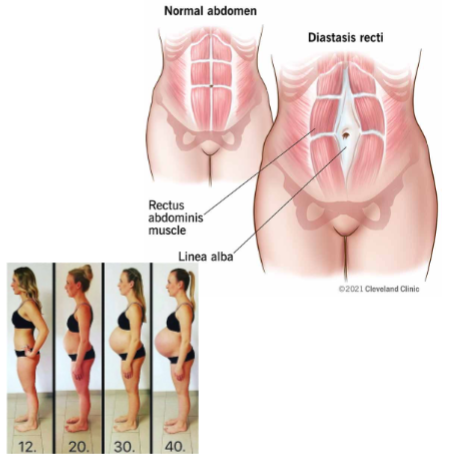
Diastasis recti
• Increased distance between left and right rectus abdominus muscles
• Cause by weakness in ligaments and muscles of abdomen due to
stretching during pregnancy
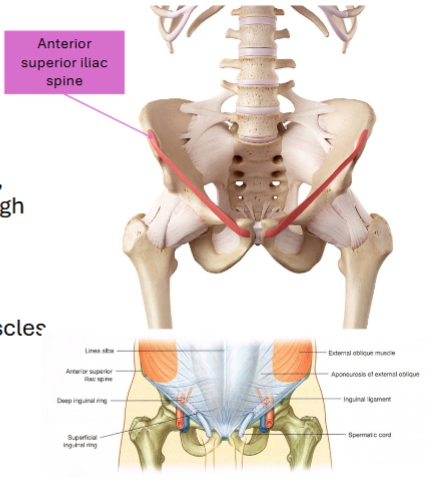
lnguinal ligament
Defines the lower abdomen, before the creases of the thigh
• Separates trunk from leg
• Anchors the abdominal muscles to the hips
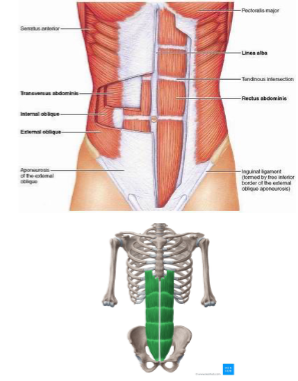
Rectus Abdominus
Origin: pubic symphysis
• Insertion: xiphoid process, costal cartilages of ribs 5-7
• Function:
Trunk flexion
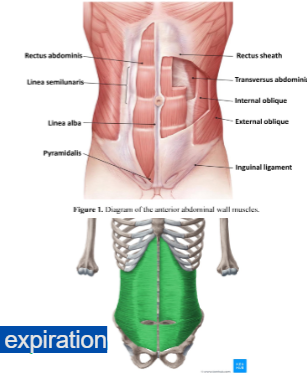
Transverse Abdominis
• Origin: costal cartilages of ribs 7-12, thoracolumbar fascia, iliac crest
• Insertion: aponeurosis, Linea alba, pubis
• Function:
Unilateral: Trunk rotation
Bilateral: compresses organs, posture, expiration

