Chapter 19 - Cognitive Development
 Studied by 0 people
 Call with Kai
 Learn
Learn Practice Test
 Spaced Repetition
 Match
Match Flashcards
 Knowt Play
1/31

There's no tags or description
Looks like no tags are added yet.
Name | Mastery | Learn | Test | Matching | Spaced | Call with Kai |
|---|
No study sessions yet.
32 Terms
Cognitive development
the development of thinking across the lifespan
influenced by evolution (instincts), genetics (different versions of genes), and environment (both physical and social)
initial thoughts are focused on sensation and movement
its a primitive goal-directed behaviour
how many neurons do babies have in the brain
at 40 weeks, brain has almost 100 billion neurons and a convoluted (folded) cortex
teratogens
substances like drugs or environmental toxins that impair the process of development
reflexes
involuntary muscular reactions to specific types of stimulation
rooting
stimulation of the corner of the mouth causes the infant to orient herself toward the stimulation and begin sucking motions
swallowing
infant can swallow, but this reflex is not yet well coordinated with mouth breathing
Moro (startle)
when infants grimace and reach their arms outward and then inward in a protective motion
occurs in response to losing head support or starting stimuli
Babinski
infants toes will spread out and then curl in as a response to being touched on bottom of foot
grasping
when an infants palm is stimulated, they will grasp stimulating object
facilitates holding onto caregiver
stepping
if held so that the feet just touch the ground, an infant will show walking movements, alternating the feet in steps
Types of newborn reflexes
rooting
swalling
Moro
Babinski
Grasping
Stepping
2 types of postnatal brain development
synaptogenesis - formation of new synaptic connections
synaptic pruning - loss of weak nerve cell connections (after synapsis has developed)
gets rid of synapses or unuseful cells
perceptual abilities of infants
infants visual range is about 30cm, but this ability develops quickly
can distinguish contrasts, shadows, and edges
learn which patterns are important
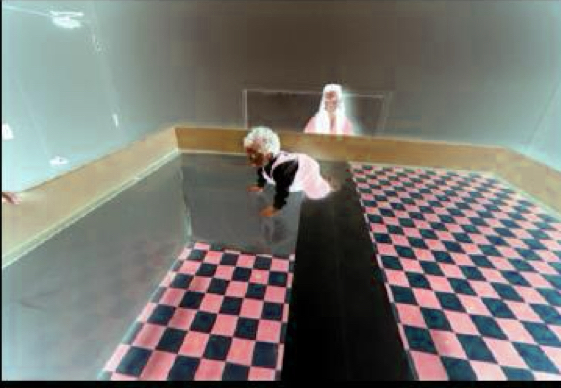
visual cliff effect
babies that don’t know how to crawl won’t care
but babies that know how to crawl will freak out
Motor (movement) abilities of infants
movement abilities are also linked to experience and changes in neural pathways
ex. pincer grasp (picking up dice or grapes)
Learning and Memory in newborns
infants (2-3 months old) show ability to learn responses and remember them for days afterwards
such as kicking legs to move
shows a lot of cognitive ability even though they lack the ability to talk
Newborns and how they are social creatures
many sensory and motoric abilities are learned through imitation
shows that newborns are inherently social creatures
when kids stare at you, they are noting patterns
Piaget and his theory of cognitive development
Cognitive development is a series of stages you go through
errors are just as interesting as correct responses
strategies are not random or meaningless
strategies reflect a predictable interaction between the child’s maturational stage and the child’s experience in the world
Cognitive development
study of changes in memory, thought, and reasoning processes that occur throughout the lifespan
assimilation
people fit new info into their belief systems (mental schemas)
ex. knowing one dog breed and seeing a new dog breed, and categorizing them together as dogs
accomodation
creative process where people modify their belief structures based on experience
(you must modify your schemas)
ex. knowing a dog and seeing a cat, and recognizing them as different things (dog and cat)
sensorimotor stage
from birth to 2 years, infants’ thinking about and exploration of the world are based on immediate senses (sight and touch) and motor experiences (grabbing, mouthing)
“thinking” consists of coordinating sensory info with body movements
purposeful movements are specific movements that will produce specific results
object performance
ability to understand that objects exist even when they cannot be directly perceived
“out of sight, out of mind” view is replaced by more logical thinking as the child leaves this stage
gaining spatial/social awareness even if the thing isn’t in view physically
preoperational stage
(age 2-7 years)
devoted to language, development, using symbols, pretend play, and mastering the concept of conversation
ex. imagination
2 year old kid is able to pretend that a large box is a house, table, or train
limits of peoperational stage
children were egocentric
children at this age could not reason
lacked reasoning to perform actions that could reverse an action
Scale errors - interacting with dolls and toys as if they were the real thing
but disappears around age 2 ½
they lack Conservation - knowledge that quantity or amount of object is not the same as the physical arrangement and appearance of that object
Conservation of substance - thinking change in shape = change in amount
Conservation of number - thinking change in arrangement of rows/columns = change in quantity
concrete operations stage
(age 7-11 years)
develop skills in logical thinking and manipulating numbers (arithmetic)
thinking is still grounded in concrete experiences and concepts
but they can now understand conservation, reversibility, and cause-and-effect
learn to categorize things
from smallest to largest
understand the nature of identity
girl doesnt turn into a boy by wearing a boy’s hat
Transivity - problem solving skills by applying context clues
Allen is taller than Cindy, Cindy is taller than Liam, rank tallest to shortest
formal operations stage
(age 11-adulthood)
development of advanced cognitive processes
abstract reasoning
hypothetical thinking
thinking about the future
problem solving skills improve
core knowledge hypothesis
infants have inborn understanding of some important aspects of their environment
they just lack the language to communicate it
habituation
decreased responding to a repeated presented stimulus
b/c people get tired of seeing the same things over and over again
dishabituation
increasing responsiveness to new stimuli
b/c new stimuli is intriguing
core knowledge hypothesis
infants have inborn abilities for understanding some key elements of their environment
zone of proximal development
ideal development comes from pushing kids just outside their comfort zone to attempt new skills, with guidance from adults
scaffolding
when the teacher matches their guidance to the learner or student’s needs
 Note
Note  Flashcards (36)