bio120
 Studied by 0 people
 Call with Kai
 Learn
Learn Practice Test
 Spaced Repetition
 Match
Match Flashcards
 Knowt Play
1/148

Earn XP
Description and Tags
everything before tt2
Name | Mastery | Learn | Test | Matching | Spaced | Call with Kai |
|---|
No study sessions yet.
149 Terms
Paley’s argument from design
if something has a design, and the design has a purpose, it must’ve been created by someone
nature must have a creator
Lamarke’s theory
organisms can change its form in its life,
offspring will have some characteristics that their parents gained over their lifetime
August Weismann’s Germplasm theory
inheritance only be gametes, soma/body cells do not function as agents of heredity
genetic info cannot pass from soma to gametes and onto next gen
Darwin and Wallace’s theory of evolution
All organisms have descended with modification from a common ancestor (thus, living things change over time)
process leading to evolution is natural selection operating on variation among individuals
Darwin on Lyell’s theory for uniformitarianism
process that shape the eath’’s surfaces are uniform over time
the world is dynamic (changes) rather than static
change builds up gradually by the same mechanisms as in the past
Darwin on Malthus
favorable variations would tend to be preserved and unfavourable ones would be destroyed
not everything born can survive, struggle for existence
Wallace on Malthus
Only the best fitted live, in every gen, the inferior would be killed off and the superior would remain
Darwin’s mechanism of Natural sleection
Natural selection is heritable variation in fitness
Variation
individual variation in a population
heredity
progeny resemble their parents more than unrelated individuals
differential fitness
some forms are more successful at surviving and reproducing than others in a given environment (more fit than others)
fitness is measured relative to ancestor (ancestor value=0)
Important elements of Darwin’s theory
evolution occurs primarily at level of populations (individuals don’t evolve)
variation is not directed by environment (individuals dont induce adaptive variation when needed)
most fit type depends on the environment
“survival of the fitter” evolution works with available variation, will not necessarily achieve perfection
Evidence from geology
earth is very old, immense time for evolution
intermediate forms show transitional fossils linking features of unsimilar relatives (e.g. ungulates and whales)
fossils in younger strata resemble modern species in same region, older strata show more differences
Homology
Similarity of characteristics of two or more species due to inheritance from a common ancestor
Evidence from homology
vestigial traits provide evidence of evolution - have no/reduced function, can only be explained by presence of functional traits in ancestors, followed by evolutionary degradation
homologous structures are found across all organisms, structural similarity reflects common ancestry, homologous structures have evolved to serve diff. functions.
Evidence from biogeography
geographically close organisms resemble each other
different groups of organisms adapt to similar environments in diff. parts of the world
geographically isolated regions have unusual organisms (have species adapted to niches unusual for their group)
evidence from domestication
lots of heritable variation found within species
variation can be selected on, leading to dramatic change over gens.
artificial selection is human imposed compared to natural selection in wild
Genotype
genetic constitution of an organism, defined in relation to particular gene/gene combo
e.g. Aa, AaBB
Phenotype
feature of organism when observed, used when describing trait of organism that varies
e.g. size, fur colour, enzyme activity,
Genome
the entirety of an organisms DNA, includes genes and non coding regions
some organelles e.g. mitochondria, chloroplasts, have their own genome
Key conclusions from mendel’s pea experiments
inheritance is determined by discrete particles, genes
each diploid organism carries 2 copies (alleles) of each gene,
alleles can show dominance/recessivity,
gametes contain only one allele per gene
gametes fuse to make offspring
offspring inherit one gamete (an allele per gene) from each parent at random
Discrete/discontinuous traits
distinct separable group with no in betweens, mendelian genetics
e.g. red or blue flowers
we can measure dominance and recessiveness, spread of alleles/changes in allele frequency
continuous traits
a trait that varies in amount/degree, qualitative genetics
e.g. height
we can measure selection response as change in average trait value
Mutation
ultimate source of genetic variation, caused by random, undirected errors during replication
increases genetic variation
recombination
crossing over of alleles during meiosis, creates new combos of mutations
increases genetic variation
genetic drift
change in frequency of an existing gene variant (allele) due to random change, stronger effect on smaller populations
decreases genetic variation
Negative (purifying) selection
mutations that reduce fitness are removed by natural selection
decreases genetic variation
positive selection
(aka. adaptation)
mutations that increase fitness will eventually become fixed in a population
decreases genetic variation
gen 1: allele is beneficial, favoured by selection —> gen 2: allele is more present —> as more gens pass, if allele is beneficial, freq. will increase until everyone eventually has this allele
fixation
occurs when polymorphic locus becomes monomorphic due to loss of all but one allele (can occur due to natural selection or genetic drift)
Diversified selection
selection can act to maintain diversity over the long term (e.g. heterozygote advantage)
increase (or retains) genetic variation
gene flow
movement of genetic material from one population to another
decreases differences between population
increases genetic diversity (introduces new alleles to your population)
mutation-selection balance
less fit types reintroduced by mutation, selection acts to remove them
classical school model
selection maintaining variation
heterozygote advantage, frequency dependent selection, fitness varies in space or time, (genetic based)
balance school model
classical school model
morgan, muller
low heterozygosity, low polymorphism, wild type is “normal” genotype,
selection is typically negative
Balance school model
Dobzhansky, ford
heterozygote advantage, high heterozygosity, high polymorphism,
selection favours diversity
advantages of studies in enzyme polymorphism
many loci can be examined, can be used in nearly any organism, heterozygotes can be identified
variation is examined closed to DNA level, provides genetic marker loci for other studies
selectively neutral variation
negative selection eliminates detrimental mutations, positive selection fixes beneficial mutations, so the only mutations that create genetic variation are selectively neutral
synonymous substitution
AKA a silent substitution (not always silent tho)
change of a nucleotide base that does not result in the change in the amino acid
nonsynonymous substitution
mutational change of a nucleotide base that causes a change in the amino acid
10x more likely to become fixed than synonymous ones
parthenogenesis
asexual reproduction with an egg without fertilization
clonal propagation
asexual reproduction without an egg
sexual reproduction
2 parents contribute genetic material to offspring
meiotic, reductive division to form gametes, fusion of gametes
asexual reproduction
1 parent contributes to genetic material
no meiotic reductive division, offspring are genetic replicas (clones) of parents
two fold cost of meiosis
sexual females contributes only 50% of gene copies to next gen
transmission bias favours asexuals in competition with sexual females
costs of sex
sexual reproduction breaks up favourable combos of alleles
time and energy to find/attract mates, increased energetic costs of mating, risk of predation/infection, cost of producing males
benefits of sex
favourable combos of mutations brought together more rapidly
harmful mutations can be eliminated
benefits of genetic variation in variable/unpredictable environments (lottery models)
tangled bank hypothesis
may encounter diff. (heterogenous) environments, variation helps to acclimatize
spatial hypothesis
red queen hypothesis
conditions (e.g. temp) can change over time, variation can help an organism survive
temporal hypothesis
Case study: rotifers in diff environments (lec6)
Tested for rates of sex in homogenous and heterogenous environments- was found that there was more sex in heterogenous environments
Supports tangled bank hypothesis
Case study - evening primrose Oenothera
Asexual species are found to be on tips phylogenetic trees, greater accumulation of deleterious mutations w no way to purge bad mutations
outbreeding
mates are less closely related
inbreeding
mates are more closely related
ONLY DECREASES heterozygosity
outcrossing
mating with someone else (either by in/out breeding)
fusion of gametes from 2 parents - derived from meiotic reductive division
selfing (self-fertilization)
mating with yourself, common in plants
fusion of gametes from 1 parent
most extreme form of inbreeding, NOT asexual reproduction
loses 50% of heterozygosity everytime you breed
factors leading to inbreeding
structure of local population enhances mating among relatives
hermaphroditic organisms have potential for self-fertilization
in small populations, even random mating can lead to mating among relatives
genetic effects of inbreeding on population
changes genotype frequencies - increases homozygosity, decreases heterozygosity
does not change allele frequencies
does not change polymorphism
inbreeding depression
reduction of fitness of inbred offspring compared to outcrossed offspring
leads to lower viability/survival and/or lower fertility
inbreeding depression disfavours inbred offspring → favours outcrossed mating systems
genetic consequences of inbreeding
heterozygosity reduced by 50% per generation with selfing
competition between homozygous genotypes and genetic drift of small populations can reduce polymorphism
homozygosity for deleterious recessive alleles results in inbreeding depression
inbreeding depression CAN change allele frequencies (selection acts against deleterious alleles → allele freq. changes)
short term effects of selfing
can spread via natural selection if:
rare pollinators/mates make selfing a better option
transmission advantage
low inbreeding depression
long term effects of selfing
low diversity and inefficient selection
higher extinction rates
outcrossing is more prevalent in macroevolution
selective advantage
amount by which some individuals of a given genotype are better adapted to a given environment, reflects relative differences in fitness
adaptation
trait that contributes to fitness by making organism better to survive/reproduce in a given environment compared to prior ancestral trait
evolutionary process that leads to origin and maintenance of traitsf
fitness
genetic contribution of individuals to next gen, relative to other individuals, as a result of differences in viability and fertility - relative quantity (not absolute survival/offspring number)
natural selection
selection by abiotic and biotic environment, no goal, affects all organisms
artificial selection
selection by humans towards a goal
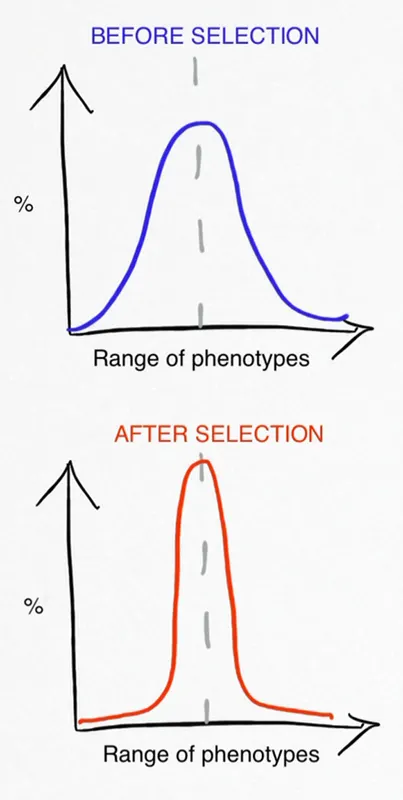
stabilizing selection
average traits are favoured
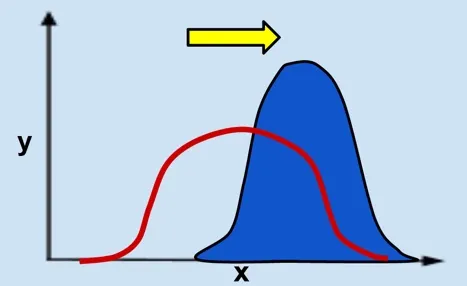
directional selection
one extreme is favoured
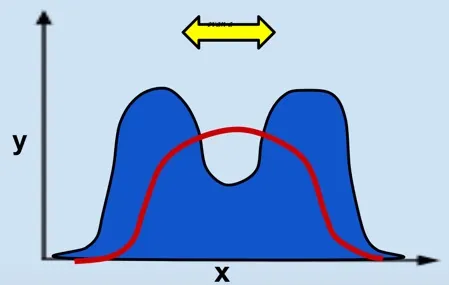
disruptive selection
both extremes are favoured
Case study: peppered moths
light and dark forms exist, dark moths were rare but increased as industrial pollution increased
mechanism of selection due to predation by birds (difference in moth camouflage depended on trunks)
dark moths in polluted areas, light moths in unpolluted areas
after the clean air act, dark moths became rare again
Case study: heavy tolerance of metals in plants
tolerant genotypes will be closer to mines
gene flow between pastures and mines were restricted because difference of flowering time
allowed tolerant alleles to be maintained
tolerance alleles decreased as you moved further away from mine (didn’t need to evolve for tolerance)
Case study: vision in stickleback fish
directional selection (depending on which part of the water)
clear water: against red-shifted vision
black water: for red-shifted vision
on one position along the chromosome, there was no genetic variation - strong directional selection that picked one gene over all others
selective sweep
selection causes a new mutation to increase in frequency so quickly that nearby alleles hitchhike and also increase in frequency
population
group of individuals of a single species occupying a given area at the same time
migration
movement of individuals from one population to another
gene flow
movement of alleles from one population to another, doesn’t require migration/movement of individuals
genetic drift
stochastic (random) changes in allele frequency due to random variation in producing offspring and death
most important when populations are small
population bottleneck
single sharp reduction in abundance, usually followed by rebound
causes loss of diversity
founder events
colonization by a few individuals that start a new population
colonizing group contains limited diversity compared to source population
extreme loss of diversity
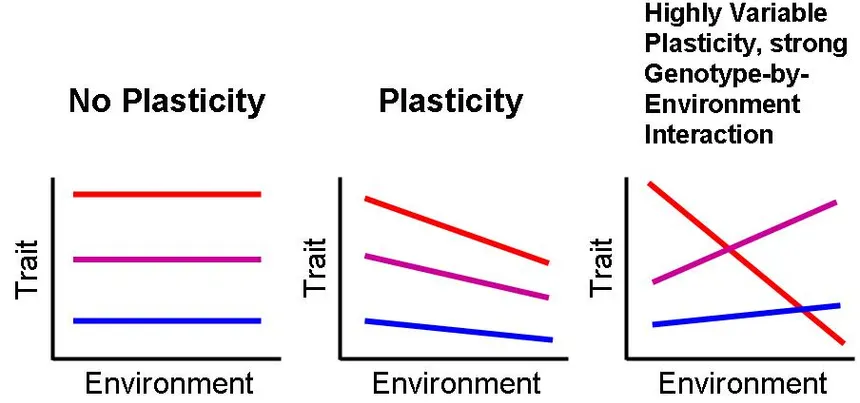
phenotypic plasticity
ability of a genotype to modify phenotype in response to particular environment
occurs through modifications to development, growth and/or behaviour, often an adaptation to unpredictable environments
not all phenotypic plasticity is due to adaptation
reciprocal transplant study
growth of equivalent genotypes in contrasting environment and comparing their relative performance
can separate phenotypic variation into genetic and environmental components
enables measurement of selection against non-local genotypes
can provide evidence for/against local adaptation
darwin’s origin of species
group of organisms that are sufficiently similar in phenotype
biological species concept
group of interbreeding natural populations that are reproductively isolated from other groups
if they cant reproduce they’re not from the same species
reproductive isolation is key to distinguishing species
allopatric speciation
geographic speciation
biological populations of the same species become geographically isolated from each other, preventing gene flow and leading to reproductive isolation over time
sympatric speciation
process where new species evolves while ancestral species continues to inhabit same geographic region
must happen rapidly, much rarer than allopatric speciation
prezygotic barriers
prevent mating or fertilization, no zygote forms
geographical, ecological
temporal
behavioural
mechanical
cellular (sperm-egg compatibility)
Case study: apple maggot flies
Habitat and temporal isolation
arrival of domesticated apples caused host shift, different timing of host plant fruiting caused different timing of fly mating on host plant
gene flow reduced by 94% in sympatry (same region)
postzygotic barriers
prevents proper functioning of zygotes once they are formed
caused by combo of genes with low fitness in the hybrid
arises as an indirect byproduct of evolution acting separately in diff. populations (cannot be directly favoured by natural selection)
intrinsic barriers: inviability, sterility, abnormal development of hybrids
extrinsic barriers: ecological mismatch of hybrid phenotype to environment
Case study: mule
sterile cost of male donkey and female horse
can’t further breed to get another mule due to chromosomal mismatch (62 from m donkey, 64 from f horse)
Case study: genetic distance and fruit flies
the farther the genetic distance, the more reproductively isolated they are
ecological speciation
local adaptation can lead to RI and speciation
distinct evolutionary responses to different selective pressures
local adaptation NOT NECESSARY, but accelerates population divergence
Case study: Benthic vs Limnetic sticklebacks
sticklebacks colonized freshwater lakes
2 morphs evolved, differ ecologically and morphologically
hybrids have lower fitness in each habitat, females prefer males of own morph
adaptive radiation
rapid diversification (ecologic and phenotypic diversity) from an ancestral species into multiple new forms
differ in traits allows for exploitation of a range of habitats and resources
causes of adaptive radiations
colonization of competition free zones
extinction of competitors
key innovation (evolution of a new trait that provides access to new resources
ability for speciation (RI evolves easier in some clades)hy
hybridization
exchange of genes between species as a result of interspecies mating
can sometimes reverse speciation process and merge 2 species into one
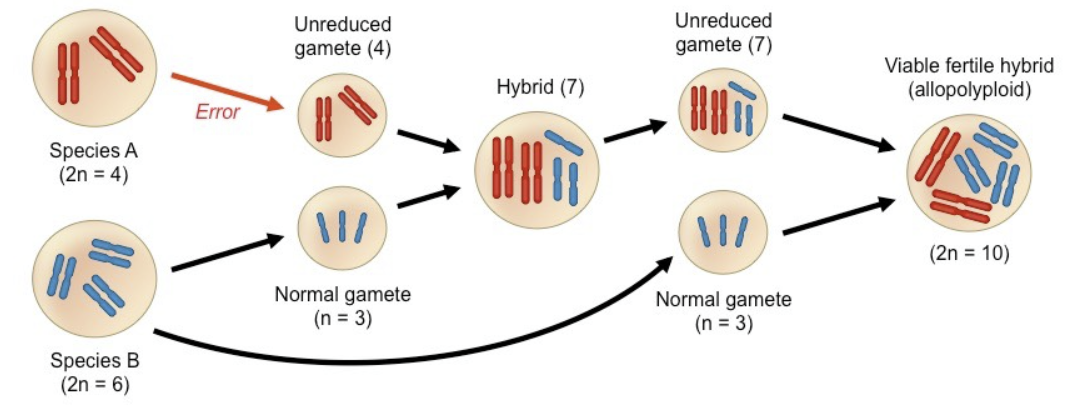
polyploidy
describes an organism, tissue, cell with more than 2 complete sets of homologous chromosomes
are reproductively isolated from parental species - sympatric speciation
exhibits new phenotypes, allows exploitation of new habitats
show hybrid vigour due to heterozygosity (allopolyploids)
allopolyploidy
when a polyploid offspring comes from hybridization between 2 parental species
autopolyploidy
when a polyploid offspring is derived from a single parental species
monophyly
a clade, describes a group made up of ancestor and all its descendants
paraphyly
group made up of an ancestor and some (but not all) of its descendants
polyphyly
group that does not contains MRCA of all members
 Note
Note  Flashcards (20)