Culture and attention
 Studied by 0 people
 Call Kai
 Learn
Learn Practice Test
 Spaced Repetition
 Match
Match Flashcards
 Knowt Play
1/15

There's no tags or description
Looks like no tags are added yet.
Name | Mastery | Learn | Test | Matching | Spaced | Call with Kai |
|---|
No analytics yet
Send a link to your students to track their progress
16 Terms
What is culture?
Way of life of a large group of people grouped in the same geographical location
Behaviours, beliefs, expectations, values and interpretations of symbols (language, emojis) that they agree on (often implicitly), passed along by communication and imitation from one generation to the next
Cultures are dynamic
They change subtly from one area to the next, from one period of time to the next
idea of consitency over time
implicit - sometimes people from their own culture don’t know what aspects are cultural
Does culture affect congnition?
Most of psychological sciences are conducted on WEIRD populations
is that a problem?
How do people from different cultures differ in their cognition?
We ned to be careful not to overgeneralise and stereotype
What we’ll talk about are average differences
Cognition vs performance
experience affects performance in most tasks, but performance is only a marker of cognition (eg. language production)
Lots of IQ tests are culturally specific
Does culture affect low level cognitive processes
Low level vs high level cognition
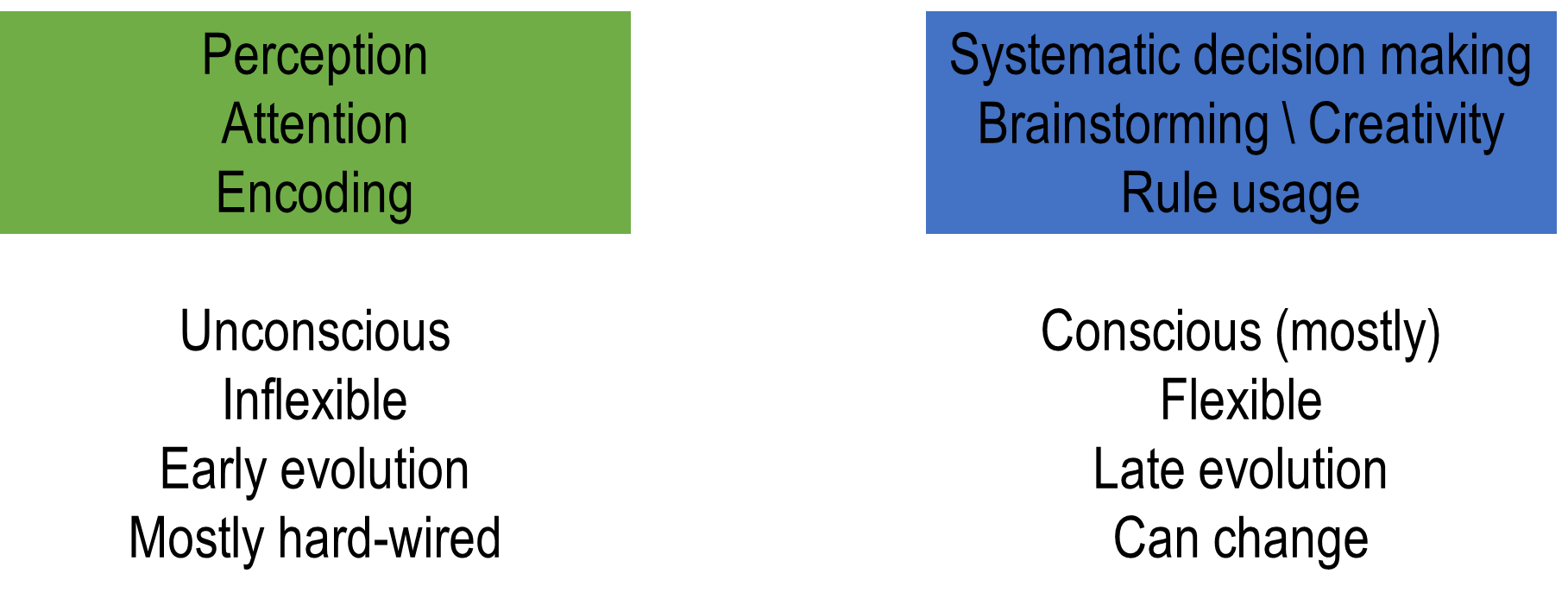
low level - the basis
high level - complex by rely on low level functions
Can culture affect perception?
Some believe that culture affects cognition at its most basic level
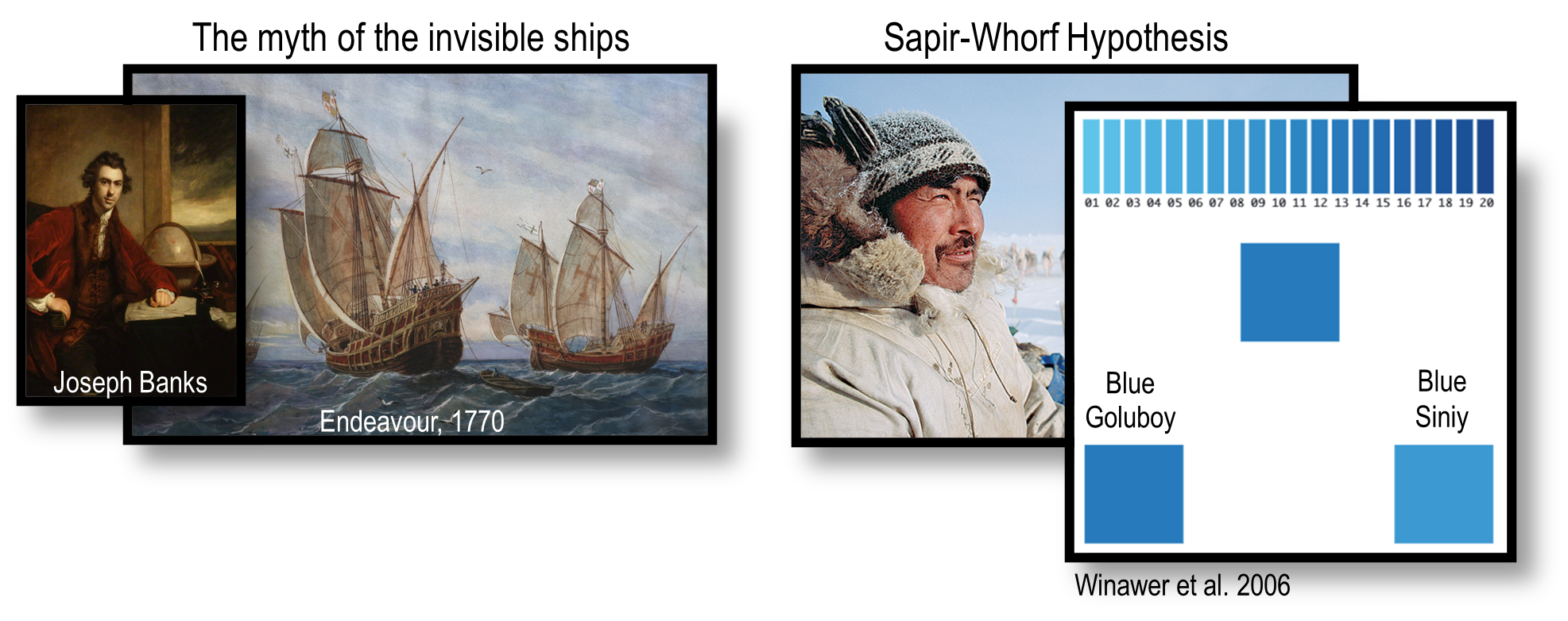
The myth of invisible ships
Christopher columbus ships were not seen coming in as the native americans did not know what the concept of a ship was
this is a myth
when you don’t expect something it is more difficult to notice and see
Sapir whorf hypothesis
language affects all the way down to low level cognition
if you have a different language perception is going to be different around that language
Eg. more words to describe ice in a language may cause them to have a deeper perception of ice
Russian colours
People from a russian heritage or spoke russian were quickers at categorising colours
were they better at perception or categorising?
Can culture affect social attention?
social attention = the priority we automatically give to social stimuli, generally considered to be bottom up
However, top down infleunce and experiences can shape even these processes
Eye contact - western vs east asian cultures
Direct eye contact
encouraged in western societies
may be considered rude in eastern cultures (especially with elders)
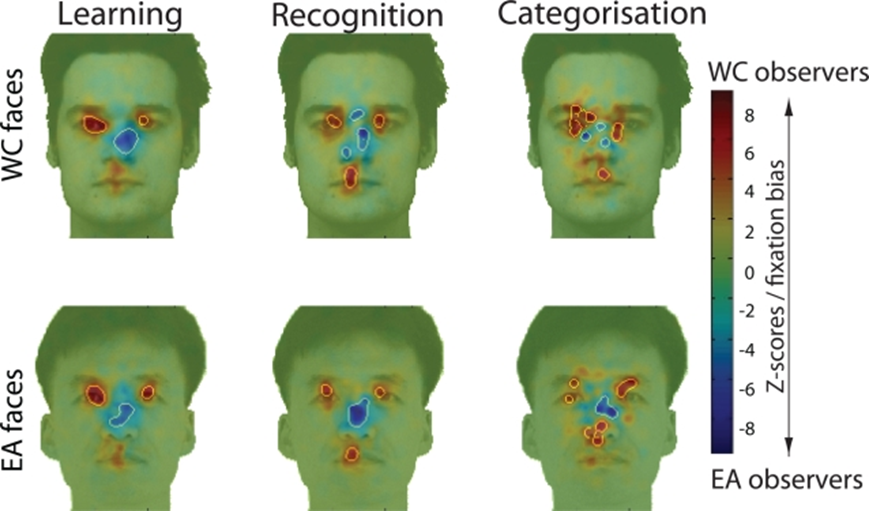
Do these norm differences affect how people use their attention when it comes to looking at faces
WC and EA faces
many different tasks
eye tracking measure
WC - red bits
EA - blue bits
regardless of the race of the face WC looks at peoples eyes and mouths
EA - looked more just below the eyes in the nose area
Not an absolute but a relative measure
This change in cultural norm can change how people scan others faces
Uono & Hietenan study
RQ - does eye contact perception differ in people with different cultural backgrounds?
FInnish (european) vs Japanese (east asian)
Task - is this face looking at you
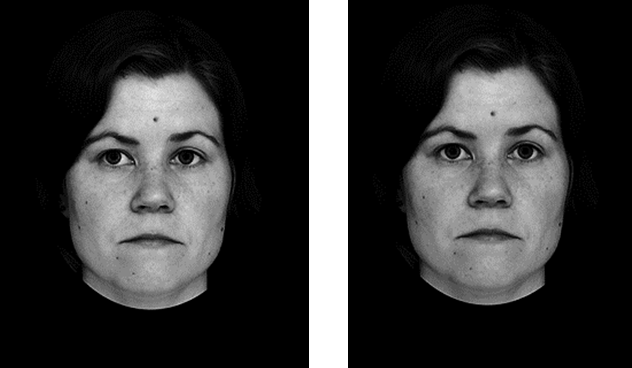
Results
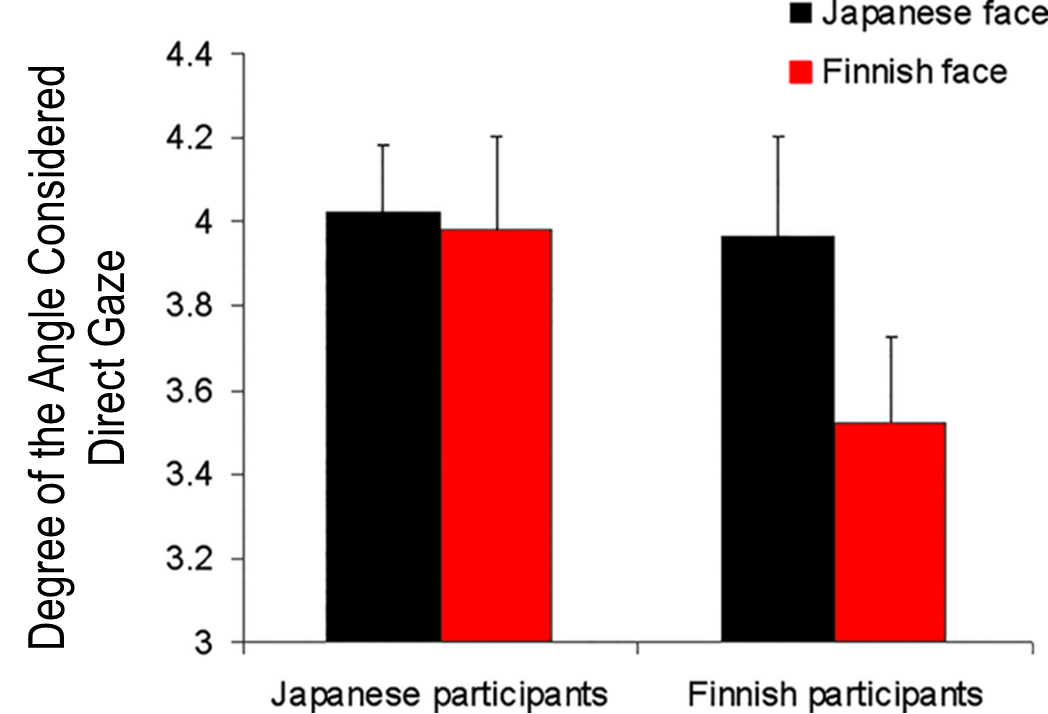
Finnish ppts were more accurate in discerning gaze of finnish faces
Finnish ppts showed an own race effect
better perception for white european faces
Japanese ppts did not show an own race effect
Conclusions
Visual experience with finnish faces throughout development likely led to more effective processing of these faces
Eye contact is quite minimal in Japanese culture so perhaps participants just didn’t have as much experience
Can culture affect attention more generally?
Analytic thinking vs holstic thinking
Analytic - emphasise a linear object-oriented focus
dominant in western europe and north america
focus on the object
Holistic - emphasise a non-linear context oriented focus
dominant in east asian cultures such as China, Korea and Japan
focus on the context / background
Masuda & Nisbett
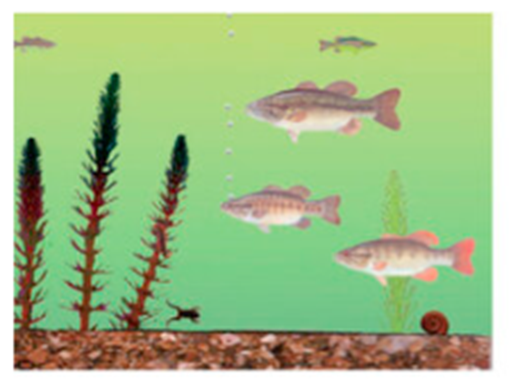
‘I saw 3 big fish and 2 small fish’
‘Some fish were swimming near the ocean floor towards the seaweed. in the back other smaller fish swam away from it’
Finding - japanese ppts were more likely than american ppts to make statements regarding contextual info and relationships
Cultural variation in eye-movements during scene percpetion
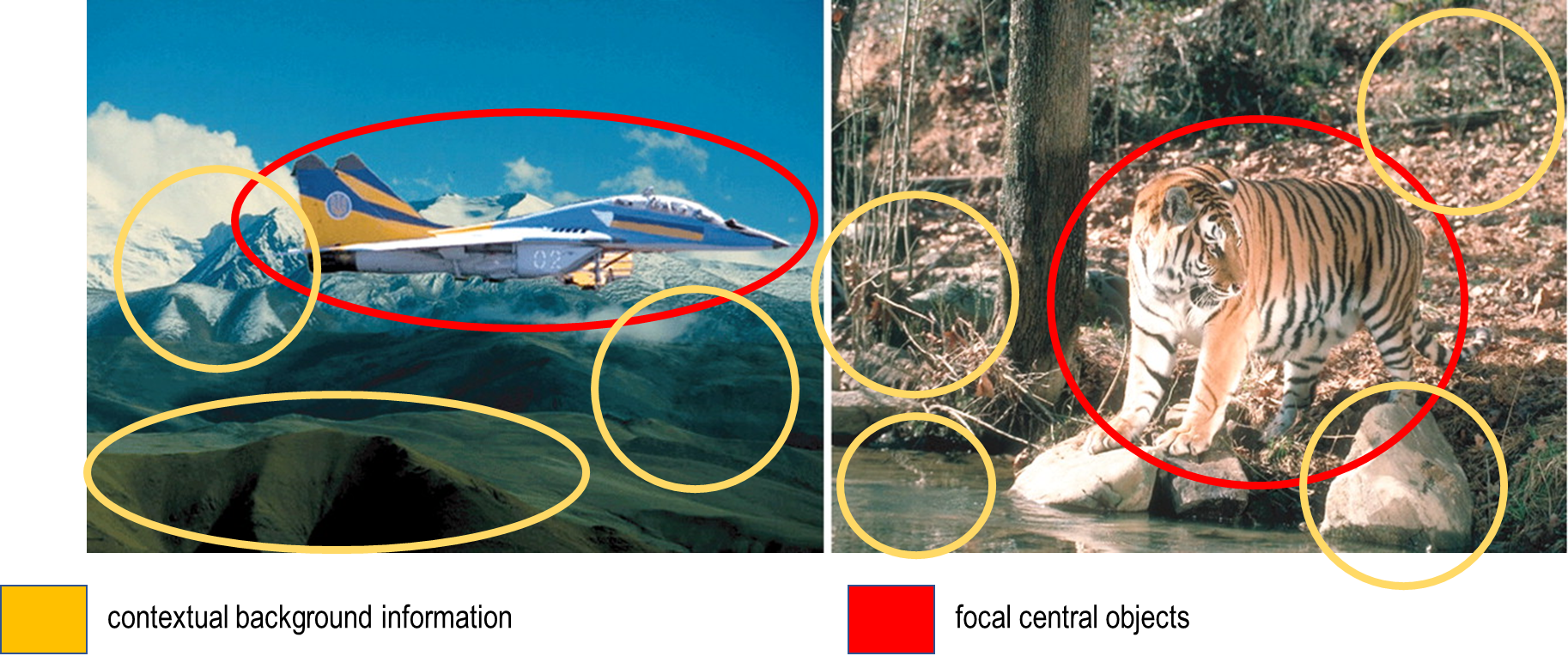
Asked to describe it and given some time to freely watch the picture with no instruction
Looked at differences in eye movements (contextual background info and focal central objects)
Predicted that if culture affects perception and attention then western people will look at the central and east asian will look at the contextual info
Results
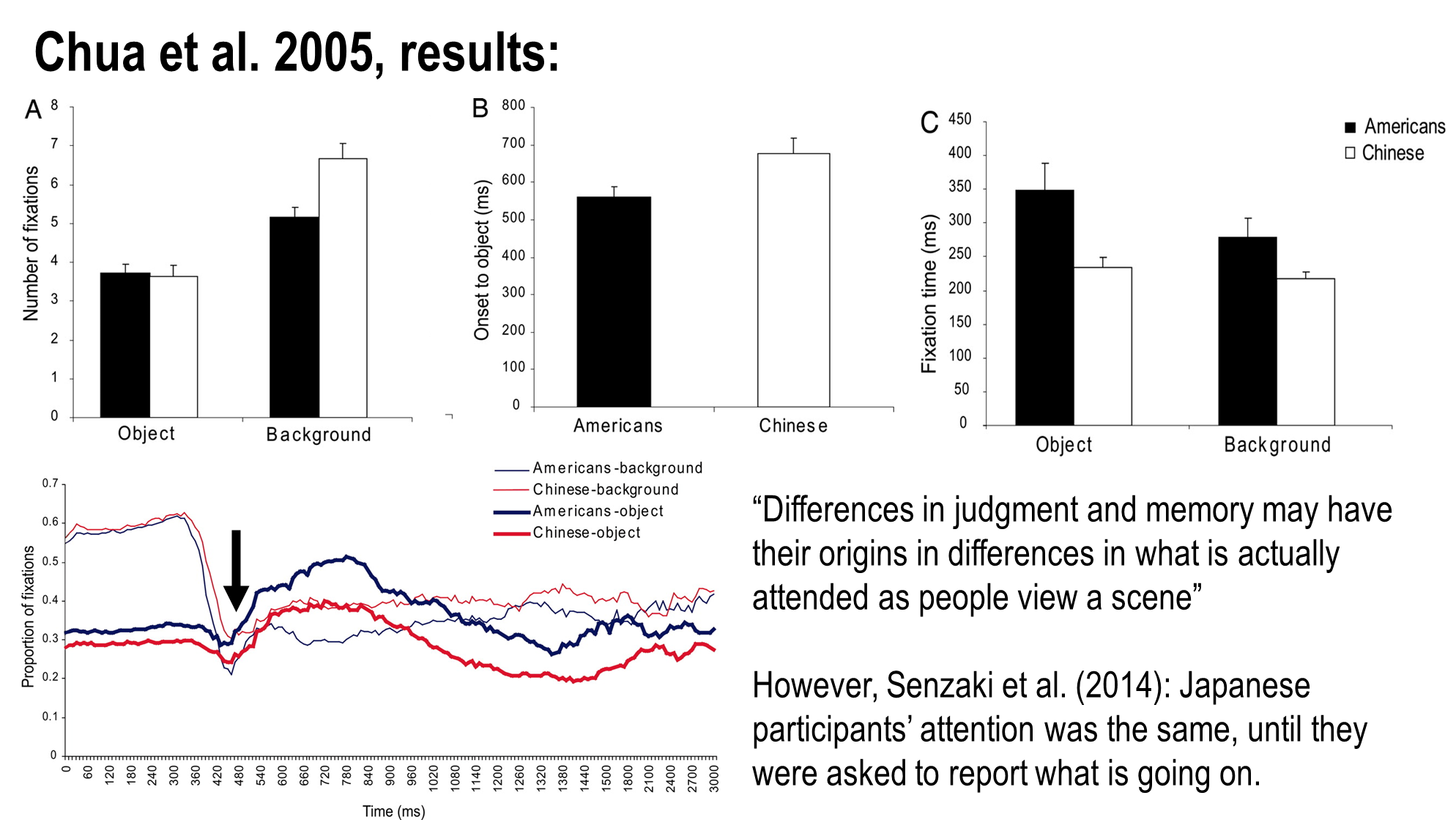
Chinese and american ppts both as likely to fixate on the object and chinese ppts more likely to fixate on the background
Chinese ppts take longer to fixate on the object
Americans spent more time fixating on the object and the background but this differencve was even larger for objects than background
Strong support for cultural differences affecting attention
Plor proportion of fixation not as an average, from the point at which people see the picture
About 500ms pass where american and chinese ppts react in similar ways, for half a second there are no cultural differences and after this you see the split
americans object fixation
chinese background fixation
This initial fixation and attention is the same but cultural differences affect what we prioritise
cultural differences do make a difference but mostly here about the more flexible process of what we want to prioritise at the time
What implications does this have for gaze cueing
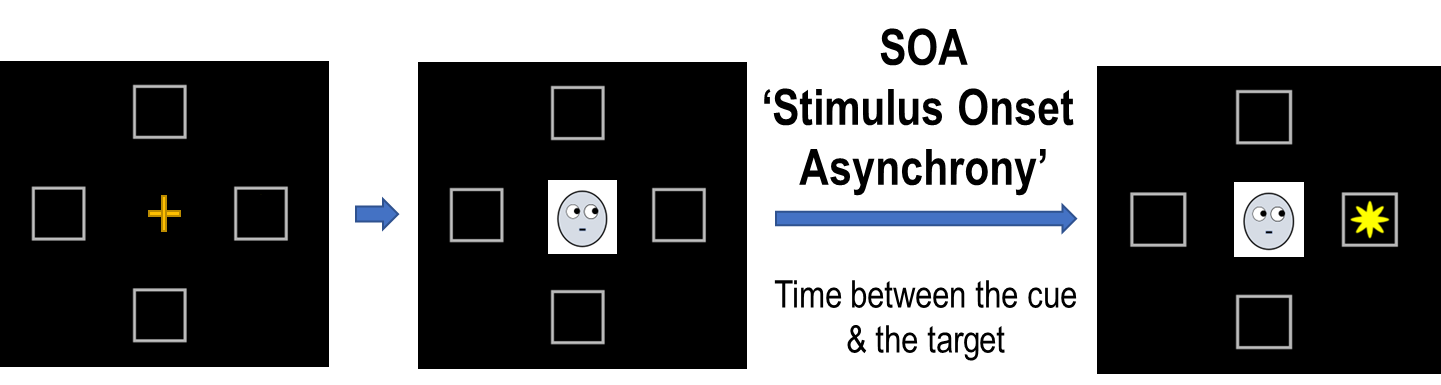
Gaze cueing paradigms typically use short SOAs
Ppts show the gaze cueing effect regardless of if the cue is predictive
BUT what if we used a longer SOA that let the ppts have time to process the contextual info (ie. that the cue is non-predictive)

Conclusion
At longer SOA’s Japanese ppts are better at using contextual info and disengage from the irrelevant gaze
Frame & line test
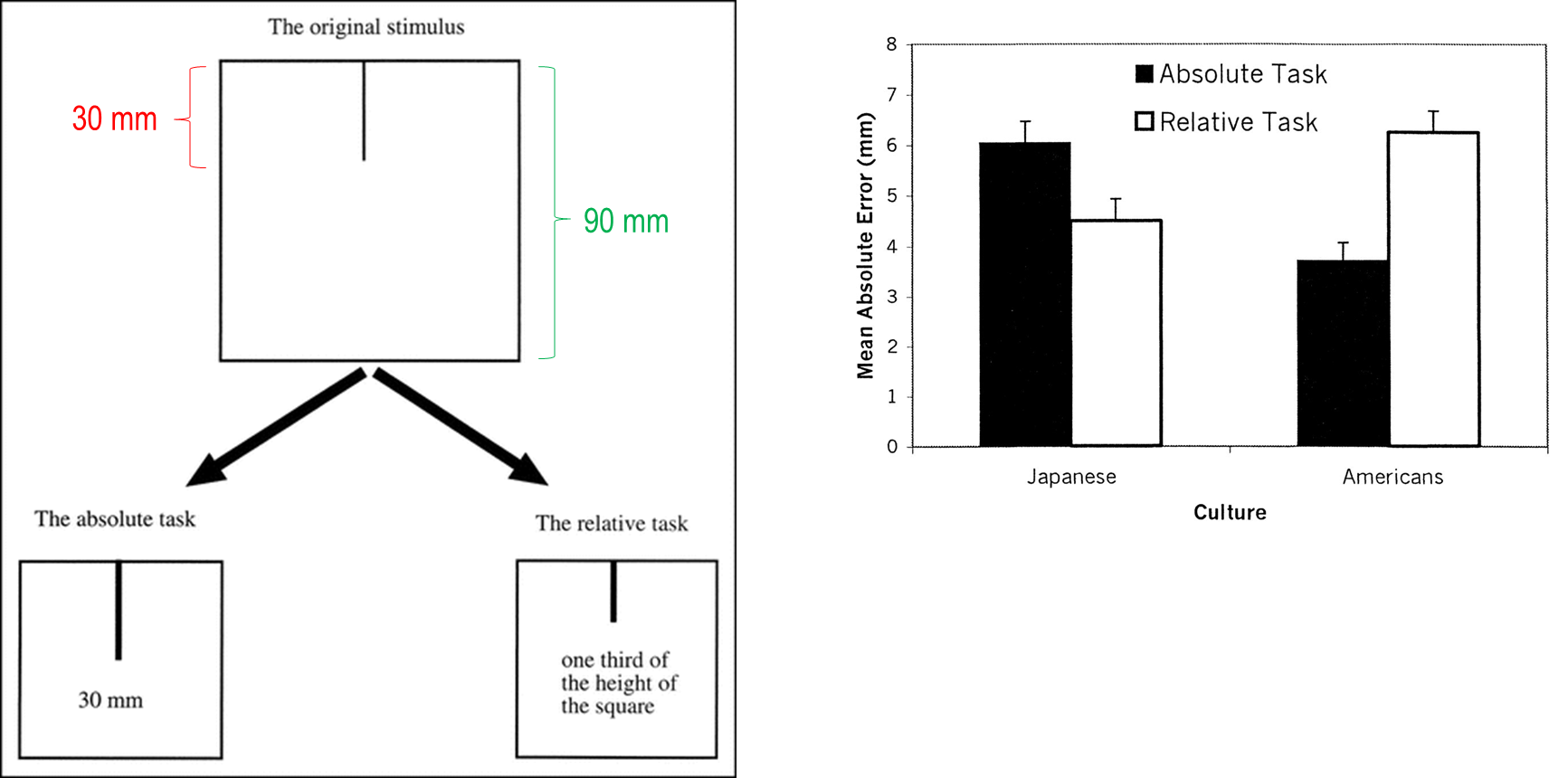
Ppts asked to memorise frame + line within the frame
Absolute task - redraw the length of the line regardless of the box
Relative - recreate the line relative to the overall size
Measured mean absolute error
JPN better at relative task than absolute and vice versa
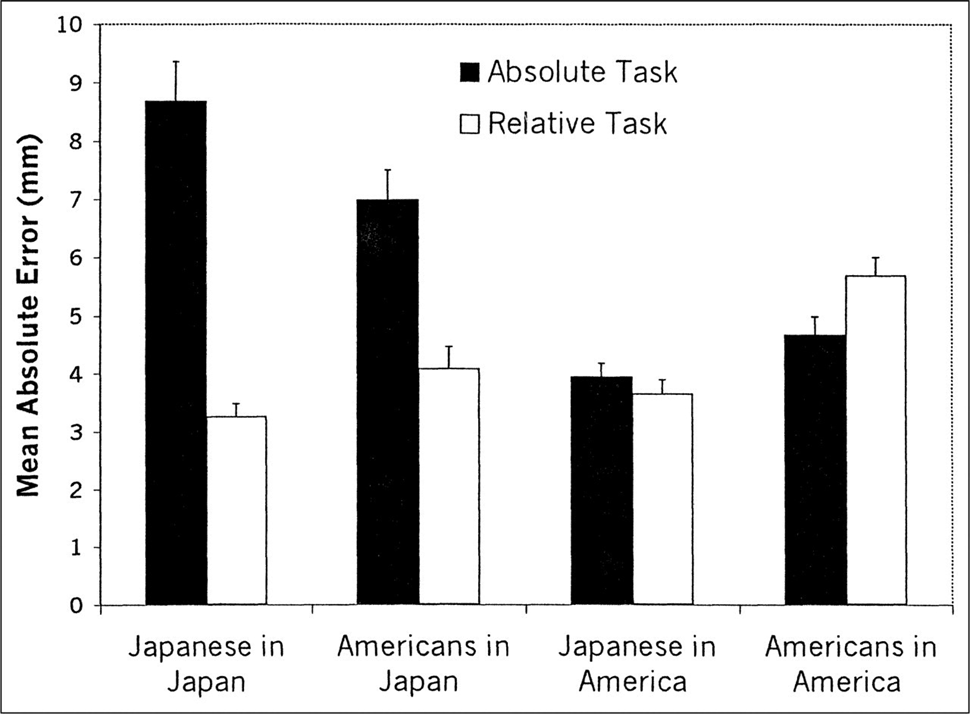
Exposure to society around us plays a role
Individuals tended to show the congitive characteristic common in the host culture
When do cultural attention differences develop?
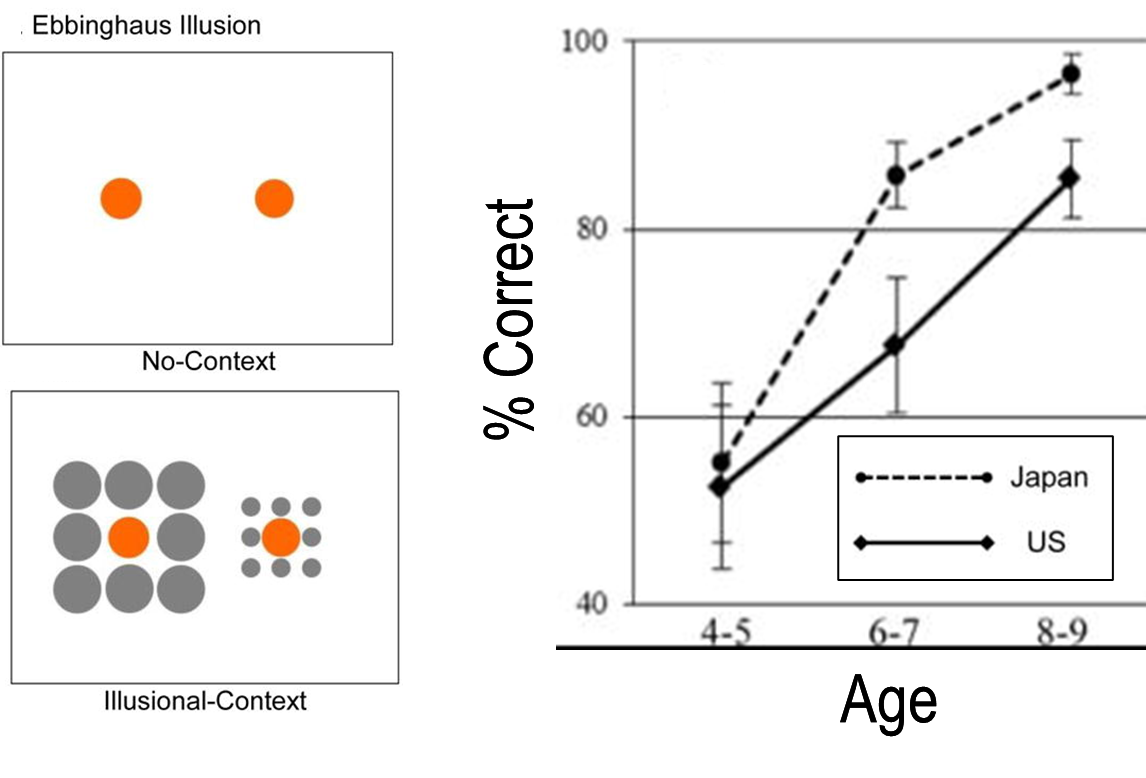
At age 4 - 5 children did not show any difference in accuracy
By ages 6 - 7 JPN children showed better performance, indicating higher context sensitivity
Takes time and exposure to develop cultural differences
Size perception changes based on surrounding context of the target
Cross sectional design - not in the exam
Culture and the physical environment - holistic vs analytic percpetual affordances
Affordance - property of an object that defines its possible uses
Are culturally specific pattersn of attention afforded by the perceptual environment of each culyure?
Scene perception study
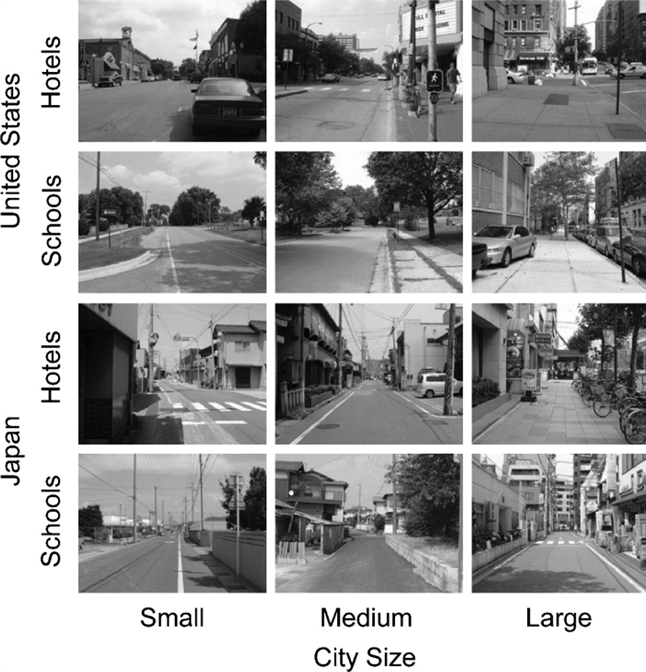
Japanese street vs an american street will our attention be affected by the environment
Showed people pictures of these cities and asled them to classify them
American cities almost bare and clear object in the view
Japanese cities less clear cut and more complex
more ambiguous
Conclusion
Japanese city scenes are more complex and ambiguous than american city scenes, suggesting that objects look more embedded in the field in the Japanese percpetual environment
Change blindness task
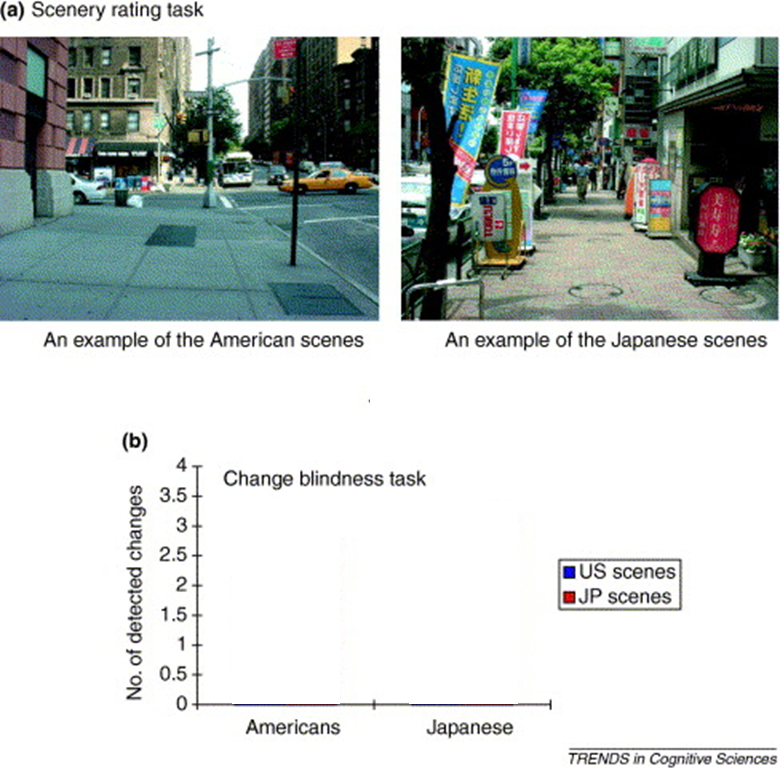
Change blindness task - show a picture flickering and have to determine what changes from one flicker to the next
Flickering resets our memory so we don’t tend to notice
JPN ppts were more likely to detect the change (as they attend more to contextual info)
Both JPN and American ppts who viewed scenes from JPN cities were more able to detect changes
JPN cities helped ppts attend to more contextual info
“Culturally characteristic environments may afford distinctive pattern of perception”
American streets designed in a way to kake you fixate and attend but JPN streets more complex and no specific thing to attend to
Reciprocal feedback loop → cultural differences lead to different street designs → this leads to percpetion changes which lead to this cultural difference
Take home messages
Initial response to stimuli is the same (bottom up) but modulated later, based on the task
Culture shapes how we attend to info
Westerners and East Asians more likely to attend analytically and holistically
differences are both social and nonsocial
Easterners tend to take more consideration of contextual info than westerners
Default patterns of attention can be modified
Cognitive psychology paradigms can help to both reveal and improve understanding of cultural differences
 Note
Note  Flashcards (20)