AP Art History Unit 4: Later Europe and Americas
 Call Kai
 Learn
Learn Practice Test
 Spaced Repetition
 Match
Match Flashcards
 Knowt Play
1/15

There's no tags or description
Looks like no tags are added yet.
Name | Mastery | Learn | Test | Matching | Spaced | Call with Kai |
|---|
No analytics yet
Send a link to your students to track their progress
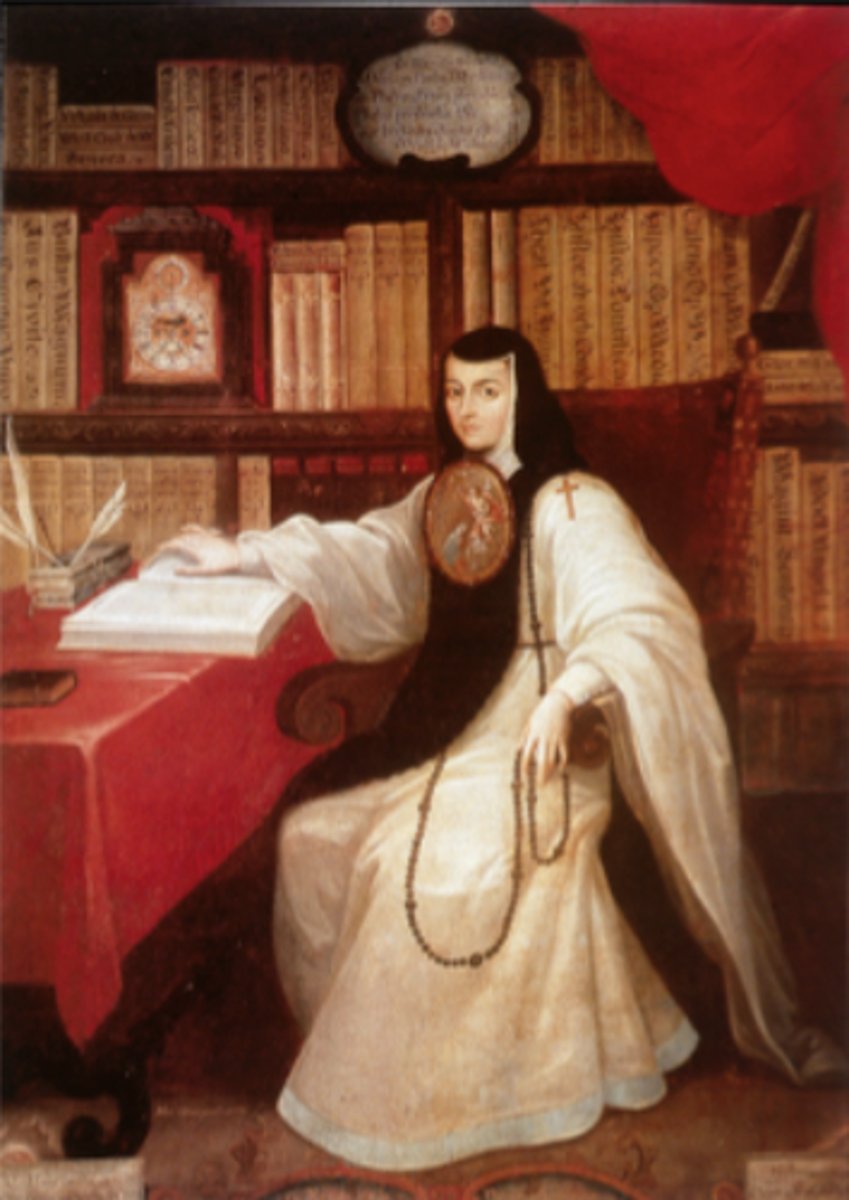
16 Terms
Form:
- style: enlightenment
-baroque: billowing red curtain
-oil on canvas
Content:
-typical nun looks
-surrounded by books (educated)
-nun=sor
-wearing a shield
-has painting of Virgin Mary
-hold St. Jerome's translation of the Bible (her religious order is named after him)
-toys with rosary in her left hand
-gaze directly at viewer
-red curtains shows higher status
-woman taking on the clergy
Function:
-conveys religious and intellectual status
-feminist
Context:
-artist: Miguel Cabrera
-1750 CE
-location: Mexico City
99. Portrait of Sor Juana Ines de la Cruz
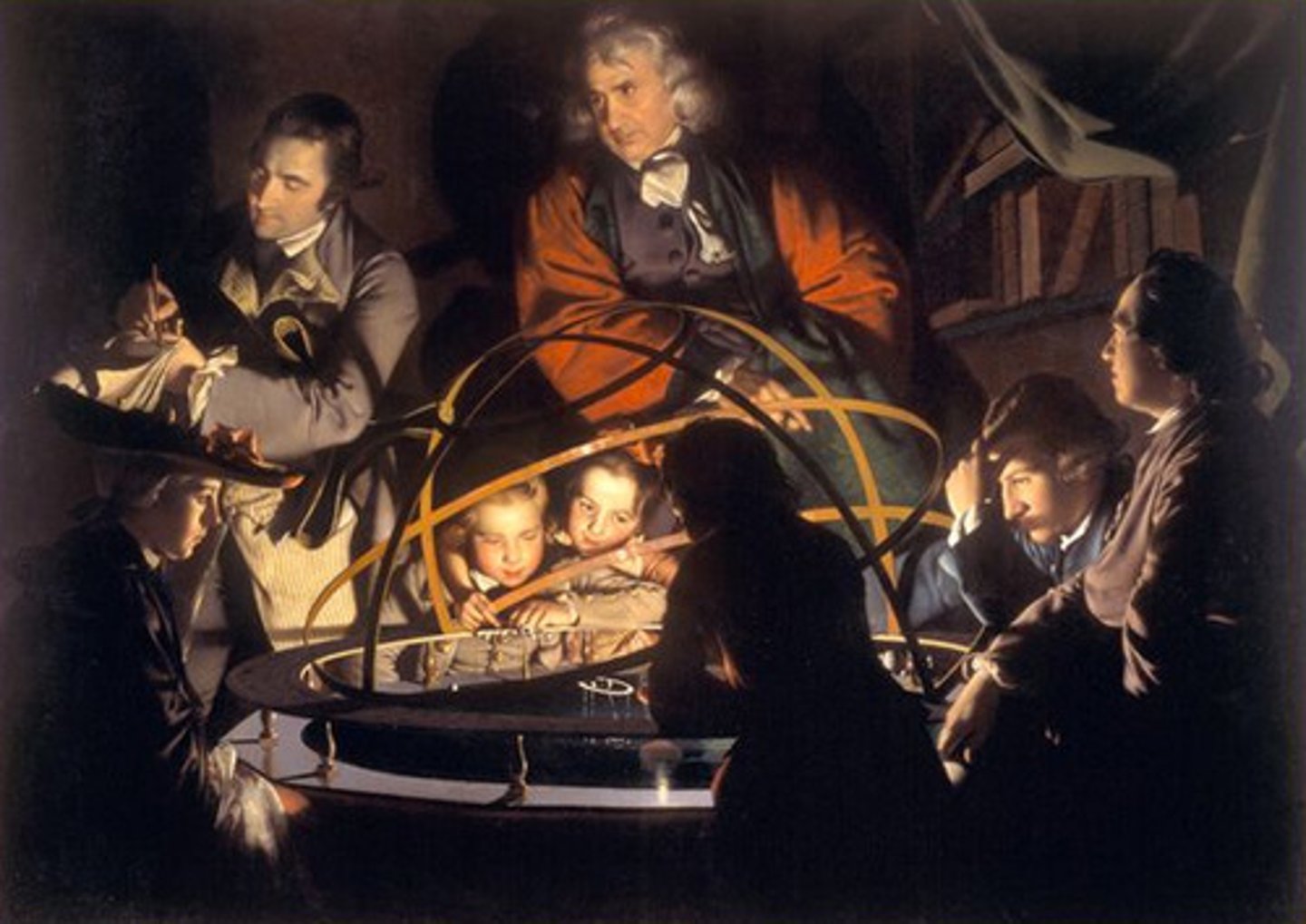
Form:
-Tenebrism now used in secular aspects (mimicking Caravaggio)
-Chiaroscuro: contrast between light and dark
Content:
-orrery: model of the solar system (heliocentric)
-philosopher explain something to people in painting (education is sacred)
Function:
-introduction to science
-celebrates access to knowledge
-shift from religion to science
-philosophical groups emerging
Context:
-1763-1765 CE
-artist: Joseph Wright of Derby
100. A Philosopher Giving a Lecture on the Orrery
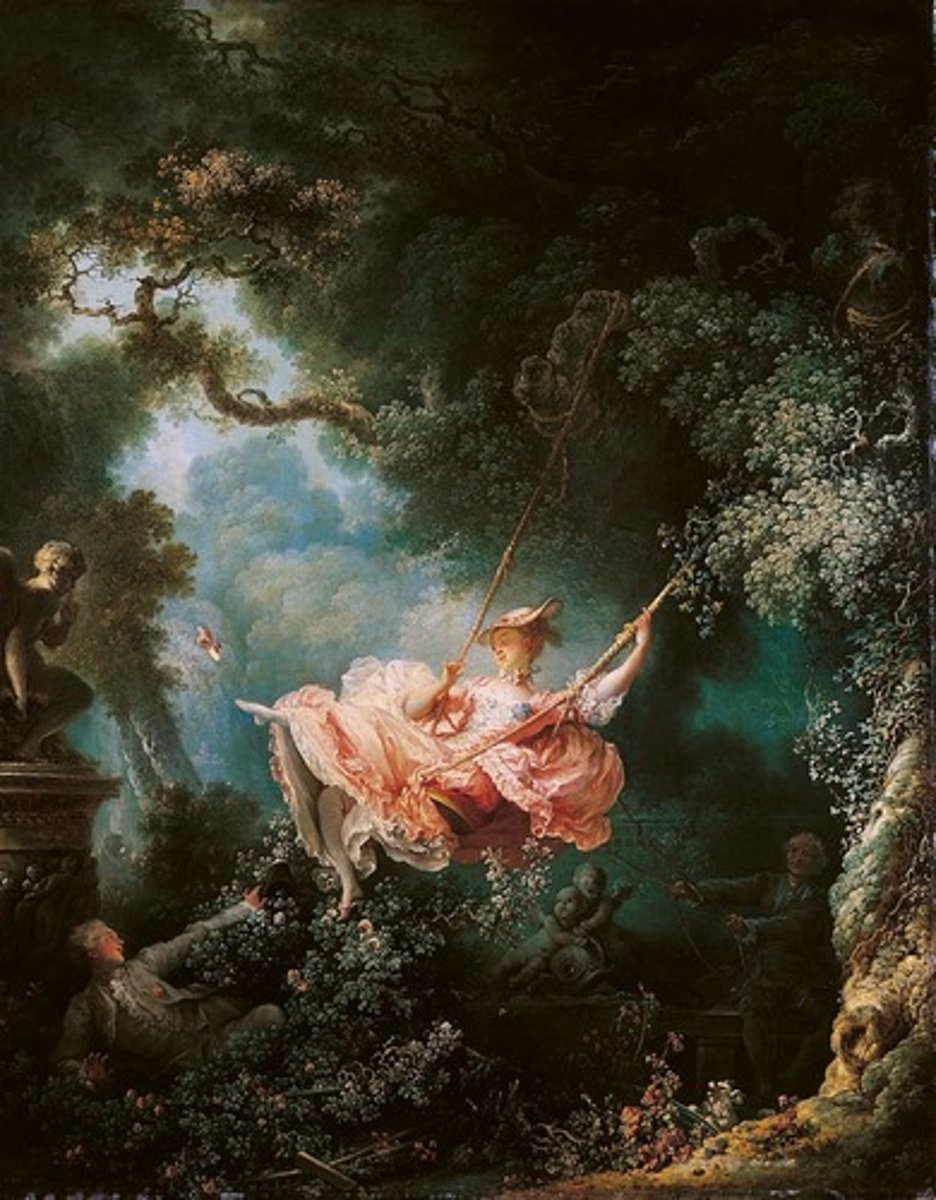
Form:
-style: Rococo- love, pastels, aristocracy, arabesques, delicate paint application
-oil on canvas
Content:
-ideal love gardens with sculptures
-cupid whispering
-attendant swinging her=elite
-foot with expensive shoe
-French garden
-"peeping tom" in lower left
Function:
-made for aristocrats to decorate buildings
-show the pleasures and decadence enjoyed by the elite
Context:
-1767 CE (18th century)
-artist: Jean-Honore Fragonard
-Enlightenment
101. The Swing
Form:
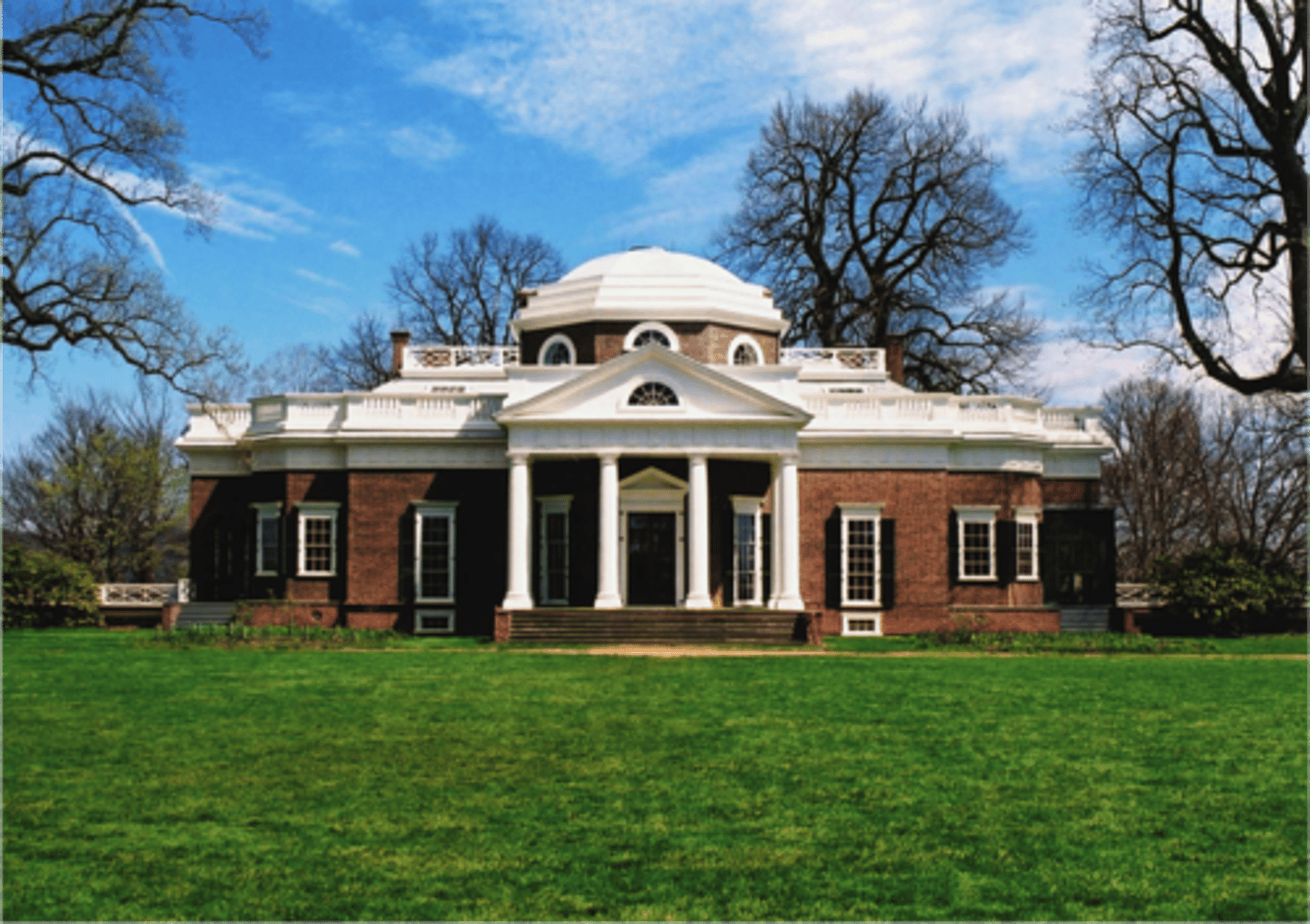
-classical and enlightenment ideals (neoclassical) combining Italian Renaissance and French Classical architecture
-domestic
-symmetrical
-brick, glass, stone, wood
Content:
-expresses American virtue of a Republic through architecture
-two column deep extended portico that support triangular pediment decorated by a semicircular window (doric columns)
-shallow dome
Function:
-plantation house for Jefferson
Context:
-Virginia, USA 1768-1809
-Romanticism/Classicism on the rise
102. Monticello
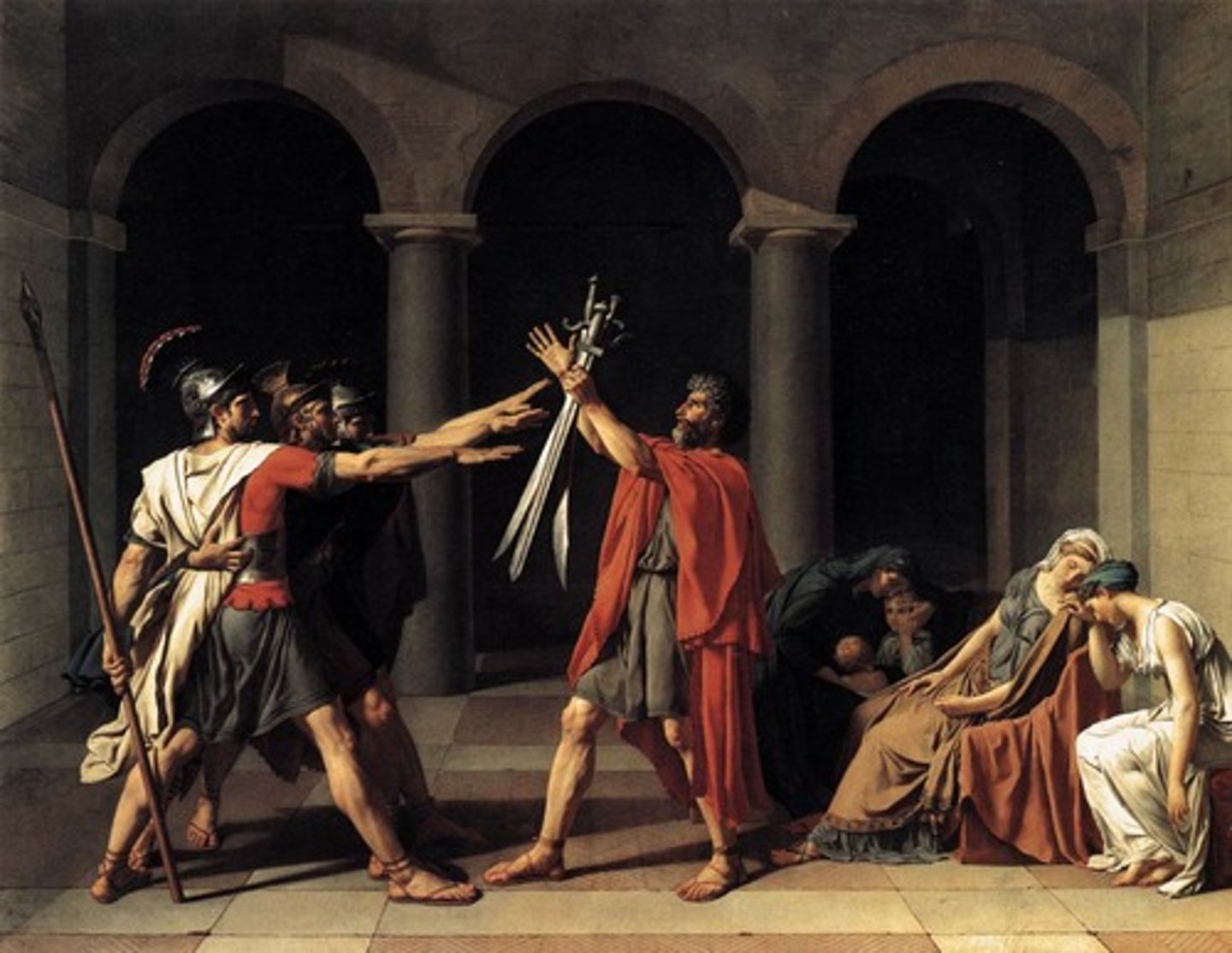
Form:
-neoclassical (physicality and intense emotions)
-dramatic, rhetorical gestures
-geometric forms with the contrasting curvy formed women
-single light shined upon them at the heightened drama of the scene
Content:
-"what are you willing to die for?"
-3 brothers saluting towards the swords which are held by their father (take oath to defend Rome)
-woman grieving in back ground because they have to deal with consequences of war (either lose husband or their bro)
-sacrifice oneself for good
Function:
-challenge aristocracy
Context:
-Jacques-Louis David 1784 (before the revolution)
-commissioned by King of France
103. The Oath of the Horatii
Form:
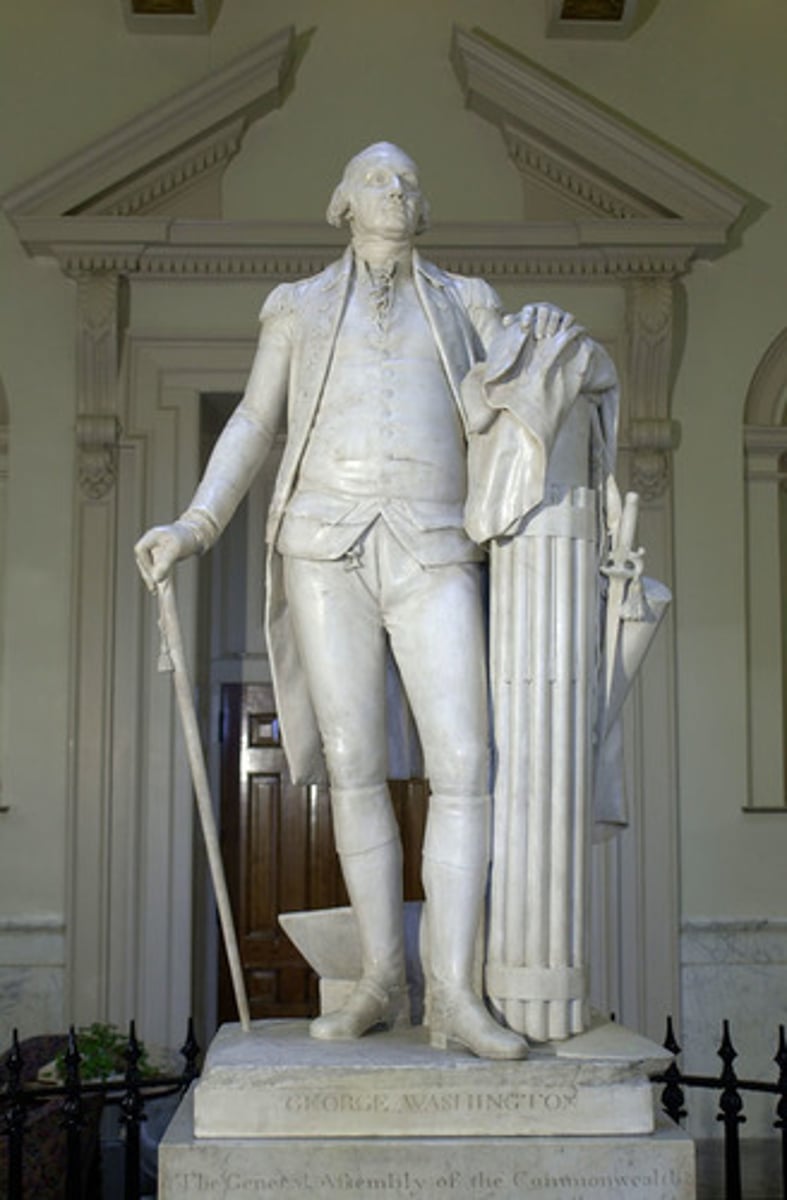
-contrapposto
-neoclassicism (influenced by essence of Greek art as opposed to Rococo)
-realistic
-idealistic
Content:
-captured the duality of Washington (private citizen and public soldier)
-bundle of 13 rods (symbolizes not only power but strength found through unity
Function:
-commemorate momentous occasion after the revolutionary war
Context:
-artist: Jean-Antoine Houdon (commissioned by Jefferson)
-1788-92 CE made by foreigner
104. George Washington
Form:
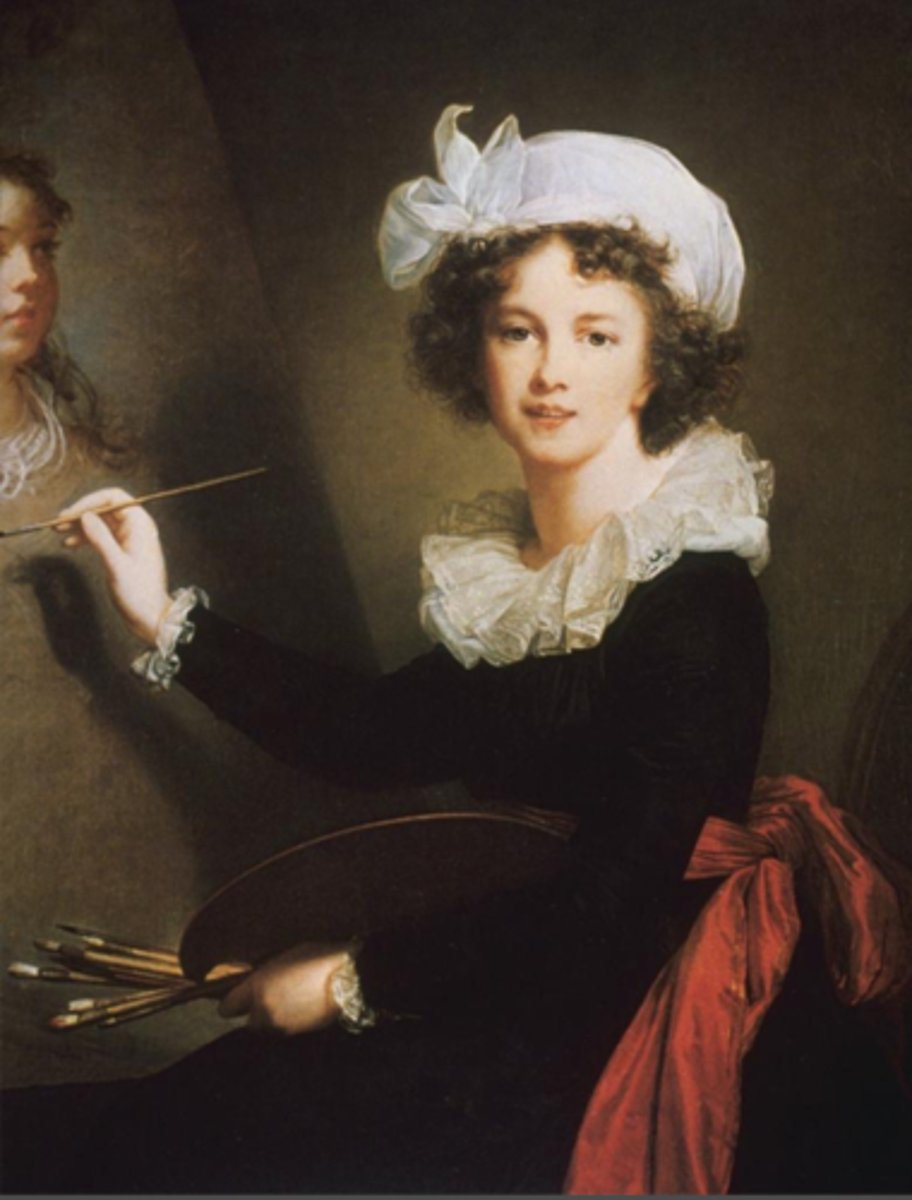
-oil on canvas
-portrait
-light brushwork and colors (Rococo style)
-Enlightenment
Content:
-shows her in process of creating the self portrait of Marie Antoinette (she was her court painter)
-holding palette and paint brush (showing she is skilled)
-interrupts her but she welcomes the interruption
Function:
-shows that she is a painter
-several different version
Context:
-artist: Elizabeth Louise Vigee Le Brun
-1790 CE, Rococo-Neoclassicism (in between)
105. Self Portrait
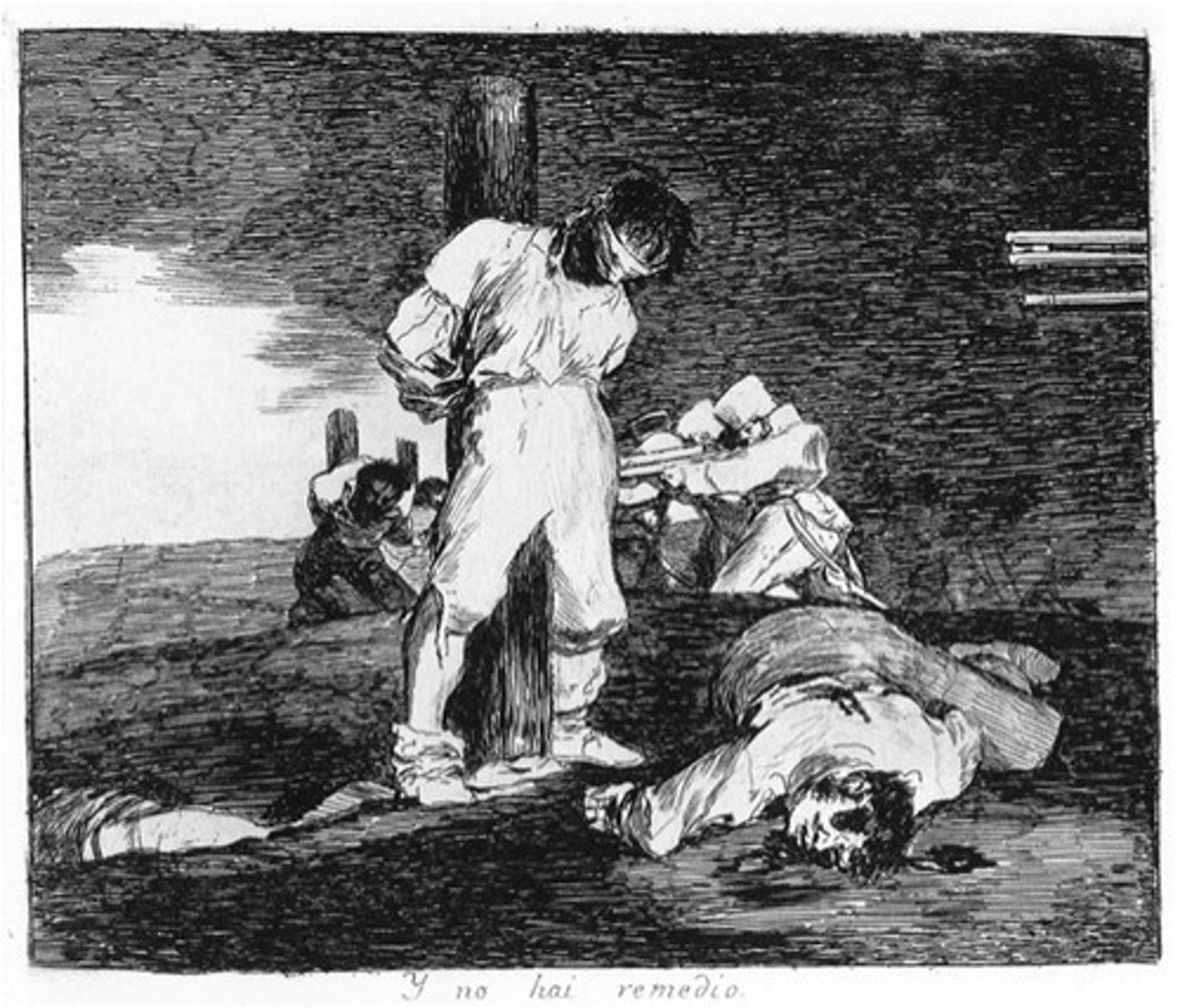
Form:
-style: romanticism (challenging power and oppression)
-etching, drypoint
Content:
-part of series of 82 called Disasters of War
-what human beings capable of
-government misuse of power on helpless victims
-man is blindfolded with head down tied to wooden pole (christ-like)
-recently deceased corpse with extreme detail of his grotesque face (behind body on pole is a dead body on pole)
Function:
-pictures the atrocities of war
-visual indictment and protest against French occupation of Spain
Context:
-publish 1863, made 1810-1823 CE
-artist: Francisco Goya (trained by Rococo)
106. Y no hai remedio (And There's Nothing To Be Done)
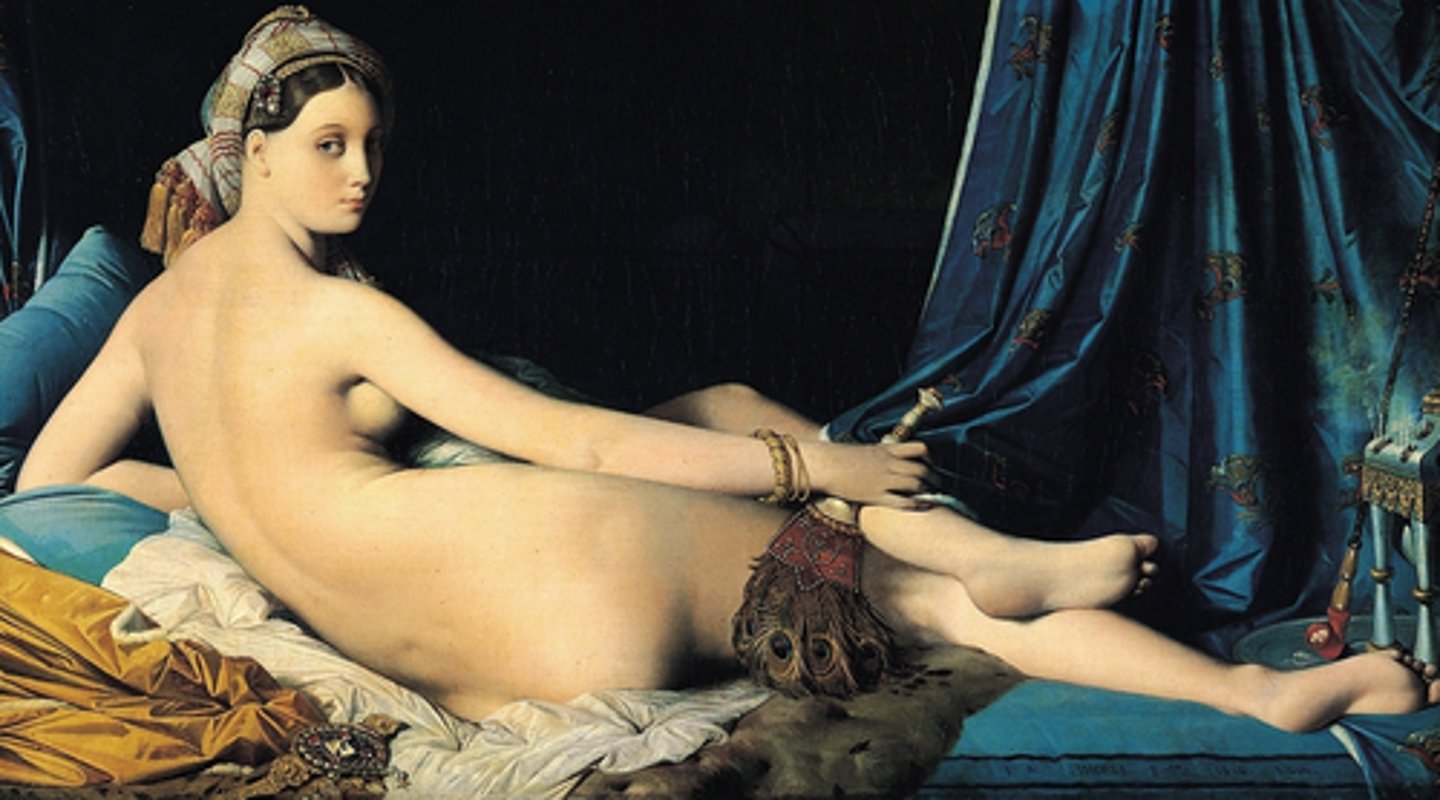
Form:
-romanticism (exoticism)
-classical figure
-proportions are messed up
-oil on canvas
Content:
-physically unreal body
-peacock fan, turban, enormous pearls, hookah (eroticism based on exotic content)
Function:
-what a French male's fantasy would look like
Context:
-artist: Jean-Auguste-Dominque Ingres (court painter for Napoleon
-1814 CE
107. La Grande Odalisque
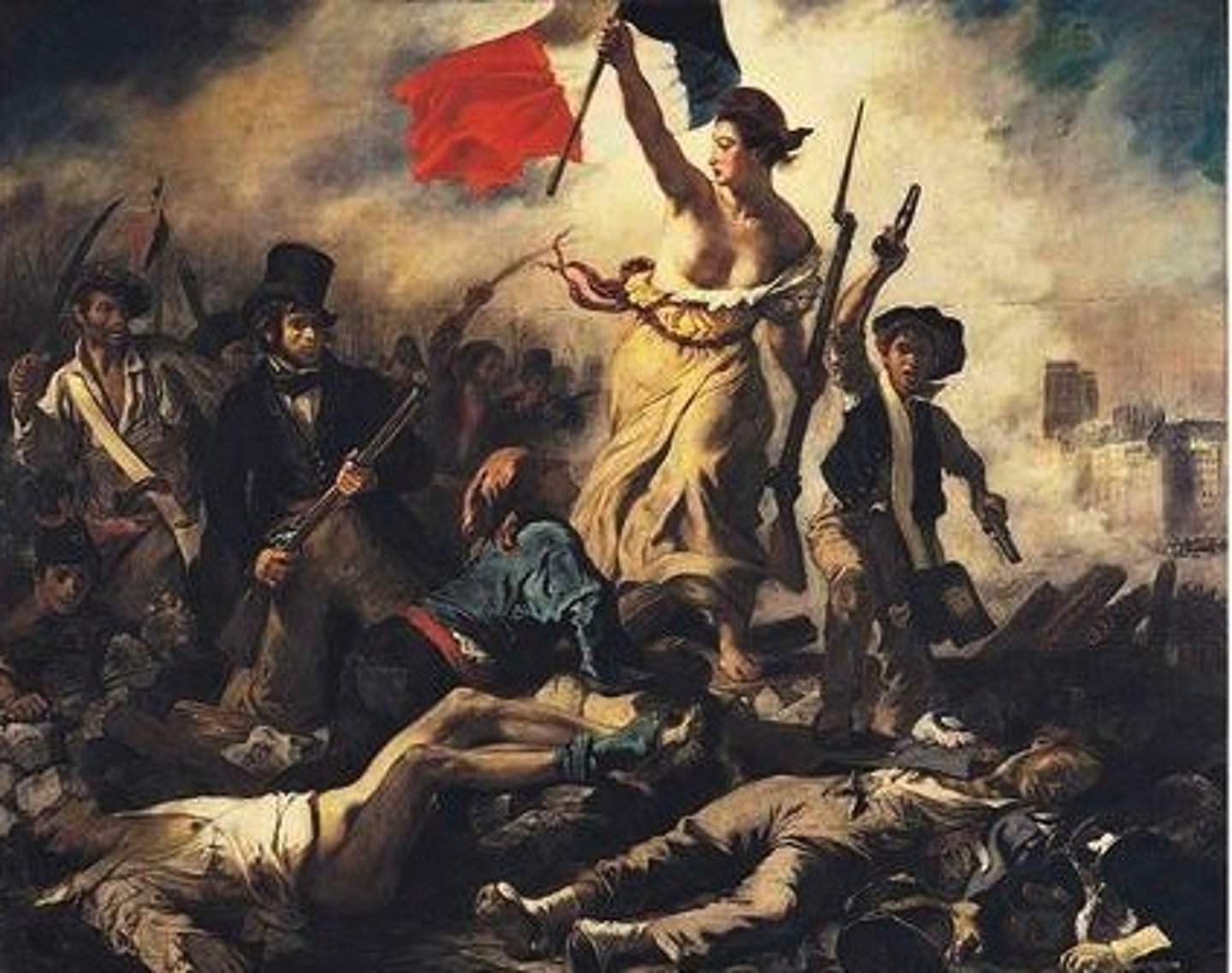
Form:
-romanticism
-seems as though it is overpowered by chaos but filled with subtle order
-oil on canvas
Content:
-people of both the working class and middle class join in the fight against the government
-lady carrying the French flag meant to serve as an allegory, in this case a moral or political idea of Liberty (looking back to make sure people are following, represents an idea)
-background: Notre Dame
Function:
-allow us to believe anyone can be a revolutionary
Context:
-artist: Eugen Delacroix
-1830 CE
108. Liberty Leading the People
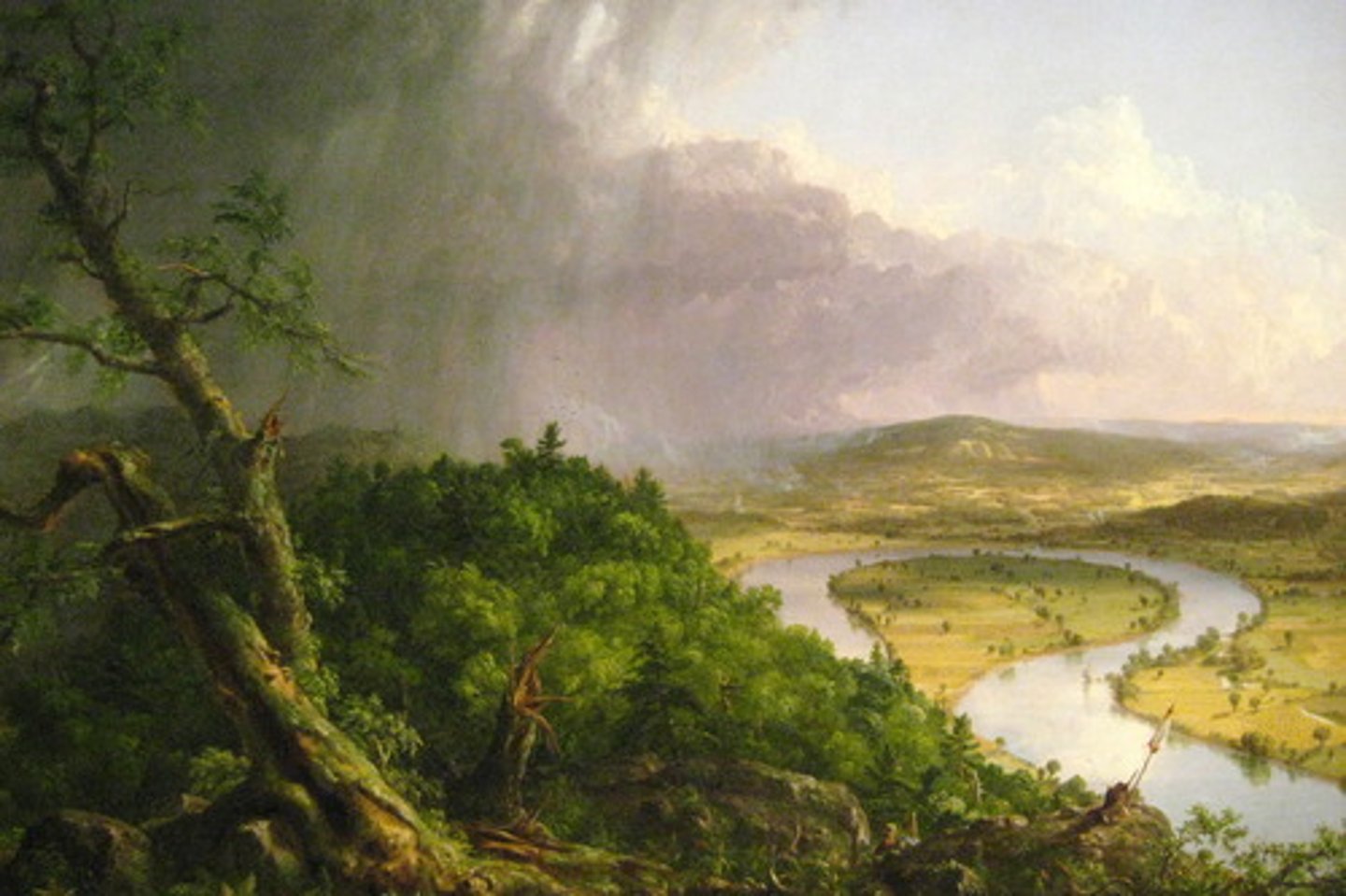
Form:
-romanticism
-Manifest Destiny
-not based of a real place
-oil on canvas
Content:
-reverence for nature
-filled with life
-based on real life area
-divides the painting into two unequal sections
-one shows sublime view of land untouched by man (wild, untamed)
-other side shows land humankind has taken over (overtaken by agriculture)
-self portrait of himself wandering
Function:
-landscape painting
-shows respect for nature
Context:
-Northampton, Massachusetts
-artist: Thomas Cole (leader of Hudson River School)
-1836 CE (19th century)
109. The Oxbow
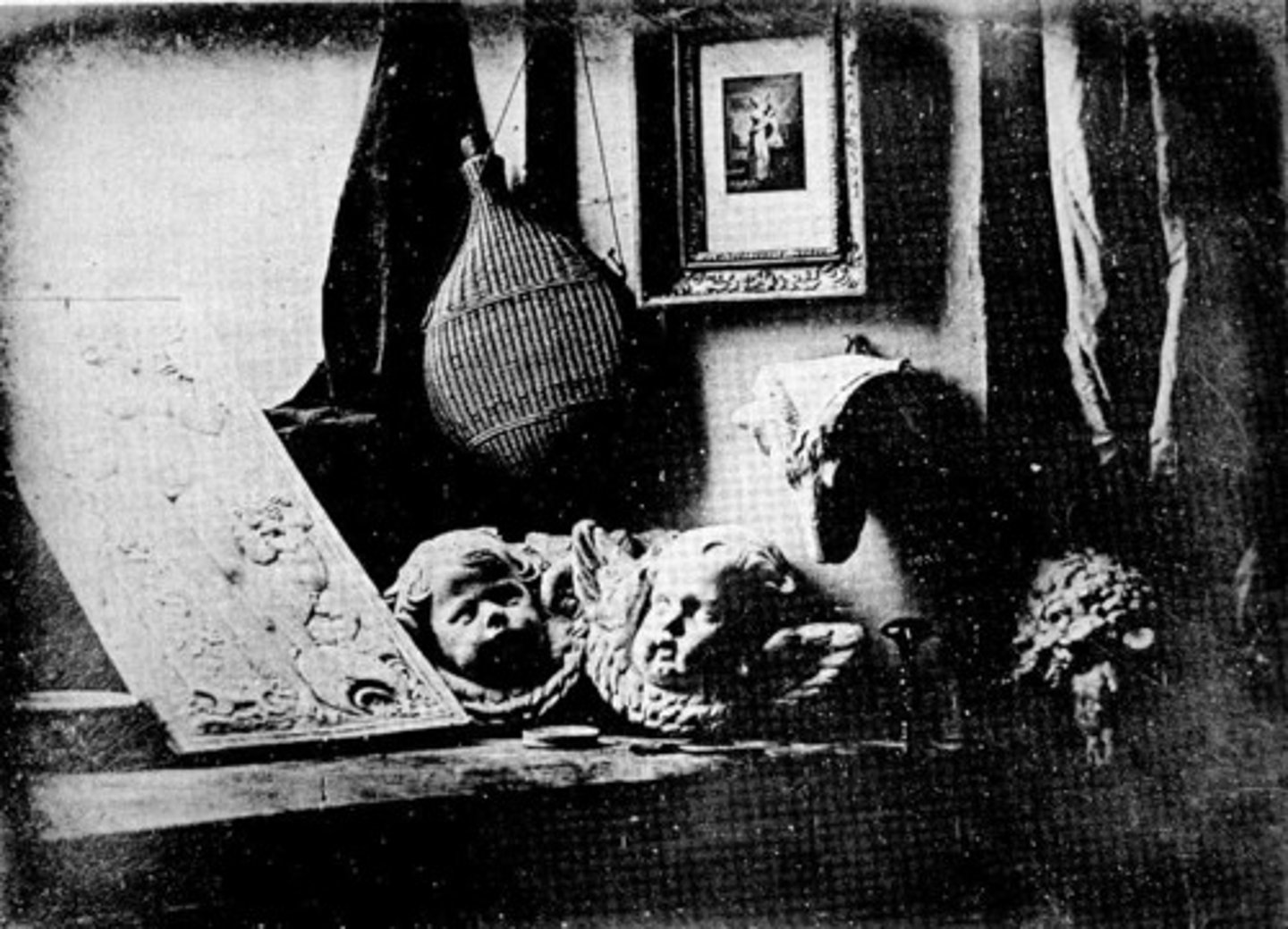
Form:
-classical art
-daguerreotypes record precise detail
-photography
Function:
-elevate photography to art
Content:
-reversed image
-long exposure and can't record movement
-upstairs underneath the skylight due to no flash
-fills his photos with plaster casts (angels)
Context:
-artist: Louis Jacques Maude Daguerre
-1837 CE (earliest dated photography)
110. Still Life in Studio
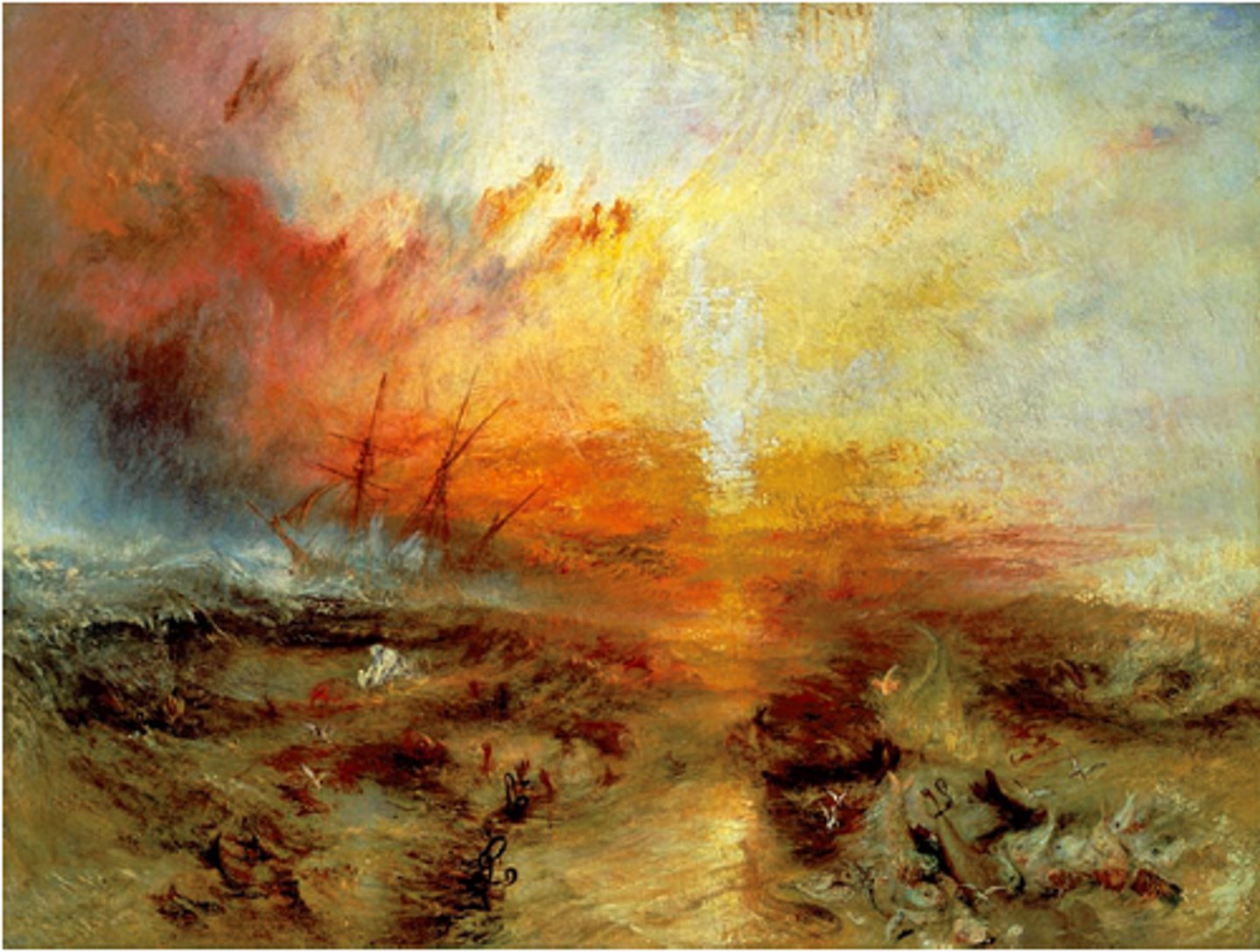
Form:
-romanticism (sublime)
-combines a beautiful and horrible scene together
-rich colors
-loose brushwork
-oil on canvas
Content:
-beautiful seascape looking at first but if u look close you see slaves drowning and being eaten alive
-disease breaks out on ship and overthrows all the dead and sick overboard so they can get insurance (money is motivator for what they did)
Function:
-political and social activist piece
Context:
-artist: Joseph Mallord William Turner
-1840 CE
-inspired by a book
111. Slave Ship
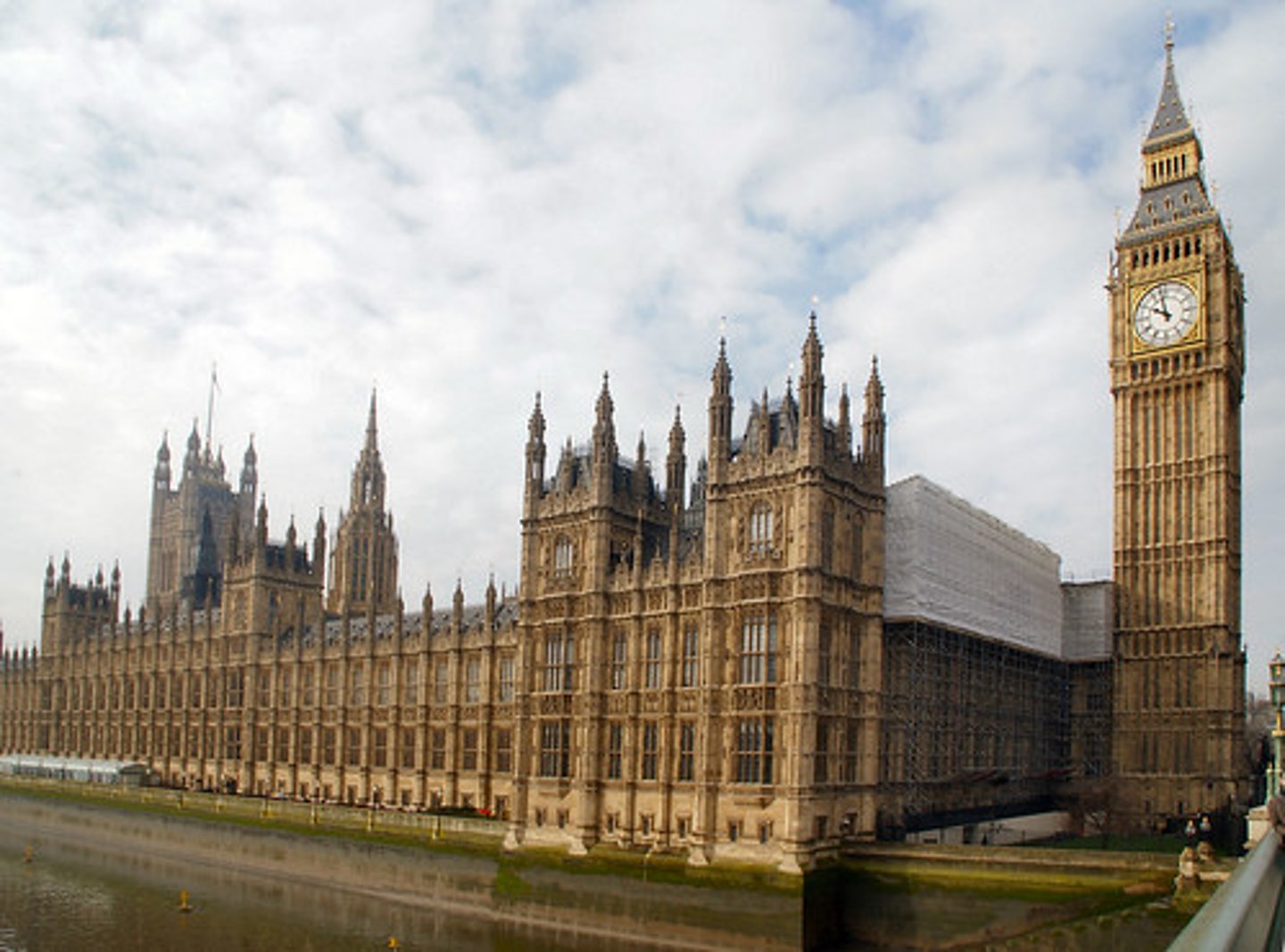
Form:
-Hammer Beam Construction in the Westiminster Hall
-Romanticism
-classical building with a Gothic exterior, Gothic revival
-limestone, masonry, glass
Content:
-central lobby
-westiminster hall (oldest section)
Function:
-where the House of Lords and Commons meet
-rebuilt because a fire burned down old palace that was originally there
Context:
-London, England
-architect: Charles Barry
-designer: Augustus Pugin
-1840-70 CE
112. Palace of Westminster
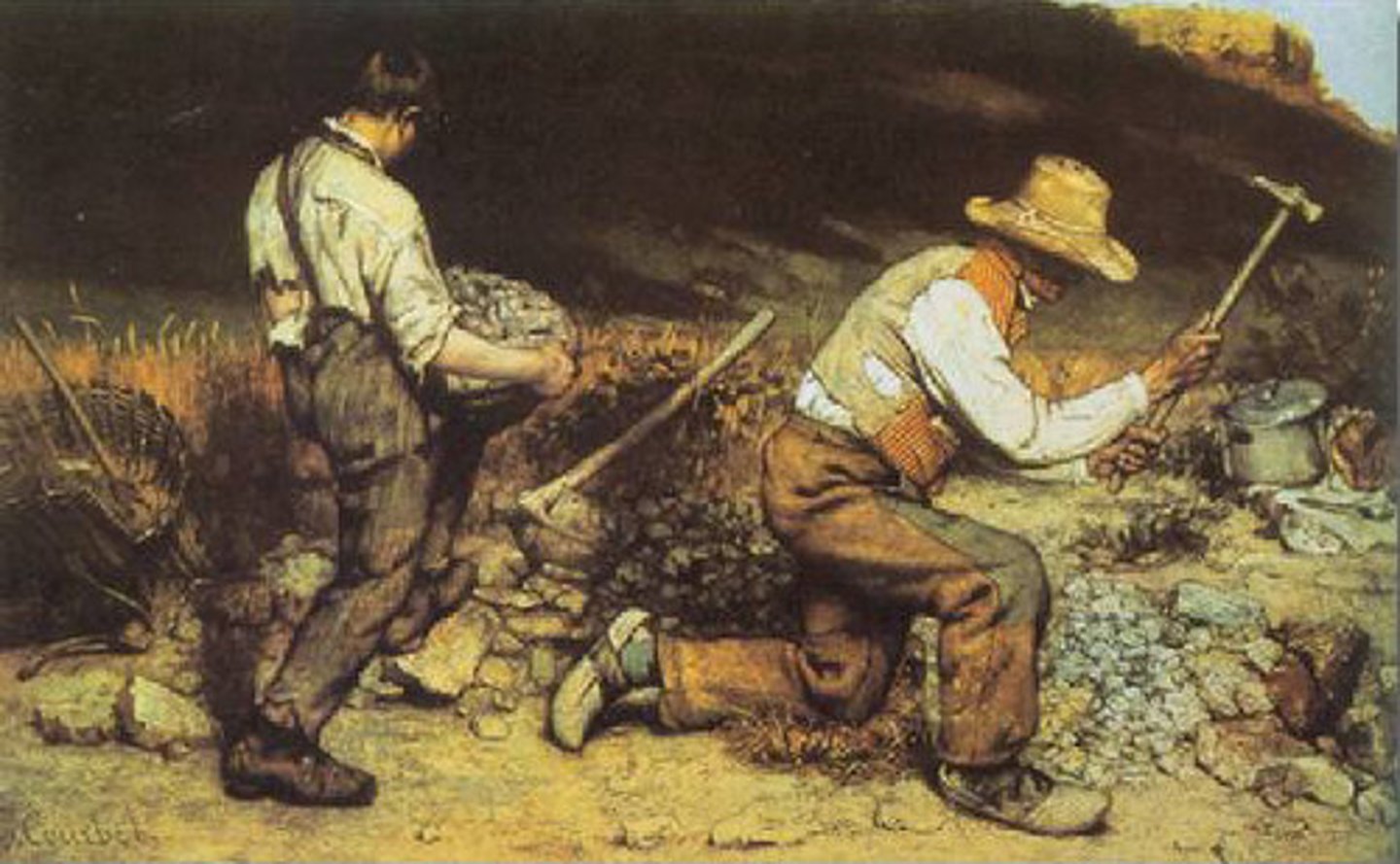
Form:
-Realism (anti-heroism
-oil on canvas/chunky
-rough brushwork
-against neoclassical style that dominated French art
-dark palette
Content:
-young and old man
-faceless men doing painful work that will neber get them out of poverty
-this owrk is punishment for chain gangs
-rock=faces
Function:
-"painting of nothing"
-cycle of poverty
-works: economically and physically trapped
-accurate display of abuse and deprivation that was common in French rural life
Context:
-1849 (destroyed during bombing of Dresden in 1942)
-artist: Gustave Courbet (prolific artist)
113. Stone Breakers
Form:
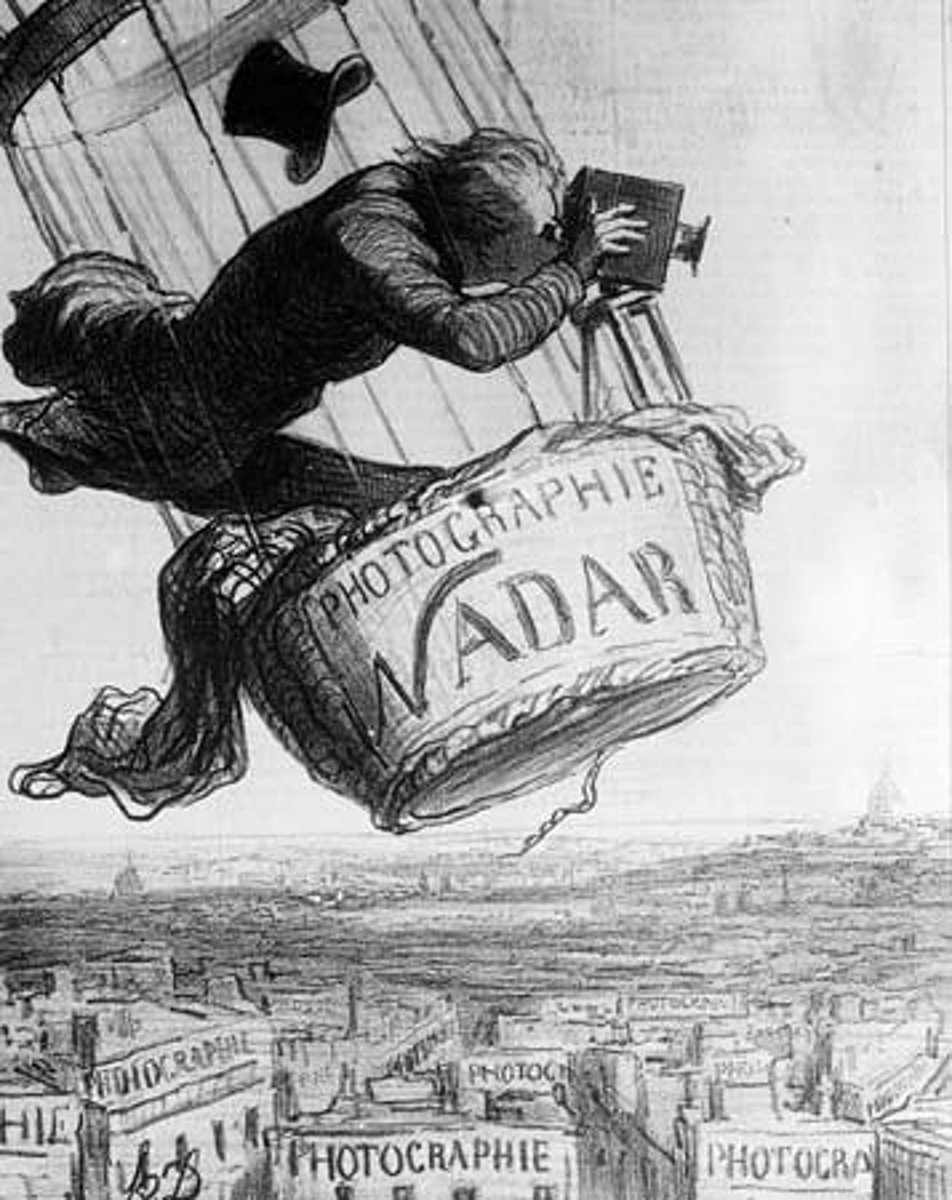
-lithograph: process of making a design on ston eblock with greasy crayon, ink applied to wet stone and stick to greasy parts to make a print (cheap way)
-Realism
Content:
-Nadar- awkward photographer/businessman on high and attempting to raise photography to high art (takes first aerial shots of France
Function:
-make lithographs as a new mass media print method
-crave of art in Paris
-new kind of photography
Context:
-artist: Honore Daumier
-made 6000+ lithographs
-satirist, uses caricatures
-1862, Paris
-published in Le Boulevard
114. Nadar Raising Photography to the Height of Art