Comprehensive Study Guide for Exam 2 in Biology (1442 BIOL UTA)
 Call Kai
 Learn
Learn Practice Test
 Spaced Repetition
 Match
Match Flashcards
 Knowt Play
1/110

There's no tags or description
Looks like no tags are added yet.
Name | Mastery | Learn | Test | Matching | Spaced | Call with Kai |
|---|
No analytics yet
Send a link to your students to track their progress
111 Terms
In a bacterium that possesses antibiotic resistance and the potential to persist through very adverse conditions, such as freezing, drying, or high temperatures, DNA should be located within, or be part of, which structures?
plasmids and endospore
A stromatolite is best described as a
fossilized microbial mat
Which is the most accurate description of using vaccines to preventatively treat viral infections?
Vaccines stimulate the immune system to create antibodies that can destroy viruses.
All known extremophiles are prokaryotic archaeans. (t/f)
False
PSTV (spindle tuber) in potatoes
viroid
DNA virus
smallpox (variola virus)
RNA retrovirus
HIV is what type of virus?
Bovine Spongiform Encephalopathy (BSE) in cattle
prion
Which of the following creatures have limbs with 'one bone, followed by two bones, then little blobs, then fingers or toes'?
ALL OF THESE. Lizard, frog, humpback whale, and human.
DNA evidence supports the hypothesis that the first organisms on earth were more closely related to bacteria than to archaea. (t/f)
true
The search for the fish called 'Tiktaalik' involved unique dangers, such as the possibility of being attacked by a...
Polar bear
Prokaryotes lack some parts found in eukaryotic cells, including which item?
a nuclear membrane
Which treatment holds the most promise for curing patients with hereditary disorders like Severely Compromised Immunodeficiency Disease?
gene therapy with viral vectors
Biologists have used molecular evidence to trace all viruses to a single common ancestor.
False
Influenza (the flu) is a collection of different viruses. Which of these organisms are influenza viruses NOT known to infect?
fish
Which pathogen is not a bacterial infection?
HIV
Neil Shubin and his colleagues spent several field seasons outdoors, searching for...?
fossilized remains of fish from a particular time in biological history
Shubin's vivid memories of med school anatomy lab include an emotional response to dissecting which part of a human cadaver?
the hands
Which disease is NOT caused by a prokaryotic organism?
COVID-19
What is the primary ecological role of prokaryotes?
breaking down organic matter
RNA retroviruses contain reverse transcriptase, allowing them to circumvent the "central dogma" of molecular biology. Choose the most appropriate description of reverse transcriptase.
It transcribes RNA to make DNA.
Viruses are not always considered to be life forms because they
are not organized in cells, but need to use a host organism cell to survive and reproduce.
Cyanobacteria are
photoautotrophs
One model organism featured in this reading is called a skate. Which description best fits this creature?
close cousin to the shark
A geologic layer of rare iridium and the presence of an impact crater correspond with
the asteroid that caused the K-Pg (K-T or end-Cretaceous) extinction event
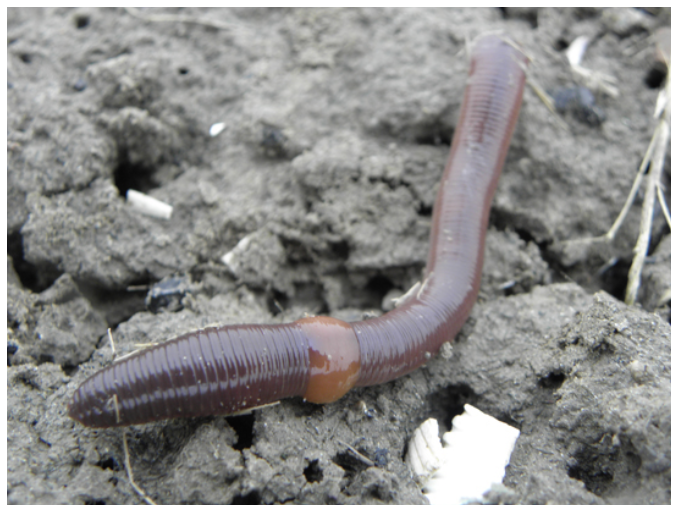
What can animals with a mesoderm do, that animals without a mesoderm can't?
make a true body cavity to contain their internal organs.
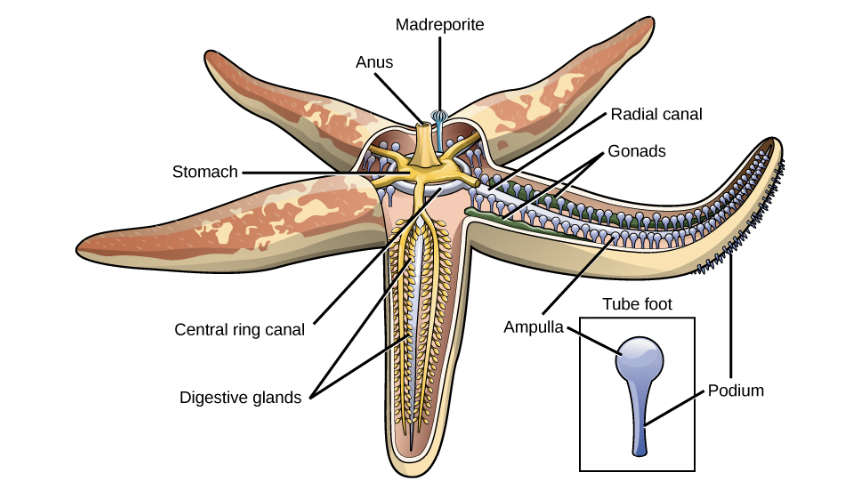
(OpenStax Biology 2e Figure 28.47)
Although they are members of the bilaterian clade, sea stars have a radial symmetry in the adult life stage. They move around (and open their prey) by sucking water up through their tube feet and sending it through canals in their arms. This movement of water is finely controlled by the valve on top. The closest cousins of the sea stars are
sea urchins and sea cucumbers
Which description of coral is NOT accurate?
An individual coral polyp has bilateral symmetry.
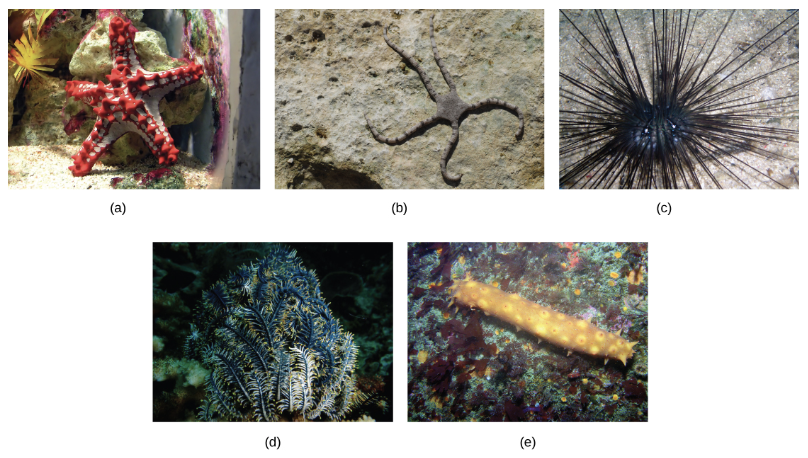
(OpenStax Biology 2e Figure 28.48)
Sea stars, brittle stars, urchins, sea lilies and sea cucumbers are _____ and members of the _____ clade.
deuterostomes / echinoderm
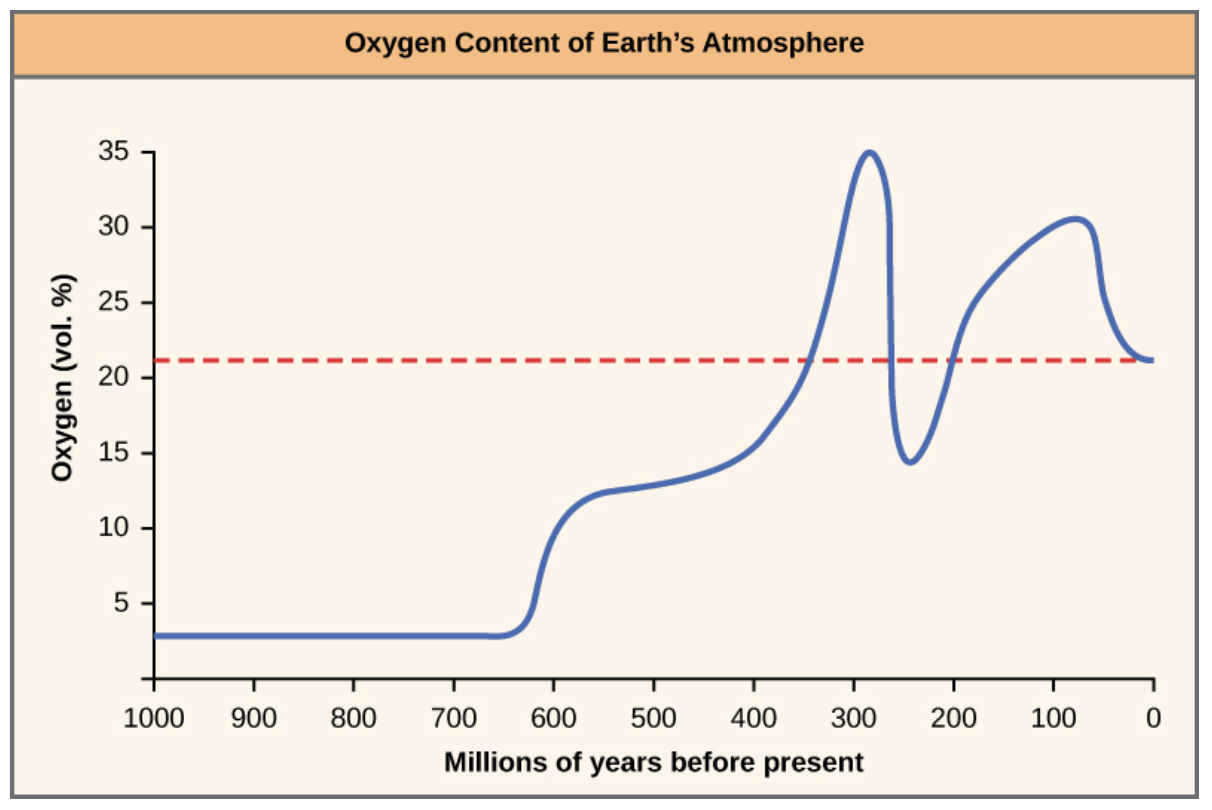
Photosynthetic prokaryotes (i.e., cyanobacteria) produced the first atmospheric oxygen (OpenStax Biology 2e Figure 27.18). The resulting "Oxygen Revolution"
likely set the stage for marine animals to become larger and more complex.
Which is the most accurate description of phage therapy?
the use of "live" viruses as antibiotics to kill bacteria
Which type of host cell is targeted by a phage virus?
bacteria
Most viruses that infect people evolved from viruses that infect other animal species. t or f
true
Although not present in all bacteria, this cell covering often enables cells that possess it to resist the defenses of host organisms, especially their phagocytic cells.
capsule
Setting it apart from many fish, the eyes of Tiktaalik are located on top of the head. t/f
True
Cephalization is most commonly associated with
bilateral symmetry.
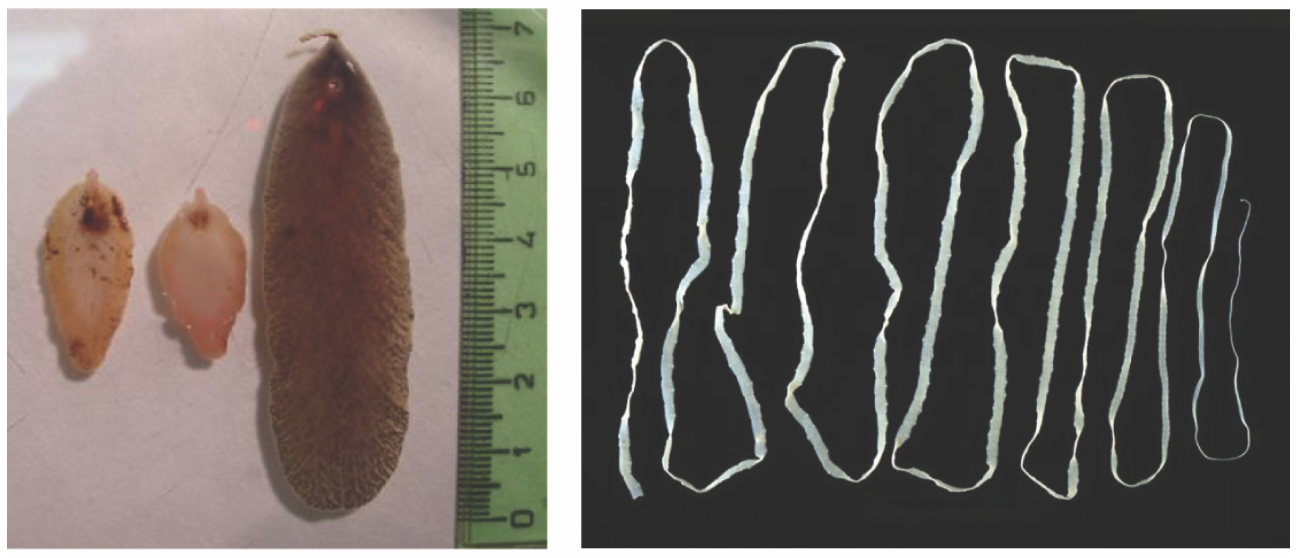
(OpenStax Biology 2e Figure 28.15)
Parasitic trematodes (flukes) are shown on the left, and a parasitic cestode (tapeworm) on the right. Both of these animals are long, flat, and flexible. They are bilaterally symmetrical and triploblastic, but they are acoelomates. They belong to the phylum
Platyhelminthes.
OpenStax Biology 2e Figure 28.36)
Trilobites were highly segmented animals, with mineralized exoskeletons and jointed appendages. They belong to the phylum
Arthropoda.
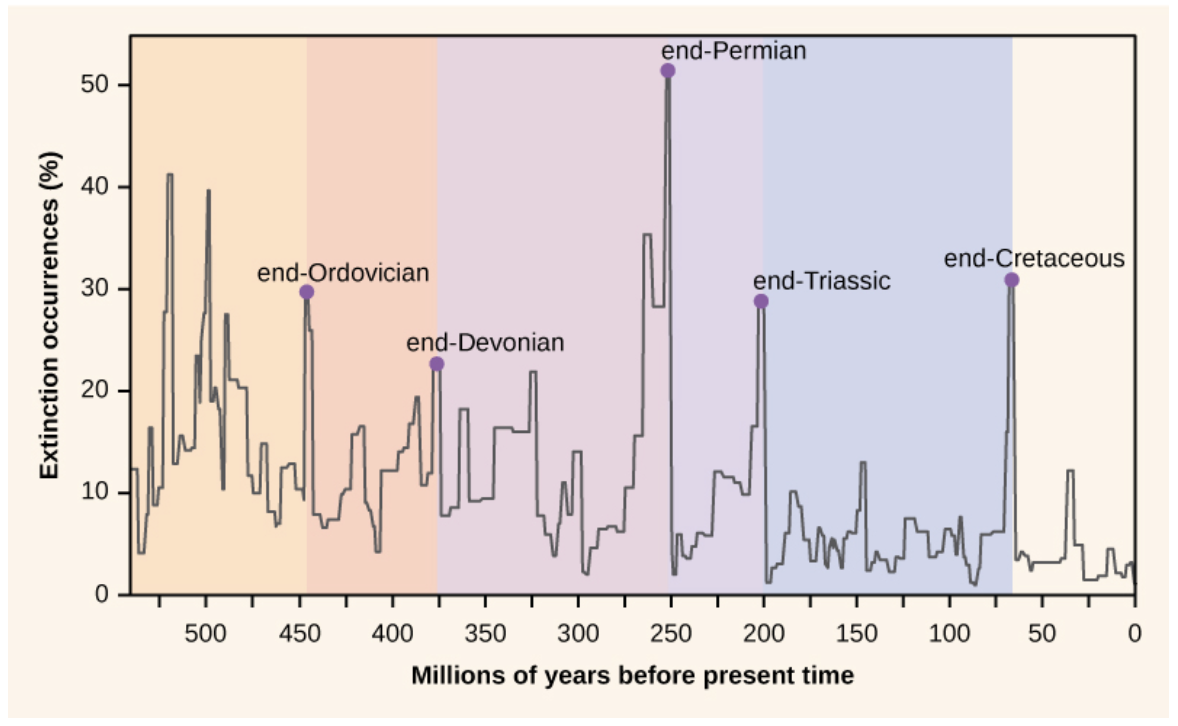
The K-Pg or K-T (end-Cretaceous) extinction is the fifth (i.e., most recent) mass extinction (OpenStax Biology 2e Figure 27.17) marked the end of the _____ and was followed by the
age of reptiles / rise of mammals
The first atmospheric oxygen was made by _____. It caused a mass extinction of _____ but in the long-term, likely allowed the evolution of
photosynthetic prokaryotes / anaerobic prokaryotes / larger, more complex marine animals
Rocks older than 600 million years old are generally devoid of fossilized animals or plants.
True
Figure 27.16 from OpenStax Biology 2e Chapter 27 illustrates
an adaptive radiation of animal forms known as the Cambrian explosion.
Which of the following best describes how humans compare to other mammals with respect to smell?
Humans have a similar number of 'smell' genes as most mammals, but many of them are not functional.
Choose the answer that accurately describes the olfactory abilities of fish and mammals.
Mammals have many more copies of genes associated with smell.
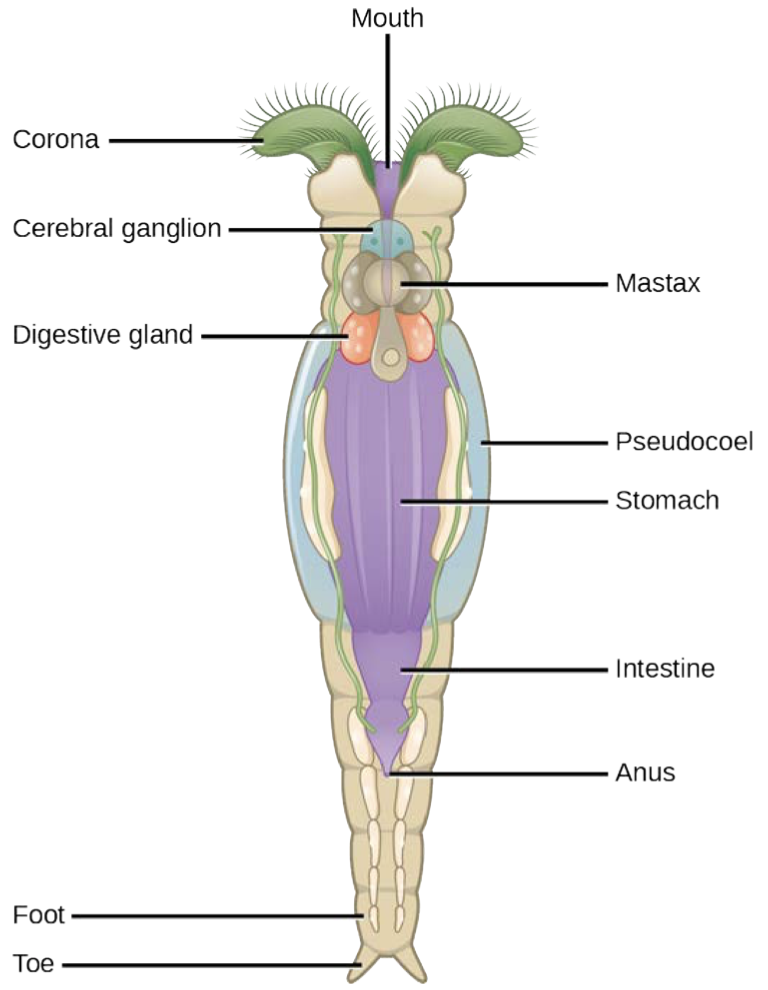
(OpenStax Biology 2e Figure 28.18)
This illustration (of an organism much smaller than it looks) shows the basic anatomy of a(n)
rotifer.
Which of the following statements is true?
Triploblastic organisms have three embryonic layers: an outer ectoderm, a mesoderm, and an inner endoderm.
The largest mass extinction (referred to as the "Great Dying" in the Eons short film, "A Brief History of Geologic Time") corresponds with which event in this illustration (OpenStax Biology 2e Figure 27.17)?
end-Permian extinction
Placozoans, ctenophores, and cnidarians are all considered _______, since they have inner and outer embryonic cell layers.
diploblastic
(OpenStax Biology 2e Figure 28.6)
This illustration shows the two germ layers and life stages of a typical
cnidarian
Which of the following is a difference between fungi and animals?
Only fungi have external digestion.
(OpenStax Biology 2e Figure 28.21)
The generalized mollusk body plan shown here aligns most closely with the subgroup called
bivalves
(OpenStax Biology 2e Figure 28.29 & 29.30)
The earthworm is a segmented worm with a closed circulatory system, and its closest cousins are leeches and marine polychaete worms. These animals have
a true body cavity formed within the mesoderm germ layer.
Animals with radial symmetry evolved before there were animals with three germ layers.
true
(OpenStax Biology 2e Figure 28.4 and see also Figure 27.7)
Porifera (sponges) are considered the simplest animals because they have no _____, but ctenophores (comb jellies) are also considered basal because like the sponges, they have no _____.
true tissues from embryonic germ layers / Hox genes
Deuterostome animals evolved before there were animals with bilateral symmetry.
false
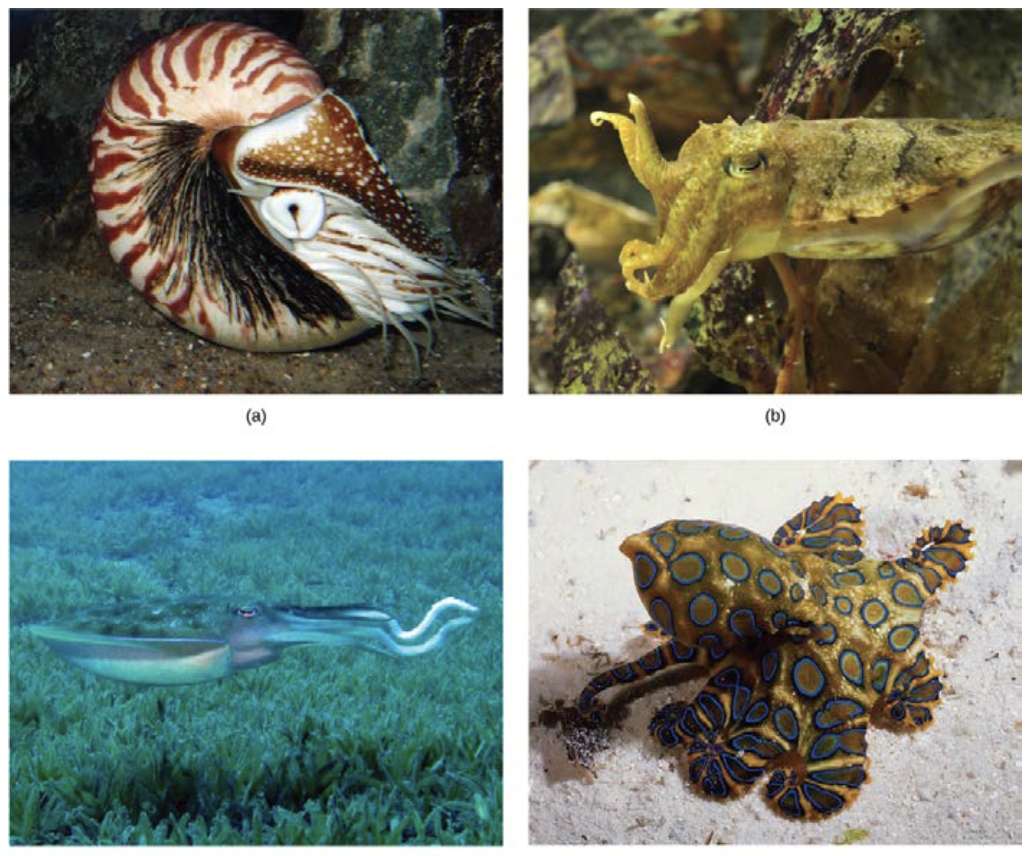
(OpenStax Biology 2e Figure 28.27)
Nautilus, cuttlefish, squid and octopus belong to the _____ clade in the phylum _____.
cephalopod / Mollusca.
Fish have a sense of smell; they can extract odors from the water.
true
Which characteristics are (both) unique to animals?
muscle tissue and a nervous system
The most abundant protein in the human body is
collagen
The Cambrian explosion and the rise of mammals both refer to
adaptive radiation events
The overall shape of an animal can be described by its
body plan
Hox genes are associated with body segmentation, and segmentation is important in animal evolution because it
has allowed organisms to alter their body forms in complex ways.
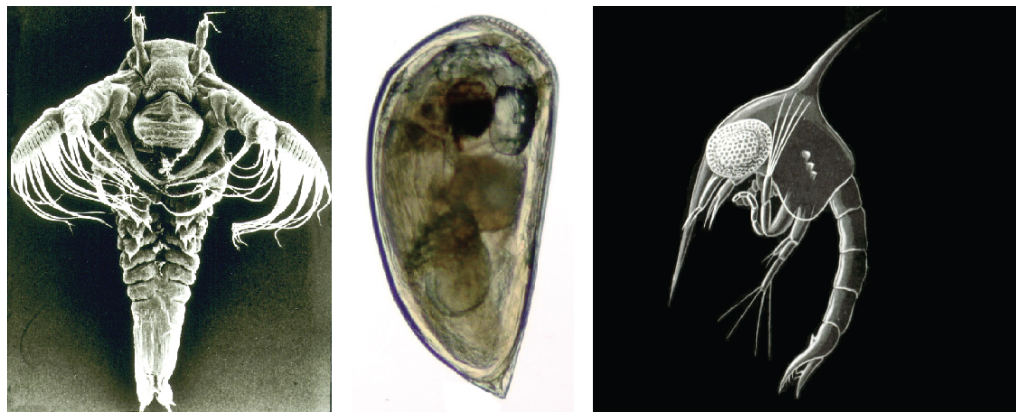
(OpenStax Biology 2e Figure 28.44)
These planktonic larval stages belong to a shrimp (left), a barnacle (center), and a crab (right). To reach adulthood, they will need to undergo a dangerous process called
ecdysis.
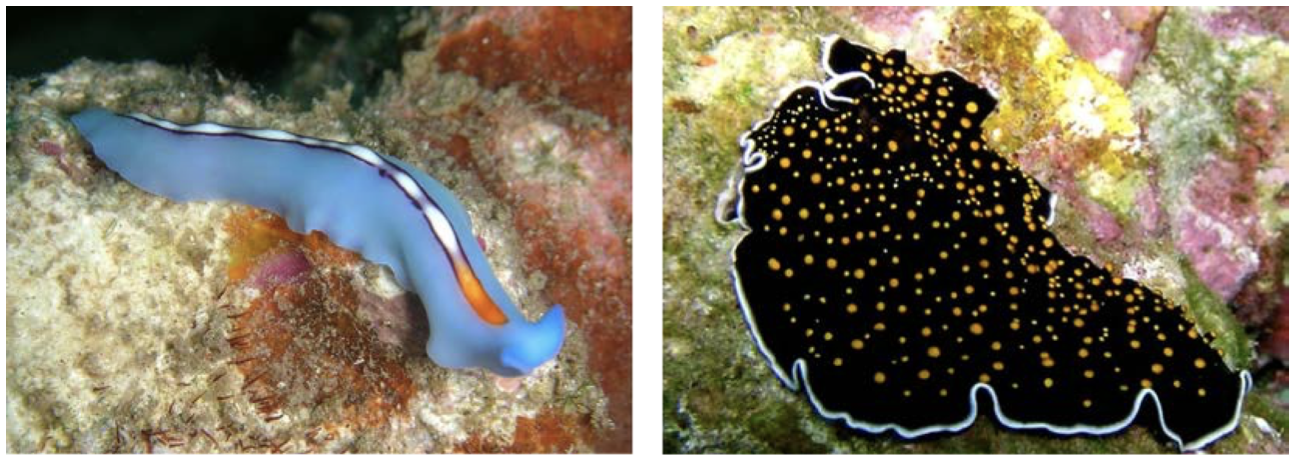
(OpenStax Biology 2e Figure 28.13)
Like the planarian shown above, the colorful marine worms below are free-living members of a worm clade with three germ layers but no body cavity. They are all
flatworms (Platyhelminthes).
Trilobites (OpenStax Biology 2e Figure 27.17) were abundant and diverse, with a mineralized exoskeleton. They are reliable index fossils
from the Cambrian explosion (~541 mya) until the Great Dying, 252 million years ago.
A basal animal called a sponge qualifies as a multicellular 'body.'
true
(OpenStax Biology 2e Figure 28.45)
Typical members of the _____ clade have compound eyes, three body regions, and three pairs of legs. They breathe through spiracles, and they are the only group of arthropods that have evolved _____.
hexapod / wings
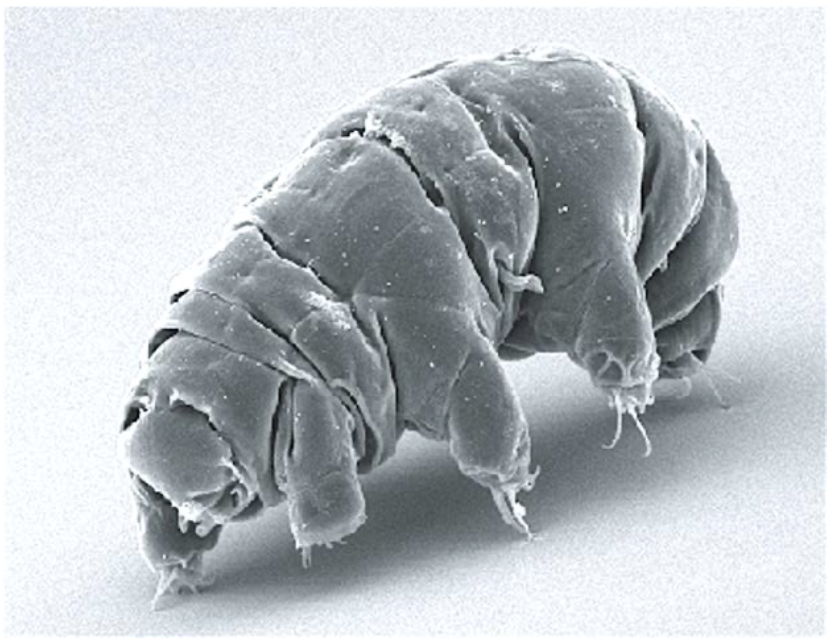
(OpenStax Biology 2e Figure 28.35)
A microscopic tardigrade ("moss piglet" or "water bear") lives in a film of freshwater, and can survive dry spells in a desiccated state. Tardigrades are so strange, they have an entire phylum of their own. But like arthropods they have bilateral symmetry, cephalization, segmentation, and a cuticle that contains chitin and is periodically molted. Tardigrades are
ecdysozoans.
OpenStax Biology 2e Figure 28.23)
Bivalve mollusks like mussels (left) and scallops (right) have a trochophore life stage. To which clade do they NOT belong?
ecdysozoans
Many multicellular fungi form super-organisms through _____ followed by _____.
plasmogamy / karyogamy
Morganucodon and Eozostrodon are the genus names of what kind of extinct creature?
animals that were 'almost' mammals
Algae are monophyletic.
False
A constricting ring formed by Arthrobotrys traps a nematode. Fungal hyphae invade and digest the nematode. This is an example of a _______ interaction.
predatory
This stonewort (OpenStax Biology 2e Figure 25.8) may be similar to the common ancestor of land plants. It is considered a green plant, but NOT a land plant. It is a member of the _____ clade.
charophyte
Many fungi are _______, associating with photosynthetic organisms to form mycorrhizae or lichens.
mutualistic
The creature called Amphioxus has a backbone.
False
A red tide is caused by
phytoplankton called dinoflagellates
The coal we burn today is not made from dinosaurs, but from ancient forests made up of large, tree-like plants. Since these plants lived more than 300 million years ago, there were no angiosperms yet among them. Therefore, these forests contained early gymnosperms and
lycophytes and monilophytes.
Pollination happens when male gametophyte is transferred to a female gametophyte. (If all goes well, fertilization will follow this step, resulting in a new sporophyte generation.) Pollen can be transferred from a male strobilus to a female strobilus, or from a male flower (or flower part) to a female flower (or flower part). Pollination is part of the life cycle in
gymnosperms and angiosperms.
Every single creature whose embryo contains a notochord, a nerve cord, and gill slits belongs to a category called:
chordates
Powerful exoenzymes and maximum surface area provided by abundant long, thin, underground hyphae are excellent adaptations for
absorptive heterotrophy
_____ is a process in which certain organelles are the descendants of prokaryotes that were engulfed, but not digested, by ancient eukaryotic cells.
Endosymbiosis
Dinoflagellates are common endosymbionts of
corals
According to the endosymbiotic theory of the origin of eukaryotic cells, how did mitochondria originate?
from engulfed, originally free-living prokaryotes
This word describes a fungal infection (such as the zombie ant fungus, or the honey mushroom, which eats live trees from the inside out).
mycosis
Eukaryotic organisms that are single celled and are often distantly related are best described collectively and informally as.....
protists
A single cell that can produce a multicellular generation (all by itself, through mitosis). define
spore
When fertilized, this becomes a fruit (containing one or more seeds within). define
ovary
A male gamete (haploid cell which must fuse with another gamete to become diploid before any growth/division can take place). define
sperm
When fertilized, this is called a seed; it contains the (multicellular but microscopic) female gametophyte of a seed plant. define.
ovule
A female gamete (haploid cell which must fuse with another gamete to become diploid before any growth/division can take place). define
ovum/ egg
Contains the (multicellular but microscopic) male gametophyte of a seed plant. define.
pollen grain
Which feature is universal in the life cycles of land plants?
alteration of generations between haploid gametophytes and diploid sporophytes
"Alternation of generations" describes a life cycle found in
all land plants
Kelp is the underwater ecological equivalent of a tree; it supports an entire community of marine life.
true
Ecological roles of fungi include
all of these
In a jellyfish body plan, there is no distinguishable front/back or left/right orientation. t/f
true
Without fungi, human civilization would not have
all of these: wine, bread, penicillin, beer.
"Take the Organizer region from a chicken and graft it onto a salamander embryo: you get a ..."
twinned salamander

