BIO Lab Safety Quiz
 Studied by 0 people
 Call Kai
 Learn
Learn Practice Test
 Spaced Repetition
 Match
Match Flashcards
 Knowt Play
1/12

There's no tags or description
Looks like no tags are added yet.
Name | Mastery | Learn | Test | Matching | Spaced | Call with Kai |
|---|
No analytics yet
Send a link to your students to track their progress
13 Terms
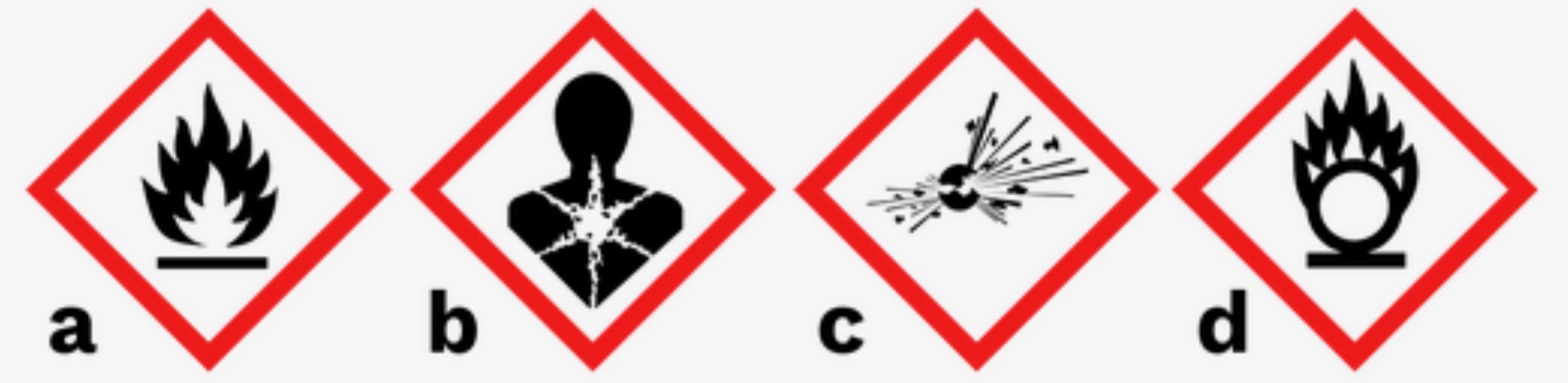
Question 1: Which symbol depicts an oxidizing reagent?
a. Option A
b. Option B
c. Option C
d. Option D
d. Option D

Question 2: What does the following symbol mean?
a. Health hazard
b. Harmful
c. Corrosive
d. Toxic
a. Health hazard
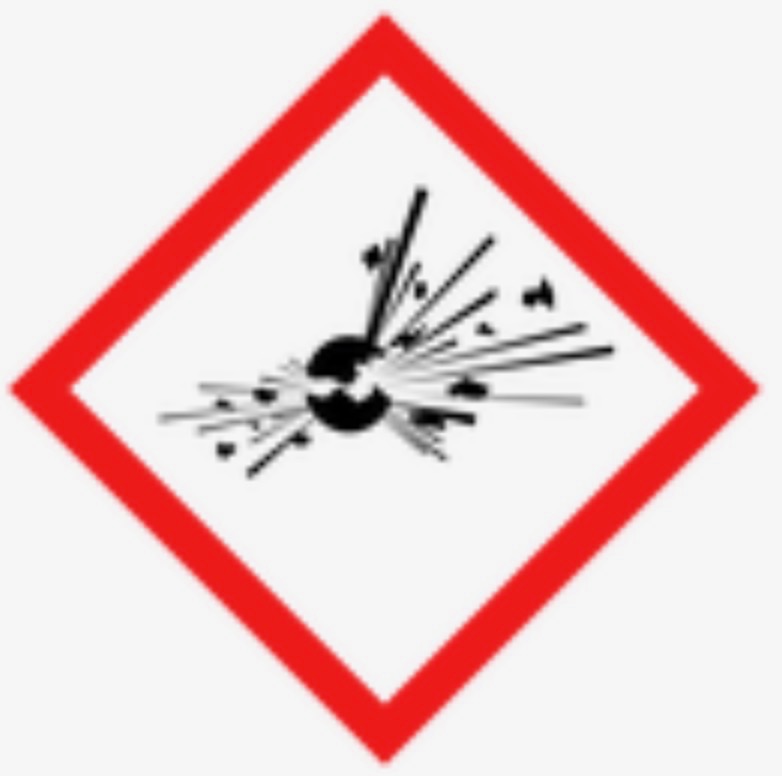
Question 3: Here is an image of the hazard symbol on the box. What does it mean?
a. Explosives
b. Flammable
c. Oxidizer
d. Toxic
a. Explosives

Question 4: What does the hazard symbol on the beaker mean?
a. Corrosive
b. Flammable
c. Explosive
d. Toxic
a. Corrosive
Question 5: Goggles can protect your eyes from:
a. Fumes
b. Debris
c. Vapors
d. All of these
d. All of these
Question 6: What do you have to do if there is an unexpected violent chemical reaction in a bottle?
a. Evacuate
b. Put the lid on the bottle
c. Add baking soda for neutralization
d. Add water
a. Evacuate
Question 7: What should you NOT do if a person's clothes suddenly catch fire?
a. Wrap a fire blanket around a standing person
b. Stop them and smother the fire by rolling them on the floor
c. Drag them under a safety shower
d. Splash them with a bucket of water
a. Wrap a fire blanket around a standing person
Question 8: There are usually two different types of fire extinguishers: CO2carbon dioxide based extinguishers and foam based extinguishers.
Never use a CO2carbon dioxide based extinguisher on a person. Do you know the reason why?
a. CO2carbon dioxide is freezing cold
b. The person would suffocate
c. CO2carbon dioxide is toxic
d. CO2carbon dioxide is corrosive
a. CO2carbon dioxide is freezing cold
Question 9: What is the first thing you have to do if there is a fire in the lab?
a. Alert people
b. Run for the fire extinguisher
c. Splash the fire with water
d. Open the windows
a. Alert people
Question 10: What do you have to do before leaving the lab, to make sure you don't carry traces of chemicals outside?
a. Take off your lab coat and wash your hands
b. Turn off the main power
c. Tell your supervisor
d. Wash your hands and then remove your lab coat
a. Take off your lab coat and wash your hands
Question 11: Choose ALL of the following statements that are TRUE about proper laboratory attire.
a. Long hair should be tied back.
b. Long pants should be worn.
c. Shorts are okay if it is hot in the summer.
d. Closed toed shoes are required.
a. Long hair should be tied back.
b. Long pants should be worn.
d. Closed toed shoes are required.
Question 12: Which of the following should you wear if you are working with chemicals in a lab?
a. Lab coat
b. Safety Goggles
c. Gloves
d. All of the above
d. All of the above
Question 13: Why is it dangerous to wear contact lenses in the lab?
a. Liquid can become trapped under them and cause eye damage.
b. The plastic reacts with acids
c. Eye glasses protect your eyes better than contact lenses.
a. Liquid can become trapped under them and cause eye damage.
 Note
Note  Flashcards (25)