Economics
 Call Kai
 Learn
Learn Practice Test
 Spaced Repetition
 Match
Match Flashcards
 Knowt Play
1/34

There's no tags or description
Looks like no tags are added yet.
Name | Mastery | Learn | Test | Matching | Spaced | Call with Kai |
|---|
No analytics yet
Send a link to your students to track their progress
35 Terms
capital
resources we use to get things we want and need
- can be economic, social, or cultural
economic capital
financial resources that are or can be converted into money
income
steady sources of money
- salary, interest payments, social assistance etc.
wealth
money sitting in the bank and ownership of economic assets minus debts
measures of central tendency
median - middle value among a set of numbers (lowest to highest)
mean - sum of all values divide by the number of values
mode - value among a range of values that occurs most often
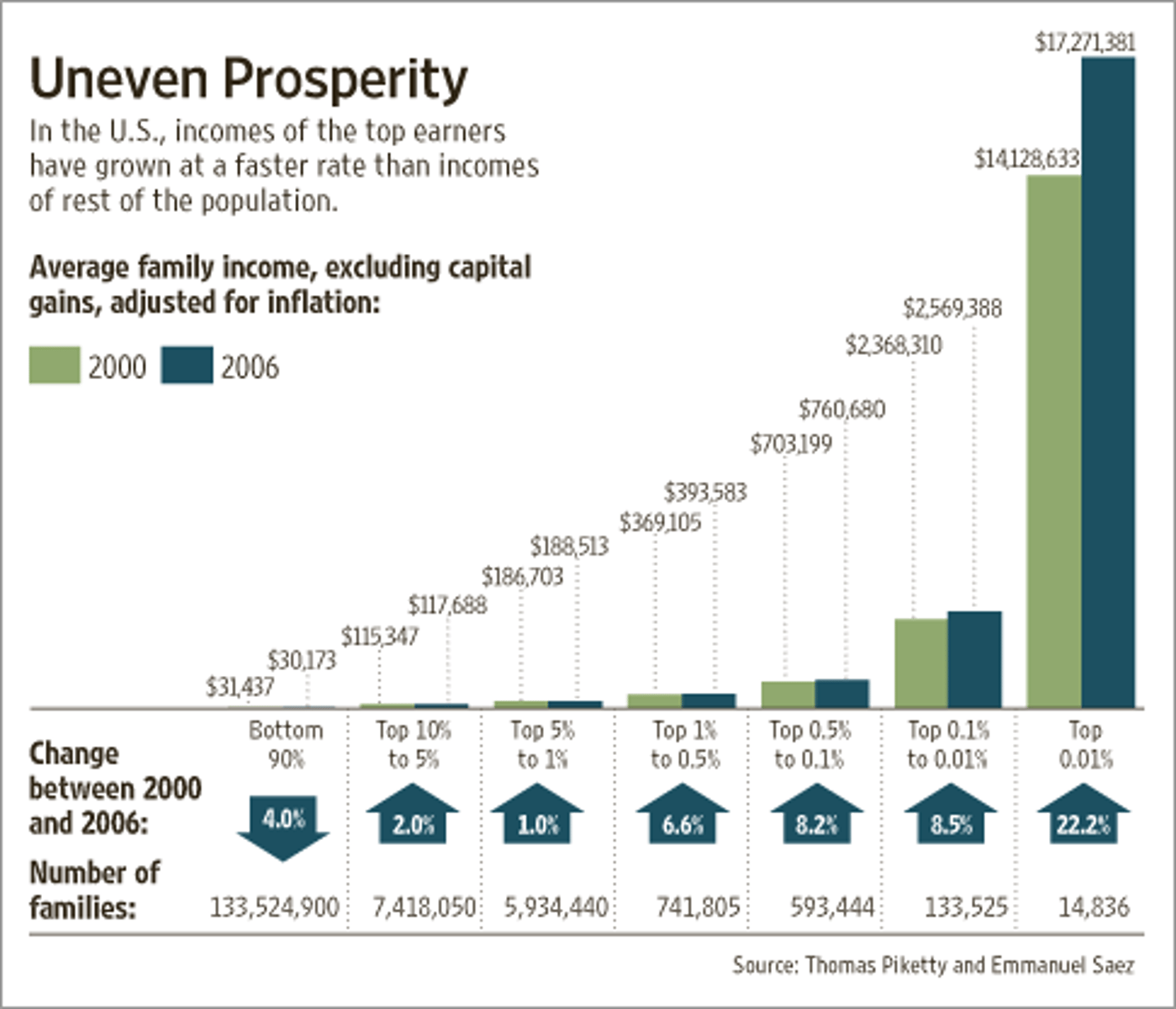
distribution of income
- households in the lowest fifth earn mean 16,000 a year while highest 5th earn about 277,000
- highest earning 10% of households make more than 53,000 every month
- hughest 1% with annual salary of 2800000 make about 233000
disproportionate
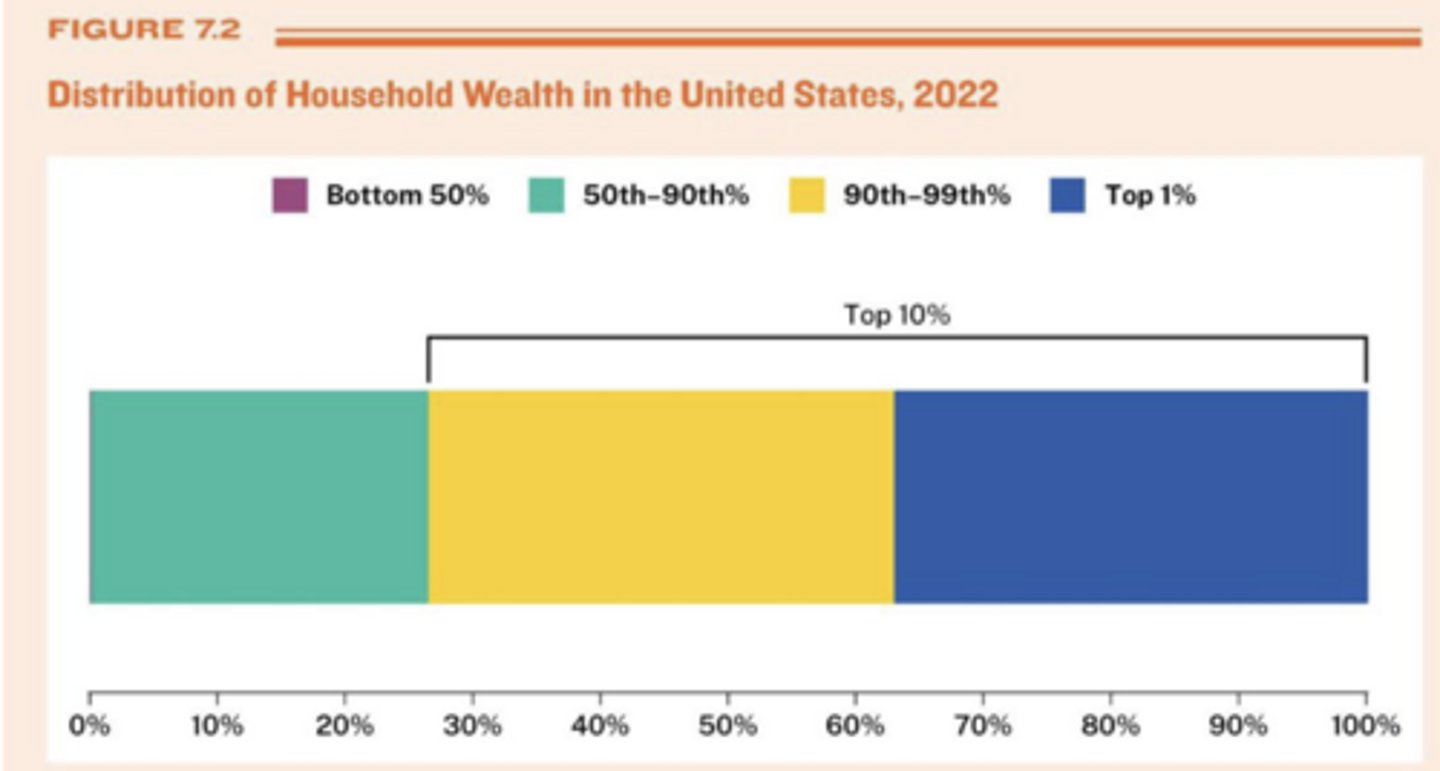
when a resource is distributed unevenly
- of all income earned by all americans in any given year, the bottom 90% of households share about half of it
- the other half goes to the top 10%
- nearly half of that half (24% of all income) goes to top 1 %
economic elite
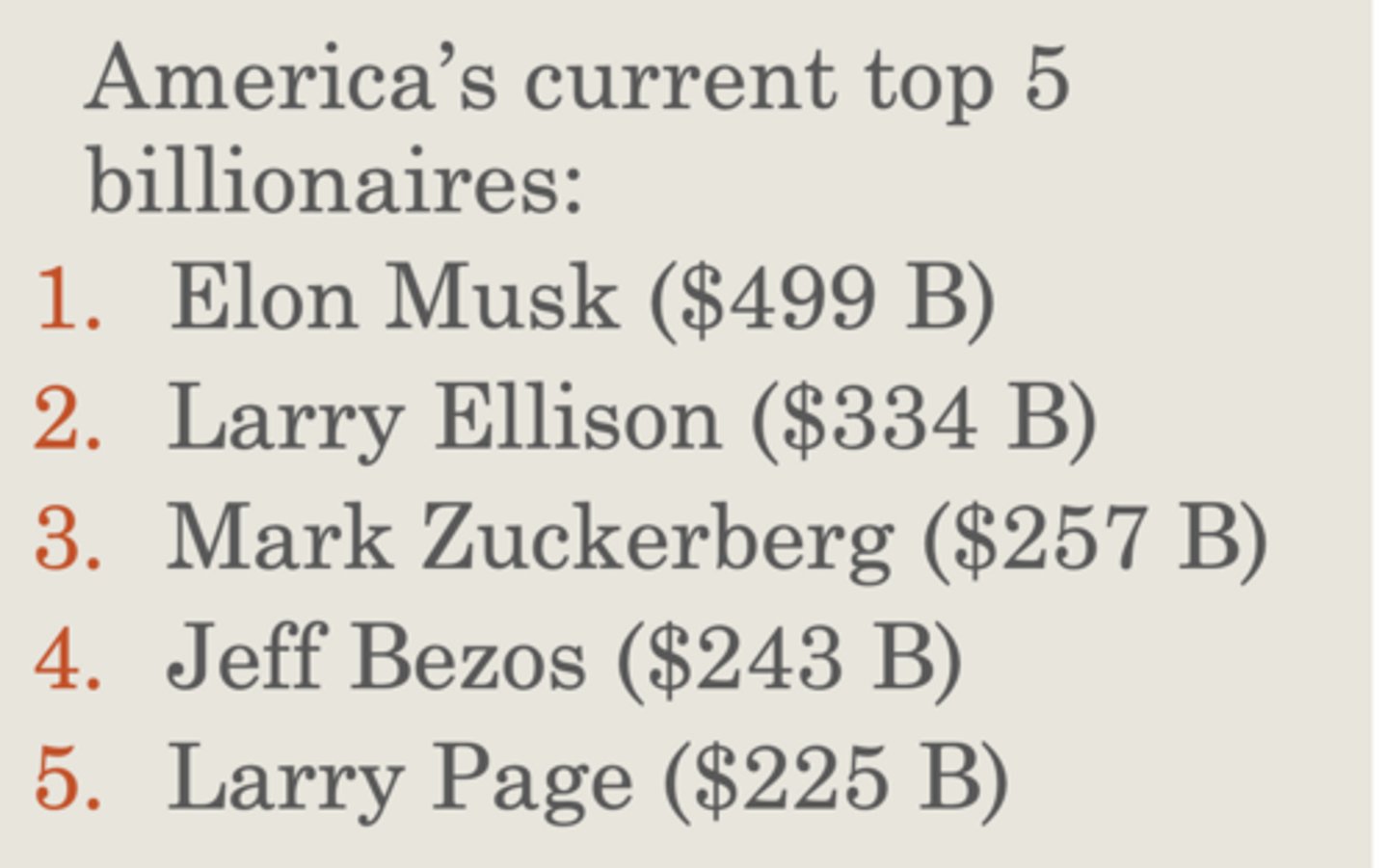
minority of people who control a disproportionate about of wealth
- hold twice the wealth held by the bottom half of the US population
wage
cash payments given to workers in exchange for their labor
capitalism
economic system based on private ownership of the resources used to create wealth and the right of individuals to personally profit
- facilitated affordable prices
- higher rates of production
-level of luxury and convenience
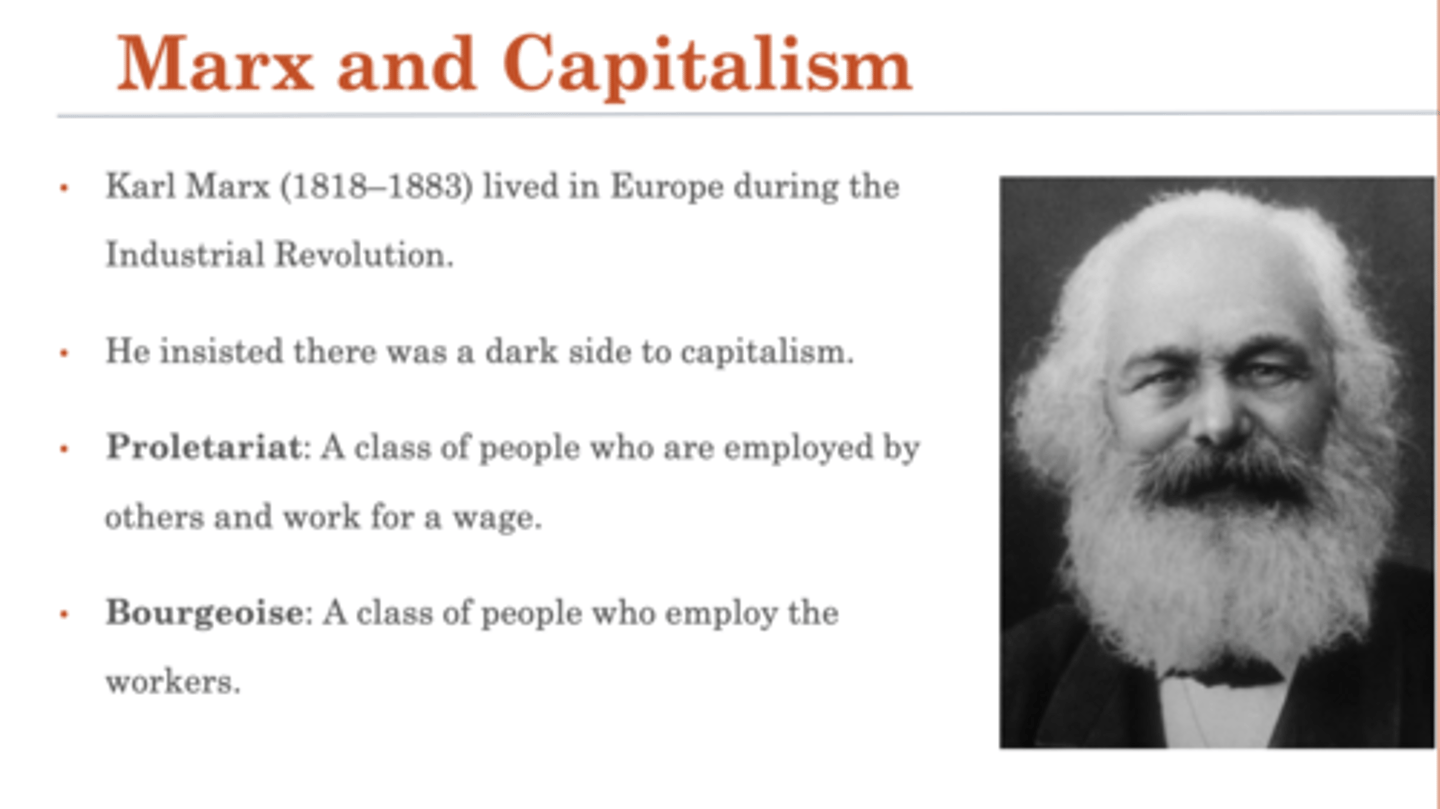
proletariant
class of people who are employed by others and work for wage
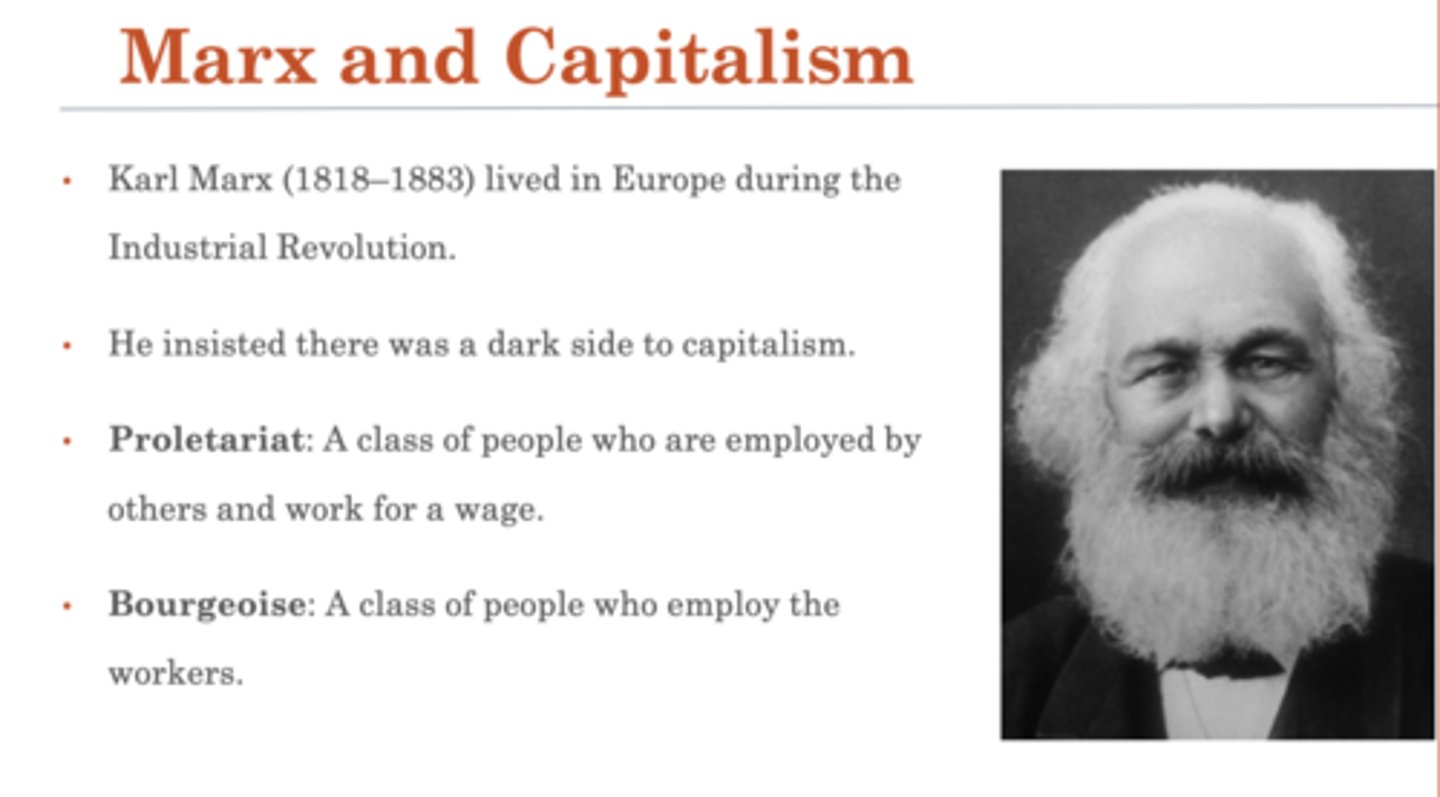
Bourgeoise
class of people who employ the workers
means of production
resources that can be used to create wealth
labor
the work people can do with their bodies and minds
alienation
feeling of dissatisfaction and disconnection from the fruits of one's labor
crisis of capitalism
a coming catastrophic imlosion from which capitalism would never recover
class consciousness
understanding that members of a social class share economic interests
socialism
economic system based on shared ownership of the resources used to create wealth that is distributed by governments for the enrichment of all
Gilded age (1870-1900)
- by 1890, the 1% were so rich that they owned more property than every other American combined
- free market capitalism - capitalist system with little or no government regulations
- built monopolies, treated workers inhumanely, bribery and shady deals
proletariat response
- like marx's prediction, movement of workers rose up in response
- labor unions - associations that organize workers so they can negotiate with their employers as a group instead of individuals
(resisted violently by business owners)
The New Deal (1933-1936)
- following the great depression, politicians passed laws to protect the proleteriant and rein in the bourgeoisie
- unions normalized living wage (allows full time workers to afford basic needs)
social safety net
patchwork of programs intended to ensure that the most economically vulnerable do not go without basic necessities
welfare capitalism
capitalist economic system with some socialist policy aimed at distributing the profits of capitalism more evenly across the population
new middle class
- mostly white middle class
- new deal polices excluded black and hispanic americans or ensured that they recieved inferior benefits
- members of new middle class held contradictory class locations
contradictory class locations
positons in economy that are like the proletariant and in other ways like bourgeoise
new gilded age (2000- today)
- in the first gilded age, the top 10% owned 80% of the wealth; today they own 77%
- at first they took home 49% of the income; today they take home 50%
- unraveling socialist polices of the new deal
service and information economy
economy centered on jobs in which workers provide services or work with information
social mobility
opportunity to move up or down in economic hierarchy
- class systems sort people into different positions in an economic hierarchy but also allow them to rise or fall
- class based societies produce higher levels of social stratification
- mobility is limited in the US. class reproduces itself
- more important to americans than poverty relief and overall level of inequality
glass ceiling
invisible barrier that restrict upward mobility
- class at birth is correlated with life outcomes
glass floor
invisible barrier that restricts downward mobility
inequality and working
- fastest growing jobs are at the bottom of the income pay scale
- low paying service jobs are gigs (under age of 35, disproportionately women and people of color, immigrants, long hours, few workplace protections, piecemeal tasks, no paid sick days, overtime, no accomidations)
result is that....
americans are struggling financially
precariat
new class of workers who live economically precarious lives
- even college graduates are at risk of becoming members of the precaruart
- nearly half of college graduates work in jobs that dont require a college degree
working poor
people in labor force who earn poverty level wages
- low wages force many workers to supplement their incomes with government aid
- US has high poverty rates (measured by life expectancy, infant mortality, vulnerability to violence)
americans perfer...
government gaurenteed work over a social safety net that protects the employed and unemployed alike
- the richest a,erocams are especially likely to oppose social safety net programs
- stereotpes pf poor people portray them as lazy, untrustworthy and greedy w too many children
- more than half of americans belive that transfer payments to people in poverty just encourage them to stay poor

