2.1 types + causes
 Studied by 0 people
 Call Kai
 Learn
Learn Practice Test
 Spaced Repetition
 Match
Match Flashcards
 Knowt Play
1/24

There's no tags or description
Looks like no tags are added yet.
Name | Mastery | Learn | Test | Matching | Spaced | Call with Kai |
|---|
No analytics yet
Send a link to your students to track their progress
25 Terms
types of hypertension
Primary (Essential) Hypertension
secondary hypertension
hypertensive crisis
isolated systolic hypertension
white coat hypertension
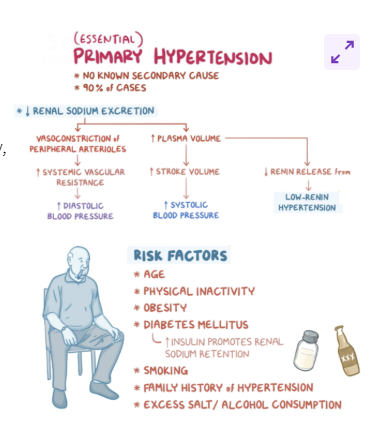
primary hypertension is the most common type
where there is no single identifiable cause and tends to develop gradually over many years
primary hyp contributing factors
genetics
poor diet, especially high salt intake
physical inactivity
obesity
smoking
stress
primary hyp prevalence
90%-95% of hypertension cases
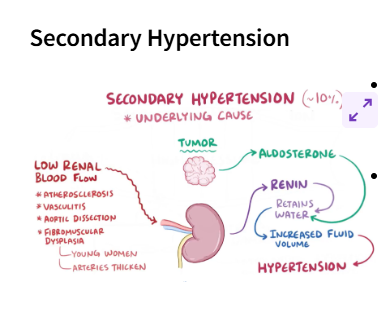
secondary hypertention is caused by underlying conditions
once the condition is treatment blood pressure often returns to normal
secondary hypertension causes
kidney disease,
hormonal disorders (e.g. Cushing’s syndrome, hyperaldosteronism),
thyroid problems,
obstructive sleep apnoea,
and certain medications (e.g. contraceptive pills or decongestants).
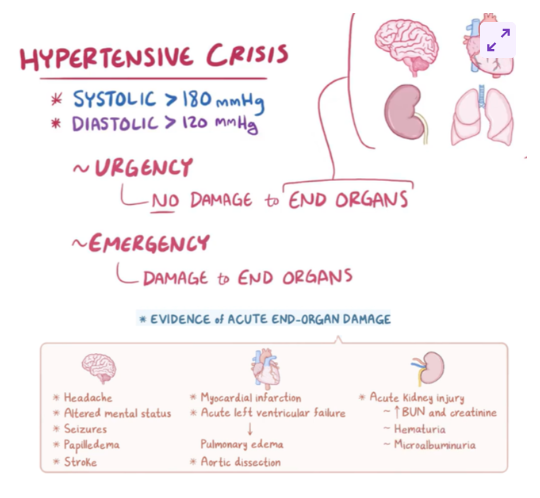
hypertensive crisis is a severe and rapidly progress in form of hypertension
where blood pressure rises dangerously high typically above 180/120 mmHg). It is a medical emergency.
hypertensive crisis causes
Can occur in both primary and secondary hypertension
but is more likely in people with uncontrolled blood pressure.
hypertensive crisis symptoms
organ damage
severe headache
chest pain
vision problems
shortness of breath
hypertensive crisis complications
immediate stroke
heart attack
kidney failure
isolated systolic hypertension is a condition where only the systolic blood pressure is elevated
while the diastolic pressure remains normal
isolated systolic hypertension causes
Common in older adults due to the stiffening of large arteries
, but can also occur due to hyperthyroidism or other conditions.
white coat hypertension evelated blood ropessure reading onlin in clinical setting
but normal reading outside this environment
white coat hypertensionc auses
axciety/ stress reated to medicla settins
white coat hypertension managment
monitored with home HBPM or ambulatory ABPM blood rpessure monitoring to avoid unnessary medication
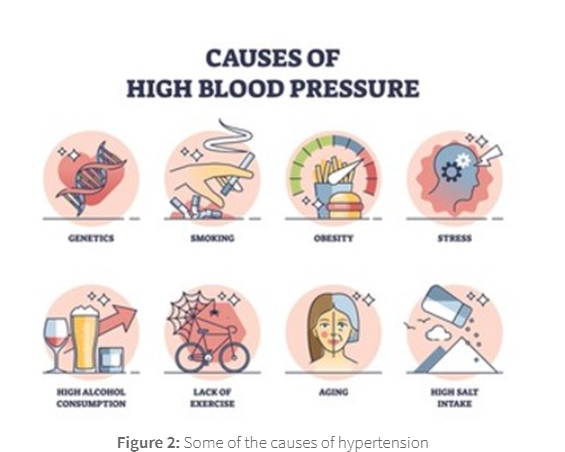
causes of hypertension
dietary factor
physical inactivity
obesity
alcohol consumption
stress
smoking
family history
gene variantss
dietary factors
High Salt Intake: Excess sodium in the diet leads to fluid retention, which increases the volume of blood in the arteries, raising blood pressure.
High Consumption of Saturated Fats: Diets high in saturated fats can lead to cholesterol build-up in the arteries, contributing to hypertension.
physical inactivity
Lack of exercise is associated with weight gain, atherosclerosis (narrowing of arteries), and increased peripheral resistance, all of which elevate blood pressure.
obesity
Excess body fat, especially around the abdomen, increases the workload on the heart and blood vessels, leading to higher blood pressure.
alcohol consumption
Regular consumption of excessive alcohol can raise blood pressure by damaging the heart and blood vessels over time.
stress
Chronic stress leads to temporary increases in blood pressure, which may become sustained in the long term, especially when coupled with poor coping mechanisms like smoking or overeating.
smoking
Nicotine causes the blood vessels to constrict, increasing resistance and raising blood pressure. Smoking also damages the arterial walls, exacerbating hypertension.
age and gender
Hypertension becomes more common with age as blood vessels naturally lose their elasticity. It is also more prevalent in men under the age of 55 and women over 55.
family history
A family history of hypertension significantly increases the risk. Genetic predispositions affect how the kidneys regulate salt, how the blood vessels constrict, and how hormones like renin and angiotensin are regulated.
gene variants
Renin-Angiotensin-Aldosterone System (RAAS) genes: Variants in genes regulating the RAAS can lead to overactivity, causing blood vessel constriction and increased sodium reabsorption in the kidneys thereby raising blood pressure.
Sodium-Transport Genes: Mutations in genes regulating sodium balance can predispose individuals to salt-sensitive hypertension, leading to increased blood pressure in response to high salt intake.
 Note
Note  Flashcards (24)