H2 - Lab- 3 - Bleeding Time, Capillary Fragility, Clot Retraction - Complete
 Call Kai
 Learn
Learn Practice Test
 Spaced Repetition
 Match
Match Flashcards
 Knowt Play
1/149

There's no tags or description
Looks like no tags are added yet.
Name | Mastery | Learn | Test | Matching | Spaced | Call with Kai |
|---|
No analytics yet
Send a link to your students to track their progress
150 Terms
Bleeding time
This test measures the In vivo measurement of the platelet adhesion, and aggregation to a locally injured vascular sub-endothelium
Factor VIII-vWF complex, GP Ib/IX complex
The presence of these complexes are necessary for platelet adhesion to occur
Bleeding time
It is the initial test for patients suspected of having congenital platelet abnormality or vWD
Primary platelet plug, Vasoconstriction
Bleeding time is dependent on the formation of this end product in primary hemostasis (#1), and the initial event that happens upon injury of the blood vessel wall (#2)
Aspirin, Non-steroidal Anti-inflammatory drugs
Medications that prolong bleeding time
Anti-platelet effect
What effect does Aspirin have on platelets?
Cyclooxygenase
Aspirin inhibits the catalytic activity of what enzyme?
Thromboxane A2
Aspirin inhibits cyclooxygenase, which leads to the inhibition of the synthesis of what platelet agonist?
1 week
Patients taking Aspirin should discontinue ingestion for how long prior to the bleeding time test?
Ibuprofen, Naproxen, Tolmetin sodium, Ticlopedine
Examples of Non-steroidal Anti-inflammatory drugs
24 hours
Patients taking NSAIDs are asked to discontinue ingestion for how long prior to the bleeding time procedure?
Keloid formation
Before starting the bleeding time procedure, the patient should be informed of the possible formation of this type of scarring on their site of incision.
Duke method, Ivy method, Template method
Methods for bleeding time
Feather lancet
Duke method materials used
Earlobe, Fingertip
Duke method site of puncture
Lancet size-dependent
Duke method incision size
5 minutes
Duke method normal value
Every 30 seconds
Duke method frequency of wicking blood using Whatman filter paper #2
Feather lancet, Blood pressure cuff
Ivy method materials used
40 millimeters of Mercury
Ivy method BP cuff pressure used
Blood pressure cuff
What equipment used in the Ivy method makes it standardized?
Volar surface of the forearm 5 centimeters below the antecubital crease
Ivy method site of puncture
Free of veins, scars, bruise, hairs, swelling
Ivy method site of puncture requirement
Parallel to the antecubital crease (3.5mm), Lancet-size dependent
Ivy method incision size
2.5-7 minutes
Ivy method normal value
Modified Ivy method
Other name for Template method
Melke et al.
They modified the Ivy method, making Template method
Disposable template device, Blood pressure cuff
Template method materials used
40 millimeters of Mercury
Template method BP cuff pressure used
Volar surface of the forearm 5 centimeters below the antecubital crease
Template method site of puncture
Parallel
Template method incision direction that is more sensitive
Perpendicular
Template method incision direction that produces less scar formation
Parallel
Template method incision direction that tends to prolong bleeding time
Parallel
Template method incision direction most commonly used
5 mm long, 1 mm deep
Template method incision size for adults
3.5 mm long, 1mm deep
Template method incision size for pediatrics
White
Surgicutt device color used for adults
Pink
Surgicutt device color used for pediatrics
2-8 minutes
Template method normal value
Whatman filter paper #2
Filter paper used in bleeding time
Wicking
It is the action of blotting the bleeding time incision site with filter paper without touching the incision.
Primary platelet plug formation
Wicking of filter paper for bleeding time is done to avoid disturbing the formation of what product in hemostasis?
30-60 seconds after
After the BP cuff is inflated on the patient's arm in preparation for bleeding time, the procedure should be started after how many seconds?
Note: The timer should also start together with incision
Every 30 seconds
How often is the incision site blotted using Whatman filter paper in bleeding time?
Simplate device
Identify template device.
Its blade remains outside and does not retract. It can either be one or two-blade.
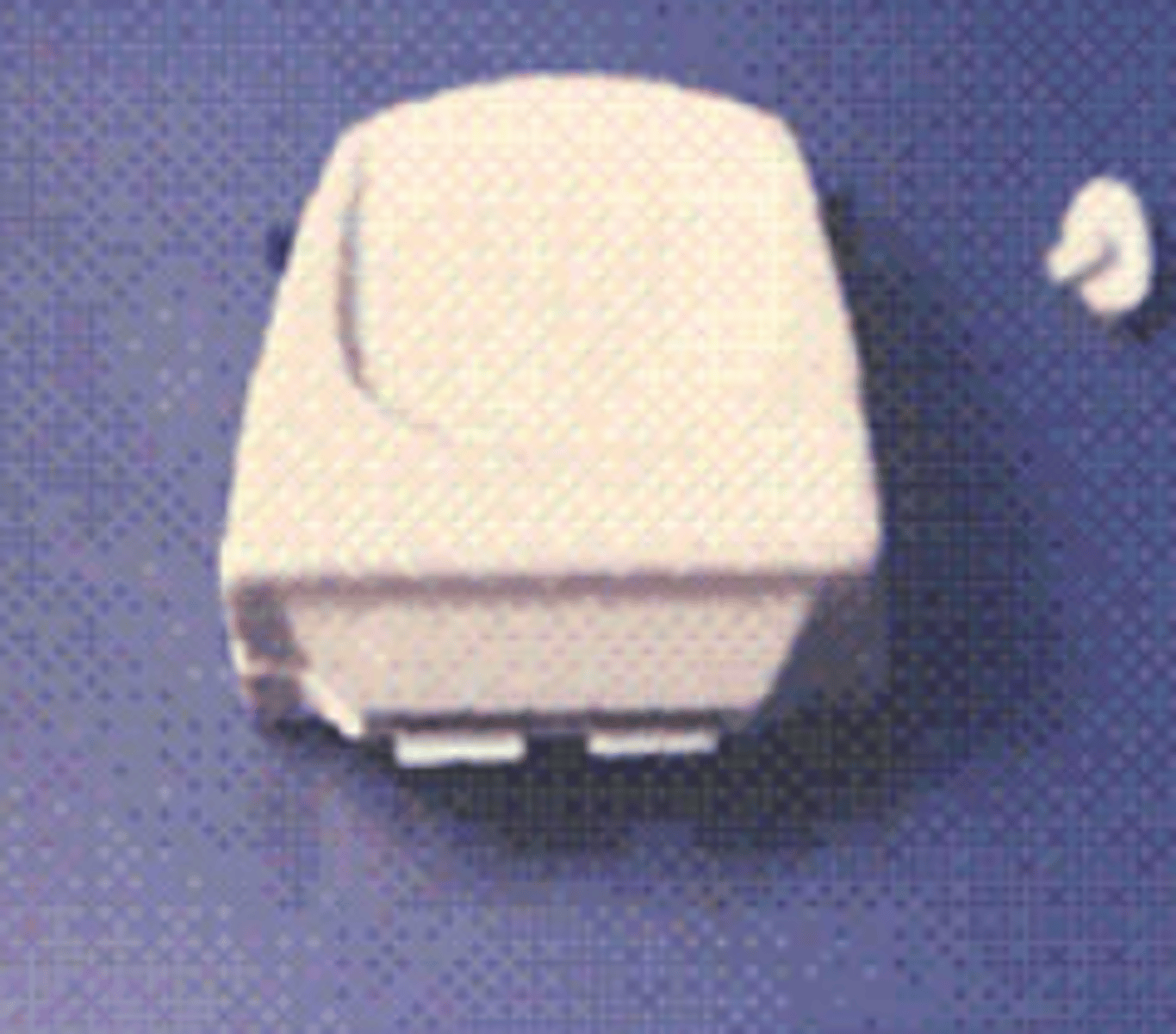
Guillotine-like cut
Incision made by Simplate device
Surgicutt device
Identify template device.
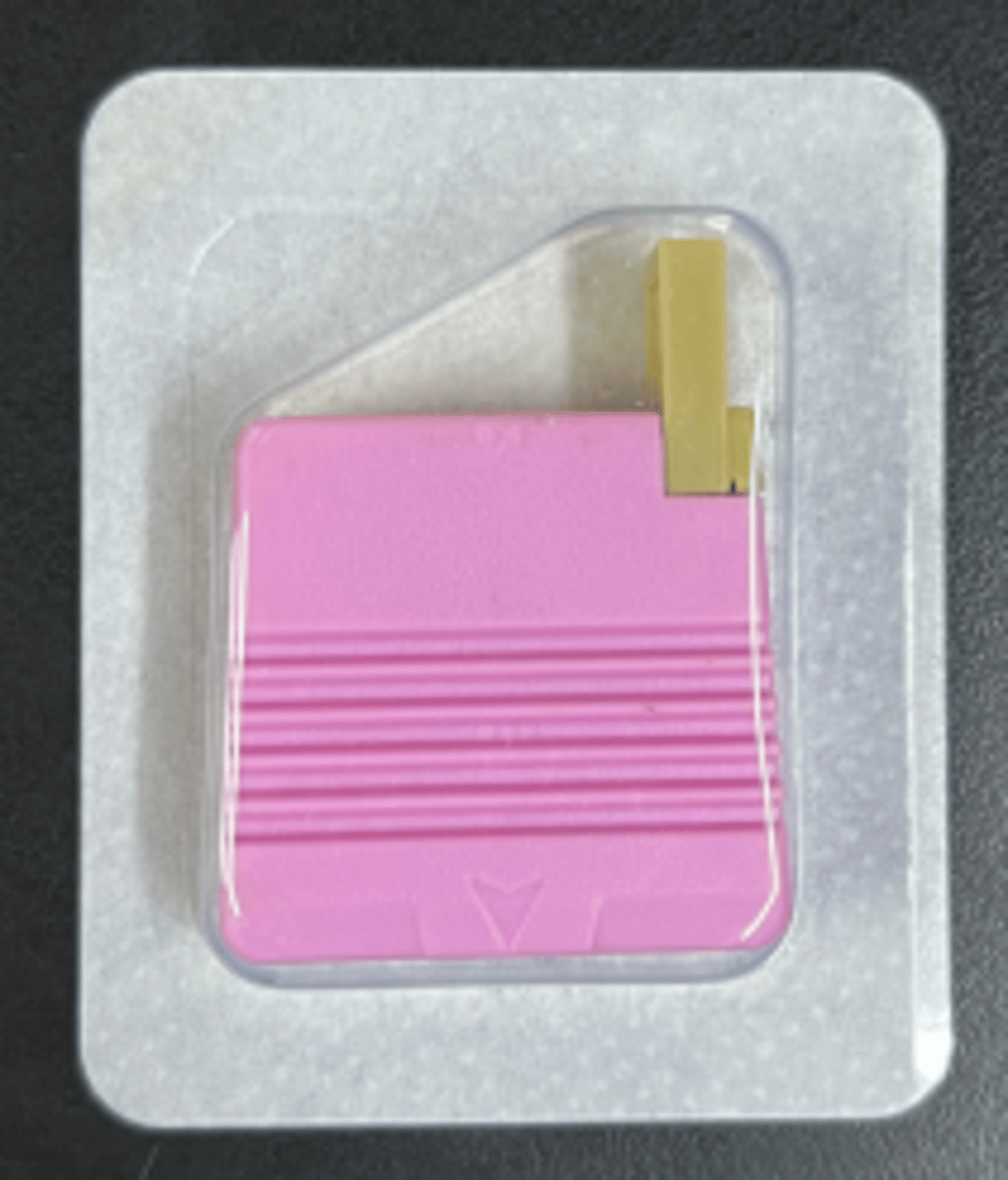
Slicing action
Incision made by Surgicutt device
Surgicutt device
Template device with blade with automatically retracts
Perpendicular to elbow crease
Template method incision direction for infants <4 months
20 millimeters of Mercury
BP cuff pressure for newborns <2 lbs
25 millimeters of Mercury
BP cuff pressure for newborns 2-4 lbs
30 millimeters of Mercury
BP cuff pressure for newborns >4 lbs
Anemia
Red blood cell condition that prolongs bleeding time
Inversely proportional
What is the relationship of the amount of platelets to bleeding time result?
Thrombocytopenia
Platelet condition that prolongs bleeding time
Aspirin, Non-steroidal Anti-inflammatory drugs, Antibiotics like Penicillin and Cephalothin
Medications that prolong bleeding time
von Willebrand's disease, Glanzmann thrombasthenia, Bernard-Soulier syndrome, Congenital storage pool disease
Clinical conditions that prolong bleeding time
von Willebrand's disease
Bleeding disorder with the absence of von Willebrand factor
Glanzmann thrombasthenia
Bleeding disorder due to qualitative platelet defect — Platelet aggregation defect
GP IIb-IIIa complex deficiency
Platelet defect in Glanzmann thrombasthenia
Fibrinogen
GP IIb-IIIa complex is a binding site for what coagulation factor?
Bernard-Soulier syndrome
Qualitative platelet defect that prolongs bleeding time. — Platelet adhesion defect
GP Ib/IX complex deficiency
Platelet defect in Bernard-Soulier syndrome
von Willebrand Factor
GP Ib/IX complex is a receptor for what substance?
GP Ib
What portion of the GP Ib/IX complex is missing in Bernard-Soulier syndrome?
Hermansky-Pudlak syndrome
Other name for Congenital storage pool disease
Preoperative screening
Procedure where bleeding time has no predictive value
Neurosurgical and intraocular procedures
Procedures where bleeding time has predictive value
Discontinue test
If bleeding time exceeds 15 minutes using the Ivy method, what should be the next appropriate course of action?
4' 33''
If bleeding time is 4 minutes and 33 seconds, what is the proper way of writing it down?
Capillary fragility test
This test detects the ability of the small blood vessels to retain RBCs in their lumen under conditions of stress and trauma
Positive pressure
What pressure is utilized in the Capillary fragility test so that small blood vessels undergo stress and trauma?
Tourniquet test, Rumpel-Leede test
Other names for Capillary fragility test
Petechiae formation
Capillary fragility test positive result
Petechiae
These are minute hemorhages in the skin near the site where pressure is applied; indicates bleeding in the skin
Thrombocytopenia, Decreased fibrinogen, Vascular purpura
Conditions with positive tourniquet test
Tourniquet test, Elliot method
Methods used for capillary fragility test
Rumpel-Leede test
Other name for Tourniquet test
Positive pressure
Tourniquet test pressure used
Stethoscope, Blood pressure cuff
Tourniquet test materials used
80 millimeters of Mercury
Tourniquet test BP cuff pressure
5 minutes
Tourniquet test BP cuff duration
Tourniquet
This is used in place of the BP cuff in the Tourniquet test
15 minutes
How long is the BP cuff or tourniquet applied for in the Tourniquet test?
1/2 inch
Petechiae within this distance of the BP cuff in the tourniquet test should be disgarded.
7 days
How many days after can you perform the tourniquet test on the same arm?
False positive
Tourniquet test result if done on the same arm within 7 days
<10 fresh petechiae
Tourniquet test negative result
10-20 fresh petechiae
Tourniquet test borderline result
>20 fresh petechiae
Tourniquet test positive result
Elliot method
Capillary fragility test method that uses negative pressure
Negative pressure
Pressure used in the Elliot method
Suction cups, Petechiometer
Elliot method equipment used
15-20 millimeters of Mercury, 1 minute
Elliot method suction pressure and duration
0-10 fresh petechiae
Elliot method negative result
>10 fresh petechiae
Elliot method positive result
Thrombocytopenia, Glanzmann thrombasthenia, Scurvy, Women before and during menstruation, Women >40 years old
Conditions that exhibit positive capillary fragility test
Idiopathic Thrombocytopenic Purpura, Drug-induced, Immune-induced
Conditions that cause thrombocytopenia resulting in positive capillary fragility test
Scurvy
What condition shows a normal platelet count and a positive capillary fragility test?
Explore top notes

Explore top flashcards
