Lipids
 Call Kai
 Learn
Learn Practice Test
 Spaced Repetition
 Match
Match Flashcards
 Knowt Play
1/72

There's no tags or description
Looks like no tags are added yet.
Name | Mastery | Learn | Test | Matching | Spaced | Call with Kai |
|---|
No analytics yet
Send a link to your students to track their progress
73 Terms
Lipids have low amounts of
oxygen molecules
C = 77%
H = 12%
O = 11%
is the _________ in lipids
percentage found
Lipids are insoluble in water (___________)
hydrophobic
Lipids are soluble _______ solvents
organic
Lipids are characterized by their high _______
energy value
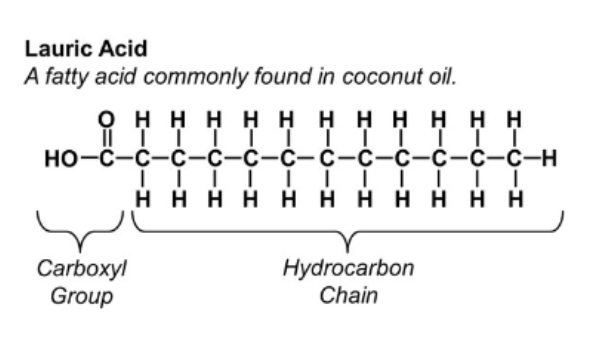
Lauric Acid
One gram of typical lipid yields ____ the gross energy when completely combusted than a carbohydrate.
2.25x
Lipids are digested _____ than carbs or protein
more slowly
Lipid = _____ kcal heat/gram
9.45
Lipids are condensed energy!
Carbohydrate = ________ kcal heat/gram
4.2
Protein = ______ kcal heat/gram
5.6
Fatty Acids are _______
key building blocks for lipids
Fatty Acids are full of chains of _________
carbon atoms with a carboxyl group at one end, and a methyl group at the other
_______ lipids may be “free” or attached to another compound
True
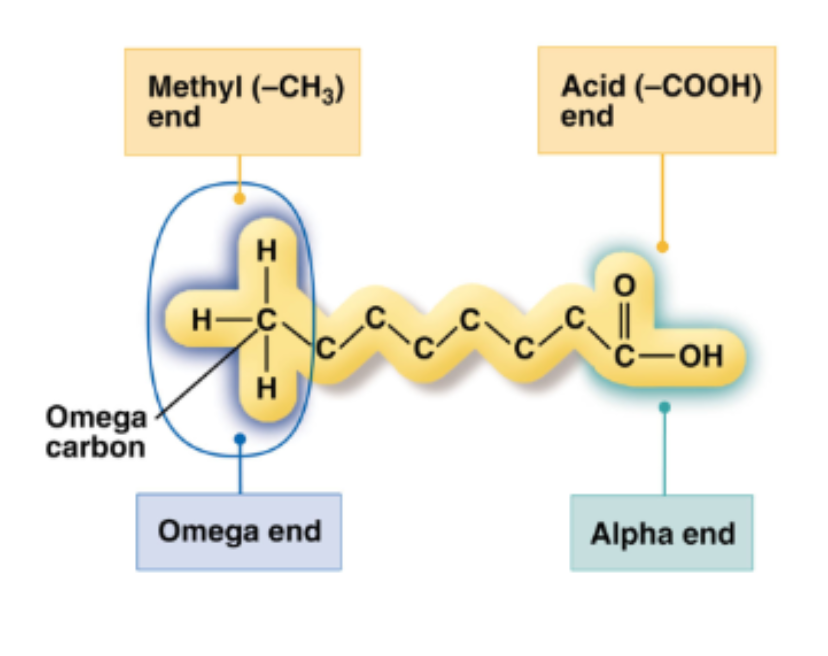
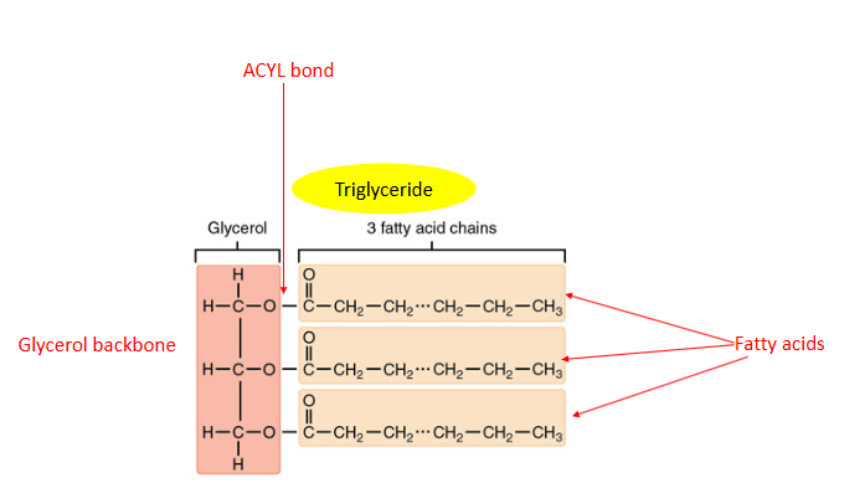
Components of True Lipids
Glycerol Backbone
ACYL Bond
Triglyceride
Fatty Acids
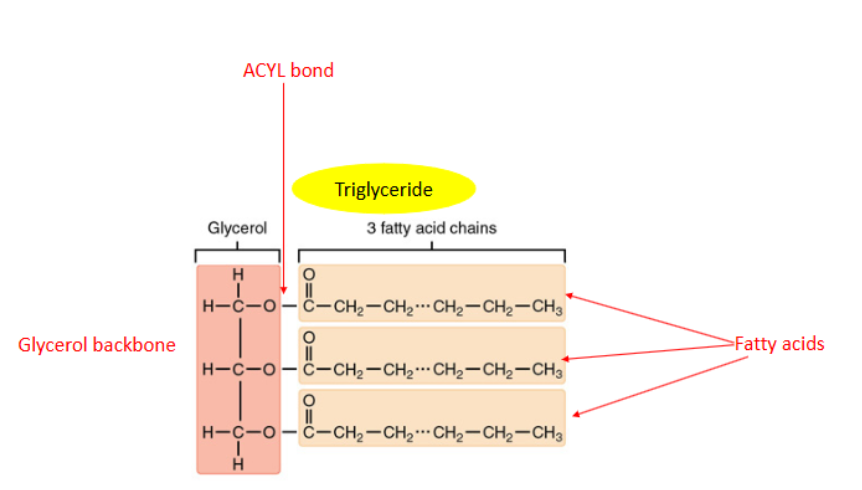
Free fatty acids (FFA):
1. Monoacylglycerides (MAG)
2. Diacylglycerides (DAG)
3. Triacylglycerides (TAG)
Majority of fat stored in the body is in here
_______: breakdown of a compound (the lipid) due to a reaction with H2O.
Hydrolysis
___________: to treat a compound (the lipid) with H2 using a specific catalyst, saturating it with H bonds, making it less toxic or reactive
Biohydrogenation
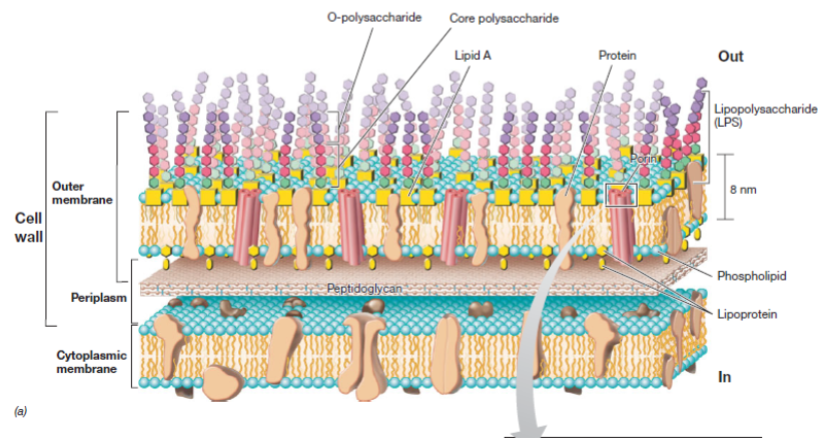
Biohydrogenation is a result of bacterial action on lipids / lipids are toxic to bacteria because lipids can infiltrate a bacterial cell (cell wall = _______)
phospholipid bilayer
True Fats
Waxes
Simple Lipids
Fatty Acids
Triacylglycerols (TAG) carbon chain with glycerol backbone
NOTE: TAG is how lipid is stored in the body
True Fats
carbon chain with different alcohol backbone
Waxes
Simple Lipids
Compound Lipids
Classification of Lipids
Phospholipids
Glycolipids (CHOs)
Lipoproteins (lipids with protein)
Compound Lipids
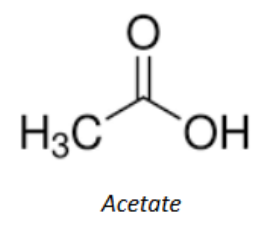
Small lipids are soluble in water (ex: VFA & Short chain fatty acids)
For optimal digestion of lipids, they need to be in a liquid state in the small intestine
Increased chain length = reduced solubility in water
Anything > 8 C long is insoluble in water
Characteristics of Fatty Acids - Solubility in Water
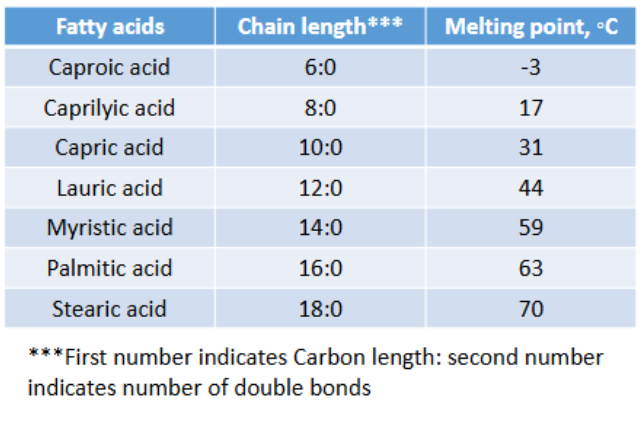
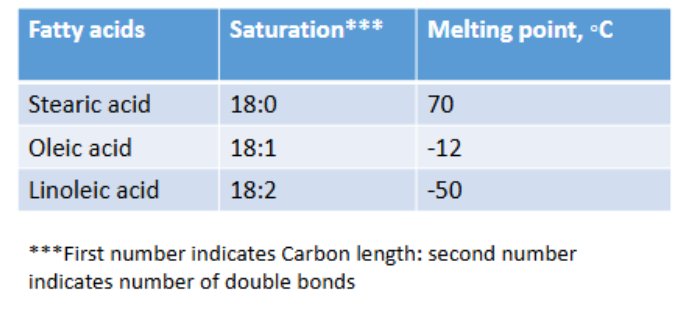
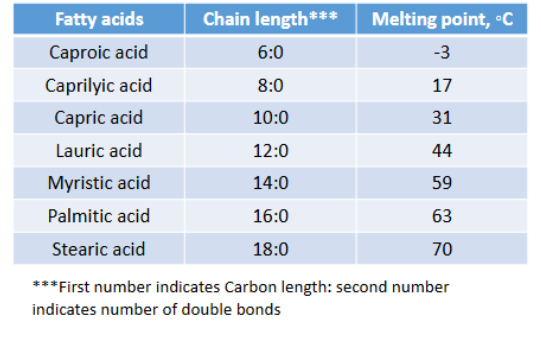
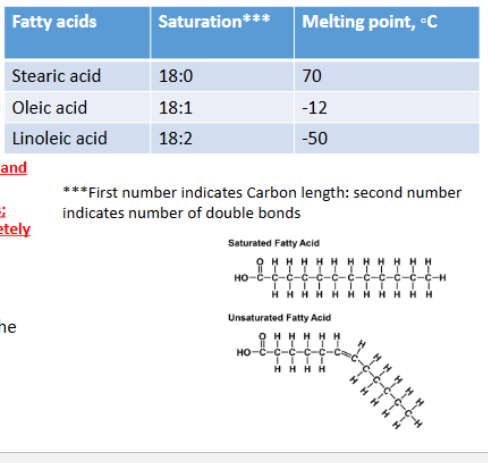
Greater chain length results in higher melting point
Thought questions:
Which of these would be in liquid state at room temperature?
Body temperature?
Characteristics of Fatty Acids - Short Chain vs. Long Chain
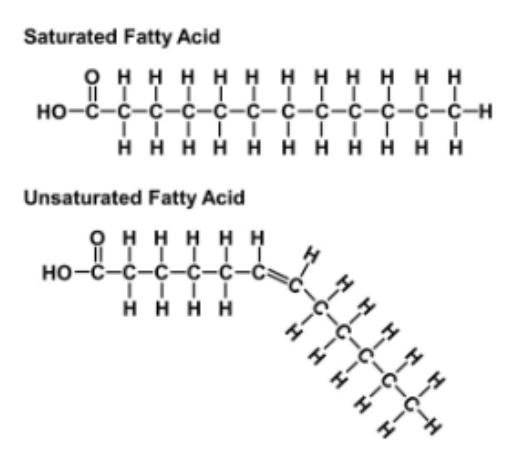
Unsaturated vs. Saturated
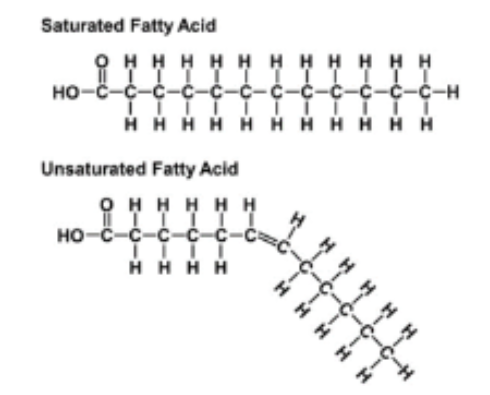
Saturated = saturated with H bonds
Unsaturated = a double bonded C
Characteristics of Fatty Acids - Degree of Saturation
_________: Esters containing groups in addition to an alcohol and a fatty acid
Compound Lipids
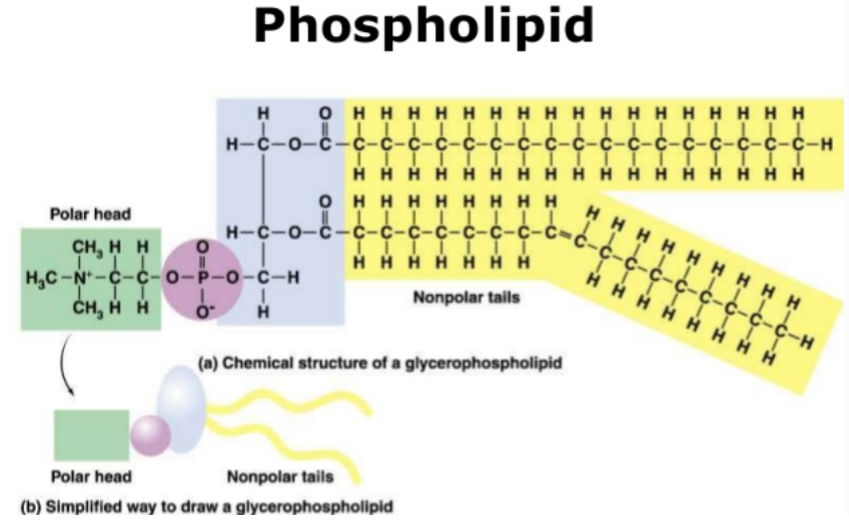
Contain phosphoric acid and nitrogen
Part of cell membranes (phospholipid bilayer!)
Notable types of phospholipids
Lecithin – cell membranes
Sphingomyelin – component of the myelin sheath which lines nerve cells
Phospholipids
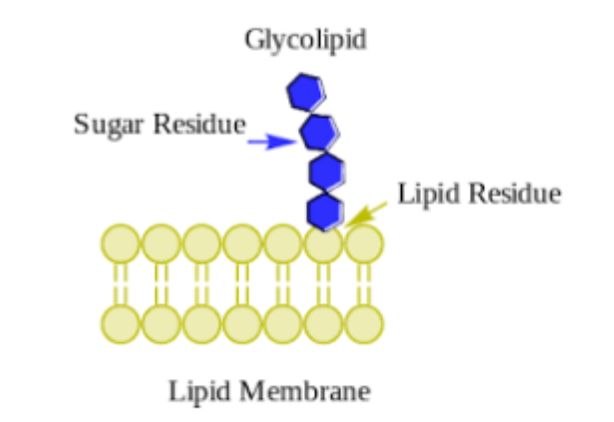
___________: Lipid + carb
Contain a carbohydrate and nitrogen group
Cerebrosides - component of myelin sheath and also the white matter of the brain.
Glycolipid (Lipopolysaccharide)
______: Lipids bound to proteins in blood and other tissue
Chylomicrons: Formed inside enterocytes of the small intestine & diffuse into the lymph system.
Majority of fats transported out of lumen in this manner
Lipids are the one thing that bypass the liver after nutrient absorption
Lipoproteins
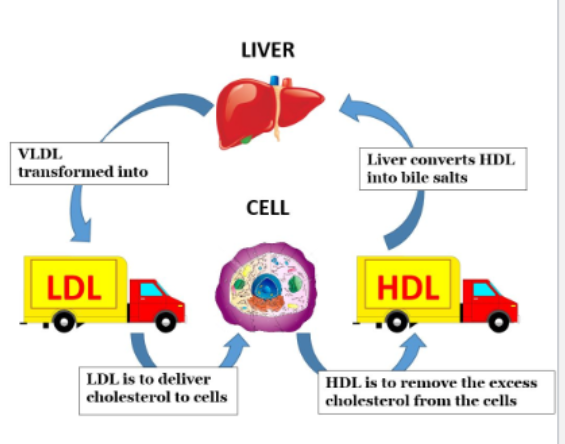
________: Very low density lipoproteins (VLDL) (“bad” cholesterol)
Low density lipoprotein (LDL) (“bad” cholesterol)
High density lipoprotein (HDL) (“better” cholesterol)
Cholesterol is a prerequisite for some important hormones & Vitamin D
Majority of animal cholesterol is synthesized ( ~ 80%) the rest must be consumed in the diet
Animal diets are typically plant based and low in cholesterol
Other Lipoproteins (primarily derived from the liver)
Digestibility of fat is high (> 80%) regardless ______
of GIT
GIT secretes 3 main lipid digesting enzymes:
Lingual Lipase (from the salivary glands)
Gastric Lipase (from the true stomach)
Pancreatic Lipase (from the pancreas)
__________, lingual and gastric lipase provide up to ~50% of lipolytic activity
In young mammals
__________, secretion shifts toward pancreatic lipase having ~ 70% of lipolytic activity
As mammals mature
Poultry rely primarily on ___________
pancreatic lipase activity
Two modes of action
physical emulsification with saliva liquid
Lingual lipase – break acyl bonds
Digestion of Lipids - NON-Ruminants - Mouth
Two modes of action
physical emulsification with stomach secretions (churning)
Gastric lipase - break acyl bonds
Digestion of Lipids - NON-Ruminants - Stomach
Digestion of Lipids - NON-Ruminants: Fat digestion is significantly aided by _______
Mastication and churning (oil in water concept)
Increases surface area for lipase attachment
emulsification
________ & ______ contributions:
Bile
Primarily water & electrolytes
Bile salts
Phospholipids (Lecithin)
Cholesterols
Pancreatic Lipase
Cleave glycerol from fatty acid chains
Digestion of Lipids - NON-Ruminants - Liver and Pancreas
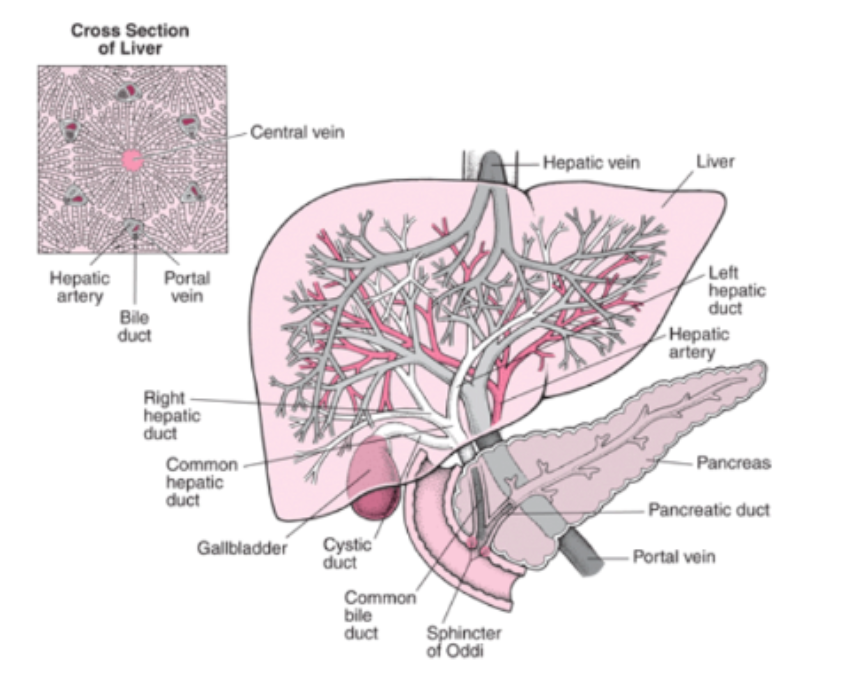
Digestion of Lipids - NON-Ruminants - Contraction of the stomach stimulates the release of the hormone “GASTRIN” which contracts the gallbladder & relaxes the Sphincter of Oddi to release _________
bile and pancreatic lipase into the lumen of the small intestine
Digestion of Lipids - NON-Ruminants - Challenges and Solution
Digestion takes place in the duodenum of the S.I.
Challenges
Lipids are not water soluble
TAG’s are too large to be absorbed
Solution
TAG must mix with bile and pancreatic enzymes (lipase) to be emulsified and digested (this creates mixed micelle)
Key players in lipid/fat digestion
Bile salts
Lipase
Two modes of action
Emulsification with bile salts from the liver
Form smaller lipid droplets
Transforms hydrophobic droplet into hydrophilic
2. Pancreatic lipase
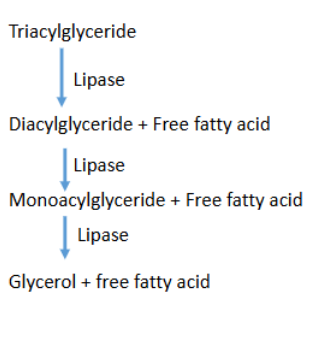
Hydrophilic enzyme that cleaves FFA from glycerol
Lipase + H2O cleaves acyl bonds (Hydrolysis)
Secreted in inactive form
Activated by free Ca++ in the lumen of the small intestine
Lipase enzymes act on the emulsions (smaller droplets) releasing FFA, MAG and some glycerol
Smaller lipids more easily dissolve!
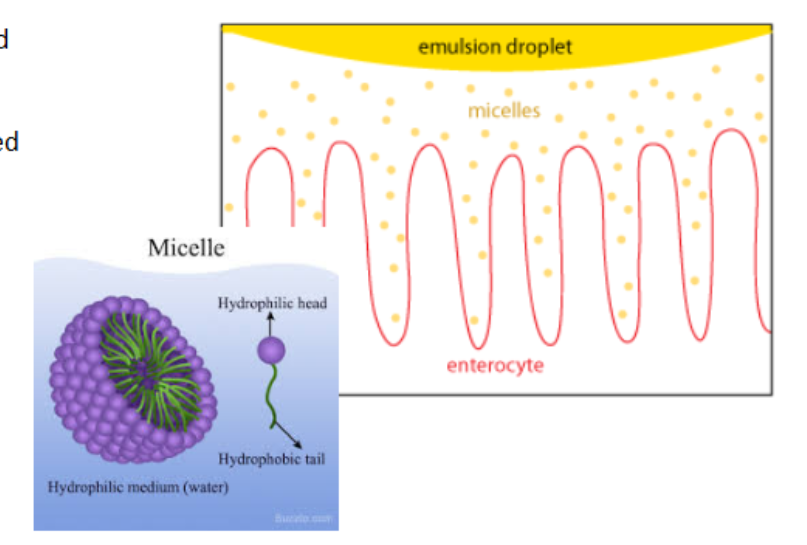
After emulsions, droplets of MAG and FFA are associated with bile salts and phospholipids and form a “micelle”.
Micelle is a droplet of lipid surrounded by a shell of water -Hydrophilic
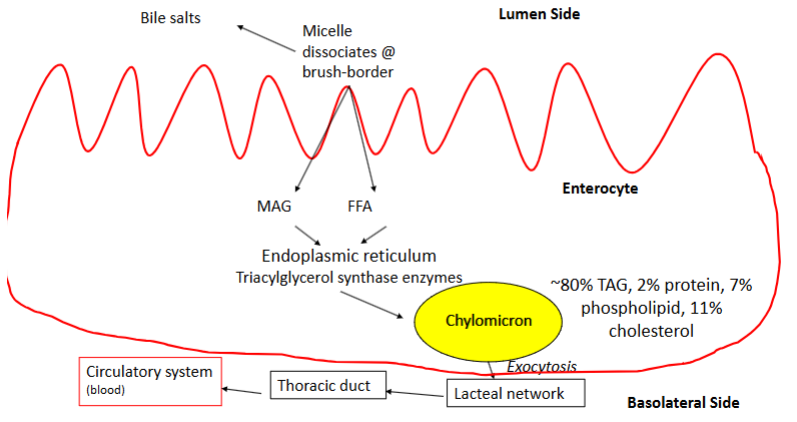
The micelle moves toward the enterocytes and dissociate the MAG and FFA into a pool in the brush border
FFA and MAG then may diffuse across the lipid tolerant phospholipid bilayer of the enterocyte following a concentration gradient
Digestion of Lipids - NON-Ruminants - Small Intestine
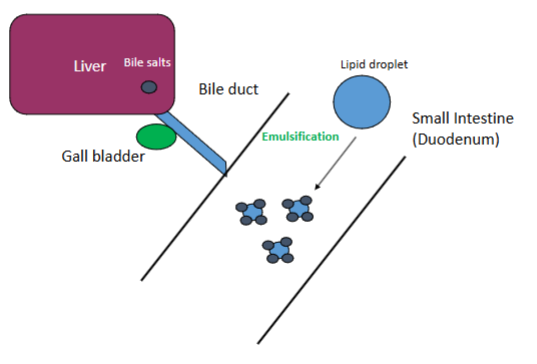
Bile Salts Emulsify Fats/Lipids
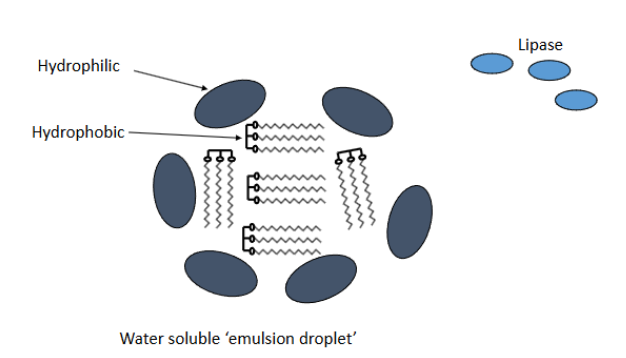
Emulsification Increases Surface Area, which Enhances Lipase’s Effectiveness
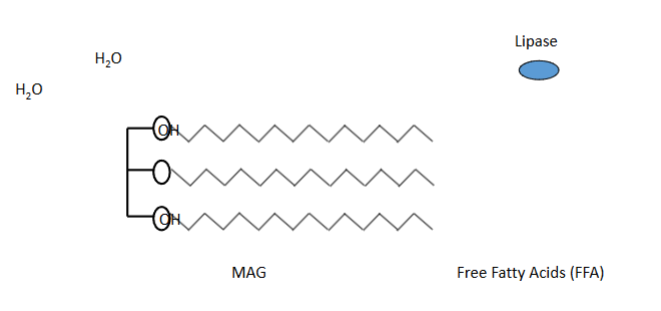
Lipase Hydrolyzes Fatty Acids from Glycerol Backbone
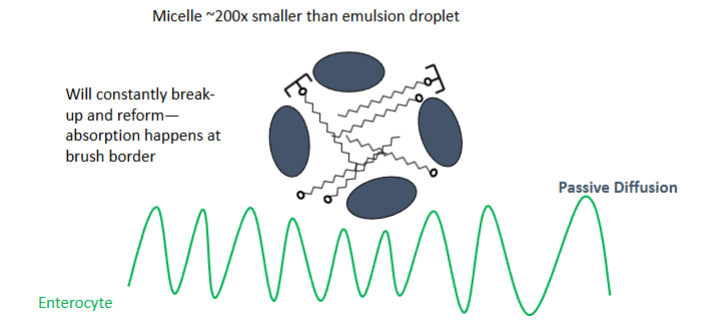
Micelles Contain MAG, FFA, Bile Salts, Phospholipids, Cholesterol
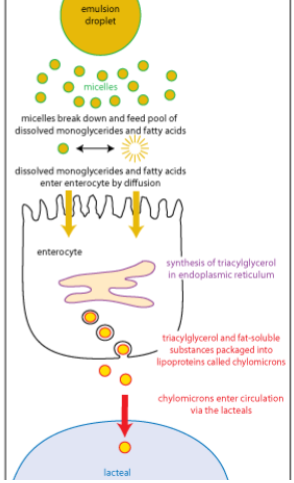
_________: Inside the Endoplasmic reticulum of the cell, MAG and FFA are reformed into TAG, repackaged into a Chylomicron
Chylomicrons are transport vessels which contain TAG, cholesterol & fat soluble vitamins, and are surrounded by a phospholipid bilayer with embedded apo-lipo-proteins, similar to animal cells. This stabilizes them for transport in both lymph & blood networks.
Exocytosis – Chylomicrons are excised out of the cell into the lacteal network (Lymphatic network inside the villus)
Any glycerol or VFA (short chain fatty acids) diffuse directly into the blood capillary inside the villus
Enterocyte
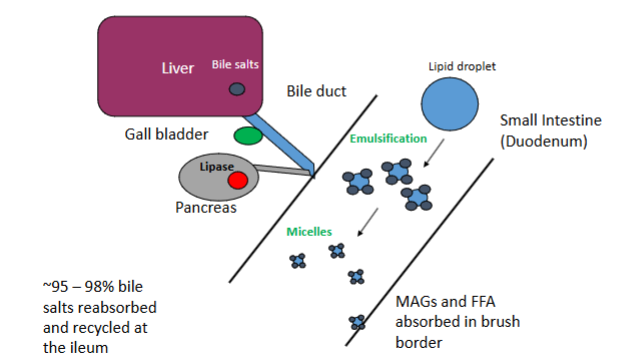
~95 – 98% bile salts reabsorbed and recycled at the ileum
MAGs and FFA absorbed in brush border
Lipid Absorption
Short Chain vs. Long Chain
Fatty acids with < 14 C long…
form micelles MORE READILY
Are ABSORBED FASTER
And MORE COMPLETELY ….than longer chain fatty acids.
Unsaturated vs. Saturated
Saturated = saturated with H bonds
Unsaturated = a double bonded C
Unsaturated fatty acids form micelles more easily and are more liquid at room temp
Fatty acids must be in liquid state to form micelles; unsaturated fatty acids are absorbed more completely that saturated fats
Consider the temperature of the body
~37◦C
Which of the fats listed here would be more solid in the body?
Factors affecting Absorption of Fatty Acids
Same as non-ruminants
Salivary lipase
Emulsion starts
Digestion of Lipids in Ruminants - Mouth
As with CHO digestion (and protein), microbes get to digest lipids/fats first, before the ruminant animal’s __________
bile salts and enzymes in the small intestine
Grain → TAGs
Forages → glycolipids (glycerol backbone, 2 fatty acids, and a galactose or other sugar)
Ruminants eat grains and forages (different lipid sources)
Some lipids escape rumen modification
Most dietary lipids undergo tremendous modification by ruminal microbes
Lipids cause a toxic effect on some bacteria
Bacteria have 2 strategies of coping:
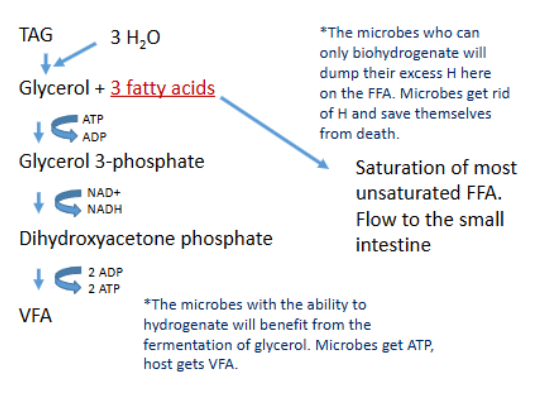
Hydrolysis: Some bacteria will use lipid hydrolysis to utilize the glycerol backbone as an energy source VFA
Biohydrogenation: The unsaturated FFA are hydrogenated to become saturated (less toxic)
Most bacteria use biohydrogenation
Digestion of Lipids in Ruminants - In the Rumen:
Most unsaturated fatty acids become saturated
Saturated - sat stack, are more solid
Unsaturated, more liquid
Some unsaturated fatty acids pass intact
Microbial alteration results in:
Increased trans-unsaturated fatty acids
Increased fatty acids with odd number of C
Branched chain fatty acids
Digestion of Lipids in Ruminants - sat vs. unsat
*The microbes who can only biohydrogenate will dump their excess H here on the FFA. Microbes get rid of H and save themselves from death.
*The microbes with the ability to hydrogenate will benefit from the fermentation of glycerol. Microbes get ATP, host gets VFA.
After leaving the rumen, digestion of lipids in ruminants occurs in the exact same manner as a non-ruminant.
However, the profile of fat reaching the small intestine is now drastically different than the profile of fat that was consumed in the feed!
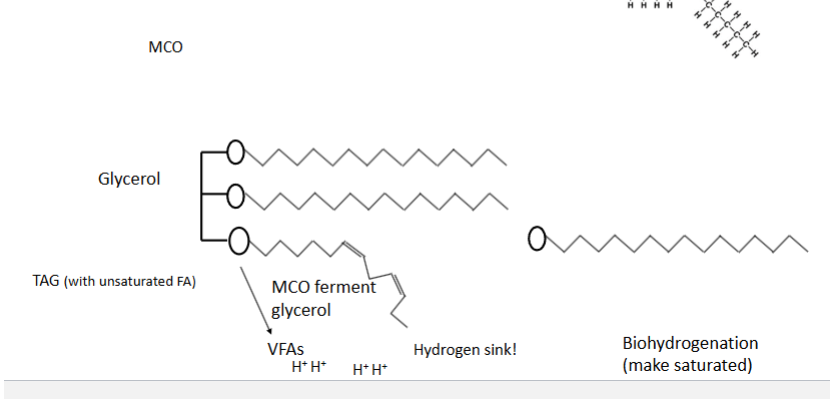
Consequences of Fatty acid saturation by microbes – WHY is beef high in saturated fats?
Beef is high in saturated fatty acids because animals will deposit whatever fat reaches the small intestine. In ruminants (cows) it is difficult to change the fatty acid profile because of the microbes.
All animals will deposit some of the fatty acids they absorb from the small intestine DIRECTLY into the adipose tissue.
As a result, the fatty acid profile of an animal’s diet will affect the type of fat deposited in the animal tissue. Except in the case of ruminants!
In non-ruminants, feeding oils (high in unsaturated fatty acids) causes body fat high in unsaturated fats, resulting in meat that is soft when refrigerated.
In pigs, “soft pork” (Undesirable-handling & visual appeal)
Because rumen bacteria saturate most dietary unsaturated fat, the deposited animal fat is saturated (beef tallow is high in saturated fatty acids.)
It would not be possible to produce “soft beef” by feeding unsaturated fatty acids to beef cattle.
Common sources of lipids in the diets of livestock
Plant based
Oil seeds (most grain)
Corn
Soybean
Cottonseed
Safflower seeds
Sunflower seeds
Canola seeds
Animal Based
Tallow (rendered animal fat)
Hard at room temp
Lard (rendered pig fat typically from abdomen)
Soft-ish at room temp
Milk fat (baby mammals)
Not beneficial to an avian
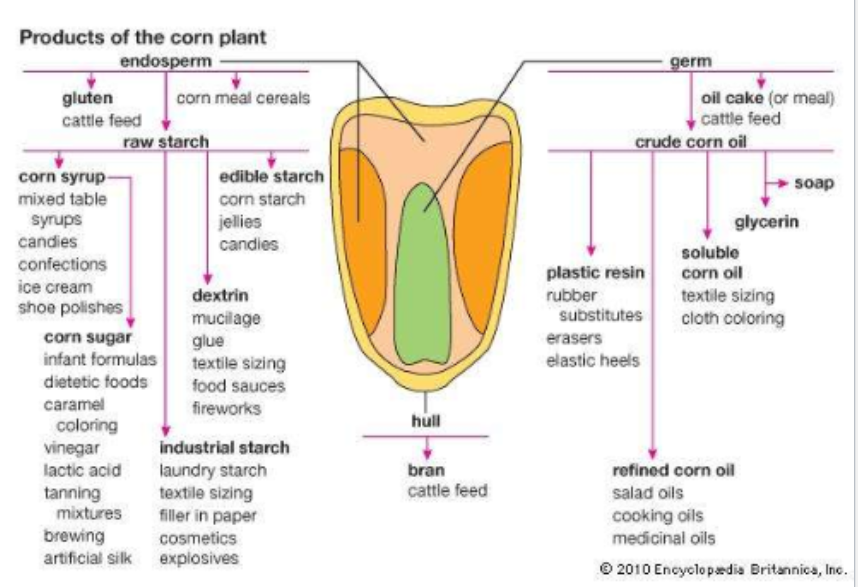
Many seeds are crushed or processed to retrieve the oil or starch. By-products of these processes are also used as animal feeds.
Lipids are typically contained in the “germ” layer which is the plant embryo.
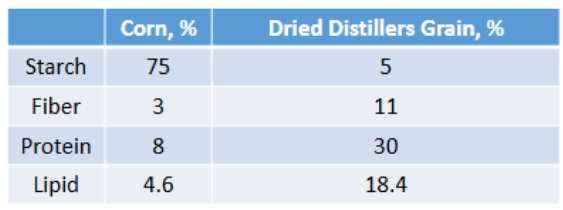
________: Feed processes that removes starch typically yields products higher in other nutrients (fiber, protein & lipids)
EX: ethanol production from corn removes the starch component of the grain concentrating other ingredients 4x resulting in “dried distillers grain”.
By-products
Essential fatty acids: fatty acids that must be consumed in the diet
The only known essential fatty acids of farm animals and humans are linoleic acid (ω-6 family) & linolenic acids (ω-3 family).
Pre-requisite to molecules important to inflammatory response when faced with invading pathogens
Deficiency is NOT typical because daily needs are relatively low. Generally poor overall nutrition may lead to deficiency illness
Excess nutrition: Carbs, protein and lipid consumed in excess of maintenance needs will result in conversion to fatty acids and stored as TAG in fat cells of adipose tissue.
Contribute to greater fat accumulation earlier in life
Typically a healthy fat accumulation in young animals is associated with earlier reproductive performance.
However, an over abundance of fat may lead to infertility and greater maintenance requirements.
Malnutrition: During inadequate intake to meet daily maintenance requirements fatty acids are released from the fat cells into the blood and used by other body tissues for energy.
Loss of body condition may affect reproductive status (abortion/absorption of fetus)
Nutritional significance of lipids in the diet
Excess fat in the diet can reduce fiber digestion by physical coating & microbial death
May reduce efficiency of high fiber diets & subsequently depress milk fat % of dairy ruminants
Typically this is an effect of feeding products high in unsaturated fatty acids
< 3% unsaturated, < 8% overall fat in the diet (sat + unsat) is recommended
Nutritional significance of lipids in the diet - In ruminants
Fat may be added to the diet in place of carbohydrate in high performing animals
Slow the rate of energy circulation to increase endurance
Overload of carbohydrates may cause excitability and then crash vs. substituting some lipids may reduce the excitability and contribute to longer term energy spurt
Nutritional significance of lipids in the diet - In hindgut fermenters
Fat often added for texture & to increase energy density of the diet
These animals grow much faster than larger livestock species and therefore energy density of the diet is key to efficient growth.
Nutritional significance of lipids in the diet - In Pigs & Poultry
Lipid storage
Lipogenesis
Lipolysis
Metabolism of Lipids
Once Chylomicrons enter the lymphatic system they can then by-pass the liver and diffuse straight into the blood because they have become water soluble. As they circulate the encounter the capillary beds of muscle and fat tissues.
Lipoprotein Lipase is secreted by muscle and fat tissues and the chylomicron is digested releasing the TAG which are cleaved into glycerol and fatty acids. They are taken up individually by tissue cells oxidized for immediate energy usage or reformed as TAG for energy storage.
Chylomicron remnants are taken up by the liver via endocytosis where they are recycled into the bile. The circle is now complete! Great job body!
Fate of the Chylomicron & Lipid Storage
Subcutaneous fat: under the skin.
Internal fat: surrounding vital organs (visceral fat), chronic stress may increase accumulation above normal. Most difficult fat to mobilize
Intra-muscular fat: between muscle fibers (skeletal muscle fat) first to mobilize
In lactating females, milk fat is a major depot and dependent on stage of production.
Early lactation tends to be higher in fat the mid – late lactation
Major fat deposits of the body
Lipogenesis (new fat)
De Novo: Actually a result of excess carbohydrate origin (Acetyl CoA), NOT FROM FAT IN THE DIET! This occurs in the LIVER
When excess glucose is present the body stores this for later.
Acetyl-CoA (also acetic acid) is the metabolic precursor for de novo fatty acid synthesis
Which combined with glycerol may be stored as TAG in adipose tissue.
Lipolysis (lipid cell death/ but really it means mobilization)
Lipogenesis
Normal occurrence during growth
Fatty acids are mobilized from adipose tissue and transferred to target cells.
Fatty acids with even numbers of Carbons result in production of Acetyl CoA only
Enters TCA Cycle in a similar manner to the VFA acetate.
Fatty acids with odd numbers of Carbons result in Propionyl CoA.
Enters TCA Cycle in a similar manner to the VFA propionate.
Acetyl CoA is oxidized in the TCA cycle and respiratory chain resulting in a lar production of ATP.
EX: Palmitic acid (16C) Acetyl CoA (2C) = ~ 129 ATP
The rate limiting step is the availability of Oxaloacetate
If the rate of Acetyl CoA exceeds the rate of TCA cycle turnover must take another route
Beta-Oxidation:
When feed intake is limited and energy demands are high body fat is the primary source of energy.
Excessive breakdown of fatty acids in conjunction with a limited intake of carbohydrates elevates ketone bodies in the blood and results in a pathological condition known as Ketosis.
These excess ketone bodies can cause metabolic acidosis which in extreme cases can cause coma and death.
Not-uncommon in high performing dairy cattle, sheep or goats. Usually Ketosis is associated with lactation but can occur in starvation scenarios.
Adipose cells release TAG as glycerol & free fatty acids. They travel to the liver.
In the liver, fatty acids are oxidized from Acetyl CoA & converted to ketone bodies: they serve as a safety net for the body during perceived or actual starvation. (in order of most widely used by the tissues for energy)
1. Acetoacetic acid
2. Beta-hydroxybutyrate (Most widely found in circulation)
3. Acetone
Ketogenesis
Both plants and animals store energy
Plants= germ layer
Animals= 3 major depots
Lipids in the body provide condensed energy, insulation, cushion and a reserve for nutritionally challenging times
Lipids in the diet offer a way to increase nutrient density of the diet without impacting bulk
Lipids may increase or decrease the nutrient efficiency of some diets for some livestock
Type of lipid ingested may affect the type of fat being deposited in the animal tissue
In ruminants, however, this is not the case due to microbial action on unsaturated fatty acids
Summary

