Human Physiology 100 TEST 1
 Call Kai
 Learn
Learn Practice Test
 Spaced Repetition
 Match
Match Flashcards
 Knowt Play
1/97

There's no tags or description
Looks like no tags are added yet.
Name | Mastery | Learn | Test | Matching | Spaced | Call with Kai |
|---|
No analytics yet
Send a link to your students to track their progress
98 Terms
Regulation of blood pressure- - Baroreceptor reflex
•Baroreceptors located in carotid sinus and aorta monitor the degree of stretch in blood vessels as blood flows through them.
•When blood pressure (BP) falls the baroreceptors are stretched less
•Impulse sent to the cardiovascular centre to increase cardiac output (CO) (via HR & SV) & vasoconstriction via sympathetic stimulus
Resulting in increased Blood Pressure
Positive Feedback Loop
The response of the effector increases change of the stimulus
Body is moved away from homeostasis
Normal range is lost
For speeding up processes
plasma membrane
Phospholipid bilayer: Intracellular, inside the cell
Extracellular: outside the cell
Regulates exchange with environment
Ions and nutrients into the cell
Release of wastes and cellular products outside the cell
Cellular communication
Structural Support
Anchors cells and tissues
Organelles
Specialised structures which perform specific functions for normal cell homeostasis
G protein coupled receptors (GPCRs)
Receptors that cross the membrane and specifically GPCRs have seven transmembrane domains.
Activation of the receptor, causes activation of a nearby G-protein, which subsequently regulates further signalling events and changes in cell function
Transmembrane receptors with linked enzymatic domains: example
Insulin receptor
Intracellular receptors
Found within cells. In either cytoplasm or the nucleus
when a molecule (ligand) binds to a receptor, the molecule-receptor complex binds the the DNA and alters the proteins (gene transcriptions). The effects of intracellular receptors tend to be slow.
Non-membranous: do not have a definite boundary or are an extension of the plasma membrane
cytoskeleton
microvilli
cilia
ribosomes
Cytoskleton
Provides structural framework for a cell
Movement of cellular structures and materials
Made of 3 types of filaments
•Microtubules (tubulin)
•Intermediate filaments (keratin)
•Microfilaments (actin)
Microvilli
•membrane extensions containing microfilaments
•increases surface area for absorption of extracellular materials
Endoplasmic Reticulum (ER)
network of membranous sheets and channels that extend throughout the cytoplasm.
Golgi Apparatus
characterised by stacks of flattened membranes containing chambers.
Skeletal Muscle Fibre
moves bone
Needs a large amount of energy and therefore has many mitochondria
Chain of amino acids
= polypeptide chain = functional protein
Organelles involved in protein synthesis
Nucleus, ribosomes, rough endoplasmic reticulum, Golgi apparatus, transport vesicles
Paring is due to
the shape of bases
Transcription
DNA is transcribed into messenger RNA (mRNA) in the nucleus.
mRNA is transported from the nucleus to ribosomes in the cytoplasm or associated with the RER
Translation
mRNA is translated into protein in the cytoplasm and at ribosomes.
Proteins destined for modification and transport enter the RER and become folded before being transported to the Golgi Apparatus for modification and packaging into secretory vesicles.
Cancer types: BENIGN
cells are contained (encapsulated)
generally not life threatening
Active transport
Requires the cell to use ATP
Isotonic
Solution is ISOTONIC if there is no flow of water between the cell and solution (same osmostic pressure.
Electrochemical gradient
Sum of chemical and electrical forces acting across the cell membrane
Unequal distribution of positive and negative charges across the plasma membrane
Neuron -70 mV
Cardiac Muscle Cell -90 mV
Contributing factors
•Differences in ion concentrations
•Differences in the permeability of the plasma membrane.
Types of tissues (four)
Epithelia tissue
connective tissue
muscle tissue
neural tissue
Functions and characteristics of epithelial tissue
cell polarity
intercellular connections
Functional regions of epithelia
Epithelial cells have several different specialized structures
microvilli which increase the surface area to transport substances
cilia in lungs which moves mucous toward the throat
no blood supply - avascular
Cell adhesion molecules (CAMS)
connects large areas of plasma membranes of adjacent cells
Connect basal surface of epithelium with the basement membrane
Desmosome
Desmosome
-connections that can resist twisting and stretching
-linking of two cells by CAM & proteoglycans to the cytoskeleton
-Strong connections and found in the superficial layers of our skin.
number of cells between the exposed surface and the basement membrane
simple
stratified
An organism is said to be at homeostasis when its internal environment:
• contains the optimum amount of chemicals
• has optimal temperature
• has optimal pressure for the survival of living cells
Cyclic components required for homeostasis
Receptor: sensor that monitors the physiological environment and signals a change.
Control Centre: processes the signal & sends instructions for a response to occur. Determines the level of change required.
Effector: carries out instructions sent by the control centre.
Negative Feedback Loop
The response of the effector reduces or stops the stimulus
Body is brought back into homeostasis
Normal range is achieved
Thermoregulation - Primary Organ Systems Involved
•Integumentary system
•Muscular System
•Cardiovascular system
•Nervous System
Regulation of blood sugar
When Blood sugar too high: increased insulin released from pancreas (liver removes blood glucose excess glucose stored as glycogen)
when too low: glucagon released from the pancreas (liver breaks down glycogen glucose into blood)
Ion channels:
Regulate the movement of ions across membranes e.g. nicotinic receptor activation.
Rough Endoplasmic Reticulum (RER
•Lipid and protein synthesis
•Folds polypeptides into proteins
•Packages newly synthesised
Mitochondria
double membrane bound organelles.
The inner membrane folds to form cristae which enclose important metabolic enzymes.
Macrophage
cells that fight disease
engulf bacteria which are then degraded and thus inactivated
many lysosomes within the cell to digest bacteria it engulfs
Adenine -
thymine
Guanine -
Cytosine
Gene
A section of DNA which has the instructions for one protein e.g. the sequence of amino acids
3 types of RNA involved in protein synthesis
Messenger RNA: mRNA
Transfer RNA: tRNA
Ribosomal RNA: rRNA
Two general types of cells
Somatic cells: non sex cells, divide via MITOSIS
Sex cells: sperm or oocyte MEIOSIS
APOPTOSIS
programmed cell death
activation of "suicide genes"
DNA fragmentation
Ingestion of dying cell by phagocytes
Cancer or tumour
abnormal cell division and growth e.g. uncontrolled cell division
Why is the plasma membrane is described as semi-permeable.
Cells differ in their permeability depending on what proteins are associated with the membrane.
Facilitated diffusion - protein channels
Passive transport through a protein channel
•ions such as sodium and potassium
•leak channels
Net movement of molecules toward a lower concentration
Osmolarity/Osmotic concentration
The total solute concentration of all solutes in an aqueous solution.
Osmoles per litre (Osmol/L)
Osmole is the number of moles of ions that contribute to a solution's osmotic pressure
Normal plasma (intracellular environment) approximates 285 mosmol/L
hypotonic
Solution is HYPOTONIC if water moves into the cell via osmosis.
epithelia
layers of cells covering external or internal surfaces
glands
Structures that produce secretions
functions of epithelial tissue
protection, absorption, filtration, secretion
-provide physical protection
-control's permeability - any substance that leaves or enters your body must cross an epithelium
-Provide sensation (large supply of sensory receptors and nerves)
-Produce specialised secretions (glandular epithelium/glands)
How does the body maintain/regulate homeostasis?
Intrinsic/autoregulation - Automatic response within a cell, tissue, or organ to some environmental change
Extrinsic regulation - Responses controlled by the nervous and endocrine systems
Cytosol
Fluid component of the cytoplasm-intracellular fluid
Contains ions, proteins and lipids
Chemical reactions take place
Receptors
proteins which interact with molecules (ligands) to cause a biological response within the cell
receptors are often the targets of drugs
there are four different types of receptor in the body
(ion channels, G protein coupled receptors, receptors w linked enzymatic domains, intracellular receptors)
Transmembrane receptors with linked enzymatic domains
Molecules (ligand) bind to the receptor which leads to the activation of the intracellular enzymatic domain
The effects related to the activation of this receptor tend to be slow (take hours) to occur
Transmembrane receptors with linked enzymatic domains
Receptor tyrosine kinases (RTKs) have an extracellular molecule (ligand) binding domain and an intracellular domain with tyrosine kinase activity.
When the signalling molecule binds to one receptor it causes its association with a second receptor (dimerization)
Membraneous: enclosed by a membrane to afford a specific function
nucleus
endoplasmic reticulum
golgi apparatus
lysosome
mitochondrion
Cilia
•Long extensions of the plasma membrane containing microtubules
•Motile cilia move materials over cell surfaces and a primary cilium can act as a sensor.
Nucleus
membrane bound, fluid structure that contains enzymes, proteins and genetic material (DNA/chromatin) which together control cellular function
Smooth Endoplasmic Reticulum
•makes lipids and steroid hormones
•detoxifies drugs and alcohol
Lysosomes
contain enzymes that digest material and are considered the major degradative compartment of the cell.
Proteosomes
contain protein degrading enzymes called proteases which breakdown and recycle damaged or normal intracellular proteins.
Proteins are tagged with a molecule called ubiquitin which signals for protein removal from the cell.
Fibroblast
connective tissue cells involved in connecting body parts
produce the protein collagen which is integral to the physiology of skin
Abundant rough ER and Golgi apparatus to make and secrete proteins for collagen fiber formation
Neurons
cells involved in the processing and communication of information in the nervous system
produce a significant amount of protein so have many nucleoli
long microtubules to allow the movement of material from the axon terminal to the cell body.
protein sysnthesis
GENE ACTIVATION, TRANSCRIPTION, TRANSLATION, PROCESSING, FOLDING
uracil
Swaps w thymine in RNA
Gene activation
Every gene has a "start" and "stop" signal to control protein synthesis
The gene is kept inactive by being tightly coiled and bound to histones i.e. the start signal is 'hidden'.
Gene activation requires the DNA to be uncoiled to expose the sites required to start the process of making protein i.e. transcription.
The cell life cycle
I: Interphase
G1: Normal cell functions plus growth, duplication of organelles and protein synthesis
S: DNA replication
G2: Protein synthesis
M Phase: Mitosis and Cytokinesis
Mitosis (somatic division)
3 STAGES
DNA REPLICATION
MITOSIS
CYTOKINESIS
parent cell divides into two identical daughter cells each with 46 chromosomes (23 pairs)
Mitosis
Divides duplicated DNA into two sets of chromosomes
DNA coils tightly into chromatids
Chromatids connect at a centromere
Protein complex around centromere is kinetochore
Mitosis & Cytokinesis
1.Prophase: chromosomes are visible, centrioles move to opposite side of cell, nuclear envelope disapperas, spindle fibres extend and attach to chromosomes
2.Metaphase: chromosomes align themselves along the metaphase plate; equidistant from poles
3.Anaphase: centromere splits; two sister chromatids move to the opposite sides of cell
4.Telophase: nuclear envelope forms, chromosomes change to chromatin, final location of nucleus at opposite ends of cell
5.Cytokinesis: splitting of the cytoplasm with the formation of two identical cells.
cell death
APOPTOSIS and NECROSIS
NECROSIS
Cell is injured
Cellular contents flows into interstitial fluid
Inflammatory response is initiated
Cell Differentiation
All cells carry complete DNA instructions for all body functions
Cells specialize or differentiate to form tissues (e.g. liver cells, fat cells, and neurons)
By turning off all genes not needed by that cell
Differentiation depends on which genes are active and which are inactive
Cancer types: MALIGNANT
cells are no longer contained
cells can also travel to other organs and tissues
Passive
Does not require the input of physiological energy (ATP)
3 main transport processes:
Diffusion: passive
Carrier: passive or active
Vesicular: active
Diffusion
DIFFUSION IS A FUNCTION OF THE CONCENTRATION GRADIENT AS SOLUTES MOVE FROM A HIGH CONCENTRATION TO A LOW CONCENTRATION.
Passive process that results from the random motion and collisions of ions and molecules.
Over time the molecules will eventually become evenly distributed.
Important in body fluids as it eliminates a local concentration gradient.
Factors that affect the rate of diffusion
Distance - the shorter the distance the faster the rate of diffusion
Molecule size - the smaller the molecule the faster the rate of diffusion
Temperature - the higher the temperature the faster the rate of diffsuion
Concentration gradient - the steeper the gradient the faster diffusion
Electrical force
Simple diffusion
Lipid soluble molecules moving from a region of high concentration to low concentration
•Alcohols
•Fatty acids,
•Steroids
•Gases e.g. O2
Facilitated diffusion - carrier proteins
Ions or organic substrates bind to an integral membrane protein which changes shape to allow the molecule to cross the membrane.
Net movement of molecules toward a lower concentration
Osmosis
Net Movement of Water Molecules Across a Semi permeable Membrane to a Higher Solute Concentration
Water moves through channels called aquaporins
Hypertonic
Solution is HYPERTONIC if the water moves out of the cell via osmosis.
Membrane/Transmembrane Potential
In normal conditions:
The inside of the plasma membrane is slightly negative with respect to the outside of the cell
slight excess of positive (+ve) charges outside the cell
slight excess of negative (-ve) charges and proteins inside the cell.
The separation of charge across the membrane creates a potential difference which is called the membrane/transmembrane potential
Resting membrane potential is the potential of an undisturbed cell.
Secondary Active transport
Important for the absorption of glucose and amino acids in digestion
Moves a specific substrate down its gradient: 2 sodium ions bind, then glucose is transported into the cell followed by active transport of sodium ions out of the cell
Vesicular Transport
Vesicular transport is vital for all mammalian cells
Endocytosis
Movement of material INTO the cell
•receptor mediated endocytosis
•pinocytosis
•phagocytosis
Exocytosis
Movement of material OUT OF the cell
mportant in the nervous system for communication between brain cells: release of neurotransmitter.
Classification of epithelial tissue
simple epithelial tissue
stratified epithelial tissue
Types of glands
endocrine glands
exocrine glands
Characteristics of epithelia
Made of cells which are held tightly together to form an effective barrier
Two functional regions:
the apical (top) surface which is exposed to the internal or external environment
basal (bottom) surface which is attached to a basement membrane
basement membrane is a specialized form of extracellular matrix
Maintaining the Integrity of Epithelia
1. Intercellular connections
2. Attachment to the basement membrane
3. Epithelial maintenance and repair
Cell Junctions
specialized areas of plasma membrane that attach cells together or
-Gap junctions
-Tight junctions
- Desmosomes
Tight junction
-prevents movement of water and solutes between cells between cells
-when an epithelium lines a tube (digestive tract) the apical surface is exposed to inside the tube.
-protects basal surface from contents of lumen (enzymes, acids, wastes)
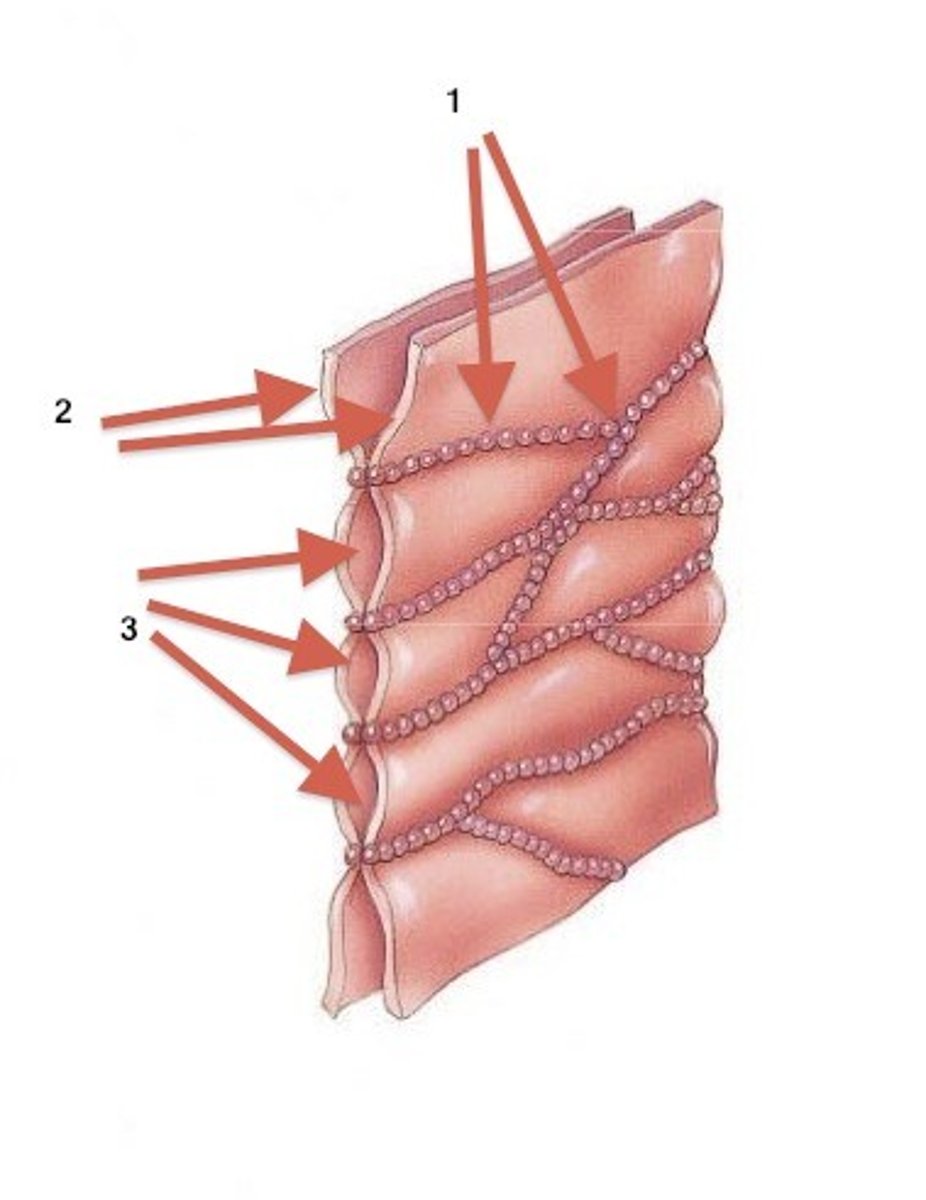
Attachment to the basement membrane
hemidesmosomes attach a cell to the extracellular filaments in the basement membrane
basement membrane also acts as a filter for substances diffusing between the adjacent tissues and the epithelium
Maintenance and repair
epithelial cells have a short life due to exposure to digestive enzymes, acids, pathogenic bacteria and abrasion
Maintains structure over time due to the division of stem cells which are located near the basement membrane which offers protection.
Classification of epithelia: SHAPE TYPES (3)
squamos
cuboidal
columnar
Still learning (52)
You've begun learning these terms. Keep up the good work!

