Honors Biology - The Working Cell Test
 Studied by 11 people
 Call Kai
 Learn
Learn Practice Test
 Spaced Repetition
 Match
Match Flashcards
 Knowt Play
1/20

Earn XP
Description and Tags
Severn School Honors Bio
Name | Mastery | Learn | Test | Matching | Spaced | Call with Kai |
|---|
No analytics yet
Send a link to your students to track their progress
21 Terms
fluid mosaic model
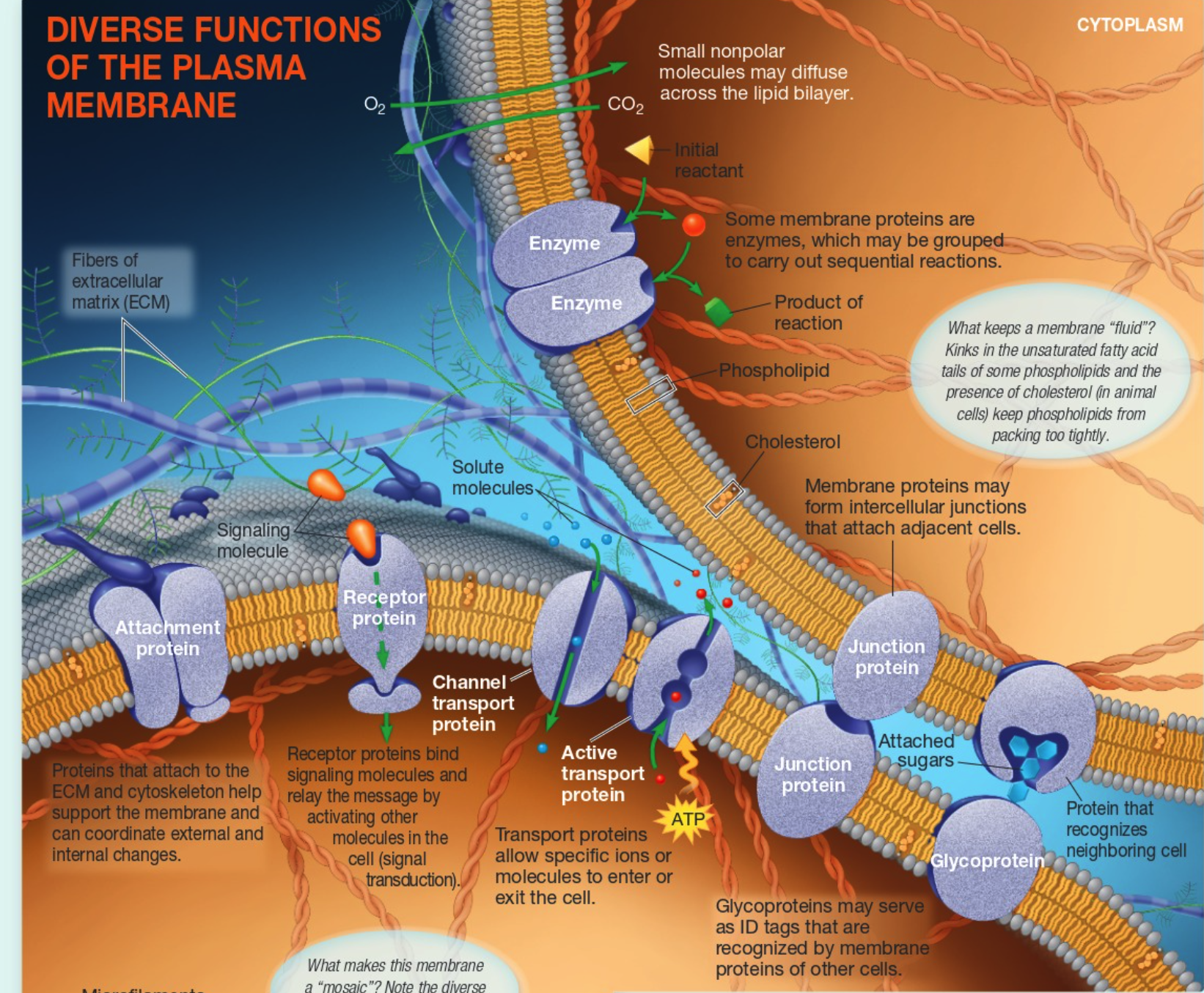
used to describe structure of plasma membrane (phospholipid bilayer) as fluid + mosaic
fluid
fatty acid chains → plasma membrane contains a mix of both saturated and unsaturated fa. chains → allows for permiability (not too close to be solid; not too far for LDFs)
cholesterol → is a lipid = hydrophobic molecule → function is to stabilize the molecule (in cold, risk of getting solid so cholesterol physicallly blocks from getting too close) (in warm, risk of moving away→ no LDFs, so cholesterol holds together
mosaic → made up of many small parts like phospholipids, cholesterol, and proteins
plasma membrane is _____
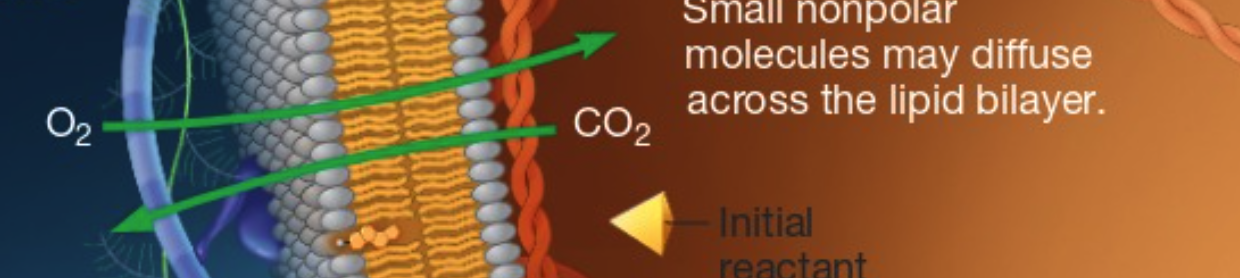
selectively permeable, meaning that only certain substances can cross: small nonpolar molecules
energy barrier
transport proteins
allow specific ions or molecules to enter/exit the cell
uncharged solutes can easily pass w/ out help of a protein important (ex. O2→ required in cell respiration)
charged solutes require help from transport proteins (specific to each ion/molecule)
enzymes
function: to speed up/catalyze chemical RXNS
some membrane proteins are enzymes
ex. mitochondria had enzymes on interior membrane (cristae); more membrane → more enz. → more ATP
attachment proteins
attach to ECM and cytoskeleton
help to support the membrane
can coordinate external + internal changes
ex. intergin protein
receptor proteins
receptors that allow a cell to receive a signal
used to detect glycoproteins on other cells
junction proteins
form intercellular juntions that attach adjacent cells
ex. tight, anchoring, and gap
glycoproteins
polypeptide modified in RER w/ sugar molecs
serves as ID tags, can be recognized by receptor proteins of other cells
Passive Transport (diffusion)
spontaneous movement of a substance from an area with high concentration to one with low concentration (can occur w/out a membrane)
does not require energy
down the concentration gradient: [high] to [low]
simple diffusion → small, nonpolar molecules, channel proteins not used
facilitated diffusion → use channel proteins; for polar, small substances ex. channel proteins (specific molecules) and aquaporin
![<ul><li><p>spontaneous movement of a substance from an area with high concentration to one with low concentration (can occur w/out a membrane)</p></li><li><p>does not require energy</p></li><li><p>down the concentration gradient: [high] to [low]</p></li><li><p><strong>simple diffusion </strong>→ small, nonpolar molecules, channel proteins not used</p></li><li><p><strong>facilitated diffusion → </strong>use channel proteins; for polar, small substances ex. channel proteins (specific molecules) and aquaporin</p></li></ul><p></p>](https://knowt-user-attachments.s3.amazonaws.com/45fa5c24-82f8-46a8-beab-287aaf2a1689.png)
Active Transport
transports small + charged particles
specific substances
used energy (ATP) → comes from ATP hydrolysis where energy stored in bonds is released (ATP→ADP+P)
protein pumps (transport protein)
against the concentration gradient: [low] → [high]
like an airlock
![<ul><li><p>transports small + charged particles</p></li><li><p>specific substances</p></li><li><p>used energy (ATP) → comes from ATP hydrolysis where energy stored in bonds is released (ATP→ADP+P)</p></li><li><p>protein pumps (transport protein)</p></li><li><p>against the concentration gradient: [low] → [high]</p></li><li><p>like an airlock</p></li></ul><p></p>](https://knowt-user-attachments.s3.amazonaws.com/8b943105-4a47-4577-afd6-a20a57780fc5.png)
osmosis
diffusion of water from high water concentration to low water concentration across a selectively permeable membrane
see diagram on notes sheet 2
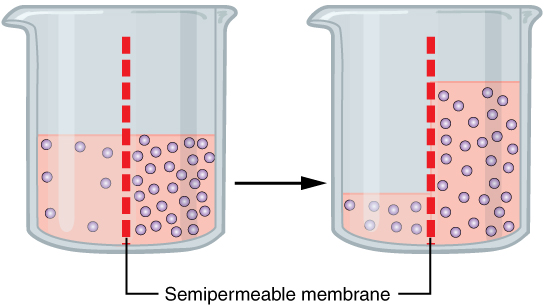
tonicity (hypotonic, isotonic, and hypertonic)
the ability of a surronding solution to cause a cell to gain or lose water
described by terms hypotonic, isotonic, and hypertonic
hypotonic solution → has a lower solute concetraction compared to that of another solution (water goes into cell); causes cell lysis in animal cells and turgid (normal) in plant cells
isotonic solution → has the same solute concentration as that of another solution (water goes in and out); normal for animal cells and flaccid for plant cells
hypertonic solution → has a higher solute concentration compared to that of another solution (water goes out of cell); causes shriveling in animal cells and plasmolysis (shriveled) in plant cells → pulls away from cell wall
osmoregulation
some cells have mechanisms to survive hypo and hypertonic solutions
ex. contractile vacuoles → helps to maintain balance
Exocytosis
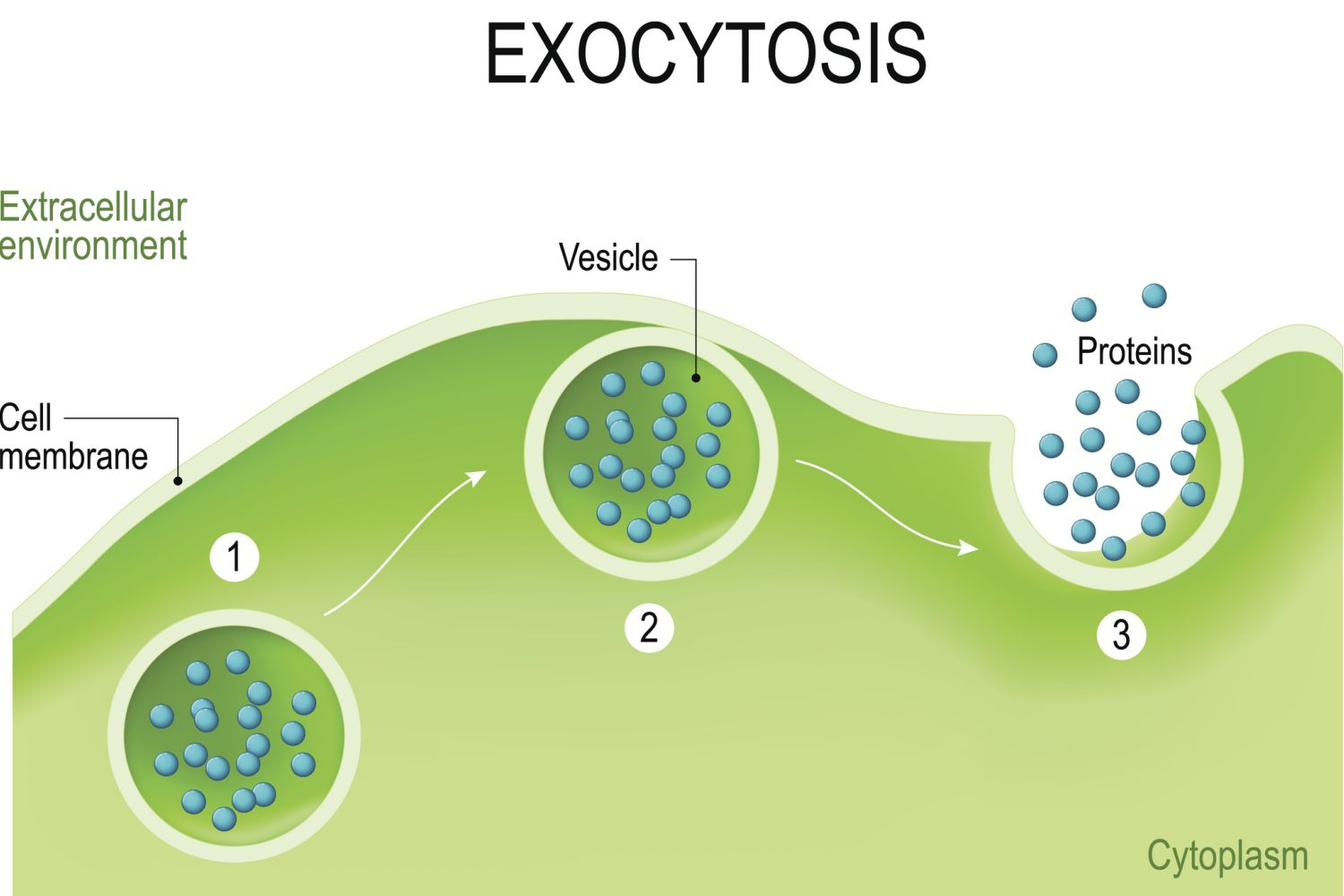
function → to remove large/bulky materials (ex. large molecs, liquid, large material) from cell
transports nonspecifically
no gradient involved
Process → vesicles fuse with plasma membrane to release contents
energy required(to remodel cytoskeleton → NO QUESTIONS ABT)
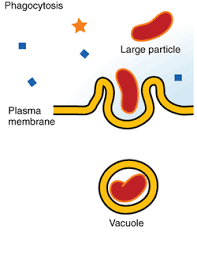
Endocytosis
function →the process of taking in large/bulky materials (ex. large molecules, liquids) into the cell
phagocytosis → general term that means to bring large materials into the cell (energy req***)
transports non-specifically
no concentration gradient
does not use transport proteins → plasma membrane folds in on itself
receptor mediated endocytosis → brings large materials in attached to receptor proteins (energy req***)
transports specific substances (b/c uses receptor proteins)
no gradient
uses receptor proteins to bing to specific molecule then is engulfed
pinocytosis → purpose to bring liquids into the cell
no gradient
transports non-specifically
does not use transport proteins → plasma membrane folds in on itself
protein structure diagram types
ball and stick → shows outside characteristics, feeling for atom amounts and idividual atoms/bonds
space filling → shows arons and any empty space; area occupied by atoms
cartoon/ribbbon → show structural details and secondary structure
molecular surface → shows overall shape/topography and water accesibilty; surface R-groups
Enzyme + Substrate Structure
fit structurally like a lock and key
active site → contains substrate binding site and catalytic site (where RXN occurs)
induced fit
shape of the active site changes upon binding of the substrate
substrate induces a shape change b/c change in attractive forces (IMFs)
make it easier for RXNs to occur b/c substrate is more unstable
activation energy
minimum amt of energy required for reactant molecules before they can undergo a chemical reaction
enzyme lowers this barrier to increase reaction rates, making processes more efficient.
see graph on page 3 notes 4
How do enzymes catalyze reactions?
Enzymes catalyze reactions by lowering the activation energy needed for reactants to undergo a chemical reaction, allowing for faster reaction rates and increased efficiency. see page 4 notes 4
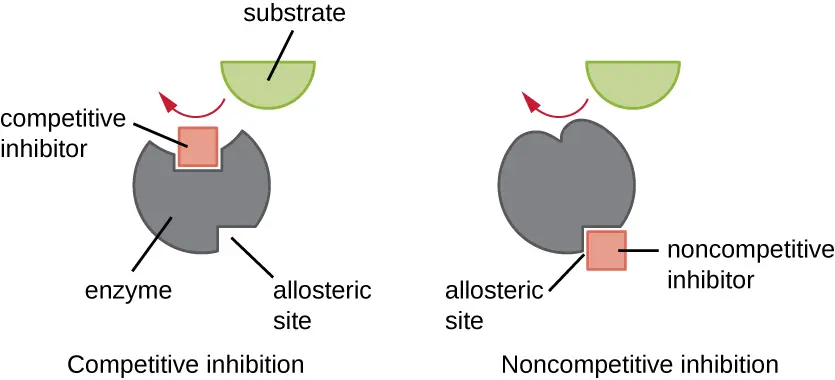
Enzyme Inhibition
chemicals that interfere/inhibit enzyme activity; function reduced or completely gone
competitive inhibition → inhibitor blocks binding of substrate; substrate competes for active site; can be reversed by having excess substrate → out competes it
noncompetitive inhibition → inhibitor binds to the enzyme at the allosteric site which causes the active site to change shape, preventing substrate binding
can be intentional to control cellular metabolism (chem RXNS in cell) → see notes 5 diagram KNOW → negative feedback loop
can also be accidental ex. cyanide + hemaglobin
 Note
Note  Flashcards (32)