MQS Chapter 10
 Studied by 0 people
 Call Kai
 Learn
Learn Practice Test
 Spaced Repetition
 Match
Match Flashcards
 Knowt Play
1/22

There's no tags or description
Looks like no tags are added yet.
Name | Mastery | Learn | Test | Matching | Spaced | Call with Kai |
|---|
No analytics yet
Send a link to your students to track their progress
23 Terms
Explain the mission of the submarine force, and 6 mission areas
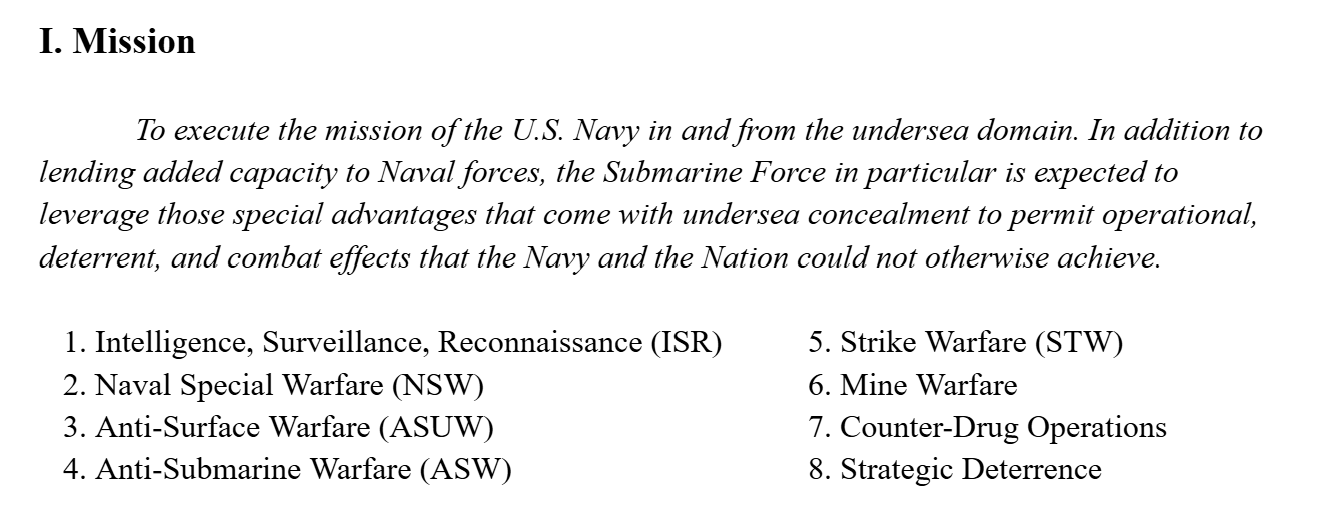
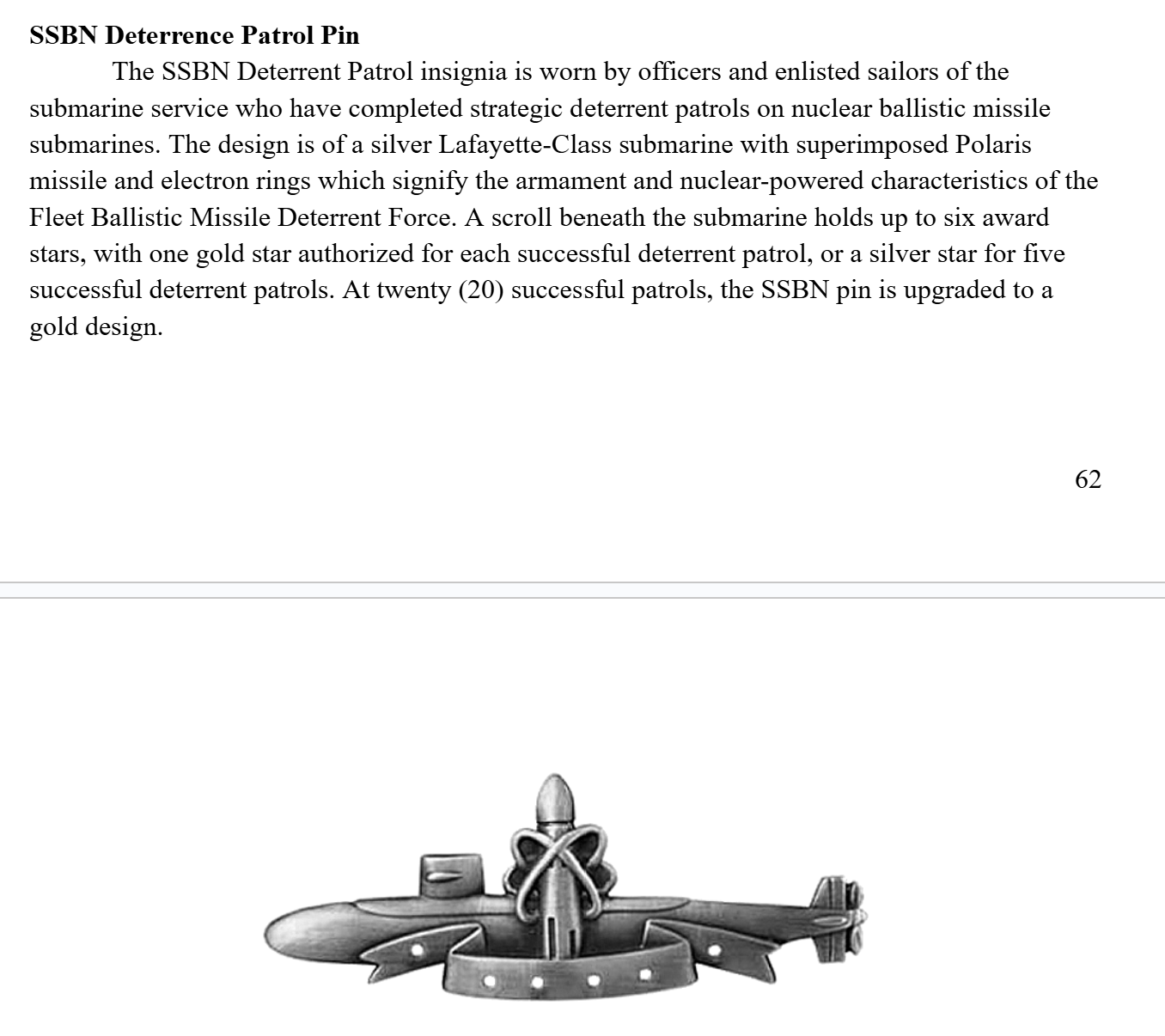
Explain what the SSBN deterrnece patrol pin looks like and how it is earned
Explain what the officer and enlisted submarine WO pins look like

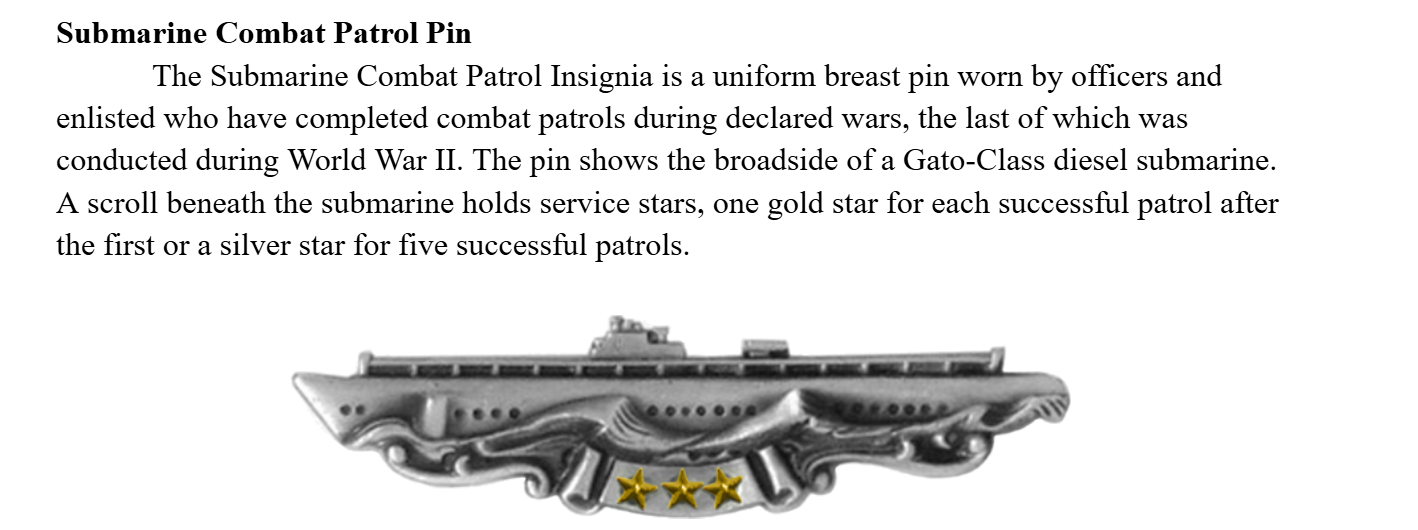
Explain the submarine combat patrol pin
Sail, fairwater plane, bow plane?
Sail: The vertical section on the submarine where the bridge is located.
Fairwater plane: The “horizontal wings” located on the sail of the submarine.
Bow plane: The “horizontal wings” located on the bow of the submarine.
Fast Attack Submarines (SSN)
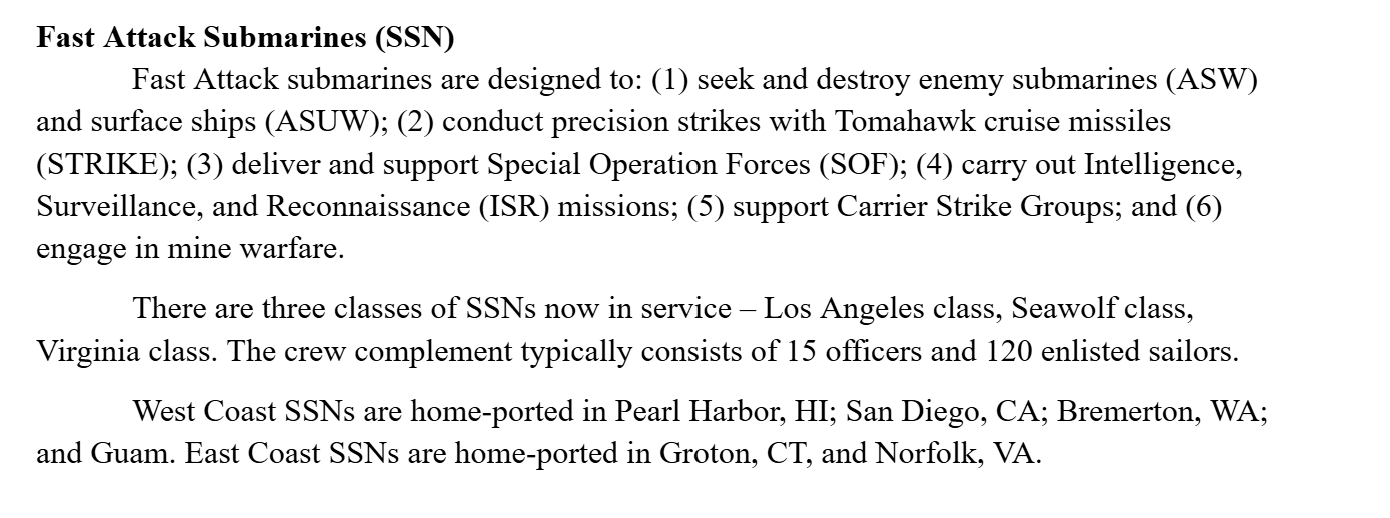
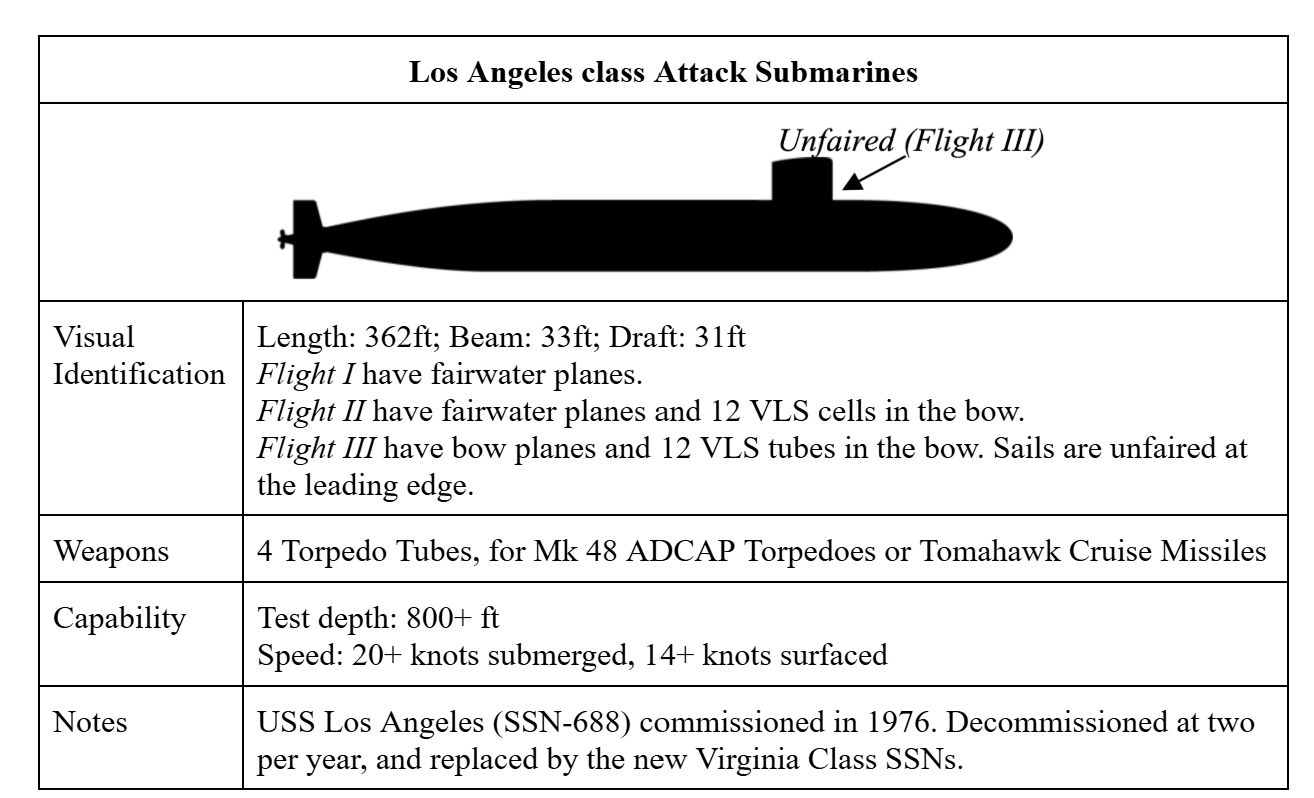
Los Angeles Class SSN
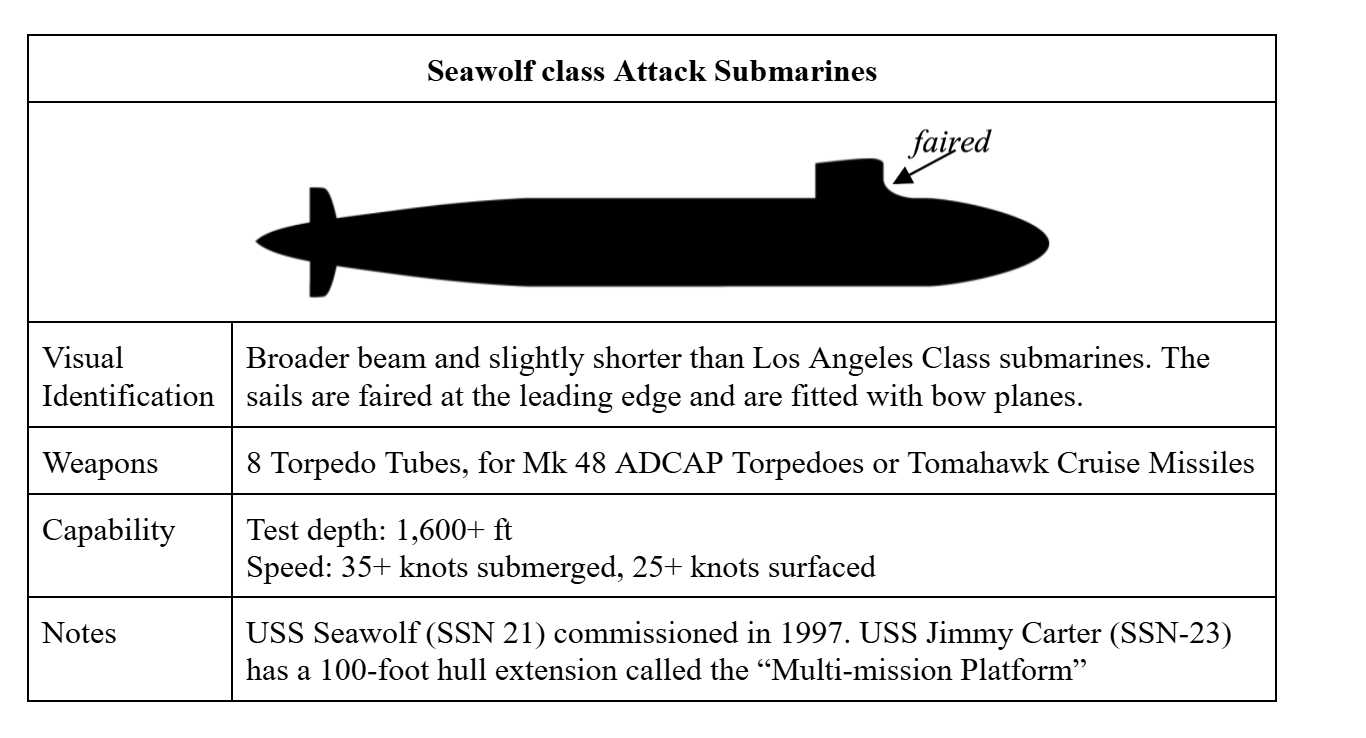
Seawolf class SSN
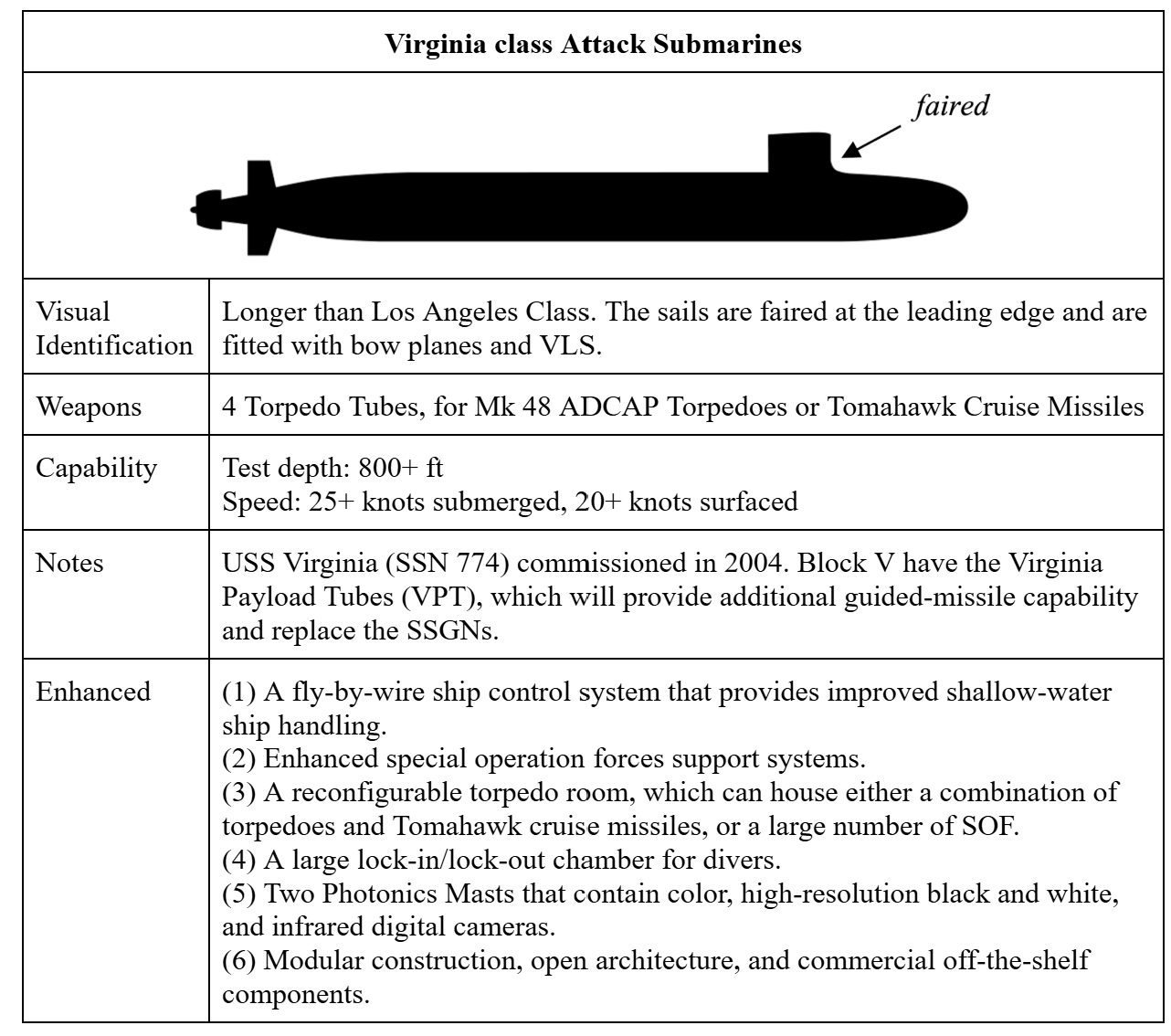
Virginia class SSN
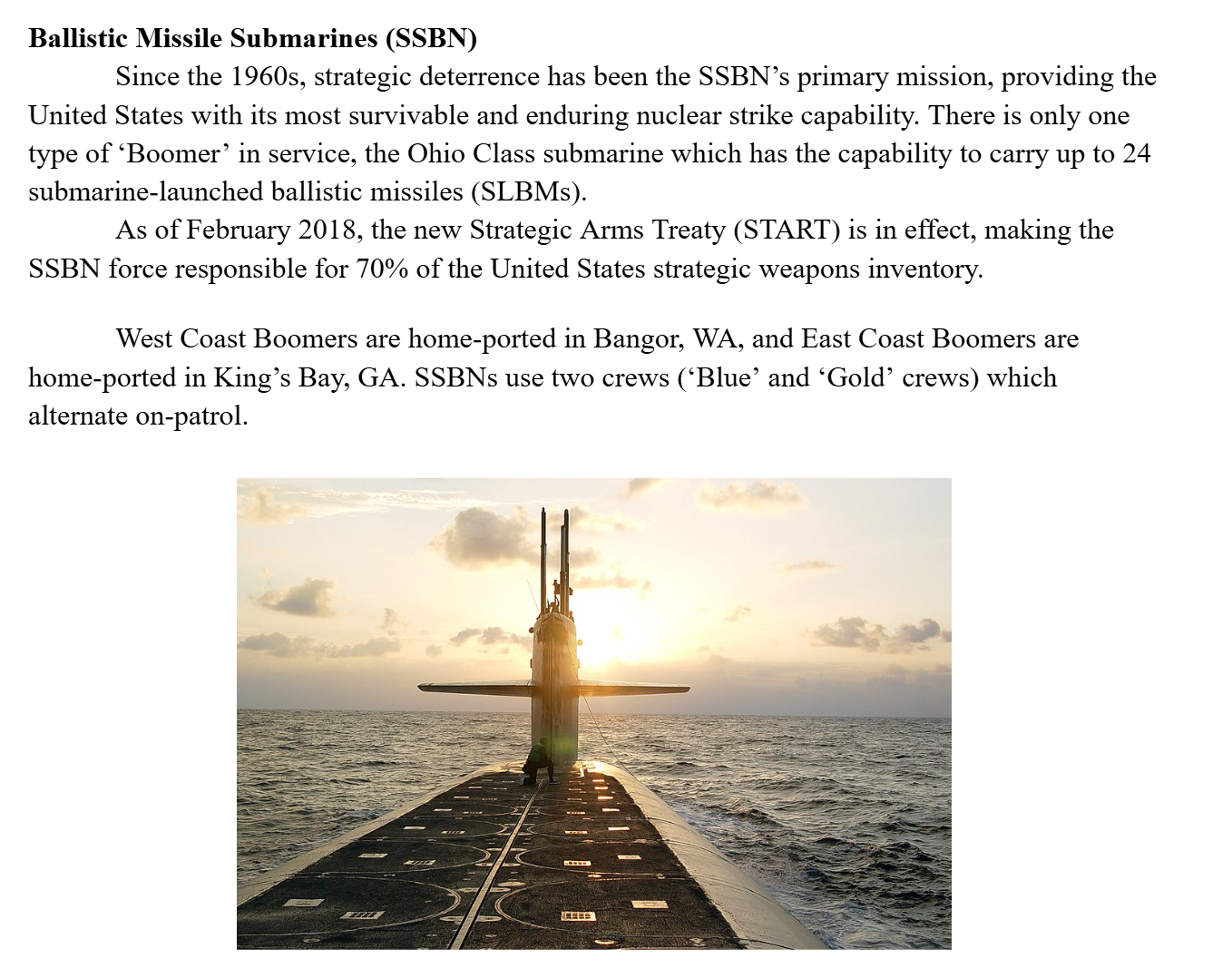
SSBN
SSGN
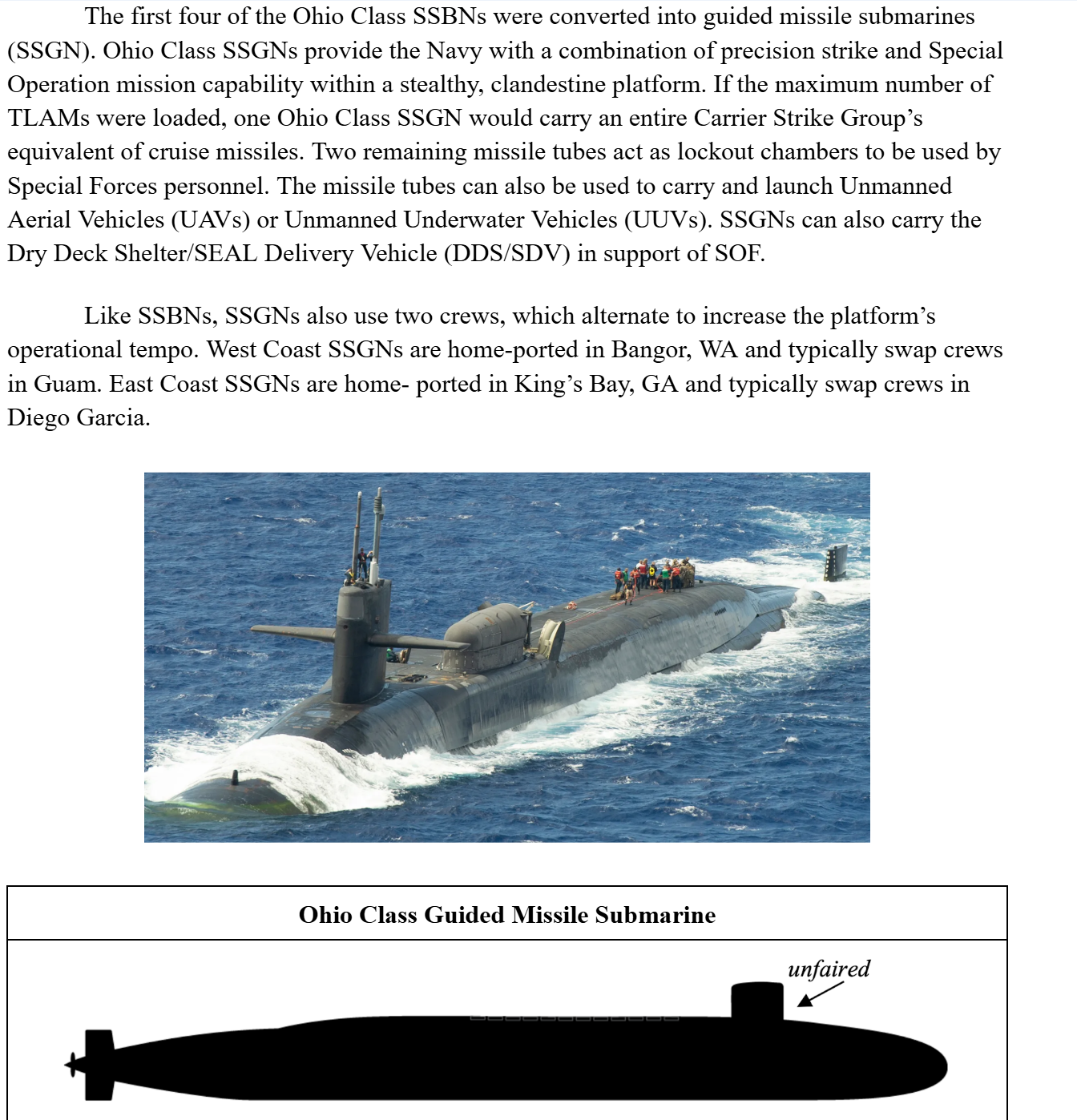
Weapons aboard submarines?
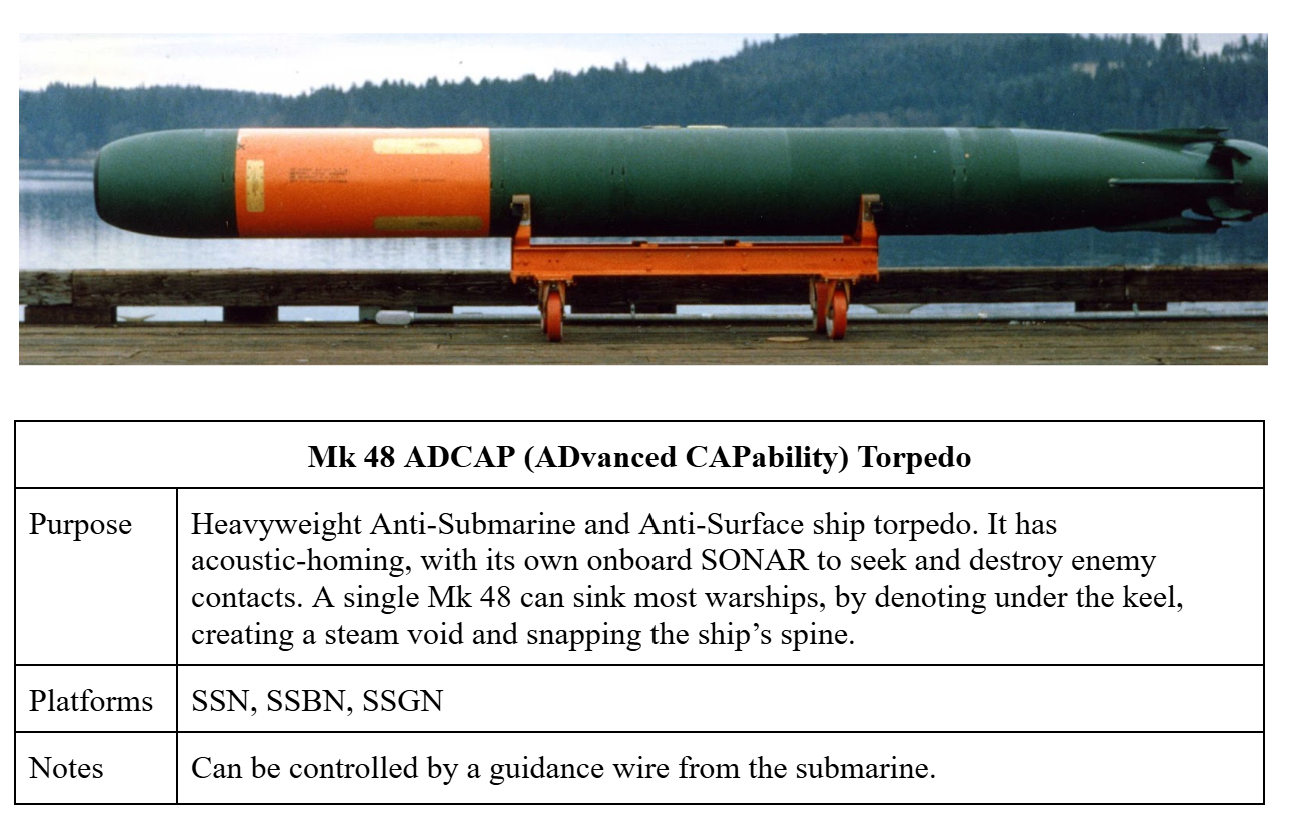
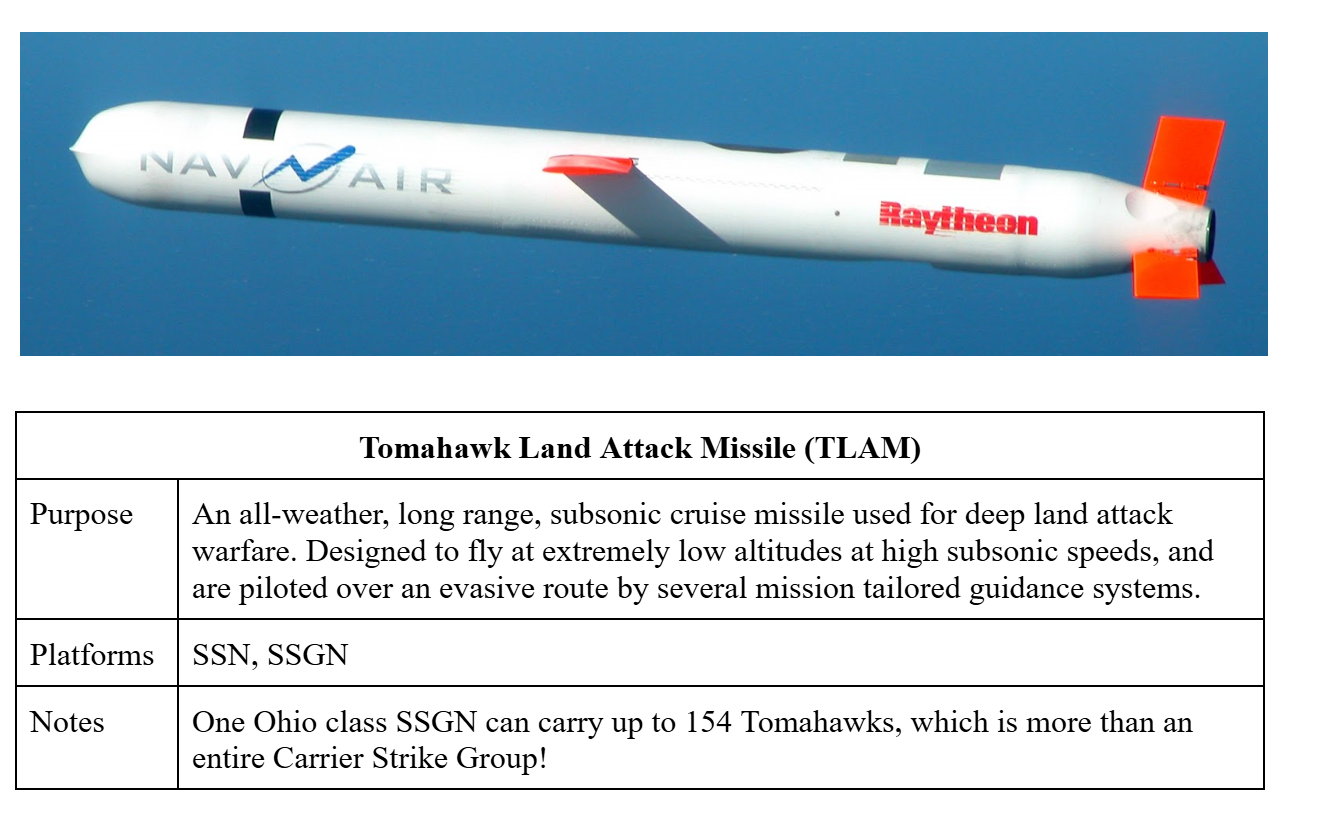
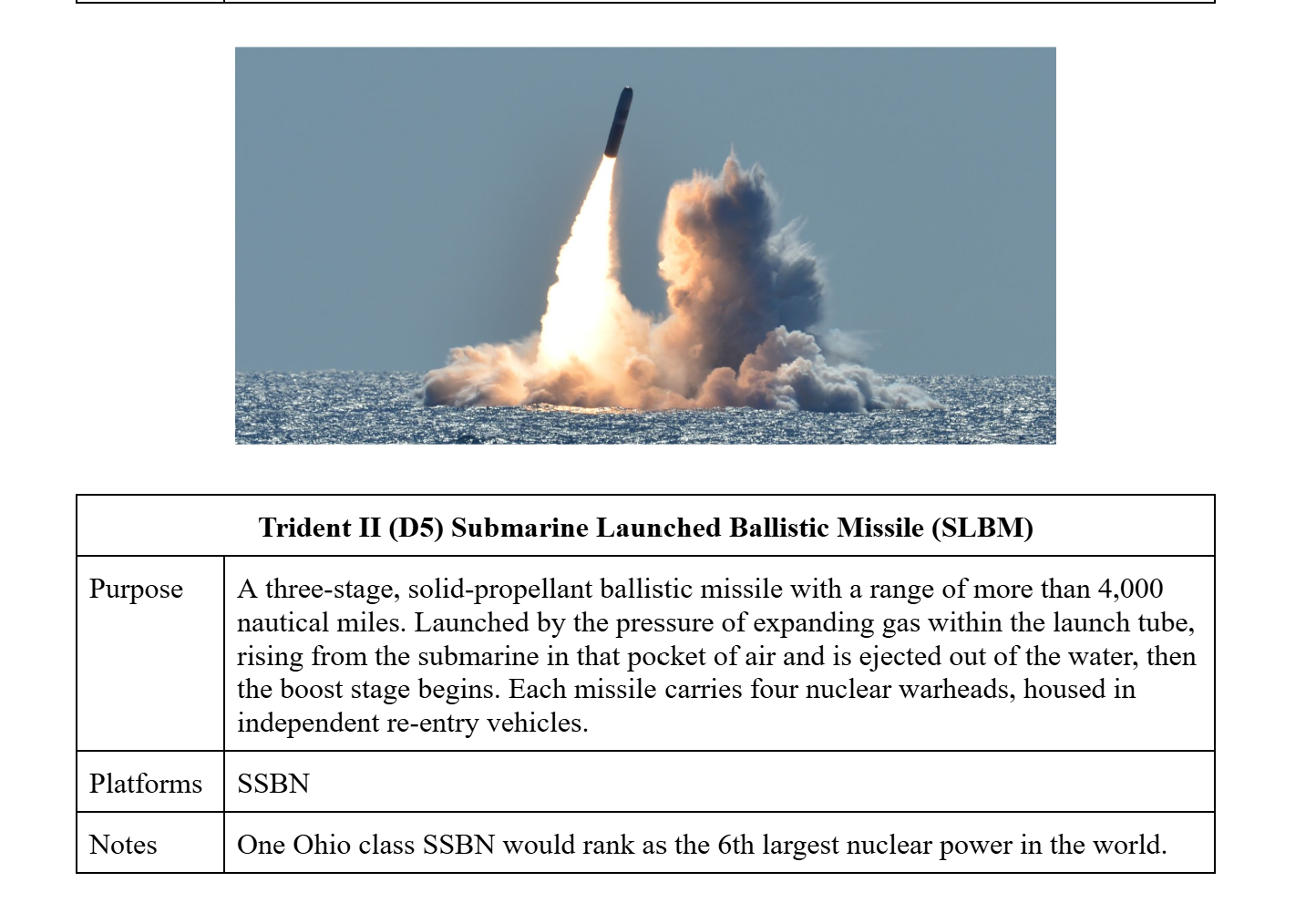
Mk 48 ADCAP (ADvanced CAPability) Torpedo, Tomahawk Land Attack Missile (TLAM), Trident II (D5) Submarine Launched Ballistic Missile (SLBM)
ADCAP Torpedo
TLAM
SLBM
What does SONAR stand for
SOund NAvigation and Ranging
Active vs. passive SONAR
In active SONAR, the submarine emits a sound pulse that reflects off an object, and the return signal allows the submarine to determine the bearing (direction) and range (distance) to the contact. Passive SONAR involves listening to sounds like the noise generated by a merchant’s engines or the noise of another submarine’s screw chopping through the water.
SONAR sensors and their locations
There are several SONAR sensors:
● Spherical Array (in the bow)
● Hull Array (along the hull)
● Towed Array (out the stern)
● High Frequency Array (in the sail)
Periscopes, photonic masts, and their purpose
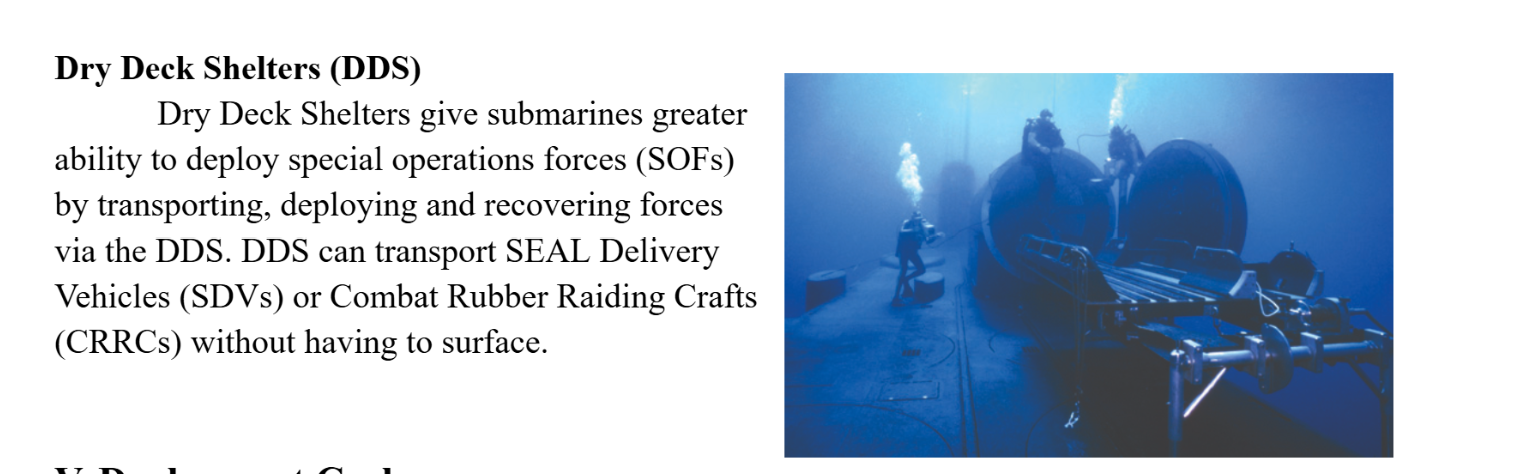
Dry dock shelters
Submarine deployment cycles
SSBNs
The Ohio-class design allows the submarines to operate for 15 or more years between major overhauls. On average, the submarines spend 77 days at sea followed by 35 days in-port for maintenance. Each SSBN has two crews, Blue and Gold, which alternate manning the submarines and taking them on patrol. This maximizes the SSBN’s strategic availability, reduces the number of submarines required to meet strategic requirements, and allows for proper crew training, readiness and morale.
SSNs and SSGNs
SSNs typically operate on 6 month deployments, and SSGNs have 15 month deployments. Like SSBNs, SSGNs will have two crews which are able to swap out in theater to allow for proper crew training, readiness and morale.
Sub officer training pipeline
Naval Nuclear Power School (NNPS)
After commissioning, this 24-week graduate-level course in Charleston, SC, is an intensive study of science-and technology-based subjects from ordinary and partial differential equations to thermodynamics to reactor dynamics. Provides a theoretical understanding of nuclear propulsion
Nuclear Power Training Unit (NPTU)
Often referred to as Prototype, in either Charleston, SC, or Ballston Spa, NY. This 26-week course involves hands-on training with several operational reactor prototypes. Here, Officers apply the concepts learned at Nuke Power School – studying systems and components of a nuclear propulsion plant and working with all the associated systems of a full-scale operating plant. Culminates with qualification as Engineering Officer of the Watch.
Submarine Officer Basic Course (SOBC)
A 12-week course in New London, CT, on submarine operations, including safety, damage control, seamanship and the responsibilities of leading an advanced submarine crew as a division Officer before reporting to an assigned submarine. Officers may receive an additional six weeks of advanced training through the strategic weapons system course at Trident Training Facilities in either Kings Bay, GA, or Bangor, WA.
Prospective Nuclear Engineer Officer (PNEO)
An examination that gives an officer the opportunity to continue their career as a department head and quality as a nuclear Engineer Officer. This exam is conducted at the Washington Naval Yard with both written and oral examinations which culminate with a recommendation from the Director of Naval Reactors.
Junior Watch Officer Quals
VII. Junior Officer Watches and Qualifications
Engineering-Officer-of-the-Watch (EOOW)
Responsible for the safe operation of the nuclear power plant. In charge of a 12 man watch team providing electricity, propulsion, and water to the ship.
Junior-Officer-of-the-Watch (JOOW)
Assistant to the Officer-of-the-Deck.
Contact Manager / Junior-Officer-of-the-Deck (JOOD)
Responsible for providing an accurate and current contact picture to the Officer of the Deck. Leads the Contact Management team made up of Sonar Operators and Fire Control Technicians to convert raw sonar data into range, direction, course, and speed of other vessels and making navigational and tactical recommendations.
Officer-of-the-Deck (OOD)
The on-watch representative of the Captain. Responsible to the Captain for the ship’s safe navigation and operation. Leads the submarine watch team to accomplish the mission objectives.
 Note
Note  Flashcards (421)