1. large animal med- equine oral/esophageal disorders
 Call Kai
 Learn
Learn Practice Test
 Spaced Repetition
 Match
Match Flashcards
 Knowt Play
1/48

There's no tags or description
Looks like no tags are added yet.
Name | Mastery | Learn | Test | Matching | Spaced | Call with Kai |
|---|
No analytics yet
Send a link to your students to track their progress
49 Terms
what are clinical signs of oral abnormalities in horses?
-abnormal chewing, quidding, dropping feed
-weight loss
-recurrent colic (impactions)
-recurrent choke
-sinusitis (unilateral nasal discharge)
-facial swelling
-head shaking
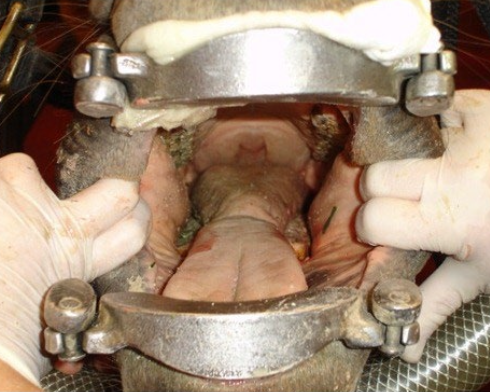
what is needed for an oral exam?
-sedation
-head stand
-full mouth speculum
-rinse
-bright light source
-mirror
-dental probe
what can be observed with oral exams in horses?
-malocclusion
-periodontal disease (pockets)
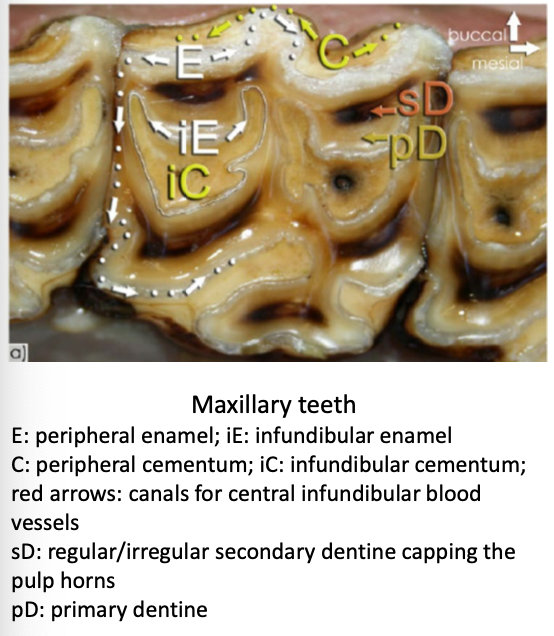
-decay of infundibulum or peripheral cementum
-fractured teeth
-endodontic disease (pulp horn)
-EOTRH
-oral lesions
-enamel points
how often should routine oral exams in horses be done?
at least once a year
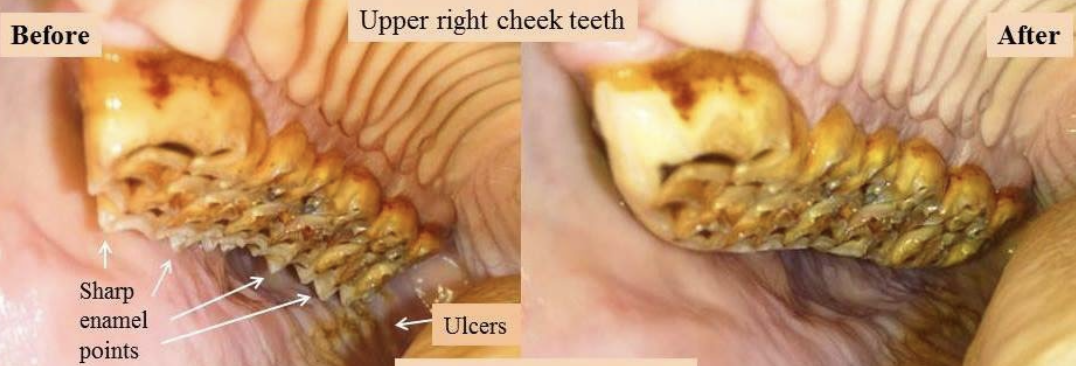
what are dental malocclusions/abnormal occlusal wear?
described as dental crown elongations (hooks, ramps, waves, steps, transverse ridges)
a normal tooth that is out of occlusion with an abnormality in opposite arcade
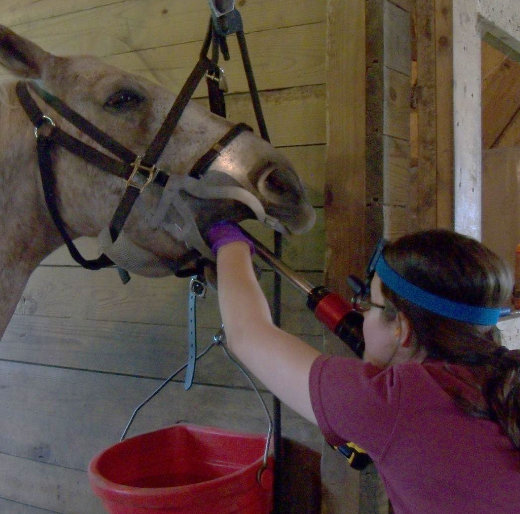
how are dental malocclusions/abnormal occlusal wear treated?
dental float
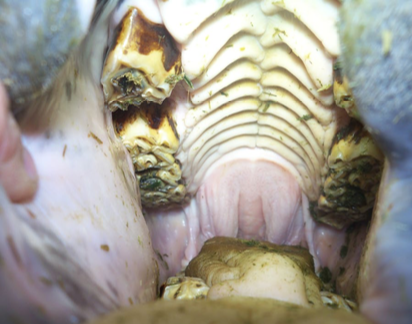
what dental malocclusions/occlusive wear changes are seen with aging?
wave mouth, smooth mouth
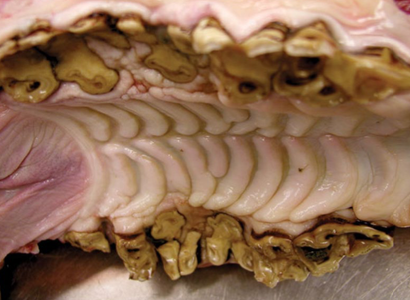
how are horses with age-related dental changes (smooth/wave mouth) managed?
dietary management- pelleted feed, grass
what does EOTRH stand for?
equine odontoclastic tooth resorption and hypercementosis
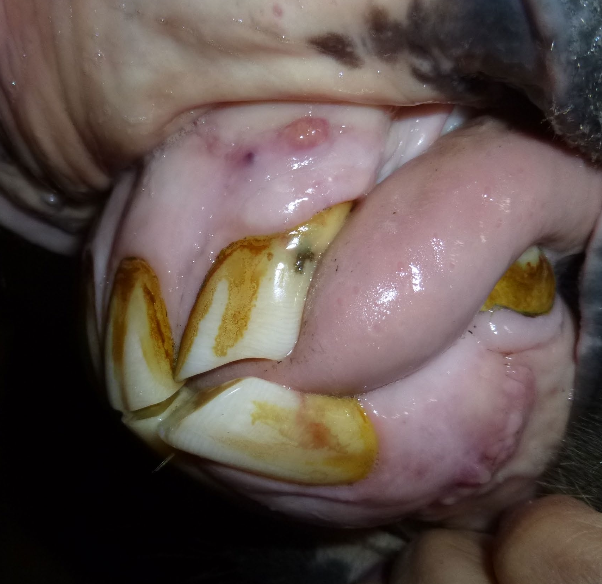
what is EOTRH?
progressive dental condition involving the incisors, canines, and premolars of aged horses internal and external resorption of dental structures and production of irregular cementum
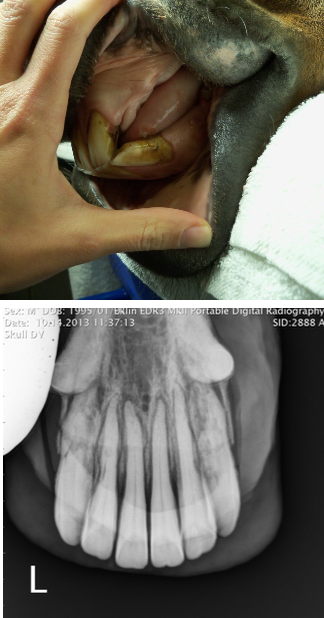
what is the cause of EOTRH?
pathophysiologic processes are still under investigation
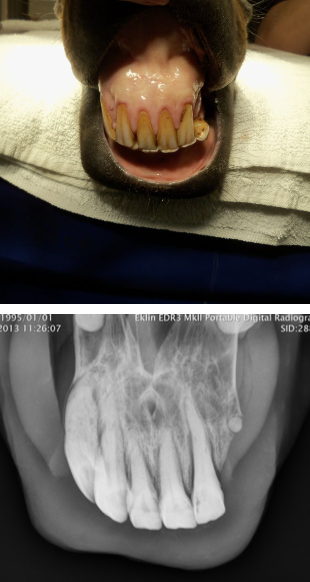
what are clinical signs of EOTRH?
-sensitivity in mouth to any manipulation
-head shyness
-periodic inappetence
-weight loss
-decreased use of incisors
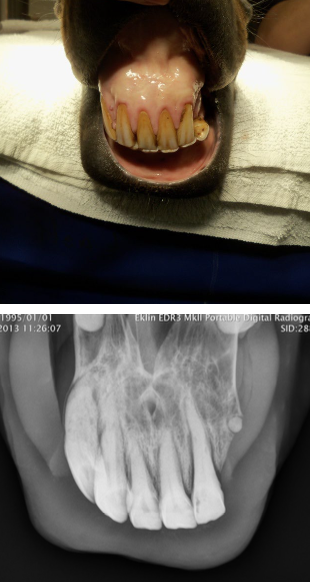
what lesions/changes are seen with EOTRH?
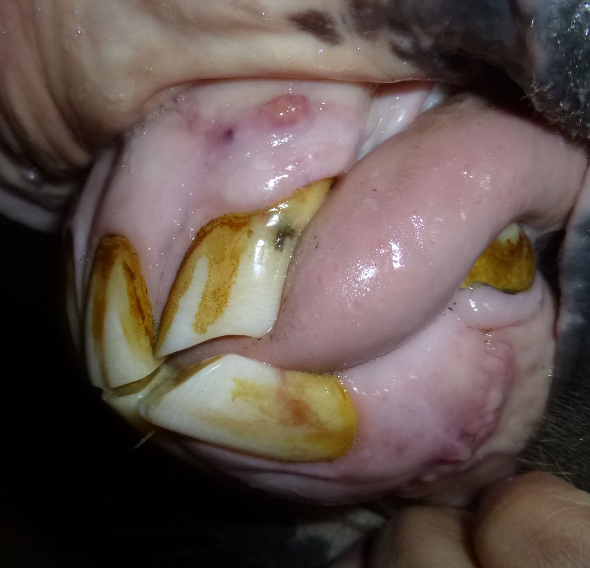
gingival recession, calculus deposition, and firm bulbous enlargement of incisive bone over incisive reserve crowns
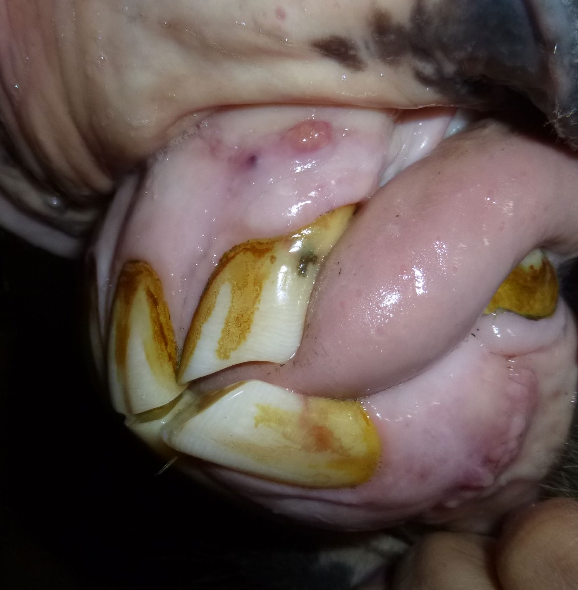
what is the treatment for EOTRH?
extraction of incisors
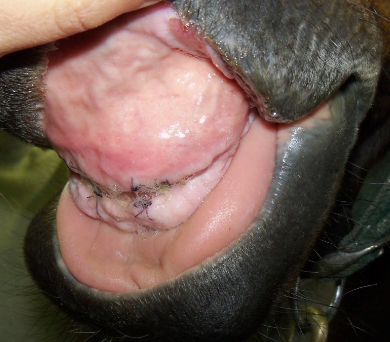
what are indications for dental extractions in horses?
1. severe periodontal dz leading to bone loss/tooth mobility
2. fractured tooth
3. severe endodontic dz leading to apical infection (tooth root abscess)
4. EOTRH
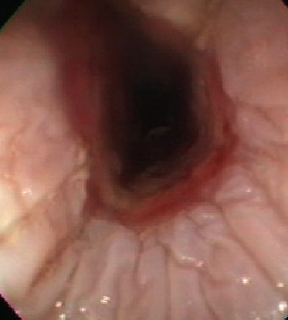
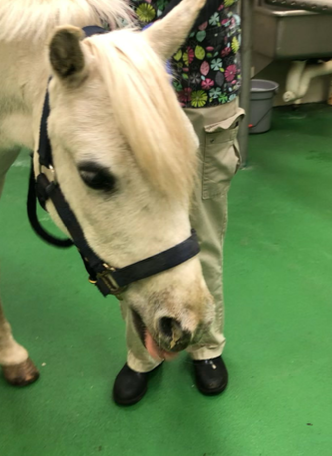
what is choke?
esophageal intraluminal obstruction
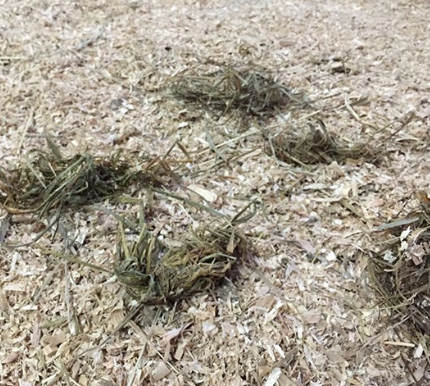
in horses, most commonly due to grains, shavings, and pellets
what are predisposing factors of choke?
-extreme hunger
-greedy eater
-competition
-exhaustion
-sedation
-dental disease
-neuromuscular problem
-esophageal abnormality
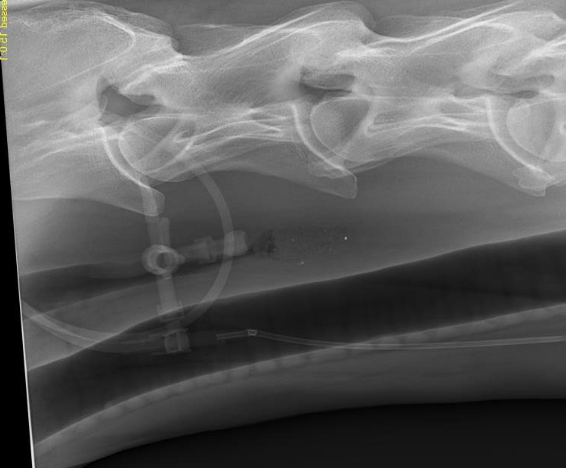
what CBC/chem abnormalities may be seen with choke?
CBC: may reflect stress or inflammation (if severe= aspiration)
chem: reflects loss of saliva, lack of drinking
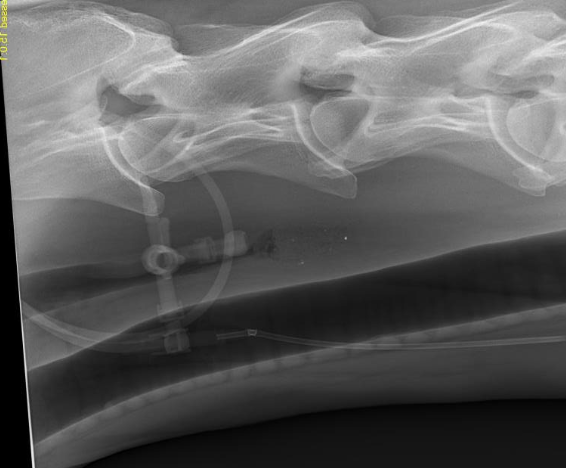
how is choke in horses diagnosed?
-clinical signs
-palpation of mass in neck (rare)
-inability to pass stomach tube
-radiographs
-endoscopy
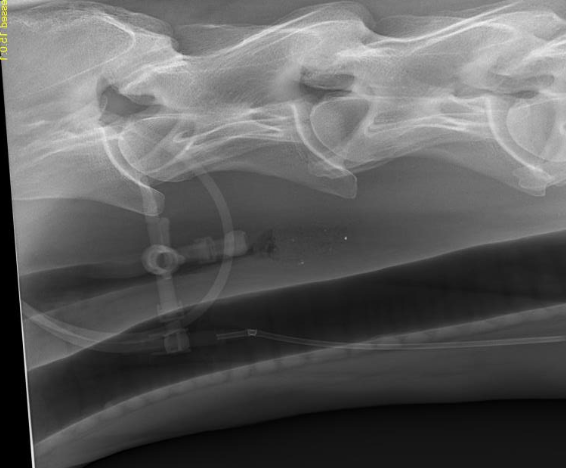
how are radiographs helpful for diagnosing choke in horses?
can help identify:
-location and length of obstruction
-evidence of esophageal rupture
-esophageal abnormalities (diverticulum, megaesophagus, stricture)
-assess lungs
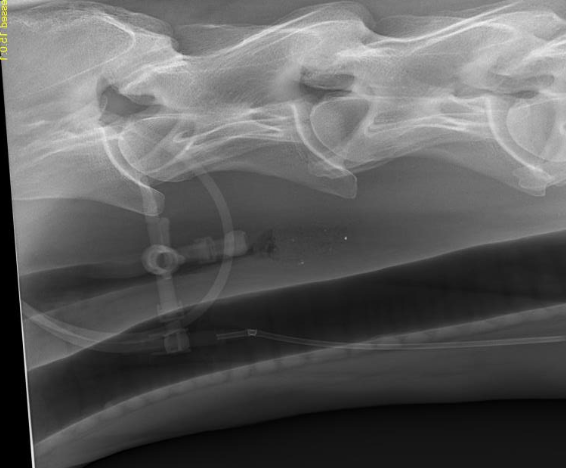
how can endoscopy be helpful for diagnosing choke in horses?
for more complicated cases, can help visualize obstruction, assess mucosa, and retrieve material
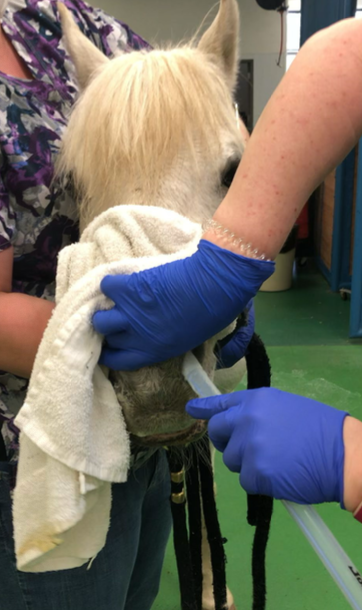
what is the treatment for minor choke episodes?
may resolve spontaneously
what is the treatment for more complicated cases of choke? (will not resolve spontaneously)
1. prevent eating/drinking
2. keep head down (prevent aspiration)
3. sedation (alpha-2s; GA for complete relaxation)
4. smooth muscle relaxant (buscopan)
5. gently try to pass NG tube- pump water thru tube against mass to break it up
6. protect airway (NT tube in other nostril)
7. do not harm
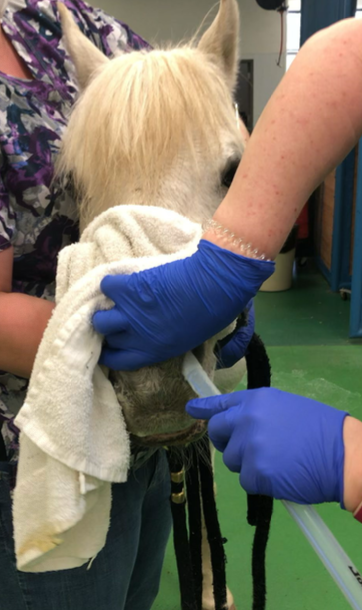
what do cuffed stomach tubes allow for when trying to resolve choke?
allows for more vigorous pumping against mass while preventing aspiration
can place small ingress tube in larger, cuffed egress tube for continuous action
for choke episodes caused by solid masses- is it better to massage the mass up or push downward into stomach?
solid masses better massaged up for retrieval than pushed downwards
what is the benefit of using alpha-2 agonists for helping resolve choke episodes?
relaxes esophagus, lowers head, and allows you to work
alpha-2s used: detomidine, xylazine
what is the treatment for choke episodes after correction?
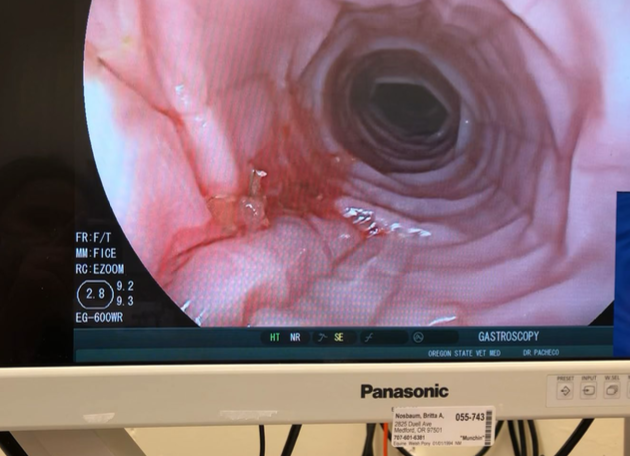
1. ideally perform endoscopy to assess mucosa
2. if esophageal ulcers present- give sucralfate
3. gradual re-intro of water and softened feeds (may need to hold off feed if mucosal lesions)
4. if painful (common) give NSAIDs (banamine)
5. if evidence/suspicion of aspiration give abx
6. if dehydrated/electrolyte imbalances- give fluids w/ additives
how is choke prevented?
-soft feed
-dental care (dont over-float)
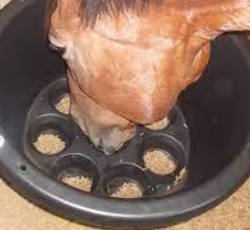
-slow down eating (slow feeders/hay nets)
-eliminate hay from diet in older horses with expired teeth
-special diets for horses with esophageal abnormalities
what are causes of esophageal strictures in horses?
result of circumferential ulcers due to choke or esophagitis
typically form within 4-8 weeks of primary lesion
what can esophageal strictures in horses lead to?
recurrent choke or megaesophagus
how are esophageal strictures diagnosed?
endoscopy, barium swallow studies
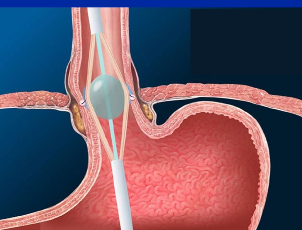
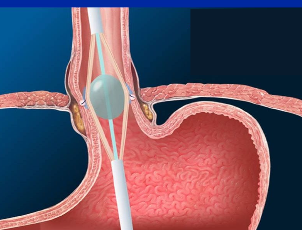
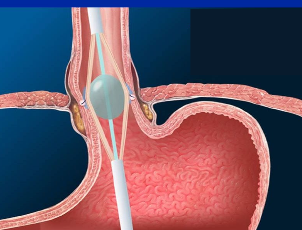
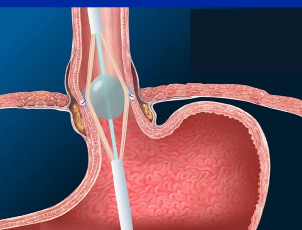
what is the treatment for esophageal strictures in horses?
-soft feeds
-ballon dilation (bougienage
-surgery (not usually done)
what are causes of esophageal rupture in horses?
-external trauma
-rupture of diverticulum
-iatrogenic (NGT)
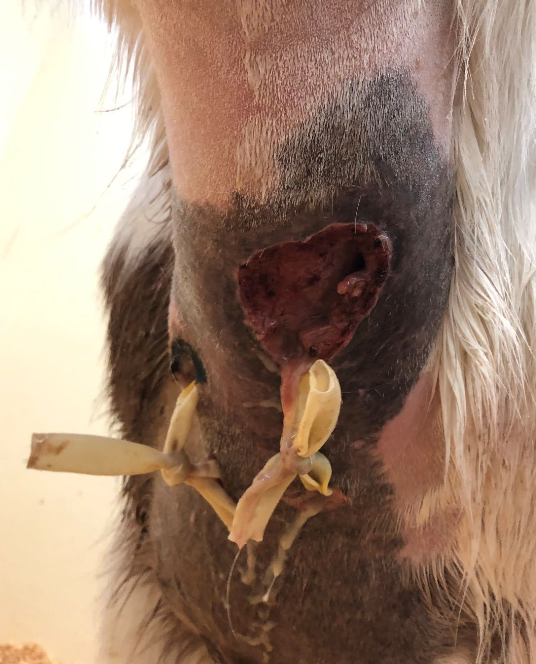
what are complications of esophageal rupture in horses?
-severe cellulitis
-tissue necrosis
-infection of mediastinum and pleural space
-stricture
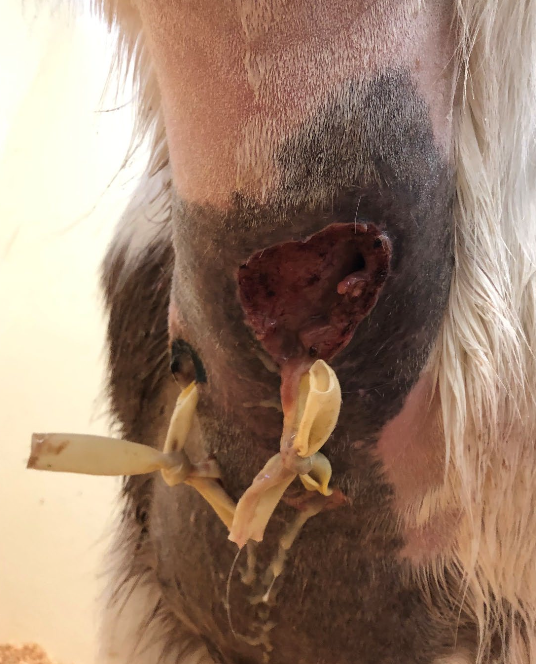
what is the treatment for esophageal rupture in horses?
-conversion of closed perforations to open perforations to allow drainage
-extensive debridement and lavage of affected tissues
-broad-spectrum abx
-tetanus prophylaxis
-esophageal rest (EG tube)
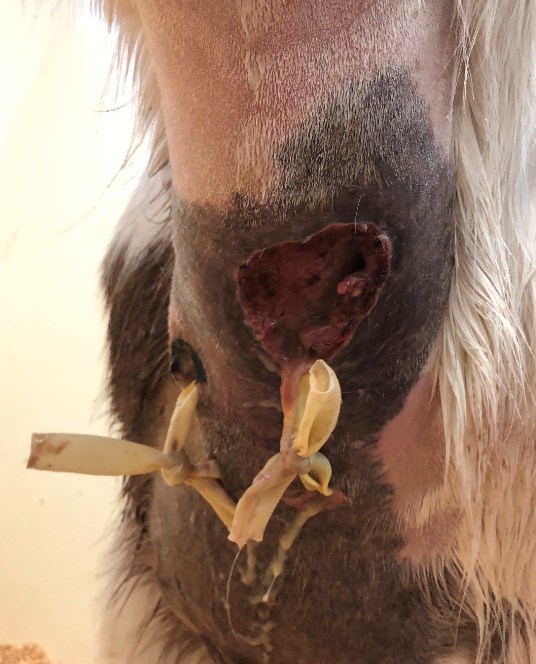
what is the prognosis for esophageal rupture in horses?
poor
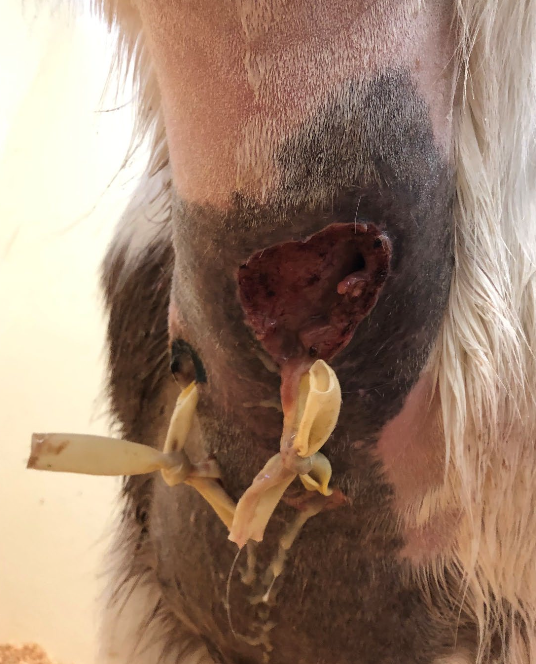
what are clinical signs of an esophageal diverticulum in horses?
recurrent choke
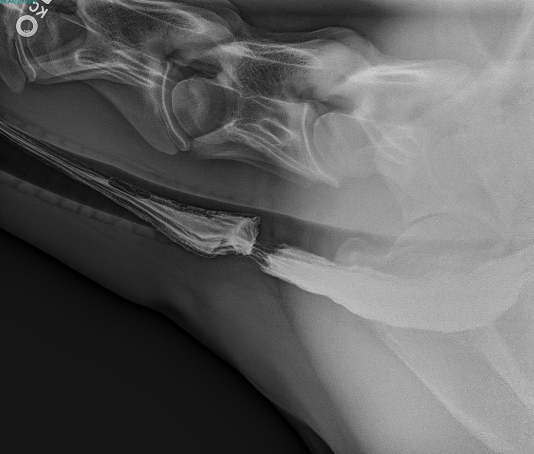
what are causes of an esophageal diverticulum in horses?
usually acquired from choke/strictures
these are rarely congenital
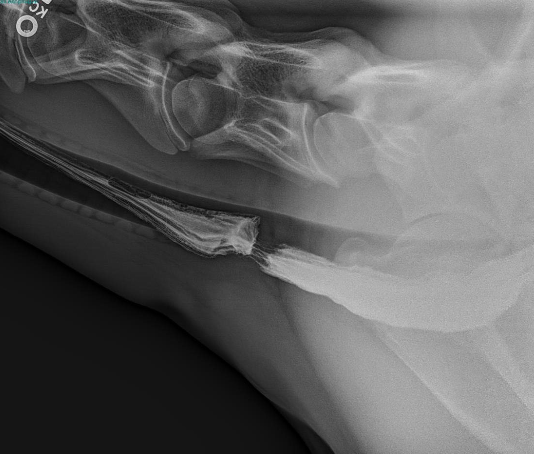
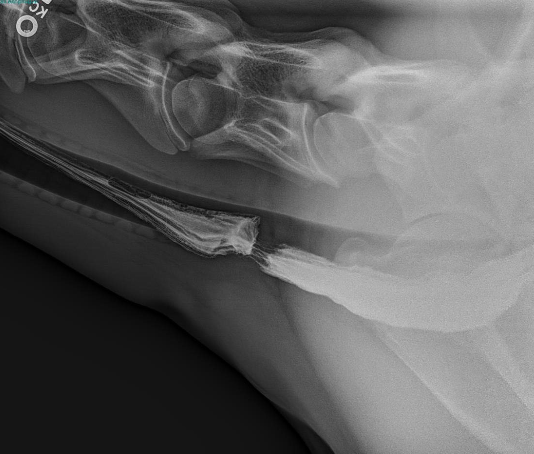
how is a esophageal diverticulum diagnosed?
barium swallow
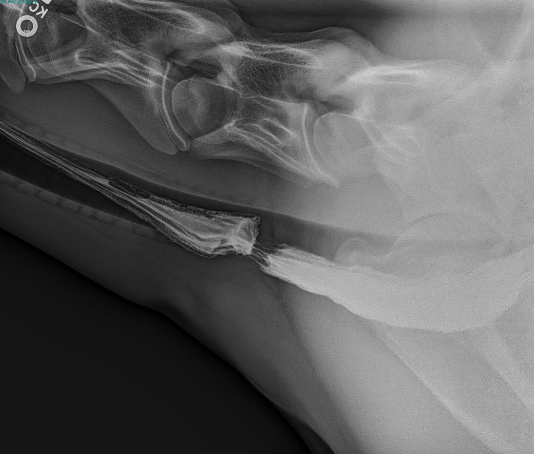
what is the treatment for an esophageal diverticulum?
manage with soft diet
no curative treatment
is megaesophagus common in horses?
no, it is uncommon
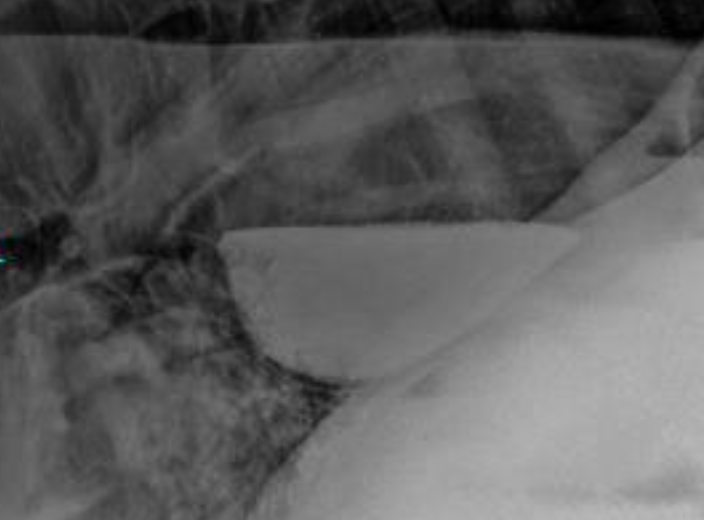
what are causes of megaesophagus in horses?
-chronic obstruction (choke, stricture, hiatal hernia, vascular ring anomaly, achalasia)
-vagal nerve dysfunction
-myopathy (WMD/botulism)
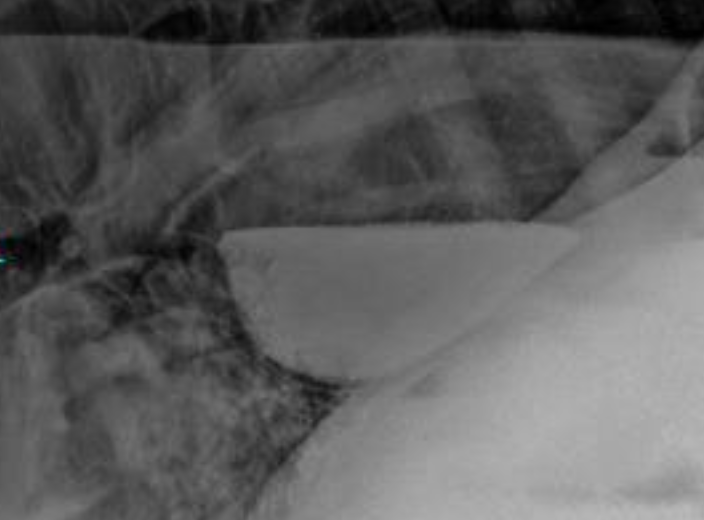
what are clinical signs of megaesophagus in horses?
-excessive salivation
-bulge or fluid-wave in neck
-nasal reflux
-regurgitation
-poor growth/weight loss
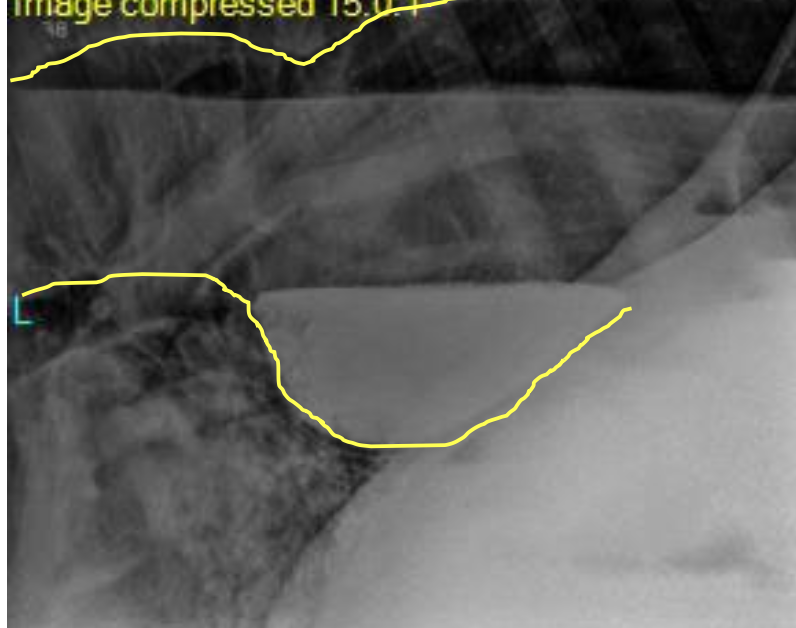
how is megaesophagus diagnosed in horses?
presumptive diagnosis via clinical signs
definitive diagnosis via endoscopy, esophogram (barium swallow)
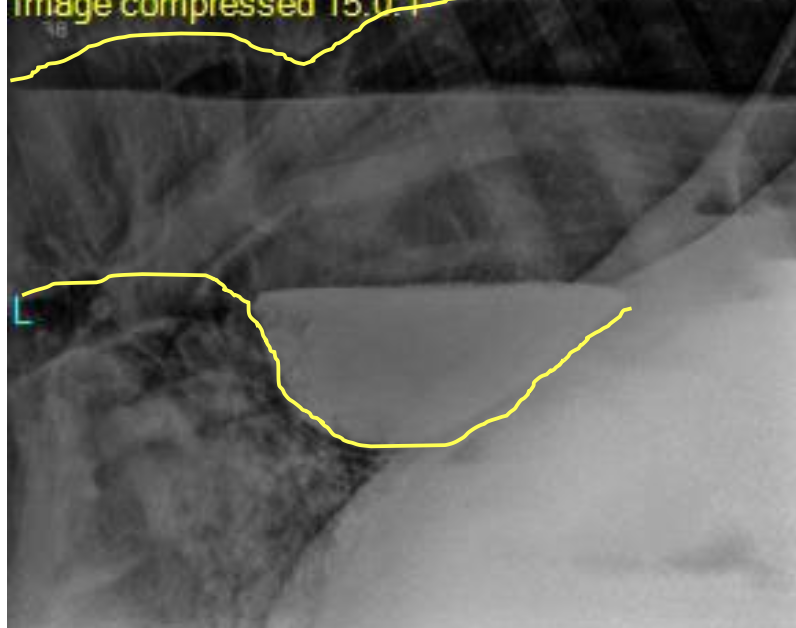
what is the treatment for megaesophagus in horses?
-treat underlying disorder if possible
-dietary management (soaked, pelleted feed given elevated)
-human euthanasia may be required
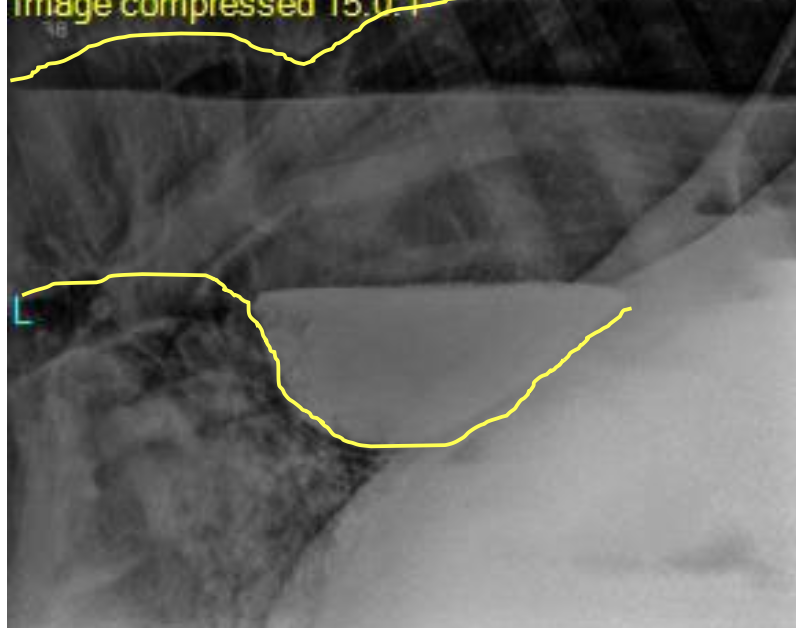
what are clinical signs of esophagitis in horses?
-gagging or discomfort when swallowing (dysphagia)
-hypersalivation
-bruxism (grinding teeth)
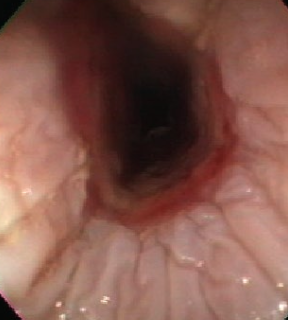
what are causes of esophagitis in horses?
-trauma (NG tube)
-infection (mural abscess)
-chemical injury (acidic meds, cantharidin, gastric acid/reflux)
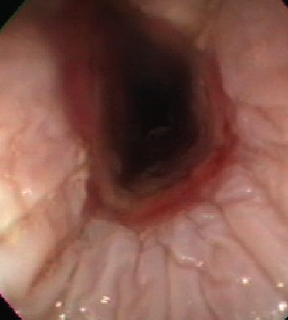
how is esophagitis diagnosed?
with endoscopy
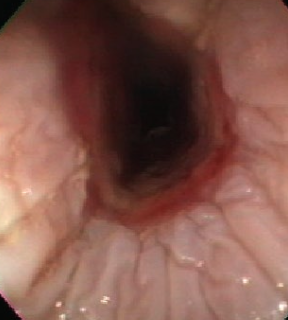
what is the treatment for esophagitis in horses?
-sucralfate
-pain meds
-soft feed