take it to the limit 17
 Studied by 0 people
 Call Kai
 Learn
Learn Practice Test
 Spaced Repetition
 Match
Match Flashcards
 Knowt Play
1/34

There's no tags or description
Looks like no tags are added yet.
Name | Mastery | Learn | Test | Matching | Spaced | Call with Kai |
|---|
No analytics yet
Send a link to your students to track their progress
35 Terms
vo2
the highest rate at which the body can take in, transport and utilize oxygen to perform muscle work
modifications in vo2 factors will result in
changes to vo2 max
what would it take to make sub2 in a marathon
maximal aerobic power (VO2 max)
Critical speed
economy of movement
envionrmental conditions
take in oxygen
inhaling
oxygen diffusion into blood
transport of blood
oxygenated blood is distributed to working muscles
oxygen diffuses into muscles
utilize oxygen
diffusion into mitochondria
oxygen is consumed during the ETC to produce O2
gas exchange =
more blood flowing to alveoli + more capillaries
Ventilator limitations of Vo2 max (take in)
lung capacity and alveoli capillary perfusion
transport limitations on Vo2 max
blood hemoglobin levels predict vo2 max
HR
Cardiac Size
limit to vo2 max which isn’t modifiable/trainable
HR
muscular limitations of vo2 max
oxygen diffusion into mitochondria
capillary and mitochondrial density
combination of factors resulting in elite vo2 max
lung size and alveolar capillary perfusion
blood vol and hemoglobin content
heart size, HR, vascular conductance
fibre type (capillary and mitochondrial density)
threshold intensity
describes maximum sustainable intensity during sustained exercise
balance between lactate and H production and clearance
improved oxygen supply limits
need for lactate and H+ production
improved lactate and H+ clearance limits
fatigue
how to increase lactate clearance
increased in MCP transporters
Bicarbonate concentration
Resting PH
untrained vs trained lactate
untrained ppl produce more lactate but if it’s cleared at higher rates then it won’t accumulate
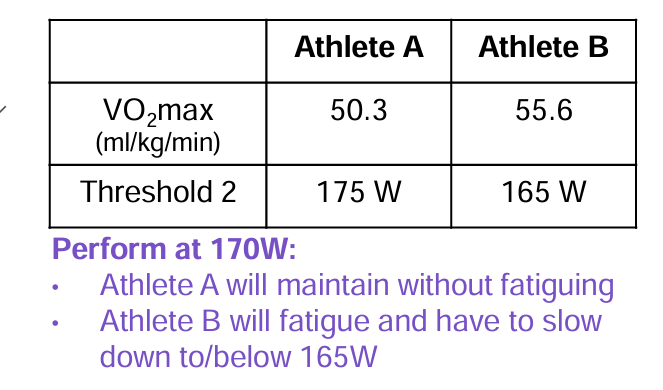
critical power better at predicting
performance in long events than vo2 max
increasing threshold 2 (anaerobic threshold)
When you increase your LT2, you're essentially pushing back the point at which lactate starts to accumulate rapidly
increased threshold intensity
better oxygen delivery and improved clearance prevents accumulation
a greater running economy enables a runner to
run at the same speed at a lower energy expenditure
run at a faster speed at the same energy expenditure
running economy":
the energy cost of maintaining a given intensity
primary factors of running economy
swing mass (moment of inertia)
midsole cushioning
longitudinal bending stiffness
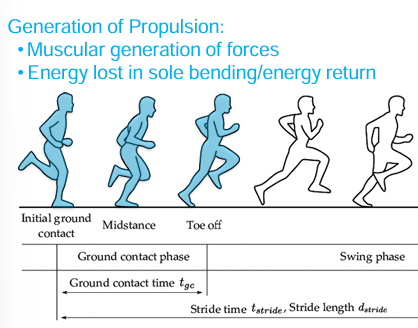
generation of propulsion
Muscular generation of forces
energy is lost in sole bending and energy return
impact of landing
muscular absorption of forces
energy lost in sole compression/energy return
energy is expended to (footwear)
minimize impact and generate propulsion
shoe cushioning minimizes
muscle cushioning activity
if you have a more cushy shoe then your leg has less to absorb and uses less energy
arch stiffness and running
stuffer arch returns more cushioning energy back into propulsion energy
Swing mass
the heavier the mass is or the further the mass is from the axis of rotation the more torque is required to move the limb
temperature and running
temp decides where blood flow
heat increases blood flow to skin to assist in cooling which is blood that is not travelling to the exercises muscle which will make vo2 dropa
envionrment altitude
high altitudes reduces PO2 of ambient air and limits oxygen diffusion into blood
VO2 MAx drops 5-10% for each
1000m increase in elevation
pollution and race env
pollution stimulates bronchoconstriction and vasoconstriction to limit ventilation and blood flow to working muscles
sub 2 hour marathon =
high vo2 max
high speed at LT2
high running economy
course with optimal conditions
 Note
Note  Flashcards (23)