Periodic Table of Elements History
 Studied by 1 person
 Call Kai
 Learn
Learn Practice Test
 Spaced Repetition
 Match
Match Flashcards
 Knowt Play
1/27

There's no tags or description
Looks like no tags are added yet.
Name | Mastery | Learn | Test | Matching | Spaced | Call with Kai |
|---|
No analytics yet
Send a link to your students to track their progress
28 Terms
empedocles (450BCE)
greek, love & strife
aristotle (384 BCE)
four elements- fire, air, water, earth
alchemist (medieval)
classified elements, grouped the elements
antoine lavoisier (1789)
father of chemistry
johann wolfgang dobereiner
law of triads
john newland (1864)
law of octaves
lothar meyer (1864)
arranged elements by atomic weight
dimitri ivanovich mendeleev
father of periodic table
electronegativity
atom’s ability to attract and bind with electrons
ionization energy
energy required to remove an electron in its gaseous phase
atomic radius
distance from the nucleus to the outermost electron of an atom
periodic table has __ groups
18
periodic table has __ periods
7
sublevels
subdivision of energy level, describes the shape of the region where electrons are most likely to be found
orbitals
specific space within a sublevel (max of 2)
most complex of all
sublevel f
Sublevel S
spherical #1
Sublevel P
dumbbell #3
Sublevel D
cloverleaf #5
Sublevel F
Complex #7
electron configuration
describes how electrons are arranged within an atom or molecule
Aubau’s Principle
1s 2s…
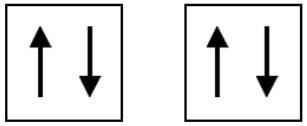
Pauli’s Principle
mass number
total # of proton & neutron
atomic number
#of protons
neutron
mass number - proton
isotopes
stable % radioactive; atoms of the same element that have the same number of protons but different numbers of neutrons
empirical formula
simplified
 Note
Note  Flashcards (87)