Bio Principles Final
 Studied by 41 people
 Call with Kai
 Learn
Learn Practice Test
 Spaced Repetition
 Match
Match Flashcards
 Knowt Play
1/119

Earn XP
Description and Tags
Fraizer
Name | Mastery | Learn | Test | Matching | Spaced | Call with Kai |
|---|
No analytics yet
Send a link to your students to track their progress
120 Terms
DNA replication
The enzymes involved in the synthesis of the
LEADING STRAND are
A. Ligase
B. DNA Polymerase
C. Primase
D. All of the above
E. B and C only
E. B and C only
DNA replication
The enzymes involved in the synthesis of the
LAGGING STRAND are:
A. Ligase
B. DNA Polymerase
C. Primase
D. All of the above
E. B and C only
D. All of the above
In DNA replication, DNA polymerase ADDS new
nucleotide bases to the NEW DNA strand from the
__________ end to the _______end.
A.3’, 5’
B. 5’, 3’
C. 3’, 3’
D. 5’, 5’
B. 5’, 3’
DNA replication
The complimentary DNA strand of TACCCCAATTTGGG, would read:
A. TACCCCAATTTGGG
B. ATGGGGTTAAACCC
C. AUGGGGUUAAACCC
B. ATGGGGTTAAACCC
DNA replication happens during:
A. Mitosis
B. Meiosis
C. Interphase
D. Protein synthesis
E. None of the above
C. Interphase
The enzyme that functions in adding new nucleotides to a parental DNA in a leading strand is:
A. Ligase
B. Primase
C. DNA polymerase
D. Helicase
E. All of the above
C. DNA polymerase
The enzyme that functions in unwinding a double stranded DNA during DNA replication is:
A. Ligase
B. Primase
C. DNA polymerase
D. Helicase
E. All of the above
D. Helicase
DNA replication
The enzyme that functions in adding short sequences of RNA primers to the DNA strand is:
A. Ligase
B. Primase
C. DNA polymerase
D. Helicase
E. All of the above
B. Primase
Define mutation
(according to the book)
changes in the genetic material of a cell
How is a mutation formed?
A chemical change in just one nucleotide base pair of a gene causes a point mutation EX. Sickle cell anemia
- It can affect protein structure and function
- Base-Pair Substitution is a point mutation that results in replacement of a pair of complimentary nucleotides with another nucleotide pair, some have little or no impact in protein function called silent mutations.
- Others cause a readily detectable change in a protein:
- Missense mutations still code for an amino acid but change the indicated amino acid
- Nonsense mutations change an amino acid codon into a stop codon
Insertions and deletions are additions or losses of nucleotide pairs in a gene (cause frameshifts), having a disastrous effect on the resulting protein
DNA replication
Which cell types are the ONLY cell types in which mutations, acquired during the lifetime of an individual, will pass on to the offspring?
germ cells
DNA replication
In DNA replication, DNA polymerase ADDS new
nucleotide bases to the NEW DNA strand from the
__________ end to the _______end, while READING
the DNA template strand from the direction _____
end to ____ end.
A.3’, 5’, 5’, 3’
B. 5’, 3’, 3’, 5’
C. 3’, 3’, 3’, 5’
D. 5’, 5’, 5’, 3’
B. 5’, 3’, 3’, 5’
In DNA replication the complimentary DNA strand of TACCCCAATTTGGG, would read:
A. TACCCCAATTTGGG
B. ATGGGGTTAAACCC
C. AUGGGGUUAAACCC
B. ATGGGGTTAAACCC
Protein Synthesis
Transcription consists of:
A. Copying a DNA double helix molecule
B. Producing a polypeptide chain based on the code within the mRNA
C. Producing a mRNA with the complimentary code of a gene
D. Producing new cells
C. Producing a mRNA with the complimentary code of a gene
Protein Synthesis
Translation consists of:
A. Copying a DNA double helix molecule
B. Producing a polypeptide chain based on the code within the mRNA
C. Producing a mRNA with the complimentary code of a gene
D. Producing new cells
B. Producing a polypeptide chain based on the code within the mRNA
Protein Synthesis
The complimentary RNA strand to the following DNA strand TACCCCAATTTGGG, would read:
A. TACCCCAATTTGGG
B. ATGGGGTTAAACCC
C. AUGGGGUUAAACCC
C. AUGGGGUUAAACCC
Protein Synthesis
Practice Making Polypeptides
• DNA – TACTTTAAACCCGGGAATATT
• RNA - ???
AUGAAAUUUGGGCCCUUAUAA
Protein Synthesis
Practice Making Polypeptides
• DNA – TAC TTTAAACCCGGGAATATT
• RNA - AUGAAAUUUGGGCCCUUAUAA
• AMINOACIDS – ????
–Met-lys-phe- gly-pro-leu
A gene reads: TACCCCATTTTTCCCGGGATC. The
correct sequence of amino acids in the primary
structure of the polypeptide would be:
A.met-gly-gly-lys-pro
B.met-lys-pro-gly-gly
C.met-arg-pro-iso-pro-leu-leu
D.met-gly
E.None of the above
D. met-gly
A mRNA reads AUGAAACCCUAGGGG. The correct
sequence of amino acids in the primary structure of
the polypeptide would be:
A.met-gly-lys-pro
B.met-lys-pro
C.met-pro-lys-gly
D.met-lys
E.None of the above
B.met-lys-pro
A mRNA reads AUGAAACCCUAGGGG. The
ANTICODON in the tRNA for the amino acid lysine in the mRNA above
will read:
A.met-lys-pro
B.TTT
C.UUU
D.None of the above
C.UUU
Protein Synthesis
DNA “controls the cell’s metabolism by carrying
the information to make_______.
A. Lipids
B. DNA
C. Proteins
D. Carbohydrates
E. None of the above, DNA does not control the
cell.
C. Proteins
In protein synthesis, DNA is directly involved in the
production of _______, which are essential for
assembling proteins.
A. Lipids
B. DNA
C. Proteins
D. Carbohydrates
E. RNA molecules.
E. RNA molecules.
Protein Synthesis
Which RNA molecule is responsible for bringing in
the amino acids, and contains the anti-codons.
A. mRNA
B. rRNA
C. tRNA
D. snRNP
E. A, B and C are correct
C. tRNA
Protein Synthesis
Describe the function of ALL RNA molecules below:
A. mRNA
B. rRNA
C. tRNA
D. snRNP
E. SRP RNA
What is a gene?
a specific sequence of nucleotides in DNA, involved in producing a polypeptide chain
Ex. code for color of a flower
More than 70% if the DNA does not code for proteins but regulates…
gene expression
Alleles
the alternative versions of a gene
Ex. P(purple) or p(white)
Locus
location of a gene in a chromosome
What is a hybrid?
crossed if different phenotypes
(Ex. white and purple flower)
The chance of crossing over when genes are closed to each other are _____ compared to the genes far away from each other that have more space to break and reattach
(fill in blank)
small
Rh Factor was tested on ______
Rhesus monkey’s
one gene inheritance
What does being Rh+ mean?
red blood cells have a protein sticking out in surface (referred to as Rh+)
Phenotype = Rh+
Genotype = RR or Rr
What does being Rh- mean?
red blood cells do not have proteins around them, no membrane proteins
Phenotype = Rh-
Genotype = rr
Mendel developed a hypothesis consisting of 4 related ideas
What do they state?
Alternative version of genes ( different alleles ) account for variations in inherited characters
Different alleles vary somewhat in the sequence of nucleotides at the specific locus of a gene
The purple-flower allele and white-flower allele are two DNA variations at the flower-color locus
For each character, an organism inherits two alleles, one from each parent
- 2 characters for every trait, and the plant got one character form each parentIf two alleles differ, then one, the dominant allele, is fully expressed in the organisms appearance and the recessive allele is not expressed
The two alleles for each character segregate (separate) during gamete production
Mendel predicted meiosis before it was known
What is a test cross?
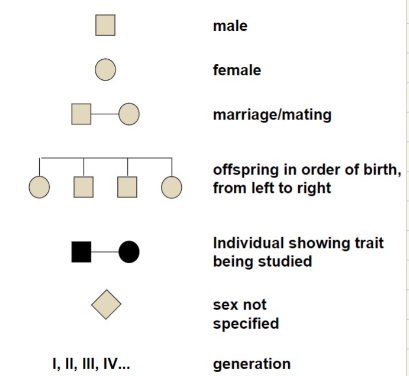
can’t be done in humans so a pedigree analysis is done instead
Pedigree Key
(image)
What is a monohybrid cross?
Monohybrid cross of two homozygous resulting in a heterozygous (cross between PP and pp)
Inheritance of characters coded by one gene
Very few characteristics are inherited by one gene EX. Widow's peak, free earlobe
100% Heterozygote ("Pp"), also known as carrier
What law details how do alleles for one gene segregate into different gametes?
Mendel's Law of Segregation
What are true breeders?
when mates itself always produces the offspring of the same variety
What is hybridization?
crossing between individuals from genetically distinct populations
produces a heterozygous
Phenotype
physical appearance or expression of the genotype
Character vs Trait
Character
heritable feature (Flower Color)
Trait
variants for the character (purple or white)
Phenotypic ratio: 1 purple (100%)
Genotype
Genetic contribution of the individual EX. Pp or PP, pp)
Gene: codes for flower color
- Alleles: "P" or "p"
- Genotypic ration: 1 Pp (100%)
Human disorders caused by ONE RECESSIVE allele:
Albinism:
Cystic Fibrosis:Tay-Sachs:
Sickle-cell anemia:
Human disorders caused by ONE DOMINANT allele:
Achondroplasia
Huntington's DiseasePolydactyl
Are lethal dominant alleles or lethal recessive alleles more common?
lethal recessive
Describe Albinism
mutated gene produces malfunctioning protein involved in
depositing skin pigmentation
Human disorders caused by ONE RECESSIVE allele
Describe Cystic Fibrosis
there is a normal allele that makes a membrane • protein that transports Cl- between cells and the environment, accumulation of mucus
Human disorders caused by ONE RECESSIVE allele
Describe Tay-Sachs
lethal disease recessive disorder, caused by a dysfunctional enzyme that fails to break down specific brain lipids
Human disorders caused by ONE RECESSIVE allele
Describe Sickle-cell anemia
most common inherited disease among people of
African origin. Has valine instead of glutamine in position 6.
Human disorders caused by ONE RECESSIVE allele
Describe Achondroplasia
form of dwarfism
Human disorders caused by ONE DOMINANT allele
Describe Huntington's Disease
degenerative disease of the nervous system, lethal dominant allele that has escape elimination
Human disorders caused by ONE DOMINANT allele
Describe Polydactyl
having 6 toes and/or 6 fingers is a dominant condition
Human disorders caused by ONE DOMINANT allele
What is a dihybrid cross?
Inheritance of characters code by TWO genes in separate chromosomes
Dihybrid - organism with two distinct genes with the two observed traits
By the law of independent assortment, each pair of alleles segregates into gametes independently
What kind of cross would you FOIL for?
Dihybrid Cross
How do you determine the number of gametes from a punnett square/dihybrid cross?
the number of rows and columns (not boxes)
What is the Law of independent assortment?
independent assortment of each pair of alleles during gamete formation
In other words, the allele a gamete receives for one gene does not influence the allele received for another gene during meiosis.
What are the non-mendelian inheritance variations?
and what is it?
For 1 gene
Incomplete Dominance
Codominance
Multiple Alleles
Pleiotropy
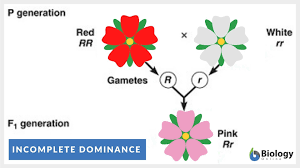
Incomplete Dominance
Heterozygotes show a distinct intermediate phenotype, not seen in homozygous
Not blended inheritance because traits are separable
Phenotypic and genotypic ratios are identical, 1:2:1
EX. A white flower and red flower cross give a pink flower
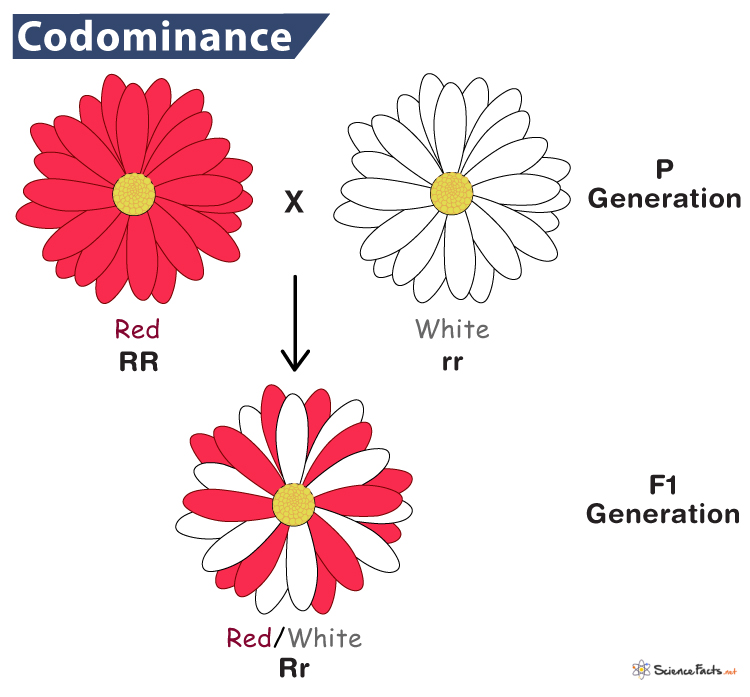
Codominance
Two alleles affect the phenotype in separate, distinguishable ways
EX. Blood groups: AB blood is codominant
People of group A (genotype AA and Ai but A is dominant over O with simple dominance) have one type of molecule on their blood cells, people of group B (genotype BB and Bi, B dominant over O) and people of group AB (genotype AB) have both molecules present
Blood type O (ii), A (AA or Ai) and B (BB or Bi)- simple dominance
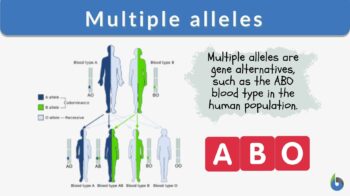
Multiple Alleles
Most genes have more then two alleles in a population
The ABO blood groups in humans are determined by three alleles:I^A, I^B, and i
-Both I^A, I^B alleles are dominant to the i allele
- The I^A, I^B alleles are codominant to each otherBlood type O is the most abundant
Blood type O: no glycoproteins, immune system produces antibodies against blood type A and B when exposed to it. It can only received from blood type O but can give to all the other blood types.
Blood type A: type A glycoprotein, antigen on the surface of the cell, immune system will produce antibodies (proteins produced by white blood cells to fight other foreign proteins) against blood type B when exposed to it
Blood type B: type B antigen, will produced antibodies gains foreign blood type like B when exposed to it
Blood type AB: both antigens, body will NOT produce antibodies against blood type A or V because it recognizes both proteins as self. It can received blood from any blood type but can only give to blood type AB.
Vaccines - introduced a foreign protein making the body to produced against the bacteria or virus
Rh factor: one benefit in simple dominance
Rh+ (RR or Rr)
Rh- (rr)
Pleiotropy
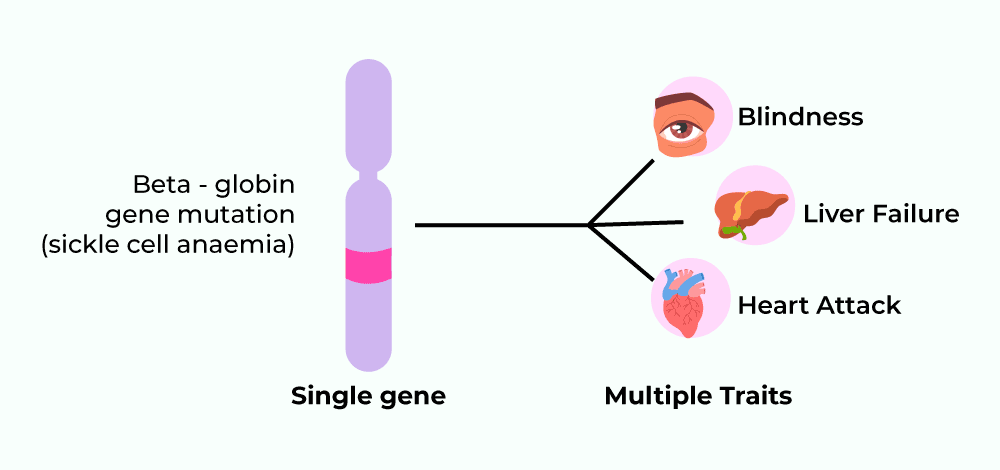
Pleiotropic genes affect more than one phenotypic character
EX. Symptoms of sickle cell disease are due to a single gene
What are the forms of Polygenic Inheritance?
and what is it?
2 or more genes
Epistasis
Quantitative Traits
Linkage
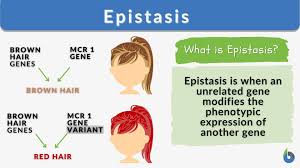
Describe Epistasis
A gene in one locus alters the phenotypic expression of a gene at a second locus (Polygenic Inheritance)
EX. Pigmentation in mammals affects the color
Describe Quantitative Traits
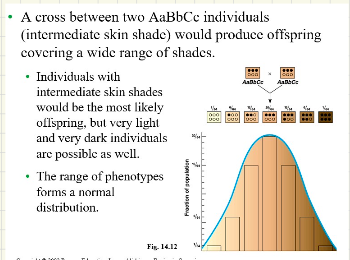
Vary in a population along a continuum, a way of • evolution to ensure that every trait that is extremely important to your survival are determined by many genes
Due to polygenic inheritance, the additive effects of • two or more genes on a single phenotypic character
EX. Skin color in humans is controlled by at least • three different genes, height, weight, IQ etc
Every dominant gene adds more brown to your skin. Extreme white is recessive and darkest all dominant.
Height in humans:
Minimum height to be normal = 120 cm
Every dominant gene adds 10cm (4 inches) to the minimum height.
EX. AABBCCDD, means 80 cm plus 120 cm means 200 cm
Phenotype depends on environment and genes (EX. Genes to be tall but needs enough food to for up)
Phenotypic plasticity: same genes but two
different phenotypes with differing
environmental conditions
IQ values: gene plus environment (access
to education and food)
Describe Linkage
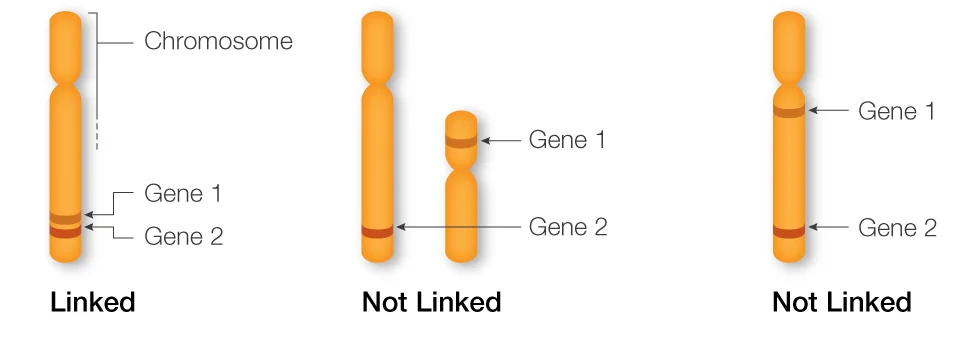
The closer the genes are to each other on a chromosome, the more likely the are linked or inherited together from parents to offsprings, there is little distance between them
No foil in linkage because genes are in the same chromosome, they are inherited as a unit
Chromosome theory of inheritance: genes exist on loci within chromosomes, genes exist on specific locations on the chromosomes and the places do not change. They undergo segregation and Independent Assortment.
Linkage is broken by crossing over/ recombination
Genes that are closed together will have a very slow recombination frequency
Sex determination: sex chromosomes in pair 23
Genes may have linkage with the sex chromosome: man (XY) and female (XX)
Non disjunctions of Autosomes: in meiosis I or meiosis II, when the whole tetrad of sister chromatids are pulled to one cell having and uneven number of chromosomes in your gametes.
Barr Body - although females system inherit 2 chromosomes X only one will be active in any cell, usually not the same one in every cell.
Imprinting - in autosomal chromosomes, only one allele is expressed in all cells while the other is silenced during embryonic development
Chargaff’s Rule
number of adenines as approximately equal to the number of thymines and the number of guanines was equal to the number of cytosines
Watson and Crick learned…
from building models that DNA was helical in shape and that phosphate group of one nucleotide is attached to the sugar of the next nucleotide in line
Mendel discovered…
gene function
Morgan discovered…
gene is within the chromosomes
Bases Are:
Purines: 2 rings - Adenine (A) and Guanine (G)
Pyrimidines: 1 ring - Thymine (T) and Cytosine (C)
purine pairs with a pyrimidine: Adenine (A) pairs with Thymine (T), Guanine (G) pairs with Cytosine (C)
Adenine would form how many hydrogen bonds only with thymine?
Two
Guanine would form how many hydrogen bonds only with cytosine?
Three
Each DNA strand has a 3' end with a free hydroxyl group attached to ______ and a 5' end with a free ______ group attached to deoxyribose
deoxyribose;phosphate
Semiconservative model
two strands of the parental molecule separate, and each functions as a template for synthesis of a new complementary strand
S stage on interphase is where DNA replication happens
Origin of replication
points where DNA starts to separate
Eukaryotic cells have many points of origin but Prokaryotes only have one
Replication bubble
Replication happens in both directions
Where the DNA opens up
Replication Forks
Keep opening in both directions
Where the DNA that is opening meets the DNA that is still closed
As each nucleotide is added, the new complementary DNA strand is formed in the directions _' to _’
5’ to 3’
the enzyme can only add nucleotides in the 3' end of the DNA so the new DNA molecule grows from 5' to the 3'
A new DNA strand can only elongate in the 5' -> 3' direction forming the leading strand
What are the types of Enzymes involved in DNA replication?
( ends -ase is an enzyme)
Primase
DNA polymerase
DNA polymerase (another one)
Primer
Primase
adds RNA primers or nucleotides, a short segment of RNA (the primer is about 10 nucleotides long in eukaryotes). Connects RNA to the DNA, te es to be a 5 pair of RNA
DNA Polymerase
add nucleotides to primer, link DNA to RNA and keep adding more nucleotides in the 3' and stops until meeting a fork
DNA polymerase: (another one) An enzyme removes RNA primer to replace them for DNA nucleotides
Primer
a support to make the DNA
Lagging Strand
The other parental strand (5' -> 3’ into the fork), is copied by DNA polymerase away from the fork in short segments (Okazaki fragments - fragments of DNA that each have their own primers )
What are Okazaki fragments?
fragments of DNA that each have their own primers
Steps in forming Okazaki fragments:
Primase joins RNA nucleotides to the DNA to form a RNA primer
DNA polymerase adds DNA nucleotides to that RNA primer
The DNA polymerase reaches the next RNA primer and detaches and the primase attaches a new RNA primer
Okazaki fragments are formed, each about 100-200 nucleotides, are joined by DNA ligase to form the sugar-phosphate backbone of a single DNA strand
When the first Okazaki fragment reaches the second fragment , DNA polymerase detaches
A different DNA polymerase replaces the RNA primer with DNA nucleotides’
DNA ligase then links the Okazaki Fragments into one continuous DNA strand
DNA polymerase creates a long molecule of DNA or polymer of DNA, adds nucleotides
Helicase - open the DNA by breaking the hydrogen bonds, attached to the parental DNA where strand ps are connected because it’s responsible for breaking bonds and attaches proteins (binding proteins) to the open of the DNA strands preventing the from closing until the DNA polymerase comes through
DNA Proofreading
Mistakes during the initial pairing of template nucleotides and complementary nucleotides occurs at a rate of one
error pero 10,000 base pairs
Other DNA polymerase proofreads each new nucleotide against the template nucleotide as soon as it is added
We end up after proofreading only one mistake per billion nucleotides
DNA can be damaged by forces outside like chemicals
Mismatched nucleotides that are missed by DNA polymerase or mutations that occur after DNA synthesis is
completed can often be repaired
Protein Synthesis
Gene - specific sequence of nucleotides along the DNA strands which contains the code to make polypeptides (includes RNA molecules involved in protein synthesis
Proteins are the links between genotype and phenotype
In the nucleus, the DNA opens up on a specific sequence of a gene -> enzyme
comes in makes RNA -> RNA is taken to the cytoplasm -> the RNA doubles up with ribosomal RNA to make proteins, read the code in the message RNA and aligned the amino acids in the correct sequence to make the protein
Two stages:
Transcription: happens in the nucleus, transcribing DNA code into RNA, complementary copy of DNA into RNA language. DNA into mRNA
Translation: cytoplasm, machine that makes proteins translates the code of mRNA into protein language. mRNA into proteins.
DNA is double stranded and has A-T and G-C
RNA is single stranded an had A-U and G-C
Chain of command: DNA -> RNA -> Protein, also ribosome before protein
Transcription
instructions will tell the enzyme where to attach and where to start reading but only one strand is read
Initiation
Elongation
Termination
DNA closest and RNA polymerase goes to copy somewhere else and mRNA goes to the cytoplasm
RNA polymerase adds nucleotides to the 3' of the growing polymer, reading the gene from 3’ to 5' but making the new one from the 5’ to 3’
Promoter
RNA polymerase recognizes specific nucleotide sequences in the promoter area, at the beginning of the gene
It won’t start coping until hitting the transcription unit, where it’s going to start copying the DNA
Elongation: Starts copying the DNA into RNA language
RNA polymerase hits the terminator (sequence of nucleotides) everything
separates
RNA polymerase attaches and initiates transcription at the promotor “upstream” of the information contained in the gene, the transcription unit
The terminator signals the end of transcription
In the promotor: ateas in eukaryotes promotersTATA box: where the RNA polymerase attaches
transcription factor attaches first recognizes the TATA box and then signals RNA polymerase to attach
Initiation
Elongation
Termination
Promoter
Transcription
RNA processing - eukaryotic cells modify RNA after transcription
Enzymes modify pre-mRNA before the genetic messages are dispatched to the cytoplasm
One modification is called RNA splicing, which removes introns and joins exons to create an mRNA molecule with a continuous sequence
RNA transcripts have long noncoding segments of nucleotides called introns, lie between coding regions
Final mRNA has coding regions, exons, that are translated into amino acids, plus the leader and trailer sequences
Transcription
At the 5' end of the pre-mRNA molecule a modified guanine is added, the 5' cap
helps protect mRNA from
hydrolytic enzymes
Functions as an "attach here”
signal to ribosomes
Transcription
At the 3’ end, an enzyme adds 50 to 250 adenine nucleotides, the poly (A) tail
facilitates the export of mRNA from the nucleus in addition to inhibiting hydrolysis and facilitating ribosome attachment
Do prokaryotic cells have INTRONS and RNA splicing?
no
Transcription
Steps of RNA splicing
1. Pre-mRNA combines with snRNPs and other proteins to form a spliceosome
2. Within the spliceosome, snRNA base-pairs with nucleotides at the ends of the intron
3. The RNA transcript is cut to release the intron, and the exons are spliced together, the spliceosome then comes apart, releasing mRNA which now contains only exons
Transcription
Functions of RNA Splicing:
Presence of introns increased the probability of potentially beneficial crossing
over between genes
Ability of Exons to encode for more than one polypeptide
 Note
Note  Flashcards (20)