APUSH Unit 8 MCQ
 Call Kai
 Learn
Learn Practice Test
 Spaced Repetition
 Match
Match Flashcards
 Knowt Play
1/84

There's no tags or description
Looks like no tags are added yet.
Name | Mastery | Learn | Test | Matching | Spaced | Call with Kai |
|---|
No analytics yet
Send a link to your students to track their progress
85 Terms
The historical development described in the excerpt can best be explained by which of the following related developments?
The persistence of economic and racial disparity in the United States
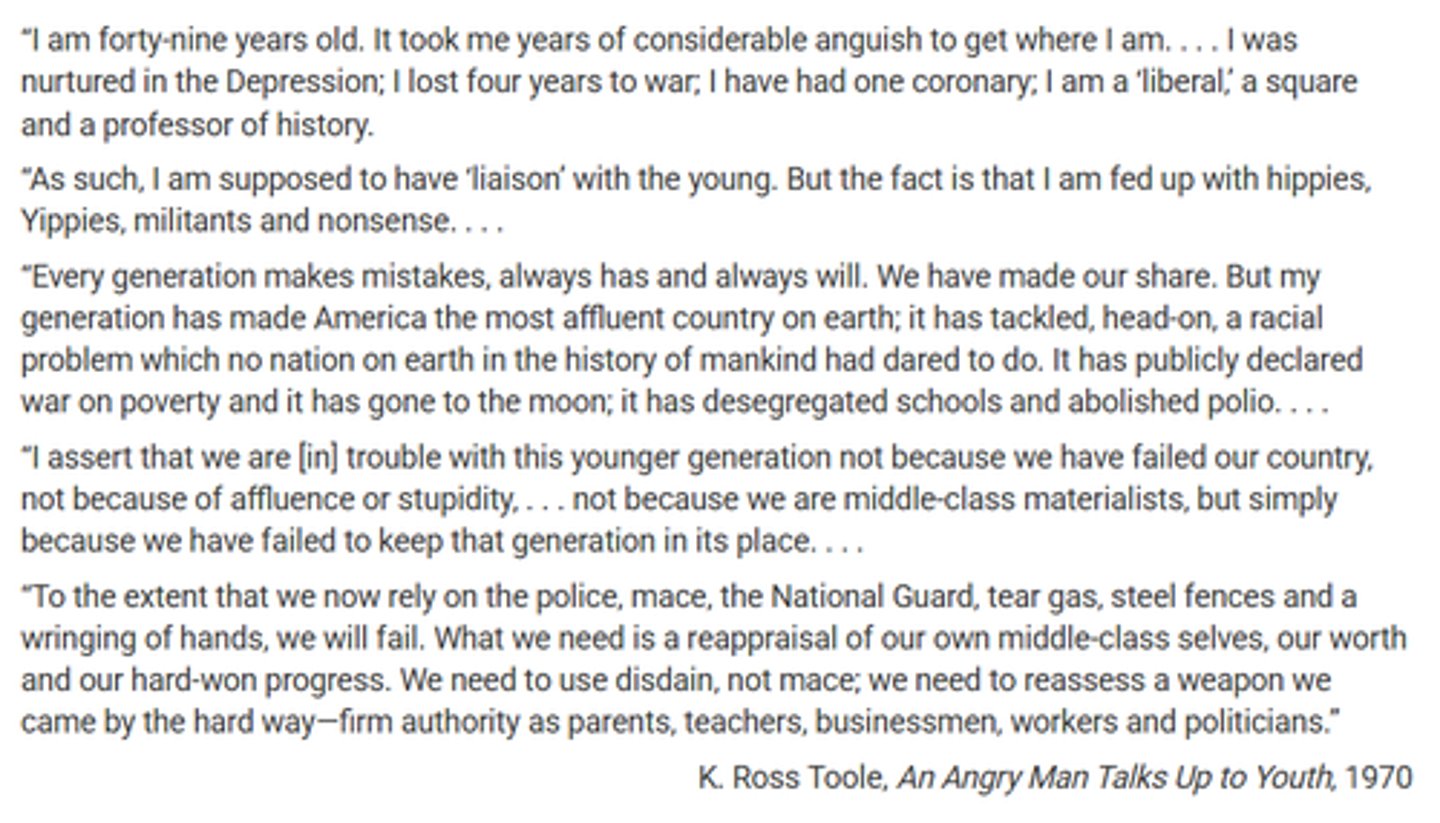
The sentiments expressed in the excerpt are best explained in connection to which of the following broader developments during the period?
A widening political and cultural gap between young people and earlier generations
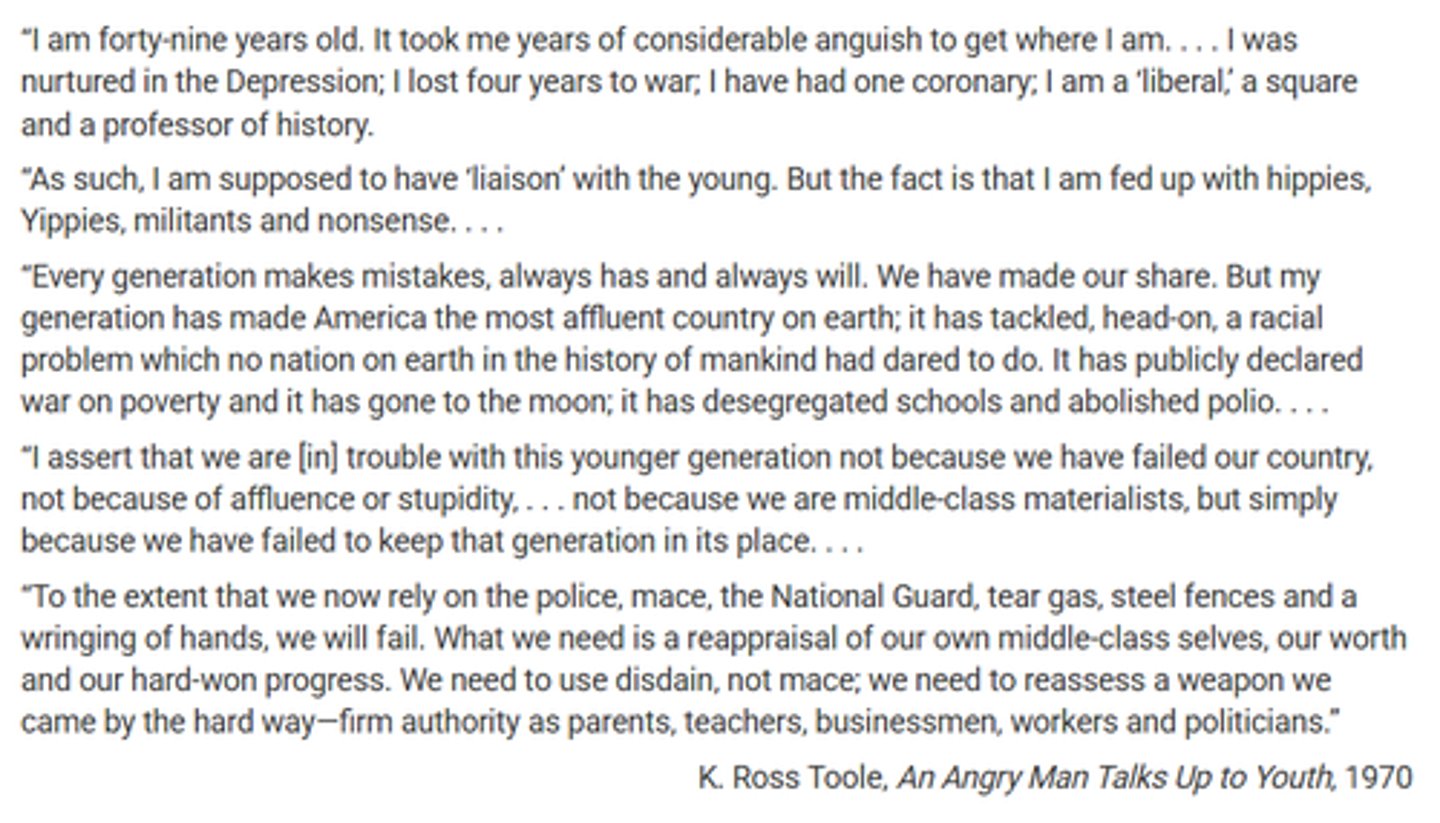
The sentiments expressed in the excerpt best reflect which of the following divisions within the Civil Rights movement?
Frustrations among Civil Rights activists that social and political change was not occurring fast enough
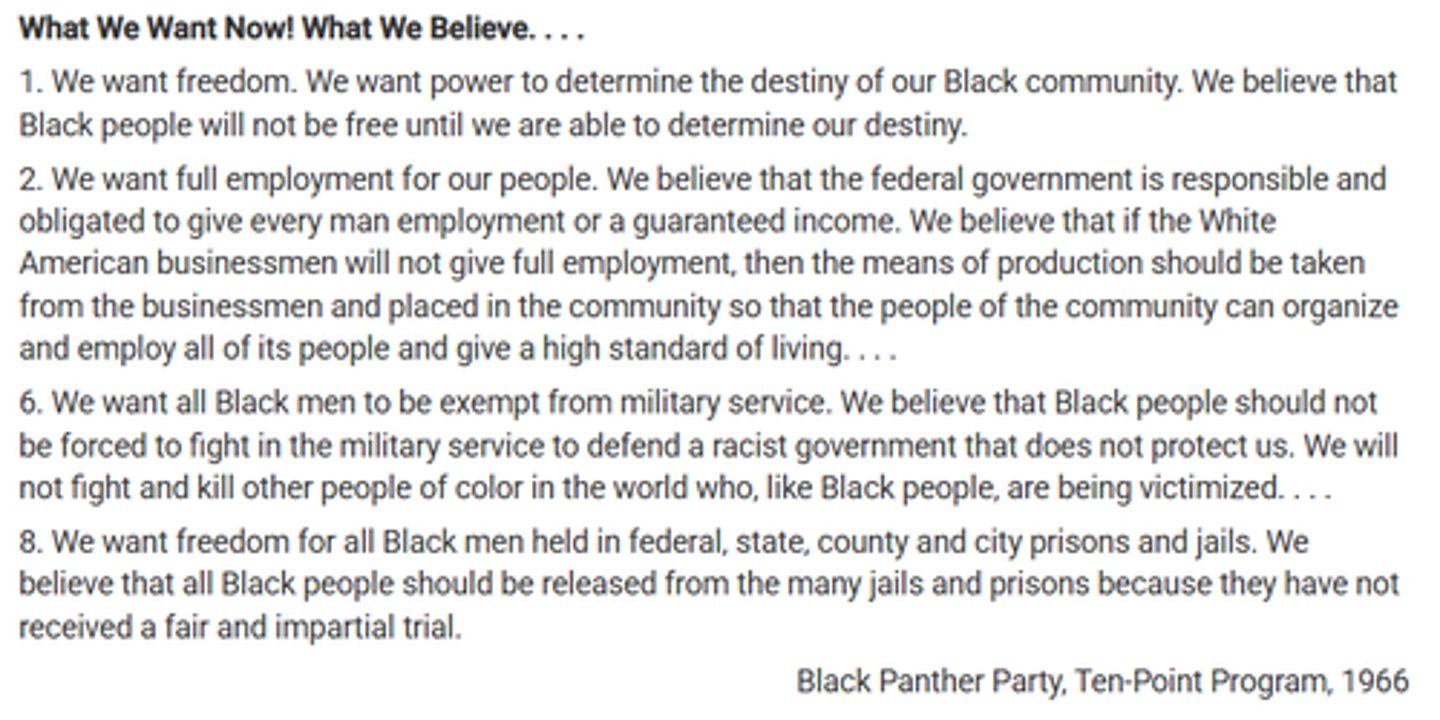
Which of the following was a long-term reaction to the actions of the youth addressed in the excerpt?
The emergence of a conservative backlash against perceived cultural decline
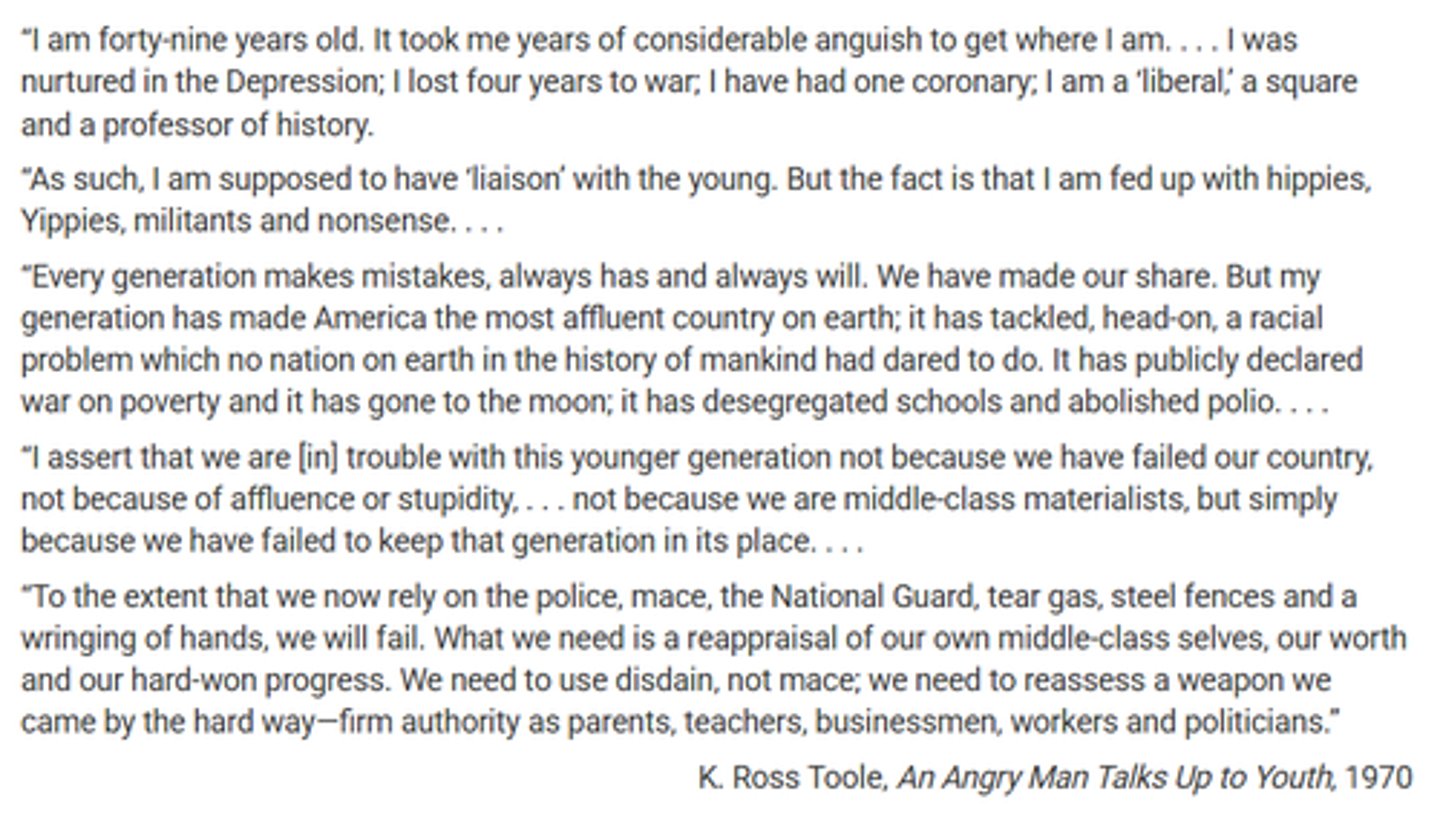
In which of the following ways did public attitudes toward the Civil Rights movement change as a result of sentiments such as those expressed in the excerpt?
White approval declined as a result of the perception that aggressive policies like those of the Black Panthers resulted in urban unrest.
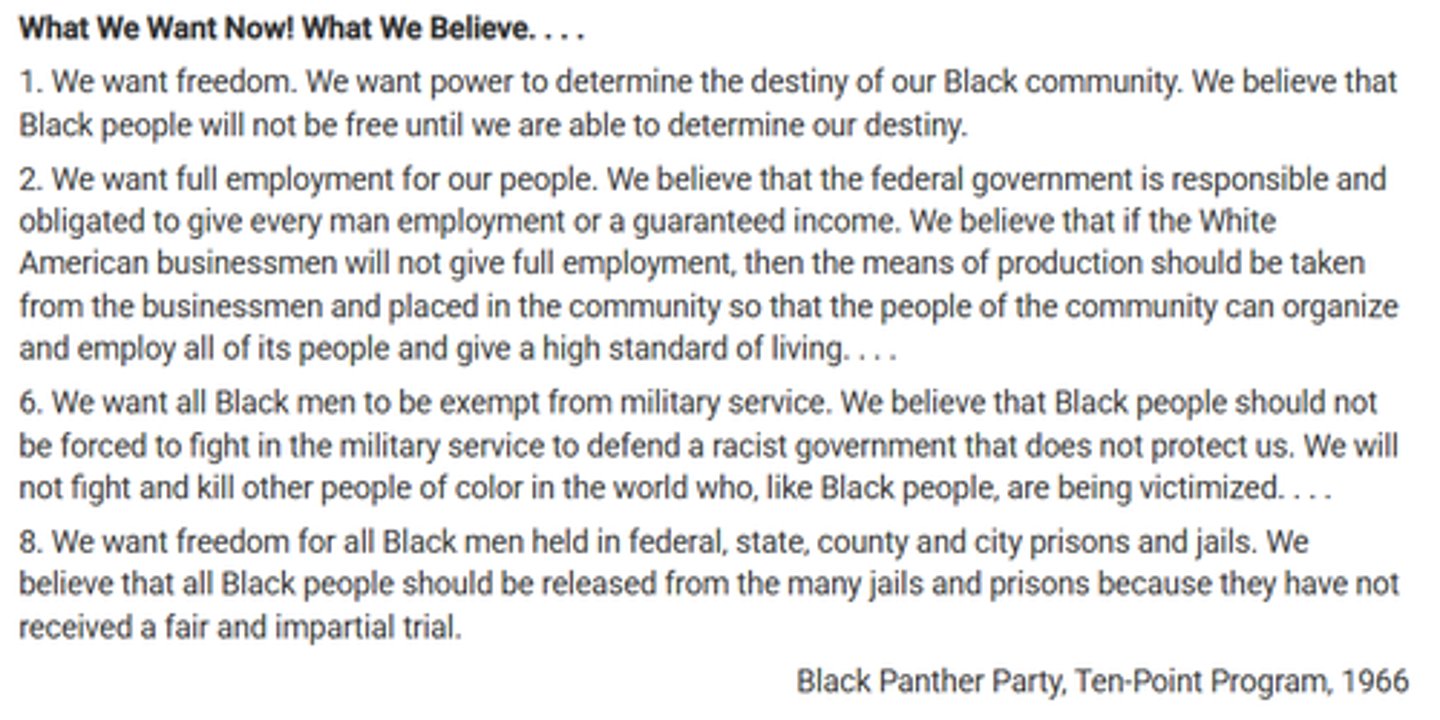
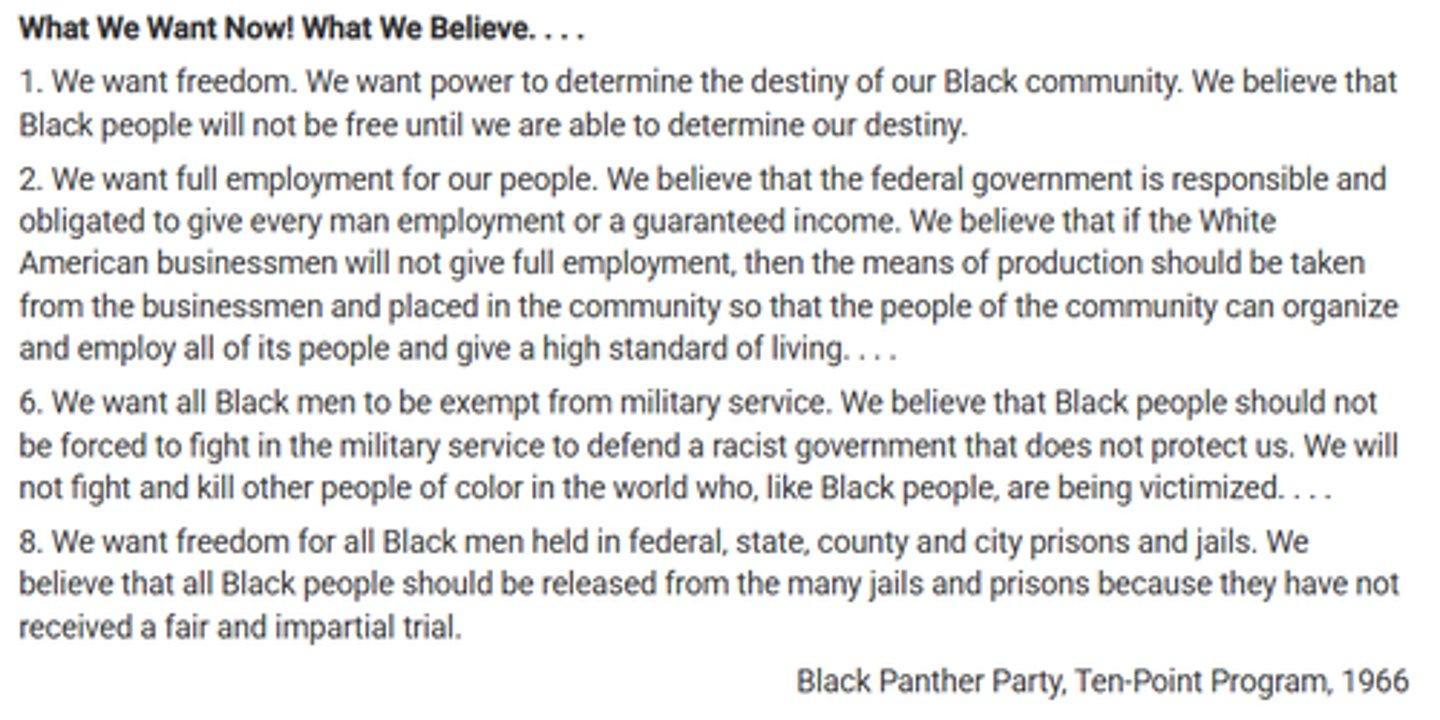
Which of the following best describes the historic situation in the 1960s that prompted the emergence of social and political reform movements such as the Black Panther Party?
The United States became increasingly divided as conflicts within and between liberal and conservative movements intensified.
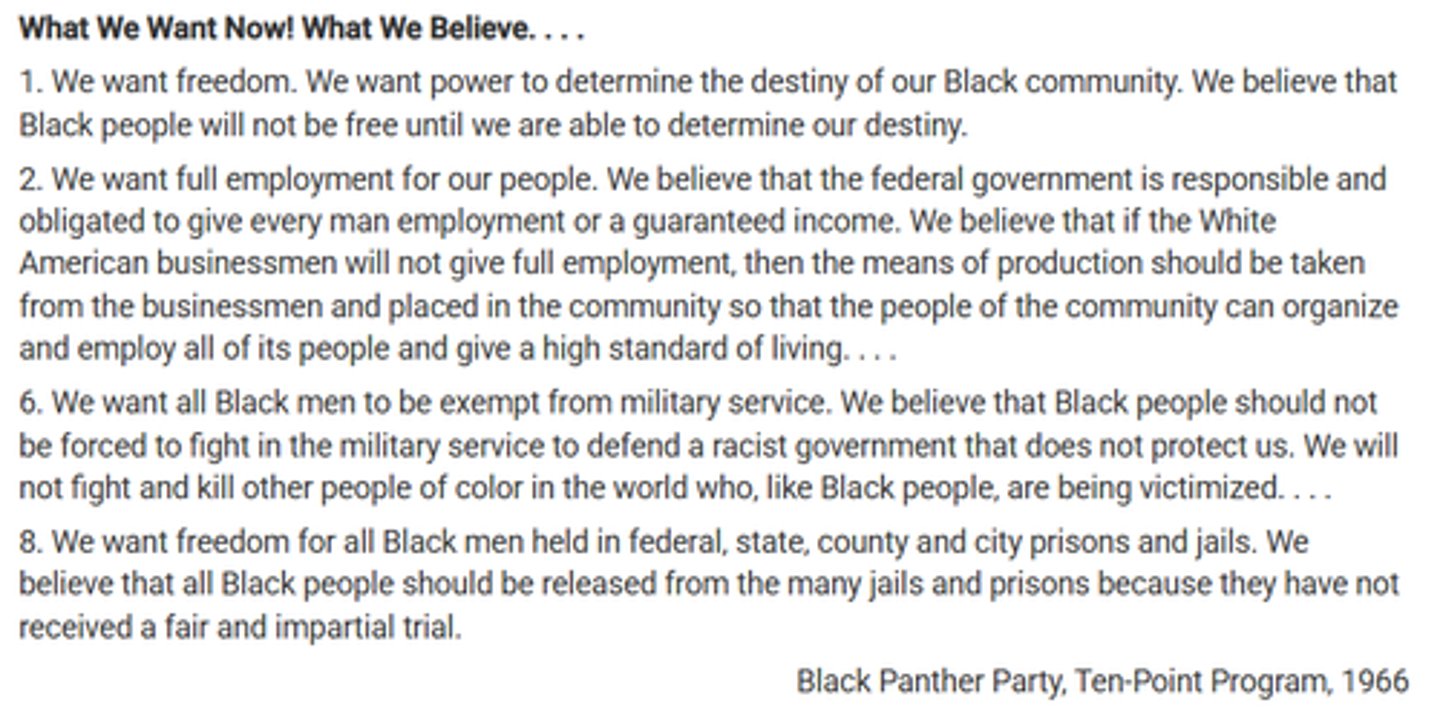
The opinions expressed in the excerpt are most similar to those of the American Indian Movement in that both groups
argued that the United States had a responsibility to provide compensation for past injustices
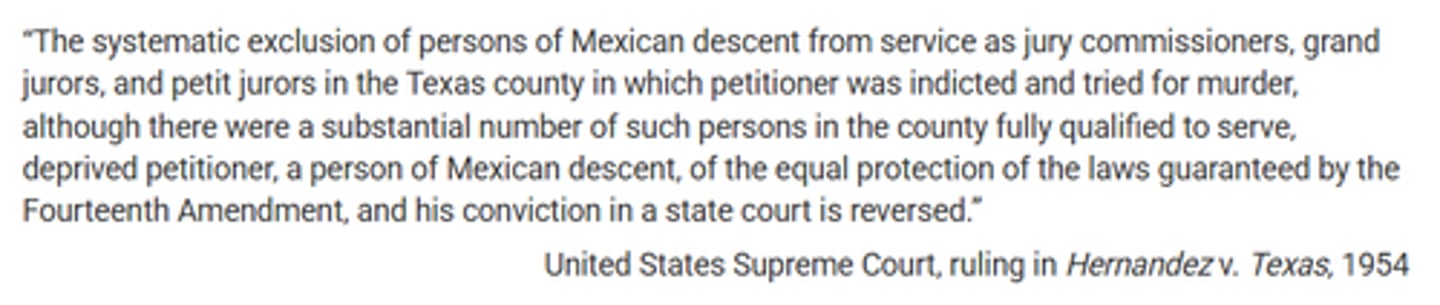
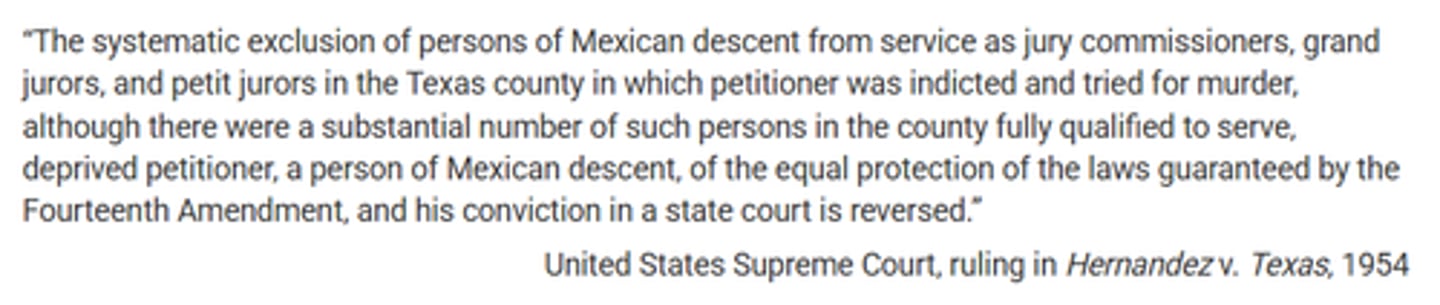
The decision guaranteeing the rights of Mexican Americans to serve on juries most directly resulted from which of the following historical processes during this period?
The use of court challenges to obtain legal reforms
Mexican American activism in the 1950s and 1960s was most directly inspired by which of the following?
The tactics and goals of the African American Civil Rights movement
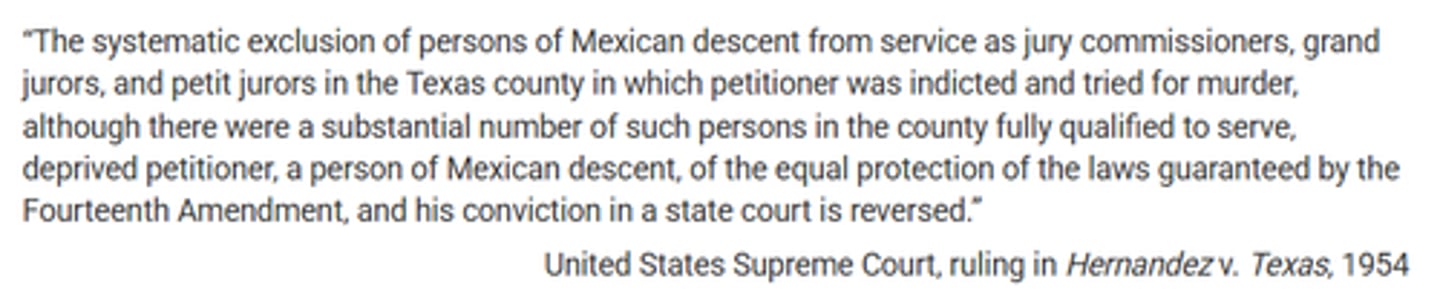
Which of the following most directly contributed to the emergence of Mexican American activism in the 1950s and 1960s?
Changing immigration policies and patterns
Eisenhower's concerns expressed in the excerpt emerged most directly from the context of the
Cold War
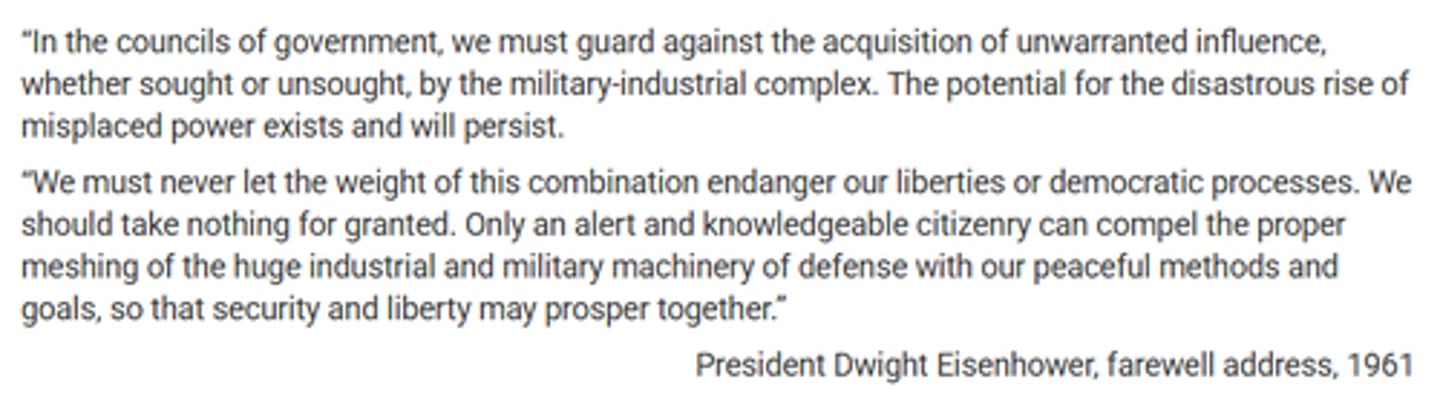
Which of the following most directly contributed to the developments Eisenhower warned "we must guard against"?
The growth of the nuclear arsenal
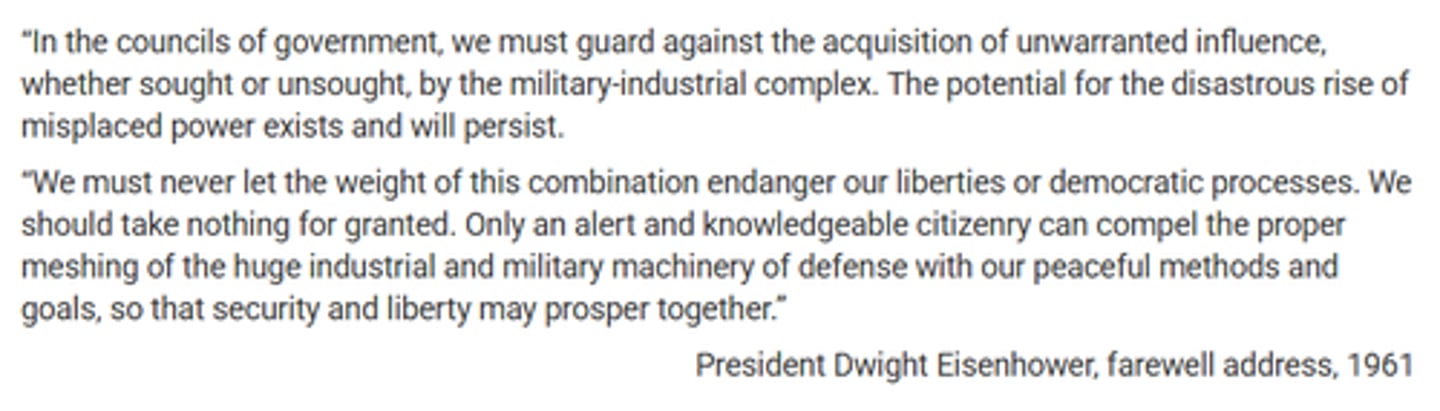
Which of the following best characterizes the military-industrial complex in the decade following Eisenhower's speech?
The concerns about the military and industry largely persisted.
Kennedy's views expressed in the excerpt best reflect a foreign policy built around
containment of communism
Kennedy's strategies expressed in the excerpt have the most in common with which of the following?
Ronald Reagan's rhetoric about the Soviet Union in the 1980s
A development related to the overall trend from 1960 to 1980 depicted on the graph was the
increase in public concern regarding air and water quality
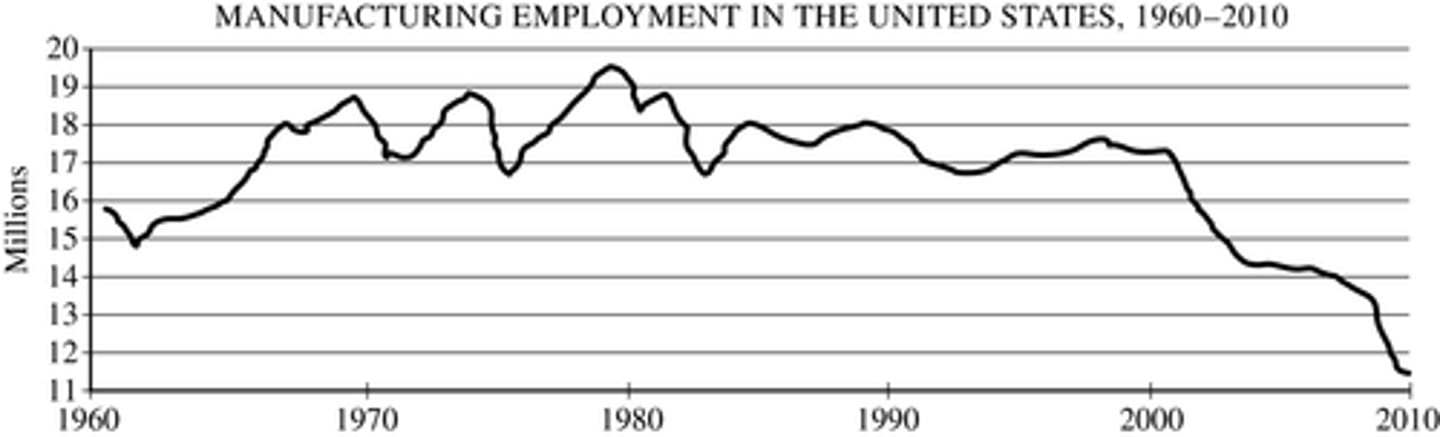
The overall trend from 1960 to 1970 depicted on the graph resulted from all of the following EXCEPT the
adoption of digital technologies
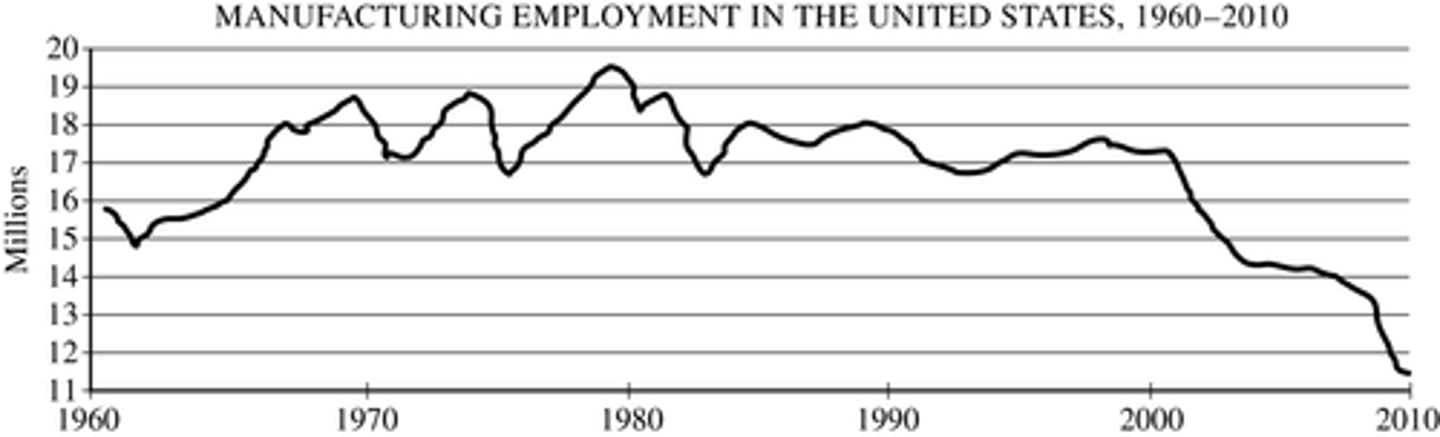
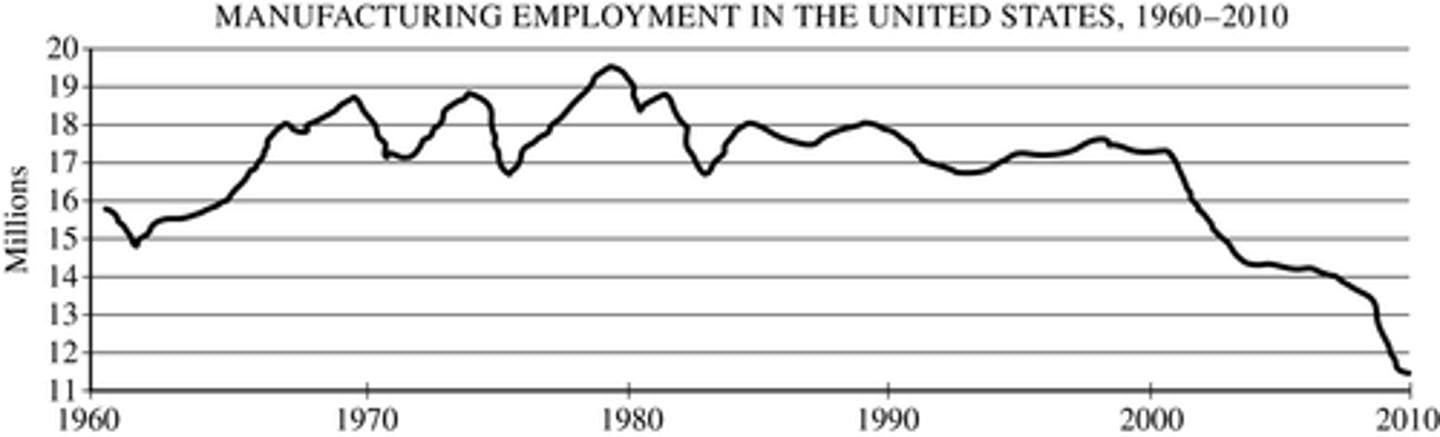
The overall trend from 1980 to 2010 depicted on the graph was most directly caused by the
increasing integration of the United States into the world economy
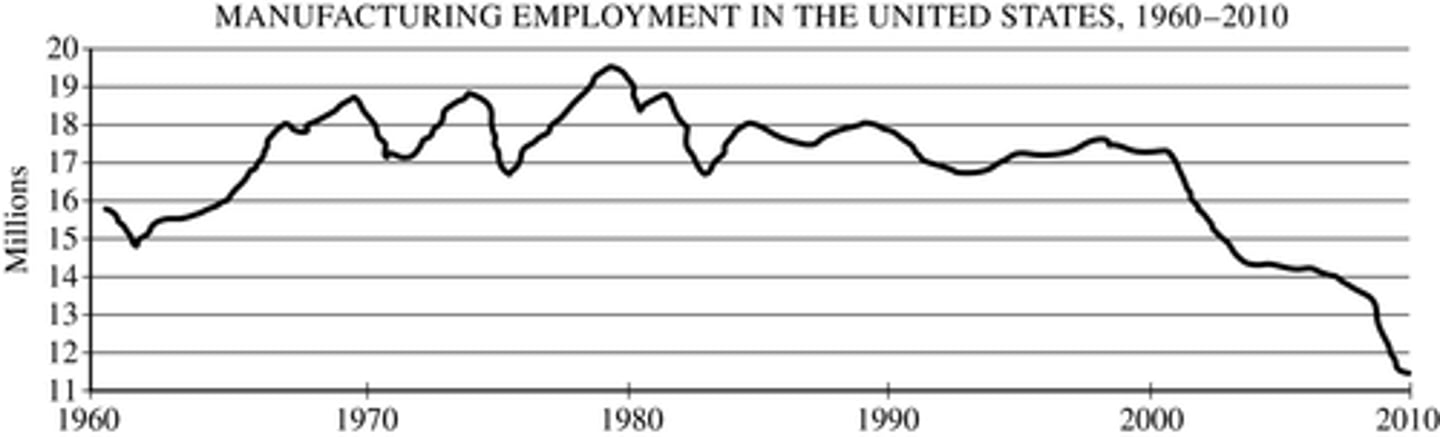
The overall trend from 1980 to 2010 depicted on the graph most directly led to a decline in
union membership
At the time the excerpts were written, Martin Luther King, Jr., disagreed with Malcolm X in that King believed that
the most desirable outcome of Civil Rights activism would be equal rights and racial integration
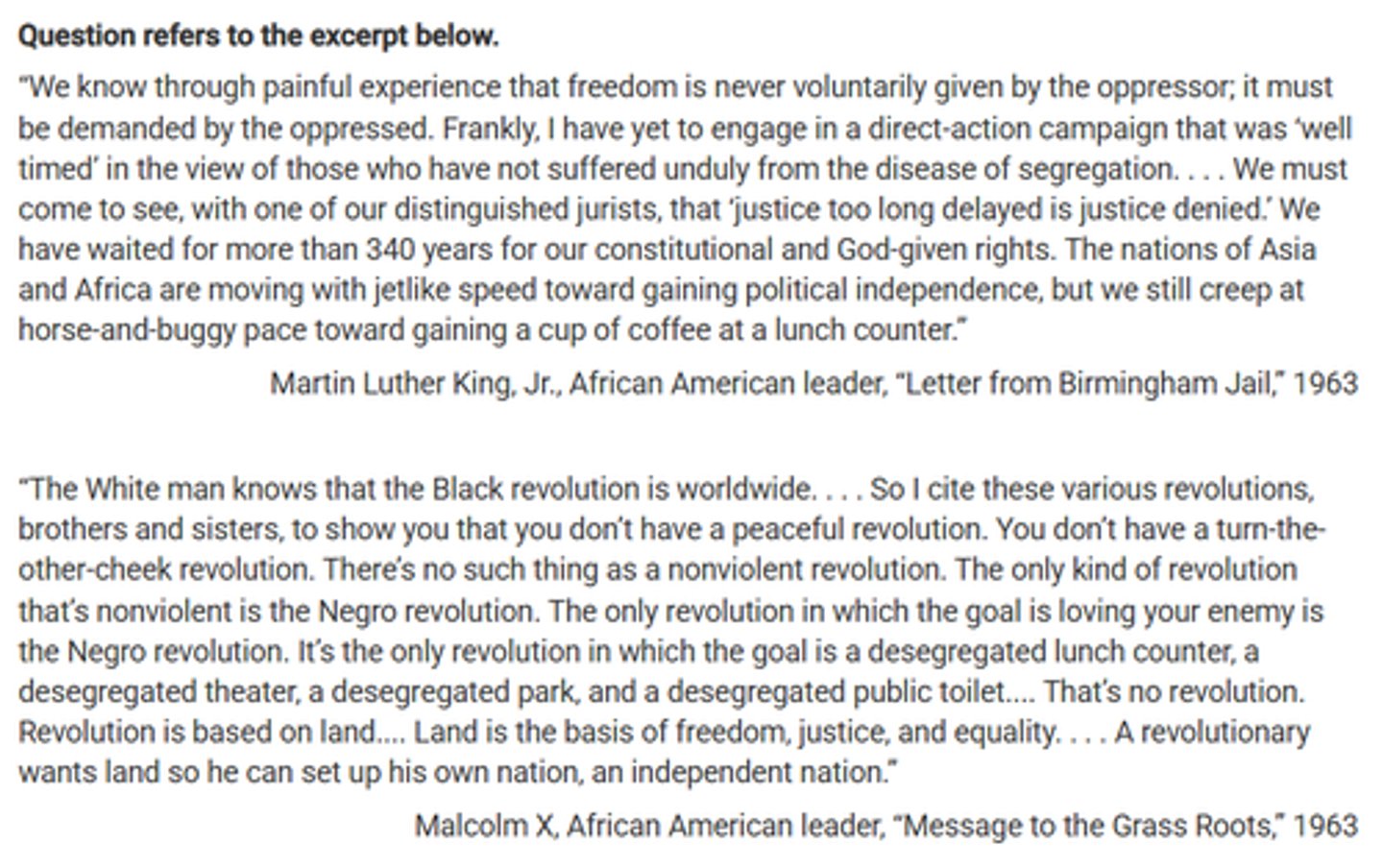
Martin Luther King, Jr., and Malcolm X shared the view that
the movement for Black advancement in the United States was part of a global process of social change
In noting that he had "yet to engage in a direct-action campaign that was 'well timed,'" Martin Luther King, Jr., was most likely arguing against
White Americans who argued that African Americans should be more patient and that civil rights should not be brought about by civil disobedience tactics
Malcolm X's statement suggests that he strongly agreed with
radical leftist movements
The ideas expressed in the excerpt helped to justify which of the following United States foreign policies?
Forming collective security agreements among noncommunist nations
The ideas in the excerpt most directly intensified which of the following domestic developments in the 1950s?
Allegations of communist infiltration of the government
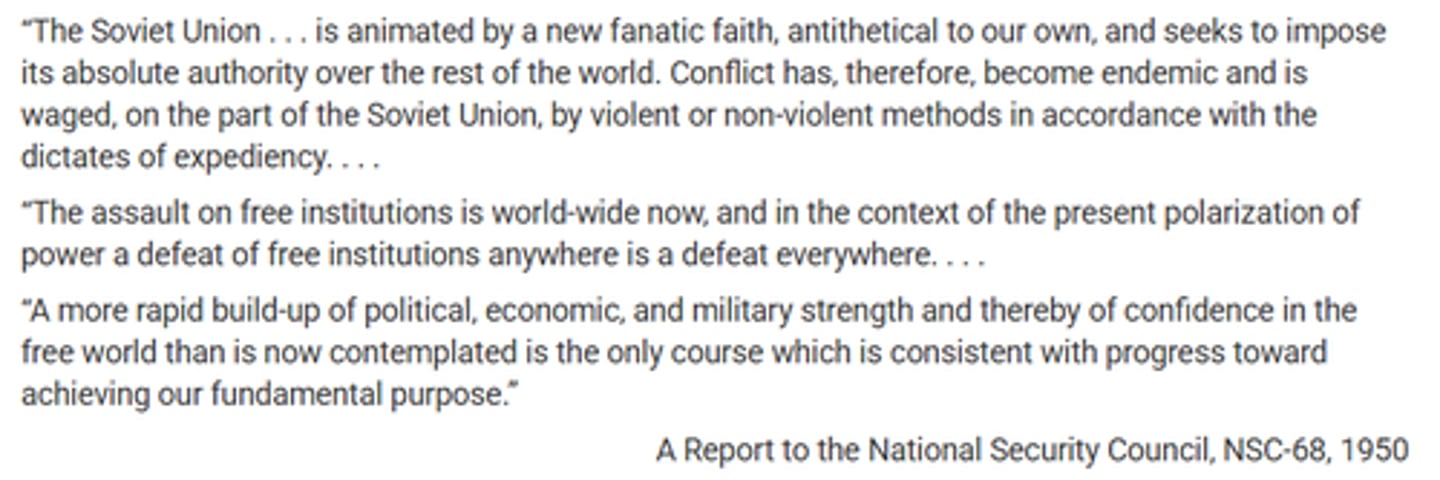
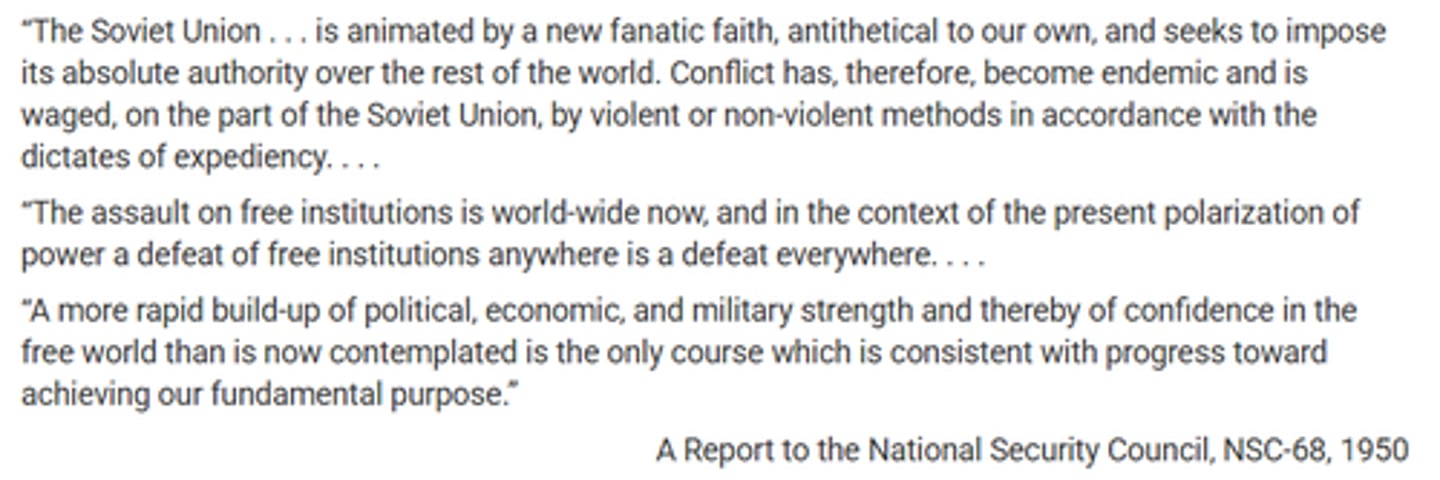
The relationship between the United States and the Soviet Union outlined in the excerpt most immediately resulted in which of the following actions by the United States?
The development of more powerful conventional and nuclear weapons
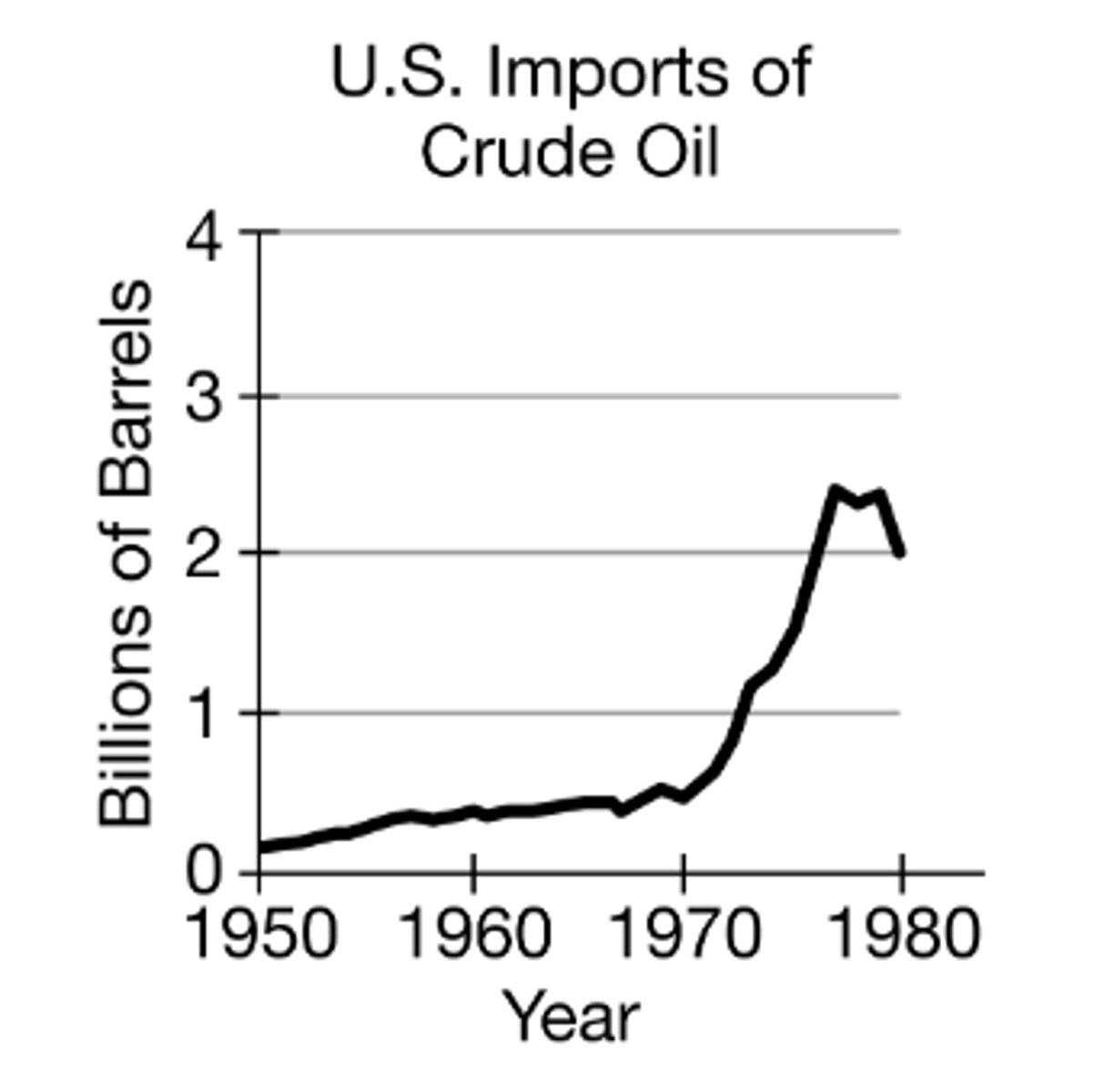
Which of the following describes the trend in crude oil imports to the United States between 1970 and 1980 as depicted in the graph?
Crude oil imports rose rapidly and then declined to about 2 billion barrels in 1980.
Which of the following explains the context for United States economic development between 1950 and the early 1970s?
Low unemployment encouraged American optimism about economic growth.
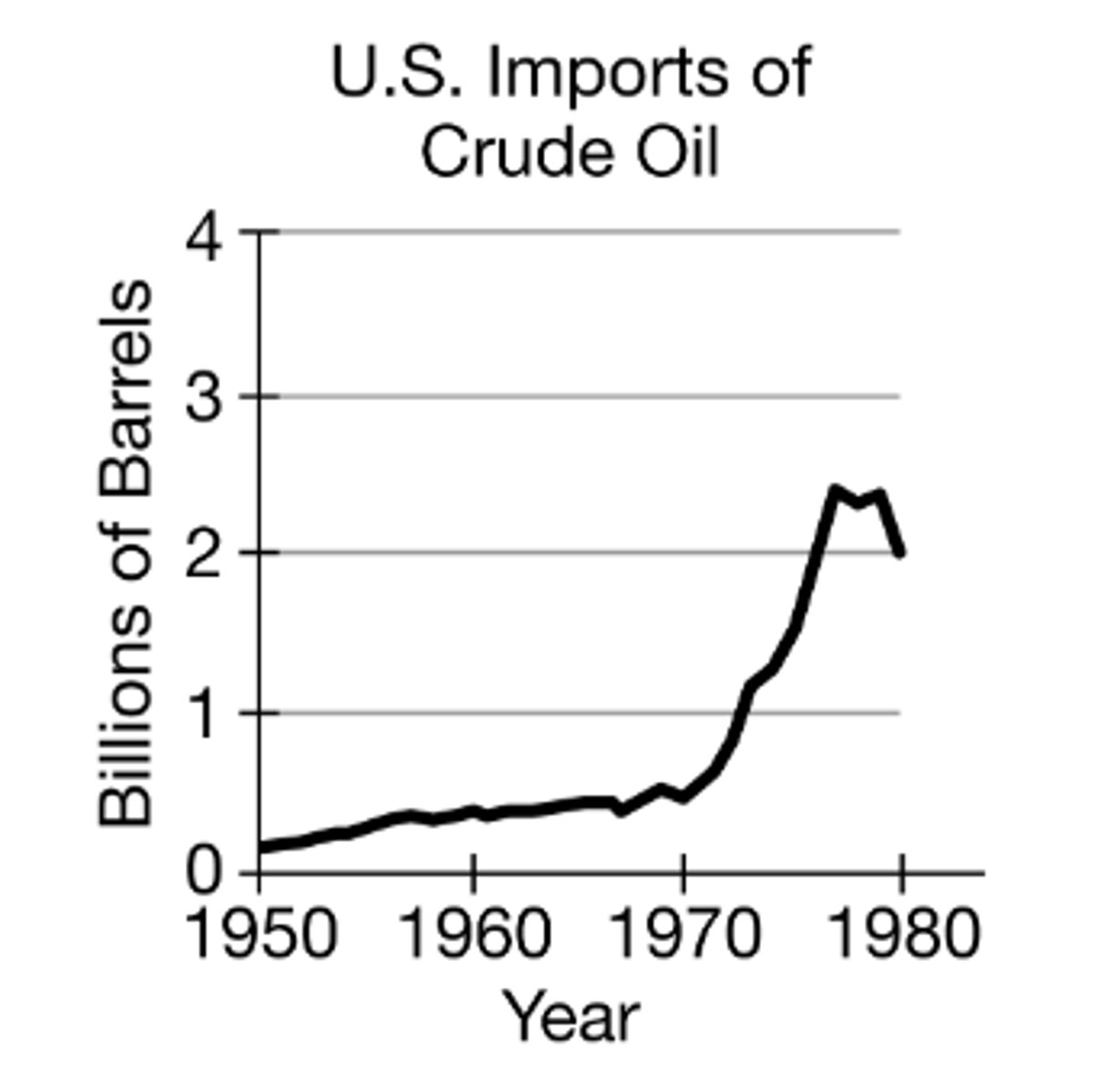
Which of the following describes the trend in crude oil imports to the United States from 1950 to 1970 as depicted in the graph?
Crude oil imports rose gradually until reaching half a billion barrels in 1970.
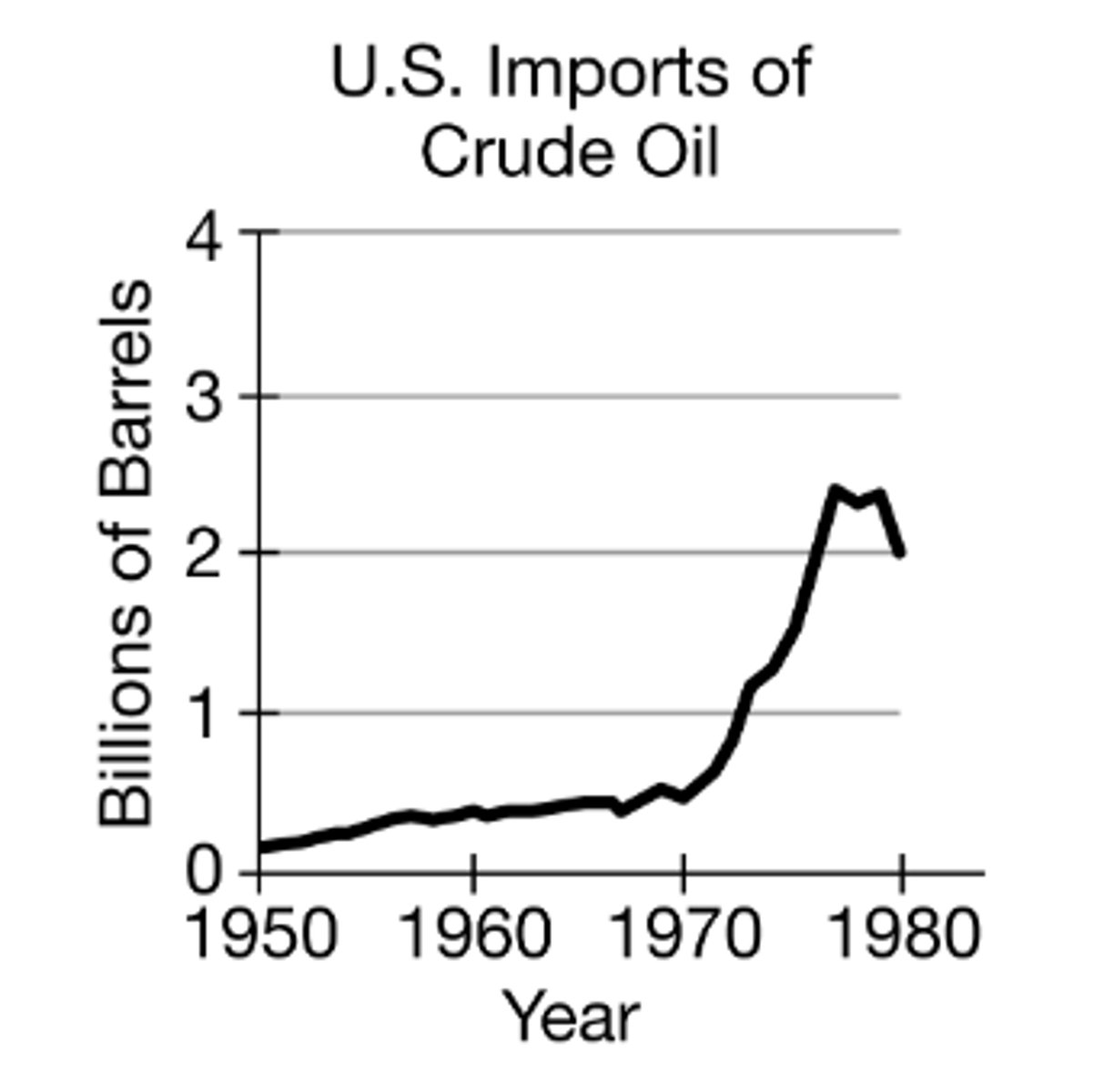
Which of the following best describes an interpretation of the overall trend in the graph of United States crude oil consumption between 1950 and 1980 ?
The United States became more dependent on imports of crude oil in this period.
Which of the following United States actions most directly resulted from the goals expressed in the excerpt?
Intervention in the conflict in Korea
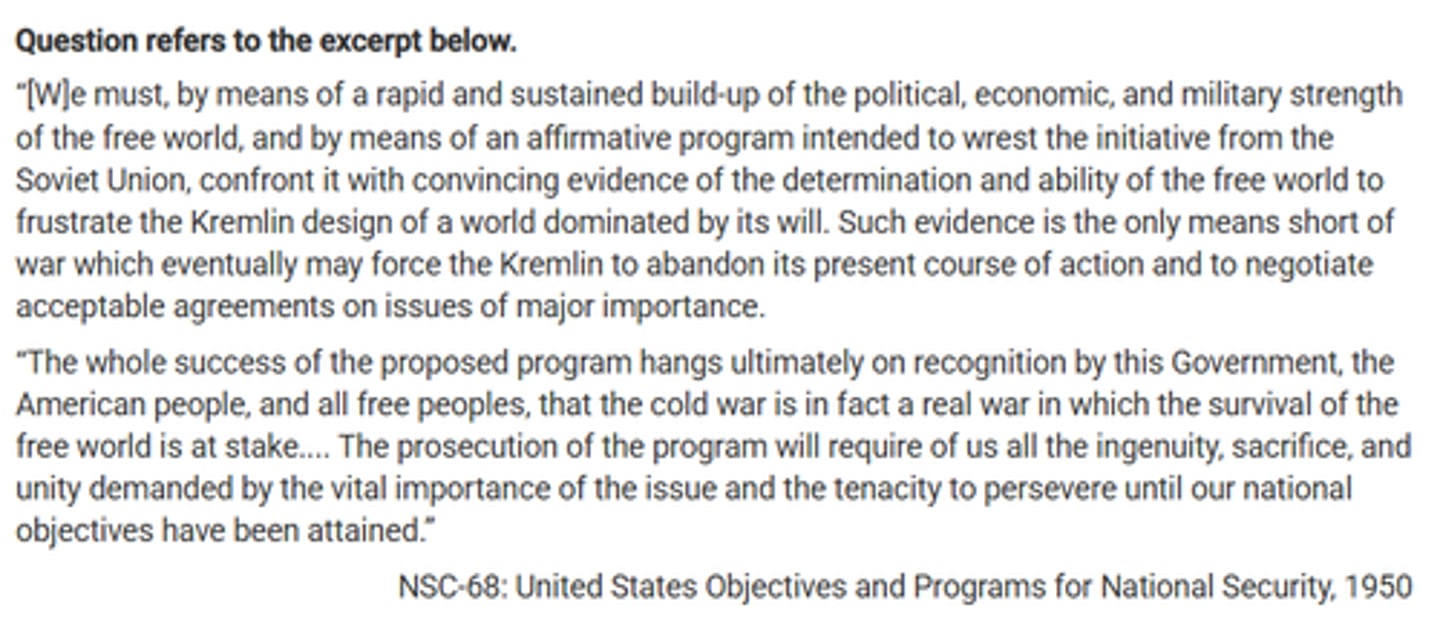
The policies expressed in the excerpt contributed most directly to debates in the United States about the
best means to combat communism
The excerpt most directly reflects the United States efforts to
build an international security system
The ideas expressed in the advertisement overlook which of the following contexts that allowed for the expansion of new suburban housing developments in the 1950s?
The reliance on new roads and highways

The advertisement best provides evidence for which of the following developments in the 1950s?
The increase in homogeneity in postwar society

Which of the following best explains a limitation of the incentives expressed in the advertisement?
Many new suburban housing developments of the 1950s practiced racial segregation.

The ideas in the advertisement most likely had limited appeal for which of the following groups?
Rebellious young people uncomfortable with conformity

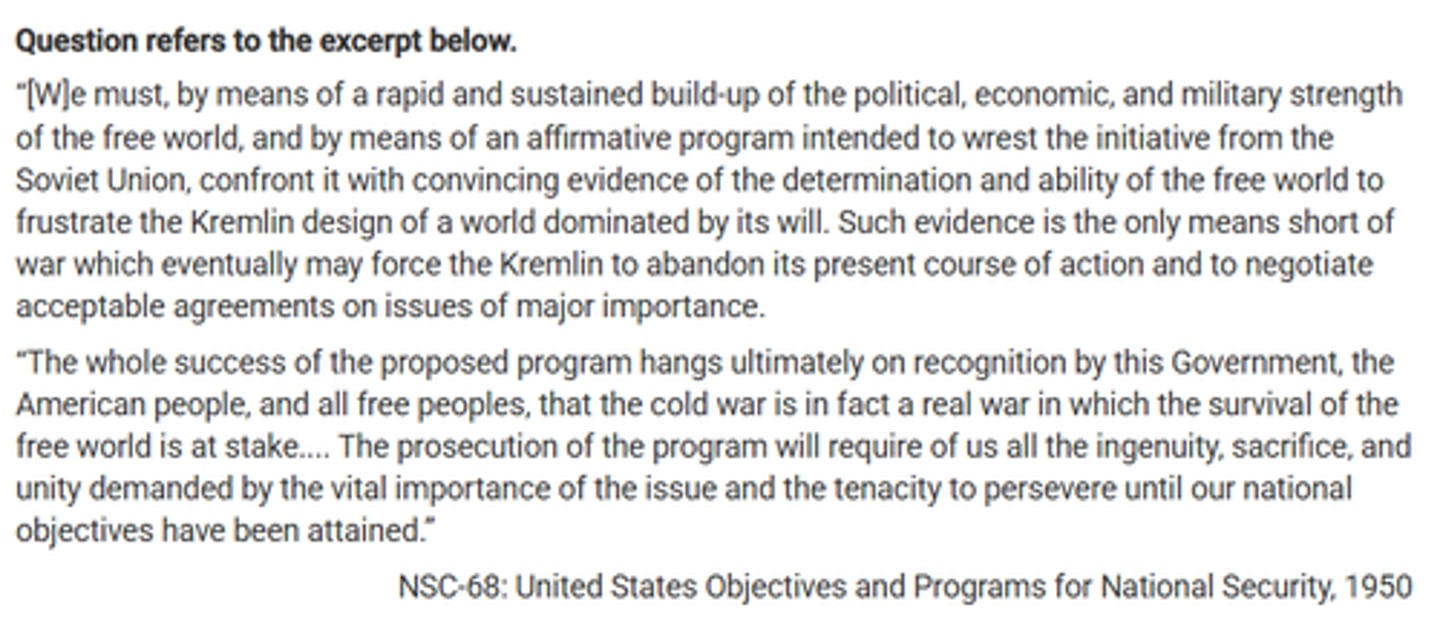
The presence of troops overseas in the countries indicated on the graph demonstrates United States prioritization of which of the following?
Practicing containment around the world
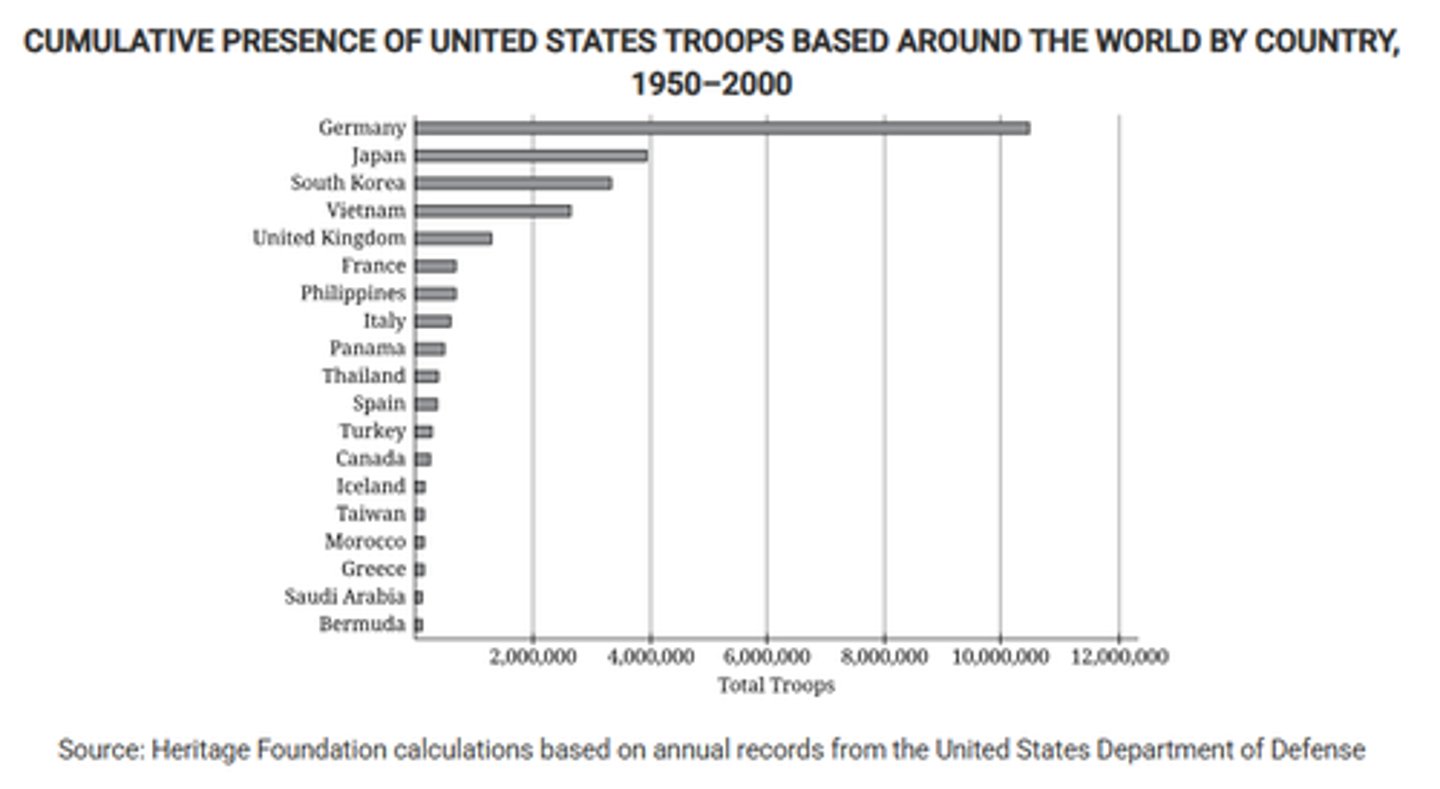
The United States commitment of troops to European countries shown in the graph reflects a foreign policy built primarily around
participating in collective security arrangements such as the North Atlantic Treaty Organization
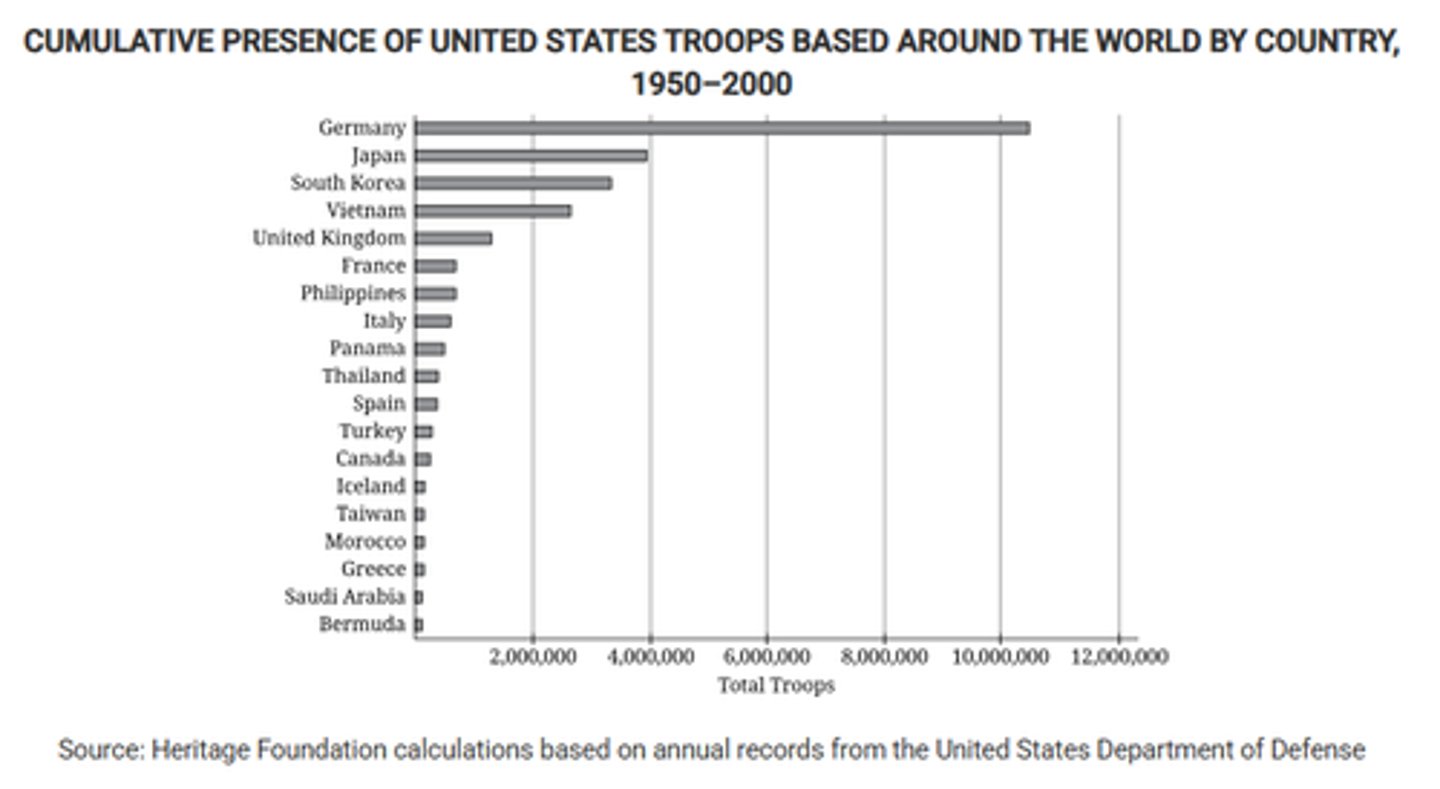
In contrast to United States policies following the First World War, the United States used its military forces after the Second World War to
occupy its former enemies' territory and help them rebuild from the war
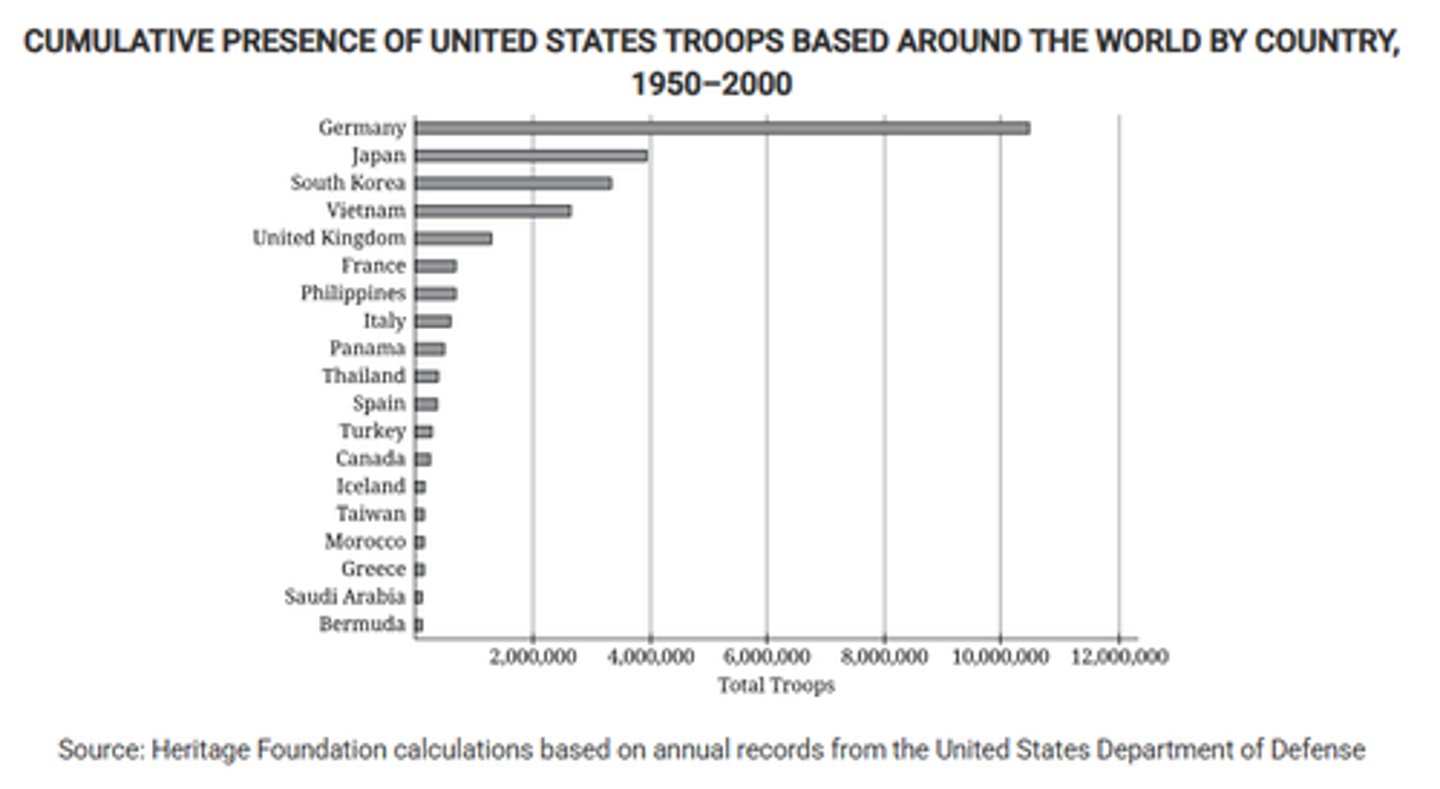
Which of the following was a key difference between the Korean War and the Vietnam War?
Public opposition was more significant for the Vietnam War than for the Korean War.
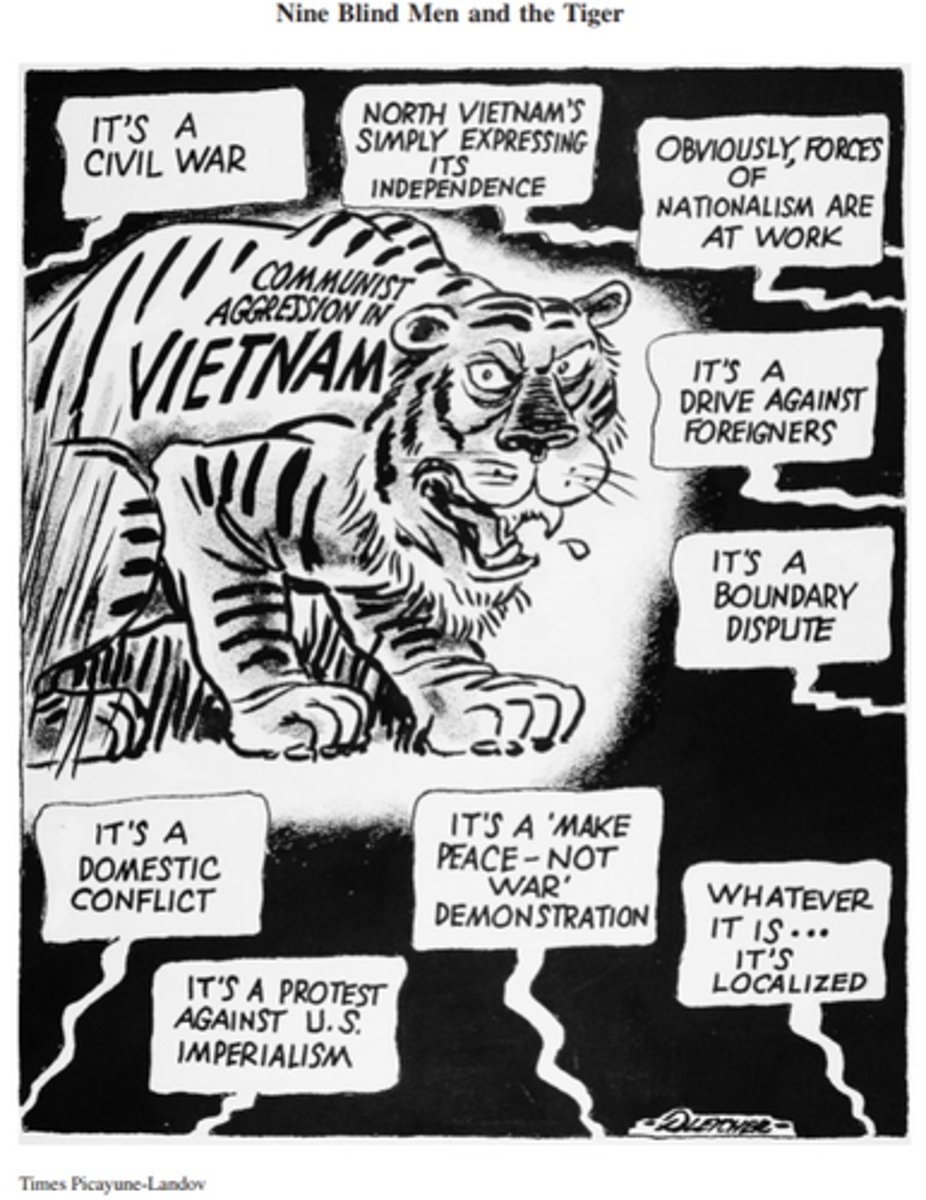
The image most closely reflects which of the following developments in the political climate in the United States?
A growing public debate over the merits and rationale for the Vietnam War
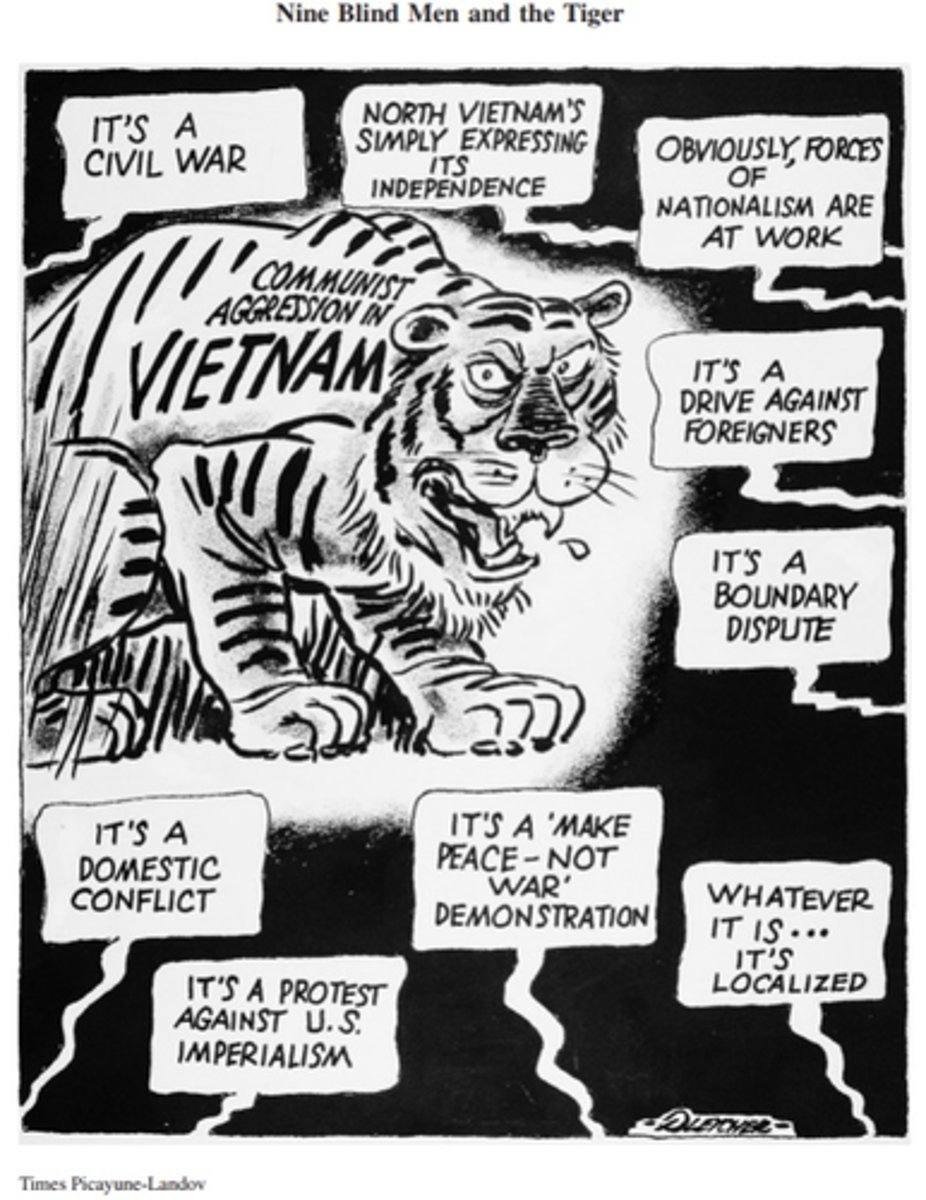
The image most directly illustrates a United States foreign policy that emphasized
stopping the spread of communism in Africa, Asia, and the Middle East
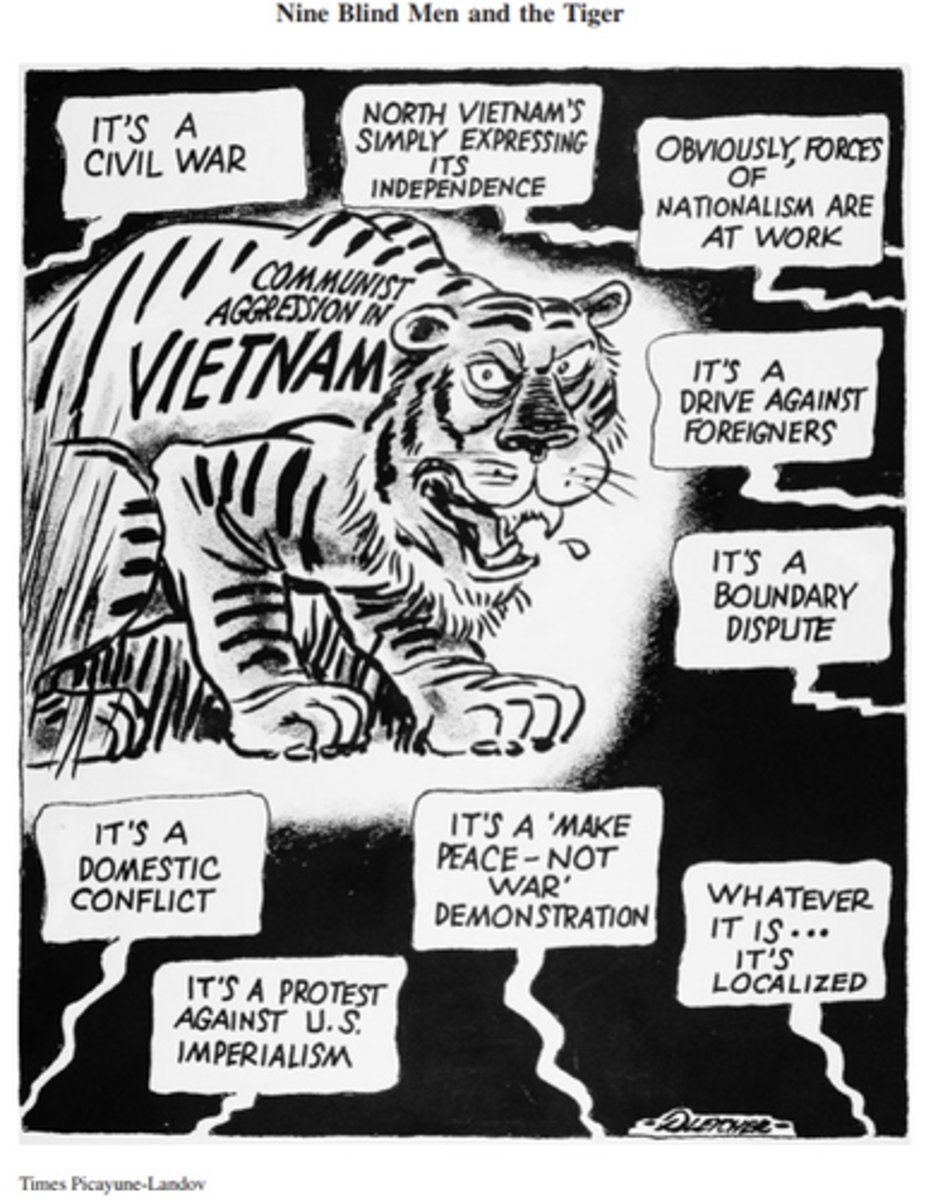
Which of the following developments is the most direct effect of the situation portrayed in the image?
Reduced public trust in the federal government and the president
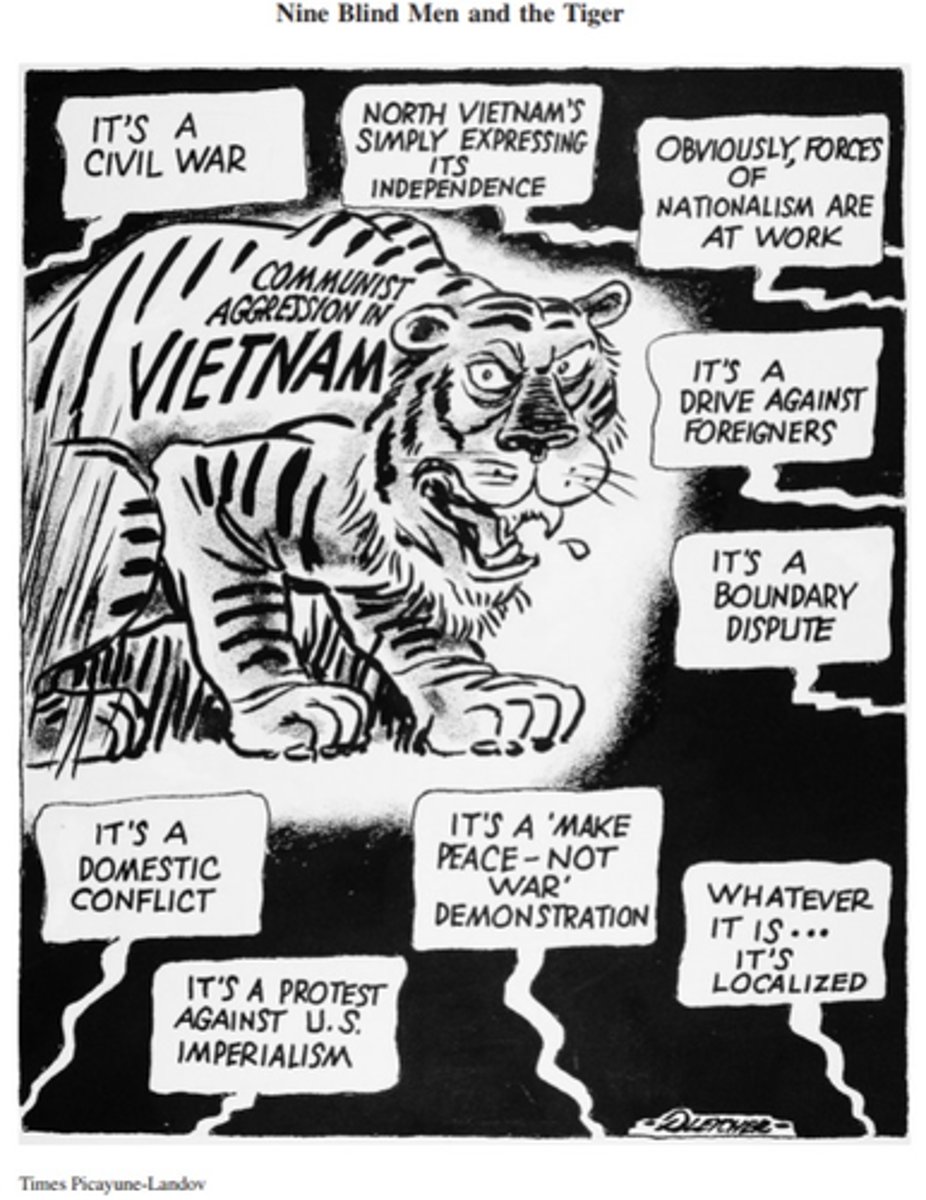
Which of the following developments was most directly associated with the general trend depicted in the graph between 1964 and 1974 ?
The passage of new government programs through the Great Society
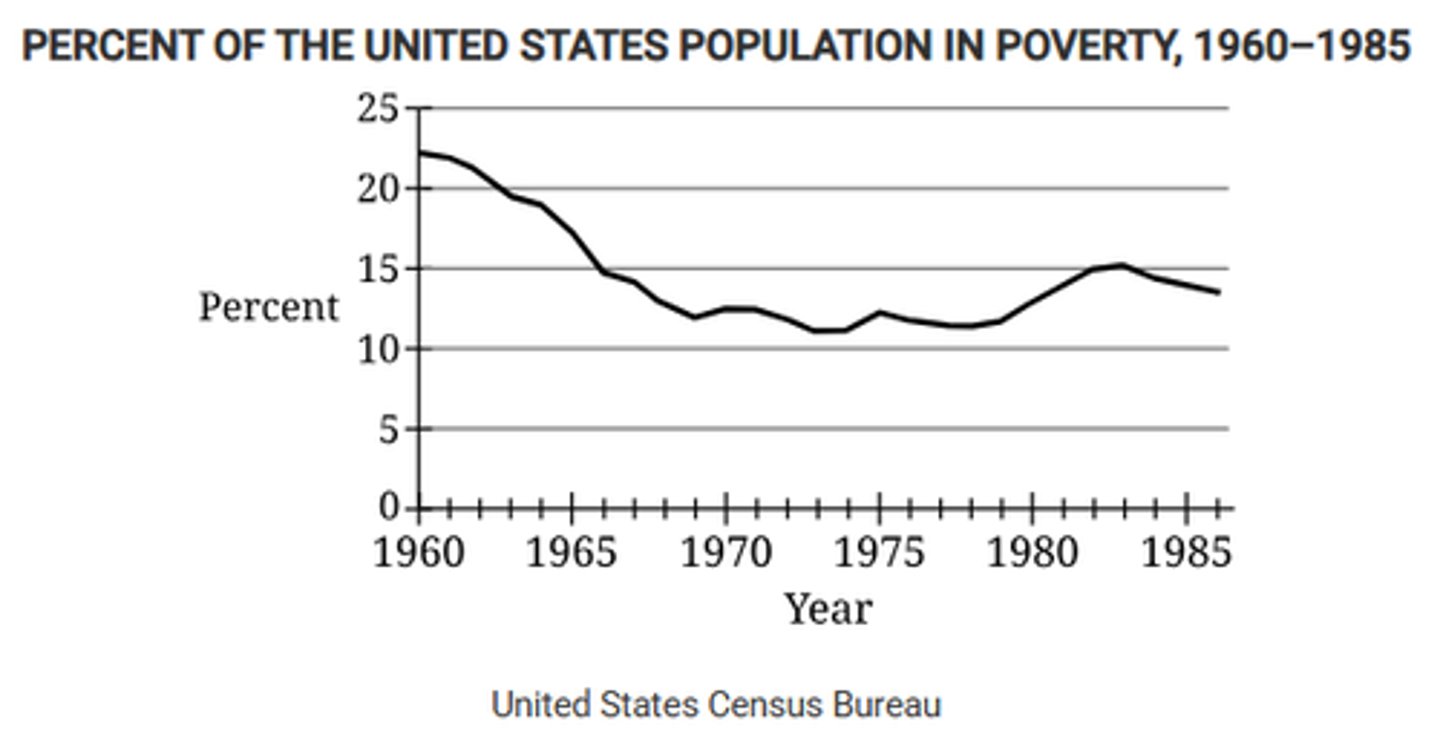
Which of the following developments was most directly associated with the trend shown in the graph between 1960 and 1965 ?
The expansion of the private sector of the economy
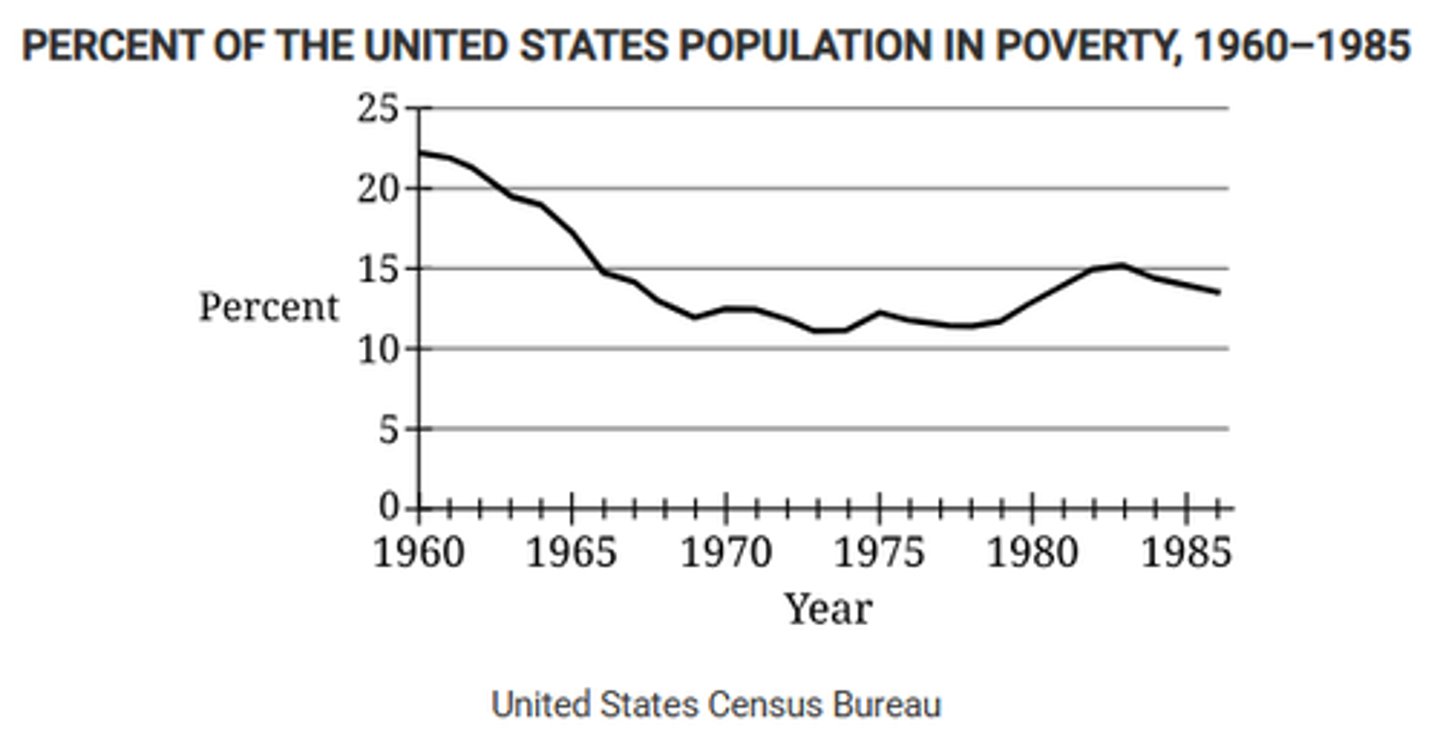
The poverty rates of the early 1960s depicted in the graph most directly contributed to which of the following developments?
Reformers criticized the persistence of inequality despite the affluence that the economy produced.
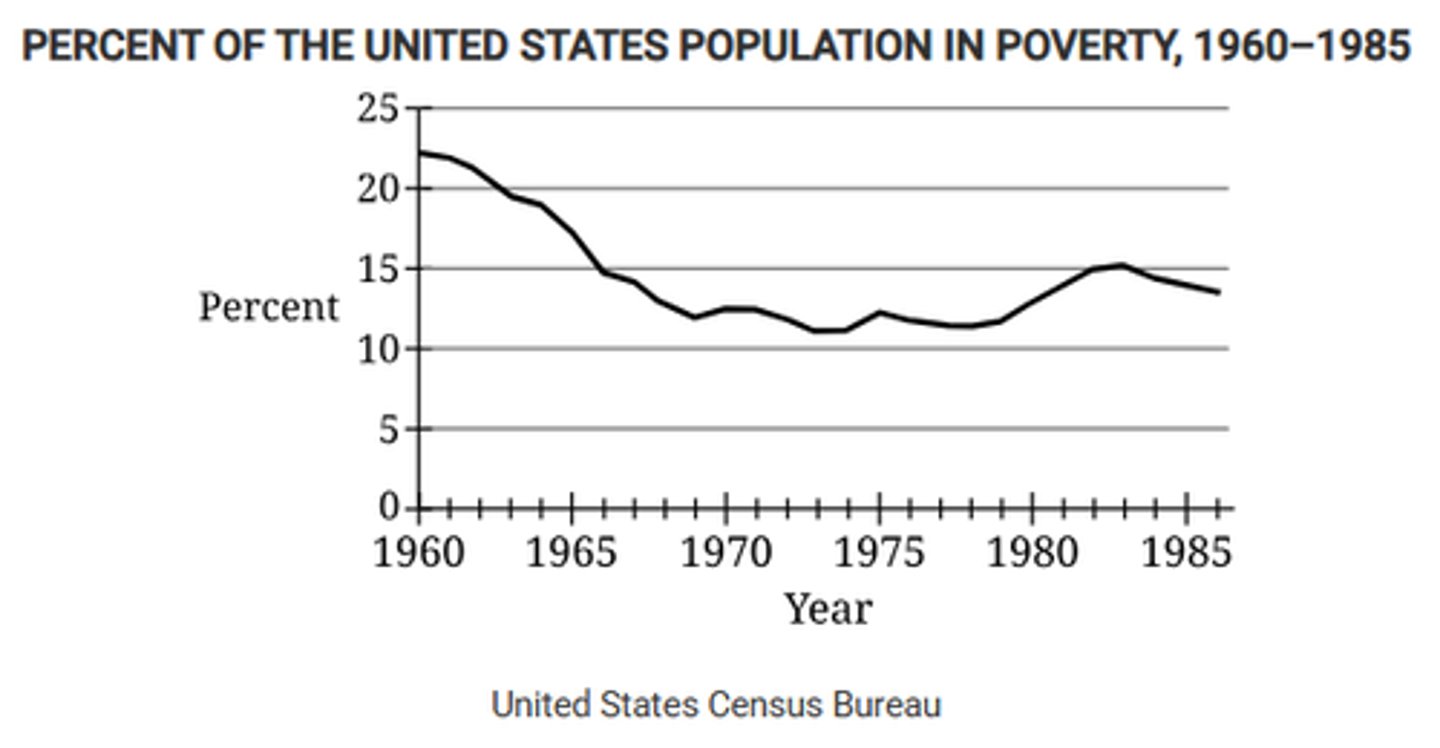
Which of the following factors contributed to the trend depicted in the graph after 1979 ?
The stagnation of real wage growth for working- and middle-class Americans
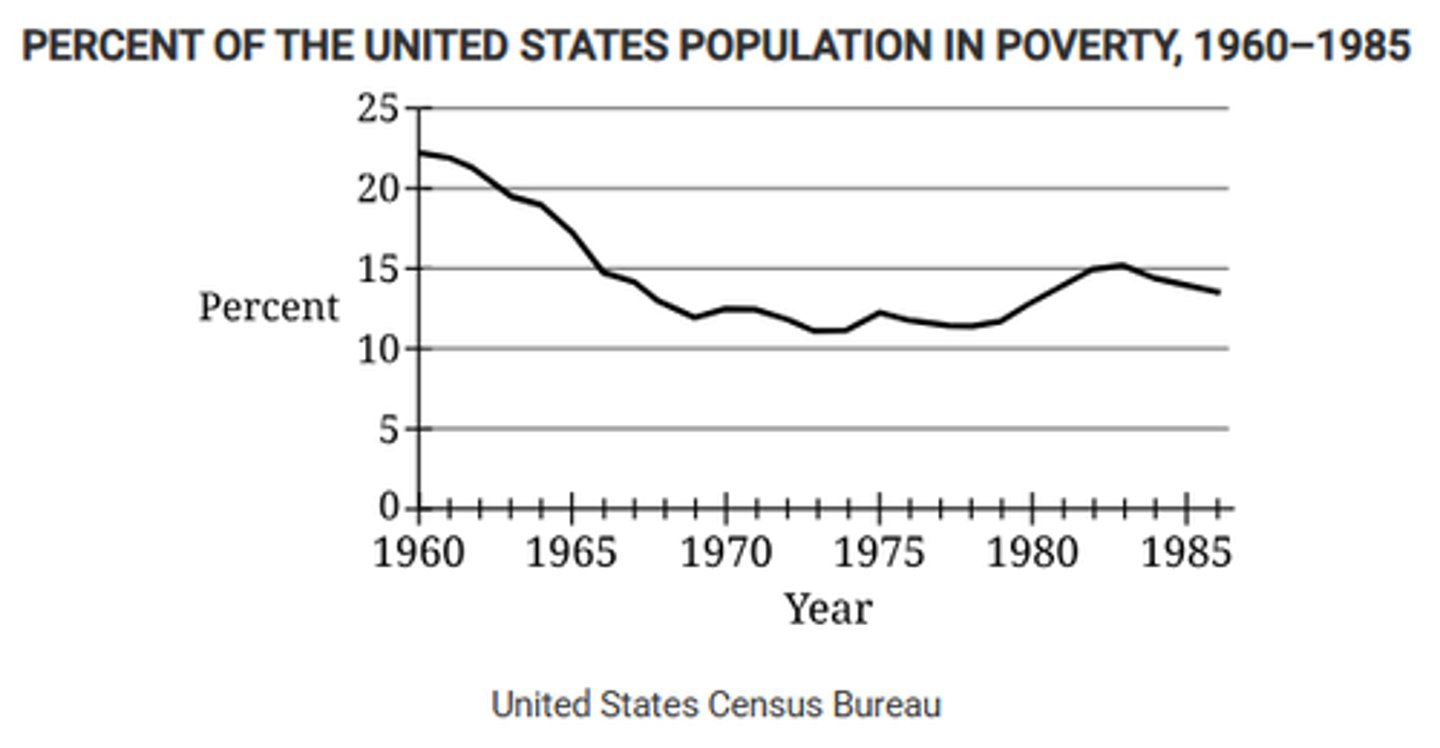
Which of the following postwar developments most directly contributed to the ideas in the excerpt?
The foreign policy strategy of supporting developing nations as a means to prevent the spread of communism
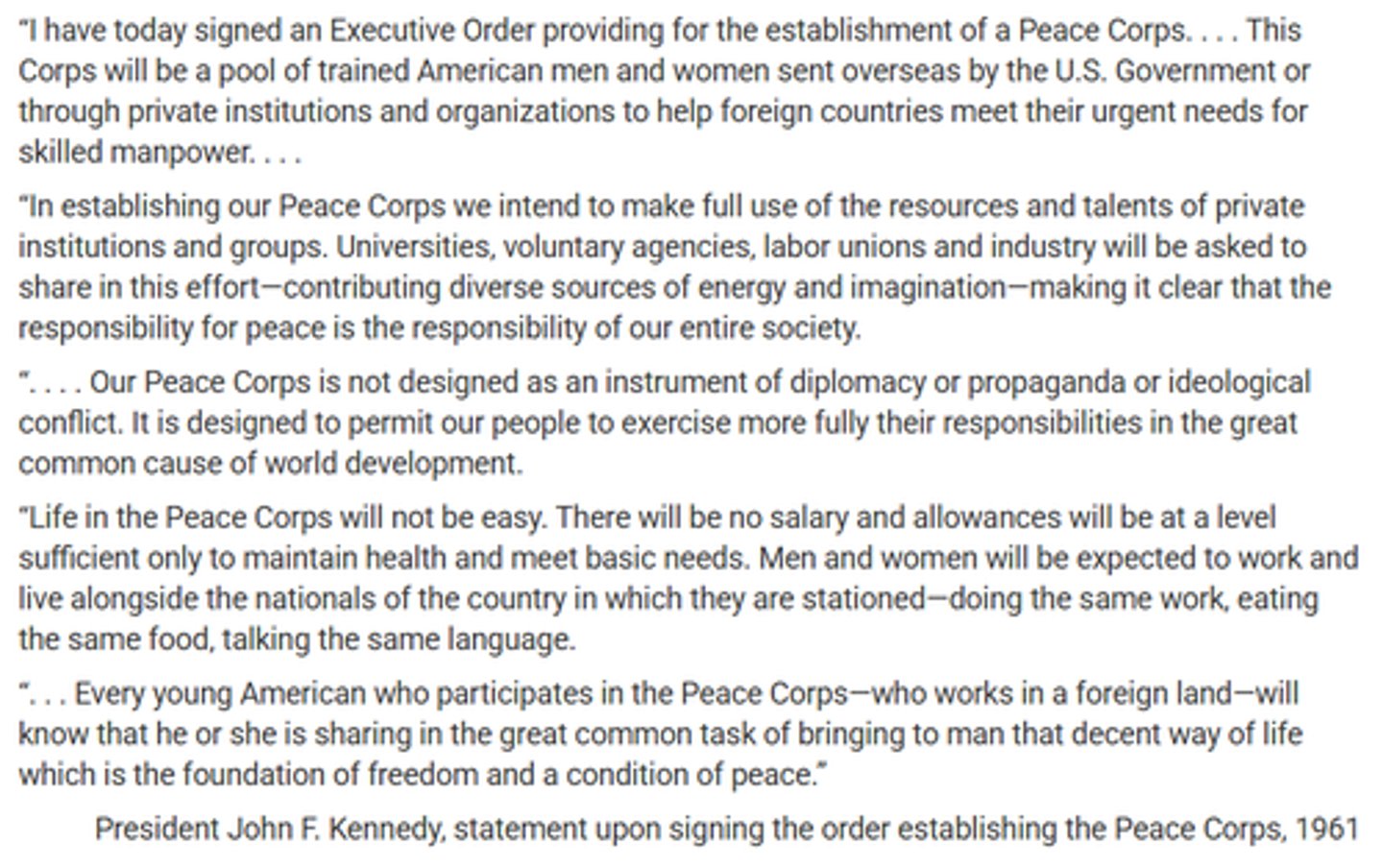
President Kennedy's primary goal in enacting the program described in the excerpt was most likely to
promote a free-market global economy through international aid to other nations
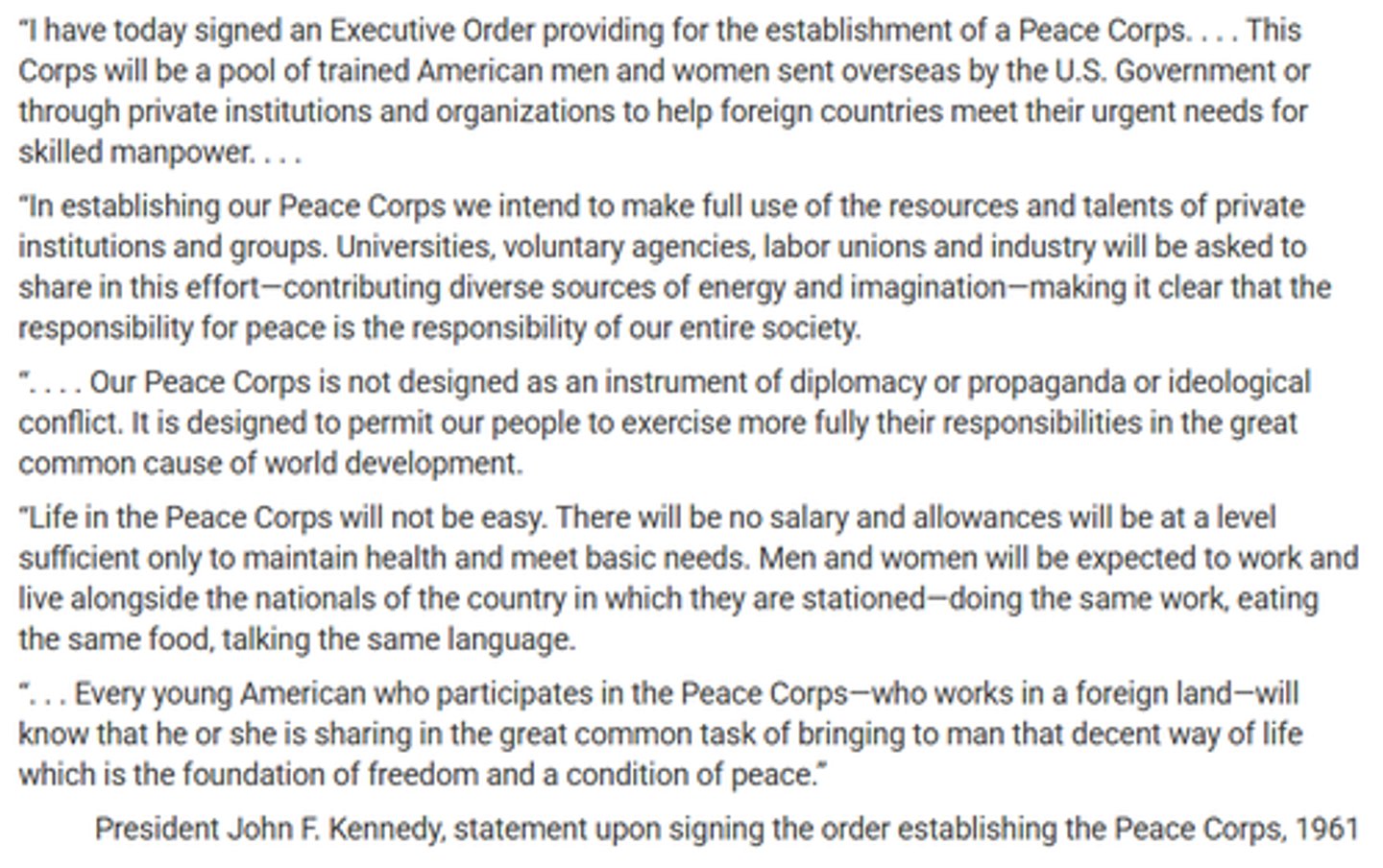
The point of view expressed in the excerpt most directly illuminates which of the following debates within United States foreign policy during the post-Second World War period?
Whether to use direct or indirect tactics to challenge the influence of the Soviet Union
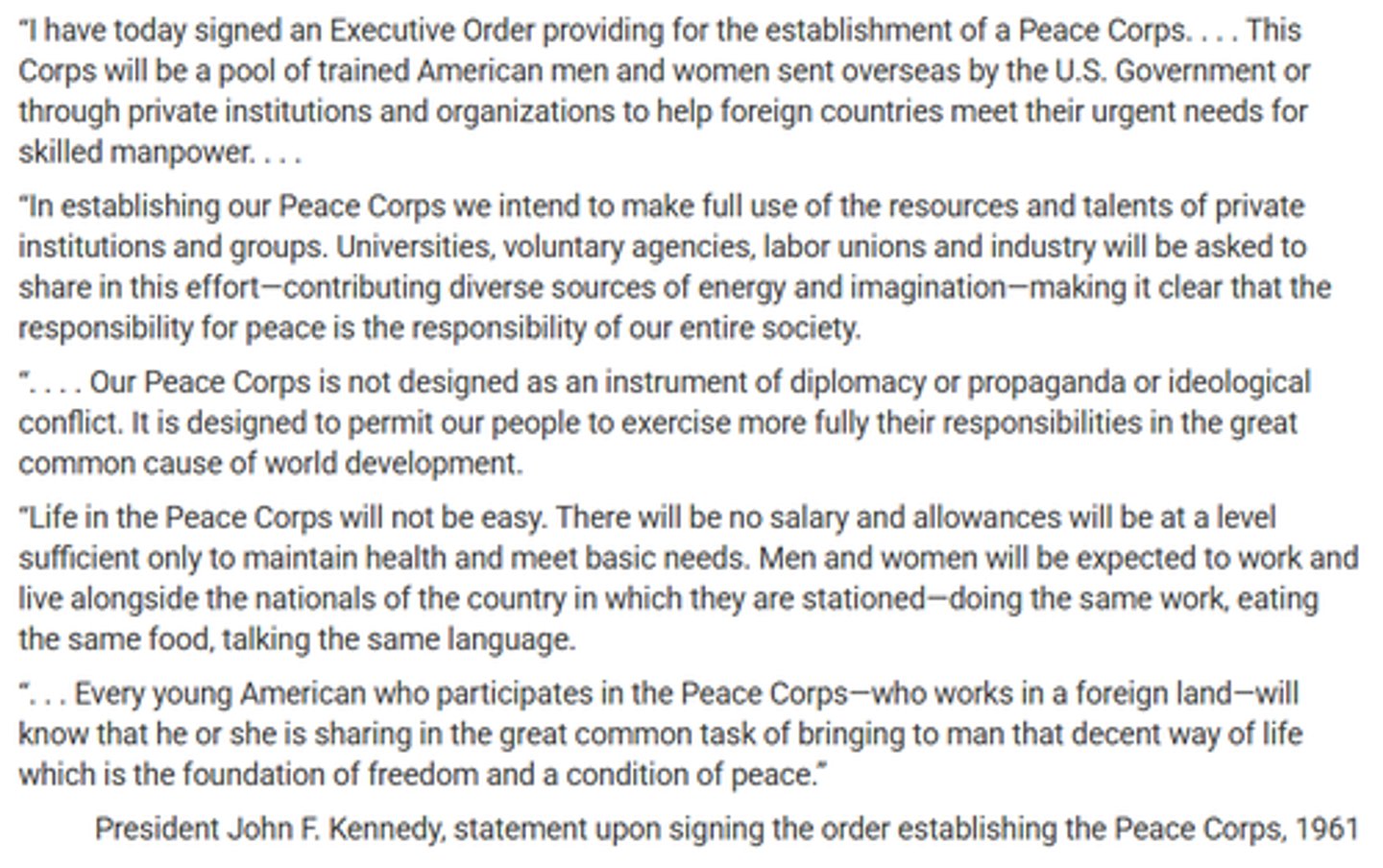
Which of the following best explains how the Red Scare following the Second World War reflected the larger historical context?
The ideas demonstrate efforts by the federal government to ensure domestic security.
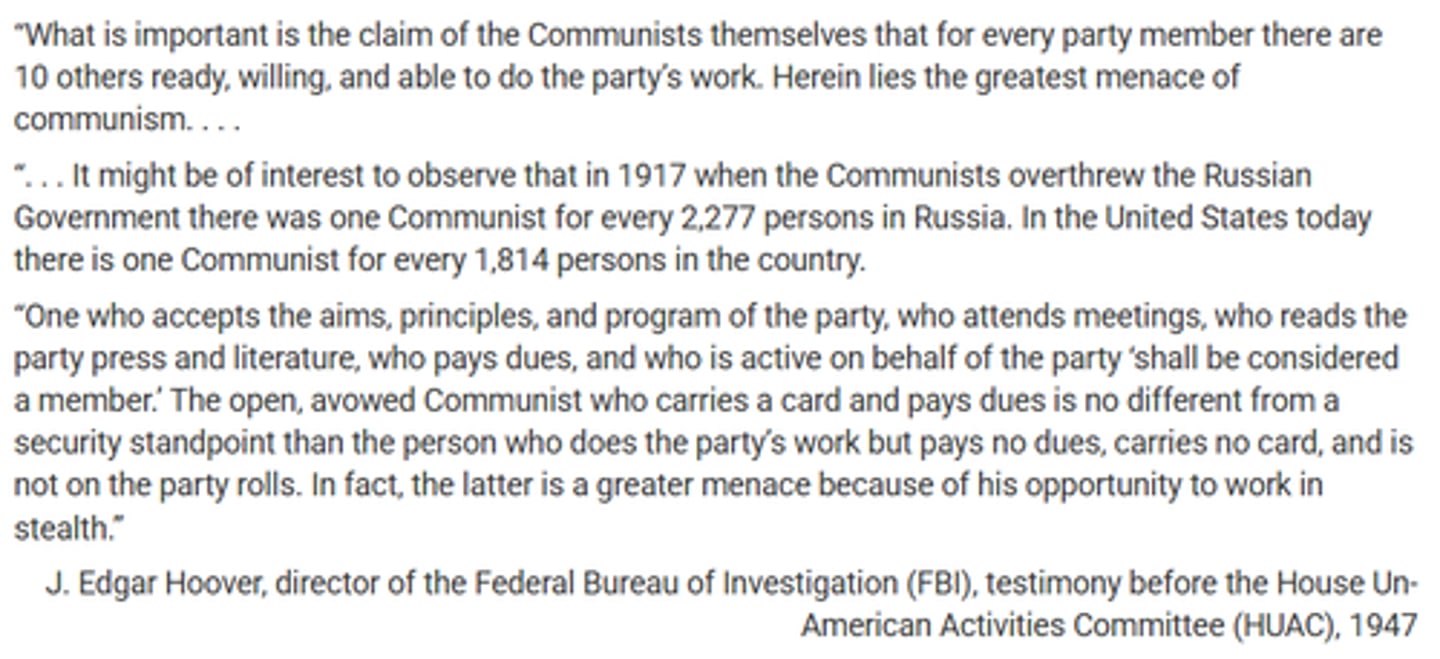
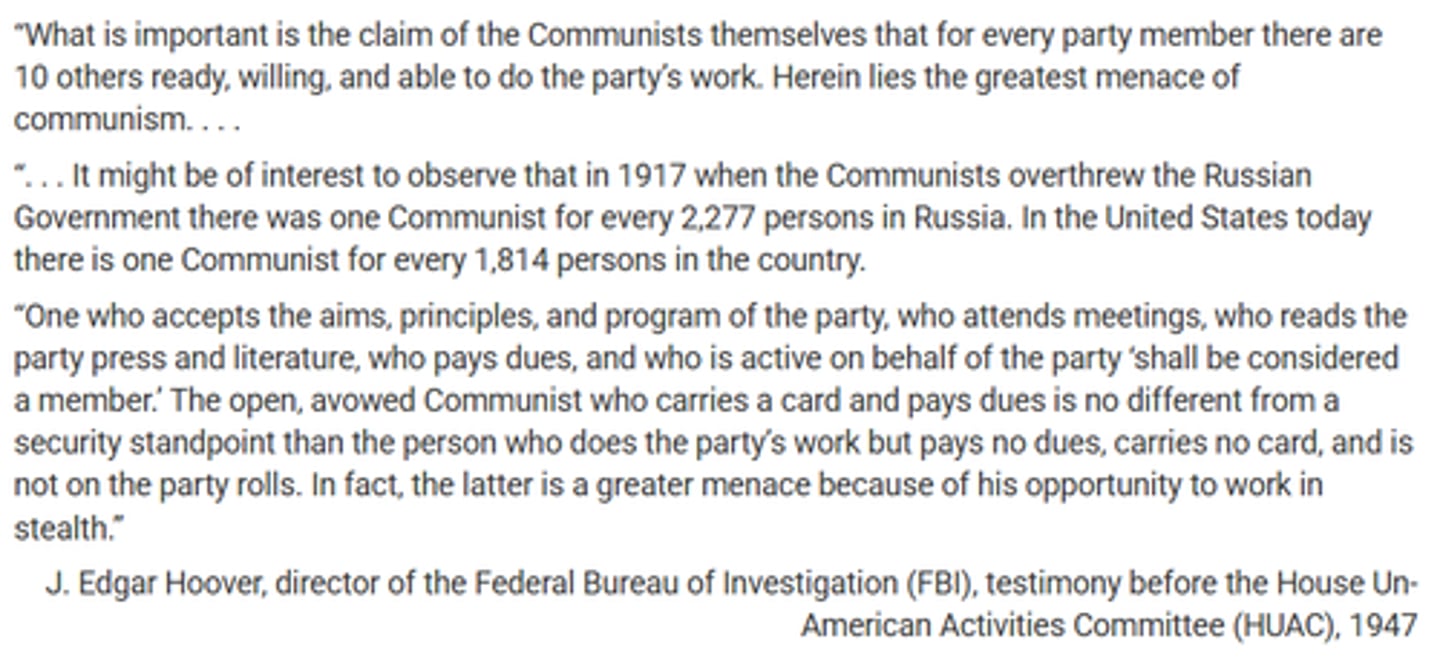
At the time, Hoover's purpose in his testimony would have most likely been interpreted as attempting to convince Americans of the
threat posed by suspected communists within the United States
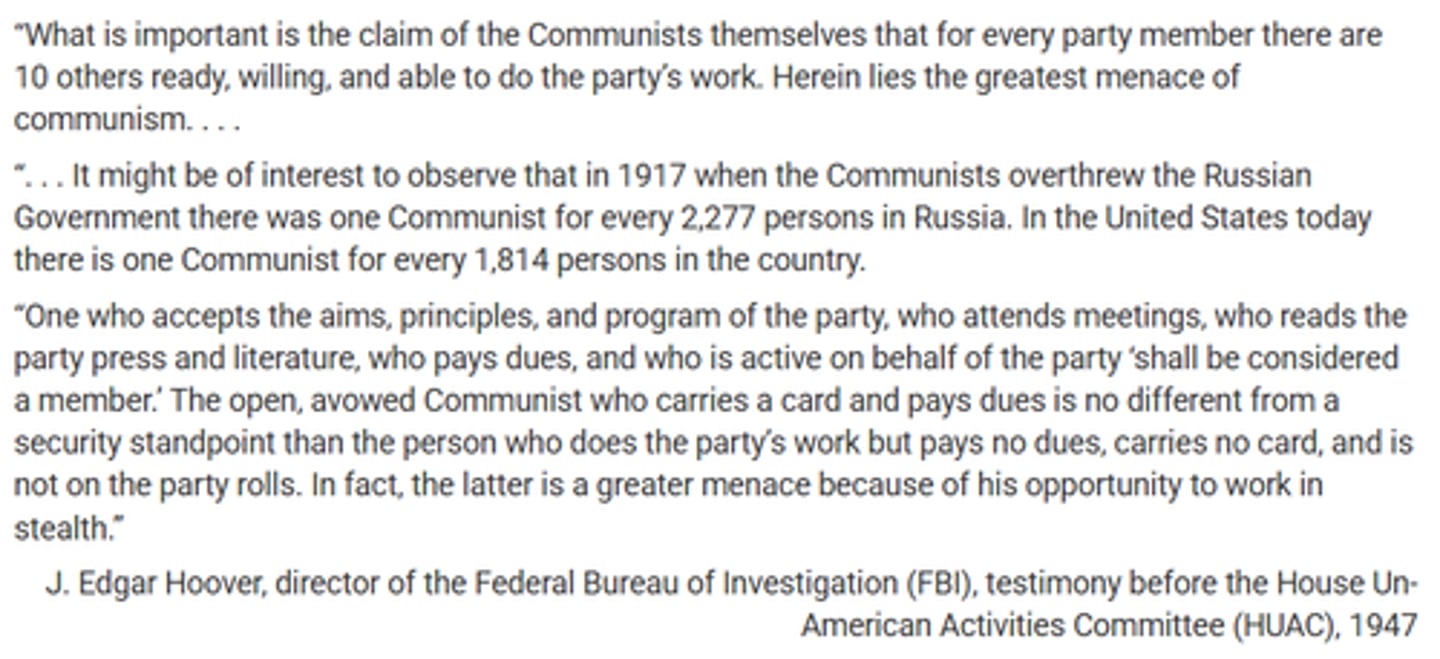
The House Un-American Activity Committee (HUAC)'s interpretation of Hoover's testimony most likely influenced the committee to
investigate communism in labor unions and industries such as filmmaking
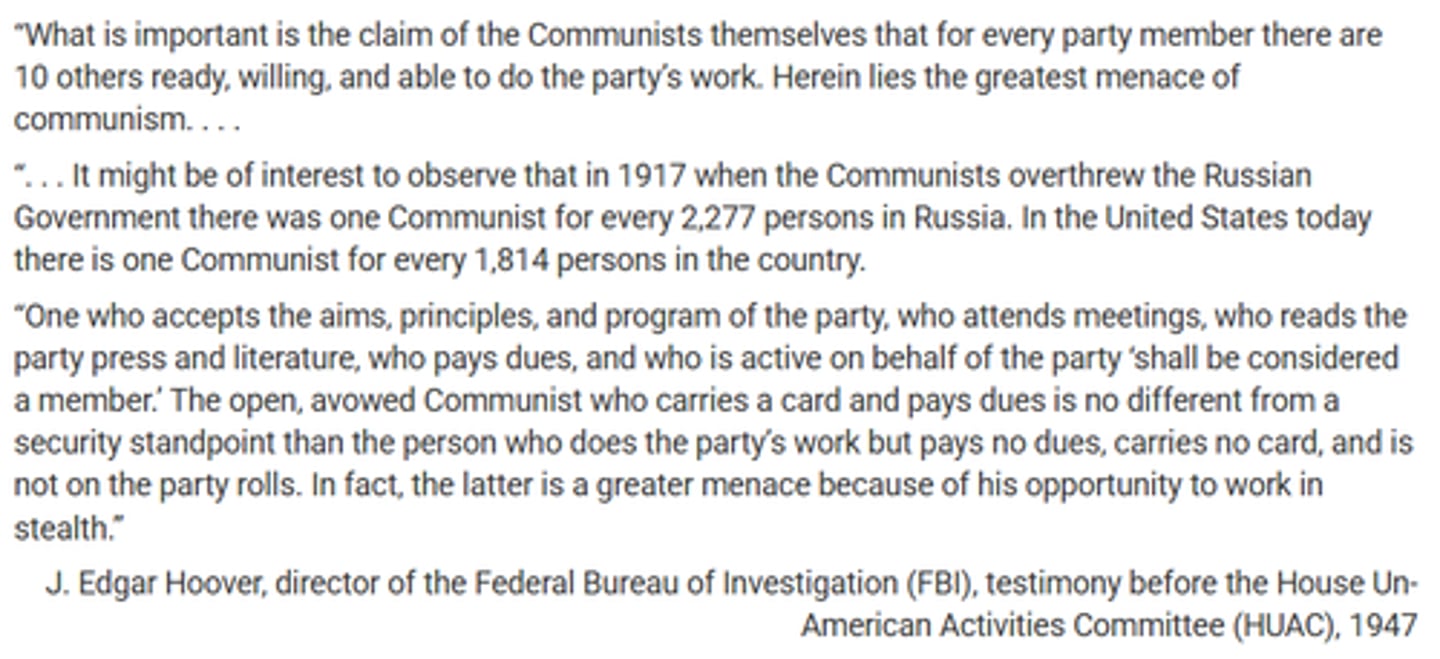
Hoover's testimony in the excerpt could best be used as evidence by historians studying which of the following?
Debates among Americans about the policies and methods used to expose domestic communists
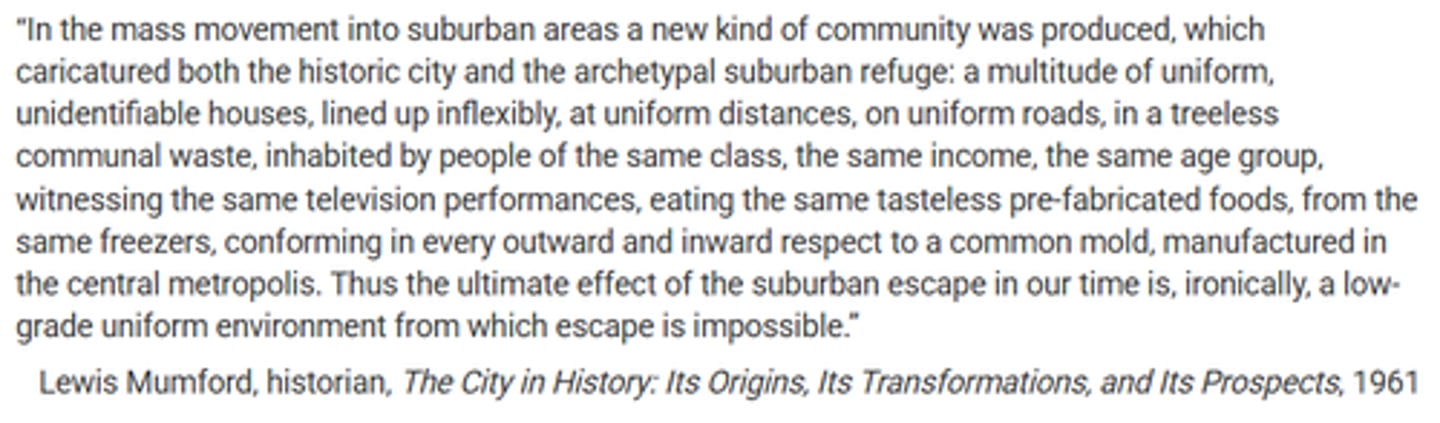
Which of the following best explains a limitation in Mumford's critique of postwar suburbanization?
Many families moved to the new suburbs to find affordable homes.
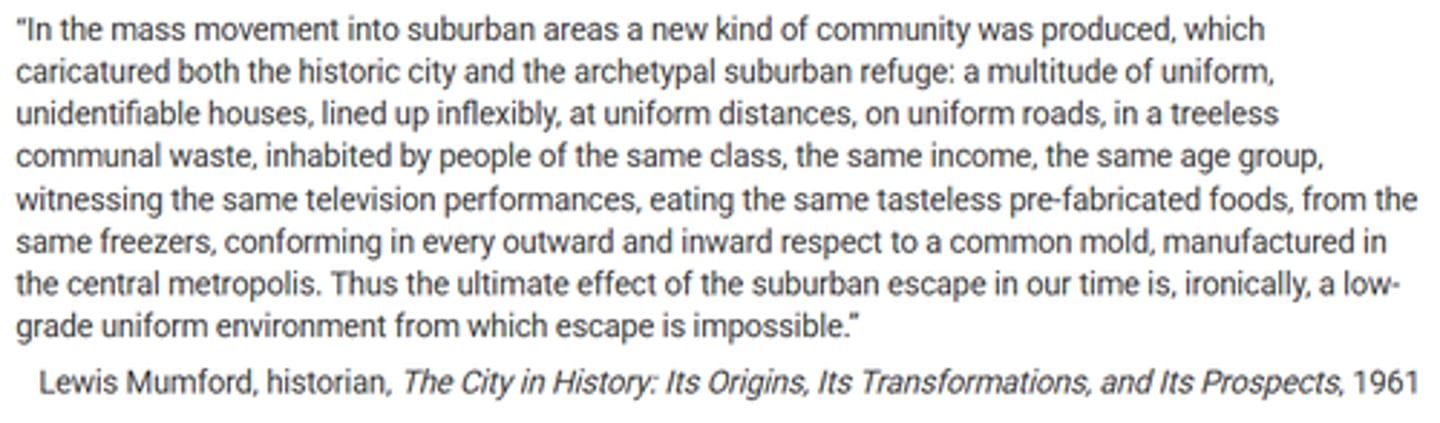
Mumford's argument in the excerpt does not account for which of the following historical factors that most directly explains the rise of the suburbs in the United States?
The necessity of having an automobile to travel to work
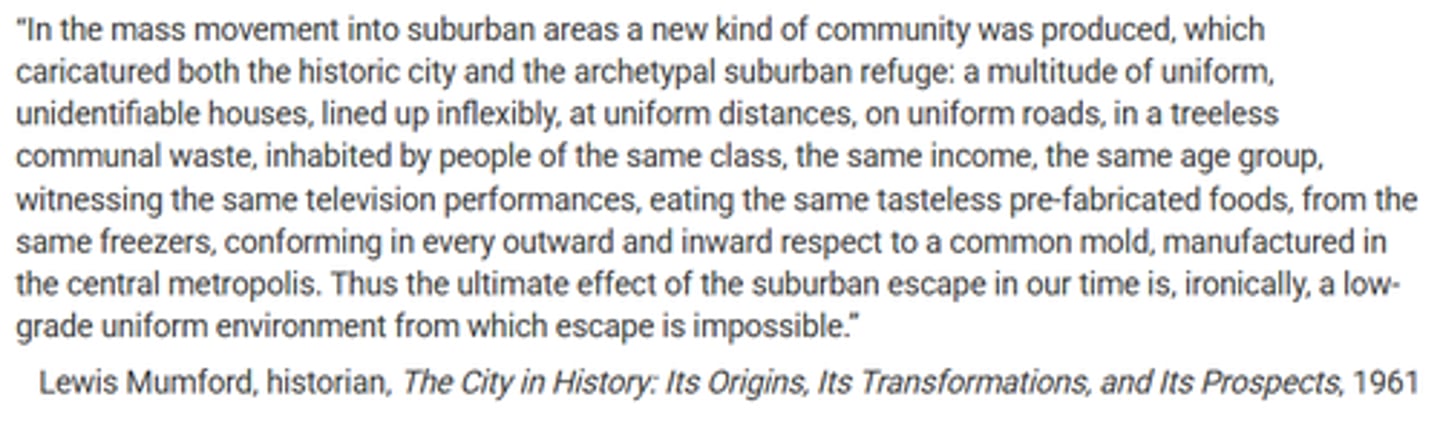
Mumford overlooks which of the following broader historical contexts that best explains why many Americans might have been attracted to the consistency and conformity of the suburbs?
Recent periods of economic depression and war encouraged many families to seek stability and security.
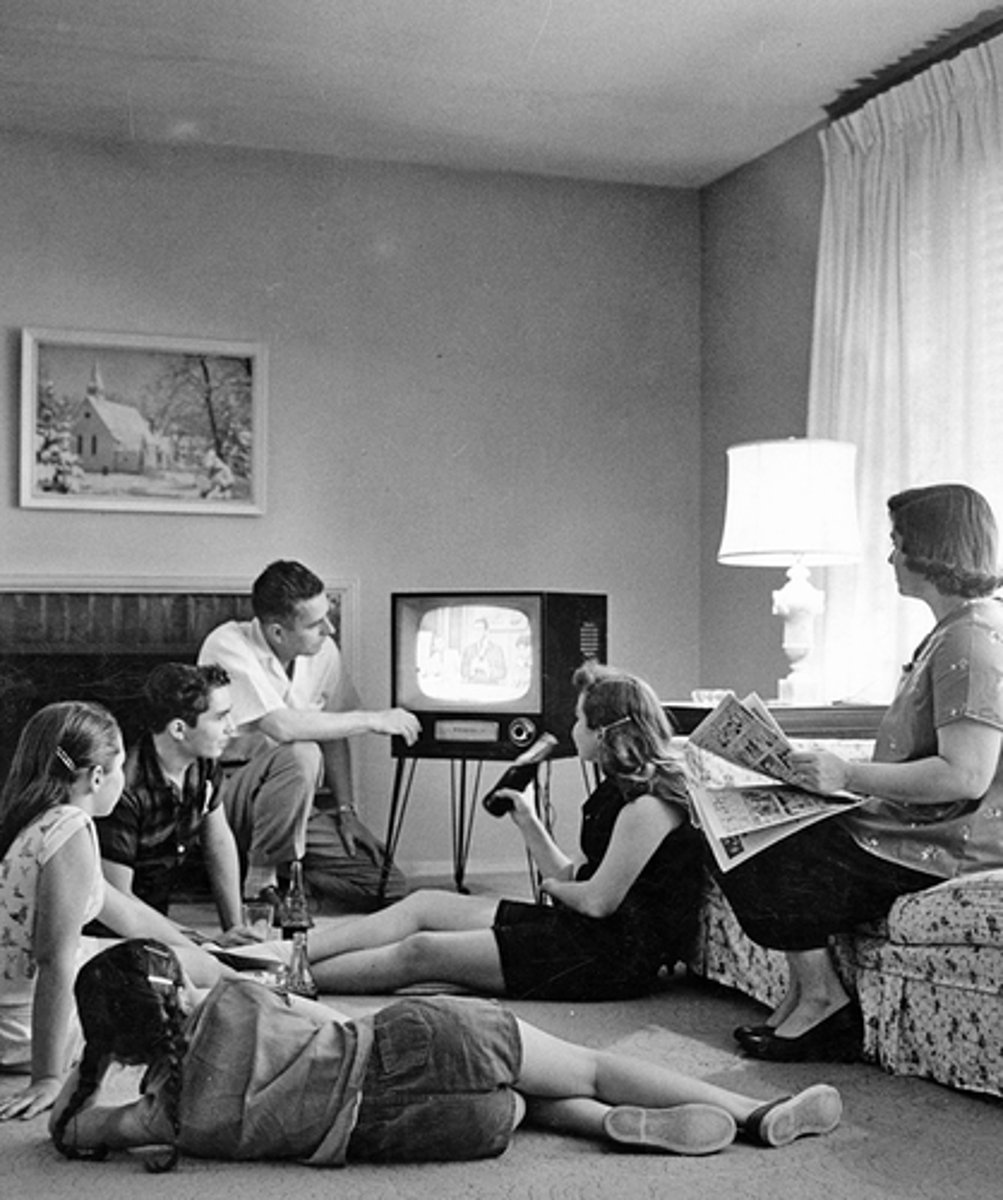
The depiction in the photograph best provides evidence for which of the following developments in the late 1940s and early 1950s?
The spread of mass culture to many Americans
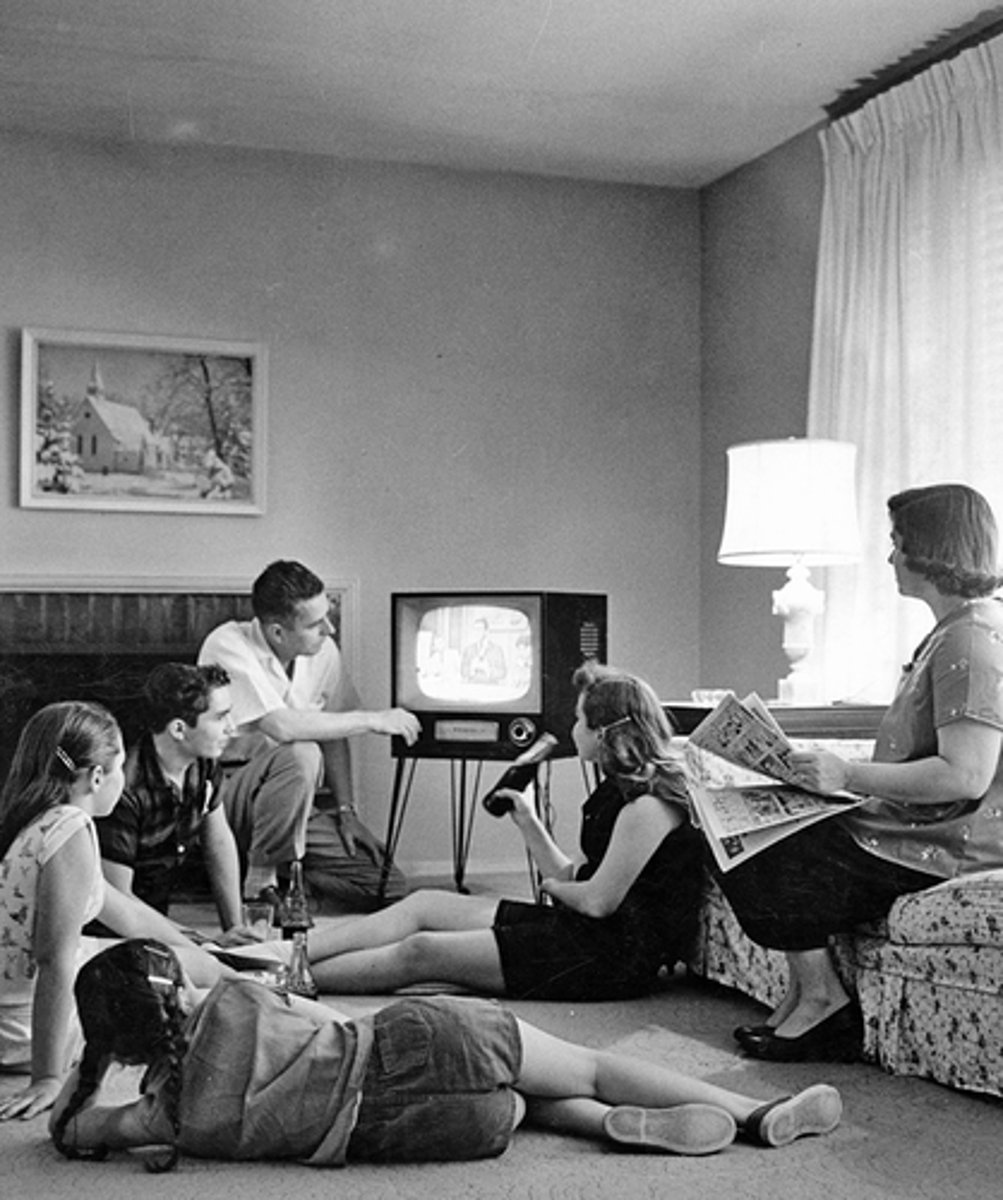
The image best serves as evidence of the experiences of families living in which of the following places in the 1950s?
New suburban developments
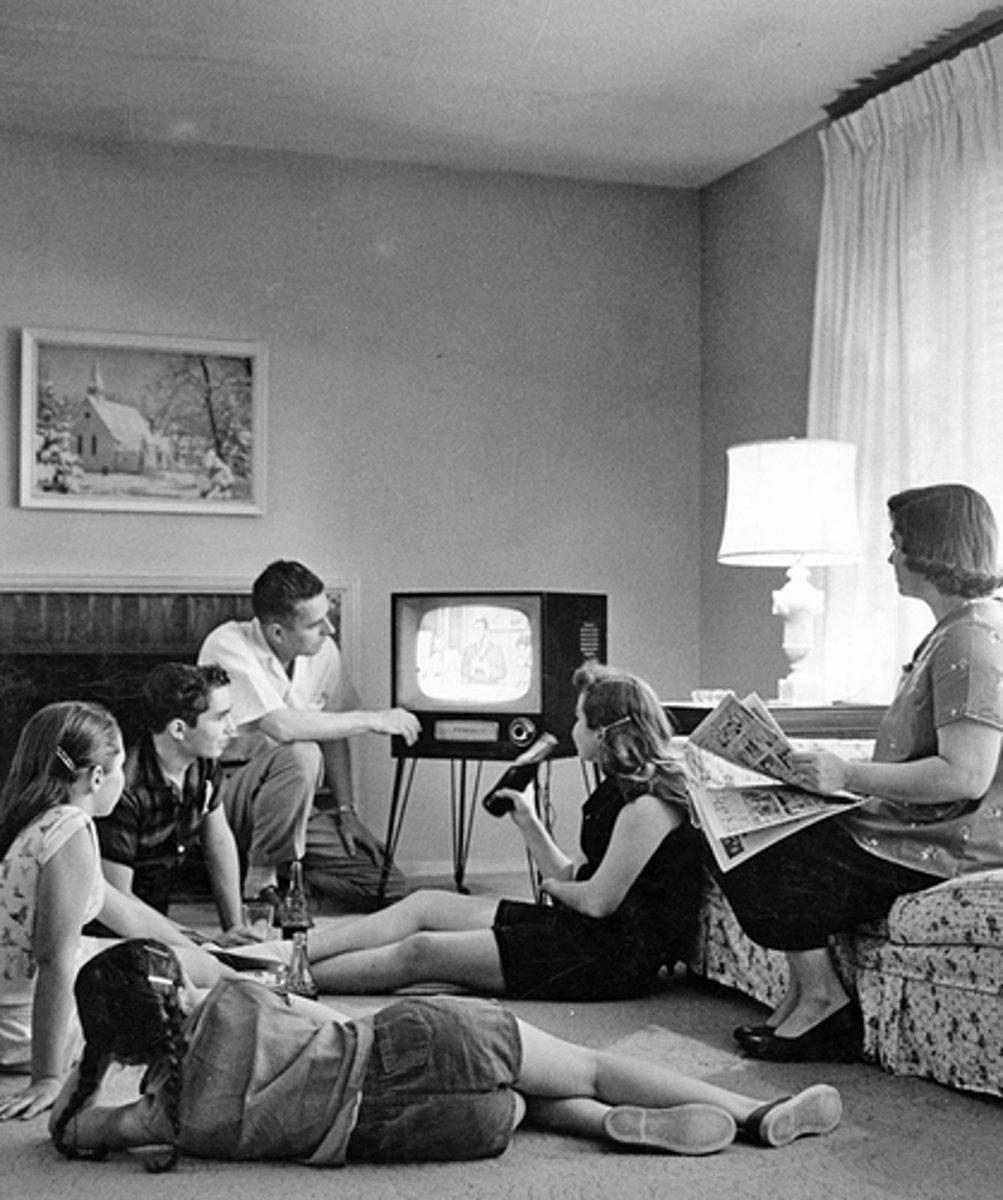
Which of the following groups would have most objected to the development evidenced in the photograph?
Young people who rejected the homogenization of culture
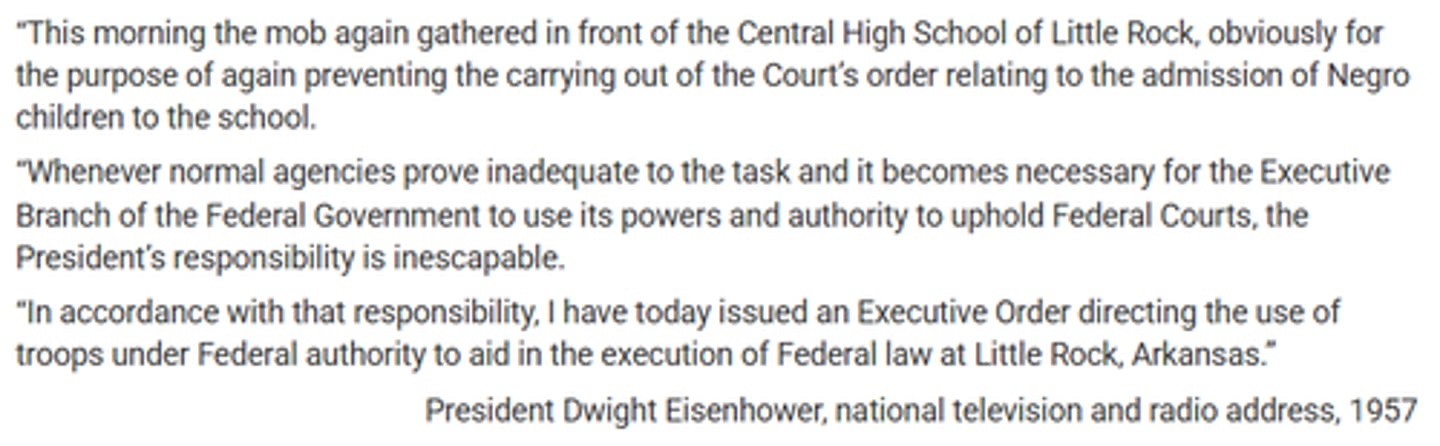
President Eisenhower's actions in the excerpt were most similar to which of the following earlier actions?
The ending of segregation in the military in the 1940s
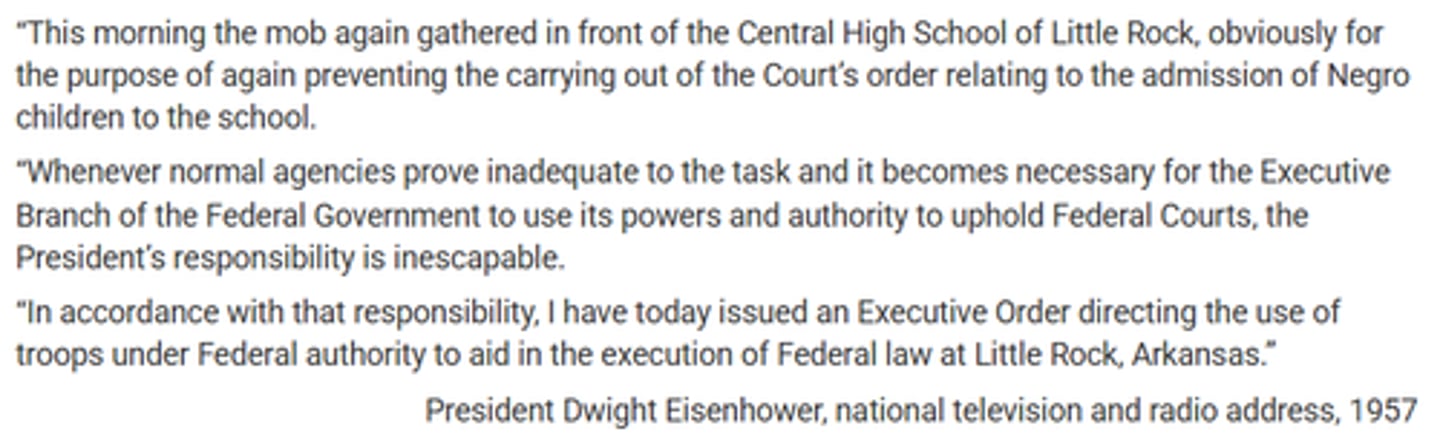
Which of the following events represented a continuation of the development discussed in the excerpt?
The advocacy for the passage of the Civil Rights Act of 1964
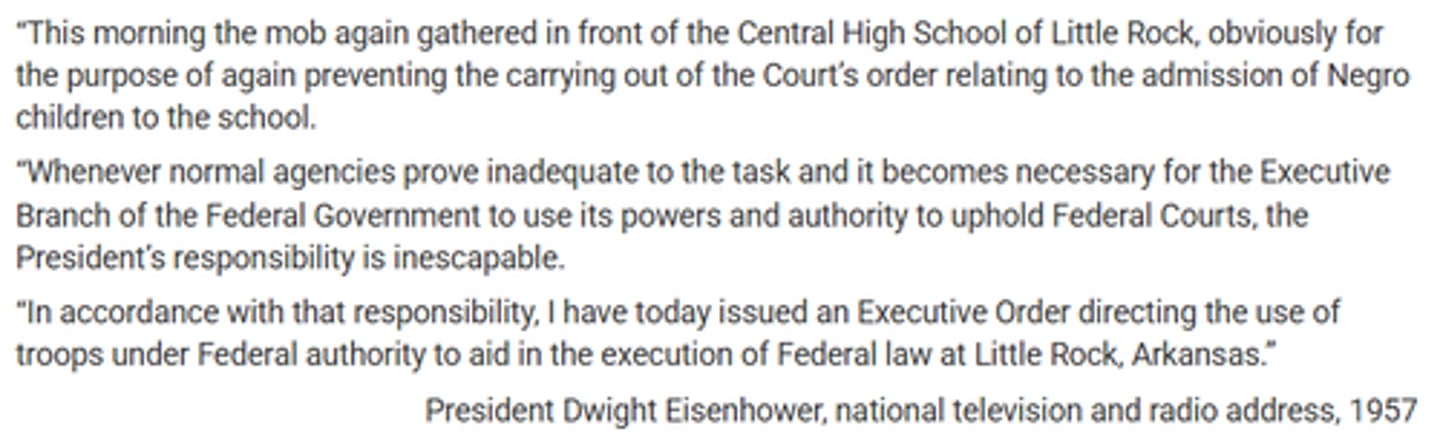
Opponents of Eisenhower's decision in the excerpt most likely held views similar to which of the following earlier groups?
Southern state leaders in the 1880s and 1890s
Which of the following contexts best explains the origins of the modern African American Civil Rights movement?
The federal government continued to fail to live up to its promises of guaranteeing the equality of citizens.
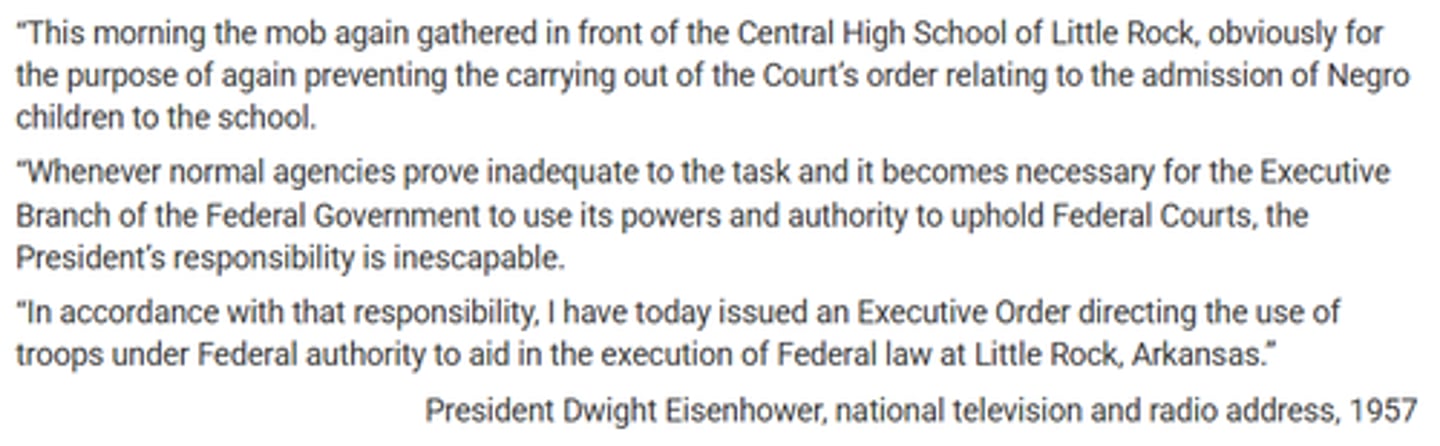
Which of the following arguments about United States policy toward decolonization do the excerpts best support?
It was more interested in maintaining stability in regions than in backing decolonization.
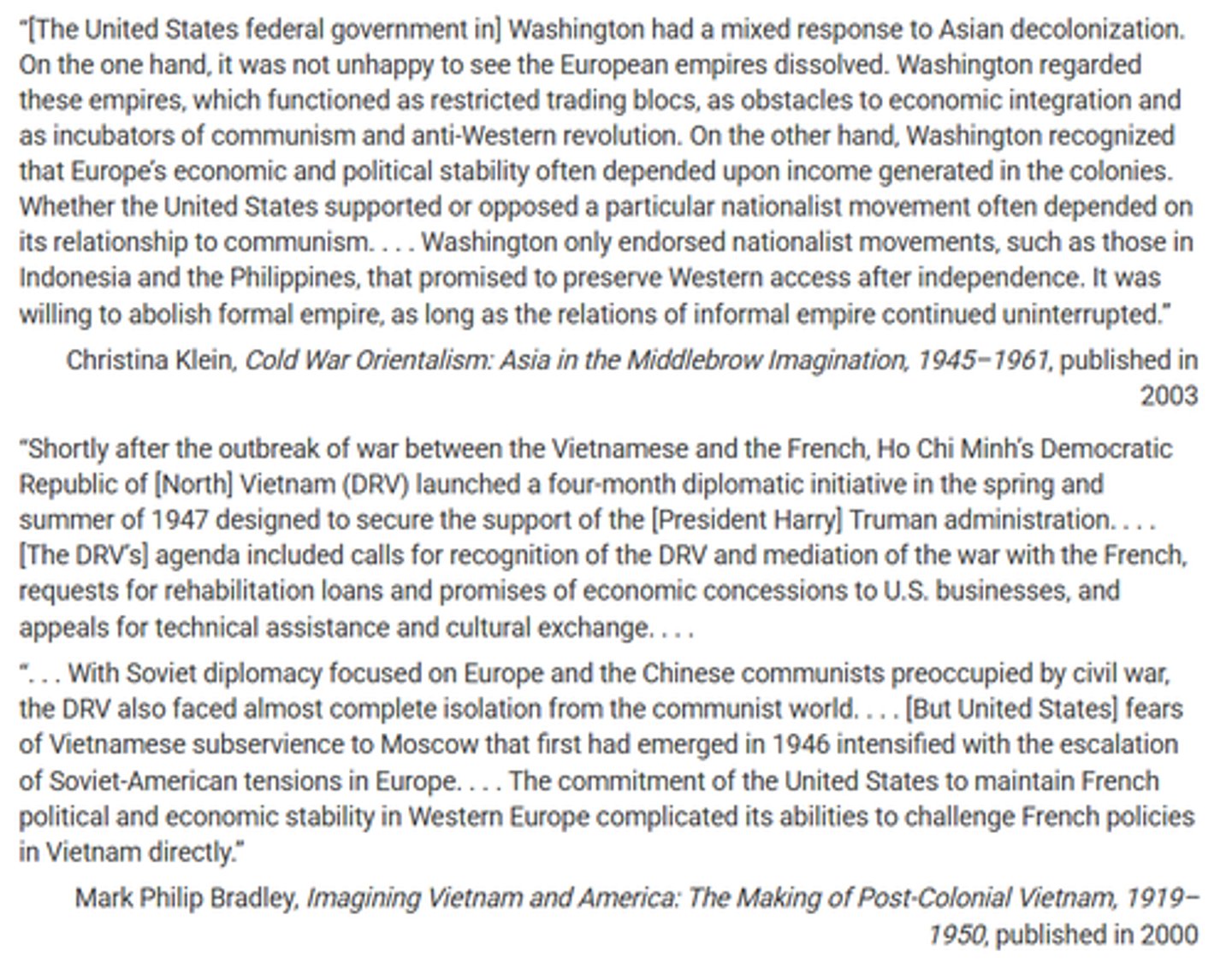
Bradley's argument differs from Klein's in that Bradley claims that
some communist governments actually sought assistance from the United States
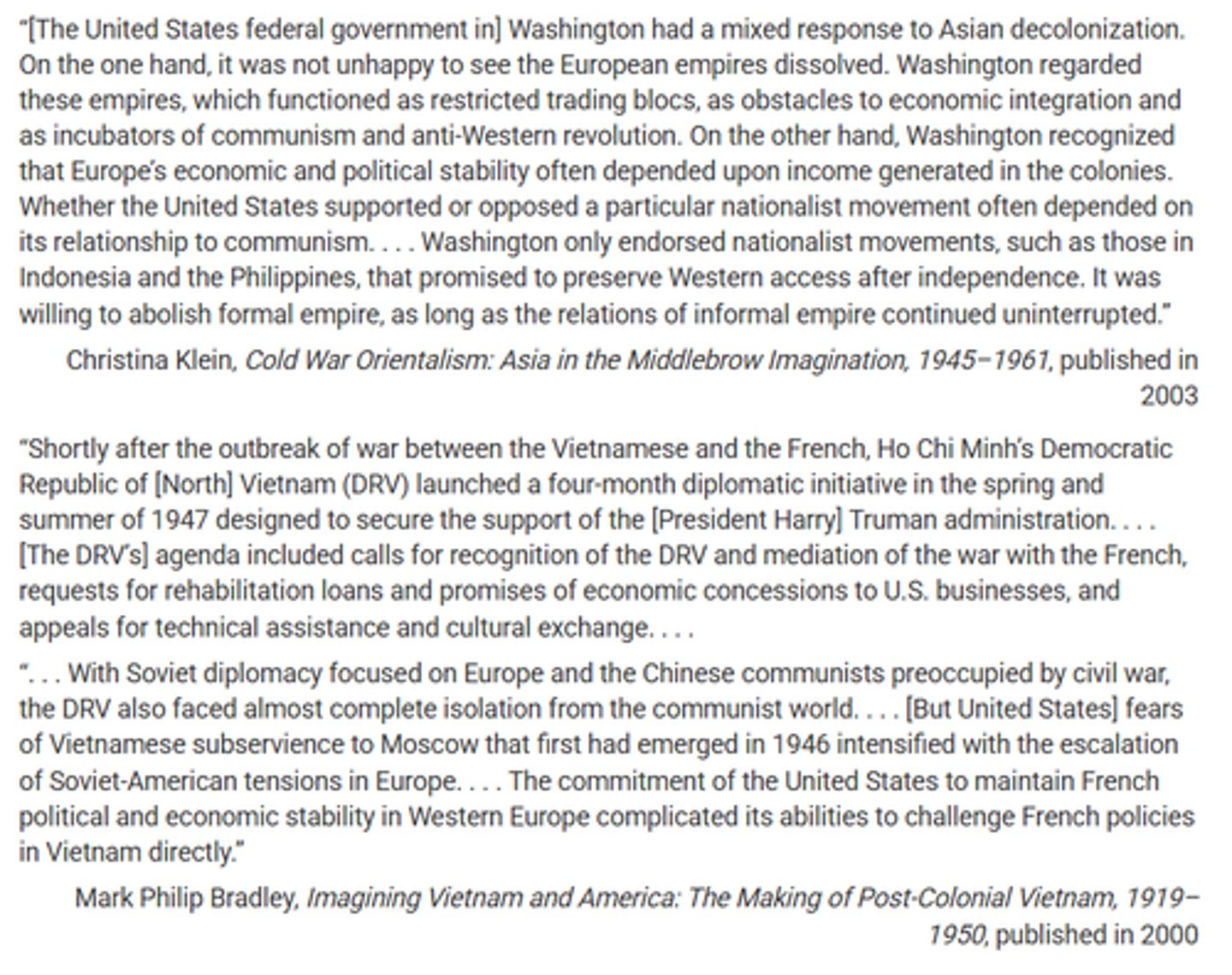
The excerpts could best be used to support which of the following criticisms about United States foreign policy during the Cold War?
The United States sometimes supported nondemocratic countries so long as they opposed communism.
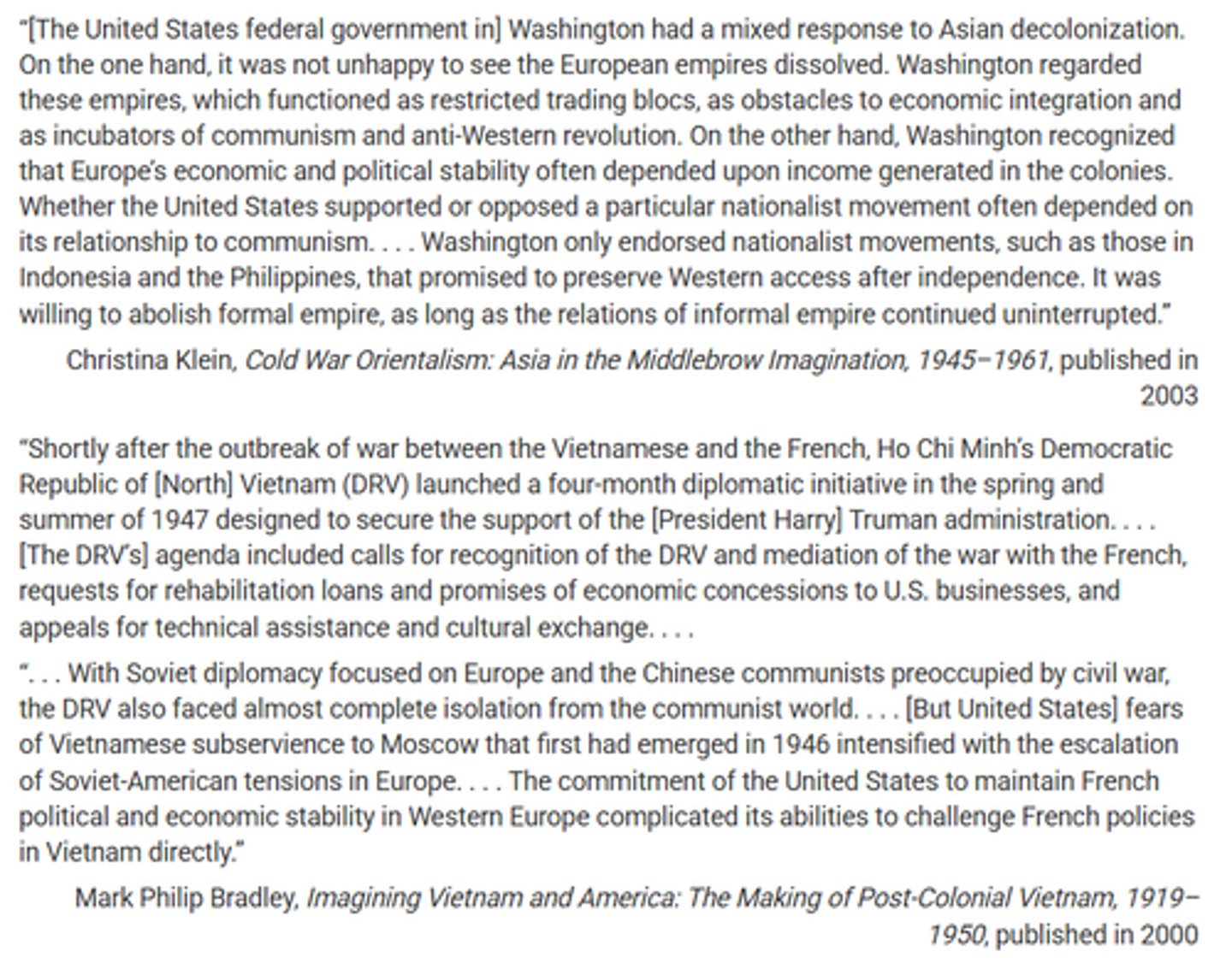
Which of the following best explains the change in the overall United States military presence in Vietnam between 1964 and 1968 as depicted in the graph?
The fear that the North Vietnamese forces under Ho Chi Minh would spread communism in Asia
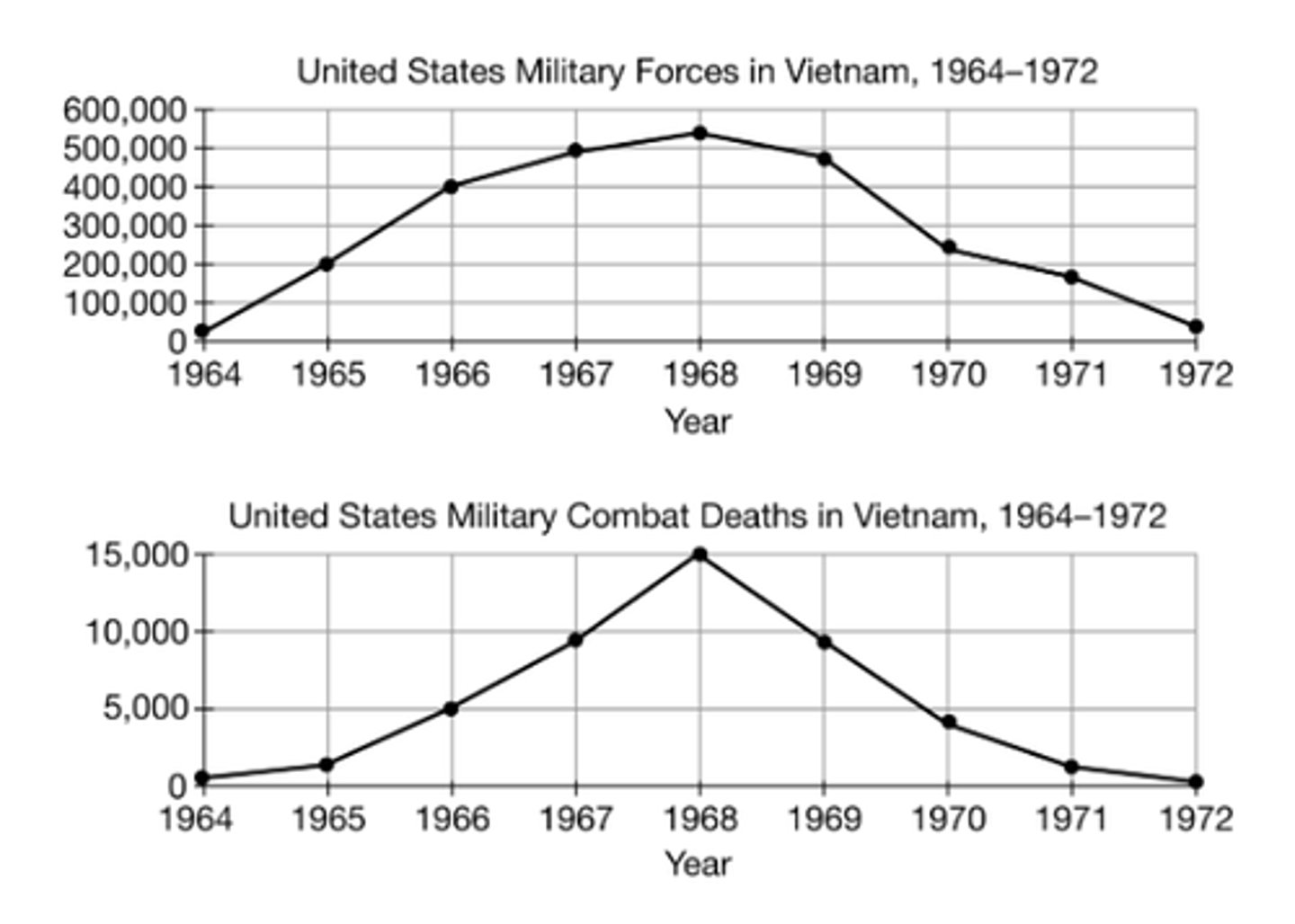
Which of the following best explains the change in United States military combat deaths in Vietnam between 1964 and 1968 as depicted in the graph?
Increasing commitment by politicians in the United States to combat the spread of global communism
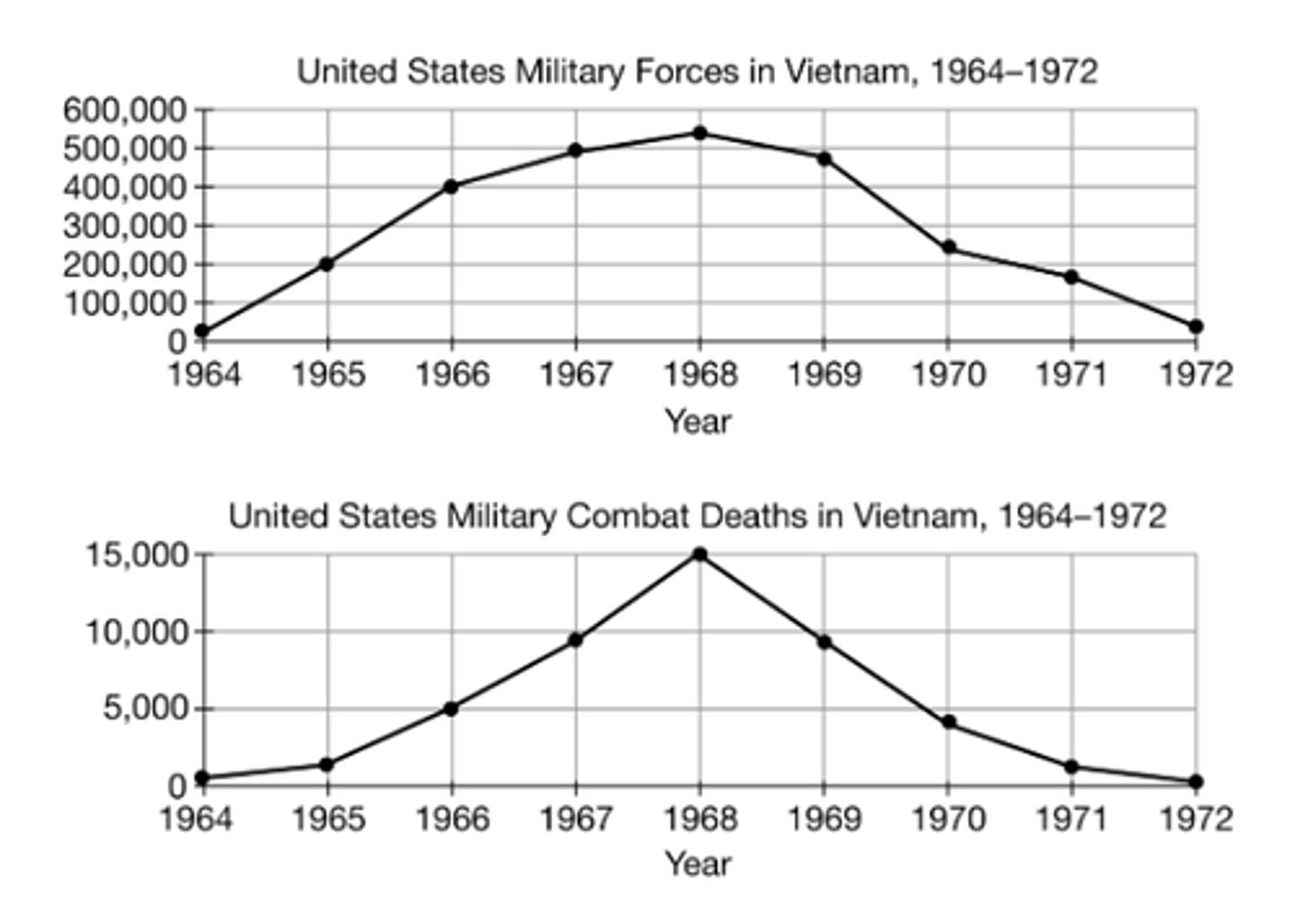
Which of the following was the primary reason behind the change in United States military forces in Vietnam after 1969 as depicted in the graph?
Responding to decreasing public support for the Vietnam War, President Nixon eventually withdrew United States troops without eliminating communism or uniting Vietnam.
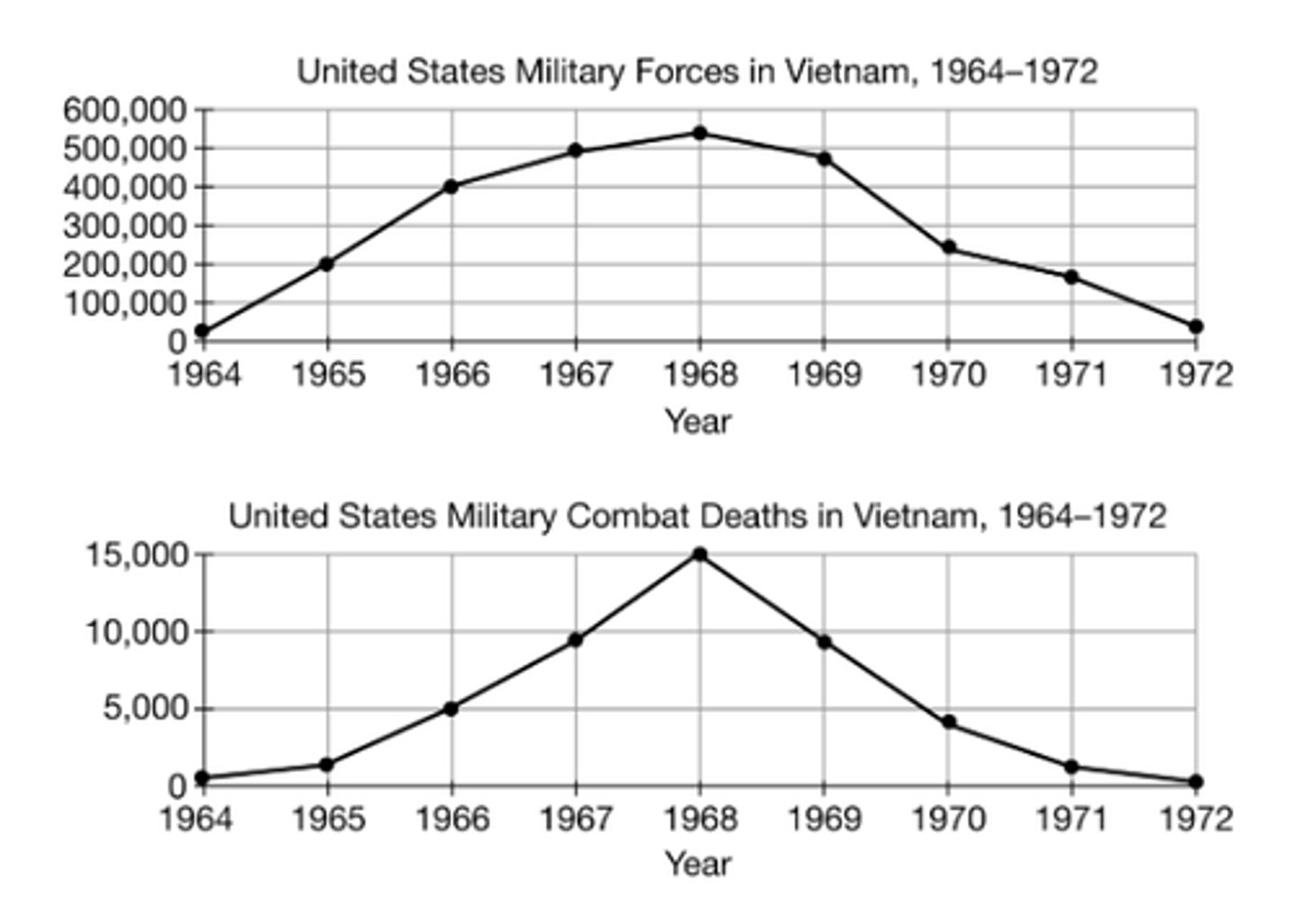
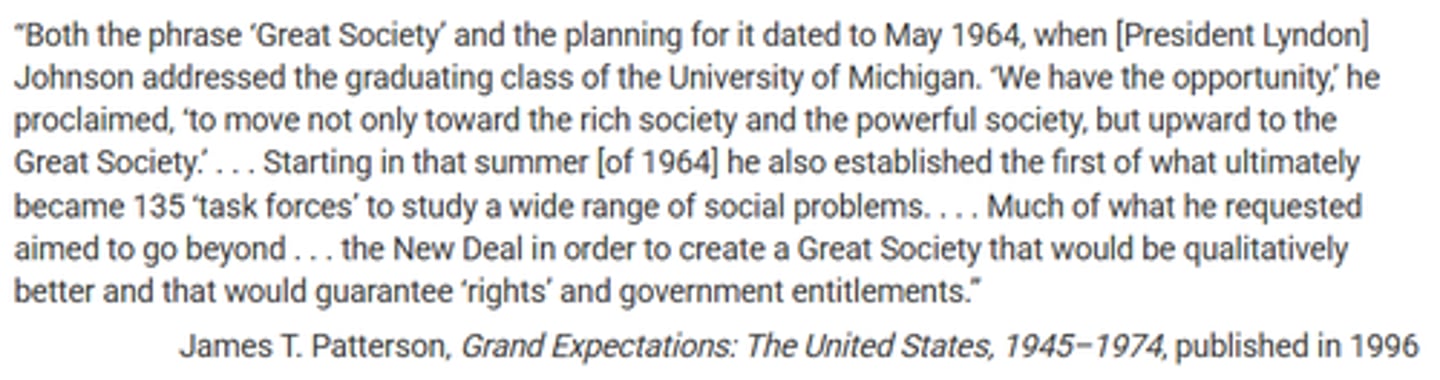
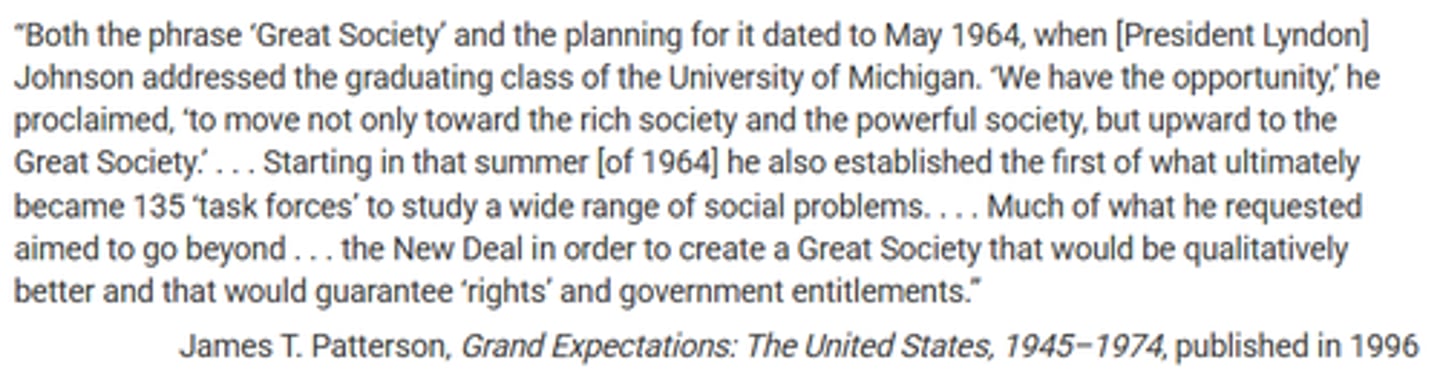
The principles of the Great Society as expressed in the excerpt are best explained in relation to which of the following twentieth-century ideologies?
Liberalism
The expansion of African American rights during the Great Society was most similar to which of the following earlier situations?
The passage of constitutional amendments during Reconstruction
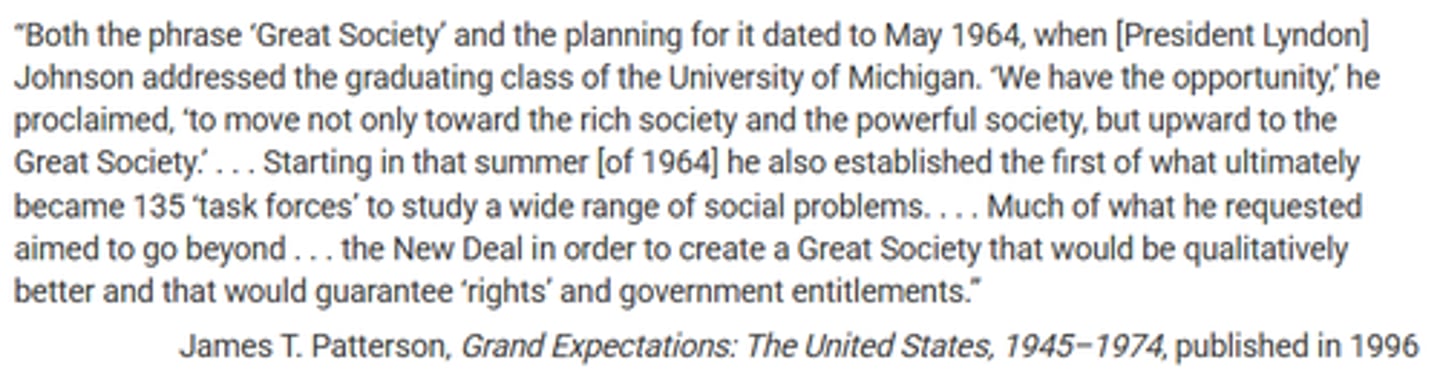
The social policies advocated by which of following earlier groups were most similar to the policies of the Great Society?
Progressives in the 1910s
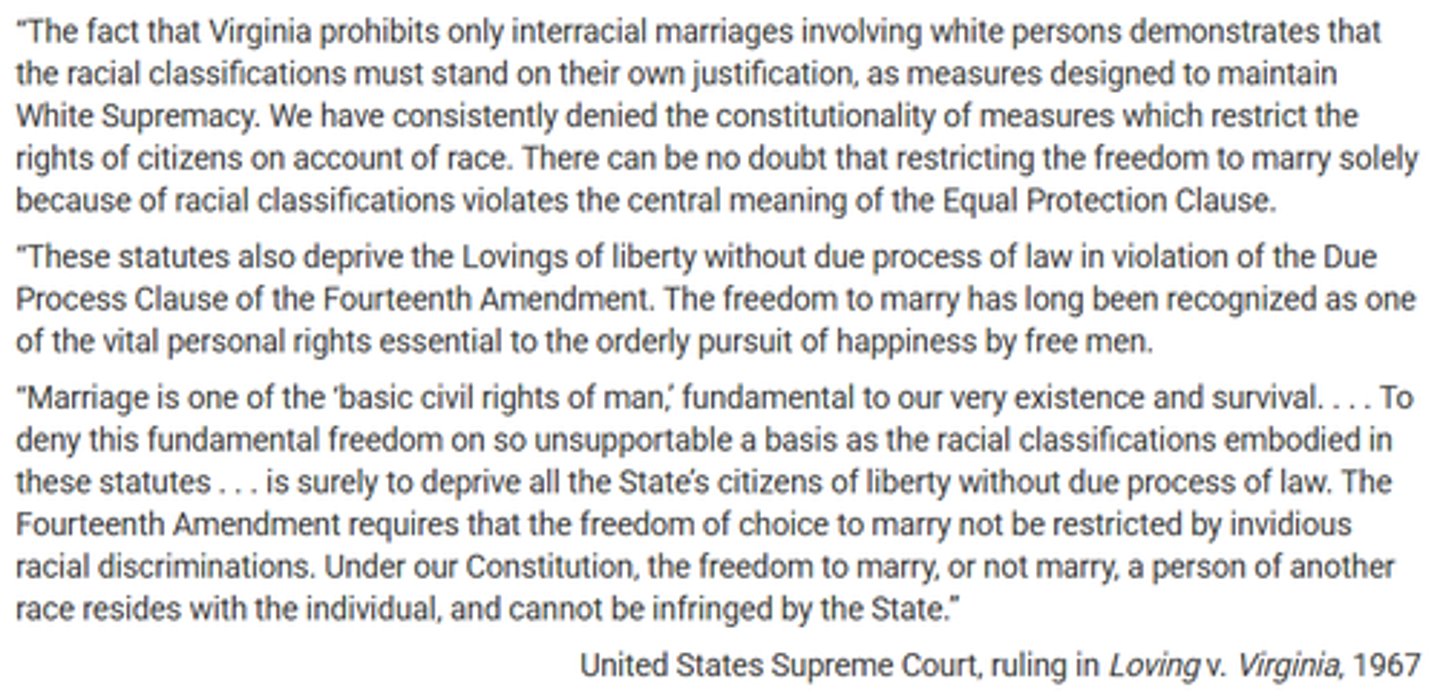
The ruling described in the excerpt is most similar to which of the following earlier political changes?
The extension of citizenship rights to formerly enslaved people following the Civil War
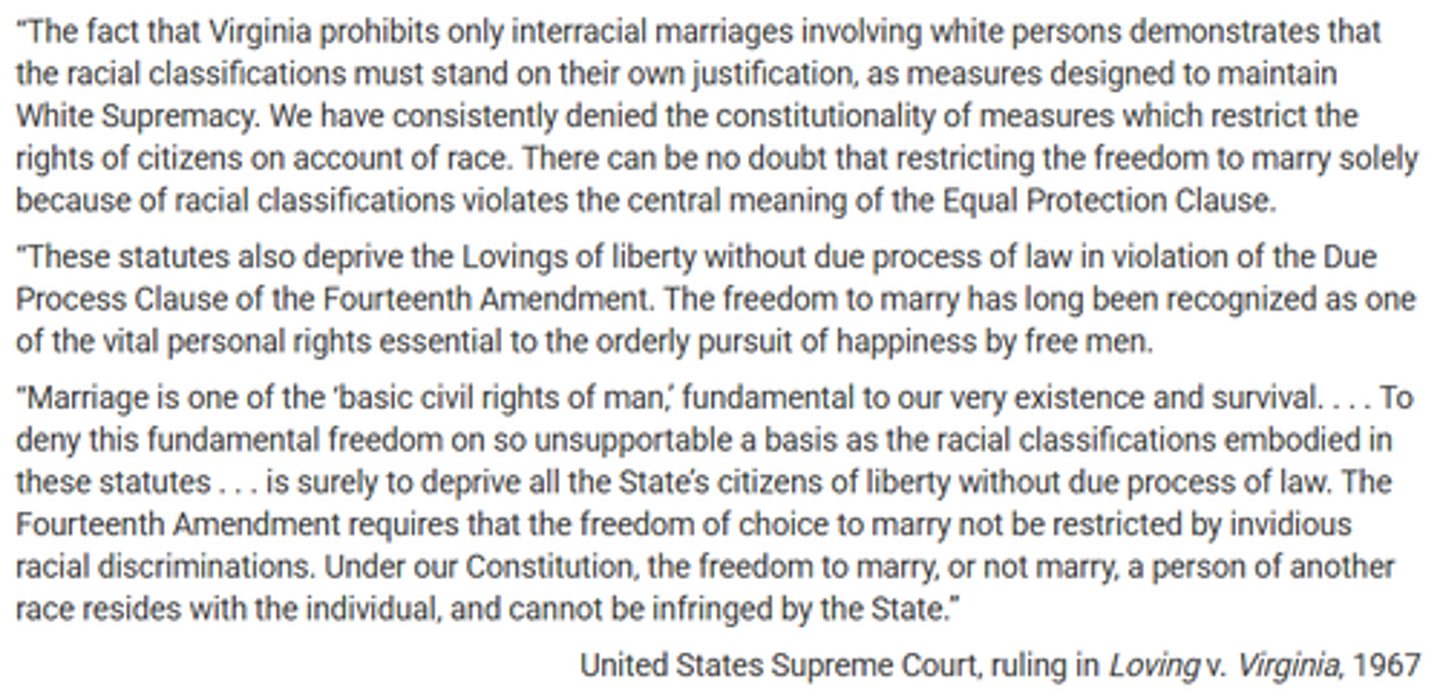
The ruling described in the excerpt is most similar to other civil rights achievements in the 1960s in that it
represented responses by the federal government to calls for the expansion of civil rights
By the late 1960s, critics within the Civil Rights movement were dissatisfied with the tactics illustrated by the excerpt. These critics were increasingly likely to argue that
nonviolent methods should be abandoned because they were ineffective
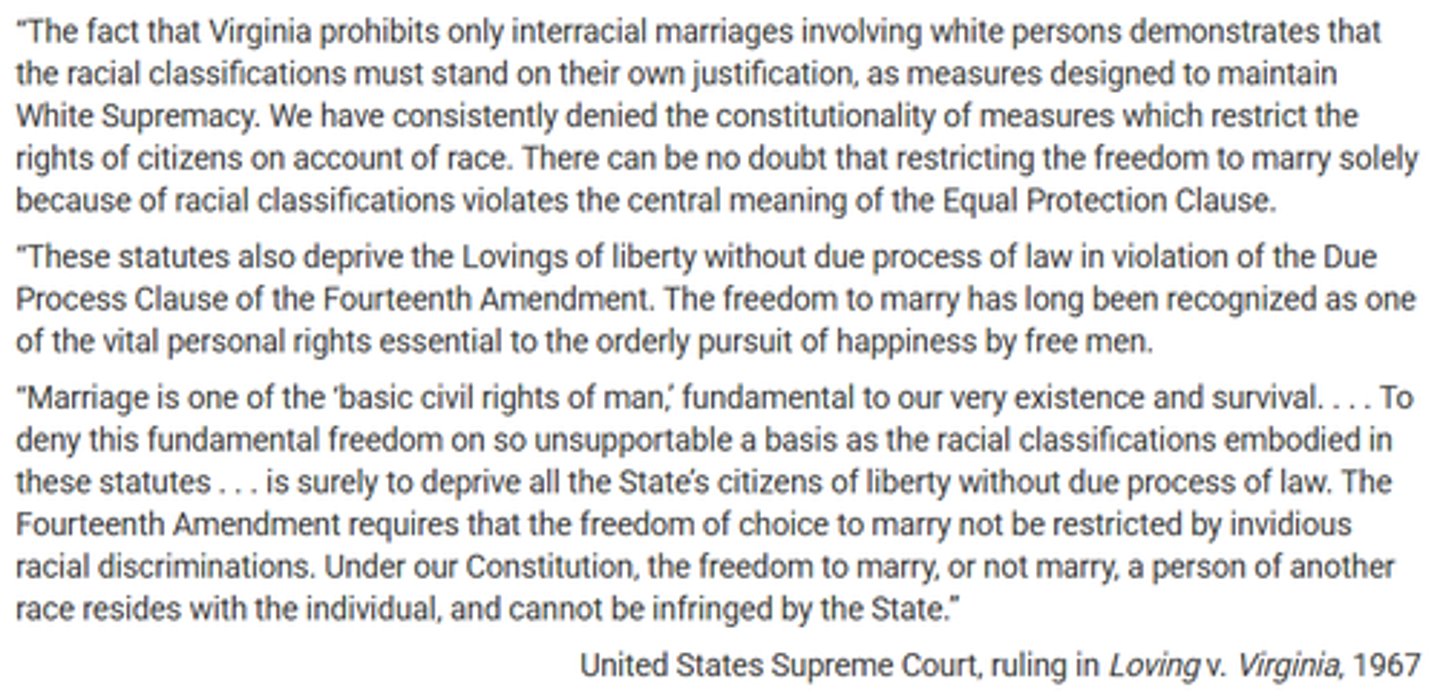
Which of the following historical processes most directly contributed to reactions like those depicted in the excerpt?
Efforts to contain the spread of communism following the Second World War
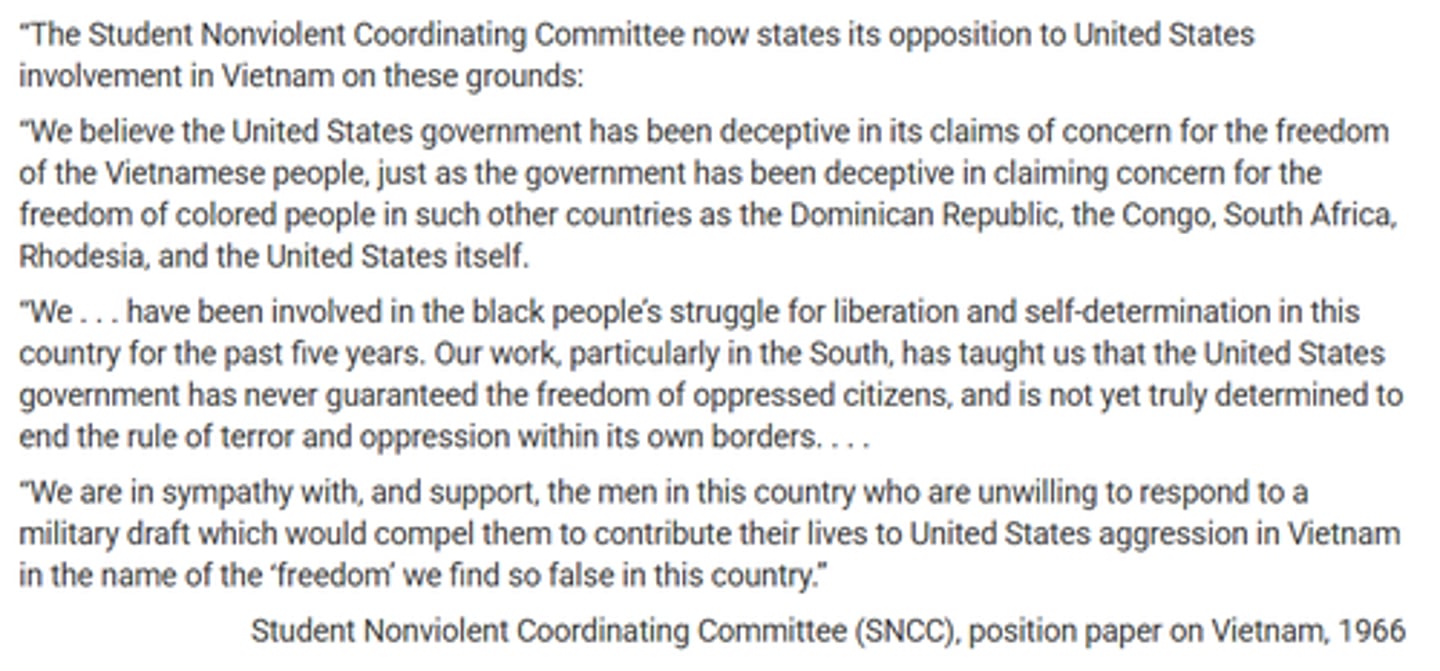
Political statements such as the excerpt most directly culminated in which of the following?
The growth in opposition to United States foreign policies by many groups on the political left
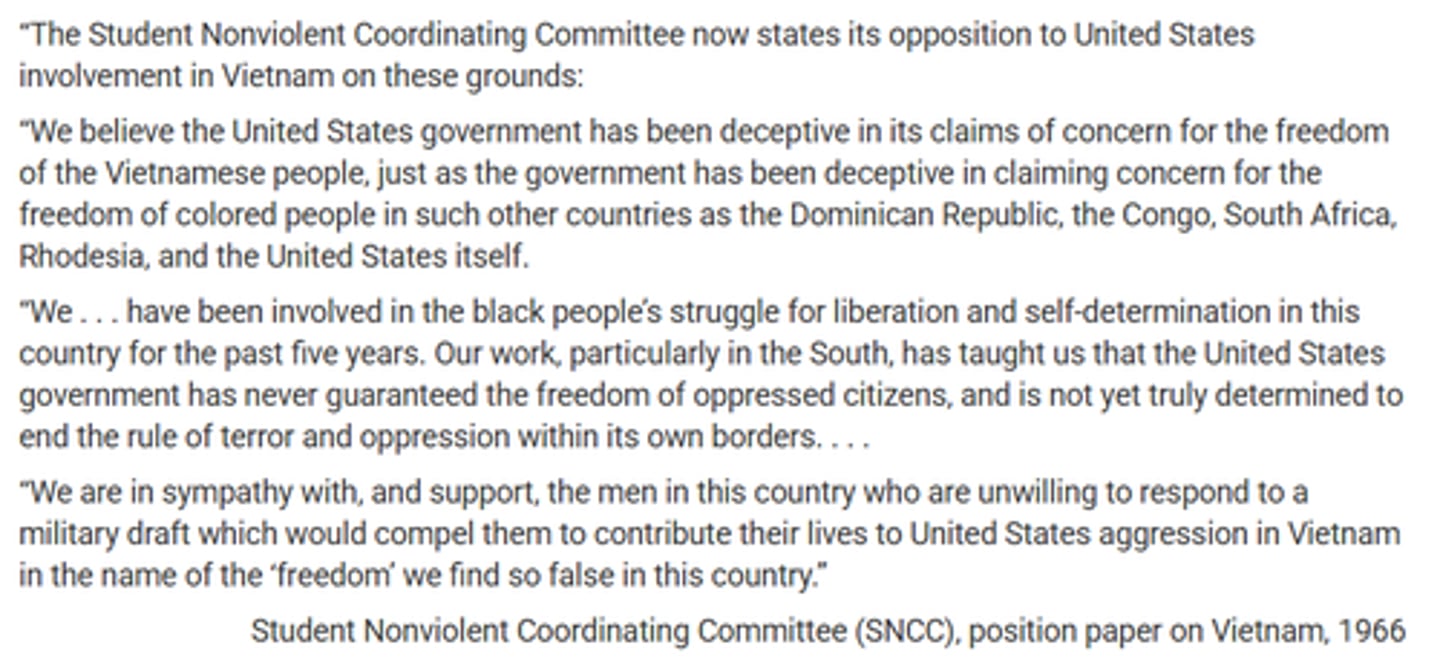
The activities of young people like those in SNCC exemplify which of the following broader changes in United States society during the 1960s?
Many rejected the values of previous generations.
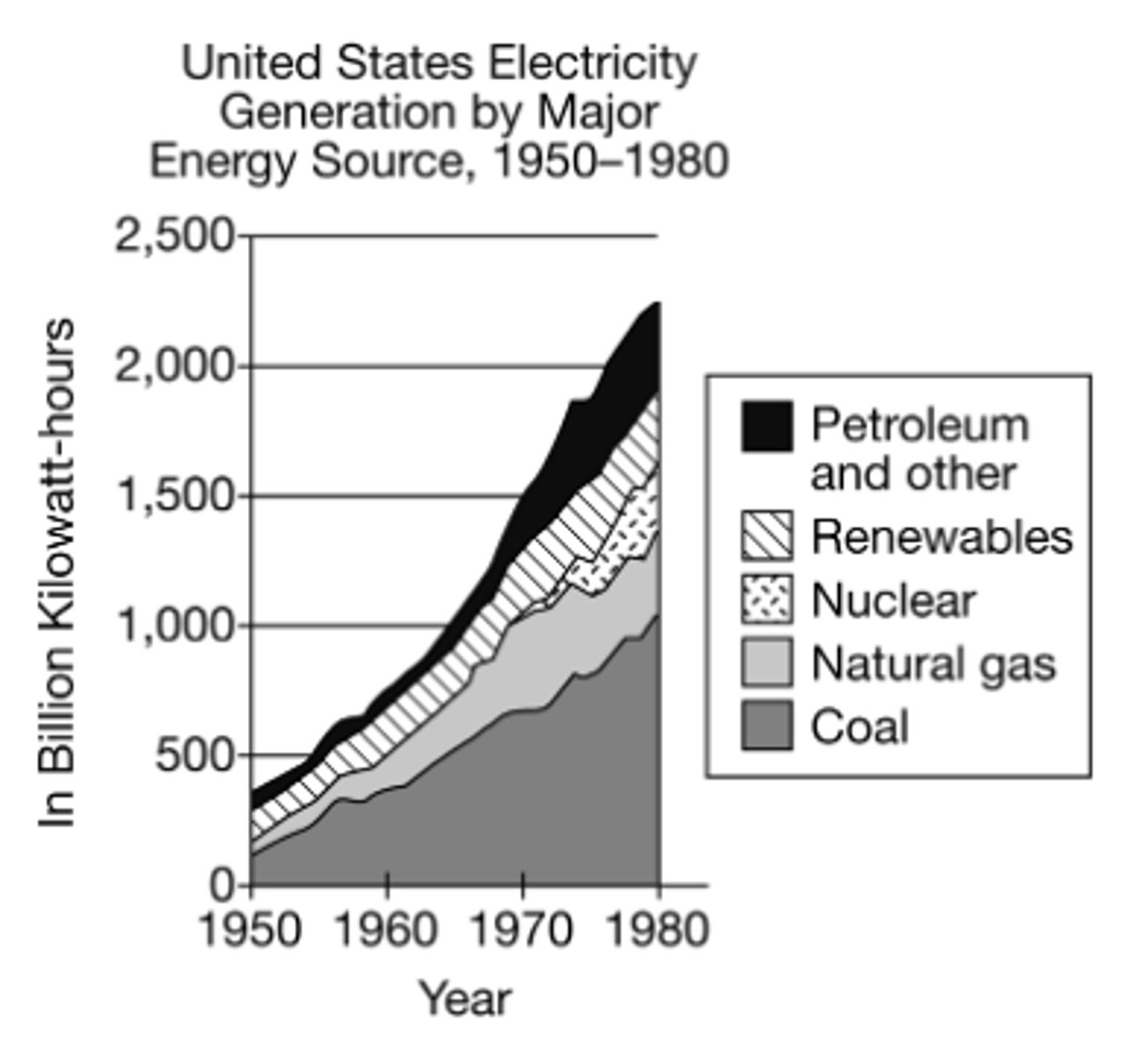
The overall trend depicted in the graph best reflects which of the following?
The increased demand for all sources of power following the Second World War
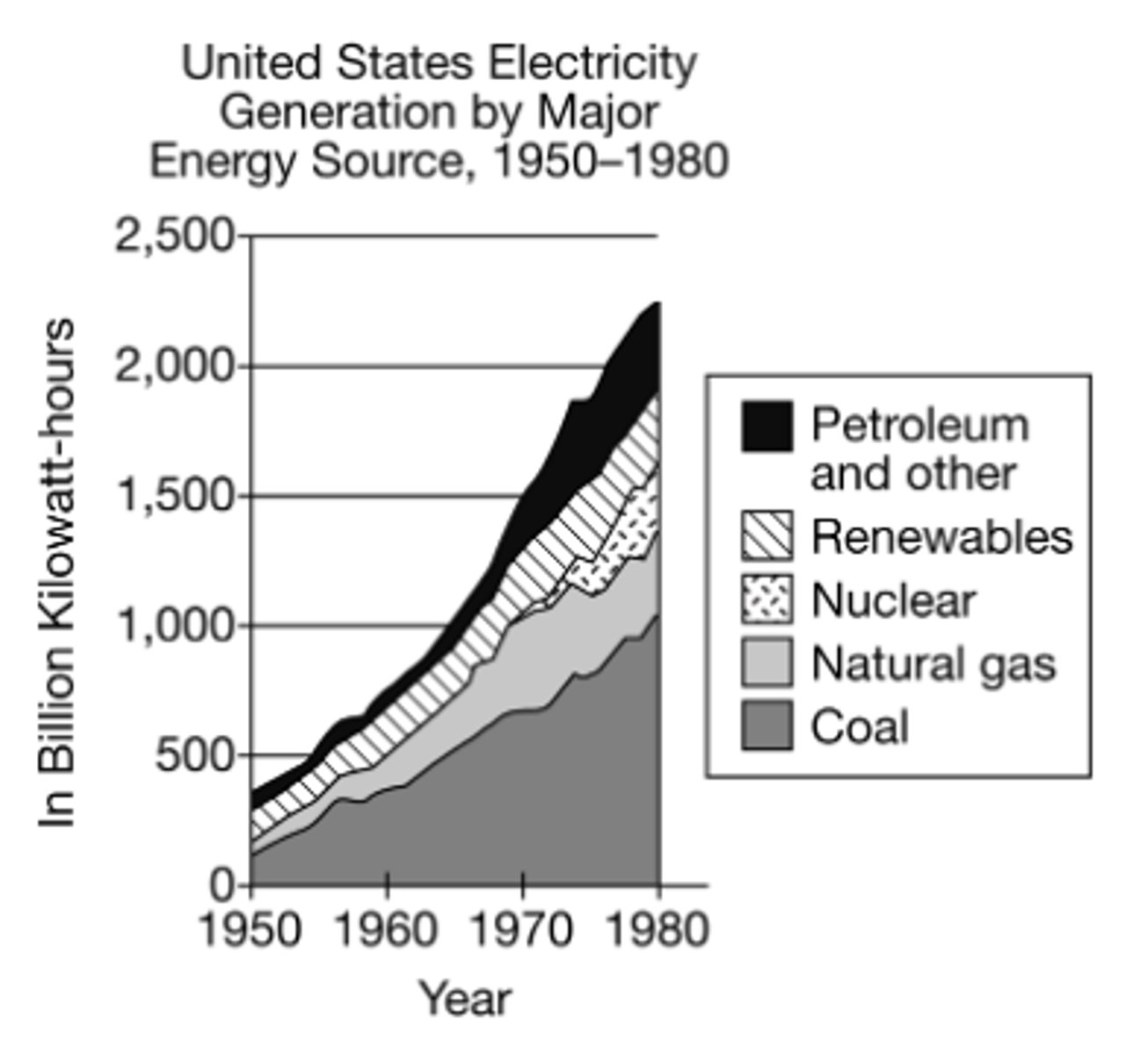
Which of the following best explains a reaction to the changes in energy production depicted on the graph?
Environmental groups were formed to lobby against increased pollution.
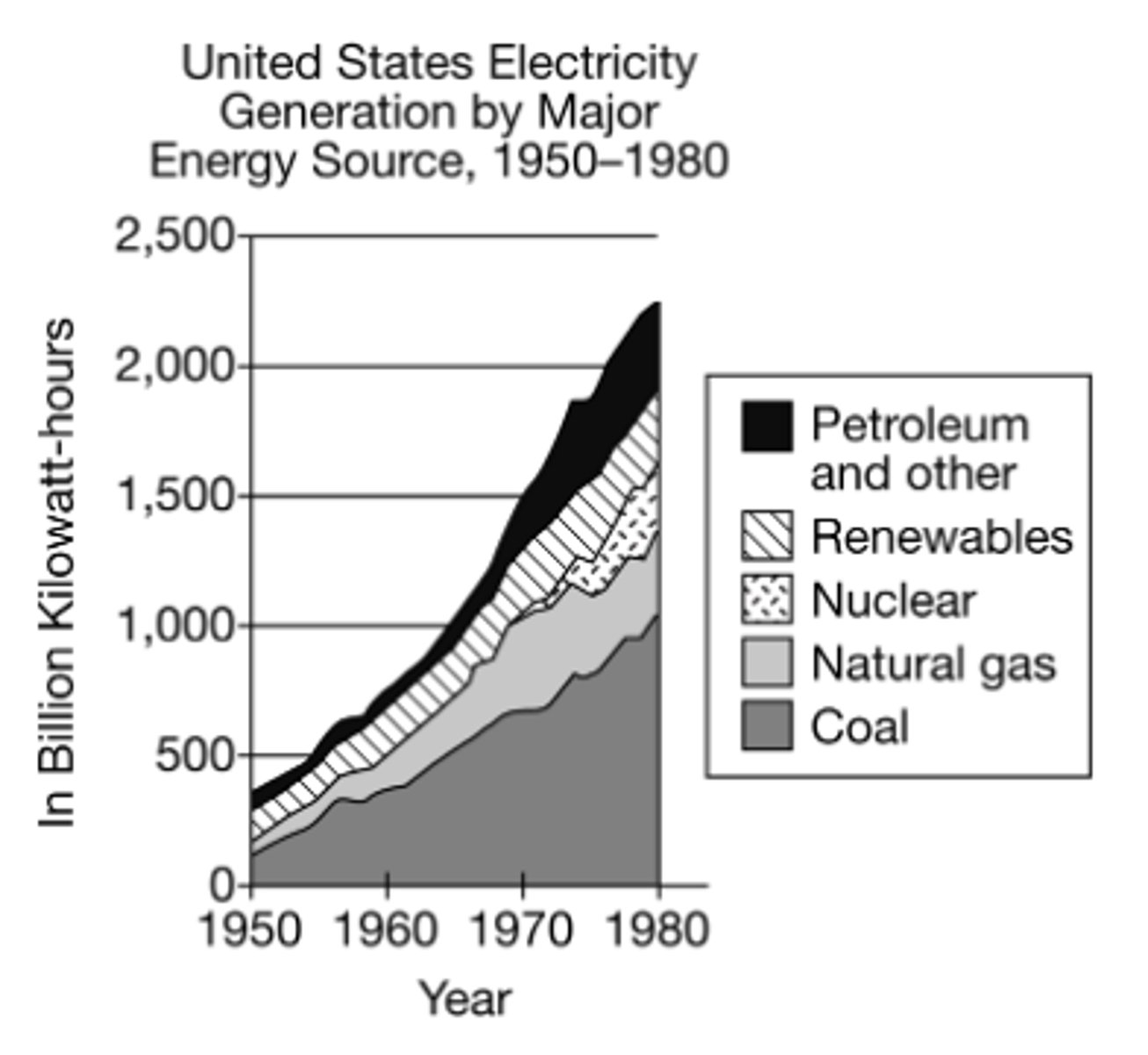
Which of the following best describes the federal government's response to the overall patterns depicted in the graph?
The passage of laws meant to combat environmental problems caused by power generation
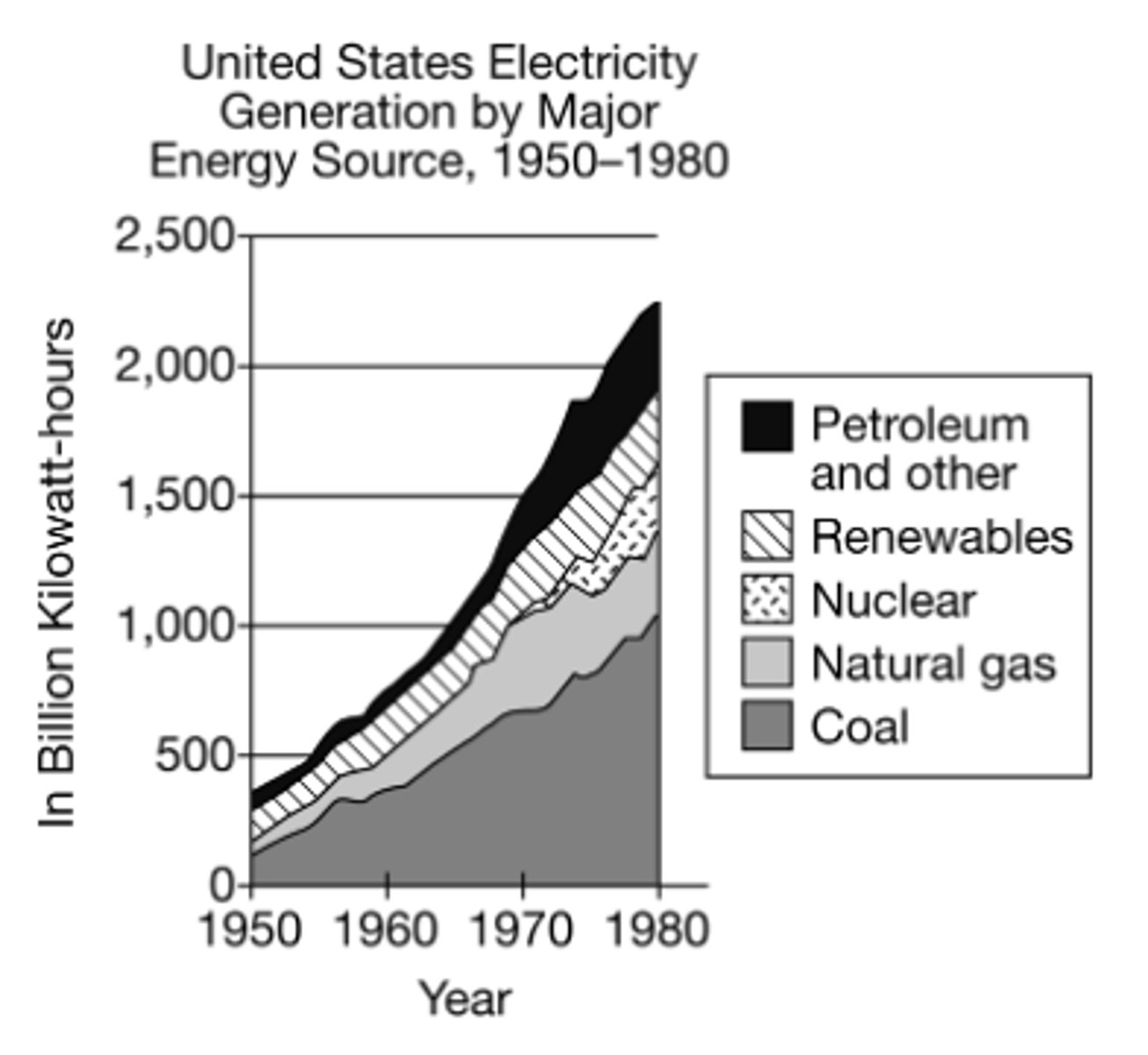
A sense of optimism in the 1950s and 1960s most likely emerged in response to which of the following contexts?
Rapid economic growth led to greater affluence.
Still learning (3)
You've started learning these terms. Keep it up!

