HL MICRO CONTENT 2.11-2.12 | Quizlet
 Studied by 0 people
 Call Kai
 Learn
Learn Practice Test
 Spaced Repetition
 Match
Match Flashcards
 Knowt Play
1/49

There's no tags or description
Looks like no tags are added yet.
Name | Mastery | Learn | Test | Matching | Spaced | Call with Kai |
|---|
No analytics yet
Send a link to your students to track their progress
50 Terms
Rational producer behavior
Firms wanting to maximize profits (cost, revenue, profits)
Market power
Ability of firm to raise market price of a good or service above MC, influencing market outcomes by restricting output to increase price without loosing their share
Perfect competition
- Many firms
- Firms are small relative to industry size (price takers)
- No product differentiation
- No barriers to entry
- Invisible hand has power
- Only short-run abnormal profits/losses
- Long-run normal profits
- No market failure
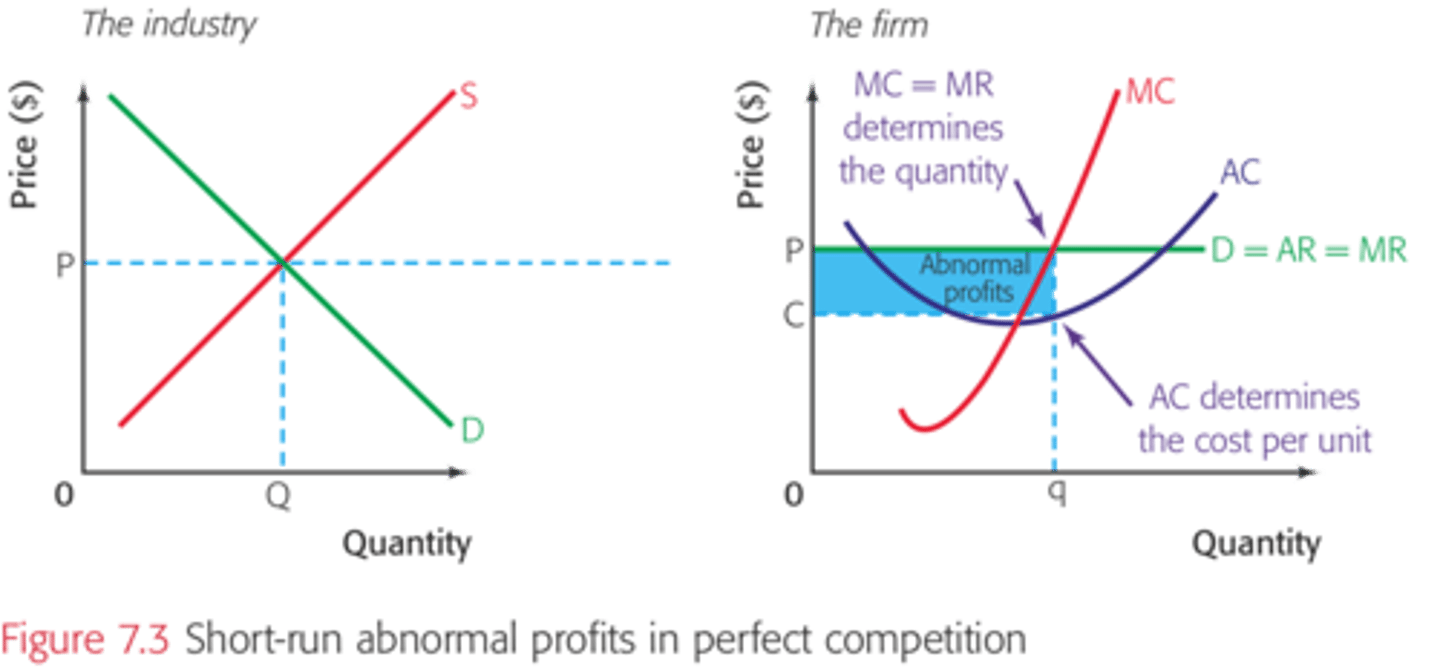
Perfect competition making abnormal profits
Short-run only
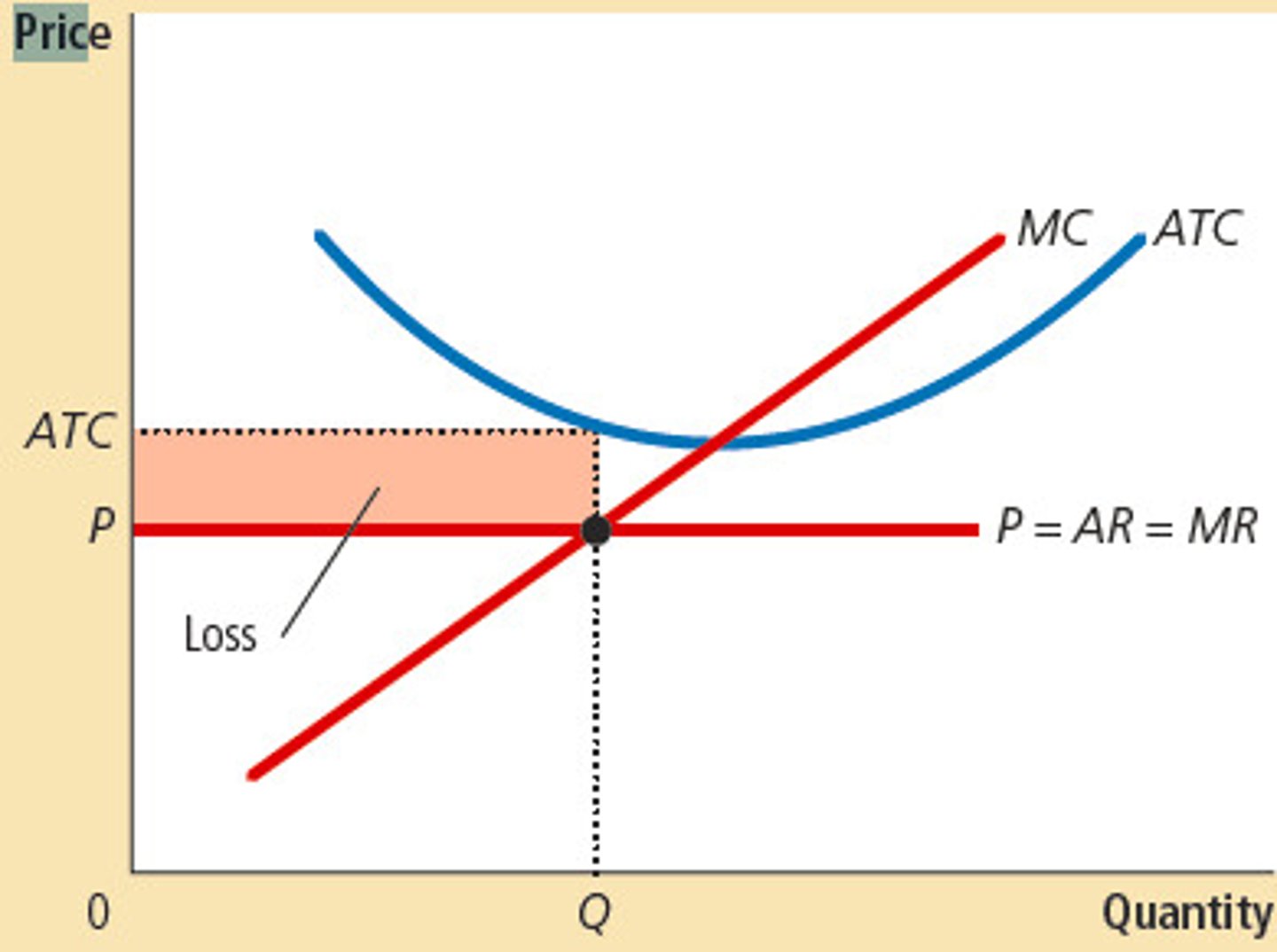
Perfect competition making losses
Short-run only
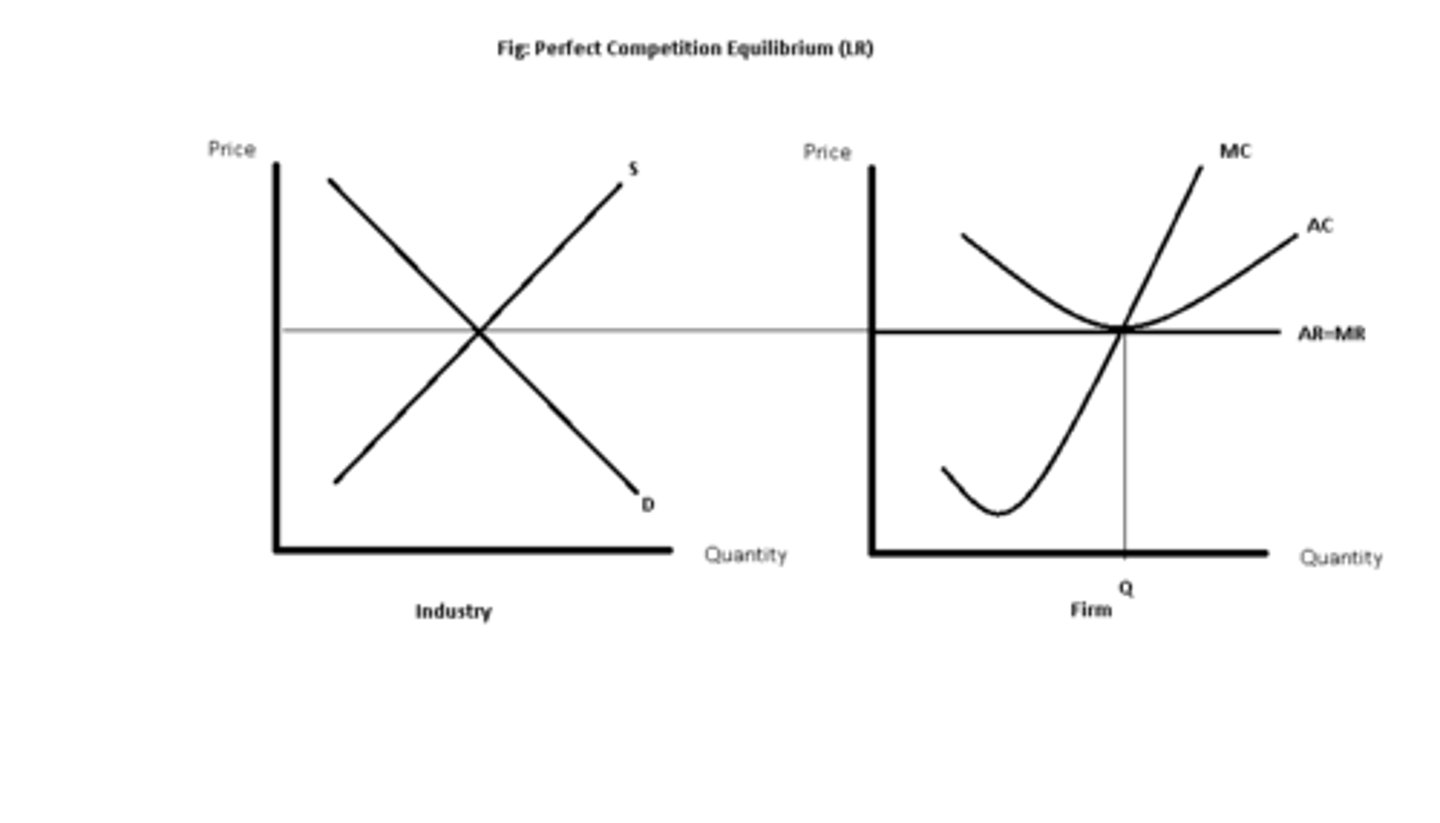
Perfect competition making normal profits
Long-run
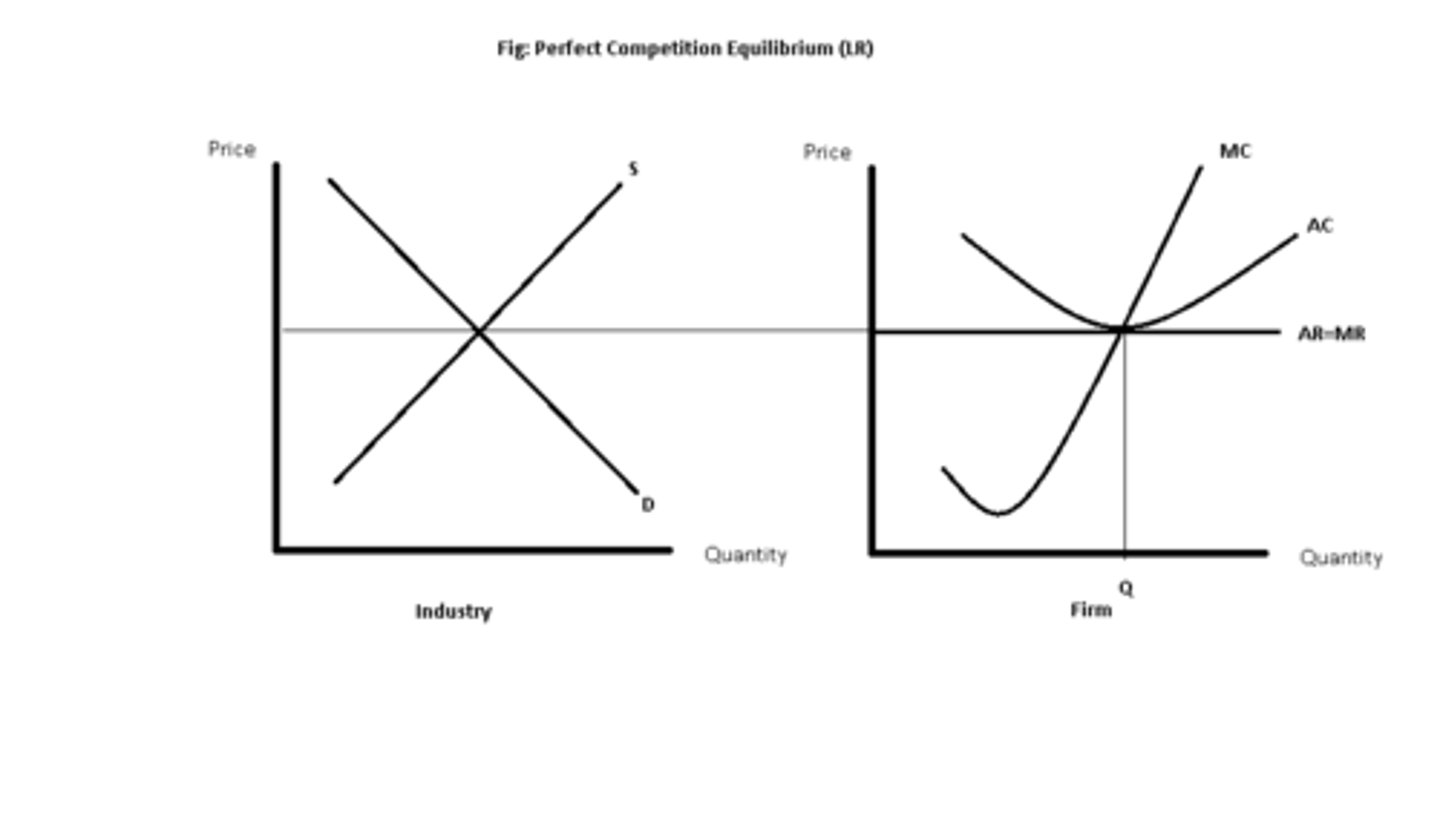
Productive efficiency in perfect competition
Firm produces at lowest possible unit average cost (MC=AC)
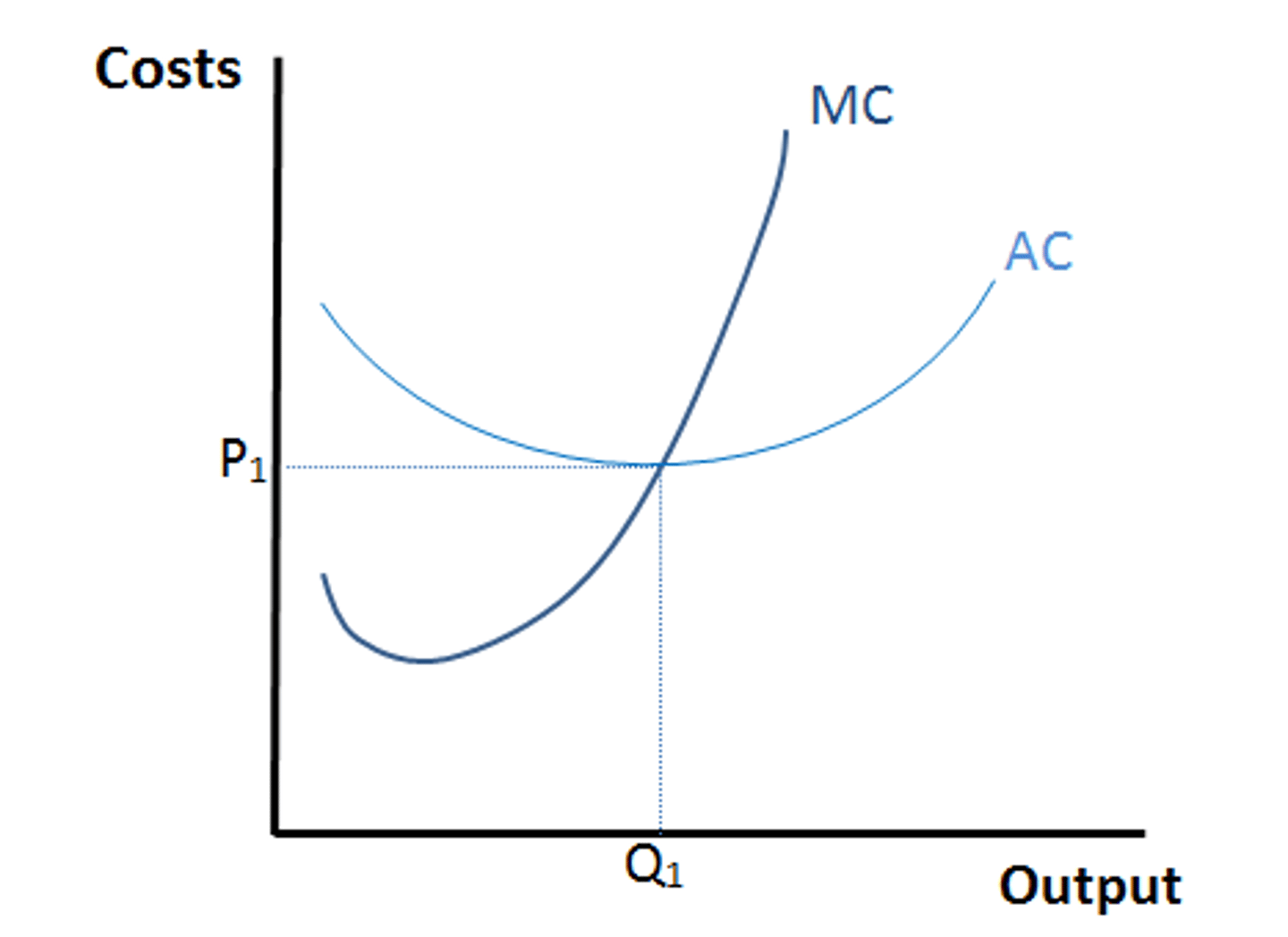
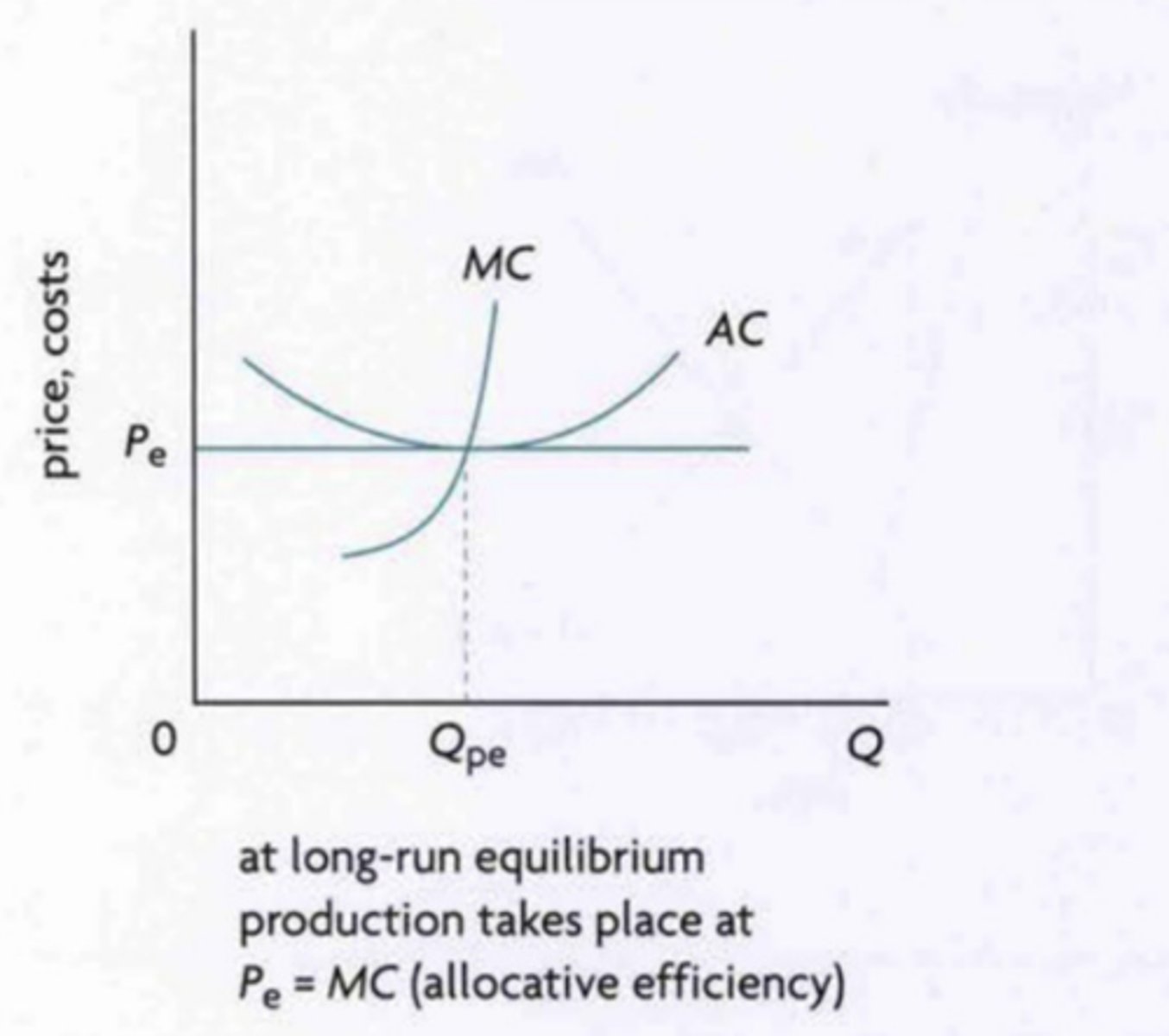
Allocative efficiency in perfect competition
Socially optimum level of output where suppliers produce optimal mix of goods/services required by consumers
Monopolistic competition
- Many firms
- Few firms have little market power
- Product differentiation
- No barriers to entry/exit
- Perfect information
- Only short-run abnormal profits/losses
- Long-run normal profits
- Market failure

Monopolistic competition making abnormal profits
Short-run only
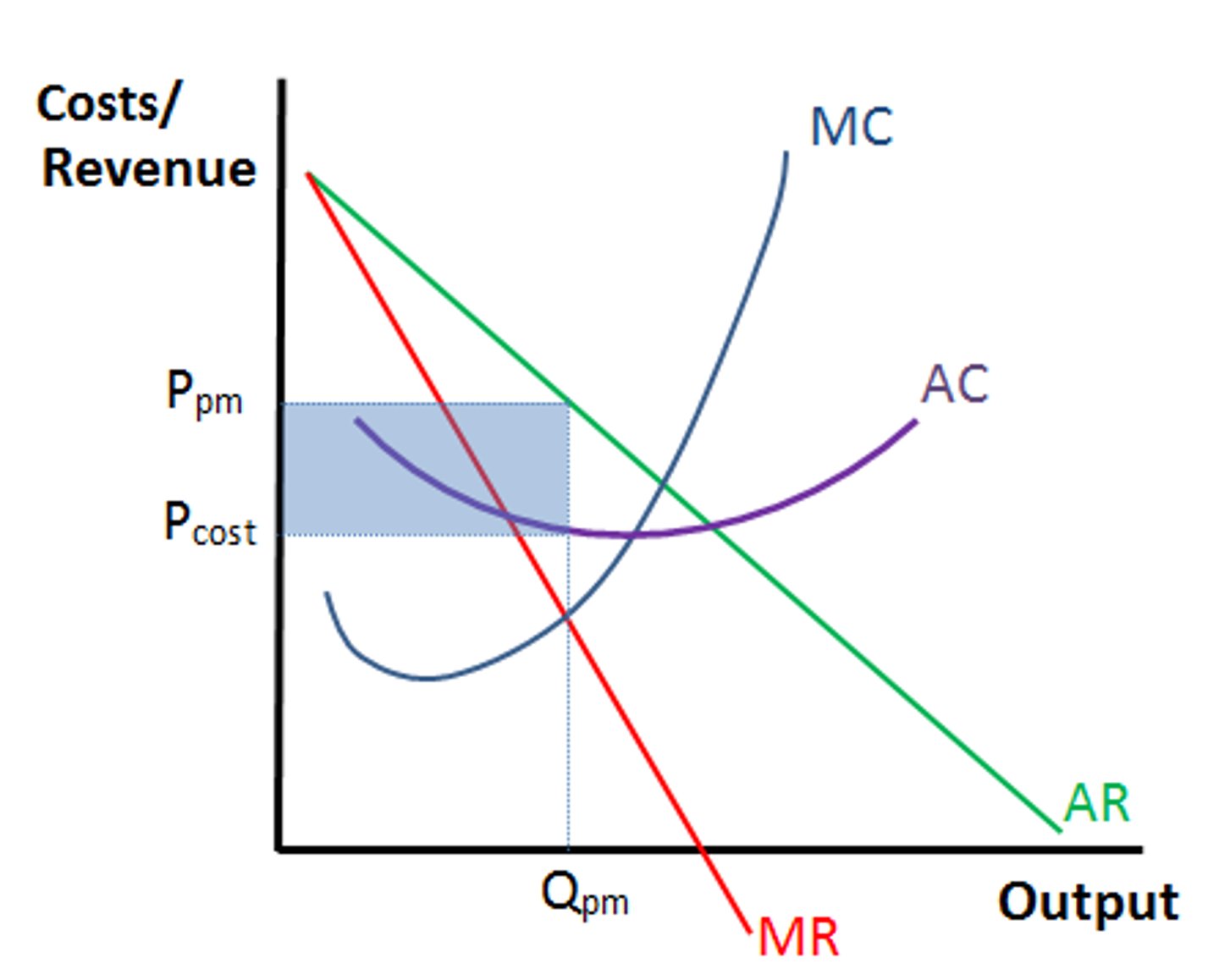
Monopolistic competition making losses
Short-run only

Monopolistic competition making normal profits
Long-run
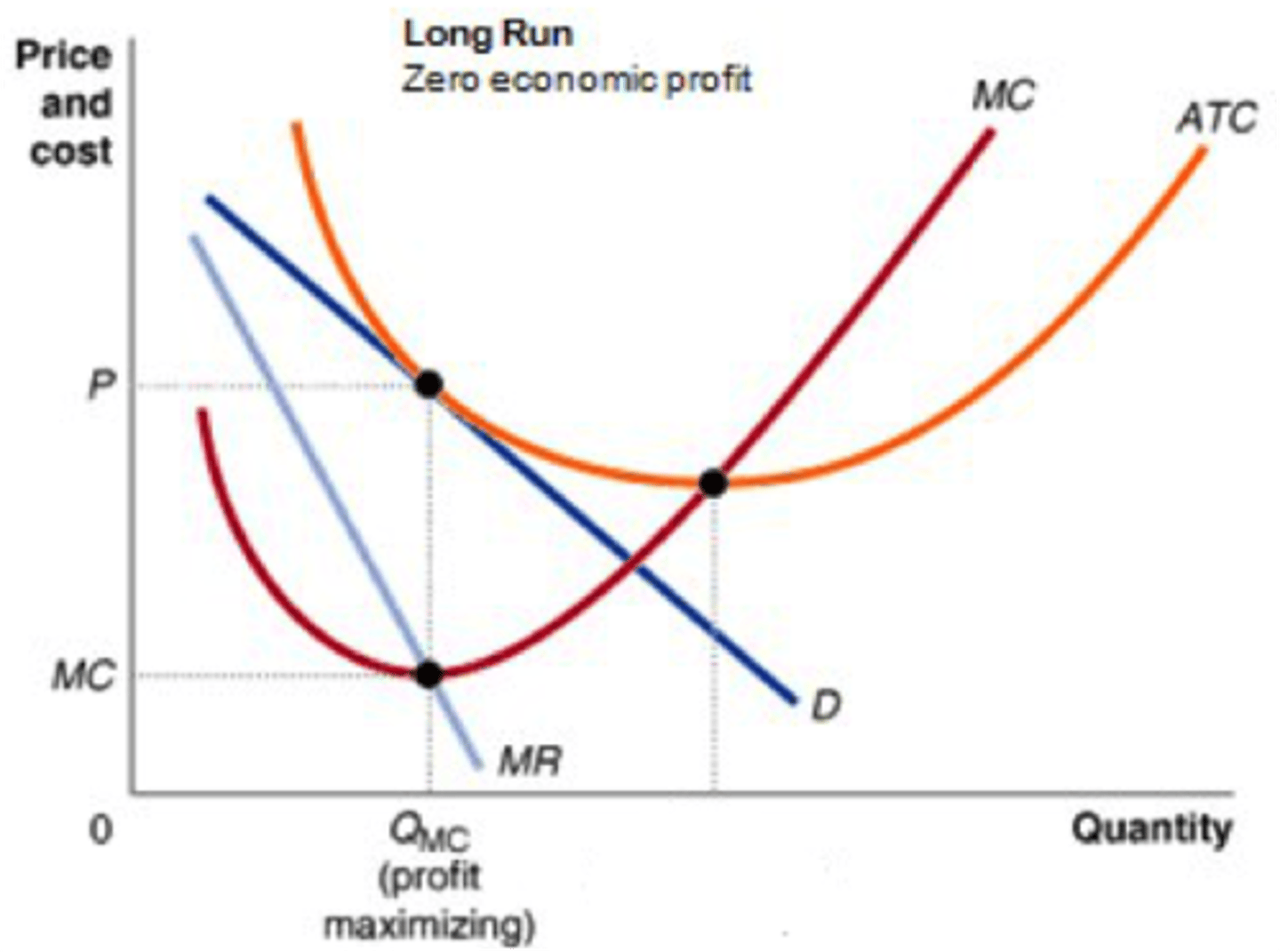
Productive efficiency in monopolistic competition
MC=AC
Allocative efficiency in monopolistic competition
MC=AR
Monopolies
- One firm with power (firm=industry)
- Barriers to entry
- Abnormal/normal profits, losses (long/short-run)
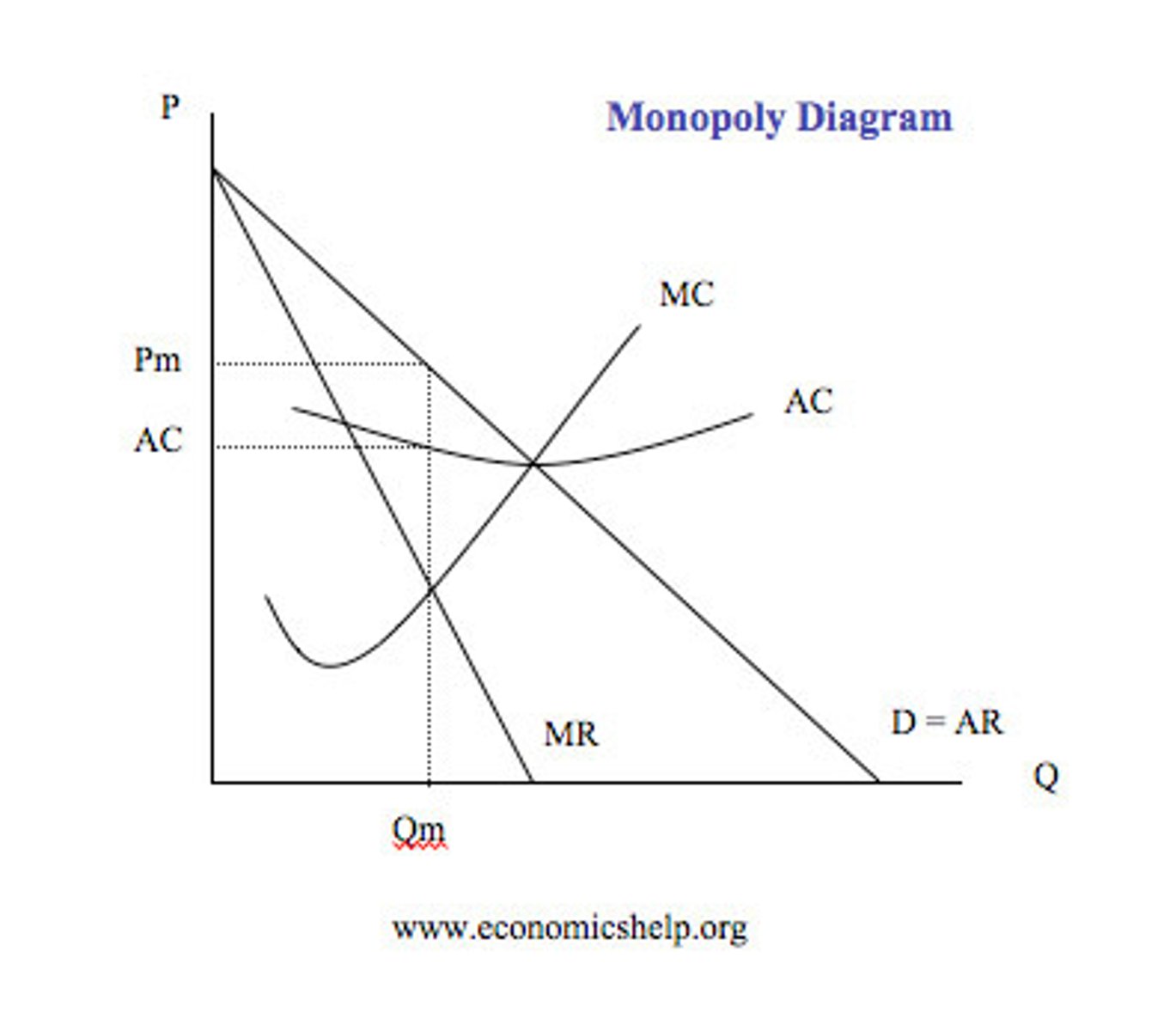
Factors of how monopolies maintain position/market power efficiently
Economies of scale, natural monopolies, legal barriers, brand loyalty, anti-competitive behavior
Economies of scale
Factors that cause a firm's average cost per unit to fall as output rises (specialization, division of labour, bulk buying, financial economies, transport economies, large machines, promotional economies)
Natural monopoly
A market that runs most efficiently when one large firm supplies all of the output
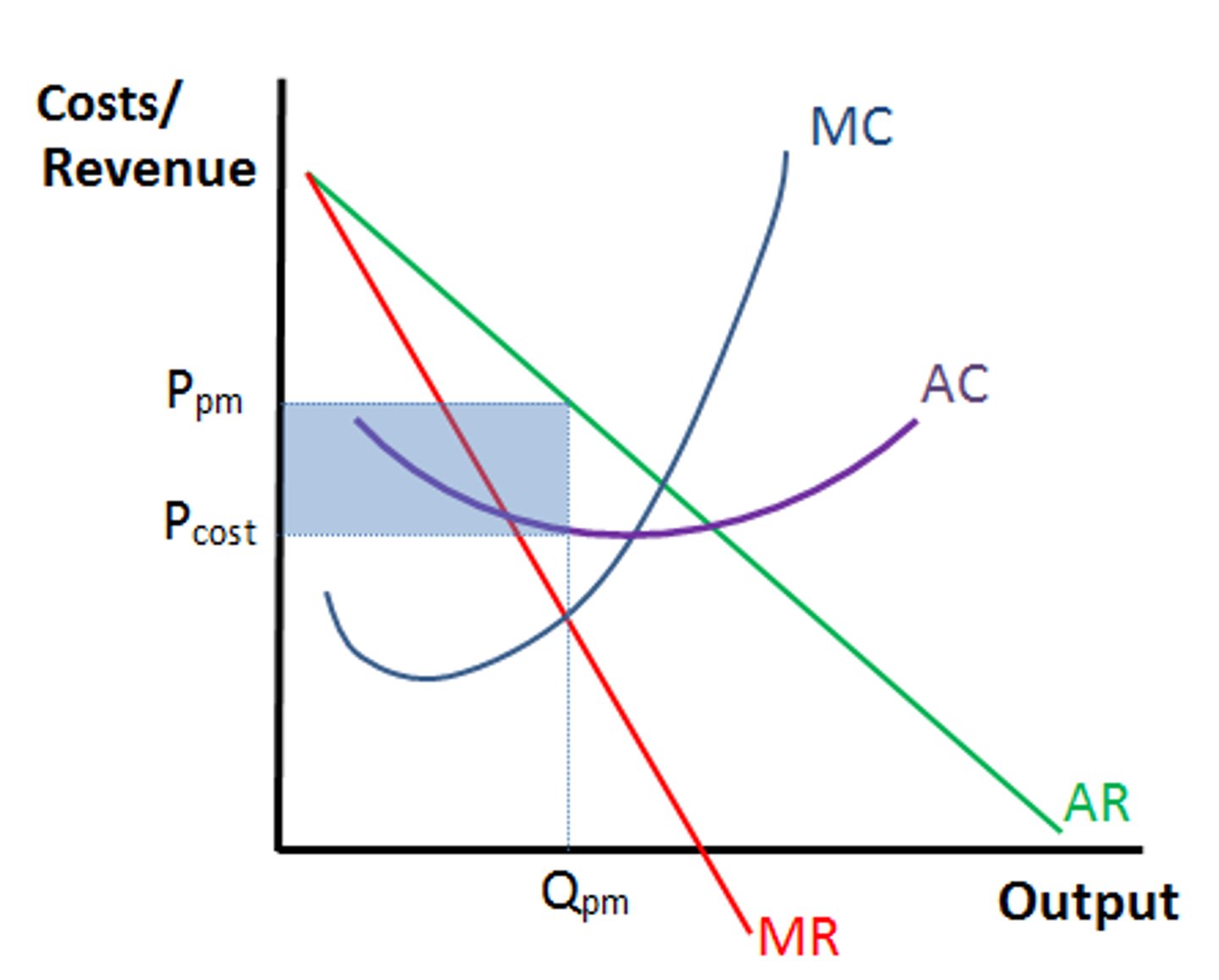
Monopolies making abnormal profits
AC below profit-maximizing quantity (MC=MR)
- MC crosses the lowest point at AC
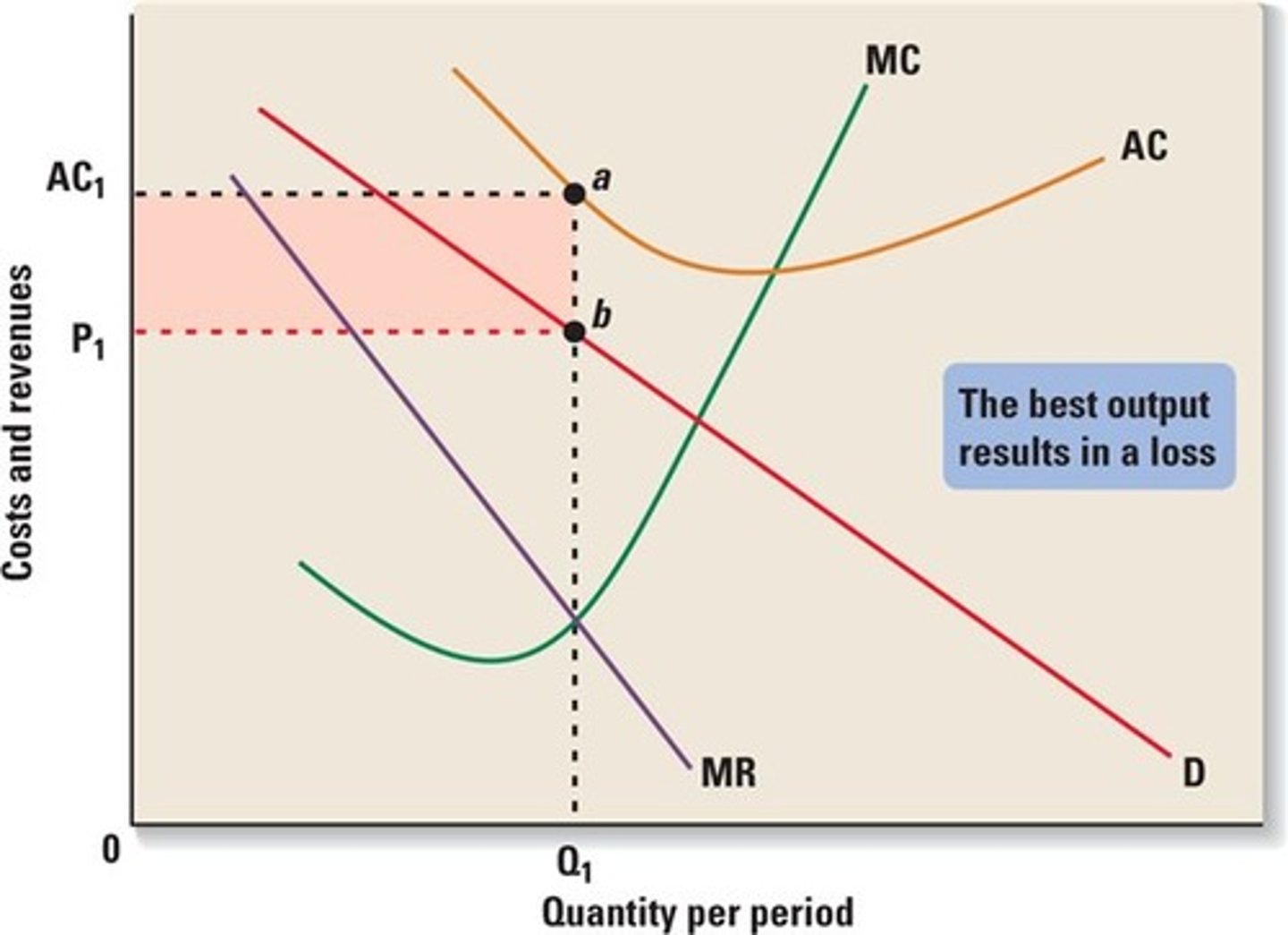
Monopolies making losses
AC above profit-maximizing quantity (MC=MR)
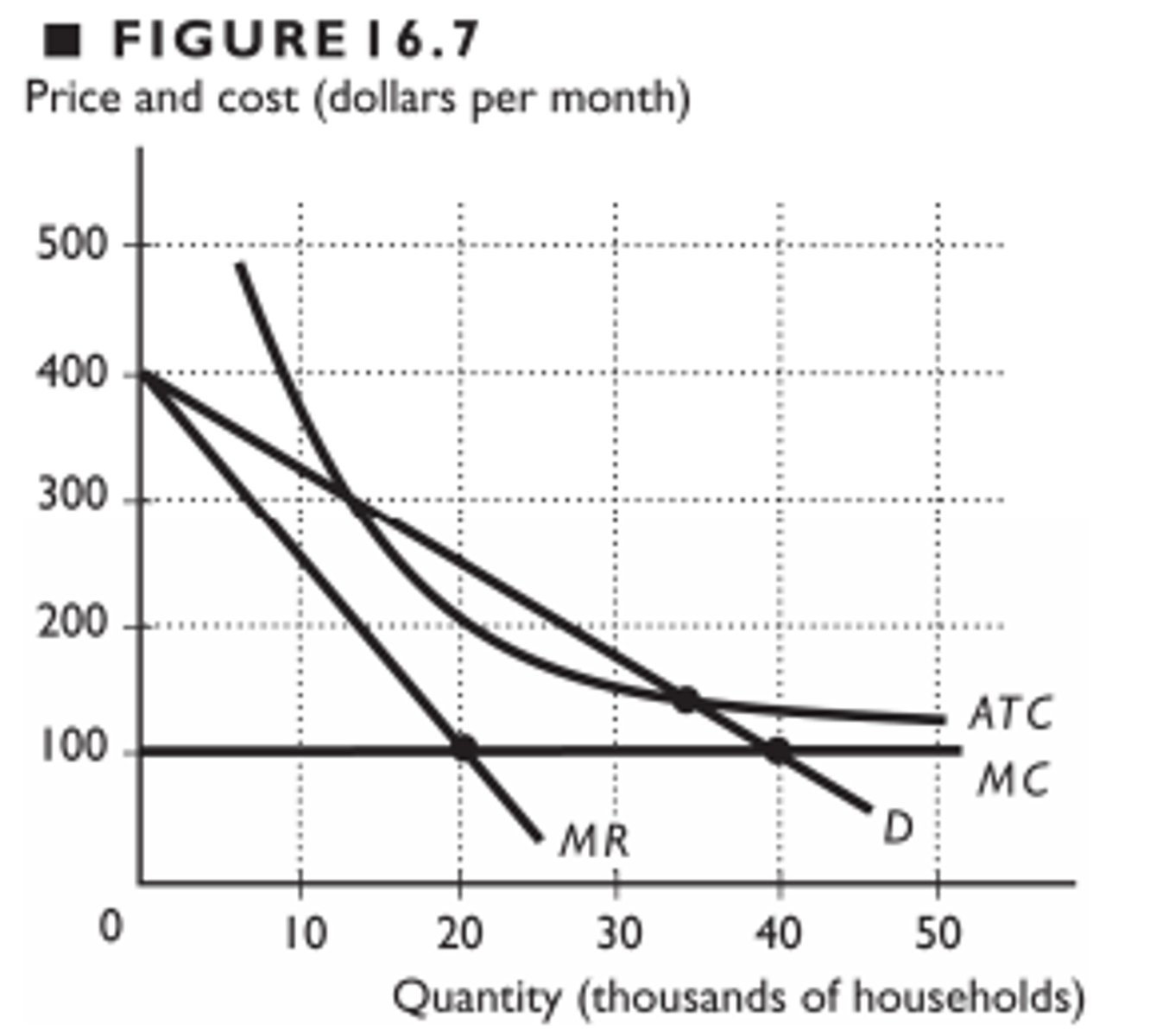
Monopolies making normal profits
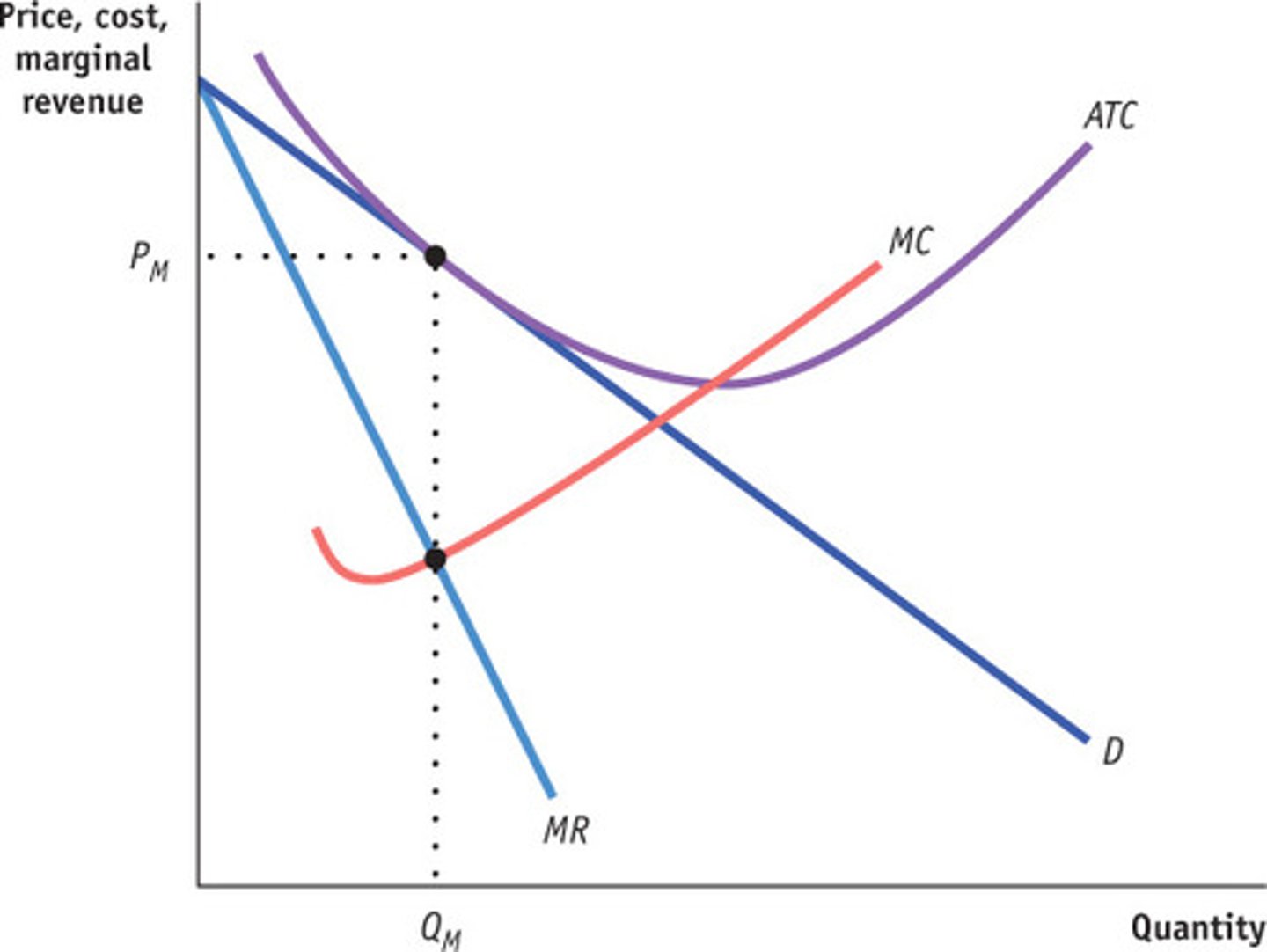
Productive/allocative efficiency in monopolies
MC=D=AR=P

Advantages of monopolies
- Substantial economies of scale: More possible to change price (lower) than in perfect competition
- High levels of investment: Abnormal profits used for R&D, benefitting quality of products and consumers in long-run
Disadvantages of monopolies
- May restrict output
- Charge high price w/ less economies of scale (brings lower output)
- Unfair high profits for low-income firms
- Anti-competitive
- No productive/allocative efficiency
- Can act against public interest
Oligopolies
- Few firms dominate the industry
- Concentration ratio (CRx) --> higher percentage = more concentrated market power of the firms
- Barriers to entry
- Product differentiation
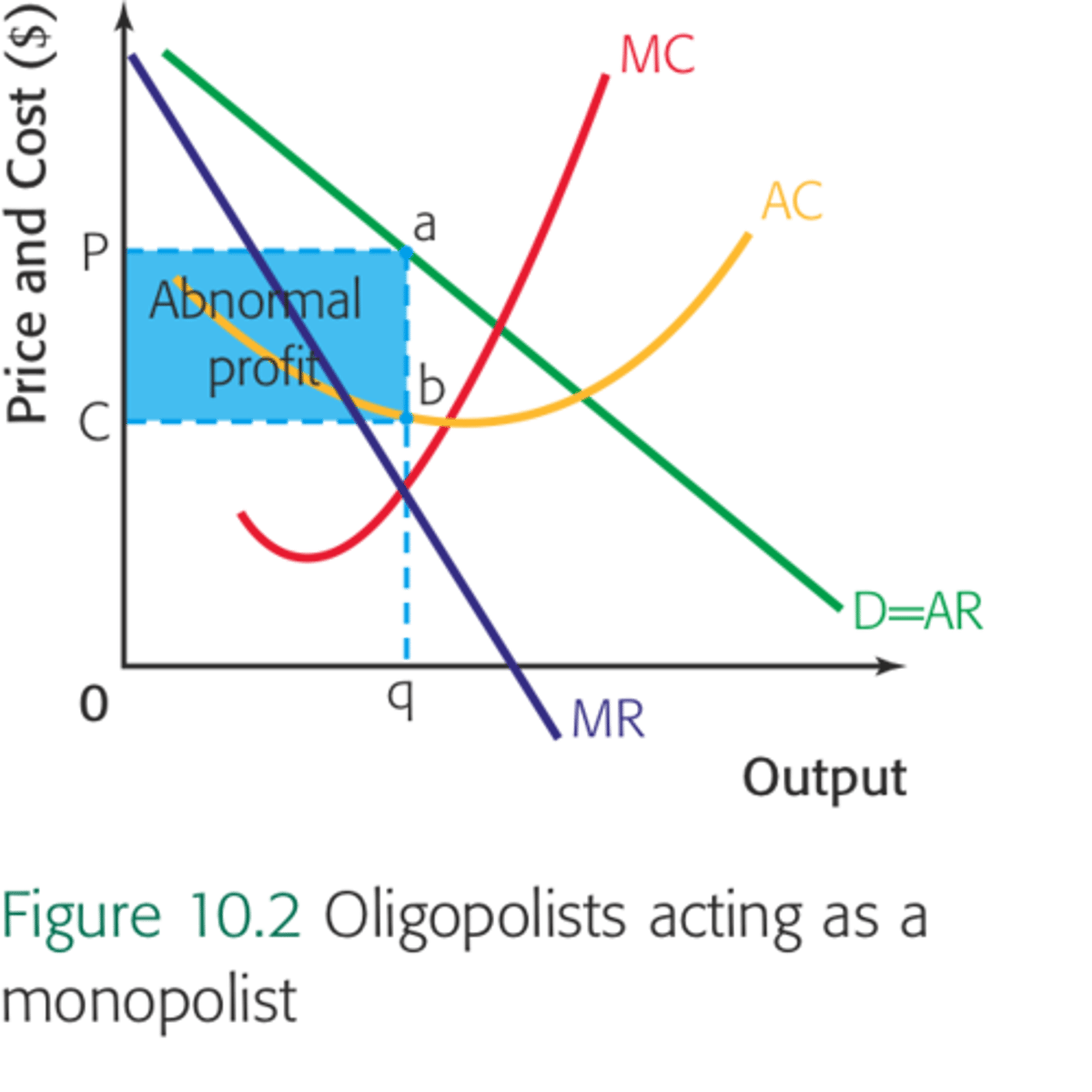
Collusive oligopolies
When firms in market collude to charge the same prices for their products in effect of monopolies (dividing profits), offering price ridgity--> ex. cartel
Non-collusive oligopolies
When firms don't collude so they are aware of firms' actions and reactions when deciding on pricing (game theory applied)
Competition in oligopolies
- Non-price competition (brand names, packagings, special features, adverts, etc.)
- Used to make demand less-elastic
Reasons why governments intervene
- Output/price/distorted resource allocation
- Less consumer choice
- Productive inefficiency
- Allocative inefficiency
- Abnormal profits exploiting firms/consumers
How governments intervene
- Regulation (taxes, incentives, etc.)
- Legislation (laws/rules to follow)
Economic costs
Explicit costs + implicit costs
Explicit costs
Costs that are direct, out-of-pocket monetary payments made for business expenses (salary, rent, etc.)
Implicit costs
Indirect, non-purchased, or opportunity costs of resources provided by the entrepreneur (Potential investment, time, etc.)
Fixed costs
Costs that remain constant as output changes
Variable costs
Costs that vary with the quantity of output produced
Total costs
Fixed costs + variable costs
Marginal costs
Cost of producing one more unit of a good
Average costs
Total costs / output
Law of diminishing marginal returns
As more of a variable resource is added to a given amount of a fixed resource, marginal product eventually declines and could become negative
TR (Total Revenue)
TR = P x Q (price times quantity)
AR ( Average revenue)
AR = TR / q --> AR = (pxq) /q (total revenue over quantity(
MR (Marginal Revenue)
∆TR / ∆Q (change in total revenue over change in quantity)
TC (Total Cost)
Total fixed costs + Total variable costs
or
Average Cost * Quantity
AFC (Average Fixed Cost)
TFC/Q (total fixed cost/quantity)
AVC (Average Variable Cost)
TVC / Q (total variable cost/quantity)
ATC or AC (Average Total Cost)
TC / q (total cost over quantity)
MC (Marginal Cost)
change in TC / change in q (change in total cost over change in quantity)
TFC (Total Fixed Costs)
Total Costs - Total Variable Costs
TVC (Total Variable Costs)
Total Costs - Total Fixed Costs
Profit
TR - TC (total revenue - total costs)
 Note
Note  Flashcards (178)