nurs 210: chapter 19 - cardiovascular system, blood vessels
 Call Kai
 Learn
Learn Practice Test
 Spaced Repetition
 Match
Match Flashcards
 Knowt Play
1/62

There's no tags or description
Looks like no tags are added yet.
Name | Mastery | Learn | Test | Matching | Spaced | Call with Kai |
|---|
No analytics yet
Send a link to your students to track their progress
63 Terms
systemic circuit
transports oxygenated blood from the left ventricle of heart through aorta and arteries to capillaries
pulmonary circuit
transports deoxygenated blood from right ventricle of heart to the lungs
order of blood flow through each circuit:
pulmonary circuit exchanges CO2 for O2, then returns oxygenated blood to the left atrium to be distributed by systemic circuit
types of blood vessels:
arteries, arterioles, capillaries, venules, veins
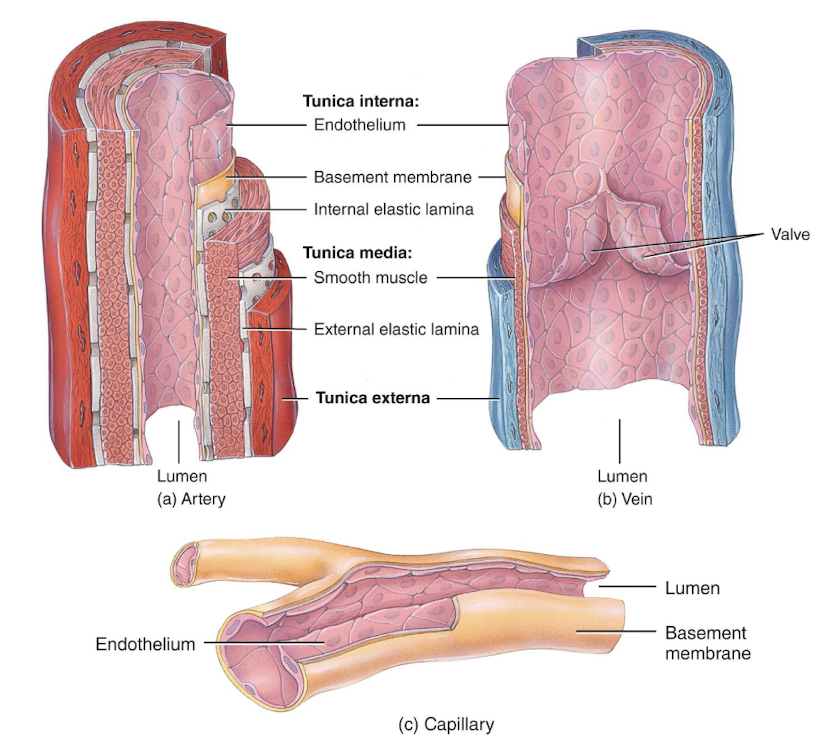
blood vessel structures:
tunica interna, tunica media, tunica externa
tunica interna
innermost layer, adjacent to lumen
tunica media
middle layer, smooth muscle, elastic fibers
tunica externa
outermost layer, adjacent to surrounding tissue
arteries
carry blood away from the heart to tissues
walls of arteries are:
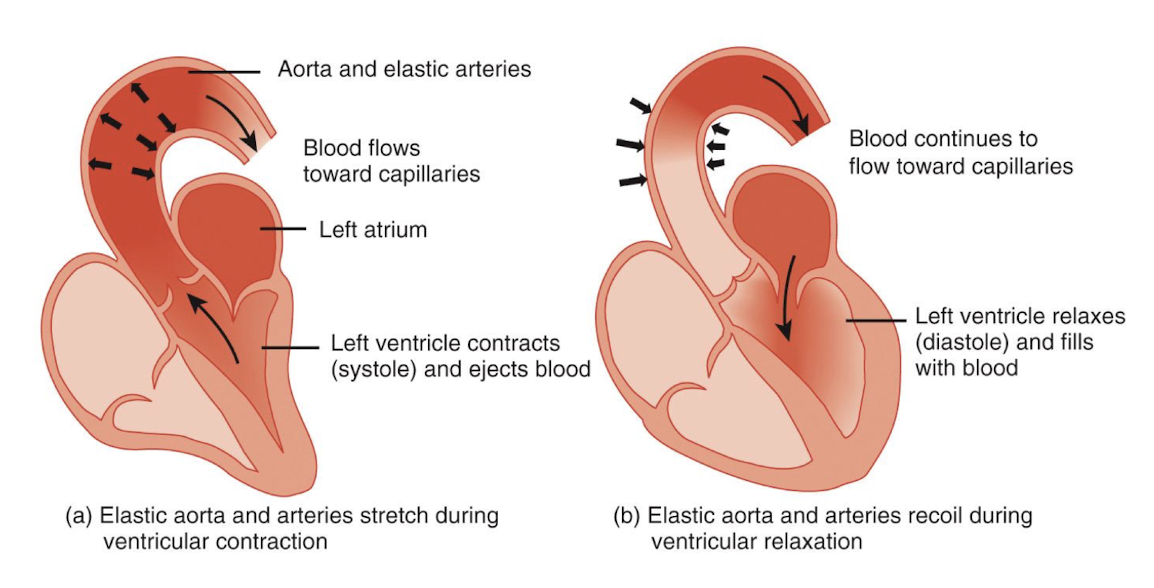
elastic, allowing them to absorb pressure created by ventricles of heart as they pump blood into arteries
due to smooth muscle in tunica media:
arteries can regulate their diameter
picture of blood vessel structure:
types of arteries:
elastic, muscular
elastic arteries (conducting arteries)
large diameter, more elastic fibers, less smooth muscle, function as pressure reservoirs
muscular arteries (distributing arteries)
medium diameter, more smooth muscle, fewer elastic fibers, distribute blood to various parts of body
picture of arteries pressure reservoirs:
capillaries
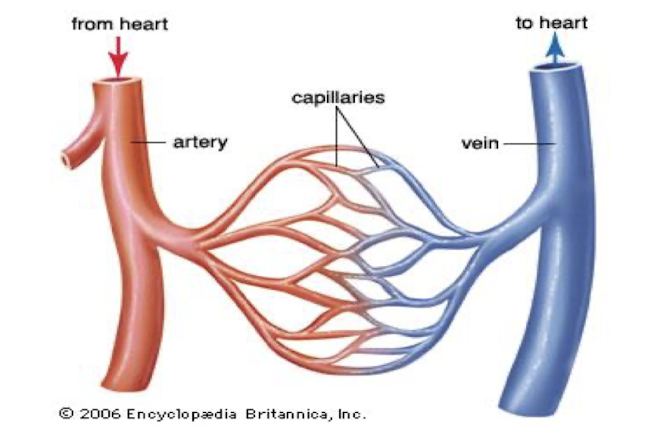
microscopic vessels that usually connect arterioles and venules
capillary walls are composed of:
a single layer of cells and a basement membrane
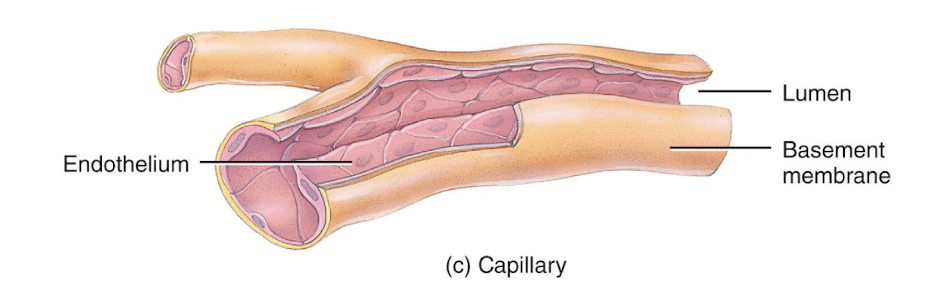
due to the walls of capillaries being thin:
capillaries permit the exchange of nutrients and wastes between blood and tissue cells
types of capillaries:
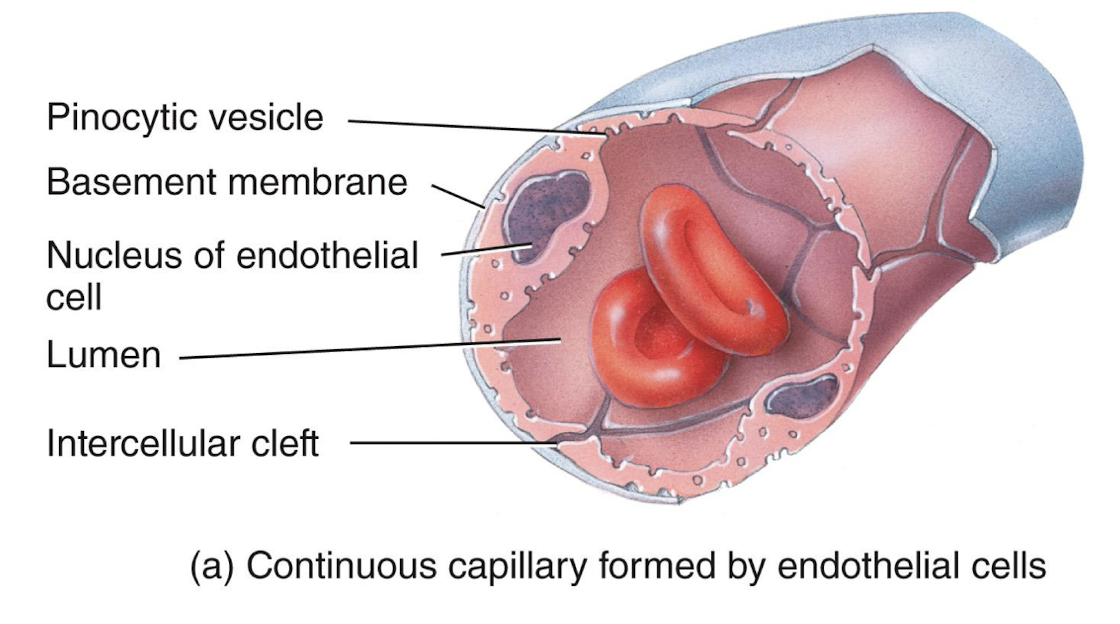
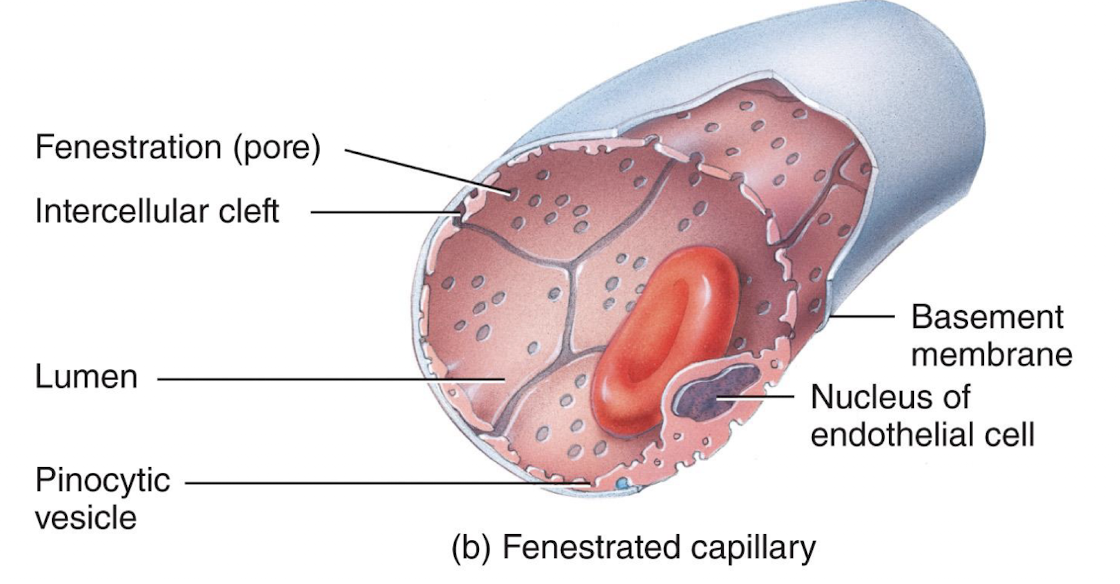
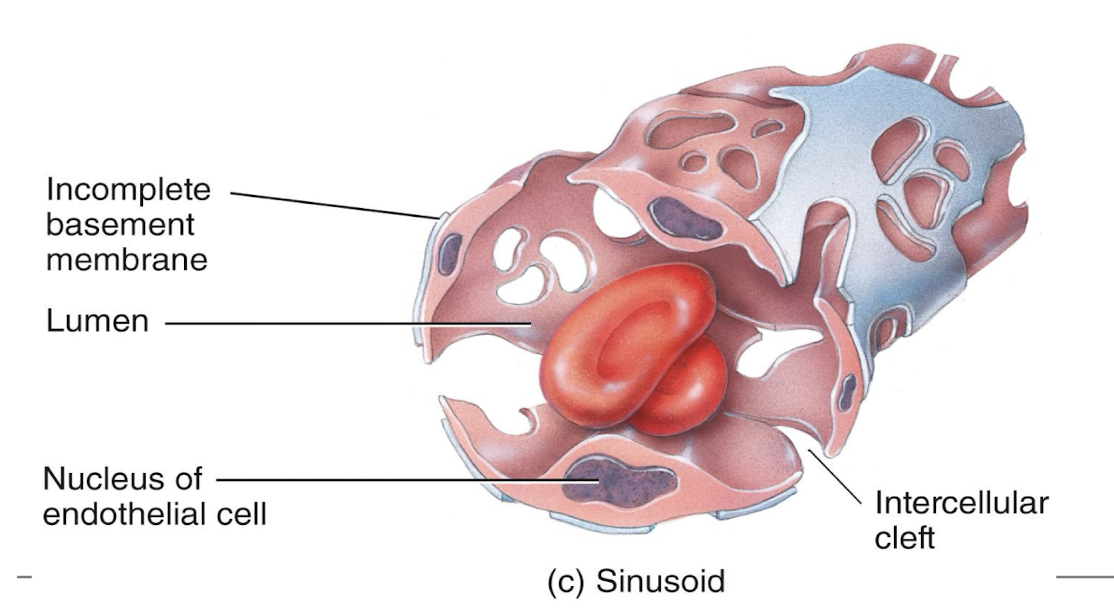
continous, fenestrated, sinusoid
continuous capillaries
most common
fenestrated capillaries
filter small molecules (kidneys)
sinusoid capillaries
leaky, allow passage of large molecules and recycled RBC components (liver)
venules
smallest veins that are formed by the union of several capillaries; drain blood from capillaries into veins
veins
formed from the union of several venules and they have thinner tuninca interna and media and thicker tunica externa; veins have less elastic tissue and less smooth muscle than arteries
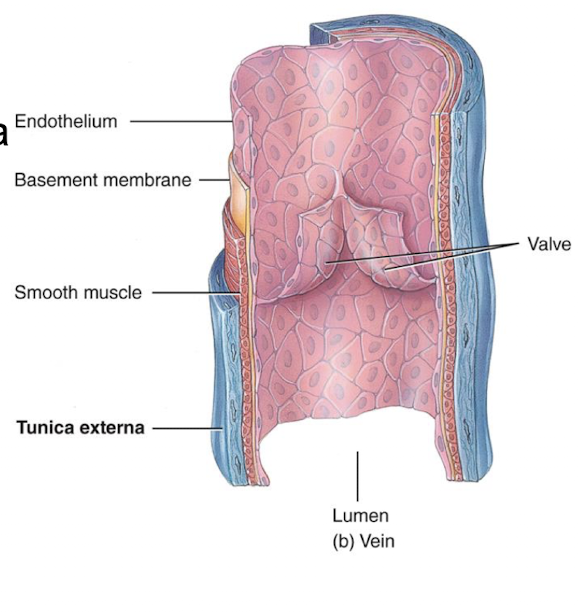
veins have:
valves, which keep blood moving toward the heart
blood distribution
largest portion of blood is in systemic veins and venules, which are considered blood reservoirs
capillary exchange
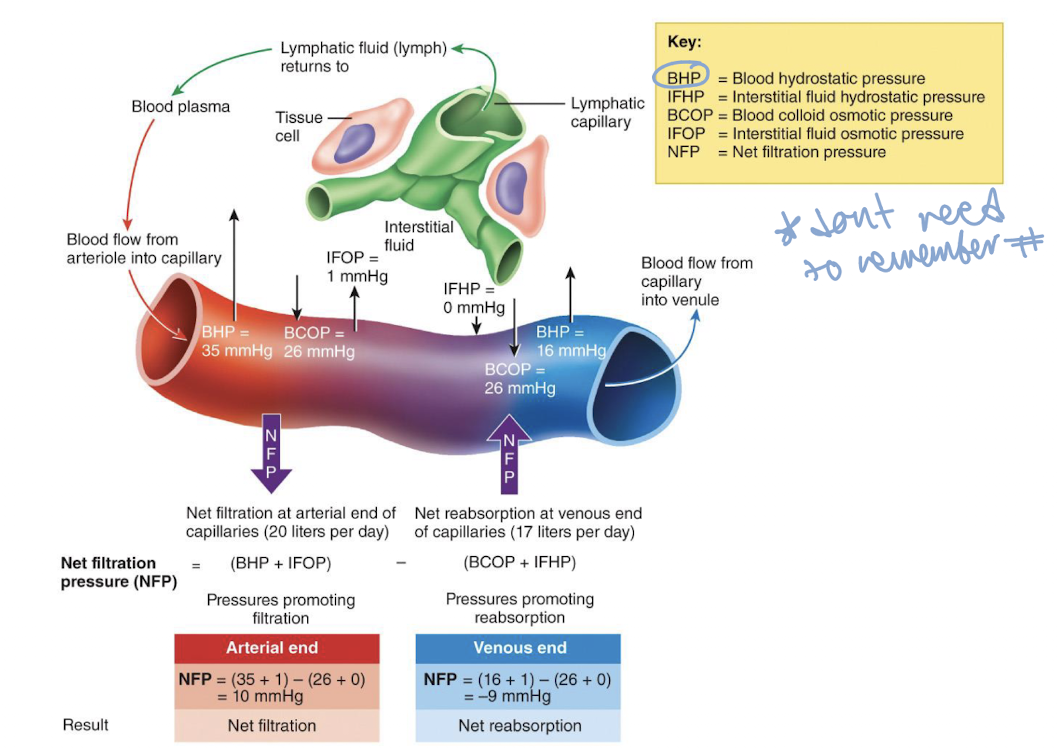
substances cross capillary walls by diffusion transcytosis, bulk flow
bulk flow
a passive process in which large number of ions, molecules, or particles in fluid move together in same direction
bulk flow occurs from an area of:
higher pressure to an area of lower pressure, which continues as long as pressure difference exist
bulk flow is important for:
regulation of relative volumes of blood and interstitial fluid
filtration is a:
pressure-driven movement of fluid and solutes from blood capillaries into interstitial fluid
blood hydrostastic pressure (BHP) and interstitial fluid osmotic pressure (IFOP) promote:
filtration
reabsorption is a:
pressure driven movement of fluid and solutes from interstitial fluid into blood capillaries
interstitial fluid hydrostatic pressure (IFHP) and blood colloid osmotic pressure (BCOP) promote:
reabsorption
picture of dynamics of capillary exchange
blood flow
volume of blood that flows through the tissues within period of time (in mL/min)
total blood flow
is cardiac output (CO), the volume of blood that circulates through systemic (or pulmonary) blood vessels each minute; CO = heart rate (HR) x stroke volume (SV)
stroke volume (SV)
amount of blood pumped out of ventricle in one beat
vascular resistance (R)
opposite to blood flow due to friction between blood and walls of blood vessles; higher the R, smaller the blood flow
R is affected by:
size of blood vessel lumen, blood viscosity, and total blood vessel length
size of blood vessel lumen
smaller diameter, higher R
blood viscosity
flowability, thickness of blood; blood is more viscous than water because it contains formed elements (primarily RBCs) and plasma proteins
total blood vessel length
longer the vessel, greater the resistance
resistance opposes:
flow, with small changes in radius having a large effect on resistance to blood flow
vasoconstriction
a decrease blood vessel diameter and decreases blood flow
vasodilation
an increase in blood vessel diameter and increases blood flow
venous return (VR)
volume of blood flowing back to heart through systemic veins
VR is assisted by:
valves, respiratory pump, and skeletal muscle pump
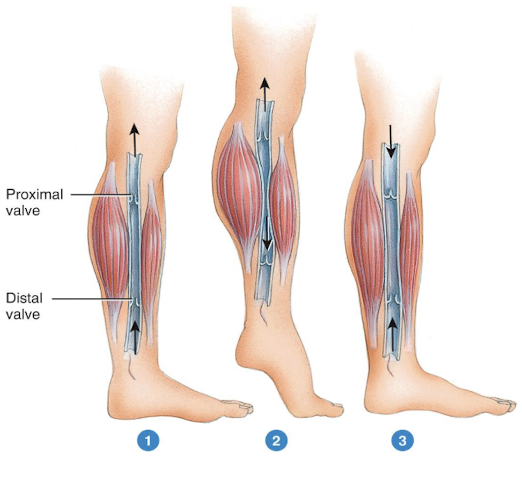
respiratory pump
thoracic cavity action, which inhaling decreases thoracic pressure, and exhaling raises thoracic pressure
skeletal muscle pump
contraction and relaxation of skeletal muscles
contraction of ventricles generates:
BP
BP is influenced by:
cardiac output, blood volume, and vascular resistance
blood flows from:
high pressure (arteries) to low pressure (veins)
larger the pressure gradient:
the greater is blood flow
medulla oblongata contains:
a cardiovascular center, which is a group of neurons that regulate heart rate, contractility, and blood vessel diameter
baroreceptors
important pressure-sensitive sensory neurons that monitor stretching of walls of blood vessels and atria
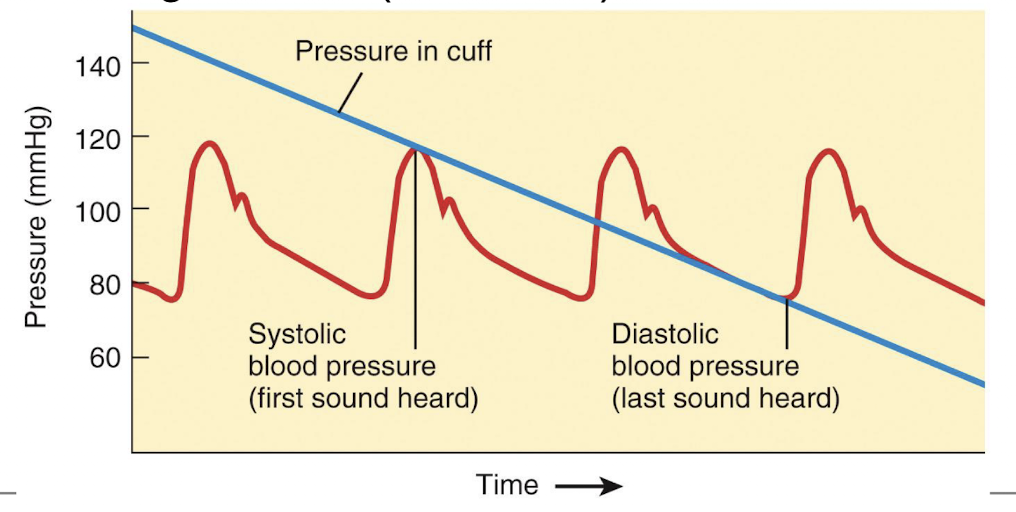
blood pressure (BP)
measured indirectly by auscultatory methods using sphygmomanometer
systolic pressure
normally less than 120 mm HG; pressure sounds first occur as blood starts to spurt through artery
diastolic pressure
normally less than 80 mm HG; pressure when sounds disappear because artery no longer constrictred, blood flows freely
systolic blood pressure (SBP)
highest pressure during systole (contraction)
diastolic blood pressure (DBP)
lowest pressure during diastole (relaxation)
picture of systolic blood pressure and diastolic blood pressure