2.3 Male Reproductive System Diagram | Quizlet
 Call Kai
 Learn
Learn Practice Test
 Spaced Repetition
 Match
Match Flashcards
 Knowt Play
1/27

There's no tags or description
Looks like no tags are added yet.
Name | Mastery | Learn | Test | Matching | Spaced | Call with Kai |
|---|
No analytics yet
Send a link to your students to track their progress
28 Terms
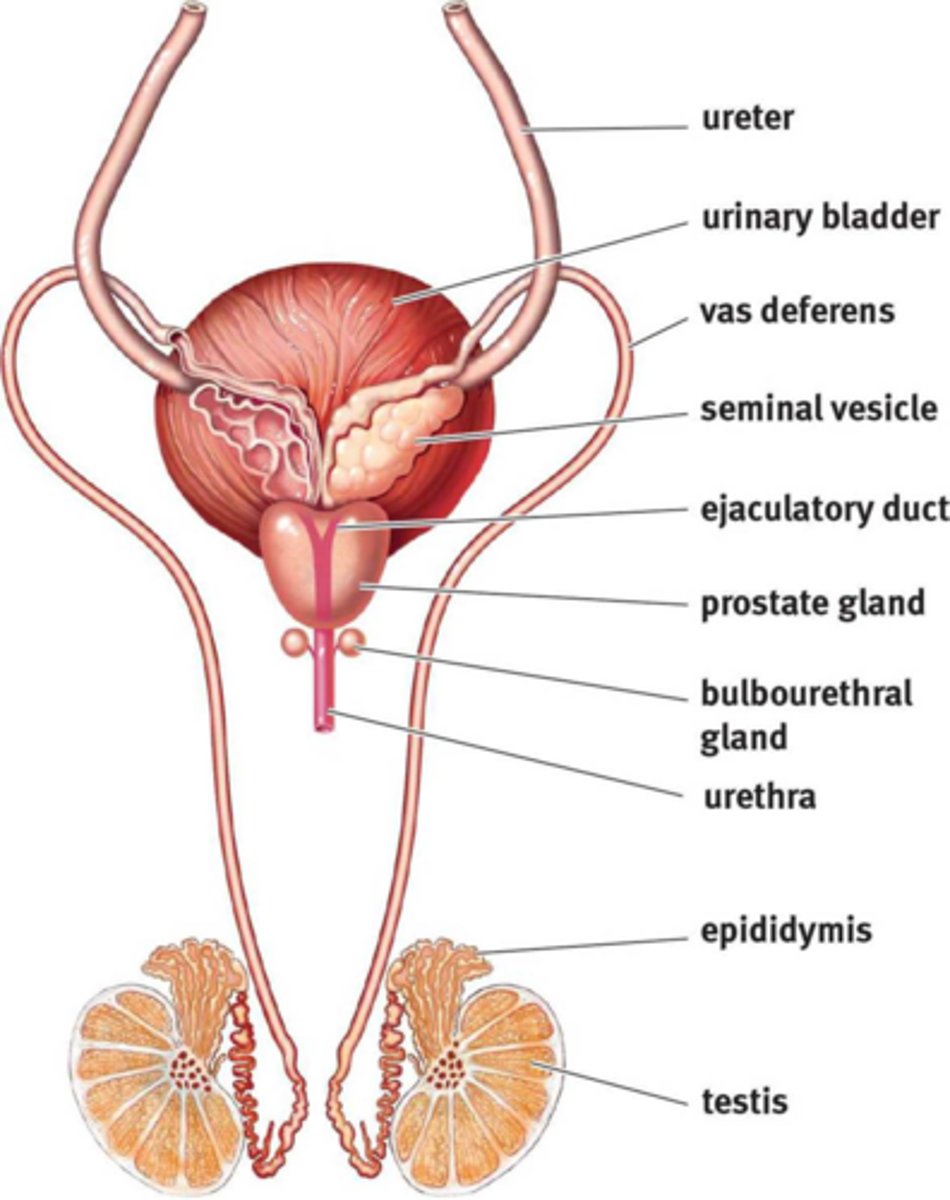
Seminiferous Tubules and Interstitial Cells of Leydig
The two functional components of the testes.
Seminiferous Tubules
Highly coiled structures in the testes where the sperm are produced.
Sertoli Cells
Cells near the seminiferous tubules that secrete nutrients for the sperm.
Interstitial Cells of Leydig
Secrete testosterone and other male sex hormones.
Scrotum
Holds the testicles outside of the body around 2-4 degrees celsius below the body's temperature.
Ductus Deferens
Muscular layer around the vas deferens that can raise and lower the testes to maintain proper temperature.
Epididymis
A long, coiled tube on the surface of the testes where the sperm gain their motility by the flagella developing.
Ejaculation
Sperm travel through the vas deferens to the ejaculatory duct and out of the penis.
Ejaculatory Duct
Located at the posterior edge of the prostate gland.
Seminal Fluid
Substance that nourishes sperm. It is made through combined effort of the seminal vesicles, prostate gland, and bulbourethral gland.
Seminal Vesicles
Contribute fructose to the semen. Also contributes to the alkalinity of the semen.
Prostate Gland
Give the fluid mildly alkaline properties so the sperm can survive in the relatively acidic environment of the vagina.
Bulbourethral Glands
Secrete a substance to coat the lining of the urethra to neutralize the acid and lubricate the tract in preparation for ejaculation.
Semen
The name for the sperm and seminal fluid.
Spermatogenesis: Ploidy
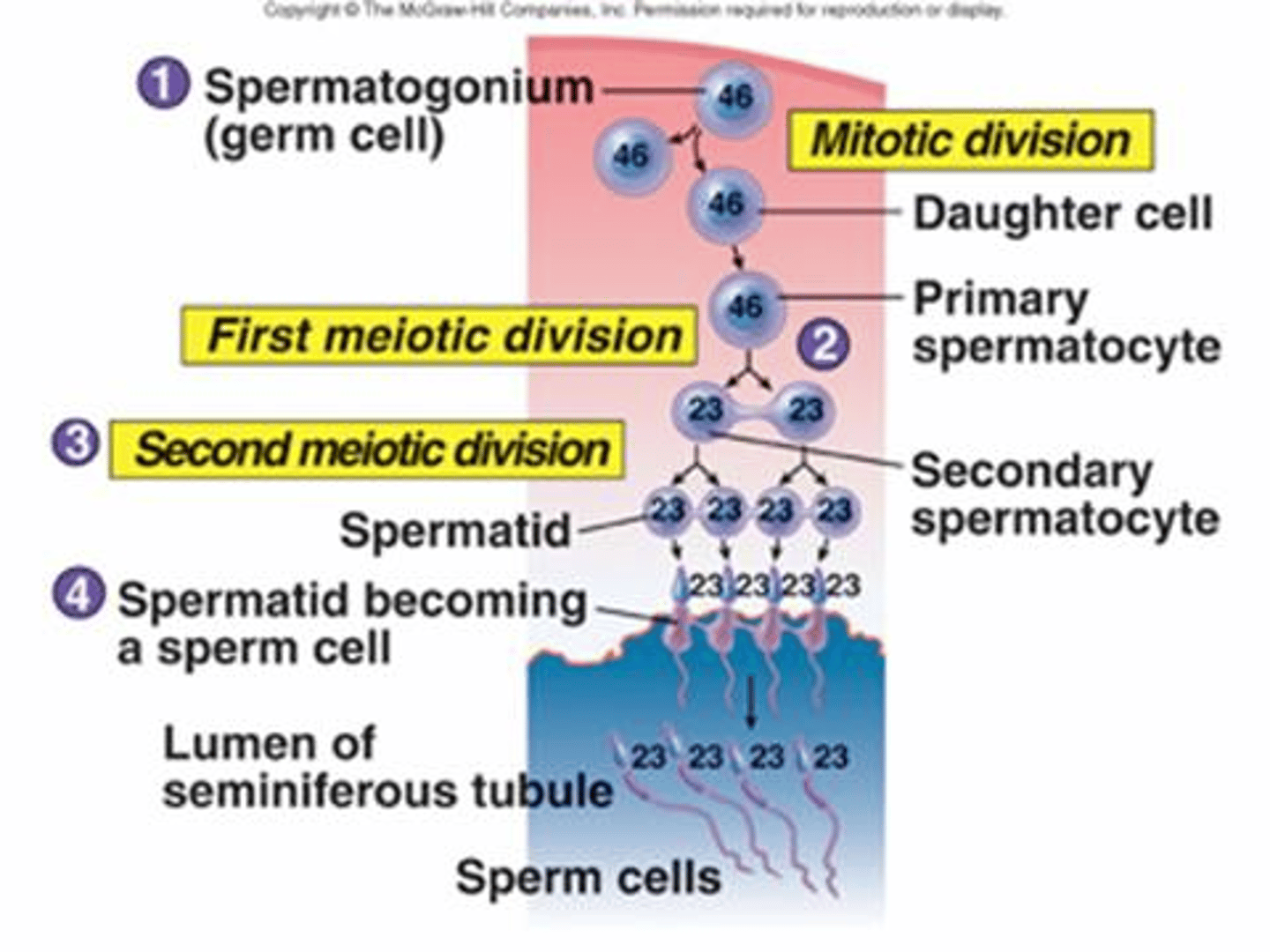
Spermatogonia
Diploid stem (germ) cells in males.
Primary Spermatocytes
After the spermatogonia go through S phase.
Secondary Spermatocytes
Haploid cells that result from the first meiotic division of the primary spermatocytes.
Spermatids
Haploid cells that result from the secondary spermatocytes undergoing meiosis II.
Spermatozoa
After the spermatids mature.
Sperm Head
Hold the genetic material of the sperm.
Spermiogenesis
Spermatids mature to become spermatozoa, aka. sperm.
Sperm Midpiece
High numbers of mitochondria that create ATP from fructose.
Acrosome
Cap that covers the sperm head and is necessary for the sperm to enter the ovum. Develops from the Golgi apparatus.
3 million
The number of sperm produced per day.
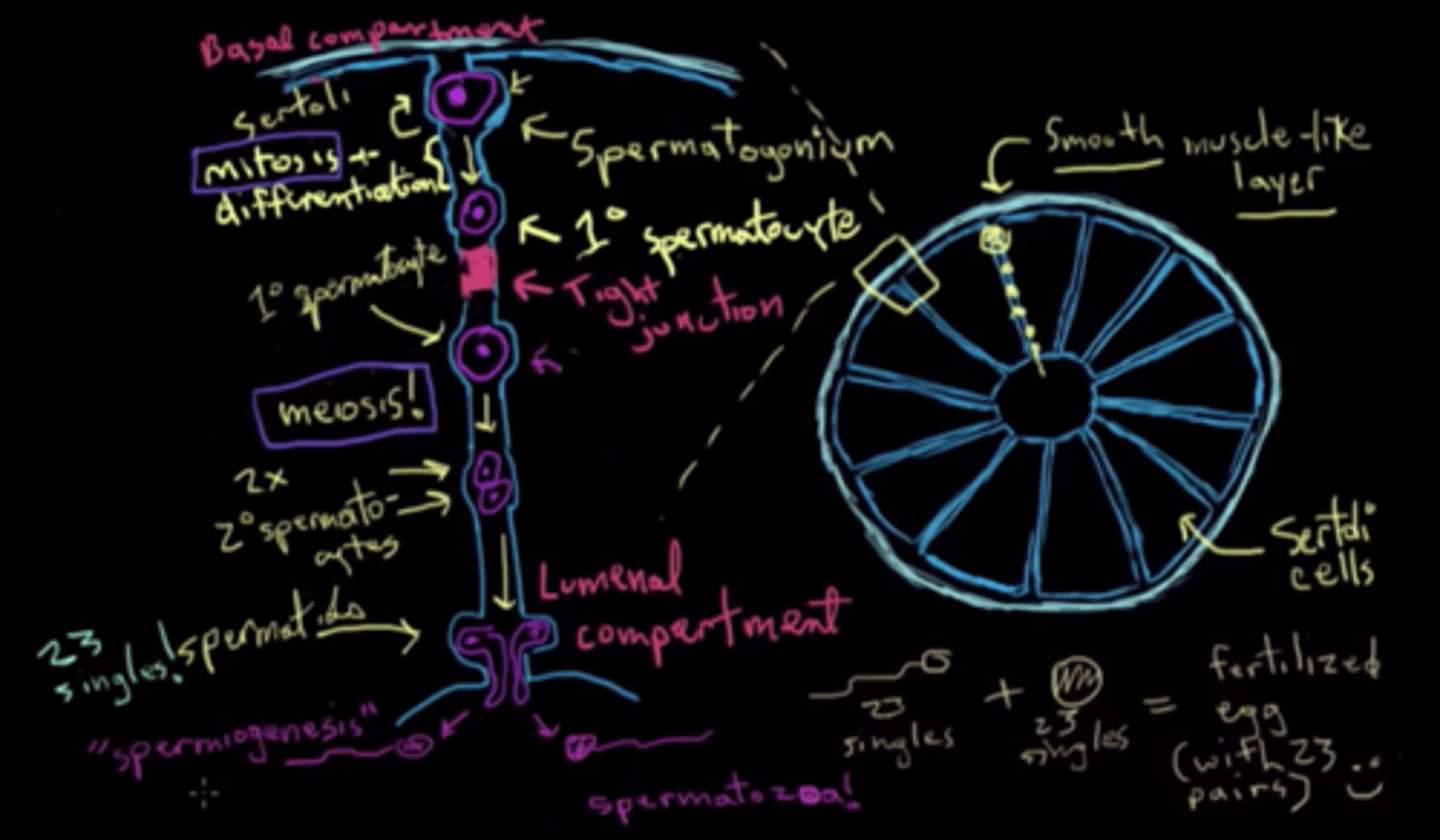
Deeply Embedded
Spermatids are more deeply embedded in the sertoli cells because they get a lot of nutrients from them.

