Unit 5 Food, Pesticides, and Human Health
 Studied by 0 people
 Call Kai
 Learn
Learn Practice Test
 Spaced Repetition
 Match
Match Flashcards
 Knowt Play
1/52

There's no tags or description
Looks like no tags are added yet.
Name | Mastery | Learn | Test | Matching | Spaced | Call with Kai |
|---|
No analytics yet
Send a link to your students to track their progress
53 Terms
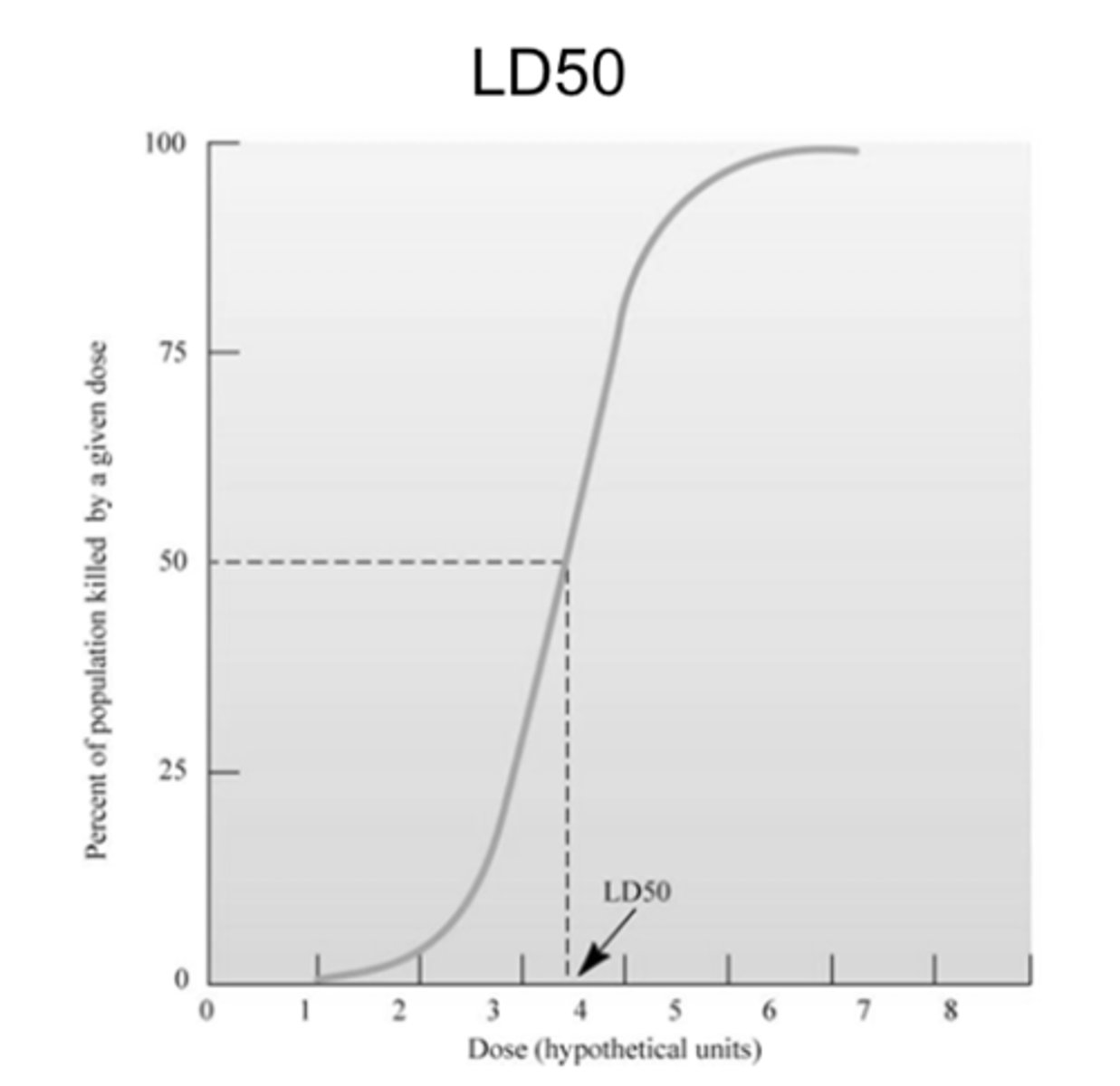
1. Lethal Dose-50% (LD50)
the amount of a chemical that kills 50% of the organisms in test population
2. Effective Dose-50% (ED50)
the dose that affects 50 % of the pop. (with a response other than death)
3. Threshold Level
level below which there are no noticeable toxic effects observed
4. Mutagen
causes changes to DNA that result in hereditary changes
Examples of common mutagens
ethidium bromide, formaldehyde, dioxane, and nicotine
5. Teratogen
causes birth defects
Examples of common teratogens
ethanol, mercury compounds, lead compounds, phenol, carbon disulfide, toluene and xylene
6. Carcinogen
substance that causes cancer
Examples of common carcinogens
benzene, vinyl chloride, formaldehyde, dioxane, and acrylamide
Does EVERYTHING cause cancer?
No
7. Endocrine disruptor
chemicals which mimic human hormones such as estrogen, thereby interfering with their normal functions
Examples of common endocrine disruptors
BPA, Phthalates, PBDE's (flame retardants)
8. Bioaccumulation
chemical build-up of toxins in fatty tissue in a single organism
9. Biomagnification
build-up in toxins as you move up the food chain; they must consume more to survive.
Think magnification = MULTIPLE organisms!
Example of biomagnification
DDT caused problems in large predatory birds (Osprey)
10. How Does Mercury get into the Environment and Fish?
burning of coal
atmospheric deposition
11. Perfluorooctanoic Acids (PFOA, PFOS)
chemical used in nonstick coating have been recently found in the water on Long Island. Linked to kidney and testicular cancer, thyroid disease, lower sperm count and smaller penis size.
13. BPA or Bisphenol A
chemical that has been used since the 1960s to make lightweight, hard plastics; Possible health effects of BPA on the brain, behavior and prostate gland of fetuses, infants and children
12. Polybrominated diphenyl ethers (PBDEs)
group of highly toxic chemicals that are persistent in the environment; flame-retardants that are used in many consumer products to make them difficult to burn like couches, mattresses, pillows, etc.
14. Phthalates
group of chemicals used to soften and increase the flexibility of plastic and vinyl.
Used in cosmetics and personal care products, like hair spray, soap, shampoo, nail polish, plastic and vinyl toys
Implicated as a cause of breast cancer, increased obesity, insulin disruption, testicular disease
15. Synergism
when the sum of the effects of multiple chemicals is more dangerous than each chemical individually.
16. Persistent Organic Pollutants (POPs)
man-made (aka "forever") chemicals that are not biodegraded, therefore transported by wind and water all around the Earth (grasshopper effect). Since they last for a long period, they biomagnify/bioaccumulate; adversely affecting human health and the environment.
Examples of Persistent Organic Pollutants
DDT, dioxins, PBDEs, and PFAS
17. World's Main Food Source
Wheat, rice, and corn provide more than ½ of the calories in the food consumed by the world's people
18. Slash-and-burn
agriculture method that involves burning a forest or field of vegetation and using the resulting ash as fertilizer—ancient technique that pre-dates modern fertilizers.
Which method do the natives use to clear the forests of the Amazon to farm and raise cattle?
slash and burn
19. Green Revolution
began in the 1940's, greater increase in food production due to genetically altered crops, improved synthetic fertilizers, man-made pesticides and using fossil fuels to power machines
20. Monoculture
farm focuses on just one organism; all resources are focused on producing it efficiently, highly susceptible to disease/pests, needs high amounts of synthetic fertilizers and pesticides
21. Monarchs and the Milkweed Case Study
milkweed is the only plant on which monarch butterflies will lay their eggs, and it is the primary food source for monarch caterpillars.
Extensive monoculture and herbicide use the milkweed population has declined dramatically.
22. Economic Advantages of CAFO (Concentrated Animal Feeding Operations)
a large percentage is produced on factory farms, maximizing profit by increasing the yield and decreasing cost by cramming animals into small spaces. This provides humanity with high quality protein at reasonable prices for millions
23. Environmental Disadvantages of Factory Farming (CAFO)
· Contamination of surface and groundwater due to the high volume of animal waste from runoff. This contributes to cultural eutrophication when the runoff enters lakes and streams, eventual dead zones
· Using antibiotics and hormones poses unknown risk to human health, possible antibiotic resistance
· Takes a tremendous amount of energy, land, and water to produce a small amount of meat (beef is the most energy intensive) which is a major contributor to climate change and habitat destruction
· Methane, a GHG 25x more potent than CO2, is released from flatulent animals, especially beef
24. Genetically Modified Organisms (GMO's) aka Bioengineered
involves taking beneficial genes from an organism and inserting them into the genome of the crop or livestock species.
Why would GMOS be beneficial?
create traits such as drought resistance, pesticide resistance, need for less fertilizer, or even more nutritional value
25. Problems with GMO's
Native diversity may be decreased by the spread of GMO genes to nonengineered organisms, beneficial insects may be harmed or killed unintentionally (ex. pollen toxic to monarch butterflies)
ECONOMIC ISSUE: Companies have patented, sterile seeds which commit the farmer to annual purchase of seeds that are often too expensive for poor farmers
26. First Generation Pesticides
made from natural substances
• Examples are sulfur, arsenic, lead, mercury
• Abandoned due to human poisoning and contamination of soil
• Also botanically derived pesticides like nicotine sulfate from tobacco leaves
27. How are Heavy Metals Getting into our Food?
· Remnants of past pesticide use remain in soils like inorganic arsenic (especially in the US South)
Ex. High levels of inorganic (toxic) arsenic in some rice and juices (more in brown vs. white rice)
· Use of leaded gasoline put lead into the air and then it contaminated soils
Ex. High levels of lead in some chocolate (more in dark vs. milk), juices, and sunflower products
· Emissions from the metal industry, mining, and contaminates of fertilizer use
Ex. How metals like cadmium gets into chocolate
28. Chlorinated Hydrocarbons
second generation pesticide Examples are DDT, Aldrin, Methoxycholor
• Contain chlorine
• Broad Spectrum which kill many species
• Slow to degrade aka persistence (2 - 15 years)
• Biomagnifies and bioaccumulates; Suspected carcinogen & endocrine disruptor
29. Rachel Carson
wrote a book called Silent Spring detailing use of DDT and its effects on birds. DDT biomagnified and in larger predatory birds weaken the shells of their offspring so much so that when they sat on them to keep them warm, they cracked, killing the developing baby bird.
30. Organophosphates
second generation pesticide; examples are Malathion, Parathion, Diazonon
• Contain phosphorus; derived from nerve gas (German research during WWII)
• More poisonous than others, high level of toxicity to mammals
• Degrades more easily because it is water soluble (several weeks)
31. Neonicotinoids
relatively new class of pesticide similar in chemistry to nicotine
• Highly toxic to most insects by attacking their nervous system, but less toxic to birds and mammals
• Most widely used insecticide, persists for years (about 4)
• Linked to colony collapse disorder (CDC) which are killing pollinators. (Bees are dying!!!!)
32. Roundup (Glyphosate)
is an extensively used herbicide made by the Monsanto Corporation
• World Health Organization (WHO) listed it as "probably" causing cancer in humans
• Similar in structure to a natural growth hormone (endocrine disruptor)
• Broad spectrum; used to kill dandelions and many other "weeds"
• Very small amounts (parts per billion) have found in common foods like cereal and grain products
33. Pesticide Pros
saves lives from insect-transmitted disease; increases food supply and lowers food costs therefore increasing profits for farmers; works faster than alternatives
34. Pesticide Cons
genetic resistance, ecosystem imbalance, pesticide treadmill, persistence, bioaccumulation and biomagnification, can runoff, can kill unintended species
35. Pesticide Resistance
when a pesticide is applied it kills most organism except for organisms that are naturally resistant to the chemical. These "pesticide resistant" organisms reproduce and overtime the entire population is now evolves a resistance the pesticide.
36. Pesticide Treadmill
as the development of pesticide resistance increases the farmer requires increased applications, which then leads to more resistance! (like a drug addict needs more/stronger drugs to get same high)
37. Circle of Poison
• US pesticide companies can make and export pesticides that have been banned or never approved in the US
• Foreign farmers assume they are safe because the US is making them
• Residues of these chemicals return to US consumers on imported produce (25% of all produce consumed in the US is produced overseas)
38. Pesticides Effects on Humans
• Short Term Exposure i. Farm workers poisoned
• Long Term Exposure i. Cancers, leukemia, birth defects
ii. Disruption of human hormone systems (endocrine disruptor) ex. breast cancer, decrease in sperm counts
39. Delaney Clause of Food, Drug, and Cosmetic Act (FDCA) 1958
1 shall not approve any food additive that has not been test or found to induce cancer in man, or after tests, found to induce cancer in animals
40. Problems with Delaney Clause
technology for detecting pesticide residues was in its infancy. New tech makes it impossible for any processed food to meet the standard of no pesticides causing cancer at some level
41. Integrated Pest Management (IPM)
involves multiple strategies such as introduction of pest predators (lady bugs/praying mantis), pheromones traps, hormones to disrupt the pest's life cycle, sterile males, and/or crop rotation to reduce the use of pesticides. GOAL: to learn more about pests, only use pesticides as a last resort and while still making a profit
42. IPM Examples
know a few examples for the test (this is what we use in our courtyard garden)
• Agricultural Methods
i. Crop rotation or intercropping (monoculture invites pests)
ii. Pick off insects or pick out weeds like dandelions (by hand or drill)
iii. Adjust planting times (squash vine borer example)
iv. Mosquitoes (drain standing water, wear long sleeves)
• Natural Enemies 129 beneficial insects are sold in the US
i. Parasitic wasps control the boll weevil
ii. Lady bugs and praying mantis control aphids
• Biological Agents
i. Milly spore fungus controls white grubs/Japanese beetles
ii. Repellents: Fox/Coyote Urine or marigolds to keep pests like rabbit/deer away
iii. Pheromones: chemical sex attractants to lure pests
• Miscellaneous
i. Sterilize the males: fruit flies
ii. Physical barriers like small fences, sticky materials or netting
iii. Motion activated sprinklers
iv. Diatomaceous earth: harm only insects with exoskeletons
v. Natural oil spray
43. Pros and cons of becoming vegetarian or vegan
Pros: Healthier for you, less cancers and heart disease, Animal rights/poor treatment, Feeds more people by eating lower on the food chain (10% rule), Reduces greenhouse gases (climate change) like methane from livestock and fossil fuel use (about 15% of all greenhouse gas emissions)
Cons: Could be protein deficient and must need to take B12 supplements due to scarcity in non-animal products
44. Organic Food
food produced without antibiotics; growth hormones; and most conventional pesticides; petroleum - based fertilizers; bioengineering (GMO's); or ionizing radiation
 Note
Note  Flashcards (25)