CH 2 Derivatives (DONE)
 Studied by 0 people
 Call Kai
 Learn
Learn Practice Test
 Spaced Repetition
 Match
Match Flashcards
 Knowt Play
1/24

There's no tags or description
Looks like no tags are added yet.
Name | Mastery | Learn | Test | Matching | Spaced | Call with Kai |
|---|
No analytics yet
Send a link to your students to track their progress
25 Terms
Futures Contracts
Available on a wide range of assets
Exchange traded
Specifications need to be defined:
What can be delivered,
Where it can be delivered, &
When it can be delivered
Settled daily
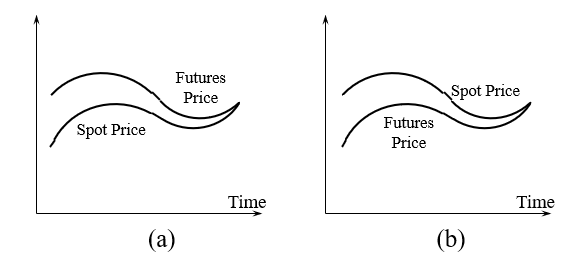
Convergence of Futures to Spot (Figure 2.1)
Margins
A margin is cash or marketable securities deposited by an investor with his or her broker
The balance in the margin account is adjusted to reflect daily settlement
Margins minimize the possibility of a loss through a default on a contract
Margin Cash Flows
A retail trader has to bring the balance in the margin account up to the initial margin when it falls below the maintenance margin level
A member of the exchange clearing house only has an initial margin and is required to maintain the balance in its account at that level every day.
These daily margin cash flows are referred to as variation margin
A member of the exchange is also required to contribute to a default fund
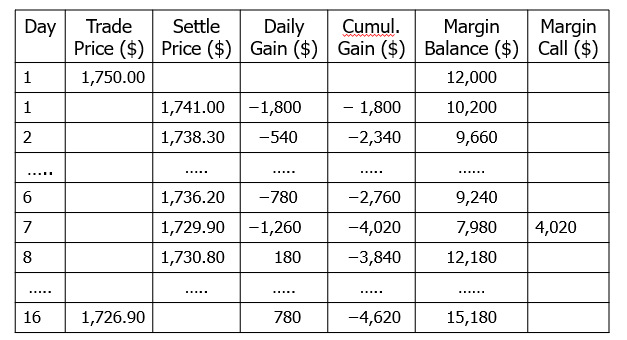
Example of a Futures Trade
A retail trader takes a long position in 2 December gold futures contracts on June 5
contract size is 100 oz.
futures price is US$1,750
initial margin requirement is US$6,000/contract (US$12,000 in total)
maintenance margin is US$4,500/contract (US$9,000 in total)
Example of a Futures Trade (Gold Futures) - A Possible Outcome (Table 2.1)
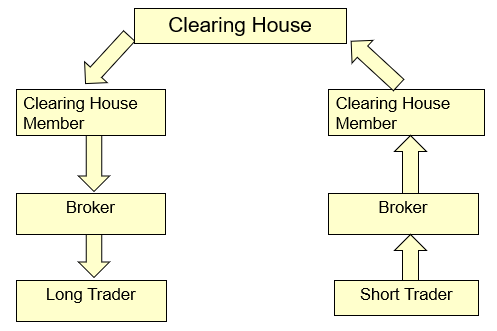
Margin Cash Flows When Futures Price Increases
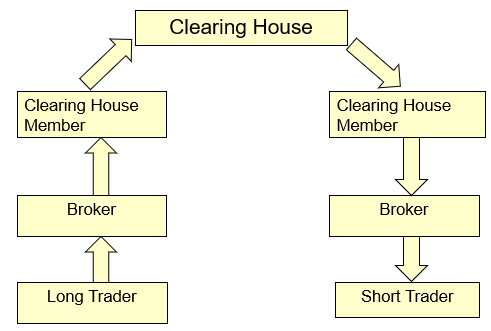
Margin Cash Flows When Futures Price Decreases
Some Terminology
Open interest: the total number of contracts outstanding
equal to number of long positions or number of short positions
Settlement price: the price just before the final bell each day
used for the daily settlement process
Volume of trading: the number of trades in one day
Open interest:
the total number of contracts outstanding
equal to number of long positions or number of short positions
Settlement price:
the price just before the final bell each day
used for the daily settlement process
Volume of trading:
the number of trades in one day
Key Points About Futures
They are settled daily
Closing out a futures position involves entering into an offsetting trade
Most contracts are closed out before maturity
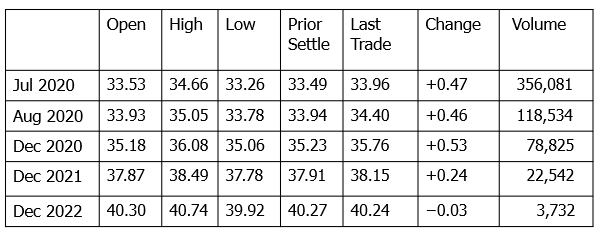
Crude Oil Trading on May 21, 2020 (Table 2.2)
Delivery
If a futures contract is not closed out before maturity, it is usually settled by delivering the assets underlying the contract. When there are alternatives about what is delivered, where it is delivered, and when it is delivered, the party with the short position chooses.
A few contracts (for example, those on stock indices and Eurodollars) are settled in cash
*Questions
When a new trade is completed what are the possible effects on the open interest?
It can go up or down. (search up on own)
Can the volume of trading in a day be greater than the open interest?
Yes
Types of Orders
Limit
Stop-loss
Stop-limit
Market-if touched
Discretionary
Time of day
Open
Fill or kill
Regulation of Futures
In the US, the regulation of futures markets is primarily the responsibility of the Commodity Futures and Trading Commission (CFTC)
Regulators try to protect the public interest and prevent questionable trading practices
Accounting & Tax (Not on Quiz)
Ideally hedging profits (losses) should be recognized at the same time as the losses (profits) on the item being hedged
Ideally profits and losses from speculation should be recognized on a mark-to-market basis
Roughly speaking, this is what the accounting and tax treatment of futures in the U.S. and many other countries attempt to achieve
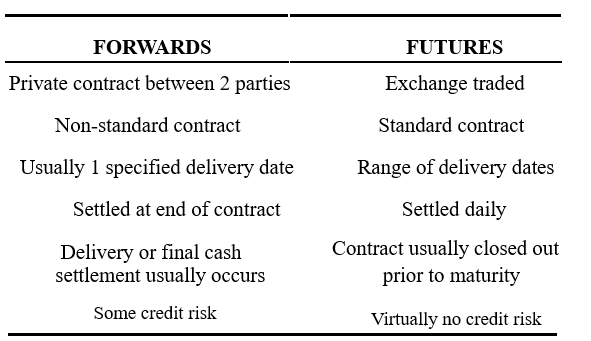
Forward Contracts vs Futures Contracts (Table 2.3)
Foreign Exchange Quotes
Futures exchange rates are quoted as the number of USD per unit of the foreign currency
Forward exchange rates are quoted in the same way as spot exchange rates. This means that GBP, EUR, AUD, and NZD are quoted as USD per unit of foreign currency. Other currencies (e.g., CAD and JPY) are quoted as units of the foreign currency per USD.
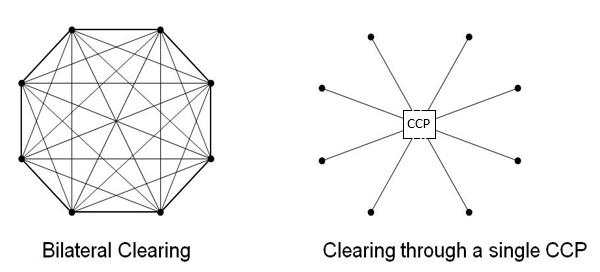
OTC Derivatives Transactions: Bilateral Clearing vs Central Clearing
Bilaterally Cleared Derivatives Transactions
Usually governed by an ISDA Master agreement with a credit support annex (CSA)
The agreement explains the rights of one party if the other party defaults
The CSA defines the collateral which must be posted
If one party defaults, the other party is entitled to keep any collateral that has been posted up to what is necessary to settle its claims
Traditionally CSAs have required variation margin but not initial margin (e.g., LTCM in Business Snapshot 2.2)
Post-Crisis Regulations 1
Standard transactions between financial institutions must be cleared through CCPs
Non-standard transactions can be cleared bilaterally
A transaction with a non-financial corporation can be cleared bilaterally
Post-Crisis Regulations 2
New regulations for non-standard trades between financial institutions that are not cleared centrally require the financial institutions to have CSAs where both initial margin and variation margin are posted
The initial margin is posted with a third party
 Note
Note  Flashcards (28)